

By Lionel Bopage –

Dr. Lionel Bopage
After 16 years of legal battles, witness intimidation, and broken promises, the disappearance of Sri Lankan journalist Prageeth Ekneligoda remains unsolved. It is a sobering reminder of the impunity that still plagues Sri Lanka’s human rights and press freedom. His wife Sandya Ekneligoda continues to face abuse and death threats, even under the current government. The most recent threat was reported to have been made by someone identified as a retired army major. It is not just a terrible act, it is also an attack on the self-respect of a woman and a victim.
On January 24, 2010, Sri Lankan journalist and cartoonist Prageeth Ekneligoda disappeared without a trace. Sixteen years later, Sandya Ekneligoda continues her relentless quest for truth, navigating a justice system plagued by delays, intimidation, and institutional resistance. As the anniversary of his enforced disappearance passes once again in 2026, the case stands as a painful emblem of Sri Lanka’s ongoing struggle with accountability and press freedom.
Trapped in Legal Limbo
The trial against nine military intelligence officers accused in Ekneligoda’s disappearance continues to inch forward at a glacial pace. Among the accused is Retired Brigadier Shammi Kumararatne, former commanding officer of the Giritale Army Camp[1], where witnesses reported seeing Prageeth after his abduction. Yet despite years of proceedings before a Permanent Trial-at-Bar, a verdict remains frustratingly out of reach.
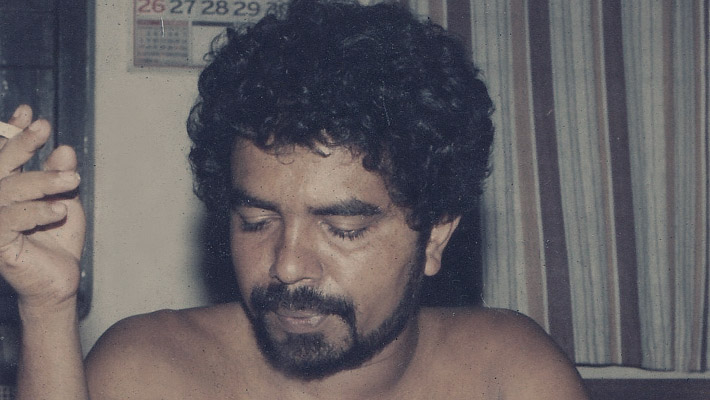
Prageeth
The current phase of the trial focuses on analysing circumstantial evidence, including phone records and witness testimonies. That could finally piece together what happened to Prageeth after he vanished in broad daylight. Former Criminal Investigation Department Director Shani Abeysekara, who led the original investigation, has been designated as the 109th witness of the trial. That is a crucial addition that advocates hope would bring fresh momentum to the case.
However, repeated postponements have characterised the proceedings throughout late 2025 and into 2026. The three-judge bench has faced persistent vacancies. Hearings have been deferred for months at a time. Judicial appointments languished in bureaucratic limbo. For Sandya Ekneligoda, who has fought this battle for 16 years, each delay compounds the agony of not knowing her husband’s fate.
The statement that the hope that existed by the end of 2024 has been shattered by the end of 2025 reflects the frustration expressed by those close to the case. It is unfortunate that the appointment of judges to vacant judicial posts is delayed for six or seven months even when Rajapaksas are not in power.
Shadows of Intimidation
Perhaps no factor has undermined the pursuit of justice more than the systematic intimidation of witnesses. Key witnesses have recanted their testimonies or simply failed to appear in court. Their silence speaks volumes about the climate of fear surrounding this case. The pattern of intimidation runs so deep that even the accused have been implicated in attempting to silence those who dare to speak.
In June 2025, Shammi Kumararatne himself was briefly remanded for allegedly threatening a witness. It refers to a brazen act that highlights how those accused of disappearing a journalist feel emboldened to obstruct justice openly. For witnesses who might provide crucial testimony about what happened at the Giritale military camp, the message is clear. That is cooperation comes with personal risk.
This atmosphere of intimidation extends beyond individual threats. The Sri Lankan Army has historically withheld information about the case, citing national security concerns whenever pressed for details. The military’s wall of silence has made it nearly impossible to establish what happened to Prageeth after witnesses last saw him at the military installation.
Promises Made and Promises Broken
The election of President Anura Kumara Dissanayake in September 2024 initially sparked renewed hope among human rights advocates and Prageeth’s family. The new administration, led by the National People’s Power, pledged to expedite long-unsolved cases of political abductions and killings. For a brief moment, it seemed justice might finally be within reach. However, that hope proved short-lived.
In January 2026, the same government that promised accountability reportedly promoted T.E.R. (Erantha) Peiris, a suspect in the Eknaligoda case, to the rank of Colonel. The promotion has sent shockwaves through the human rights community and drew sharp criticism from international observers. How could a government claim to seek justice while simultaneously advancing the military careers of those accused of making a journalist disappear?
This contradiction mirrors patterns from previous administrations. Under former President Gotabaya Rajapaksa, a Commission of Inquiry into Political Victimisation went to the extent of recommending the acquittal of all nine accused officers. International observers condemned that move as a deliberate attempt to derail the investigation. The fact that such recommendations could be made with impunity reveals the depth of institutional resistance to accountability in cases involving military personnel.
International Spotlight
The Ekneligoda case has become emblematic of Sri Lanka’s broader struggles with press freedom and human rights. As of 2025, Sri Lanka ranks 150th out of 180 countries in the World Press Freedom Index. It is a dismal position that reflects the dangerous environment journalists face in the country.
International organisations have not remained silent. Reporters Without Borders and Amnesty International continue to apply pressure, calling for concrete reforms that would make justice possible. The United Nations Human Rights Council extended the mandate of the Office of the High Commissioner for Human Rights on Sri Lanka for two years in October 2025, specifically to monitor accountability for past crimes like Prageeth’s disappearance.
These international watchdogs have identified three critical needs for achieving closure in the Eknaligoda case: witness protection, full disclosure, and judicial continuity. Effective mechanisms must be established to shield those testifying against military personnel from intimidation and retaliation. Without such protections, the truth will remain buried beneath layers of fear.
The military must be held accountable for fully disclosing Prageeth’s whereabouts after he was seen at the Giritale military camp. National security cannot be used as a perpetual shield for human rights violations. Additionally, the Special High Court bench must remain fully staffed to prevent the tactical delays that have characterised this case. That is because justice deferred, is justice denied. The chronic vacancies on the bench serve no purpose but obstruction.
A Wife’s Unwavering Determination
Throughout these 16 years of legal battles, broken promises, and institutional resistance, Sandya Ekneligoda has remained steadfast. Her public campaign for justice has kept her husband’s case in the national consciousness, refusing to let his disappearance fade into the background of Sri Lanka’s troubled history.
“Prageeth’s case needs to be concluded and soon. I think I have a right to make this request,” she has stated with dignified determination. Her words carry the weight of nearly two decades she spent seeking answers, navigating a system that seems designed to exhaust rather than deliver justice.
Sandya’s fight is not just about a single person’s disappearance. It is about whether Sri Lanka can break free from its culture of impunity, whether military personnel can be held accountable for crimes against civilians, and whether journalists can work without fear of being silenced permanently.
The Urgent Need for Closure
January 24, 2026, marks 16 years since the forced disappearance of Prageeth Eknaligeda. The need for conclusion of his case has never been a more urgent task. A transparent and impartial final verdict is not just a legal formality. It is also a moral imperative for a society seeking to move beyond its authoritarian past.
The obstacles are formidable, with witness intimidation, institutional resistance, contradictory government actions, and a military that continues to protect its own. Yet these challenges cannot be allowed to prevent justice indefinitely. The question facing Sri Lanka is whether this case will join countless other disappearances that remain forever unsolved, or whether the country will finally demonstrate that no one is above the law, regardless of rank or uniform.
For Sandya Ekneligoda and for everyone who believes in press freedom and human rights, the answer to that question will define Sri Lanka’s future as much as its past. Sixteen years is more than long enough time to wait for justice. Now is the time to arrive at a final conclusion.
[1] Giritale Army Camp in Sri Lanka is a military facility. It is notably associated with the Sri Lanka Corps of Military Police (SLCMP). It gained significant media attention in 2015-2016 when the CID investigated the Prageeth Ekneligoda disappearance.
Jit / January 19, 2026
“…The answer is blowing in the wind…” but I got a glimpse of it here: https://www.youtube.com/watch?v=XF96tMhZviM
/
Douglas / January 19, 2026
Jit: Thank you for the link. I watched this earlier. I am trying to get him to send that report he has compiled to the President and the Minister of Justice. Hope he will do that. According to his report, there is no doubt on the culpability on the part of the AG in messing up most of the court cases, for which the Government must take serious note and institute appropriate action to remove him.
In one of my comments in this forum, I referred to the ‘Promotion’ given to the ‘9th’ accused in this case. On hearing this, Sandya Ekneligod wrote to the President and protested over this ‘Promotion’. It is now learned that this promotion has been withheld and an’Investigation’ is being conducted as to how it was recommended from the Army Secretariat.
When can we expect the Minister of Justice to ‘Wake Up’ from his ‘Coma’? Will he ever ‘Wake Up’? I doubt. It would be better and healthier for the President to ‘Bury’ him and get someone else.
/
Jit / January 20, 2026
Douglas, as I mentioned in that reply, the promotion of Peiris was rather a calculated lapse in accountability by the legal and military establishment – not a presidential endorsement. This country’s law abiding citizens were badly let down by the failure of the AG and the Army to launch this investigation, BEFORE the President had to do so. It is another despicable chapter of machination and twisting by the AG’s Dept to please politicians, which is not limited to the current AG but spans back many decades, and it is getting worse by the day! Irony is, it is now happening to please the politicians in the opposition – not in the government! I believe President has enough evidence by this stage to make a formal inquiry about the conduct of the current AG, as highlighted by many fair minded journalists recently, before the big hopes the masses have for a changed society wanes out.
/
Douglas / January 20, 2026
Jit: Today (19-01-26), another ‘Stunt’ was played by the AG in the case against 9 accused in that ‘Budu Pilama’ case in the Trincomalee Magistrate’s court. The Lawyer from the AG’s Department tried to get bail for the accused 4 ‘Buddhist Priests’, including the famous trouble maker ‘Balangoda Kassapa’. However, he failed due to the good care of the Magistrate and the Police. Too many details to state here.
/
old codger / January 20, 2026
Douglas,
The fact is that elected politicians don’t run the country. They are only temporary custodians. The real rulers are:
1. The monks
2. The Civil Service.
The administrators know all the rules, and they know the system inside out through many years of experience. The politicians have to seek the help of the bureaucracy. Good examples are P.B. Jayasundara and C. Paskaralingam.
These people simply cannot be replaced with outsiders, just as you can’t replace surgeons with carpenters.
As for the monks, they know everything, of course.
/
LankaScot / January 20, 2026
Hello OC,
It doesn’t only apply to Sri Lanka, I have seen from the inside how the Civil Service and other Organisations run the UK. As you say the Politicians are only “temporary custodians”. I remember watching Robin Day in his famous ” ‘here-today, gone-tomorrow” 1982 interview – https://www.youtube.com/watch?v=Sx1gWQacnEM
As for carpenters; the Son of a Carpenter is reputed to have raised the dead and performed various healings.
Best regards
/
leelagemalli / January 20, 2026
Hello LS and all other rational minds!
Let truths be heard. Not just 16 years, but 36 years or longer, cases of high crimes similar to those of Jamal Khashoggi or more mysterious (https://www.youtube.com/watch?v=VoqjiRnKLX0)
, are not uncommon in our motherland (land of hypocrisy number one), where nearly 70% of sinhalayas remain licking bo-trees, unable to see justice served, and the only option has been invisible forces, even if sinhala-buddhists believe they are different from Hindus and Christians.
Manmade disasters worsen day by day as a result of their own ignorance and indifference until the matter or case becomes theirs. To tell you the truth, the way Murderous Jeppos conducted extrajudicial killings between 1989 and 1992 devastated me and forced me into exile.
by attacking others, but after 15 months, the current government has done little to address high-level road crimes, which are more prevalent in this country than ever before. Tuk tuk drivers and motorists compete on land roads and highways, while officials remain silent. Innocent predestians are killed or harmed. Underworld operations are doubling today compared to prior governments. What is Anura Kumaraya, the “Maraya of all communities,” doing to bring new laws and improvements to existing stagnant ones?
/
old codger / January 21, 2026
LS,
Just asking, would we have been better off if he had been the Son of a Surgeon?
/
LankaScot / January 21, 2026
Hello OC,
No you are right, it would have made no difference. However one of my Gt Gt Grandfathers was a Ship’s Carpenter on the Sailing Ships and they often helped the Surgeons with Amputations (I try to keep the pictures out of my mind) and even on occasions performed them by themselves. Life at Sea was very hazardous back then – No Health & Safety Laws for them. UK had their groundbreaking Health and Safety at Work Act 1974; Sri Lanka has its Factories Ordinance (1942).
Best regards
/
Douglas / January 20, 2026
OC: Thanks for your input. True, the politicians don’t run the country. But, as ‘Custodians’, they have a responsibility to oversee the operations and intervene where corrective measures have to be taken.
What has been very wrongly misunderstood and taken out of context is that the politicians must not interfere with the ‘Bureaucrats’ activities’ and they must be given the ‘Freedom’ to act. This mistake made by all previous Governments led to building a ‘Monstrous’ and a ‘Law Unto Themselves’ type brigade of Bureaucrats.
The worst was that the present NPP government promised to adhere to this policy with all its pride and even made a request to the bureaucrats to change and act according to the rules.
What is NEEDED and MUST be done is to closely ‘MONITOR’ the performance and intervene to correct matters then and there as they occur to keep in line with the policies.
/
old codger / January 21, 2026
Douglas,
“This mistake made by all previous Governments led to building a ‘Monstrous’ and a ‘Law Unto Themselves’ type brigade of Bureaucrats.”
If you replace the word “Bureacrats” with, say, “bus drivers “, tuk drivers, doctors, monks,etc you will get an idea what’s wrong with this country.
/
Native Vedda / January 22, 2026
old codger
–
“The real rulers are:
1. The monks
2. The Civil Service. “
3.The Security Apparatus, Army, Navy, Airforce, STF, Unintelligence agencies, death squad, rent a mob, Sarath Weerasekere’s village informers, ………… some of the party affiliated trade unions, ….
/
Ajith / January 19, 2026
I don’t think that this government or any other government will give justice to this case or any other case through investigation or punish the past political leaders or religious leaders or military or themselves. It is impossible to do that and it is waste of time and resources. One thing this government can do tell the truth that all made mistakes in the past and all those who committed crimes should accept it and all and take away them and institutions from participating in future politics and the victims of the past politics and allowing the people who were chased away from the country to take part in the politics and sharing the power with North Eastern Tamil speaking people.
/
Naman / January 20, 2026
I agree with Ajith that no GoSL is going to find its Security Forces as guilty of ALL CRIMES committed in the past against innocents who were doing the jobs/activities as part of their livelihoods
Minimal Justice that citizens of SL want is at least have a complete SHAKE UP of current personnels in the Ministry of Defence. These people need to be replaced by young educated civilised SL citizens.
All crimes can be sorted out by CID by questioning all the Rajapaksas Ranil Wicremasinghe & Bandaranaike
/
Jit / January 20, 2026
Do your research people — you’re both wrong! Stop pulling out the “racism” card whenever it suits you. Sri Lanka’s justice system is far from spotless – there is no doubt, but it has indicted and prosecuted military personnel across all ranks over the years for certain atrocities unleashed in the war zone. Look at how many soldiers are currently on trial for crimes committed against Tamils during the civil war, despite resistance from certain monks and opposition figures who weaponize racial politics just as eagerly as you do.
If you want historical grounding, start with the 1962 Ceylonese coup attempt (“Operation Holdfast”) and how that prosecution unfolded. Then look at cases like Premawathi Manamperi and Krishanthi Kumaraswamy. Even under the anti-Tamil Rajapaksa administration soldiers received 25‑year sentences for the Vishwamadu rape case. Under the CBK government, perpetrators were convicted for the Modera rape‑murder of a Tamil girl in the 1990s.
Are there failures in the system? Absolutely yes! But they are NOT limited to Tamil victims. Hundreds, if not thousands, of Sinhala and Muslim women have been raped across the country without justice, largely due to political interference and systemic decay.
That’s a broader conversation. But for now, stop reducing every crime in this country to your favourite narrative. Not everything is racism and treating it as such only weakens genuine anti‑racist work.
/
Ajith / January 21, 2026
“Do your research people — you’re both wrong! Stop pulling out the “racism” card whenever it suits you.”
Your research is fine. It is not true that not everything racism or religious terrorism. Who invented the system for Sinhala only? Why it happened 1958 massacre and 1981 massacre? Why do you need special status to Buddhism? What are these? Who governed this island? Is it Buddhism? or Is it Governments for all civilians or citizens? It is not about one case or two case?It is for Sinhalese speaking people and Tamil speaking people? You say thousands of of Sinhala and Muslim people raped across the country without justice? Is it like that Muslim doctor did the operation over thousands of Sinhalese women in Sinhalese hospital? Who do you think in the governments? It is Sinhala speaking governments, Sinhala speaking justices/ Sinhala speaking lawyers? What they were doing?
/
Jit / January 22, 2026
Ajith, The core activities of the judiciary are not government business. The entire process of managing cases and delivering justice is the responsibility of the police and the judiciary. When politicians do not interfere, justice is delivered and law and order can prevail. But that did not happen since 1970 Sirima government and the rot is now at a putrid level. Despite their efforts not to interfere with the system and producing better results in prosecuting armed personnel and bureaucrats aligned to previous regimes, even the current government has been unable to clear major roadblocks in this whole system. Painfully, we have to accept that the phantoms and ghosts living in the system are more powerful than AKD or his cabinet, and any possible ghostbusting by extreme techniques though possible, can be political suicide! So, there is little progress and yes, people are not happy the way it is dragging and there could be more protests coming up similar to the one we saw yesterday. But the biggest question is – if not NPP then who else?? Do you genuinely think if Sajith or Namal takeover tomorrow, the law and order machinery will be much better than it was under NPP? I will be ROTFLMAO!!!
/
Naman / January 20, 2026
In 2015, we who are looking for a real change in the way we are governed hoped that with the defeat of Rajapaksas we thought we could see the light through the long long tunnel.
It ended with deep disappointment with Ranil.W & M.Siresena being not the saviours of SL.
From September 2024 we were thrilled in AKD winning both Presidential and parliamentary elections
It is definitely a CHANGE for good.
But we want it to be much better & better!
Those corrupt politicians of the past & also in the present parliament should face the corruption charges asap
/