

By P M Amza –

P M Amza
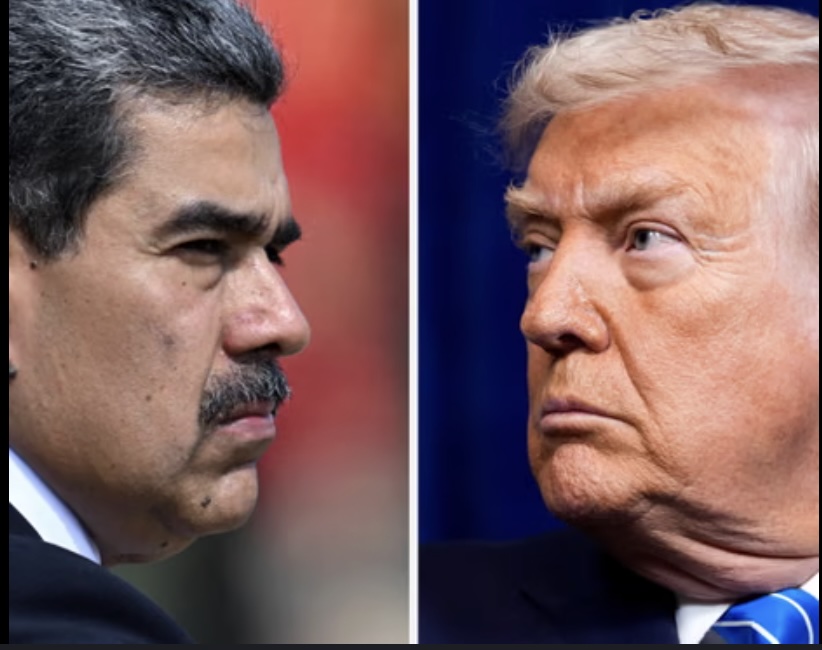
The forcible capture of Venezuelan President Nicolás Maduro by United States military forces represents one of the most consequential ruptures in the post-Second World War international system. Whatever the allegations against the Maduro regime, the manner in which the operation was carried out—unilateral, extraterritorial, and without multilateral authorization—has alarmed governments and scholars alike. The event is not simply about Venezuela; it is about the erosion of a foundational principle of international order: that sovereignty and territorial integrity cannot be overridden by power alone.
This episode, and the rhetoric that followed it, offers a revealing window into President Donald Trump’s approach to global affairs. It is an approach that privileges coercion over consent, spectacle over sustainability, and immediacy over institutional restraint. Far from stabilising the international system, it risks accelerating a descent into strategic disorder at a time when multilateral norms are already under strain.
Power as Legality: The Venezuela Precedent
Since 1945, international law—however imperfect—has been built around the idea that the use of force must be exceptional, collective, and legally justified. The United Nations Charter permits force primarily in self-defence or with Security Council authorization. The capture of a sitting head of state from his own capital by a foreign military does not sit comfortably within these constraints. Unsurprisingly, the operation provoked widespread condemnation at the United Nations, with several states describing it as a violation of Venezuelan sovereignty and a dangerous act of aggression.¹
The problem is not whether the Maduro regime is culpable of serious wrongdoing; it is whether global justice can be enforced through unilateral military abduction. Once powerful states claim the right to act as judge, jury, and enforcer beyond their borders, international law risks being reduced to an instrument of convenience. What emerges instead is a hierarchy of power, not a community of law.
Warnings After Venezuela: Normalising Coercive Diplomacy
What transformed concern into deep unease was President Trump’s rhetoric in the immediate aftermath of the Venezuela operation. In a series of public remarks and interviews, he issued warnings—explicit and implicit—toward five other countries: Colombia, Cuba, Mexico, Iran, and Greenland.² These statements were not framed as diplomatic engagements but as signals of potential coercion.
Colombia was portrayed as a possible site for U.S. action, with Trump remarking that military involvement “sounds good” while criticising its leadership. Cuba was described as politically fragile and “ready to fall,” language that echoes Cold War-era justifications for intervention. Mexico was warned to “get its act together” on drug cartels, with repeated suggestions that U.S. military involvement inside Mexican territory remained an option. Iran was threatened with severe retaliation should regional violence escalate further, reinforcing an already combustible Middle Eastern security environment. Greenland, remarkably, was again spoken of in terms of acquisition and control, challenging the post-war taboo against territorial acquisition by pressure—even among allies.³
Individually, these statements might be dismissed as bluster. Collectively, they form a pattern: a redefinition of diplomacy as intimidation. When backed by demonstrated willingness to violate sovereignty, such rhetoric ceases to be performative. It becomes a strategic signal—one that other powers are certain to interpret and, potentially, emulate.
Fragile Peace Claims and the Illusion of Resolution
Trump has repeatedly claimed credit for ending or resolving eight conflicts across different regions of the world. While some diplomatic interventions did contribute to temporary de-escalation, authoritative assessments by the Associated Press and TIME magazine suggest that many of these claims conflate ceasefires with settlements, pauses with peace, and mediation with resolution.⁴
In the Middle East, U.S. involvement in Israel–Hamas and Israel–Iran confrontations produced temporary stabilisation, but neither conflict has moved meaningfully toward comprehensive resolution. Tensions remain high, humanitarian crises persist, and the underlying political disputes are unresolved. In South Asia, Trump asserted that U.S. mediation helped avert war between India and Pakistan during a crisis in Kashmir; Indian officials, however, publicly rejected the claim, underscoring the contested nature of this “success.”⁵
Elsewhere, situations cited as peacemaking achievements—Serbia–Kosovo, Armenia–Azerbaijan, Rwanda–Democratic Republic of Congo, and Cambodia–Thailand—illustrate similar fragility. In each case, either violence resumed, negotiations stalled, or stability rested on pre-existing international mechanisms rather than new durable agreements.⁶ In Cambodia–Thailand, for example, fighting re-emerged even after U.S. pressure helped broker a ceasefire, requiring renewed negotiations and confidence-building measures.⁷
The pattern is revealing. Trump’s approach tends to produce rapid, high-visibility interventions that temporarily suppress symptoms while leaving structural causes untouched. Peace becomes a transactional outcome, not a process of reconciliation, institution-building, or regional consensus.
The Dangerous Logic of Precedent
International order is sustained not merely by rules, but by restraint. When restraint erodes, precedent becomes perilous. The Venezuela operation sends a signal that sovereignty is negotiable if one possesses sufficient power. That signal does not go unnoticed in Moscow or Beijing.
In the context of Ukraine, Russian discourse has long emphasised spheres of influence and selective legality. Analysts have noted that actions like the Venezuela operation weaken Western credibility when opposing territorial revisionism, particularly in contested regions such as Donbas.⁸ Even without immediate escalation, the rhetorical ammunition is invaluable: if powerful states can seize leaders and override borders in the name of justice, others can claim similar prerogatives in the name of security or history.
The implications for Taiwan are equally sobering. Reuters has reported that while China is unlikely to alter its immediate military calculus because of Venezuela, such precedents strengthen Beijing’s long-term argument that sovereignty is conditional and that reunification by force is not categorically illegitimate.⁹ Precedent does not have to trigger conflict tomorrow to be dangerous; it reshapes norms gradually, legitimising future actions that once would have been unthinkable.
Small States in a World of Selective Law
For small and medium-sized states, the stakes are particularly high. Countries like Sri Lanka depend on the predictability of international law to offset power asymmetries. When global order shifts from rule-based to power-based, legal protections weaken precisely where they are needed most.
The selective application of sovereignty—respected for allies, ignored for adversaries—creates a world where compliance with norms offers no guarantee of security. It also undermines multilateral institutions by rendering them peripheral to real decision-making. The United Nations becomes a forum for post-hoc condemnation rather than collective prevention.
From Disruption to Disorder
Trump’s defenders often argue that disruption is necessary to break diplomatic stagnation. Yet disruption without reconstruction leads not to renewal, but to disorder. The withdrawal from multilateral agreements, disdain for international institutions, and preference for coercive bilateralism reflect a worldview in which predictability is sacrificed for leverage.
The irony is stark. Actions justified as restoring order—whether in Venezuela or elsewhere—end up eroding the very system that prevents global chaos. Each exception becomes a precedent; each precedent, an invitation.
Conclusion: The Cost of Letting Might Replace Right
The Venezuela episode should not be viewed in isolation. It is part of a broader transformation in global politics, where power increasingly asserts itself as legality. Trump’s approach does not merely challenge specific regimes; it challenges the architecture of international order itself.
This is not a defence of authoritarian governments or a plea for inaction. Accountability remains essential. But accountability pursued through unilateral force, detached from multilateral legitimacy, collapses the distinction between justice and domination.
In the final analysis, Trump is not simply failing to solve global problems; he is actively contributing to their multiplication. By weakening norms, legitimising coercion, and normalising selective sovereignty, his actions accelerate the unravelling of a world order that—however flawed—has constrained the worst impulses of power for nearly eight decades.
For small states and vulnerable regions, the choice is stark. Either the international community reasserts the primacy of law over force, or it accepts a future where might replaces right—and where disorder becomes the defining condition of global affairs.
Footnotes
1. The Guardian, “US foes and allies denounce Trump’s ‘crime of aggression’ in Venezuela at UN meeting,” January 5, 2026.
2. People, “Trump Threatens to Come for Cuba, Colombia, Greenland, Iran and Mexico Next After Saying ‘Nobody Can Stop Us’,” January 4, 2026.
3. Al Jazeera, “Trump threatens Colombia’s Petro, says Cuba looks ‘ready to fall’,” January 5, 2026.
4. Associated Press, “Trump says he’s ended eight wars. His numbers are off,” December 29, 2025; TIME, “Where Trump Claims to Have Brought Peace, Conflicts Continue,” December 9, 2025.
5. Associated Press, ibid.
6. TIME, ibid.
7. Reuters, “Thailand frees 18 Cambodian soldiers under new ceasefire deal,” December 31, 2025.
8. Reuters, “Putin indicated Russia could be open to territory swap as part of Ukraine deal,” December 26, 2025.
9. Reuters, “U.S. strike on Venezuela likely to embolden China’s territorial claims; Taiwan attack unlikely,” January 4, 2026.
leelagemalli / January 7, 2026
Whether or if Nikolas Maduros, President of Venezuela, was lawfully elected, his abduction by US soldiers violates US or international law. However, this is typical of Trump’s politics. Why hasn’t the UN said something about this? Elephant is in the room, yet no one talks about him.
Similarly, everything is against the way law and order enforcement in Sri Lanka is being applied to governing party officials and MPs, while the country’s President continues to lay around. Not a single stone has yet been hurled at him. The WORLD is naked… how pitiful.
/
CChampa / January 8, 2026
“Make America Pirates Again”.
I had secondhand embarrassment when I saw the video clip of the US seizing a Venezuelan-linked oil tanker. This is exactly how Houthis seized Israel-linked or Israel-bound ships.
The elite US forces are copycatting Houthis!!!!
America’s “greatness” has no limits, no boundaries, and it is now stooping to the lowest level.
/
Naman / January 9, 2026
Might is Right had been the practice in our Motherland since getting the Independence from the British. The Sinhala Buddhist Majority targeted the hard working passive people of Tamil speaking citizens (TSC). By subjugation of the minorities the Sinhala Supremacists brought on the ECONOMIC DOWNTURN to the ENTIRE country. They need to realise their STUPIDITY and begin to treat the Tamils EQUALLY.
/
CChampa / January 10, 2026
Naman
What subjugation of minorities? Who are you trying to mislead? The truth is, Tamil-speaking people who are concentrated nationwide are well represented in Sri Lanka Parliament.
As you prefer race and religion-based analysis, the make-up of the current Sri Lanka Parliament is 52 Tamil-speaking MPs and 173 Sinhalese. Of the Sinhalese MPs, the majority are Atheists, Anti-Buddhists, Catholics and fake Buddhists.
From the total of 225 Members of Parliament, 23% are Tamil-speaking lawmakers which is more than their percentage of population composed of Tamil-speaking Tamils, Tamil-speaking Indians and Tamil-speaking Muslims, as indicated in 2012 statistics.
The 52 Tamil-speaking MPs represent “8 out of 9 Provinces in Sri Lanka” which is more than equal!!!! This is the list of their constituents. 1. Colombo and Gampaha (Western Province), 2. Kandy and Nuwara Eliya (Central Province), 3. Matara (Southern Province), 4. Jaffna and Vanni (Northern Province), 5. Batticaloa, Ampara and Trincomalee (Eastern Province), 6. Kurunegala and Puttalama (North-Western Province), 7. Badulla (Uva Province), 8. Kegalle (Sabaragamuwa Province) and the National List.
Moreover, the corruption-plagued, wastage-ridden and miserably failed ALL-Tamil Northern Provincial Council proved that Tamils are not capable of handling governance even with the full financial support of the Sri Lankan government.
/
Naman / January 9, 2026
The USA has to keep the connection between the OIL and US$ in order to control the economy of the world.
This is why they got rid of leaders of so many countries Iraq/Libya …..
Donald Trump and his team are making sure that USA domination continues for ever and ever!!!!
/
SJ / January 9, 2026
A tree wants to be quiet, but the wind still blows it.”
So much for the peaceful path to social justice.
/