

By P M Amza –

P M Amza
The Commonwealth Confronts Its Colonial Past
The Commonwealth Heads of Government Meeting (CHOGM), held in Antigua and Barbuda from 1 to 4 November 2026, brought renewed attention to an uncomfortable chapter in the history of the British Empire: the transatlantic slave trade and the continuing demands for apology and reparatory justice.
The Commonwealth, comprising 56 independent countries representing approximately 2.7 billion people, is frequently portrayed as a voluntary association committed to democracy, human rights, good governance and cooperation. Yet many of its members share a historical relationship shaped by colonial domination, economic exploitation and, in several countries, the institution of slavery.
For Caribbean and African nations particularly affected by the slave trade, the issue is not simply about revisiting history. It concerns acknowledgement of historical injustice, moral responsibility and the continuing consequences of colonial exploitation.
The Antigua Summit followed the 2024 Commonwealth meeting in Samoa, where leaders recognised the need for meaningful discussions on reparatory justice. The latest developments, including King Charles III’s address and the UK government’s willingness to consider a formal apology, have given the debate renewed diplomatic significance.
The central question is whether the Commonwealth can reconcile its historical inheritance with its contemporary commitment to equality and mutual respect.
Slavery and the Expansion of the British Empire
The UK’s historical involvement in slavery originated under successive English and British governments, long before the formation of the modern United Kingdom. From the seventeenth century, merchants, shipping companies and plantation owners participated extensively in the transatlantic slave trade.
Millions of Africans were forcibly transported across the Atlantic, many aboard British slave ships, to work on plantations producing sugar, tobacco and other commodities. Enslaved people were deprived of their liberty, treated as property and subjected to harsh conditions of forced labour.
Caribbean territories such as Jamaica, Barbados, Antigua, Grenada and St Kitts and Nevis became important centres of plantation slavery. British Guiana, now Guyana, similarly developed an economy heavily dependent on enslaved African labour.
The economic benefits extended beyond plantation owners. Commercial enterprises, financial institutions, shipping companies and insurance businesses in cities such as Liverpool, Bristol and London benefited from different aspects of the Atlantic slave economy.
African societies, particularly in West and Central Africa, experienced forced population removals, violence and profound social disruption associated with the trade.
However, the colonial experiences of Commonwealth countries were not identical. India and Sri Lanka experienced different forms of economic exploitation, while indentured labour subsequently became an important feature of plantation economies in Mauritius, Fiji and parts of the Caribbean.
Although indentureship was legally distinct from slavery, it frequently involved coercive working conditions, restricted freedoms and unequal economic relationships. Indigenous communities in Australia and parts of the Pacific experienced dispossession and other forms of colonial injustice.
These distinctions are essential to understanding the broader historical grievances within the Commonwealth.
Abolition and the Paradox of Compensation
The abolition of the slave trade in 1807 and the passage of the Slavery Abolition Act in 1833 were important milestones in the history of the British Empire.
The legislation initiated the emancipation of more than 800,000 enslaved people across much of the Empire, although an apprenticeship system delayed full freedom for many until 1838.
Yet the arrangements accompanying emancipation revealed a striking contradiction.
The UK government allocated £20 million, an enormous sum at the time, to compensate slave owners for the loss of what the law had previously recognised as their property. The enslaved people themselves received no comparable financial compensation.
Historical research undertaken by University College London and the Bank of England has extensively documented these payments and their beneficiaries.
This remains one of the most compelling arguments advanced by advocates of reparatory justice. Those who had benefited economically from slavery were compensated, while those who had endured generations of exploitation received no equivalent redress.
The abolition of slavery, therefore, did not automatically remove the inequalities created by the institution itself.
The Growing Demand for Reparations
The Caribbean Community (CARICOM) has been particularly active in advancing the international demand for reparatory justice.
Its Reparations Commission, established in 2013, developed a Ten-Point Plan addressing historical acknowledgement, formal apologies, education, public health, cultural restoration and development. A revised plan was approved by CARICOM leaders in July 2026.
The demands extend beyond direct financial compensation. They seek recognition of the lasting economic and social consequences of slavery and measures intended to address them.
African countries and regional institutions have also increasingly engaged with questions of restitution, historical responsibility and the return of cultural heritage.
Nevertheless, the demand for reparations raises complex legal and political questions. These include identifying responsible institutions, determining beneficiaries and establishing whether present generations should bear financial responsibility for historical injustices.
Advocates maintain that the passage of time does not extinguish institutional responsibility. Opponents argue that retrospective financial liability is difficult to establish and that contemporary development partnerships may offer more practical solutions.
The disagreement is therefore not principally about whether slavery constituted a grave injustice, but about the nature of responsibility and the appropriate form of redress.
From Samoa to Antigua: A Diplomatic Shift
At the Commonwealth Summit in Samoa in October 2024, leaders acknowledged the need for meaningful, truthful and respectful discussions on reparatory justice.
The communiqué recognised concerns arising from the transatlantic trafficking of enslaved Africans, colonialism, indentureship and other historical injustices.
However, the then UK Prime Minister, Keir Starmer, resisted demands for a formal apology and financial compensation, preferring to concentrate on contemporary challenges facing Commonwealth countries.
The Antigua Summit in November 2026 has witnessed a change in the UK’s diplomatic approach.
Prime Minister Andy Burnham indicated his willingness to engage in structured discussions with affected countries and consider the possibility of a formal apology for the UK’s historical involvement in the slave trade.
Nevertheless, he maintained the government’s opposition to financial reparations, arguing that contemporary generations should not be held personally liable for historical wrongs in which they had no involvement.
The distinction between moral acknowledgement and financial responsibility has therefore become central to the UK’s position.
For Caribbean leaders, the willingness to discuss an apology represents a development, although it does not satisfy their wider demands for reparatory justice.
The challenge now is to determine whether structured dialogue can produce mutually acceptable outcomes beyond expressions of regret.
King Charles III: Sorrow Without a Formal Apology
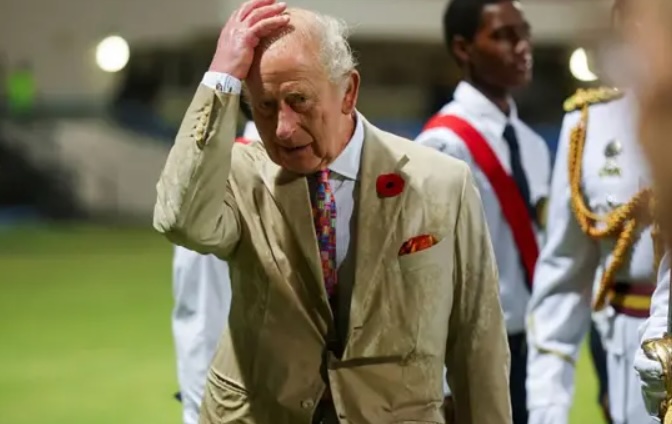
King Charles III’s address at the opening of the Antigua Summit on 3 November 2026 introduced another significant dimension.
Speaking as Head of the Commonwealth, the King described the transatlantic slave trade as a shameful chapter of history and expressed profound personal sorrow over the suffering it caused.
He acknowledged that the legacy of slavery continued to cast a shadow over Caribbean societies and other Commonwealth countries, while emphasising the importance of learning from history and strengthening cooperation.
However, his remarks stopped short of a formal apology or endorsement of financial reparations.
The distinction is constitutionally significant. As a constitutional monarch, the King does not independently determine UK government policy, particularly on matters involving public expenditure or acceptance of legal liability.
Nevertheless, the monarchy possesses considerable historical significance because of the Crown’s association with imperial expansion and colonial administration.
For countries seeking reparatory justice, expressions of personal sorrow, however sincere, may not constitute sufficient acknowledgement of institutional responsibility.
The King’s address therefore reflected an evolving willingness to confront historical injustice while leaving the more difficult questions of apology and compensation unresolved.
Human Rights, Good Governance and Historical Consistency
The debate also raises a wider question concerning consistency in the exercise of moral authority in international relations.
The UK has frequently positioned itself as an advocate of human rights, accountability, reconciliation and good governance, including in its engagement with countries such as Sri Lanka.
Such advocacy is legitimate and remains an important component of international relations. However, its credibility is strengthened when accompanied by an equally candid examination of the UK’s own historical record.
A country that calls upon others to confront uncomfortable chapters of their past must demonstrate a comparable willingness to address injustices embedded in its own imperial history.
This does not diminish the obligation of Sri Lanka, or any other country, to address contemporary human rights concerns. Rather, it reinforces the principle that accountability should be universal and applied consistently, irrespective of a country’s political influence or historical standing.
Acknowledging historical responsibility is not a retreat from the defence of human rights. On the contrary, it strengthens the moral authority with which those values are advanced.
For the UK, therefore, confronting its colonial legacy is not merely an issue of historical reflection. It is also an opportunity to demonstrate that the principles it advocates internationally are equally applicable to its own historical conduct.
From Historical Recognition to Reconciliation
The Commonwealth’s challenge is to reconcile different understandings of historical responsibility without allowing the debate to undermine contemporary cooperation.
A formal apology may carry considerable symbolic and moral significance. However, an apology alone cannot necessarily address the economic and institutional inequalities associated with centuries of exploitation.
Similarly, development assistance without historical acknowledgement may be viewed as insufficient by countries seeking reparatory justice.
A constructive diplomatic approach could explore educational partnerships, historical research, cultural restoration, public health initiatives, debt restructuring and development financing as possible elements of a broader reconciliation process.
Such measures should emerge through genuine consultation rather than be presented unilaterally as substitutes for reparations.
The Commonwealth provides an appropriate forum for this dialogue because its members, despite their different historical experiences, are committed to cooperation among sovereign equals.
Conclusion: Confronting the Past to Build the Future
The Antigua Summit has demonstrated that the legacy of slavery remains an important issue in Commonwealth diplomacy.
King Charles III’s expression of sorrow and the UK government’s willingness to consider a formal apology indicate a movement towards greater historical acknowledgement. Yet the continued rejection of financial reparations reveals the limits of that shift.
The suffering caused by slavery cannot be undone, nor can the historical inequalities associated with colonial exploitation be erased through diplomatic declarations alone.
Nevertheless, meaningful reconciliation requires neither the abandonment of historical grievances nor the indefinite perpetuation of confrontation. It requires honesty, mutual respect and a willingness to translate recognition into practical cooperation.
The Commonwealth’s future should not be held hostage to its colonial past. Equally, that past cannot simply be set aside in the name of future cooperation.
Ultimately, the Commonwealth’s credibility will rest not on its ability to forget the history that brought many of its members together, but on its willingness to confront that history and transform historical responsibility into a foundation for reconciliation, justice and cooperation. ENDS
*The author is a former Sri Lankan Ambassador to the European Union, Belgium, Türkiye, Ukraine and Saudi Arabia. He also served as Sri Lanka’s Acting High Commissioner in London.