

By Raj Sivanathan –

Raj Sivanathan
Black July: A Turning Point in Sri Lanka’s History
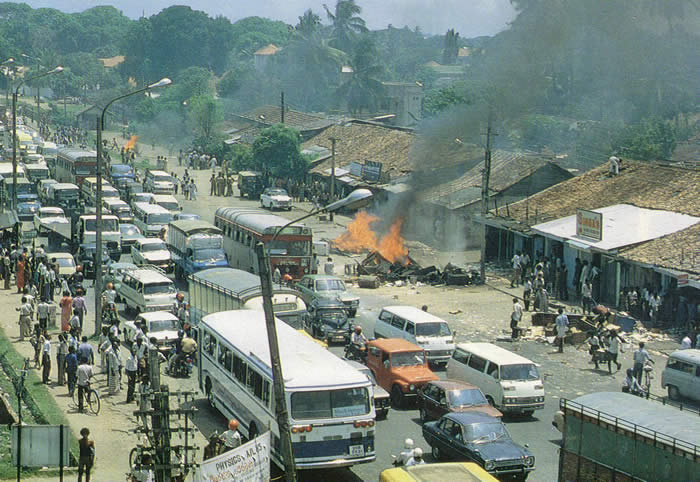
Every July, Sri Lanka pauses to remember one of the darkest chapters in its post-independence history. The anti-Tamil violence of July 1983, remembered as Black July, remains a defining moment that reshaped the country’s political, social and economic landscape. More than four decades later, the memories remain painful, the consequences continue to influence national politics, and the lessons are still waiting to be fully learned.
The immediate trigger for the violence was the killing of thirteen Sri Lankan soldiers by the LTTE near Jaffna on 23 July 1983. What followed, however, was far more than an emotional public reaction. Numerous historical studies, commissions, journalists, diplomats and human rights organisations have documented allegations that the attacks on Tamil civilians were organised or facilitated in many areas and that the state failed to provide timely protection. Tamil-owned homes, factories, shops and businesses were systematically attacked, while thousands of innocent civilians became victims of mob violence.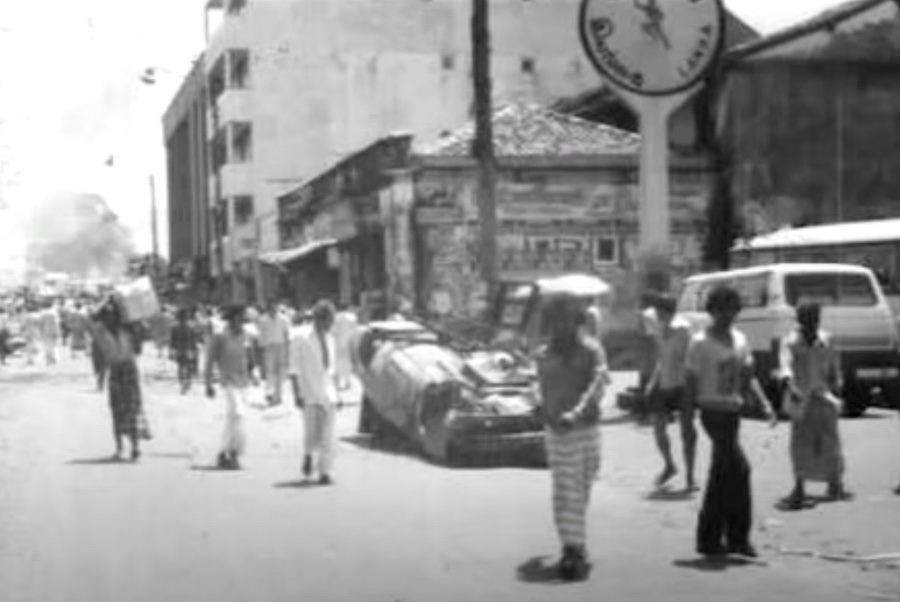
For many Tamils, Black July represented the collapse of confidence in the ability of the Sri Lankan state to protect all its citizens equally. Families who had lived peacefully in Colombo and other parts of the South for generations became refugees. Businesses built over decades disappeared within hours. Professionals and entrepreneurs who had contributed significantly to Sri Lanka’s economy were forced to leave.
The human tragedy has rightly received considerable attention, but the economic consequences deserve equal reflection. Thousands of businesses were destroyed and investor confidence deteriorated. Instead of becoming one of Asia’s emerging economic success stories during the 1980s and 1990s, Sri Lanka entered nearly three decades of civil war.
History often produces unexpected outcomes. Those who believed that driving Tamils out of the South would permanently weaken the community underestimated its resilience. Forced migration created one of the world’s most educated and economically successful diasporas. Today the global Tamil diaspora represents billions of dollars in investment potential and professional expertise, yet Sri Lanka has never fully utilised this resource.
Black July should therefore be remembered not only as a humanitarian catastrophe but also as a turning point that transformed Sri Lanka’s economic future. The country lost not merely property but generations of entrepreneurs and skilled professionals whose talents benefited other nations.
Seventeen Years After the War: Promises and Reality
When the civil war ended in 2009 there was hope that reconciliation and balanced regional development would finally become national priorities. Successive governments announced ambitious plans for the Northern and Eastern Provinces, rebuilding roads and public infrastructure. Yet many residents continue to ask whether the peace dividend has truly reached their region.
The current government promised regional economic hubs, industrial development, stronger connectivity, improvements to Kankesanthurai Harbour, Jaffna Airport and a modern cricket stadium. These proposals generated optimism because they symbolised confidence in the future of the North.
Implementation, however, has often been slower than expected, with some initiatives delayed or reportedly scaled back. Whatever the financial reasons, repeated postponements weaken public confidence. Communities begin to question whether equal regional development remains a genuine national priority.
Trust is itself an economic asset. Investors seek predictable policy, while young professionals and members of the diaspora invest where they see stability, fairness and long-term commitment. The future of the Northern Province is therefore not simply a regional question but a national economic question.
Northern Development Is National Development
Investment in the Northern and Eastern Provinces should be viewed as a national strategy rather than a regional concession. The North is Sri Lanka’s closest gateway to Southern India and offers significant opportunities in trade, logistics, tourism, fisheries, agriculture, renewable energy and technology.
A commercially active Kankesanthurai Harbour and stronger connectivity through Jaffna Airport could stimulate exports, tourism and business investment. Combined with industrial development and innovation, these projects could create employment and diversify the national economy.
The global Tamil diaspora remains another underutilised national asset. Many overseas Tamils possess capital, expertise and international business networks. With transparent governance and policy consistency, diaspora investment could become an important driver of long-term growth.
Balanced regional development benefits every province. When one region prospers, the entire country becomes more resilient.
The Future Cannot Be Built on Broken Promises
As Sri Lanka reflects on Black July and the years since the war ended, it faces an important choice. Economic recovery depends not only on fiscal reform but also on strong institutions, investor confidence, equal opportunity and national cohesion.
The development of the Northern and Eastern Provinces should be guided by national economic priorities rather than political geography. Governments should communicate openly about difficult financial decisions while maintaining long-term commitments that build confidence.
Black July reminds us that exclusion and mistrust carry lasting human and economic costs. Sri Lanka possesses enormous strengths: its strategic location, educated population, global diaspora and natural resources. Unlocking these advantages requires inclusive governance, balanced development and equal opportunity for all communities.
Whether Sri Lanka avoids another economic crisis will depend on many factors, but sustainable prosperity is more likely when every citizen believes they have an equal stake in the nation’s future. The choice belongs to Sri Lanka itself.
Ajith / July 4, 2026
“Whether Sri Lanka avoids another economic crisis will depend on many factors, but sustainable prosperity is more likely when every citizen believes they have an equal stake in the nation’s future. The choice belongs to Sri Lanka itself.”
1958 Massacre of 1958, 1977 Brutal massacre of Anuradapura, 1981 burning of Jaffna library and 1983 massacre of Tamils are different dark face of Buddhist Sinhalese Sri Lanka politics. The only people who benefitted from this dark face are few political families and few Buddhist Monks.
Even after Bankruptcy, even after Buddhist Sinhalese suffered the impact of Bankruptcy, if you don’t realise that power sharing with Tamil speaking people in a devolved system is the only way to come out of the political and economic crisis.
/
SJ / July 5, 2026
“1977 Brutal massacre of Anuradapura,”
I thought that the Brutal massacre of Anuradapura was in 1984 some time, carried out by a Cyanide Brigade.
/
Ajith / July 6, 2026
“I thought that the Brutal massacre of Anuradapura was in 1984 some time, carried out by a Cyanide Brigade.”
I know that your memory only limited to Cyanide Brigade but you cannot hide the truth about the massacre of Tamils by your Sinhalese governments. Your venom is well known truth.
/
SJ / July 6, 2026
We are talking of massacres. Are we not?
Was there a massacre in Anuradhapura in 1977?
Assaults in Anuradhapura initiated the violence of 1977. Killings happened mostly around Colombo.
I can appreciate your trouble in accepting hard truths.
But truths do not need anybody’s approval.
/
Ajith / July 7, 2026
What is it Butcher? Cannot remember about butchering tamil passengers?
Among 1500 people arrested were several known Sinhalese extremists, accused of instigating violence against Tamils.
Edmund Samarakkody in Workers Vanguard reported:
The outbreak in mid-August (1977) of the anti-Tamil pogrom (the third such outbreak in two decades) has brought out the reality that the Tamil minority problem in Sri Lanka has remained unresolved now for nearly half a century, leading to the emergence of a separatist movement among the Tamils. As on previous occasions, what took place recently was not Sinhalese-Tamil riots, but an anti-Tamil pogrom
The August 1977 anti-Tamil pogrom in Sri Lanka, which began in the northern city of Jaffna, quickly spread southward after Sinhalese mobs violently attacked the Jaffna-Colombo and Colombo-Jaffna night mail trains during scheduled stops at the Anuradhapura railway station.
/
SJ / July 7, 2026
“The August 1977 anti-Tamil pogrom in Sri Lanka, which began in the northern city of Jaffna”
History rewritten with frills, tassels and sequins!
/
Anpu / July 8, 2026
What about you writing the history without any frills?
Page 114 https://thaiveedu.com/pdf/2026/July.pdf
This is about you (online translation) “Prof. Sivasekaram occupies a unique place in the contemporary Tamil intellectual world. . His multi-faceted contribution as an educationist, literary critic, poet, translator and social analyst has had a significant impact on the Eelam context and the global Tamil arena. He was widely versed in the fields of literature, politics, culture and science and had a tradition of Marxist thought which approached any debate logically and logically without being emotional. His writings span a wide range of subjects, including poetry, short stories, plays, political columns and children’s literature. Stutter resistance is also the theme. Himself a Narrow down to narrow regional or ethnic identity His thoughts; Humanity, Equality, Enlightenment towards social justice and democratic values They emphasize the path.”
/
SJ / July 7, 2026
“What is it Butcher?”
Your butcher is dead along with his companions.
/
Naman / July 5, 2026
Timely article to remind everyone concerned with the WELL BEING of our Motherland that the month of July has come for us to remind us of the carnage.
The majority race still thinks that the ECONOMY of country could be resolved without solving the ETHNIC and RELIGIOUS DIVIDES. This makes the Tamil Speaking Citizens(TSC) very sad indeed. The REAL RECONCILIATION hasn’t taken place yet in SL. Truths have to come out before the reconciliation
/
Naman / July 5, 2026
For the TAMIL Speaking Citizens (TSC), it is important to keep the current Government in power in spite of the slow process of reconciliation.
They do need a NEW Constitution that protects their interests. Any type of election in our country should be delayed for at least two years or so
/
nimal fernando / July 5, 2026
We have come a long way ……. have the wounds healed?
–
I don’t know, I wasn’t there, but my family knows a lady who was very young first-year intern at the Ragama hospital at the time …… she witnessed a Tamil man pulled out of a train by a mob and burned alive at the Ragama station.
–
Later, Tamil people that were travelling in the train, who were cut and burned, were brought to the Ragama hospital. The Tamils were kept in a separate ward as the Sinhalese were trying to get to them.
–
A Tamil man, whose throat was cut from ear to ear, was begging her to save his life as he had small children back home.
–
She is still traumatised by what she witnessed.
–
–
People of all sides …… pause a moment to think …… if it’s worth it …… sometimes mindlessly you spread hatred.
/
Ajith / July 6, 2026
“We have come a long way ……. have the wounds healed?”
We have come a long way from 1948 to 2026. The answer to your question is a Big NO. Still it continues. In 2026, You found over 400 dead bodies in Chemmani, North. A large number of People those who handed over their love ones still looking for their loved once.
/
SJ / July 6, 2026
The missing persons issue has been a serious issue for long.
Sadly, Tamil nationalists had not done their homework in listing missing persons.
BTW
I suppose that the “large number of People those who handed over their love ones” to the LTTE have given up.
Did they hand over the kids or were the kids snatched before their eyes?
/
Anpu / July 7, 2026
“Sadly, Tamil nationalists had not done their homework in listing missing persons” – https://lkdd.itjpsl.com/ – naming Sri Lanka’s Dead and Disappeared
/
Nathan / July 7, 2026
nimal fernando, You are totally honest and truthful. For how long should we all suffer before members of the majority community rise up to your level of sincerity?
/
SJ / July 5, 2026
“Black July & Sri Lanka’s Unfinished Future”
Can anything have a finished future?
/
Jit / July 6, 2026
Dont tease for the language SJ 😂
/
SJ / July 6, 2026
J
The paradox was too provocative.
/
Jit / July 7, 2026
I would say…..hmmm….Apocryphal 🤣
/
SJ / July 7, 2026
I would no go that far.
It was just the amusing paradoxical phrasing.
/
Lester / July 7, 2026
“Forced migration created one of the world’s most educated and economically successful diasporas. Today the global Tamil diaspora represents billions of dollars in investment potential and professional expertise, yet Sri Lanka has never fully utilised this resource.”
The Sri Lankan Government could have gone after the LTTE’s financial network. Although in the 1980’s and 1990’s, the available tools were limited.
It was the Tamil Diaspora that funded suicide terrorism for decades, to the tune of 10^6 USD/month. Thus, GOSL should have blacklisted all of these people (put the name in a database, cancel citizenship, and ban them from entering the country) and then seized their assets in the North and East. Forced deportations of anyone associated with the LTTE to third countries was another option. Look how easily Trump does it.
Also, I have mentioned, S Lanka needs to seek hundreds of billions in reparations from India through some global arbitrator. It was direct Indian intervention that prolonged the war unnecessarily.
/
Lester / July 8, 2026
“Forced migration created one of the world’s most educated and economically successful diasporas.”
Does the author have actual data to back up this claim? The SL diaspora are not represented disproportionately in S Valley, for example. Here is a lesson in arithmetic for the author:
AI Overview: Upper-caste Hindus, including Brahmins, make up less than 5% of India’s population, but hold over 25% of Indian-American jobs and dominate the tech workforce in Silicon Valley.
Also, the migration was not forced . It was voluntary. They could have simply relocated to the south of the country. Look at the fatality rate, 100K in 20 years is a good overestimate. That’s around 5K/year. The SL Tamil population actually increased between 1981 and 2011: https://en.wikipedia.org/wiki/Demographics_of_Sri_Lanka
What a genocide .
/
Nutcounter / July 8, 2026
Hey Lessie darling,
““Forced migration created one of the world’s most educated and economically successful diasporas.”
Does the author have actual data to back up this claim? “
Well, if you are an example, forced migration didn’t result in much education, and you’re still too poor to afford prosthetic nuts.
Can you tell us how many forced migrants had @@ each? That’s the key to the matter.
Xoxoxo
/
chiv / July 8, 2026
NC,
😅🤣😂😂🤣😅
/
Anpu / July 8, 2026
“History often produces unexpected outcomes. ”
What about this – a princess of Vanga mates with a lion, producing a son, Siṃhabāhu. Siṃhabāhu later commits parricide by killing his father (the lion) and incest by marrying his sister.
Should not schools start teaching real history?
/
Rohan25 / July 8, 2026
Analyst consensus directly links Sri Lanka’s failure to address the legacy of Black July to its 2022 economic collapse and ongoing structural crises.
1. Institutionalised impunity. Unaccountability: No officials or rioters faced prosecution, rendering successive state-led commissions ineffectual and eroding minority trust. This unaddressed violence established a pattern of impunity that enabled subsequent wartime atrocities through 2009. Unresolved demands for truth and justice remain central to the Tamil struggle and international human rights advocacy. 2. Majoritarianism over structural reform: Constitutional barriers: The 2022 Aragalaya movement’s demand for systemic change is unachievable without dismantling the Sinhala-Buddhist majoritarian frameworks of the 1972 and 1978 constitutions. Sustained refusal to devolve fiscal and administrative autonomy to provincial councils perpetuates ethnic polarization
3. Economic regression and wasted capital: Black July aborted Sri Lanka’s path toward becoming an open-market Asian economic powerhouse, initiating decades of costly civil war. Conflict generated severe infrastructure degradation and acute poverty, heavily concentrated in Northern and Eastern provinces. State hostility continues to alienate the global Tamil diaspora, blocking billions in potential investment, capital, and technical expertise
/
Rohan25 / July 8, 2026
Analyst consensus directly links Sri Lanka’s failure to address the legacy of Black July to its 2022 economic collapse and ongoing structural crises.
1. Institutionalised impunity. Unaccountability: No officials or rioters faced prosecution, rendering successive state-led commissions ineffectual and eroding minority trust. This unaddressed violence established a pattern of impunity that enabled subsequent wartime atrocities through 2009. Unresolved demands for truth and justice remain central to the Tamil struggle and international human rights advocacy. 2. Majoritarianism over structural reform: Constitutional barriers: The 2022 Aragalaya movement’s demand for systemic change is unachievable without dismantling the Sinhala-Buddhist majoritarian frameworks of the 1972 and 1978 constitutions. Sustained refusal to devolve fiscal and administrative autonomy to provincial councils perpetuates ethnic polarization.
/
Rohan25 / July 8, 2026
continued: 3. Economic regression and wasted capital: Black July aborted Sri Lanka’s path toward becoming an open-market Asian economic powerhouse, initiating decades of costly civil war. Conflict generated severe infrastructure degradation and acute poverty, heavily concentrated in Northern and Eastern provinces. State hostility continues to alienate the global Tamil diaspora, blocking billions in potential investment, capital, and technical expertise
/