

By Dinesh Dodamgoda –

Dinesh Dodamgoda
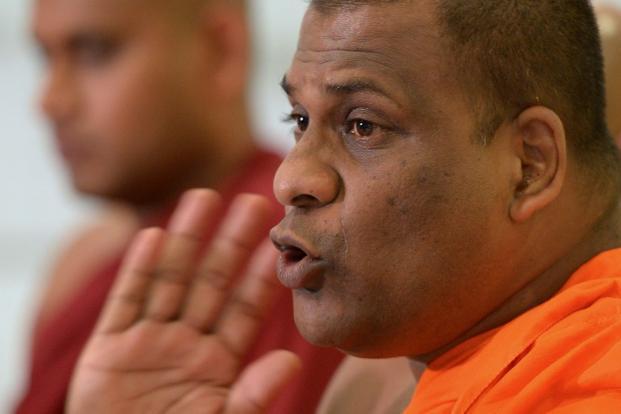
To understand the rapidly changing political landscape across the island, fuelled by the imprisonment of Ven. Galagoda Aththe Gnanasara Thero, his disrobing in prison, and the ‘Justice for the Robe’ monks’ marches from Kandy, it is necessary to look beyond conventional political analysis.
Decades ago, political philosopher Francis Fukuyama delved into a timeless idea from ancient Greece: ‘thymos’, the part of our human spirit that yearns for dignity and recognition. He explains how thymos branches into two strong political urges: ‘isothymia’, the desire to be regarded as an equal, and ‘megalothymia’, the wish to be seen as superior or exceptional.
In analysing Sri Lankan politics, a narrow focus on tax rates, inflation figures, or party manifestos is insufficient. Elections are shaped not only by economic conditions but also by powerful emotions, historical pride, and competing demands for respect and recognition.
In Sri Lanka today, this framework helps explain why the removal of a monk’s robe behind prison walls triggered an unexpected political upheaval. It also raises the question of whether traditional majoritarian power holders can harness this anger to regain influence in the forthcoming elections.
The spark: a symbol under fire
The immediate controversy arose when prison authorities applied regulations requiring a convicted popular monk, in a contempt of court case, to wear standard prison attire rather than religious robes. From the perspective of strict legal reform, this was simply an equal application of the rule of law: no citizen, regardless of status, is above prison regulations.
For many ordinary citizens within the Sinhala-Buddhist mainstream, however, the decision was not viewed as a neutral administrative act. It was experienced as a profound public insult to a sacred symbol at the heart of the community’s cultural and spiritual identity.
When a community believes its collective dignity has been wounded or disregarded, a powerful psychological defence can emerge. The marches, protests, and signature campaigns led by monks illustrate what can happen when a majority community feels that its identity is under threat. Nationalist leaders and traditional power structures may have skilfully capitalised on this sensitivity, portraying the state’s actions as part of a gradual assault on the nation’s cherished heritage.
The clash of two desires
This competition has created a political tug-of-war across the country.
On one hand, as portrayed, a reform-minded NPP-led political culture aims to build a modern, secular civic state rooted in isothymia—the shared commitment to equal laws, transparent institutions, and a firm fight against impunity.
On the other hand, the politics of cultural grievance draws on megalothymia. It fuels a populist movement that unites people behind leaders who promise to restore lost pride and defend traditional ways of life against perceived secular or cosmopolitan threats. In doing so, it gives supporters a powerful sense of unity and purpose.
Historically, political dynasties and nationalist movements have harnessed such resentment to secure sweeping electoral victories. When people believe that elites are devaluing their heritage, the rallying cry to ‘protect the nation, religion, and race’ can become an exceptionally powerful electoral tool.
Will the traditionalists regain influence?
Will the traditional Sinhala-Buddhist-led majoritarian power holders regain influence because of this wave? The outcome depends on how political actors manage public sentiment, inspiring hope that strategic actions can shape the future.
If the NPP-led government acts and communicates with greater sensitivity towards the cultural mainstream while continuing to apply the law fairly, it may prevent the politics of resentment from taking deeper root. Voters who feel respected and understood are less likely to be persuaded by promises of nationalist restoration, which can intensify social division. Yet the distrust between the NPP government and traditional Sinhala-Buddhist voters, who constitute the electoral majority, may already be too deep to repair easily.
Many Sri Lankans feel emotionally drained and frustrated because NPP leaders rely more on slogans than on credible economic policies to reduce inflation and address other economic issues. This shared fatigue underscores the importance of seeking genuine political change—not only a nationalist revival, but a focus on effective economic solutions that truly make a difference.
The forthcoming decision
The protests and monks’ marches from Kandy heading towards Colombo are about more than just disagreements over prison attire. They highlight a long-standing tension between two different visions of society: one led by the NPP, which seeks to create an illiberal-democratic order claiming to support equal justice for all, and another motivated by majoritarian politics, eager to uphold the traditional dominance and recognition of the majority culture.
This contrast really brings out the emotional depth of these protests, showing that they go beyond surface issues—touching on the fundamental values and identities of the community. So, whether traditional political forces regain power in the next elections depends on which side better resonates with the national mood.
When political leaders genuinely connect with people’s shared sense of pride and recognition, they foster a warm feeling of loyalty among voters. Meanwhile, creating a civic order based on secular justice—along with a fresh political institutional framework—could help soothe the emotionally charged politics and slow down Sri Lanka’s ongoing cycle of upheaval. Until such a decision is made, the ‘robe’ and ‘thymos’ will keep shaping the island’s ‘elections’ for the foreseeable future!
*Dinesh Dodamgoda, a former MP and Attorney-at-Law, holds an MSc in Global Security from Cranfield University, UK. He has conducted research at Newcastle University and at the Centre for the Study of Terrorism and Political Violence at the University of St Andrews. He was also a Fulbright Scholar in US National Security at the University of Delaware
Roxie de Abrew / October 13, 2026
Hi Dinesh,
Thank you for your opinion. It is unique for a person of your stature, with many letters following your name, to be active in politics.
The JVP/NPP are a disaster driven by underlying anti-democratic and anti-social embedments in its fabric.
The youth, village folk, and middle class are the most affected by the JVP/NPP’s, for lack of a better word, ‘misrule’.
To summarise the JVP/NPP rule, I can say that they are ‘clueless’.
Unfortunately, the SL Political arena lacks a credible alternative. The ‘Son of RP’ is another ‘clueless’.
The Pohottuwa is in shambles.
The way things are moving, a Gen Z uprising similar to India’s Cockroach Janatha is in the offing.
I hope Kumara Gunaratnam and the Frontline Socialist Party rise to fill the vacuum.
/
DDD / October 14, 2026
We are experiencing identity politics and its effects; it’s a cycle. The country needs a new institutional framework, and new leaders with new perspectives will emerge.
/
Naman / October 13, 2026
“It was experienced as a profound public insult to a sacred symbol at the heart of the community’s cultural and spiritual identity.“
Making a person who had broken the LAW not to wear the ROBES was THE correct decision made in order to safeguard the DIGNITY of the Yellow ROBES. Wearing the ROBES the Buddhist clergies should not do things to harm human beings as well as the animal kingdom. The ill treatment of elephants etc is not an acceptable practice. The teachings by the clerics in the religious venues needed to be monitored by the state as well as by audiences. A Teacher in schools too need to be monitored as was pointed out by the Up-country Member of the Parliament Mr Thondaman very recently. Talking badly about the hard working estate workers is totally unacceptable.
/
DDD / October 14, 2026
We may not have a perfect society because ordinary human beings are not perfect. That is why society can progress.
Yet culture plays a decisive role in identity politics, with its own unique norms and rules of the game. Cultural symbols play a fundamental role in identity politics. The best thing to do is to learn the rules and play the game.
/
Naman / October 13, 2026
The PROGRESSIVES in SL do not like some of the media giving prominence to the past corrupt politicians and to the Academic people associated with them. These media are trying their best to whip up the public to agitate against the current government which I believe is doing its best to have law and order established. We the progressives do not want any kind of Elections till 2029.
Let’s catch the people with black money and THOSE who have already performed the money laundering
/
DDD / October 14, 2026
Any government that wants to win people’s hearts and minds needs to understand the sociocultural foundations of political legitimacy. Legitimacy underpins authority, and when it fades, authority is challenged.
I think the current government, which is explicitly against majoritarianism, is losing legitimacy faster than expected because it hurts the majority’s feelings. This cycle is observable in identity politics.
/
leelagemalli / October 13, 2026
Whatever is said and done, Sri Lanka’s education system, like several others, remains heavily dependent on English, a legacy of British colonial rule until 1948. Successive governments have failed to give equal priority to all three languages. Former rebels, now in power, have also prevented meaningful progress, driven by narrow tribal instincts. Today, the government struggles to produce cabinet ministers capable of handling foreign affairs effectively in English.
Tbc
/
leelagemalli / October 13, 2026
cont.
The President, often branded the country’s biggest liar, continues making evasive statements to please public audiences. He claims that the United States and other nations are firmly under his government’s control, yet reports suggest Washington has warned Sri Lanka against supplying Iranian ships near Galle with food and medicine, threatening possible trade sanctions. Meanwhile, the government faces growing scrutiny over Buddhist monks’ protests following the removal of the robe of a convicted monk before his re-imprisonment. Although experts question the legality of the removal, critics argue that political calculations and attempts to win minority support influenced the decision. Public anger and disillusionment are growing, raising serious questions about how long the government can retain popular support through rhetoric and questionable claims.
/
DDD / October 14, 2026
Some issues are purely legal, while others are political. Culture plays a decisive role in identity politics. Public perception is shaped not only through legal conceptual lenses; culture is often more powerful than law in shaping political perceptions.
Internationally, this division is especially evident in the formation of new states: forming new states is more of a political issue than an issue of international law. So, we need to understand that culture is more powerful than legality in shaping public perceptions.
Yet the NPP/JVP grasped this reality poorly. In politics, what matters is what people believe, not what is right or wrong.
/
Naman / October 13, 2026
Has there been any studies on how the voting public were deceived in the 2019 Presidential election to vote for a Rajapaksa? Was his victory worth sacrificing so many worshippers and injuring them?
Why have not the GoSL gone after the ORIGINATORS of the 21/04/19 events?
/
DDD / October 14, 2026
Power politics may be
/
old codger / October 13, 2026
“Will the traditional Sinhala-Buddhist-led majoritarian power holders regain influence because of this wave?”
That is what I am afraid of. As the author says, voters don’t vote for high GDP or export growth. They are driven by primal emotions, including religion.
These emotions require no justification. Consider that Atamasthanadhipathi, and now the monk in Melbourne jailed for paedophilia. Both still have crowds of followers.
Politicians who know how to exploit these feelings come out on top. The Rajapaksas, Weerawansas, Dilith Jayaweeras etc are experts who make a bit on the side as well.
The JVP/NPP is stuck in inflexible principles which bring them into conflict with the real rulers of the country, the bunch of fossils in Kandy.
The government is in an undeniable position. What will it do if some Mahanayaka commits contempt of court? These issues of who is boss should have been settled two years ago when AKD was on a roll. Instead, they went after random drug dealers and politicians, even spending 25 million to investigate Ranil’s 16 million.
It will be a tragedy if this clowning results in the return of the Rajapaksas and their acolytes.
/
DDD / October 14, 2026
We have identity politics based on ethnicity and religion. It also uses cultural symbols to harness public support.
When cultural identities actively shape political perceptions, they can create a powerful emotional drive that goes beyond rationality and builds a cumulative majority against a government.
That’s what we see in Sri Lanka. It’s a cycle that can be labelled as ‘the politics of resentment’.
If this NPP/JVP government is not capable of winning the majority back, the probability is that it will lose legitimacy and ultimately authority.
/
CChampa / October 13, 2026
Revocation of Venerable Galagodaaththe Gnanasara Thero’s previous Presidential Pardon and re-imprisoning him is a religiously and ethnically sensitive issue as he was punished for interrupting a court hearing to speak in support of military intelligence officials which the court regarded as a contempt of court.
The court targeting Venerable Galagodaaththe Gnanasara Thero and punishing him more harshly than others who were previously punished for contempt of court is a direct abuse of power, a violation of principles of justice and equality and a civil rights violation of the monk.
The stand taken by the court on Venerable Galagodaaththe Gnanasara Thero is unjustifiable, malicious and discriminatory.
Sri Lanka should introduce a new Independent Judicial Conduct Commission to investigate complaints against judges who demonstrate bias, malice and prejudice when hearing cases and suspend or remove them from the bench if found guilty.
/
DDD / October 14, 2026
Yes! It’s not democratic or liberal.
We must change the contempt-of-court laws—not because of this monk, but for the sake of a healthy liberal democracy.
/
CChampa / October 14, 2026
Every citizen has a right to expression and opinion. Every government elected by people is under public scrutiny, and therefore, people have a right to criticize the government and all elected politicians who live on public coffers. If you cannot take public criticism or even a simple cartoon, do not enter politics.
This cartoon on “Ada” online newspaper is covered by something else and therefore, not visible on the first page
.
https://www.ada.lk/cartoon/2026-10-12/14-424611
.
Look at how Sinhala-medium Youtubers spread hatred against Venerable Galagodaaththe Gnanasara Thero and other Buddhist monks on social media. They were given wide publicity on “Infolanka Newsroom” until yesterday. If the ICCPR Act (No. 56 of 2007, Section 3(1)) applies to every citizen equally, all those Sinhala-medium Youtubers should be arrested or even reported to YouTube about their channels for advocating religious hatred that lead to discrimination and hostility against Buddhist monks. Why do they never spread the same hatred towards other religious priests? Because, they know if they do that they will be arrested instantly, but they are free to spread hatred against Buddhist monks without any repercussions.
/