


By Jehan Perera –
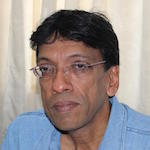
Jehan Perera
It appears that President Anura Kumara Dissanayake was a reluctant participant at the 16th National War Heroes Commemoration event. The government announced he would attend the event after strong criticism from sections of the opposition and social media. The printed invitations to the event did not contain the president’s name. The government explained this was due to a miscommunication and the president always intended to attend the commemoration. According to the constitution the president is commander-in-chief of the armed forces and the president usually takes on the office of Minister of Defense, with President Dissanayake also following this tradition. As the commander-in-chief of the armed forces and Minister of Defense, his presence was both symbolic and necessary.
Apart from the criticism that his decision to attend the commemoration was a last minute one, the president’s speech on the occasion was also subjected to criticism. This was on account of his reference to the fallen soldiers not as “war heroes” but rather as soldiers. Popular usage in the country has to refer to military personnel who lost their lives in the war as war heroes. On the other side of the divide is the term “martyr” used by Tamil people to refer to those members of the LTTE who lost their lives in the war. The president’s preference to use the neutral term of “soldiers” rather than “war heroes” would be due to his recognition of the great divide he presides over.
The president’s choice of language reflects a broader attempt to move away from divisive rhetoric and towards a more inclusive national identity. He faces a political challenge in this for which he needs to be supported. The nationalist opposition and social media have been harsh in their criticisms of the president. They claim that President Dissanayake has “reduced the war heroes to ordinary soldiers”. However, victories in civil wars are not, and ought not to be, celebrated because they mark the defeat of fellow citizens, deepen national wounds, and risk glorifying violence over reconciliation, as seen in the United States and Spain, where attempts to commemorate one side’s victory has prolonged division rather than fostered unity.
Healing Narrative
Speaking at the commemoration ceremony, the president delivered a message in which his focus was the cost of the war. He honoured the sacrifice of soldiers and civilians who suffered or died during the war. He also acknowledged the deep pain and loss experienced across all communities. He made the point that “Not only in the South, but also in the North, people hold up photographs of their husbands and children on the streets and mourn their deaths. To every parent, their child is precious. So, as a country that has faced such a massive tragedy, our responsibility today is to prevent such a war from happening again in our country.” In doing so he was expressing his conviction that this was a civil war, fought within the country, by the people of the country.
By avoiding terms that could alienate minority communities, the President signaled a desire to foster a collective memory that encompasses all victims of the conflict, regardless of their background. President Dissanayake’s speech signaled an attempt to shift the national discourse from one of division to one of unity and healing. In his speech, the president valued the sacrifice of the Sri Lankan security forces. He said “Many soldiers sacrificed their lives to bring this war to a conclusion. Their names etched on this memorial stand testament to their sacrifice. Many others were left permanently disabled, while thousands of families still grieve the loss of loved ones. As a nation, we owe them an eternal debt.”
But the president also pointed out that “war is synonymous with tragedy and devastation. Those who fought did not seek war for its own sake; they sought peace. Today, we witness the remnants of this devastation, children orphaned, parents bereaved and spouses widowed. Across our land, from North to South, grief knows no ethnicity.” It can be seen that President Dissanayake was attempting to create a new narrative and one that would take the country in the direction of “not merely a remembrance of the war’s conclusion but also a pledge to unite all communities, Sinhala, Tamil, Muslim, Burgher and Malay, in building a nation rooted in brotherhood and harmony, rather than allowing divisions to reignite.”
Narratives are ways of conveying messages that get entrenched in the consciousness of people, that appeal to their sentiments, and which can be mobilized for purposes of war and destruction. This can be seen in conflicts elsewhere in the world where one-sided narratives are being used to justify acts of violence against the other. In Sri Lanka too, the narratives of ancient enmities and more recent injustices have been used to demonise the other for political benefit. The narrative of President Dissanayake’s predecessor, former president Gotabaya Rajapaksa at the presidential election campaign of 2019 was the annihilation of the enemy and the victory of the Sinhala nation who would henceforth be given their rightful place. On May 20, the day after the government’s commemoration, the Rajapaksa family led another commemoration.
New Narrative
A new narrative for Sri Lanka must begin with the recognition that the island is home to multiple communities with distinct identities, histories, and aspirations. It must acknowledge the suffering caused by war and majoritarian politics, and chart a future based on power-sharing, equality before the law, and the right of all peoples to participate fully in national life. True reconciliation means accepting diversity not as a threat, but as the foundation of a united and peaceful country where every community has a voice, every identity a home, and every citizen a stake in peace.
This new narrative will open space for dialogue and reconciliation, as seen in South Africa’s post-apartheid truth-telling or Northern Ireland’s power-sharing process. In Sri Lanka too, a new narrative rooted in shared humanity could lay the foundation for lasting peace. President Dissanayake needs to add the concept of inter-ethnic power sharing and devolution of power to become the latest in a line of enlightened national leaders who tried to reframe the ethnic conflict from one of existential threat, terrorism and war to one of coexistence and power sharing. The first such leader was Prime Minister SWRD Bandaranaike in 1957 when he negotiated the Bandaranaike-Chelvanayakam Pact which laid the framework for all succeeding efforts at a political solution, though none has succeeded so far.
Former president Ranil Wickremesinghe, prime minister in 2015, was the last of the great champions of a new narrative when he led the government to co-sponsor Resolution 30/1 of the UN Human Rights Council which accepted the need for both truth and accountability along with reparations and a political solution to the ethnic conflict. This is the fallen baton that President Dissanayake needs to pick up though he and his government are new to power and appear to be wary of rushing to take up emotion-generating ethnic conflict. His approach to the 16th National War Heroes Commemoration reflects a shift towards a more inclusive and healing national narrative.
The current political context offers a unique opportunity to implement meaningful reforms. Where the ethnic conflict is concerned, this is the best time for the government to take decisive action with regard to finding solutions. The extremists and nationalists who held sway in the past are discredited due to their close involvement with the corruption and mismanagement that led to the downfall of the country’s economy in 2022. They do not have the trust of the people. The government has a 2/3 majority in parliament, and the continuing trust of most people, which enables it to do what is necessary for sustainable peace and reconciliation.
Nathan / May 27, 2025
… Those who fought did not seek war for its own sake; they sought peace.
I don’t know whose song this is, but, Jehan Perera is singing it well!
There were better ways to usher in peace. Weren’t there?
/
Nathan / May 27, 2025
… which enables it to do what is necessary for sustainable peace and reconciliation.
Jehan Perera, Come straight. Spell it out.
What is necessary for sustainable peace and reconciliation?
.
Everyone knows what is best for peace and reconciliation.
Each is trying to decide what is second best!
/
old codger / May 27, 2025
Nathan,
Te best chance for peace was when CBK was still an idealist in her first term. But her efforts were stymied by the UNP which was then the champion of Sinhala-Buddhism. And let’s not forget VP, to whom she lost an eye. In her second term she was in bed with the JVP and could hardly be a peacenik. Such is politics.
/
Nathan / May 28, 2025
Thanks old codger.
I do not hesitate to disagree.
She was amenable; however, not steadfast.
/
leelagemalli / May 29, 2025
Hello Mr Nathan,
You and many others might not be aware of this yet. This relates to how the media unjustly has the power to silence certain leaders (e.g CBK and RW), preventing them from ever speaking again.
Although I am not in favor of any particular party, I always give credit to those who do good work. Lanken media, however, cannot be compared anywhere, not even with VOX or similar TV channels. The majority of them spread massive lies about everything, which are only surpassed by AKD’s massive lies and exaggerations.
Actually, the public’s side should be represented by the nation’s mainstream media. But in Sri Lanka, the situation is reversed, and people are not accurately viewed because of their complete ignorance. The majority of people are fed false information. Nowadays, people read fewer or no news articles, and they primarily rely on social media and television for information. As a result, they could be misled by any lie that is broadcast.
/
SJ / May 28, 2025
The affair with the JVP lasted one year plus I think. After which they were at each other’s throats.
The JVP then got into bed with MR and got truly screwed up.
/
leelagemalli / May 29, 2025
Mr SJ,
Yes, that demonstrated the character of JVPrs and their pragmatic politics, and everyone with some knowledge would have to concur with you in this regard.
They are not very good at getting along with other people. As a result, their efforts to form a coalition for LG councils would undoubtedly fail. In fact, this is the reason they waited sixty years to seize power. The power they currently hold, though, is linked to the fact that they have no other choices and that people are so hostile toward those who embezzled state funds in the past. However, as incumbent politics deteriorate daily, the Rajapkshe factor is resurfacing more these days.
/
Ajith / May 27, 2025
“A new narrative for Sri Lanka must begin with the recognition that the island is home to multiple communities with distinct identities, histories, and aspirations. It must acknowledge the suffering caused by war and majoritarian politics, and chart a future based on power-sharing, equality before the law, and the right of all peoples to participate fully in national life.”
Before British unite the different kingdoms into one for their easy administration of this island. The population distribution in the North East Region in 1881 census clearly proves that 95% of the Population was Tamil speaking people. So, the majority of the NE region was Tamil speaking People. It was recognised by the leaders of the Political parties and they all agreed to make devolve the power to this region. There is no reason for AKD or any other Leaders to refuse this truth. Tamil speaking people are not against to Sinhalese or Buddhism. All the riots that happened in this island are against to Tamils by Sinhalese with the alliance of Government. AKD/NPP also in the war with the Governments and NPP also had war with the Governments and they also made war crimes in the past. AKD/NPP should accept the wrongs of the past if they have really changed from the past.
/
Ajith / May 27, 2025
“The current political context offers a unique opportunity to implement meaningful reforms. Where the ethnic conflict is concerned, this is the best time for the government to take decisive action with regard to finding solutions.”
Former President Mahinda Rajapaksa had his government had an opportunity to find the solutions when he promised to honour the implementation of 13th Plus when the war come to an end in 2009. But his greediness of power, family and money made him to think differently. Power greediness made the country more towards racism, corruption and bankruptcy. This lead people to realise about the truth behind racism and opportunism of the politics. The clear mandate is not for to continue with racism and wrong interpretation of Buddism. They understood that our politicians misused Buddhism to divide the people. This is an opportunity to make change the system from unitary to devolved federalism or sharing power.
/
paragon / May 28, 2025
AKD HEART TO HEART KNOWS THE PLIGHT OF TAMILS AND HAVE GOOD INTENTION TO SOLVE IT TO SOME EXTENT.HOWEVER AS IN THE PAST HISTORY OF TRYING TO SOLVE THIS LONG STANDING PROBLEM WHICH IS OVER 75 YEARS OLD HE(AKD)IS ALSO PRISONER IN THE HAND OF JVP AND TILWIN SILVA AND ALSO THE BUDIST KINGDOM CHIEFS IN KANDY.AKD MUST DECIDE BETWEEN FUTURE OF HIS PARTY OR HIS REAL FEELING OF TAMILS PROBLEM-PEACE OR PIECE OF LAND(NORTH-EAST)
/