


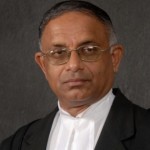
Dr. Jayampathy Wickramaratne PC
For an act to come within the definition of terrorism, it must involve ‘terror’ or a ‘state of intense or overwhelming fear’ or be committed to achieve an objective of an individual or organisation that uses ‘terror’ or a ‘state of intense or overwhelming fear’ to realise its aims. The dangers of an overly broad definition go beyond conviction and increased punishment. Such definitions allow the State to harass individuals, especially critics of the government and civil society activists, and detain them for lengthy periods, thereby suppressing and discouraging criticism. Our legal literature is replete with Supreme Court judgments and statements of the Human Rights Commission on the misuse of special legislation.
Following its electoral promise to abolish the Prevention of Terrorism Act (PTA), the government has appointed a committee led by Rienzi Arsekularatne, Senior President’s Counsel, to draft a new law to replace it. Mr Arsekularatne has decades of experience in criminal justice, having worked as both a prosecutor and defence counsel. He represented many activists unfairly accused of crimes during the Aragalaya. As a legal advisor to the Catholic Church, he has a good understanding of the rights of victims and their families. He will thus be able to consider issues from the perspectives of the State, criminal justice, human rights, suspects, accused, activists, and victims.
Misuse of special laws
The PTA does not create an offence of “terrorism”; instead, it provides for special provisions regarding offences, most of which are already covered by law. In 2018, the Yahapalanaya government proposed a Counter-Terrorism Act (CTA) that sought to define terrorism. Certain acts, not necessarily involving the use of violence, let alone terror, would amount to terrorism. When the Bill was taken up for discussion by the Sectoral Committee on Defence, the writer, then a Member of Parliament of the ruling coalition, argued that many acts committed during the famous Hartal of 1953 would have come within the proposed offence and that Opposition politicians such as SWRD Bandaranaike, NM Perera, Philip Gunawardena and Colvin R De Silva would have gone to jail as “terrorists”. The Bill was withdrawn in the face of local as well as international concern.
One can say the same of acts committed during the Aragalaya on Galle Face. Even if some acts were not entirely peaceful, they were by no means acts of terrorism. Events involving violence in the aftermath of attacks on protestors, including the unfortunate killing of a Member of Parliament and the torching of houses of politicians, were dealt with under ordinary law, not under the PTA.
Protests and strikes are not tea parties. They may lead to tension and even violence. Strikes are intended to paralyse the institution or sector concerned so that a service cannot be provided. A strike in the health sector, causing a serious risk to the health and safety of the public, or a protest that may cause a serious risk to public safety, is not terrorism. Not every severe damage to a place of public use or governmental facility should be labelled terrorism. Such acts can be dealt with under the normal law.
The dangers of an overly broad definition go beyond conviction and increased punishment. Special laws on terrorism allow deviations from standard laws in areas such as preventive detention, arrest, administrative detention, restrictions on judicial decisions regarding bail, lengthy pre-trial detention, the use of confessions, superadded punishments such as confiscation of property and cancellation of professional licences, banning organisations, and restrictions on publications, among others. The misuse of such laws is not uncommon.
Drastic legislation, such as the PTA and emergency regulations, although intended to be used to curb intense violence and deal with emergencies, has been exploited to suppress political opposition. In the aftermath of the presidential election of 1982, several opposition politicians, prominent among them Vijaya Kumaratunga, were taken in for preventive detention under emergency regulations allegedly to prevent “a Naxalite-type coup”. They were released only after the completion of the notorious referendum, which extended the term of Parliament by six years. None of them was charged in court. It is evident that they were detained not to prevent them from attempting to overthrow the government, but to prevent them from campaigning against it. Even the ICCPR Act has been misused. Our legal literature is replete with Supreme Court judgments and statements of the Human Rights Commission on the misuse of special legislation. The JVP, the main party of the government, has been at the receiving end of such misuse for decades.
The writer argues that, as a fundamental principle, for an act to come within the definition of terrorism, it must either involve ‘terror’ or a ‘state of intense or overwhelming fear’ or be committed to achieve an objective of an individual or organisation that uses ‘terror’ or a ‘state of intense or overwhelming fear’ to realise its aims. This principle has been recognised internationally even subsequent to the 11 September 2001 (9/11) incidents.
Acts related to terrorism can occur without violence, such as when a member of an extremist organisation remotely sabotages an electronic, automated, or computerised system to achieve the organisation’s aim. However, if the same act is performed by, say, a whizz-kid without any connection to such an organisation, it would be illegal and should be punished, but not under a law on terrorism.
Principles to be followed in defining terrorism: International standards
The international community’s inability to agree on a definition of ‘terrorism’ has been a significant reason for the absence of a single multi-lateral treaty on terrorism. Yet, several treaties address issues involving the use of terror. Among them are those dealing with violence at airports and on aircraft, maritime navigation, crimes against internationally protected persons, hostages, bombings, nuclear terrorism and financing of terrorism. Sri Lanka is party to more than a dozen such treaties and has enacted domestic legislation to give effect to most of them.
In its resolution 1566 of October 2004, the UN Security Council used a wider phrase “criminal acts, including against civilians, committed with the intent to cause death or serious bodily injury, or taking of hostages, with the purpose to provoke a state of terror in the general public or in a group of persons or particular persons, intimidate a population or compel a government or an international organization to do or to abstain from doing any act” but restricted it to “offences within the scope of and as defined in the international conventions and protocols relating to terrorism.” As mentioned above, most such treaties are already part of our domestic law.
The UN General Assembly, in its resolution adopted on 8 December 2005 on “Measures to eliminate international terrorism” referred to “criminal acts intended or calculated to provoke a state of terror in the general public, a group of persons or particular persons for political purposes are in any circumstances unjustifiable, whatever the considerations of a political, philosophical, ideological, racial, ethnic, religious or other nature that may be invoked to justify them”.
The UN General Assembly reaffirmed this wording in January 2006 (Resolution 60/43), using the phrase “criminal acts intended or calculated to provoke a state of terror in the general public, a group of persons or particular persons for political purposes.”
Thus, there is consensus within the United Nations, which has as its members developed countries, developing countries and least developed countries, that the threshold for a possible general offence of terrorism is the provocation of a state of terror.
The Parliamentary Assembly of the Council of Europe has defined an act of terrorism to be “any offence committed by individuals or groups resorting to violence or threatening to use violence against a country, its institutions, its population in general or specific individuals which, being motivated by separatist aspirations, extremist ideological conceptions, fanaticism or irrational and subjective factors, is intended to create a climate of terror among official authorities, certain individuals or groups in society, or the general public.” (Recommendation 1426 of 1999).
Terrorism without terror? The need to avoid over-broad definitions
Overbroad definitions of terrorism allow the State to harass individuals, especially critics of the government and civil society activists, and detain them for lengthy periods, thereby suppressing and discouraging criticism.
In his 2023 report on ‘Activities of the United Nations system in implementing the United Nations Global Counter-Terrorism Strategy, the Secretary-General warned against over-broad definitions: “Vague and overly broad definitions of terrorism and related offences in domestic legislation are a recurrent concern, further compounded by a frequent lack of appropriate safeguards to prevent their unlawful or arbitrary implementation in counter-terrorism. Such laws are not only contrary to the principle of legality under international human rights law, but they often result in heavy-handed implementation, leading to ineffective and counterproductive counter-terrorism responses. … In some contexts, counter-terrorism laws and measures continue to be routinely misused to label civil society actors, including human rights defenders, as terrorists and to prosecute them for terrorism-related offences with a view to obstructing their work.”
Martin Scheinin, the Special Rapporteur on the promotion and protection of human rights and fundamental freedoms while countering terrorism, stated in his report (A/62/263, paragraph 66): “In the absence of a universally agreed definition of terrorist acts, some States have included in their national counter-terrorism legislation a broad range of acts which do not, in terms of severity, purpose or aim, reach the threshold of objectively being considered terrorist acts, or the threshold required for exclusion from refugee status. Such broad definitions have in many instances been used to suppress legitimate activities which fall within the ambit of the freedom of opinion, expression or association enshrined in the International Covenant on Civil and Political Rights.”
The UN Human Rights Committee (HRC), the treaty body of the International Covenant on Civil and Political Rights (ICCPR), commenting on the Spanish Penal Code stated: ‘The vaguely defined crime of collaboration [with terrorist organisations] runs the risk of being extended to include behaviour that does not relate to any kind of violent activity. If conduct is criminalized as support to terrorism, it must be clear which elements of such conduct make it a terrorist crime.’
On a Russian law on terrorism, the HRC stated: ‘[T]he State party should: (a) Adopt a narrower definition of crimes of terrorism limited to offences that can justifiably be equated with terrorism and its serious consequences, and ensure that the procedural guarantees established in the Covenant are fulfilled.’
Upon the HRC stating that the offence of ‘encouragement of terrorism’ has been defined in the original section 1 of the Terrorism Act 2006 of the United Kingdom in broad and vague terms, the Act was amended to conform to the HRC’s views.
The United Nations Office on Drugs and Crime (UNODC) is the custodian of United Nations standards and norms in crime prevention and criminal justice, with a mandate to assist Member States in reforming their criminal justice systems to ensure the practical application of these standards. The UNODC Handbook on Criminal Justice Responses to Terrorism is instructive. Regarding the definition of terrorist acts and terrorism-related crimes, the UNODC emphasises that the “criminalised conduct should be described in precise and unambiguous language that narrowly defines the punishable offence and distinguishes it from conduct that is either not punishable or is punishable by other penalties.” The handbook was prepared with the participation of experts from around the world, who worked for several months, and was finalised at a workshop in Vienna. The writer was privileged to be a member of the team.
The Council of the European Union Framework Decision on combating terrorism of 13 June 2002, after the 9/11 attacks calls upon Member States to declare as terrorist offences intentional acts ranging from attacks upon a person’s life which may cause death releasing of dangerous substances, or causing fires, floods or explosions endangering human life which, given their nature or context, may seriously damage a country or an international organisation where committed with the aim of seriously intimidating a population, or unduly compelling a Government or international organisation to perform or abstain from performing any act, or seriously destabilising or destroying the fundamental political, constitutional, economic or social structures of a country or an international organisation.
Article 421-1 of the French Penal Code on terrorism lists offences that would constitute acts of terrorism “where they are committed intentionally in connection with an individual or collective undertaking, the purpose of which is seriously to disturb public order through intimidation or terror.”
Sri Lanka: Anti-Terrorism Bill, 2023
Examining the Anti-Terrorism Bill, 2023, a five-member Bench of our Supreme Court acknowledged that a broad and open definition of terrorism confers a greater power on the Police than a narrow one. To bring the law more in line with international law, acts that constitute offences under the international conventions on terrorism to which Sri Lanka is a party must be added as wrongful acts under the proposed law.
The Court referred to the following definition of terrorism in the Draft Comprehensive Convention on International Terrorism, which was considered by the Sixth Committee of the UN General Assembly, and stated that, in its view, it offers a useful yardstick to measure the domestic definition.
“Any person commits an offence within the meaning of this Convention if that person, by any means, unlawfully and intentionally, causes: (a) Death or serious bodily injury to any person; or (b) Serious damage to public or private property, including a place of public use, a State or government facility, a public transportation system, an infrastructure facility or the environment; or (c) Damage to property, places, facilities, or systems referred to in paragraph1 (b) of this article, resulting or likely to result in major economic loss, when the purpose of the conduct, by its nature or context, is to intimidate a population, or to compel a Government or an international organization to do or abstain from doing any act.”
With respect, it should be noted that, as the title of the document clearly indicates, the definition is from a draft specifically concerning the definition of international terrorism and that even the United Nations was unable to reach an agreement on it. Further, Draft Article 3 of the same makes it clear that the definition should not be applied to domestic terrorism: “The present Convention shall not apply where the offence is committed within a single State, the alleged offender and the victims are nationals of that State, the alleged offender is found in the territory of that State and no other State has a basis under article 7, paragraph 1 or 2, of the present Convention to exercise jurisdiction, except that the provisions of articles 9 and 13 to 17 of the present Convention shall, as appropriate, apply in those cases.” (UN document A/59/894).
It is worth noting that our own Dr. Rohan Perera, President’s Counsel and senior diplomat, chaired the UN Ad-hoc Committee on Measures to Eliminate International Terrorism, established by UNGA Resolution 51/210, which negotiated the Comprehensive Convention on International Terrorism. One hopes that the Arsakularatne Committee deliberating on a new law will consult Dr. Perera.
The Supreme Court referred to definitions of terrorism found in the laws of Australia, New Zealand, the United Kingdom and Canada. The Australian definition exempts advocacy, protest, dissent or industrial action that is not intended to cause the wrongful acts that would constitute terrorism. In Canada, acts committed in the exercise of the freedoms of belief, expression and association are exempted. The United Kingdom definition does not have such an exemption or “carve out.”
The Court referred to the exemption in New Zealand with approval under which “the fact that a person engages in any protest, advocacy, or dissent, or engages in any strike, lockout, or other industrial action, is not, by itself, a sufficient basis for inferring that the person” committed the wrongful acts that would otherwise constitute terrorism.
The Supreme Court agreed with the petitioners that the definition of terrorism in the Bill was too broad and infringed Article 12(1) of the Constitution, and recommended that an exemption similar to that used in New Zealand be inserted to qualify the definition.
While appreciating the Court’s finding that the definition in the Anti-Terrorism Bill was too broad, it is respectfully submitted that the political, administrative and law enforcement cultures of the country concerned are factors that must be considered. Australia, Canada and New Zealand are far ahead of developing countries such as Sri Lanka in that regard. In our countries, where the chances of misuse are greater, definitions should be narrower, with exemptions broader and more precise.
Tanzanian PTA
According to news reports, the Arsekularatne Committee will examine whether the definition of terrorism in Tanzania’s Prevention of Terrorism Act could be adopted by Sri Lanka.
The main provision in the Tanzanian Act that creates the offence of terrorism is section 4(2) which reads: A person commits terrorist act if, with terrorist intention, does an act or omission which- (a) may seriously damage a country or an international organization; or (b) is intended or can reasonably be regarded as having been intended to- (i) seriously intimidate a population; (ii) unduly compel a Government or perform or abstain from performing any act; (iii) seriously destabilise or destroy the fundamental political, constitutional, economic or social structures of country or an international organization; or (iv) otherwise influence such Government, or international organization; or (c) involves or causes, as the case may be- (i) attacks upon a person’s life which may cause death; (ii) attacks upon the physical integrity of a person; (iii) kidnapping of a person. Thus, the person who commits the acts set out must do so with a “terrorist intention,”
The definition of terrorism in section 3 leads to uncertainty: a ”terrorist act” means an act or omission referred to under section 4 of the Act, and the expression ”terrorist” shall be construed accordingly. Thus, to ascertain what a “terrorist intention” is, one refers to section 3 and is then directed back to section 4, with the result that every act or omission set out in section 4 is considered a terrorist act.
Section 4(3) defines additional acts that constitute terrorism. Acts or threats, ranging from those involving serious bodily harm and the use of firearms and explosives to disrupting essential emergency services, will be considered terrorism if they are intended to intimidate the public or a section of the public, or to compel the Government or an international organisation to act or refrain from acting. Such acts must also be made to support or promote acts that qualify as terrorism under the Act. There are thus three essential elements: (i) the acts or threats mentioned; (ii) their purpose to intimidate people, the government, or an international organisation; and (iii) their aim to support or advance acts that constitute terrorism, meaning acts described in section 4(2). As mentioned earlier, this is problematic because one has to go to section 3 to ascertain what “terrorism” is and is redirected to section 4! And so, one goes around and around.
Tanzanian lawyer Deo J. Nangela in his paper titled “Institutional Democratic Practice, Human Rights, and the Police Force’s Accountability in Tanzania” published in the Law School of Tanzania Journal (Vol 2, No. 1, 2017) states: “In Tanzania, the Prevention of Terrorism Act has not given a straightforward definition of the subject either. Section 3 of the Act does not define the concept but defines which acts constitute it by making reference to Section 4 which enlists such acts or omissions labelled as constituting ‘terrorist acts’ when committed and provides further that the expression “terrorist”, shall be construed accordingly. Even so, Section 4, to which reference is made to by Section 3, does not provide a helpful explanation of what constitutes terrorism.”
HRCSL on laws on terrorism
The Human Rights Commission of Sri Lanka, in a letter to the Minister of Justice last month, called for the abolition of the PTA and recommended that the offence of “terrorism” be dealt with under general law. Any new offence with respect to “terrorism” should contain a specific and narrow definition of terrorism, such as the following: “Any person who by the use of force or violence unlawfully targets the civilian population or a segment of the civilian population with the intent to spread fear among such population or segment thereof in furtherance of a political, ideological, or religious cause commits the offence of terrorism”. The letter was copied to Mr. Arsekularatne.
Five features of the PTA were described as particularly egregious: vague and open-ended offences, long term detention —- up to twelve months — without trial, dispensing with the requirement to produce a suspect before a Magistrate within a stipulated period of time in total contravention of Article 13(2) of the Constitution, denial of bail to the accused once an indictment is served in the High Court, and the admissibility of confession to police officers as evidence, thereby encouraging the abuse of suspects in custody.
The letter to the Minister was in relation to the much-publicised arrest and detention of one Mohamed Rusdi for displaying two anti-Israeli stickers, which the Commission found to have violated several of his fundamental rights.
The Commission viewed Rusdi’s case as an example of how law enforcement authorities may venture even beyond the PTA, revealing an institutional demand for enhancing police powers under a new special counterterrorism law. While preventive detention and racial profiling in the absence of any reasonable suspicion of an offence are not permitted under the PTA, a new special counterterrorism law could very well legitimise such measures, the Commission stated. Did the Commission have any indication that law enforcement authorities were proposing measures such as preventive detention, which even the PTA does not provide for?
The Commission cautioned the Ministry of Justice and all those involved in the current process to be conscious of the dangers inherent in any suggestion to enhance the powers of law enforcement authorities. Such enhancement may pertain to new powers being granted to law enforcement authorities to “detect”, “monitor” and potentially “rehabilitate” persons who are not reasonably suspected of any offence, but based on racial profiling, estimated to be “radicalised” or prone to “religious extremism” and capable of offences in the future.
It is in the above context that the writer suggests that for an act to fall within the crime of terrorism, it must either involve “terror” or a “state of intense or overwhelming fear,” or be carried out to achieve a goal of an individual or organisation that employs “terror” or a “state of intense or overwhelming fear” to attain its objectives. A broader definition would result in misuse, as happened under the PTA for more than forty-five years.
Lasantha Pethiyagoda / July 14, 2025
States do carry out massive acts of terror. Israel is a prime example, terrorizing Lebanese civilians by its air force jets breaking the sound barrier flying low and blanketly carpet-bombing large swathes of that country. The IDF on a daily basis terrorizes Palestinian civilians by physically killing them when they seek food at the aid stations specifically set up to slaughter starving Palestinians while hundreds of food trucks are deliberately denied entry and stay parked outside the Gaza strip while their stocks perish. A recent study by the University of Pennsylvania found that 82% of Israeli Jews in Israel supported the genocide and ethnic cleansing of Palestinians. The law is never followed. There is no punishment for blatant and very obvious acts of terror in livestreamed genocide of women and children. The rulings of the international criminal court are treated with contempt and war criminals are entertained at the highest places, while Wickremaratne debates what terrorism means and whether the PTA is bad enough etc. IDF soldiers on recreational leave after bouts of slaughtering children and babies recuperate under government protection in parts of Sri Lanka. Poor man debates cobwebs on the wall while ignoring the elephant in the room.
/
Ajith / July 14, 2025
“States do carry out massive acts of terror.”
Why we need to go to Israel. Our state terrorism is not much better than Israel.
/
davidthegood / July 14, 2025
Ajith, fully agree. Why chase Israel already in its God given land for return of Jesus.
/
SJ / July 14, 2025
“Our state terrorism is not much better than Israel.”
Is that why Mr A goes soft on Israeli genocide?
*
Any thought on LTTE stuff? Half way between the two?
/
Ajith / July 14, 2025
“Any thought on LTTE stuff?”
Yes My thought is always with your “Special Status oF Buddhism”. and your contribution to SWRD’s Sinhala only with 1958 massacre of Tamils and Srimavo’s “Special status of Buddhism”.
/
SJ / July 15, 2025
Why are you going at a tangent?
Silence is safer than stupid deviations to avoid answering embarrassing questions.
/
Rohan25 / July 14, 2025
Like many here, he has double standards, one for Israel and Palestine and another for Sri Lankan Sinhalese state terrorism and the Tamils. Many times he has trivialised and denied the structural genocide, war crimes and large-scale ethnic cleansing that the Sinhalese state has committed on the Tamils, whilst shedding hypocritical tears about the plight of the Palestinian Arabs, as it does not affect the Sinhalese. It is fashionable to cry for their plight and seen to be on the correct side. This is like abusing your wife and then running down someone else for abusing their wife.
/
Ajith / July 14, 2025
“Like many here, he has double standards, one for Israel and Palestine and another for Sri Lankan Sinhalese state terrorism and the Tamils.”
Who has double standard? I am not saying that Palestine people need not to have justice from Israel’s terrorism. I am Sri Lankan Tamil. I have all the rights to express my opinion about my country than another country. My comment is a reflection to LP’s comment. The article is about Sri Lanka, not about Israel_ Palestine. Your reference about abusing wife not applicable to me but it may be for you. why don’t you go and join Palestine forces against Israel terrorism?
/
Rohan25 / July 15, 2025
My comment is with regards to him and not you. Why don’t you read the comment properly? Before answering
/
Ajith / July 15, 2025
“My comment is with regards to him and not you.” “don’t you read the comment properly? Before answering”
If it so, I am sorry but that comment was not clear.
/
Rohan25 / July 16, 2025
This is because when replying, my comment came just below your comment. All good
/
SJ / July 16, 2025
Rohi
He is hurt and still sobbing.
Be careful when you aimlessly throw your next stone.
It may even land on your nut.
/
Rohan25 / July 17, 2025
Lol. I will try to be careful with my aim next time SJ
/
SJ / July 17, 2025
Is it a promise?
But Rohi, I will not believe you as you are born liar!
/
Svenson / July 17, 2025
Even the UK uses its ‘PTA’ unfairly https://www.theguardian.com/world/2025/jul/17/armed-police-threatened-to-arrest-kent-protester-for-holding-palestinian-flag
/
old codger / July 18, 2025
Svenson,
There is a difference between the police explaining why they want to arrest you, unless you identify yourself, and actually arresting you (twice in the case of the boy accused of pasting stickers in SL) and keeping you inside for 6 months.
/
SJ / July 17, 2025
“All good”?
That is not how poor A feels.
/
SJ / July 17, 2025
Poor A
He is saying: “Why don’t you read the comment properly?”
He hurts you and calls you stupid. Some cheek!
/
Ajith / July 18, 2025
“He hurts you and calls you stupid.”
Poor A,
Don’t be brave SJ, You are a real liar. It is very clear. I know who you are and what is your intention. I never seen people like you with criminal mentality.
/
SJ / July 15, 2025
A, it was very smart of you!
Although the rohi’s attack was on another, you realized that the cap fitted you well and truly.
He is seldom truthful or to the point.
/
SJ / July 16, 2025
A
Do you feel a little stupid after the excuse offered by the rohi?
There is no need.
That cap fitted you nicely.
/
Human Touch / July 14, 2025
This comment was removed by a moderator because it didn’t abide by our Comment policy.
For more detail see our Comment policy https://www.colombotelegraph.com/index.php/comments-policy-2
Comments should not exceed 200 words
/
Human Touch / July 14, 2025
Rohan25
.
You’re showing a clear double standard.
.
You speak out about the genocide in Sri Lanka — and rightly so — but show no empathy for the suffering of Palestinians under the brutality of the Israeli state. Despite the ongoing oppression and violence, you never seem to condemn the actions of the Israeli government or the Zionist policies that fuel it.
.
Injustice anywhere should matter to all of us — not just when it affects our own community.
/
Rohan25 / July 15, 2025
I have condemned the actions of Israel, Hamaz, Hesbollah as well as the LTTE here many times
/
SJ / July 15, 2025
HT
There have been mass killings and attack on civilians. There has been ethnic cleansing too.
But one cannot be selective in making charges, the way the likes of the rohi and his lord and master do.
Many do not understand when mass killings amount to genocide.
*
But when there is genocide here and now, these bigots will not concede that it is.
/
Svenson / July 17, 2025
Can’t you get your LTTE clown to dress decently? https://www.newswire.lk/2025/07/17/canadas-public-safety-minister-faces-scrutiny-over-letters-supporting-ltte-member/
/
Rohan25 / July 14, 2025
Read this
https://www.tamilguardian.com/content/am-i-settler-too-reflections-sinhalese-sri-lanka-after-gaza
/
leelagemalli / July 17, 2025
Ajith,
“Our state terrorism is not much better than Israel”-
Imagine that before the election, JVPrs believed that regulating criminal activity in Sri Lanka would be easy. However, after L-board politicians took control of the government, crime and high crime rates sharply increased. I can’t believe how many young people the state alone has killed in the last nine months. Even worse, they continue to spread false information or lie about serious crimes.
–
Indeed, Ajith, it might be the only way to curb terrorist activity. You people only serve to spread racism, hatred, and terror both inside and outside of this forum. By the way, what is your age? It is somewhat acceptable for those who are millennium-olds to act in this manner, but it is unbearable for older people like you to act in this manner.
Running a country would have been much simpler and a cakewalk long before JVP or similar politicians thought of it. However, after doing nothing for the past nine months, they are now struggling instead of leading this country in accordance with their lofty promises made to the foolish people.
/
hanchopancha / July 14, 2025
This comment was removed by a moderator because it didn’t abide by our Comment policy.
For more detail see our Comment policy https://www.colombotelegraph.com/index.php/comments-policy-2
/
SJ / July 14, 2025
The immediate issue is when the government will scrap the PTA?
What stops it from prompt action?
/
davidthegood / July 14, 2025
SJ, government prompt action cannot scrap laws already in action. That’s what stops.
/
SJ / July 16, 2025
I asked about action to scrap a wicked piece of legislation.
*
If you want to play silly buggers, there may be others who are more willing.
/
old codger / July 15, 2025
SJ,
To governments, the PTA is like heroin. Once they have sampled the unbridled power it gives them, they can’t let it go. The same goes for the Executive Presidency. Wherever he is, JR must be pretty tickled at what he’s done to the JVP.
/
Native Vedda / July 15, 2025
“What stops it from prompt action?”
–
Fear of their own poor performance.
Fear of their own people.
–
Siri Mao destroyed many families during 1971 armed rebellion.
Even the stupid and destructive her ideas of making Sinhala only official language policy and constitutionally allowing especial status for Sinhala/Buddhism could not stop armed uprising among the Sinhala/Buddhists.
Even her racist politics could not prevent southern rebellion.
–
/
Jayasiri Samarakoon / July 14, 2025
We welcome abolishing PTA. But the new law should be better and not worse as the Human Rights Commission has warned. I remember as a child how Vijay Kumaranatunge and others were arrested and kept in custody by Ranil Seeya’s uncle JR. My father was in the Sri Lanka Mahajana Party and my mother did not sleep properly thinking that he will also be arrested. Vijay was released after the referendum. No charge, no case. What is this preventive detention? Can Mr Wikramarathna explain?
/
davidthegood / July 14, 2025
Jayasiri Samarakoon, PTA or any other politics cannot prevent corruption for gain. Legally send them to jail, and then hang them so they can’t return to further damage.
/
LankaScot / July 14, 2025
Hello DTG,
So it’s the Death Penalty for Corruption now? You’ll be having Women stoned for Fornication next. John Knox and John Calvin would have been proud of you.
Best regards
/
Native Vedda / July 15, 2025
LankaScot
–
“So it’s the Death Penalty for Corruption now?”
–
davidthegood yearns to take this island in fact the entire world back to stone age.
–
Banning women wearing upper garments, higher caste women having sex with lower caste women, punishments according to caste hierarchy, only Govi/Vellala allowed to contest elections, supposed lower caste people are barred from temples, churches, Vihares, …… universal free education is banned, Abolition of Slavery in 1844 would be repealed, ……. Zionists, Brahmins, ….. upper class white and Chinese men are entitle to free land, ….
/
LankaScot / July 15, 2025
Hello Native,
All of the above sounds like a Donald Trump Wish List (don’t mention the Epstein List).
Best regards
/
davidthegood / July 15, 2025
LankaScot, the corrupt should not be allowed to function in someway or other. Eliminating is not necessarily taking away life.
/
LankaScot / July 15, 2025
Hello DTG,
Quote from above “Eliminating is not necessarily taking away life”.
Your previous quote “and then hang them so they can’t return to further damage”.
Hanging for most people takes away their life, do you not read what you write in your prior Comments?
Best regards
/
old codger / July 16, 2025
LS,
DTG must be close to 90 by now, since he says he can remember the Japanese bombing Colombo.
So you must excuse his memory lapses and give him credit for being able to use a computer , even though it’s a devil’s invention not mentioned in the Bible.
/
LankaScot / July 16, 2025
Hello OC,
Yes 1942, if he was 4 or 5 years old back then, he would be at least 85.
Or maybe it was the Japanese bombing of Tsingtao that he remembers in 1914 and his real name is Dorian Gray. After all selling your Soul brings untold rewards. Netanyahu, Trump and Starmer have all done the same.
Best regards
/
davidthegood / July 16, 2025
LankaScot, not necessary to sell your soul to get God’s rewards freely given.
/
Paul / July 17, 2025
DTG,
.
‘LankaScot, not necessary to sell your soul to get God’s rewards freely given.’
.
However scientific research is necessary to counter those ‘rewards’.
https://www.bbc.co.uk/news/articles/cn8179z199vo
/
LankaScot / July 17, 2025
Hello Paul,
Thanks for the BBC Link that shows a brilliant use of Genetic Fertilisation to counter Mitochondrial diseases being passed from mother to baby.
I have asked many Creationists to explain Teleological Evil where “organisms are “built” to cause suffering to one or more other organisms”. A good example is River Blindness where a parasite causes Human Suffering.
Darwin used the example of the Ichneumon Wasp, (Females lay their eggs on or inside other insects, often larvae), to question the existence of an Omnipotent, All Loving God.
Best regards
/
old codger / July 17, 2025
DTG,
“not necessary to sell your soul to get God’s rewards freely given.”
So your soul is not worth all that much, is it?
/
old codger / July 17, 2025
LS,
Dorian Gray is not in the Bible 🙂
/
LankaScot / July 17, 2025
Hello OC,
Yes he was, but under another name – Methuselah😉.
Best regards
/
Native Vedda / July 15, 2025
Jayasiri Samarakoon
–
“I remember as a child how Vijay Kumaranatunge and others were arrested and kept in custody by Ranil Seeya’s uncle JR. “
–
Do you think SJ’s old flame Siri Mao’s record on human rights was any better than JR’s even without PTA? What about the human rights records of JVP/LTTE?
–
We tend to forget the country’s sickness, hopefully we can only treat it with mass genetic editing.
–
(Genetic editing, also known as genome editing, refers to technologies that allow scientists to make precise changes to an organism’s DNA.)
/
leelagemalli / July 17, 2025
JS,
In a nation where nearly every citizen harbours animosities toward one another due to the decades-long civil war and other problems like casteism and animosity toward a class-driven society, I believe that we should first work to change the mindset of the populace before holding elections. The only way to accomplish that is to rebuild society. Today’s situation would have been considerably better if Mahind Rajpakashe, the president with a two-thirds mandate in parliament, had carried out that task. People’s thoughts ought to be the cause of Sri Lanka’s continued stagnation. Comparing it to other countries is completely incorrect. As a country, we should undergo a paradigm shift and adopt a more practical way of living.
/
Ajith / July 14, 2025
Whether you remove PTA or replace it with something in the constitution is not important. Under the unitary system lead by Buddhist Sinhala governments will have the power to do whatever they wish to do it. Buddhist Sinhala majorities two third majority can amend or create another new constitution.
/
davidthegood / July 15, 2025
Ajith, sinhala buddhism can never unite Malwattu with Amarapura. Pl. understand.
/
old codger / July 15, 2025
DTG,
“sinhala buddhism can never unite Malwattu with Amarapura. “
But that would be much easier than uniting your Cardinal with the Evangelicals or the JWs.
The monks attend functions together, at least, but have you ever seen your Cardinal sitting with a JW?
/
LankaScot / July 15, 2025
Hello OC,
Jehovah’s Witnesses are one of the most insidious Sects/Cults in the Christian Religions. I have met and fought (not physically although tempted) with many of them.
They share many traits with the Closed Brethren in North East Scotland. Here is one of their leaders, James Taylor Jr https://www.brethrenexposed.com/plymouthbrethren-aberdeenincident.html
I also know ex Members of both Sects, who took some time to regain their “bearings” after they left.
Best regards
/
SJ / July 15, 2025
LC
You must admire their perseverance
Even dtg is no match.
/
davidthegood / July 16, 2025
old codger, about time you knew that Cardinal will not sit with any JW fakes.
/
leelagemalli / July 17, 2025
DTG,
Cardinal’s prejudiced actions caused far more harm than good. Naturally, his direct mediation could completely prevent the next blood bath, which might resemble the riots of 83, in the wake of the Easter Sunday tragedy. But given his proximity to RAJAPAKSHES and the current AKD-led faction, Cardinal’s actions will have a disastrous effect on Lanken people. He ought to have considered this much earlier. How can he continue to act “as if clay-fed crocodiles” today when the current government has done nothing to expedite “Easter Sunday disaster related-investigations”? About ten months ago, he considered taking the matter to international courts, but he has since stopped talking about it. Why? Perhaps he is afraid of JVP thugs for some reason.
/
davidthegood / July 17, 2025
leelagemalli, there are more thugs in the mulana group than in the JVP as these robber murderers have to escape both jail and hell. Cardinal is safe in God.
/
old codger / July 17, 2025
DTG
Don’t you know that Jesus treated prostitutes kindly? So why can’t your Cardinal sit with JWs?
Maybe, like you, he’s not a Christian.
/
davidthegood / July 17, 2025
old codger, you are periodically going nuts again. Shed the devil off of you and pray to Jesus so that you too will have access to heaven again.
/
SJ / July 17, 2025
oc
He would like you to be a dishonest nutter all the time, like him.
/
old codger / July 17, 2025
DTG,
“The tax collectors and the prostitutes”:
Jesus famously states that tax collectors and prostitutes will enter the kingdom of God before some of the religious leaders, highlighting God’s mercy and forgiveness for those considered outcasts.
Would you or your Cardinal be seen in the alleyways of Colombo talking to prostitutes? No, because neither of you is a follower of Christ.
/