

By Mahil Dole –

Mahil Dole
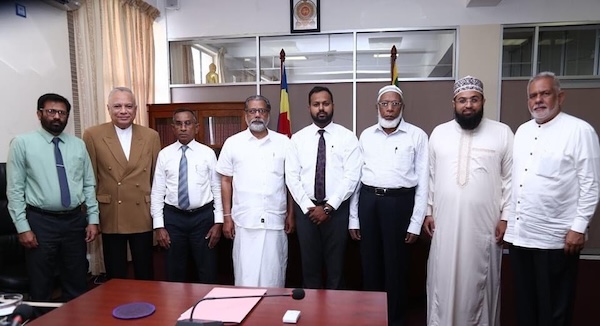
The Sri Lanka Wakfs Board is not merely a religious administrative body; it is a statutory institution created under the Wakfs Act of Sri Lanka. Its mandate, structure, tenure, and removal procedures are clearly defined by law. As such, discussions concerning its composition must be approached within a constitutional and legal framework not through conjecture or public insinuation.
Under the Wakfs Act, seven Muslims of integrity and clean record are appointed by the Ministry of Buddhasasana, Religious and Cultural Affairs for a fixed term of three years. Removal of a member is permissible only on disciplinary grounds following due inquiry. This legal architecture ensures stability, accountability, and institutional independence.
As the present Board concludes its lawful tenure on 15 February, the appointment of a new Board is a routine statutory process. It is important to recall that the outgoing Board, though appointed under a previous administration, completed its term without interruption despite a change in government a reflection of constitutional continuity and respect for institutional autonomy.
Recent public allegations suggesting that appointments are intended to advance extremist or ideological agendas and more gravely, insinuations that a public office holder is affiliated with extremist ideology raise serious legal concerns.
Constitutional and ICCPR Implications
Sri Lanka is a State Party to the International Covenant on Civil and Political Rights (ICCPR), and Parliament has enacted the ICCPR Act No. 56 of 2007 to give domestic effect to certain of its provisions.
Two constitutional principles are immediately relevant:
1. Freedom of Expression – Article 14(1)(a) of the Constitution guarantees freedom of speech and expression.
2. Equality and Non-Discrimination – Article 12 guarantees equality before the law and equal protection of the law.
However, freedom of expression is not absolute. Both constitutional jurisprudence and the ICCPR recognize that expression may be restricted where it constitutes incitement to discrimination, hostility, or violence.
Article 20(2) of the ICCPR obligates States to prohibit:
“Any advocacy of national, racial or religious hatred that constitutes incitement to discrimination, hostility or violence.”
The Sri Lankan ICCPR Act criminalizes advocacy of religious hatred that incites discrimination or hostility.
Publicly alleging without evidence that a statutory religious body is being “captured” by extremist ideology, or that a public official is linked to “jihadi” or extremist networks, must be treated with caution. In Sri Lanka’s post-conflict and post-Easter Sunday context, such terminology is not neutral. It carries the potential to stigmatize an entire community and inflame suspicion.
Where statements move beyond criticism into insinuations that associate a religious community’s statutory institution with extremism, the line between protected speech and incitement becomes legally significant.
Due Process and Institutional Legitimacy
If there are legitimate concerns regarding any prospective appointee, the appropriate mechanism is not social media denunciation but lawful engagement:
* Submission of evidence to the appointing authority
* Invocation of administrative review mechanisms
* Judicial review, where appropriate
The rule of law demands procedural fairness. Public spectacle cannot substitute for due process.
The Qur’anic principle often cited in governance contexts is instructive even in secular constitutional analysis:
“Indeed, God commands you to render trusts to whom they are due and when you judge between people, judge with justice.” (Qur’an 4:58)
In legal terms, this reflects fiduciary duty and impartial adjudication. The Wakfs Board is a trustee body. Its members exercise powers affecting property rights, religious endowments, and community interests. To undermine its credibility through unsubstantiated allegations is to weaken the very institution tasked with safeguarding community assets.
The Risk of Communal Harm
Sri Lanka’s constitutional order is built upon pluralism. Although Buddhism is given the foremost place under Article 9, the Constitution simultaneously guarantees to all religions the rights under Articles 10 and 14(1)(e).
Irresponsible public narratives suggesting ideological infiltration of Muslim religious institutions risk deepening inter-communal mistrust. In a society that has experienced violent extremism, rhetoric linking mainstream religious administration with extremist labels is not merely rhetorical; it can produce real-world consequences.
Legal accountability aside, there is also civic responsibility.
The Prophet Muhammad (peace be upon him) stated:
“A Muslim is one from whose tongue and hand people are safe.”
This teaching aligns closely with constitutional morality: speech must not cause unjust harm.
Vested Interests and Administrative Neutrality
Transitions in statutory boards sometimes give rise to disappointment among those not selected. Equally, parties who have appeared before such boards and received unfavorable decisions may seek avenues to influence future compositions.
Such dynamics are not unique to the Wakfs Board; they are common in administrative law contexts globally. However, institutional integrity requires that appointments be insulated from pressure whether political, ideological, or personal.
During my three consecutive terms spanning nine years, I did not experience political interference in adjudicative functions. That independence strengthened public trust. It must be preserved.
A Call for Responsible Constitutional Conduct
The Constitution protects the right to criticize government action. It does not protect reckless defamation or advocacy of religious hostility.
The ICCPR framework does not silence debate. It regulates speech that threatens equality, dignity, and social cohesion.
Therefore:
* Allegations must be evidence-based.
* Concerns must be raised through lawful channels.
* Public discourse must avoid stigmatizing entire communities.
* Institutional appointments must remain guided by statutory criteria, not ideological labeling.
A well-known legal maxim states: “Justice must not only be done but must also be seen to be done.” Equally, accusations must not only be made loudly they must be made responsibly.
Sri Lanka’s democratic maturity will be measured not by the absence of disagreement, but by the manner in which disagreement is expressed.
The Wakfs Board is a statutory trust. It must not become a theatre for ideological contestation. Institutional credibility, communal harmony, and constitutional fidelity require restraint, evidence, and respect for due process.
In safeguarding the integrity of public institutions, we safeguard the integrity of the Republic itself.
*Mahil Dole, SSP (Retired), is the former Head of the Counter-Terrorism Division of the State Intelligence Service of Sri Lanka, and has served as Head of the Sri Lankan Delegation at three BIMSTEC Security Conferences. With over 40 years of experience in policing and intelligence, he writes on regional security, interfaith relations, and geopolitical strategy and is the managing director of Smart Security Solutions Pvt Ltd.