


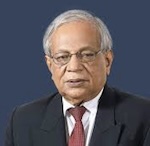
Uditha H. Palihakkara
Sri Lanka’s challenge is not a lack of policy ideas but a persistent gap between what is announced and what is delivered. Closing that gap will determine the country’s economic credibility.
“The greatest distance in the world is the distance between the promise and the performance.” — Thomas S. Monson
Recently the Japanese ambassador to Sri Lanka delivered a message that goes to the heart of the country’s current challenge: “Sri Lanka must move from promise to performance”. Nearly a decade earlier, the German ambassador made a similar observation—that while Sri Lanka often knows what needs to be done, the real test lies in doing it. Taken together, these remarks point to a deeper issue: a growing credibility gap between policy intent and policy outcomes. Bridging that gap is now central to Sri Lanka’s economic recovery and long-term stability.
Sri Lanka is not short of policy frameworks, reform proposals, or strategic visions. Industrial strategies are drafted, export plans are discussed, and governance reforms are announced. The discourse of reform is well developed and often technically sound. However, the issue is not only the presence of policies but also their appropriateness, coherence, and long-term orientation. In several instances, policies have been shaped by short-term considerations rather than sustained national strategy, resulting in frequent revision, dilution, or reversal. The challenge, therefore, is not merely the absence of ideas but the absence of timely, sustained, and credible action.
Policy Inconsistency
The consequences of such inconsistency are not theoretical. Sri Lanka’s recent economic crisis offers a stark illustration. Between 2020 and 2022, a series of policy missteps—including sharp tax reductions that weakened government revenue, abrupt shifts such as the fertilizer ban that disrupted agricultural output, and expansive monetary financing that fueled inflation and currency instability—combined to undermine macroeconomic stability. In several instances, public policy was influenced by approaches insufficiently grounded in evidence, institutional analysis, or technical expertise. The result was a sovereign debt default in 2022, the most severe economic disruption in the country’s post-independence history. These outcomes reflected not only failures of execution but also deeper weaknesses in policy design, consistency, and institutional discipline.
In a competitive global environment, countries compete on predictability, policy stability, and the reliability of their institutions. Investors and trading partners respond not to stated intentions, but to consistent and credible policy environments. Policy inconsistency sends the opposite signal: it creates uncertainty, discourages investment, and undermines long-term planning. Gradually it erodes the credibility of the state itself.
Credibility and Institutions
Sri Lanka’s ambition to become a regional hub must be assessed in this broader context. Success depends not only on policy intent but also on sustained improvements in legal systems, infrastructure, connectivity, administrative efficiency, and institutional integrity. Without a capable and responsive public sector implementing policy, even well-designed strategies cannot deliver results. Countries such as Singapore and Hong Kong succeeded not simply because of policy design but because sound policies were implemented consistently, enforced uniformly, and sustained over time.
The execution gap extends beyond macroeconomic policy. Even constitutionally mandated institutions such as the Finance Commission have long struggled to operate with the data and analytical systems required for effective decision-making. However, the absence of a robust, evidence-based database has constrained its ability to assess needs accurately and support equitable resource allocation. This highlights a broader institutional challenge: without data, continuity, and analytical capacity, even well-designed mandates cannot deliver intended outcomes.
Appearance vs. Performance
At a deeper level, the challenge is institutional and behavioral. When systems focus on meeting formal requirements rather than achieving real outcomes, performance is judged by appearances rather than results. Over time, this creates a culture where symbolic compliance substitutes for substantive achievement. This tendency is visible across multiple domains—from governance processes to the misuse of credentials and titles—where form is often prioritized over substance. It is reinforced by incentives: announcing reform generates visibility, while implementing reform requires discipline and sustained effort. In such environments, “talking the talk” becomes not merely a failure but a predictable outcome.
Transparency, often presented as a solution, also illustrates this dilemma. While Sri Lanka has made progress in promoting transparency in areas such as public finance and state-owned enterprises, transparency alone does not guarantee efficiency or accountability. Both public and private sector institutions may underperform relative to the resources they command. Reported compliance or profitability can sometimes mask deeper inefficiencies or governance weaknesses, leading to a situation where stakeholders may be misled about the true performance of these institutions. The real issue is not whether systems appear functional, but whether they deliver optimal and sustainable outcomes.
From Promise to Performance
Bridging the gap between policy and practice therefore requires more than intent. It demands policy coherence, consistency across political cycles, effective enforcement, and institutional accountability. Above all, it requires credibility. Trust is built over time but it can erode quickly—and once lost, it is difficult to restore.
Sri Lanka is currently facing a crucial moment. There is growing recognition of the need for reform, competitiveness, and integration into global markets. But recognition alone is insufficient. The risk is not merely delayed reform but the long-term consequences of inconsistent policies and weak execution: institutional erosion, misallocation of resources, and sustained economic underperformance. Short-term political gains achieved through shifting or ad hoc policies may offer immediate advantage, but they often come at the expense of long-term stability, investor confidence, and national credibility.
Bridging the gap between promise and performance requires more than policy announcements or institutional rhetoric. It requires measurable accountability, policy consistency, and a realistic understanding of political and institutional constraints that often undermine implementation. Success must be judged not by the number of reforms announced, but by measurable outcomes, implementation rates, and the stability of policies over time. Equally important is deeper reform of the public sector itself. Building an agile, citizen-focused administration requires changes in attitudes, stronger institutional safeguards, clearer accountability mechanisms, and greater reliance on data and professional expertise. Ultimately, sustainable national progress depends on the ability to translate long-term policy commitments into consistent and effective action.
Ultimately, Sri Lanka’s challenge lies not in the absence of ideas, but in the failure to implement them consistently and effectively. The distance between promise and performance remains the country’s most critical governance gap. Bridging that gap requires discipline, institutional credibility, and the ability to sustain policy beyond short-term political cycles. Sri Lanka’s future will hinge not on its promises, but on its ability to consistently implement strong policies.
*Uditha H. Palihakkara is a former Chairman of the Finance Commission of Sri Lanka and a financial management professional with experience across public, private, and international institutions. He has served as a Financial Management Specialist at the Commonwealth Secretariat (CFTC) and writes on governance, fiscal policy, and institutional reform in a comparative context.
Native Vedda / May 20, 2026
old codger
–
“From Promise To Performance: Sri Lanka’s Credibility Gap In Policy & Practice”
–
Alright, “No one is above the law, it must apply equally – Namal, SLPP National Organiser”
Daily News 15 May 2026
–
How would you reconcile both positions?
/
old codger / May 20, 2026
Native,
Do any of these ring a bell?
“Dharmishta Samajaya” , “Sinhala in 24 hours”, Yahapalanaya” “Subha Anagathayak”
Did any of these work over 65 years?
The lesson is to not take slogans seriously. But Sri Lankans are not good at learning lessons.
They fall for the next catchy slogan. Like the hordes of clueless investors who thought Sakvithi and Danduvam could beat the principles of economics and give them 35% while banks gave 15%.
Next time (if I survive) I’ll vote for the guy who promises belt-tightening for the next 20 years.
/
SJ / May 20, 2026
oc
Only Sri Lankans?
How come that Emil Savundara took the Brits for a ride nearly 70 years ago?
The promise of a fraction of a percent better interest is enough to attract the average investor anywhere.
/
Native Vedda / May 21, 2026
old codger
–
“Did any of these work over 65 years?”
–
Have you forgotten eight measures of free rice?
/
old codger / May 20, 2026
“Countries such as Singapore and Hong Kong succeeded not simply because of policy design but because sound policies were implemented consistently, enforced uniformly, and sustained over time.”
Why oh why do Sri Lankan writers omit the glaring commonality that these countries have with others like Indonesia, Thailand, South Korea , and even Japan and China?
None of them were model parliamentary democracies 30 years ago . The lesson is that discipline is needed. Discipline is not something that comes naturally to Sri Lankans. Who will impose it?
/
Jit / May 20, 2026
“…Who will impose it?….”.
Probably a charismatic dictator? 🤔Or one who can launch an operation to stuff ballot boxes successfully… 😂
/
nimal fernando / May 22, 2026
Native rejoice!
–
Of all the politicians …….. only your fave Ranil fulfils/keeps all his promises!
–
If not from the front …….. at least from behind.
–
A lot of Lankans are walking around with a pain in their ass.
–
What a guy!!! :)))))))
/
Native Vedda / May 23, 2026
nimal fernando
–
Lovely to see you back from your holiday.
Did you enjoy it? Did you learn anything during your holiday.
/
Nathan / May 20, 2026
The biggest gap is in the policy itself. There is no point in practising a policy that does not fit a country of diverse peoples.
/
Native Vedda / May 23, 2026
Nathan
–
“There is no point in practising a policy that does not fit a country of diverse peoples.”
–
Insanity is doing the same thing over and over again and expecting different results. – wrongly attributed to Albert Einstein
/
DIL / May 20, 2026
Agree with what is said here, policies are ok and have been endorsed by the people. The lack of a proper implementation plan is apparent after 18 months of NPP government. There is a huge capability and intent gap in the public sector. Ministers appear to be constrained by their own abilities as well as by their party’s interference. Unfortunately, this doesn’t bode well for SL, particularly when there is absolutely no alternative political power atm.
/
Professor ANI Ekanayaka / May 20, 2026
The gap between promise and performance is shown in the way the pompous lavish outward show of pretentious excellence is often at variance with the inward reality of third rate mediocrity. Robert Knox put his finger on the malady more than 3 centuries ago when he is supposed to have said that the Sinhalese are a people ” who have a low level of cunning which they mistake for a high level of intelligence” !!
/
old codger / May 20, 2026
Prof ANI,
“the pompous lavish outward show of pretentious excellence is often at variance with the inward reality”
Exactly. Looking at the thousands of expensive (but second-hand) cars clogging our roads, one wonders if small fuel-efficient cars are below our dignity?
The traffic has reduced in the past couple of months. Does that mean that those who buy these limos can’t afford the petrol @400 to run them?
/
leelagemalli / May 20, 2026
cont.
After nearly one and a half years, many citizens now view the period as another lost opportunity rather than a meaningful turning point. Despite continued rhetoric about progress and transformation, the economic and institutional realities remain deeply troubling. Conflicting statements from the Central Bank leadership regarding the economy and currency trends have further weakened public confidence, especially as concerns over the falling value of the economy, controversial coal tender processes, cyber and phishing attacks affecting the Treasury, and reported losses in state financial institutions continue to surface. Yet government representatives frequently appear unwilling to acknowledge failures or accept responsibility. This growing disconnect between political narratives and public reality has created widespread disappointment among ordinary people. Before aspiring to ambitious national goals, Sri Lanka must first focus on rebuilding trust, strengthening accountability, and restoring integrity within its institutions and society.
/
leelagemalli / May 20, 2026
Prof. ANE,
Many in Sri Lanka are increasingly frustrated by what appears to be a culture of pretension and lack of accountability among sections of the political, professional, and media establishment. When it comes to what SRLANKENS do, I believe the Dunnig-Krueger effect is inherited. Even the so-called finance secretary is clearly incompetent as of right now.
Whether it involves self-proclaimed experts, investigative journalists, expatriate professionals, or government representatives, qualifications and public claims are often presented with great confidence but without sufficient transparency.
–
Cabinet Media Spokesman Nalinda Jayatissa and Prime Minister Harini Amarasuriya assured the public that the former Speaker, Asoka Ranwala, had legitimately obtained his doctorate, yet even after a year no proper clarification or conclusive statement has been presented to the nation.
This pattern reflects a wider concern: major promises made to the people are repeatedly delayed, ignored, or quietly abandoned, leaving citizens disillusioned and uncertain about the credibility of those in power. At the same time, the opposition is often treated with hostility while ruling politicians appear heavily protected and insulated from criticism, raising serious questions about equality, democratic conduct, and political maturity.
/
Lester / May 24, 2026
The copy-and-paste AI bot is stealing my idea about Dunning-Krueger and misapplying it. Just like the Marxist SJ stole my idea about Sunni radicalism.
Why don’t you people get your own ideas?
/
Lester / May 24, 2026
ANI Ekanayaka:
There is a lot of money to be made from cunning.
Watch this interview with Jim Cramer: https://www.youtube.com/watch?v=gyaPf6qXLa8
The stock market is too big to be controlled mechanically, but you can use tools like the media to influence retail perception. Let’s say I am a fund. When the Iran war starts, I send a rep to the media outlet to talk about the potential for a 20% drawdown.The drawdown itself is self-fulfilling ; the fund is able to buy at a nice discount.
Elections operate on a similar principle.
/
Jit / May 20, 2026
Every politician makes promises in this universe. That is how politics is about! There were promises even in 1917 October revolution. Even in today’s Japan! So the Japanese ambassador should know it better AND Sri Lankans should not treat his words as gospel and rush to write articles about things that never take place in this universe! Some promises get done, some not. End of story – now turn off the lights and go to sleep people!
/
Ajith / May 20, 2026
“From Promise To Performance: Sri Lanka’s Credibility Gap In Policy & Practice”
Promise – Banda-Chelava pact. Dudley Chelva Pact
Performance – 1958 Massacre of Tamils in Colombo
Promise – 13Plus
Performance – Family Robbery, massacre of Tamils
Promise – Equality
Performance – Protection of illegal Building of Lord Buddha.
/
SJ / May 21, 2026
Promise of Tamil Eelam
Need I make a list of performances?
/
Ajith / May 22, 2026
Slave of Srimavo? “Special status to Buddhism” to destroy Buddhism.
/
SJ / May 23, 2026
Can you think of a more dumb response?
I am afraid that you cannot.
Are you scared that I will rattle off a list that will make you shiver?
/
leelagemalli / May 20, 2026
Readers (rational thinkers only),
The Achilles’ heel of the current leadership is not ideology; it is the lack of serious study, preparation, and governing experience. Before coming to power, they criticized every policy, every institution, and nearly every decision made by previous governments. Yet today, many of the same measures they once condemned ; IMF-backed reforms, QR-based fuel distribution systems, and fiscal controls introduced under former President Ranil Wickremesinghe; are now being implemented and defended by them. This contradiction exposes a leadership that was far more comfortable attacking from the opposition than governing with responsibility and consistency.
–
The so-called industry minister, Sunil Handunnetti, who was once projected during the election campaign as a key figure capable of leading the Finance Ministry, openly claimed that the IMF was merely one of many options available to revive the economy. Ironically, he now appears politically sidelined for obvious reasons. Much of the public narrative surrounding these figures was amplified through political theatre and media-driven rhetoric rather than practical economic understanding. Today, even President Anura Kumara Dissanayake appears unable to confront the realities and consequences of the very policies and institutions they once dismissed so confidently.
–
What the country is witnessing today is not the “alternative” people were promised, but a government learning through trial and error at the nation’s expense.
/
Lester / May 24, 2026
Long paragraphs of gibberish may be a symptom of mental illness:
“Graphorrhea: Incoherent, rambling, digressive writing with excessive wordiness. This is associated with schizophrenia (thought disorder), mania, or neurological issues like temporal lobe epilepsy. It’s not just “long paragraphs”—it’s disorganized and impairs communication.”
/
Raj-UK / May 20, 2026
LM
You may recall that a few of us were not convinced the NPP as saviours of the nation after the catastrophic Rajapakse regime which brought the country down to its knees. Many were hopeful of an era of prosperity under the NPP in the absence of mega corruption & mismanagement, which alone would result in an economic recovery, even without a strategy. In actual fact, the NPP/AKD came to power because there was no credible alternative.
RW, though capable & did bring some stability at a crucial time, his laissez-faire style governance doesn’t inspire much confidence. Anyway, he is now past his shelf life & so is Premadasa jnr., who has always been riding his old man’s wave with nothing to claim as his own contribution. He is likely to be another Rajapakse if given the reins So, AKD has the benefit of the doubt & I hope he will ‘learn on the job’ quickly & crack the whip on his errant own party members. I trust he will not bow down to pressure & net the biggest sharks as well, now that the murky water is getting exposed.
/
leelagemalli / May 20, 2026
Raj Uk, pleased to read from you. After a long time though !
Every leader faces challenges and criticism during their tenure; this is common throughout history. At the same time, even the weakest leaders usually contribute something positive. What truly matters is the overall balance of achievements and failures in hindsight. In Sri Lanka’s case, many people believe that Ranil Wickremesinghe (RW) stepped into leadership at one of the most critical moments in the country’s history. After Gotabaya Rajapaksa left the country in July 2022, following the economic collapse and sovereign default, Sri Lanka was on the verge of complete anarchy. Despite strong opposition and resistance, RW managed to stabilize the nation during his 26-month administration with a relatively small cabinet that included several younger ministers. Many international observers and economic experts acknowledged those efforts, believing the situation could have become far worse without that intervention.
/
leelagemalli / May 20, 2026
Raj,
The end of the civil war in Sri Lanka in May 2009 was a historic moment that offered the country a rare opportunity to rebuild not only its infrastructure and economy, but also its social fabric after nearly 30 years of conflict between the government and Tamil militant groups in the North and East.
In hindsight, many believe that political leaders across all parties should have come together immediately after the war to establish a national reconciliation council or a similar collective platform aimed at healing divisions, rebuilding trust, and restoring unity among communities deeply affected by the conflict.
–
Instead, the government at the time appeared to prioritize reconstruction, development, and economic recovery. To be fair, these goals were also important, as the country’s economy had suffered greatly during the long years of war. Economic progress is essential for social stability, and improving living standards can create conditions for long-term peace. We can observe similar patterns in several former Eastern European and Soviet bloc countries after the collapse of communism in the early 1990s. Once those societies opened up politically and economically, many experienced significant growth and democratic progress. From my own experiences working and studying alongside people from East Germany, Poland, Bulgaria, Russia, and Ukraine, I saw how strongly many valued democratic opportunities and worked hard to build better futures despite stereotypes that sometimes existed about them.
/
Raj-UK / May 21, 2026
LM
Having just returned from a short holiday in Bulgaria, which was cheaper than a holiday in SL, I am in agreement with your views.. I have travelled through Balkan/Eastern Block countries before & was surprised how these countries have developed from poverty under socialist regime to relative prosperity in a couple of decades. Most of these countries have an agriculture based economy but tourism is now booming. Maybe the EU funding helped but standard of living has improved across the board unlike in SL where only a privileged few have benefitted at the expense of the rest of the country.
As you say, the Rajapakses had the opportunity to unite the country after the war & maybe SL would have prospered as well but the greed & gross mismanagement due to cronyism & nepotism ruined the country, The shocking truth is now being exposed & if AKD & Co. can bring to justice all those who plundered the country, we can be satisfied even with small mercies. It maybe hard for the die hards to accept that the Rajapakses are not patriots & should be investigated not only for mismanagement but murder & treason as well.
/
leelagemalli / May 23, 2026
Raj -UK,
As previously mentioned, I work with people from more than 55 countries worldwide, including Bulgaria, the Czech Republic, and Poland. East Germans are another group I work with. I therefore have some understanding of their mindset.
The real challenge for any vulnerable nation is not sustaining political ideology through rhetoric alone, but proving that promises can be delivered through capable leadership once elected. Unfortunately, AKD and his team have appeared far less prepared than previous governments when it comes to administration and execution.
–
Several ministries (Education, Trade, Health, Transport, Cultural affairs, Internal affairs, External affairs etc) under the NPP government have faced repeated failures.
The Trade Ministry struggled even with its first tender process, while the Ministry of Education under Prime Minister Amarasooriya faced criticism over the Grade 6 textbook printing issue.
Similarly, the Petroleum Ministry was accused of delays and poor handling of coal tenders, resulting in the import of low-calorific coal. This reduced expected energy generation and forced additional diesel consumption to cover the shortfall, ultimately increasing costs for the public.
–
What makes the situation more disappointing is that these leaders came to power promising higher standards and cleaner governance.
–
Yet, even after the Auditor General exposed serious shortcomings, some ministers continued blaming previous governments instead of accepting responsibility.
/
Raj-UK / May 21, 2026
LM
My concern before was how SL would recover from an economic catastrophe & it was clear to me that the NPP had no strategy to address the situation. RW, with all his faults, stopped the slide & I was inclined to think that if RW took the back seat & allowed capable & experienced politicians like Harsha to take the lead, it would be the better option but as long as Premadasa jnr & RW holds on to the reins, its not going to happen. So, I am just watching from the sidelines.
/
leelagemalli / May 24, 2026
Raj_UK,
For many of us, it was clear from the beginning that the NPP lacked the experience, economic vision, and institutional strength needed to rescue a nation already pushed to the edge. Yet, in a society too often driven by emotion, gossip, and personality politics rather than facts and competence, warnings were ignored. If a critically ill mother’s life depended on a doctor, no responsible person would hand her over to someone without proven credentials.
Likewise, a bankrupt nation of 22 million people cannot afford experiments in governance. Today, Sri Lanka has reached a dangerous dead end, where rhetoric, revenge politics, and endless political theatre appear to take priority over the urgent task of economic recovery. More than 30% of our people live below the poverty line, the cost of living continues to skyrocket, and ordinary citizens are struggling daily just to survive.
*
What is most disappointing is the widening gap between promises and reality.
–
The government came to power claiming equality before the law and a new era of good governance, yet the public increasingly witnesses selective justice and political double standards. Meanwhile, the economy; the main bloodstream of the nation; remains weak and neglected while secondary political agendas dominate the national conversation.
–
Looking back, many now realize that even former leaders they once rejected may have offered more stability and administrative maturity than the current leadership.
Sri Lanka’s crisis is no longer only political or economic; it is deeply rooted in public attitudes, short-term thinking, and the failure to unite around national policies and the common good.
Until the people themselves begin to value competence over slogans and accountability over blind loyalty, no government will be able to move this country meaningfully forward.
/
SJ / May 21, 2026
Can you please explain why the Brits keep electing people like Thatcher, Blair, Johnson, and who is he the prime minister now?
/
Ajith / May 20, 2026
“Yet today, many of the same measures they once condemned ; IMF-backed reforms, QR-based fuel distribution systems, and fiscal controls introduced under former President Ranil Wickremesinghe; are now being implemented and defended by them.”
It is true that the JVP sponsored NPP government follow the systems created by the previous governments. It is true that this government promised so many things and find it difficult to fulfil their promises.They lack experience. But, why the people of this country elected them instead of past governments. Why the past governments failed to stop the bankruptcy using their experience. Why the past governments allowed racism and religious extremisms to rob this country? Why the country was in war with their own citizens? Who is next to Ranil? Is it Ranils family or Is it some one else? Do you think once Ranil gone, that should end for UNP? Both UNP and SLFP have to answer these questions. Can the UNP or SLFP produce a leader who will rule the country for all?
/
SJ / May 20, 2026
“JVP sponsored NPP government”
Is it not ‘JVP run’ NPP government?
/
Mani / May 21, 2026
Why is anyone surprised that promises never materialise into performance?
Given the small and big disasters happening internally and externally, and if the war in the Middle East were to continue, Sri Lanka is going to be in the same situation as 2022, sooner rather than later.
/
Roxie de Abrew / May 24, 2026
These comments can go on and on.
Despite the comments and the suggestions contained there, Sri Lanka will always be Sri Lanka, a Nation of Lotus Eaters.
President Kumara has been in office for almost 2 years, with 3 more to go.
He is most likely to get another 5-year term.
Sri Lanka has failed to provide opportunities to youth and professionals within its shores.
As long as we continue exporting talent to other countries, we will remain poor.
The most valuable asset we can create is a solid connectivity backbone that covers every household and business premises.
Does anyone care about that?
/