


By Jehan Perera –
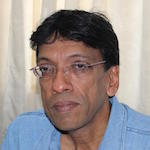
Jehan Perera
At a symposium on reconciliation organised by the National Peace Council last week, more than 250 religious clergy, civic activists and political representatives from different communities gathered to discuss the country’s future. Speaking at the event, Minister Bimal Rathnayake explained the government’s approach to national reconciliation. He said the government viewed the country’s recovery in terms of a three stage process. The first stage was stabilisation, the second was development and the third was transformation. Reconciliation, he implied, would come in that final stage. The participation of Opposition Leader Sajith Premadasa at the same symposium, and the constructive nature of his comments, would strengthen that hope.
When the present NPP government took office in 2024, the country was emerging from one of the gravest crises in its post Independence history. The economic collapse of 2022 had led to shortages of fuel, food, medicines and electricity. Inflation soared, foreign reserves disappeared and long queues became part of daily life. The political upheaval that followed culminated in the resignation of former President Gotabaya Rajapaksa after mass public protests under the banner of the Aragalaya movement. The country was then governed for two years by a leadership that spoke the language of reform and reconciliation but was widely perceived as lacking a direct popular mandate.
Sri Lanka’s past experience suggests that stabilisation and transformation cannot be treated as entirely separate stages. Postponing reconciliation until some future moment risks repeating the failures of the past. If transformation is endlessly delayed until a supposedly perfect moment arrives, there will always be new crises and new reasons for postponement. Minister Rathnayake’s contention that the government’s immediate priority has necessarily been stabilisation flows from the government’s awareness of the precarious situation the country is. Over the past two years, the government has succeeded to a significant extent in restoring economic and political stability. Inflation has reduced, shortages have ended and public institutions have regained a degree of functionality.
Guaranteed Changes
The country’s development continues to face challenges due to adverse global conditions, including disruptions caused by conflict in the Middle East and extreme weather events that have affected tourism, trade and the cost of living. The danger is that reconciliation may be indefinitely postponed in the name of stabilisation. This danger can be reduced if the government works proactively with the opposition and civil society to commence practical measures of transformation now rather than later. The participation of Opposition Leader Sajith Premadasa at the reconciliation symposium, and the constructive nature of his comments, has strengthened the sense that bipartisan engagement on the specific issue of reconciliation may be possible.
The urgency of transformation came through strongly in the presentations made by representatives of the Sri Lanka Tamil and Malaiyaha Tamil communities. ITAK parliamentarian S Shritharan spoke of the frustration caused by unresolved post war issues in the north and east. He referred to disputes regarding land occupied during the war years, including controversies linked to Buddhist temples and state sponsored settlement activity in areas claimed by local Tamil communities. He also pointed to the continuing large scale presence of the security forces in the north and east nearly two decades after the end of the war. These grievances have remained central to Tamil political discourse since the end of the armed conflict in 2009.
Academic research and practical work on the ground have shown that reconciliation cannot be separated from questions of dignity, equality and justice. Former minister Mano Ganesan, leader of the Democratic People’s Front, focused on the longstanding problems faced by the Malaiyaha Tamil community at the symposium. He spoke passionately about continuing housing shortages, landlessness and economic marginalisation, issues that have persisted since Independence. He also highlighted the devastating impact of recent extreme weather events on the housing situation of estate communities that remain socially and economically vulnerable.
The condition of the Malaiyaha Tamil community remains one of the enduring social justice issues in Sri Lanka. After Independence in 1948, a large proportion of them were denied citizenship and voting rights through legislation that rendered them stateless. Many families still lack secure housing and land ownership despite their immense contribution to the country’s plantation economy. Minister Rathnayake’s responses to both these concerns has been politically significant. He has argued that recent political developments, including the declining influence of narrow ethnic politics across communities, indicate a major shift in public attitudes. According to him, the political ground has changed in ways that make it increasingly difficult for politicians who rely primarily on ethnic division and communal insecurity to retain public support.
Inter-Connected
There is evidence to support the assessment about the changing political grounding which sees future prospects in the resolution of long standing problems. . The economic collapse of 2022 affected all communities alike and generated a new politics centred on governance, anti corruption, accountability and economic justice. The Aragalaya protests brought together Sinhalese, Tamils and Muslims in a common demand for political change. Although ethnic grievances have not disappeared, the crisis created space for a broader understanding that the country’s future depends on cooperation rather than division. Opposition Leader Premadasa’s comments at the symposium reflected this changing political climate. He emphasised that national reconciliation could not be separated from economic justice and the need to address disparities between regions and social classes. He also mentioned the need for civil society organisations to take this message to the community.
Opposition leader Premadasa’s wider understanding of reconciliation is important because ethnic inequality and economic inequality have often reinforced each other inArti Sri Lanka’s history. Academic studies have identified the denial of citizenship rights after Independence as a historic injustice that set back the Malaiyaha community for decades. The challenge now is to ensure that transformation becomes part of the stabilisation and development process itself. Practical first steps are both possible and necessary. The release of civilian lands still under state control, greater devolution of administrative authority, reduction of military involvement in civilian affairs, language equality in public administration and accelerated housing and land ownership programmes in the plantation sector are all measures that can begin immediately without waiting for a final stage of transformation.
The government’s recent commitment that provincial council elections will finally be held is therefore significant. These elections have been repeatedly postponed by successive governments. The NPP government needs to show it is different. Provincial councils were formed by international and domestic agreement. Sri Lanka has repeatedly postponed difficult reforms in the hope that a more convenient political moment would eventually arrive. But opportunities are invariably created and fought for instead of being provided as a gift by the benevolence of others be they the government or international community. Families displaced by war continue to seek the return of ancestral lands. Civil society organisations in the north have repeatedly called for greater civilian control over local administration and a reduction in military involvement in civilian life. These need to be acted upon.
Nathan / May 26, 2026
The long-delayed Provincial Council (PC) elections will not be held this year as funds earmarked for the polls had to be redirected towards disaster relief following the impact of Cyclone Ditwah, JVP General Secretary Tilvin Silva said.
/
Native Vedda / May 26, 2026
Nathan
–
“Let Tilvin say whatever he wants. However, it is up to the Hindians to decide when they want to hold their village council elections in Sri Lanka. I do not worry too much about whether Hindians are holding Indian panchayat elections in the Sinhala State of Hindia.
Can you also please acknowledge C. V. Wigneswaran’s contribution as the Chief Minister of the Northern Province?
/
nimal fernando / May 27, 2026
There are not many adults in Lanka.
–
The few rare adults with well developed mental faculties can comprehend the real situation in the country: how well the country is doing.
–
The rest who have reached adulthood but mentally still stuck at 14 ……. are busy chasing 14 year old girls …… burying their undies for later sniffing.
–
So what else is new?
–
–
For christesakes man read all the manufactered crap you guys have written as the real problems of the country!
/
old codger / May 26, 2026
Nathan,
“elections will not be held this year as funds earmarked for the polls had to be redirected towards disaster relief “
That sounds like the excuse that Ranil used to make. Is he running this government too?
/
Nathan / May 26, 2026
Is there any difference. Who governs makes no difference.
/
leelagemalli / May 27, 2026
Hello OC,
–
I overheard a government spokesman publicly state that he believes there are no such procedures to establish the ash content of loaded coal – this came from an MBBS graduate from a local university. Can you just imagine?
https://www.youtube.com/watch?v=xxbRAxHuJrw
They can only differentiate themselves from prior governments by deceiving the public.
–
Coal quality — including:
ash content
calorific value
moisture
sulfur
combustion properties
— can all be tested using standard industrial procedures before acceptance and use.
–
The real question in such controversies is usually not whether testing is possible, but:
whether proper independent testing was done,
whether results were trustworthy,
and whether procurement rules were properly enforced.
–
The following properties are normally measured:
–
Property / Why It Matters/ Can It Be Tested Before Delivery?
Ash content High ash reduces efficiency, creates waste ———–> Yes
Calorific value (CV/GCV/NCV) Determines energy output ———–> Yes
Moisture Excess water lowers usable energy ———–> Yes
Sulfur Pollution/corrosion concerns ———–>Yes
Volatile matter Combustion behavior ———–> Yes
Fixed carbon Fuel quality indicator ———–> Yes
Size distribution Boiler compatibility ———–> Yes
Trace contaminants Environmental and operational issues ———–> Yes
–
These tests are standard and routine.
/
Jit / May 27, 2026
I dont know whether Tilvin said that or not but he doesn’t have authority on these matters as a party secretary and he should focus on his job without poking fingers to matters related to governance. The fact actually is, a couple of issues to sort out by the parliament. The main hurdle is the disagreements over the delimitation report and the absence of parliamentary consensus to define new electoral boundaries as per the PC amendments passed in 2017 to introduce a new hybrid electoral system.
/
nimal fernando / May 27, 2026
Ah! Don’t let the truth dither anyone from throwing a good bucket of mud at AKD.
–
But comparing him to Ranil ……. what a low blow to Ranil by his own greatest fans!
–
Never thought will live to see the day …… well live and learn.
/
SJ / May 27, 2026
Tilvin has a lot of clout in the NPP government by virtue of his dominant position in the JVP.
Tilvin is bitterly hostile to devolution and to the recognition of minority nationalities.
AKD cannot cross some lines I fear, and his commitment to various pledges seems increasingly in tatters.
/
Ajith / May 26, 2026
“The government’s recent commitment that provincial council elections will finally be held is therefore significant.”
Firstly I don’t think that this election will be held in this year according to JVP leader or secretary Tilvin Silva. There is no point of having an election without the land and police power for North East People where still Tamil speaking people are majority. Further, government should commit itself for the devolution of power and give full support to the North East Provinces Provincial government whether they are ruled by JVP or any other Political party. Before that I would prefer that the protection of a religion by government should be removed from the constitution immediately if it wants to show the people they are equal and all politics talking about religion should be out of politics.
/
Native Vedda / May 26, 2026
old codger, nimal fernando, ……
–
Jehan Perera writes “Government Needs To Show It Is Different”.
–
However Dhanuka Rananjaka Kahandagamage believes differently:
–
Selective Justice and Sri Lanka’s Unfinished Republic — A Letter to the President
https://www.jaffnamonitor.com/featured/selective-justice-and-sri-lankas-unfinished-republic-a-letter-to-the-president/
–
Since Nimal is back from his holiday can he now explain what sort of change is taking place among NPP supporters and AKD?
Has AKD gone native, house trained, potty trained, ……. ?
/
old codger / May 26, 2026
Native,
To paraphrase someone else, the more this government tries to show it’s different, the more it looks as if Ranil is still the President, even unto postponing elections.
Is he running the show from under the Cabinet table?
/
Native Vedda / May 26, 2026
old codger
–
“Is he running the show from under the Cabinet table?”
–
Is that why Tilvin and Lal are getting behind AKD in order to stab him in the back?
–
Was there a secret rendezvous between Ranil Wickremesinghe and Anura Kumara Dissanayake at kitchen cabinet?
/
leelagemalli / May 27, 2026
Native Vedda,
“Was there a secret rendezvous between Ranil Wickremesinghe and Anura Kumara Dissanayake at kitchen cabinet?”
– Despite promises of transparency and accountability, news plants, political games, and allowing party secretaries (e.g., Tilvin De Silva) to lead public statements are reminiscent of the RAJA era.
Those who cough in support of the government in power appear to have little knowledge of current events.
Perhaps they are as foolish as Sangith Wijesooriya, who believes he can collect over 23 million USD but is not allowed to do so by law. It’s almost as if filthy Baira Lake remains as it was.
/
old codger / May 26, 2026
Native,
If AKD actually wanted to change things, he should have done it in the first 6 months, when all the racists (including Mahanayakas) were suffering from shell-shock. Now, scum like Dilith/Wimal/ Gammanpila and the rest have rediscovered their importance. Now he has to accept even obvious a-holes like Sumanaratana when they pledge undying loyalty. That idiot Sajith isn’t helping either, with his attempts to out-Mahanayaka the Mahanayakas .
/
Native Vedda / May 30, 2026
old codger
–
“That idiot Sajith isn’t helping either, ……..”
–
Don’t expect anything from the Mummy’s boy.
/
Rohan25 / May 26, 2026
Genuine reconciliation in Sri Lanka remains out of reach, largely because systemic ethnic divisions are fracturing religious institutions like the Catholic Church and Buddhist establishments. When the religious establishment aligns with majoritarian state narratives, it alienates Tamil faithful. For instance, in Colombo, official Catholic leadership has largely adopted the state’s framing of the 2009 conflict as strictly a war against terrorism, ignoring the staggering loss of Tamil civilian lives and unaddressed allegations of atrocities. As a result, a massive portion of the island’s Tamil Catholics feel deeply isolated. This friction recently came to a head when Church authorities publicly distanced themselves from a Sinhalese priest’s remarks that the conflict constituted a systematic and planned genocide, stating it was merely his individual opinion and not the official view of the Catholic Church.
/
Rohan25 / May 26, 2026
In sharp contrast, bishops, priests, and nuns in northern dioceses (such as Jaffna and Mannar) consistently document structural oppression, enforced disappearances, and mass civilian casualties. Grassroots clergy routinely join their congregations in demanding international accountability. When individual Sinhalese priests acknowledge structural violence against Tamils, the institutional hierarchy distances itself, classifying these statements as “individual views” to protect its political neutrality in the south. True reconciliation requires agreed-upon truth, accountability, and equal political rights. However, this is prevented by structural factors: acknowledging state-sponsored war crimes is politically toxic in the south, where the military is widely viewed as a saviour from terrorism.
/
Rohan25 / May 26, 2026
The political focus of the Colombo Catholic establishment shifted drastically after the 2019 Easter Sunday bombings. Since then, Cardinal Malcolm Ranjith and the Colombo Archdiocese have focused their political capital on investigating state complicity in those specific attacks, rather than addressing historical wartime atrocities in the north. Reconciliation is continuously derailed by ongoing militarisation in the Northern and Eastern provinces, land grabs, and the suppression of memorials for Tamil victims. Successive governments, including President Anura Kumara Dissanayake’s administration, have resisted implementing UN recommendations, with human rights organisations frequently criticising domestic Truth and Reconciliation Commissions as efforts to sidestep justice. Because domestic institutions regularly fail to deliver justice, Tamil groups and international watchdogs—such as the UN and Human Rights Watch—continue to press for the preservation of evidence and independent investigations abroad. For reconciliation to move beyond rhetoric, there must be official acknowledgement of structural issues and concrete steps toward justice and demilitarisation.
/
SebastianSR / May 26, 2026
Since then, Cardinal Malcolm Ranjith and the Colombo Archdiocese have focused their political capital on investigating state complicity in those specific attacks, rather than addressing historical wartime atrocities in the north. If you start a war, expect to face wartime atrocities, both in the North and the South. The 1977 election showed over-whelming support in the North (only partial support in the East) for the TULF that campaigned with the Vaddukkoddai resolution as it flagship program. That is, nationally 7% of the Demographic supported the TULF while 97% of the Northern Tamils supported it. However, they voted for civilized individuals like Amirthalingam at the helm; the latter were decapitated and their victory was hijacked by violent fascists whose wartime atrocities against Tamils themselves are now never mentioned. It was just recently that DBSJeyraj passed away, and the travails he faced were nothing compared to what anyone with a more realistic vision instead of a war with an 80% majority would face if articulated. I have already listed how minorities in other countries have dealt with majorities that routinely usurp more power claiming Bhumiputra -type status. When Rohan25 claims “millennia of exclusive Tamil ancestry” and even give false etymologies for the name Lanka being derived from a Tamil word, he is claiming Bhumiputra-type rights for Tamils, i.e., the right to discriminate over the other. All citizens, irrespective of ethnic ancestry should have equal opportunities and rights.
/
SebastianSR / May 26, 2026
Rohan25 and others with “exclusive” jingoistic claims (that led to violent ethnic cleansing of the North) like to claim that even the name “Lanka” came from Tamil, giving a painfully constructed etymology but NO HISTORICAL DATES or citing literary or inscriptional sources to prove the claimed usage. Let me for the record mention the following. In the earliest historical records, the name “Lanka” was purely a mythological proper noun used in Sanskrit epics, while the real-world island was known to its neighbors, inhabitants, Greek map makers etc., by completely different names. The name “Lanka” did not become firmly attached to the physical island in geographies until the early CE. When Emperor Asoka (3rd century BCE) he sent Mahinda and Sanghamitta as emissaries, the island was universally referred to as Tambapaṇṇi See Grek maps or Asokan Rock Edit II…reg. his borders, such as the Cholas, Pandyas, Satiyaputras, Ketalaputras, and even Tambapanni….. The name “Ilam, Ilankai” appear only around the 1st to 2nd century CE in Snagam Literature. Early Sri Lankan coins have Elu-Sinhala inscriptions with the name Tambapanni.
/
SebastianSR / May 26, 2026
In the Ramayana and Mahabharata the floating island fortress of the Rakshasas was named Lanka, and no consistent geography. Tamil (Īḻam / ஈழம்) is the oldest native Tamil name recorded – it appears in the Tirupparankunram Tamil-Brahmi inscription (Eela-kudumpikan). Linguists suggest Īḻam is a Dravidian cognate meaning gold/copper, mirroring the meaning of the already established Prakrit/Elu name Tambapanni. Elu-Sihala / Early Sinhala Prakrit (Tambapaṇṇi): Inhabitants of the Anuradhapura Kingdom refer to their own island as Tambapanni in early Brahmi cave inscriptions and coins. The word Lanka is adapted into Tamil phonology as Ilankai and enters Sangam literature, initially used as a generic common noun for an “island,” it gradually narrows down to specify this exact island. In the 1st and 2nd centuries CE, Roman and Greek geographers (like Ptolemy) record that the island’s name has changed. They switch from Taprobane to Simoundou and Salike. The name Salike is the first Western transcription of the ethnonym Sihala (which evolved into Saylan –> Ceylon). The transition in Sanskrit and Prakrit texts from Tamraparni (real-world geography) to adopting Simhala-dvipa (e.g, Nagarjunakonda inscription) took place (2nd century CE to 5th century CE), solidifying firmly during the Gupta era. Tamil texts followed a very similar structural evolution more slowly. Puranic conception of Bharatavarsha’s nine divisions shows how Simhaladipa was positioned along neighboring islands. Mainland Indian astronomers like Varahamihira categorized it similarly. After the Chola conquests, Chola administrative scribes used the term Ciṅkaḷa-mandalam (Province of the Sinhalese)in their formal state copper plates and stone inscriptions,. By doing this, Tamil rulers formalized the Prakrit/Sanskrit Simhala root into the legal vocabulary of South India, giving birth to the Tamil word Ciṅkaḷam. They dismantled the authority of the local kings and renamed the entire northern territory to Mummudi Chola-mandalam but no mandalam was entirely exclusively for Tamil or Sinhala people for residence. But what matters today is what exists today, and not ancient history, e.g., when England was Roman.
/
Rohan25 / May 27, 2026
Ethno-nationalists frequently manipulate Sri Lankan history to claim exclusive territory, yet etymological analysis of ancient names reveals a shared, complex past rather than isolated origins. While narratives often focus on Sanskritized terms like Thambapanni, early Dravidian names such as Eelam, Cheran theevu( Serendib) Illankai ( Shinning resplendant island, tied to modern Sinhalese name Lanka )and Chinkallam—which linguistically mirror the “copper-red earth” origin story—suggest a more integrated, pre-existing cultural landscape. Learn more about the history of Tamils in Sri Lanka. Good try Sebastian . Ah, the classic Canadian view: defending the very state-sponsored racism you fled, all while giving us a masterclass in selective history.
/
SebastianSR / May 27, 2026
While discussing the country names Tambapanni, Lanka, Eelam, etc., when I presented my analysis based on what is avaialable in the pubic encyclopedias, historical texts etc., Rohan25 writes the following ….Good try Sebastian . Ah, the classic Canadian view: defending the very state-sponsored racism you fled, all while giving us a masterclass in selective history…… If the Sri Lankan state is as fair as you claim, move back to Colombo. and follows up with several Ah hominem comments. I am not going to reply in that language of insinuations etc; but I say that he is widely off the mark regarding me. I spend a few months abroad every year, but I don’t live in a Toronto suburb or in Australia; I spend most months in a Colombo suburb, while also visiting Jaffna (sadly, increasingly, to attend funerals of my older colleagues!). Given that Rohan25 is clearly well instructed in Tamil language, I invite him to join with me and investigate the names Lanka, Eelam, Tambapanni etc., using only the historical record and without weighing in identity politics . Classical Tamil literature, history and culture of the subcontinent are my hobbies, while professionally I did mathematics and data science, working with economists, engineers, physics and social-science professionals. I will take up this thread of looking at the words “Eelam”, Lanka etc., in continuing comment.
/
Rohan25 / May 27, 2026
It takes real talent to opportunistically flee to Canada and then spend your free time rewriting history to defend the regime you ran from.
/
Rohan25 / May 27, 2026
You fled to Canada for safety, yet you use Western freedom to justify majoritarian oppression back home. Weaponising ancient history from a Toronto suburb to excuse modern structural discrimination against Tamils is peak hypocrisy. If the Sri Lankan state is as fair as you claim, move back to Colombo. Your commentary exhibits profound cognitive dissonance. You enjoy the protections of a Western liberal democracy while actively intellectualising state-sponsored discrimination in Sri Lanka. Using historical revisions to justify 21st-century systemic inequality against Tamils undermines your credibility, especially while operating safely from the diaspora
/
SJ / May 27, 2026
Are we running into another pot and kettle scold match?
Not quite yet, but likely.
Franky, I much enjoyed the Rohi v. Lester slang match which has quietened down a bit.
/
Rohan25 / May 28, 2026
Contrary to popular belief here, Lester and Deepthi are clearly different people. Their writing styles are completely opposite. Deepthi is a hostile, condescending snob who only posts to humiliate others and start fights, likely due to personal issues. Conversely, Lester actually contributes to the forum. While his views are unpopular, he remains respectful and polite. This is just my observation, but the difference is obvious.
/
The Truth / May 29, 2026
25, It was all knowing and super intelligent OC who suggested that Lester and deepthi are one and the same !
Leela man just followed and repeated OC .
What about The Truth ? Is that the third man ?
As to 25, how do you rate your contributions ? Objective and truthful, or just weird propaganda to justify being born like that ?
You are not wanted in any country, except Tamil Nadu. You don’t want to go there !
/
The Truth / May 29, 2026
25 -26, Now you are becoming Sherlock Holms, he was not a Tamil was he ?
If you are wrong here, is everything you say also wrong ?
I like Leela, so amusing. In you I see a lot of vanity , foolishness out of control !
/
leelagemalli / May 30, 2026
Deepthi may have been treated poorly by her pimps on a consistent basis, which is why her opinions are so critical. S/he may not have the average thinking, but her achievements have elevated her above others. Each and every offensive statement has something against former President RW, but not a single sentence against the Rajapakshe family. This demonstrates her repeated appointment to balance the CT-forum. S/he is extremely cheap. Sounds like you have lesser self-esteem than everyone else on this forum. Almost none of Deepth’s comments relate to the writer’s focus on each article, but Lester occasionally offers some good comments, but they are not from him, but rather AI-supported knowledge. Period !
/
Lester / May 31, 2026
These days, it’s easy to tell if someone is full of (something). Scott talks a lot but where does he live at the end of the day? Similarly, SJ (h-index 0) is what you call a 3rd rate academic. Unlike Hoole or Dayan J, no one will pay him anything for his opinion (beyond teaching some basic courses to 1st year students). No one will pay him for consulting, talk shows, or teaching abroad.
Let’s be honest: excluding Oxbridge, obtaining a PhD/DPhil in the UK is far simpler than in the States.
So what I said before: if someone claims to be an expert in every subject, but they are living off SLR 500 uni pension, they must be full of break().
You are right that my opinion here may be unpopular. But if these people were as successful as they claim, they would not be hiding behind anonymous nicknames. Starting with the Monopoly money refugee in Germany.
/
SJ / May 28, 2026
So there are a few fans for the pot v. kettle mud slinging.
/
Rohan25 / May 29, 2026
I admire neither; nevertheless, I recognize them as two distinct individuals.
/
The Truth / May 27, 2026
Mr.25, you imagine your lowly species is something great.
Do you observe them in different settings ? Ts with Americans or Ausssies ? Don’t they look like a handicapped lot ?
Picture OC,Leela and you standing with some German men . You guys look comic !
Even this Ranil guy with European leaders , even the King. Ranil looks like a conman pretending desperately to look like an intellectual.
Look at that potbellied MR in his white native clothes. A pickpocket brought to power by the political system introduced by the British !
/
Native Vedda / May 30, 2026
The Truthless
–
“A pickpocket brought to power by the political system introduced by the British !”
–
Don’t you greatly benefit from the same system?
Why complain when others look after their interest?
/
leelagemalli / May 30, 2026
What exactly does TT (the commenter) want? While her own hairy appearance is being affected by natural age, she may be dreaming of being someone else. She should have thought hard before using so much Botox to look younger.
In fact, several senior men and women who undergone similar plastic operations in Japan are today considered to be among the most afflicted groups, surpassing the late singer Michael Jackson.
–
Germany’s Dolly Buster, as well as the comparable figures from the Netherlands and Switzerland, appear to have TT’s ideas.
This woman, or the person with no real gender specificiation, appears to have a real huge difficulty right now, not allowing the public to exchange on the piece of article. Recently, she appears to have lost her fondness for southern Indian cuisine, yet back and forth, her tongue slips some of her typical disparaging phrases, pointing us CT-commenters.
This person is incredibly pathological; I could definitely help her with one of our projects.
/
SebastianSR / May 27, 2026
Rohan25 had suggested Even “Lanka,” historically misattributed to Sanskrit, likely derives from the Old Tamil verb ilangu (இலங்கு), meaning “to shine” or “to be resplendent.” Because ancient Tamil proper nouns could not begin with “L,” the prefix “I” was added, creating Ilankai (இலங்கை). While the native Dravidian root ilagu means “bright,” pure Sanskrit historically defines Lanka simply as “island.”Through millennia of linguistic exchange between Sanskrit and Tamil, Sanskrit absorbed the term, immortalising it in the Ramayana.
I invite Rohan25 to add references to sources(inscriptions, hymns, literary works, edicts etc) and attempt to set time lines, instead of vaguely saying “Sanskrit absorbed the term, immortalising it in the Ramayana“. The fact that the word Lanka exists in the Ramayana does not prove that it it refers to the Island of Ceylon or that the word came from old Tamil. There are no Tamil literary works that predate or even come close to Ramayana in being ancient. So, if Sanskrit (or the older unstructured pre-Panini form, namely Prakrit) absorbed the word from old Tamil, can Rohan25 indicate which Tamil Brahmi inscription, potsherd or other source dated to be older than the Ramayana where “ILangu” and Ilanka have been used in conjunction with each other?
/
Native Vedda / May 30, 2026
Rohan25 & SebastianSR
–
In your final analysis, did you agree on any fundamental issue?
–
As far as I am concerned, both of you are descendants of the Kallathoni people of South India. In the interest of the natives, I wish that all of you would return to your homeland, Tamil Nadu.
/
SebastianSR / May 27, 2026
Coming back to Rohan25’s claims regarding the name Lanka and Iilam, he now says, after my intervention that While narratives often focus on Sanskritized terms like Thambapanni, early Dravidian names such as Eelam, Cheran theevu( Serendib) Illankai ( Shinning resplendant island, tied to modern Sinhalese name Lanka )and Chinkallam—which linguistically mirror the “copper-red earth” origin story—suggest a more integrated, pre-existing cultural landscape. What matters is how a word was used, and WHEN it ws used. Let us start from modern times and work backwords.
(1)Was Illankai or Iilam or equivalent used in the 18th century work Yalpana Vaipava Maalai? The word Eelam appears in the Yalpana Vaipava Malai, but used contextually, heavily tied to the ancient historical texts that the author was synthesizing (such as the Kailasa Malai and older local court records). In the Yalpana Vaipava Malai, the southern king who interacts with the blind lute player (Yalpadi) is explicitly presented as a Sinhalese monarch ruling from the south, and the text frequently uses references to “Sinhala” and “Singhalam.” It is said to be the “The Powerful Lion” king (Uvalasingan) who makes the land grant from his land. In the early chapters of the text, the author, Mayilvaakana Pulavar, explicitly sets up the vocabulary, explaining to his audience that “Singhalam” is another name for “Lanka.“
/
SebastianSR / May 27, 2026
How was the Island of Lanka referred to in Magha and Chola Dravidian texts prior to Yalapana Vipava Maalai or Kailasa Malai? For instance, prior to the composition of the Kailasa Maalai, there was a massive corpus of written materials, including Tamil stone inscriptions, royal edicts, and merchant-guild charters carved during the Chola, Polonnaruwa, and Kalinga Magha invasion era (1215–1236 CE). The most frequent term used in localized Tamil stone inscriptions before and during the Magha era was Ilaṅkai. It was treated as the objective, physical name of the island [e.g., Velakkara or Chola-Lankeshwara edicts in Pollonnaruwa and Kantalei]. When Dravidian inscriptions from this era needed to explicitly specify the southern political kingdom or distinguish the local people from the Tamil-ruled territories, they used Ciṅkaḷam (or Cīṅkaḷam). However, South Indian Pandya inscriptions from the 13th century, tracking the chaotic geopolitics of this time, explicitly note their interventions in the land of Ciṅkaḷam to refer to the whole Island, in enforcing a balance power between the invading forces and the local rulers. Dravidian rulers legally swore to protect the Buddha’s Tooth Relic in the Velakkara inscription, just as the British did in 1815 and even today Buddhism is prioritized in the constitution, showing the continuuing power of Sinhala-Buddhist opinion in the country.
/
SebastianSR / May 27, 2026
In previous comments I looked at the I reference to Lanka in the 17th century Yalpana Vaipava Maali, 14th century Kailaasa Maalai, in Chola Lankeshvara Edicts (11th century), and Velakkara inscriptions (13 th century). Illankai and Cinkalam have been used for the whole Island, while Cinkalam was more specifically used for areas ruled by the Sinhala king when Dravidians in the North. We now look for usage in Tamil/Dravidian texts prior to the Magha in the 11th century. The oldest Dravidian markings are the controversial “Tamil-Brahmi” inscriptions in caves and local pottery/coins in Tissamaharama and Anuradhapura. At least six early inscriptions use the word Dameḻa or Dameda (Prakrit for “Tamil”) to describe Buddhist monks/merchants, showing that the Tamil used was heavily into Prakrit. In Sangam literature (dated 1st–3rd century CE), the island is referred to as Eelam, and its traders are called Eelattu-Poothanthevanar. Some linguists suggest Eelam is derived from the Dravidian word for toddy, while others (e.g., Herman Gundert, Krishnaswamy Aiyangar, Karthigesu Indrapala, Madras Tamil Lexicon) propose a linguistic evolution from the proto-name Sihala. Robert Caldwell showed that when Old Tamil adopts Prakrit loanwords, they drop the initial sibilant (the “S” or “Sh” sound). Krishnaswamy Aiyangar states that Eelam is directly derived from the Pali Sihalam, which becomes Singalam in Tamil, or Ilam when subjected to Tamil grammar rules.
/
SebastianSR / May 27, 2026
Linguists who dislike the idea that Eelam is derived from the word Sihala argue that Eelam was an indigenous word (for toddy, or for gold) before it ever became a geographic name for the island. Barrow and Emeneau proposed that Eelam came from the word for Kerala Toddy (īẓava) tappers. Eelam (ஈழம்) as gold is historically recorded in the Pingala Nikandu only by the 10th century where as Sangam literature used Eelam already for the land with no mention of gold or toddy..
/
Rohan25 / May 28, 2026
Wow, so brave of you to fight these keyboard wars for the Sinhalese regime from the safety of a Canadian apartment. If Sri Lanka is doing so great, why are you enjoying Canadian healthcare and freedom of speech? Amazing how patriotic people become once they successfully flee the country on a refugee visa.””Must be exhausting defending racism from a country built on multiculturalism.
/
Rohan25 / May 28, 2026
Don’t let facts get in the way of a good fiction script. Did you get a bonus from the embassy for this specific post, or do you work for free? I love your creative writing! Have you considered sending this plot to Netflix? Your wifi connection in Canada seems much stronger than your connection to reality. Imagine spending your life in Canada obsessed with spreading hate about your own roots.”
/
SebastianSR / May 28, 2026
I invite Rohan25 to at least read the Yalpana Vaipava Maali to begin with.
/
SJ / May 28, 2026
SSR
I know that you can be stupid, but this piece has an excess of c**p, so silly even for a good laugh.
Eelam was the name by which the island was called in early days.
The term ‘ilankai’ came into being much later, coinciding with the arrival of the epic Ramayana whose source text refers to Lanka.
Its association with this island has much to do with Ramayana.
Educating you any further is a waste of time for you will keep on repeating your falsehoods.
/
SebastianSR / May 28, 2026
Dr. S. Krishnaswamy Aiyangar, head, Department of Indian History and Archaeology, University of Madras gives the following evolution of Īḻam (Eelam) from Pali/Prakrit word Sihala
Step 1. Aiyangar starts with the Middle Indo-Aryan Prakrit/Pali word Sīhala (its neuter form, Sīhalaṃ). This word is used in early chronicles (e.g. Dipavamsa and Mahavamsa). Step 2 Classical Tamil grammar (c.f., Tolkāppiyam) dictated that Tamil words cannot begin with a sibilant sound like “S” or “Sh”. This transformes Sīhalaṃ into Īhalaṃ. Step 3 In Tamil phonetic borrowing, the soft aspirated “h” sound is highly unstable, especially when placed between vowels. The “h” sound dissolves entirely, reducing the word to Īalaṃ. Step 4 Following standard rules of vowel contraction, the adjacent vowels (Ī and a ) fused together, giving Īlaṃ (or Ilam). Final step The final derivation concerns the dental/alveolar “l” transforming into a retroflex sound. That is, the standard “l” sound shifts to the highly specific Tamil retroflex approximant ḻ (ழ).This final phonetic shift altered Īlaṃ into Īḻam (ஈழம் / Eelam). The Madras University Tamil Lexicon also gives this derivation
/
SebastianSR / May 28, 2026
The weakness in the Aiyangar argument is that the Deepawamsa was probably 2nd-3ed Century CE, where as Īḻam was used in earlier Sangam Literature, e.g., in classical Tamil Sangam poems (such as Pattinappalai, verse 191) and early Tamil-Brahmi inscriptions (such as the 2nd century BCE Tirupparankundram inscription). So, citing the Nagarjunakonda Inscriptions in Andhra Pradesh (dated to the Ikshvaku dynasty), and the the Divyavadana texts (~100 CE), philologists argue that the spoken prakrit word Sihalakam would have existed centuries before. That is, Tamil traders interacted with Lanka’s Prakrit speakers orally during the BCE era, absorbed the spoken name and evolved it naturally to create Īḻam frfom Sihalam long before written texts like the Dipavamsa arrived.
Instead of Tamil borrowing from Prakrit, some Dravidian linguists suggest that Īḻam is a pure Dravidian and that the two words developed independently from different cultural roots but happened to coincidentally point to the same geographical island. To avoid claiming a coincidence, some authors (e.g., Barrows of Oxford U) have suggested that ancient traders categorized geographies based on primary agricultural exports and that the Toddy production of the island gave it the name Īḻam.
/
Rohan25 / May 29, 2026
Naga Nadu (நாக நாடு): Meaning “Land of the Nagas,” this Manimekalai reference denotes one of the island’s earliest indigenous tribes.Cheran Theevu (சேரன்தீவு): Meaning “Island of the Cheras,” this term reflects literary links between the mountain-dwelling Nagas and the Chera dynasty. It likely inspired the Arab name Serendib.
/
SebastianSR / May 28, 2026
The TamilNet Etymological Series attempts to reinterpret etymology and place-names to fit with the exclusive Tamil claims, rejecting any links to “Cinkalam” etc., that are alluded to in Yalpana Vaipava Maali and earlier texts. They dislike the “Toddy” etymology and connections to a low-caste-profession. In Sinhala & Tamil, “eeyam” (ஈயம்) refers to lead solder. Traditional households cook Rasam in a heavy metallic pot called an Eeya Chombu (ஈயச் சொம்பு). The idea that Īḻam could have arisen from “molten glistening metal” (gold) was elaborated in the TamilNet.
The oldest written source claiming Īḻam means gold is not a modern academic paper, but the Pingala Nikandu, a monumental 10th-century CE Tamil. Nevertheless, the Tamilnet Linguists argued that a proto-Tamil root must have existed and that the Island being claimed “golden or radiant Island” was consistent with “Tambrapanni”.
So, Rohan25 has simply repeated the TamilNet version of the etymology of Īḻam favoured by the Separatist Ideologues, with no mention of the more widely held views. In my judgment, unfortunately, this obliterates a long literary track of a millennia of Tamil history that is even encoded in the Yalpana Vaipava Maali, the Chola-Lankeshvara inscriptions, The Vellakkara Inscriptions, The Dravidian brass-inscriptions, Tamil-Brahmi potshreds from Anuradhapura, Kantalai, and many inscriptions from the Mainland (Nagarjunakonda etc).
/
SebastianSR / May 29, 2026
It should be noted that the TamilNet etymology series should not be put on the same pedestal as the works of scholars and academics who have published their research in Peer-Reviewed Journals. The Tamil Net acted as the news and views (mainly news) of the LTTE. Its “etimology” of the name of the Island, and the toponymics of various place names, were dictated by propaganda objectives. For instance, Vaddukkoddai was the place where the Battakotte seminary and English school existed till almost 1900, and the area is identified by that name in other historical writings. But Tamilnet would not allow that Vaddukkoddai was ever called Battikotte because that name smacks of being close to a sinhala name (but actually, it can equally well considered as a Tamil place name). As long as we refuse to face the truth, and hug falsehoods for political purposes, we are simply fooling ourselves.
/
old codger / May 29, 2026
SSR,
“Batakotte” is more likely what the Dutch called it. Similarly, Paneture, Mature, Kalture, Galle , Kalpentyn, Kegalle in Dutch maps. Nowadays “Kernigalle” for Kurunegala isn’t much used.
https://www.ceylonpress.com/the-ceylon-press-atlas-of-eighteent
/
leelagemalli / May 30, 2026
Hello OC, thanks for the link.
The Ceylon Press Atlas of Eighteenth Century Sri Lanka:
–
What strikes me is that these maps often reveal less about how Sri Lankans renamed places and more about how Europeans struggled to write what they heard.
–
For example:
Paneture → Panadura
Mature → Matara
Negumbo → Negombo
Jafnapatnam → Jaffna
Kalpentyn → Kalpitiya
–
In many cases the local population probably continued using forms close to the modern Sinhala or Tamil names. The spellings changed because each colonial power filtered the sounds through its own language.
–
A Dutch cartographer hearing a Sinhala word ending in -tara might write -ture because Dutch spelling conventions made sense to Dutch readers. Likewise, Portuguese mapmakers often inserted vowels or altered consonants to fit Portuguese pronunciation. Then the British came later and re-transcribed many names again according to English conventions.
–
An interesting example is Jafnapatnam. The older form preserves “Patnam/Pattinam,” a Tamil word meaning town or port. Over time English usage shortened it to Jaffna, while the longer historical form disappeared from everyday use.
–
I also suspect there was another process happening inside Sri Lanka itself.
/
Rohan25 / May 29, 2026
In ancient Tamil records, Sri Lanka was primarily called Eelam (ஈழம்) and Ilankai (இலங்கை), names validated by Sangam poetry, Tamil-Brahmi inscriptions, and classical texts.Authenticated Ancient Tamil NamesEelam (ஈழம்): The earliest written name for the entire island, first recorded in the Sangam text Pattinappalai (c. 1st century BCE). It was later corrupted by foreign traders into names like Sielen, Ceilão, and Ceylon.Ilankai (இலங்கை): The most enduring classical name, featured in epics like Manimekalai. It remains Sri Lanka’s official Tamil name today.
/
SJ / May 29, 2026
Could you kindly cite a Sangam poem with the word Ilankai (இலங்கை) in it?
/
Rohan25 / May 29, 2026
Naga Nadu (நாக நாடு): Meaning “Land of the Nagas,” this Manimekalai reference denotes one of the island’s earliest indigenous tribes.Cheran Theevu (சேரன்தீவு): Meaning “Island of the Cheras,” this term reflects literary links between the mountain-dwelling Nagas and the Chera dynasty. It likely inspired the Arab name Serendib.
/
SJ / May 29, 2026
“this term reflects literary links between the mountain-dwelling Nagas and the Chera dynasty.”
“It likely inspired the Arab name Serendib.”
You seem to be in high spirits.
What did you have last evening?
/
leelagemalli / May 30, 2026
Truth followers,
A balanced historical view is that Naga Nadu (Land of the Nagas) is mentioned in ancient Tamil literature such as Manimekalai, and many scholars accept that Naga peoples were among the ancient inhabitants of Sri Lanka. However, their exact ethnic identity remains uncertain.
Modern Tamil and Sinhala identities did not exist in their present form at that time, so it is not possible to confidently describe the Nagas as either “Tamil” or “Sinhala” in the modern sense.
The claim that Cheran Theevu (Island of the Cheras) inspired the name Serendib is not the mainstream scholarly view. Most historians and linguists trace Serendib to ancient forms of Simhaladvipa through Persian and Arabic transmission. While there were undoubtedly cultural and political links between South India and Sri Lanka, presenting Sri Lanka as originally a “Chera island” or using ancient references to prove modern ethnic claims goes beyond what the historical evidence can firmly support.
/
Rohan25 / May 29, 2026
Epigraphic and Administrative ContextSangam Poets: The Ettuthokai anthologies include verses by Eezhathu Poothanthevanar, a poet from Sri Lanka’s Mannar district who was active in the Pandyan court.Chola Rule: During the 11th-century Chola occupation, the island was officially administered as Mummudi Chola Mandalam. This is my last reply to you in this matter and not going to waste time with you
/
SebastianSR / May 29, 2026
Rohan25 says and not going to waste time with you
In the above, “you” has to mean “all readers of the Colombo Telegraph” as the comment from Rohan25 appears in CT. I am one such reader, and at least for my part, let me say: “Thank you for your very valuable time that you have so far wasted; it would have been indeed more instructive for you to read Britto’s translation of the Yalpana Vaipava Maali: https://sangam.org/wp-content/uploads/2016/12/Jaffna-Yalpanavaiyaka-Maalai.pdf
/
SJ / May 29, 2026
R****25 says “not going to waste time with you”
What will I do for entertainment?
I have to count on Lester alone. But he is rather rude.
/
SJ / May 29, 2026
“Poothanthevanar, a poet from Sri Lanka’s Mannar district “
Does the text refer to Mannar District as well?
Fantastic!
/
SJ / May 29, 2026
Mr Pink Thumb, do you have an answer?
/
SebastianSR / May 29, 2026
Jehan Perera writes Speaking at the event, Minister Bimal Rathnayake explained the government’s approach to national reconciliation. He said the government viewed the country’s recovery in terms of a three stage process.
Look instead at the “approach to re-igniting” that some Tamil leaders are putting out. Tamil National People’s Front (TNPF) leader Gajen Ponnambalam and other showed the picture of a child sucking milk from a dead mother, claimed to be “genocidally” killed by Sri lankan Forces at Mulliavaikkal. In realtiy, the heartbreaking image of a child attempting to breastfeed from his deceased mother did not originate in Sri Lanka. It was captured on May 24, 2017, along the railway tracks in Damoh, Madhya Pradesh, India. The image was weaponized as a “Mullivaikkal memorial” visual. This type of digital misattribution—taking a unrelated, highly emotional tragedy from another country and reframing it as war propaganda—is a typical disinformation tactic used by LTTE and Tamil Eelamists to stir up ethnic tensions in the country and to leverage their global money extraction campaignes, e.g., in Canada and other countries. Politicians like Gajen Ponnambalam utilied highly emotional (and in most cases, as in this case, fabricated) historical presentations to emphasize unaddressed wartime trauma and allege active genocide of Tamils even now.
TNA politician Sumanthiran had rejected Genocide claims in a Tamil Net interview (Sept. 2014), while disingenuously hard-traking and claiming 400,000 victims at Mulliavaikkal-type rallies!
/
SebastianSR / May 29, 2026
Although I did not myself go to the area this year for the Mulliaviakkal events, public records, digital forensic reports, and security brief summaries confirm that highly controversial falsified visuals and messaging emerged during the May 2026 Mullivaikkal Remembrance Week. The most widespread visual controversy in May 2026 was a heavily circulated photograph of a young child dressed in a full LTTE military uniform standing next to an adult wearing a Tamil Eelam imagery scarf. This is evidence evidence that Mullivaikkal events were actively radicalizing children and breaching the peace. Digital forensics traced the original image back to a May 18, 2026, commemoration event organized by the Naam Tamilar Katchi (NTK) political party in Maraimalai Nagar, Tamil Nadu, India. It was falsely transposed into the Sri Lankan domestic landscape to stir up national tension. Wooden cutouts featuring symbolic imagery, Karthigaipoo (the toxic-glory lily adopted as the LTTE national flower) and “cyanide capsules” had been erected. Sri Lankan intelligence units intervened at multiple sites to take them down, citing them as a covert attempt to revive banned militant iconography under the guise of grieving civilian casualties.. Given these events, we Tamils can never hope for power sharing.
/
Ajith / May 30, 2026
“The most widespread visual controversy in May 2026 was a heavily circulated photograph of a young child dressed in a full LTTE military uniform standing next to an adult wearing a Tamil Eelam imagery scarf. “
This is evidence evidence that Mullivaikkal events were actively radicalizing children and breaching the peace.
How could it actively radicalising children and breaching peace?
There is no peace in Sri Lanka the day it becomes to Sinhala Buddhist rule. It is now accepted by AKD/NPP which claimed that their government will treat all equal finally proved that he Buddhists are above the law and above other than buddhists. Even he proved that even a Buddhist Monk sexually abused a young Sinhalese girl there will be no punishment. Further, an author in CT clearly proved that the Buddhism of Lord Buddha is not the same as it is practiced in Sri Lanka. Even Sinhalese speaking Christians, Muslims are treated different laws that Buddhist Sinhala, what will happen to Tamil speaking Hindu’s, Christians and Muslims?
/
SebastianSR / May 29, 2026
It is interesting to look at how our Tamil political leaders (who used false visuals to rouse up Tamil militancy) clashed also with International organizations at the Mulliavaikkal events, while at the same time demanding foreign intervention. During the events, hardline factions openly clashed with international observers. Human Rights Watch (HRW) Asia Director Elaine Pearson attended the Mullivaikkal event & she was publicly rebuked by local organizers. The public consensus among speakers was a total refusal to cooperate with the Sri Lankan state’s legal framework, calling instead for direct external pressure from the new Tamil Naud Govt to bypass the Colombo government entirely. M.A. Sumanthiran explicitly utilized slogans like “We will never forget, and we will never forgive” framing a psychological environment of perpetual militancy and ethnic friction, directly undermining any national reconciliation platform. I think these Tamil leaders, carried by their own hubris, live in a world of their own. Gajen Ponnambalam lives in “Gitanjali”, Queens Rd, Colombo 3. Similarly, Sumanthiran is a Colombo resident; these deep ties to Colombo and their remote control of the North are a frequent point of contention among hardline critics.
/
Anpu / May 30, 2026
SebastianSR
“Gajen Ponnambalam lives in “Gitanjali”, Queens Rd, Colombo 3. Similarly, Sumanthiran is a Colombo resident”. Where are you living? Are not you a hypocrite?
/