

By Asoka S. Seneviratne –

Prof. Asoka.S. Seneviratne
“The best time to repair the roof is when the sun is shining.” — John F. Kennedy
President Anura Kumara Dissanayake’s recent decision to convene a high-level meeting on the potential threat posed by an emerging El Niño phenomenon is both timely and prudent. The meeting reflects a growing recognition that climate-related risks are no longer distant possibilities but immediate governance challenges requiring coordinated national action.
The scientific community has repeatedly warned that El Niño events can significantly disrupt rainfall patterns, increase temperatures, trigger droughts in some regions, and intensify floods in others. Sri Lanka has experienced these consequences before. Past El Niño episodes have affected agriculture, water availability, hydropower generation, public health, and household livelihoods.
However, forecasting the threat is only the first step. The real challenge is (i) transforming warnings into action through a credible, (ii) transparent, and (iii) nationally accepted preparedness plan.
The success of such a plan will depend not merely on government action but on the ability to bring together a wide range of stakeholders under a common national framework.
Learning From Sri Lanka’s Past Experience
Sri Lanka is not unfamiliar with El Niño-related disruptions.
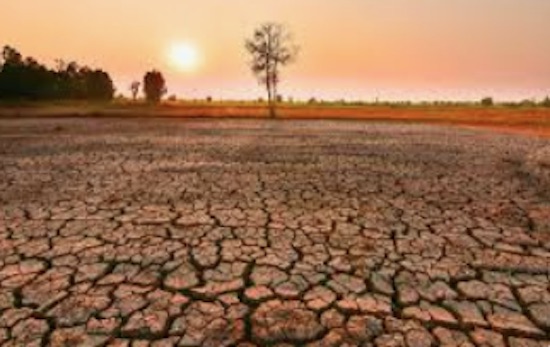
During previous El Niño episodes, the country experienced severe drought conditions affecting major agricultural districts. Paddy cultivation suffered significant losses, irrigation reservoirs reached critically low levels, and hydroelectric generation was constrained. In some years, drought conditions were followed by unusually intense rainfall, creating additional challenges for disaster management authorities.
These experiences offer important lessons.
First, delayed responses increase economic costs.
Second, fragmented institutional action weakens preparedness.
Third, public trust becomes critical when governments need citizens to cooperate in water conservation, energy management, and disaster mitigation measures.
The country’s response to future El Niño threats must therefore be proactive rather than reactive.
Bringing Stakeholders Together
One of the greatest challenges facing any preparedness effort is coordination.
The Ministry of Agriculture, Ministry of Irrigation, Ministry of Health, Ministry of Power and Energy, Disaster Management Center, provincial councils, local authorities, private sector organizations, farmer associations, universities, research institutions, media organizations, and civil society groups all possess pieces of the solution.
Yet these institutions often operate independently.
The Government should consider establishing a National El Niño Preparedness Task Force chaired at the highest political level and supported by a technical advisory committee consisting of (i) meteorologists, (ii) climatologists, (iii) agricultural experts, (iv) economists(v) health specialists, and (vi) disaster management professionals.
Such a structure would improve coordination, reduce duplication, and strengthen accountability.
Most importantly, it would create a platform where decisions are informed by science rather than politics.
Water Security: The Foundation Of Preparedness
Water management should become the centerpiece of the national preparedness strategy.
Reservoir management plans must be updated well in advance. Water conservation campaigns should begin immediately. Leakages within water distribution systems should be identified and repaired.
Local authorities should assess water storage capacity and emergency distribution mechanisms.
Communities must be educated on water-saving practices before shortages emerge.
Water security is not merely an environmental issue; it is an economic, social, and national security issue.
Without water, agriculture, industry, electricity generation, and public health all come under pressure.
Agriculture: Protecting Farmers And Food Security
Agriculture remains one of the sectors most vulnerable to El Niño.
Preparedness measures should include the promotion of drought-resistant crop varieties, improved irrigation techniques, climate-smart farming practices, and timely dissemination of weather information to farmers.
Agricultural extension services must play a leading role in translating climate forecasts into practical guidance.
Crop diversification should also be encouraged to reduce dependence on weather-sensitive production systems.
A special focus should be placed on protecting smallholder farmers, who often possess limited financial capacity to absorb climate-related losses.
Failure to protect agriculture ultimately threatens food security and rural incomes.
Public Health: Protecting Communities
Climate-related events frequently generate public health challenges.
Drought conditions can reduce access to safe drinking water, while extreme temperatures increase health risks among vulnerable populations.
Preparedness planning should therefore include health surveillance systems, emergency medical readiness, community awareness programmes, and special protection measures for elderly citizens and children.
The Ministry of Health should coordinate closely with local authorities and community organisations to ensure rapid responses when climate-related health risks emerge.
Public health preparedness should be viewed as an investment rather than an expenditure.
Disaster Risk Management: Moving From Reaction To Prevention
Historically, disaster management efforts often receive attention after a crisis has occurred. El Niño preparedness provides an opportunity to change this approach.
Early warning systems should be strengthened and integrated across agencies. Emergency response plans should be tested through simulation exercises. Disaster response teams should be adequately trained and equipped.
The goal should be prevention and mitigation rather than post-disaster recovery.
Every dollar spent on preparedness saves many dollars in future reconstruction costs.
Energy Security: Preparing For Power Challenges
Sri Lanka’s electricity system remains partly dependent on hydropower generation. Extended drought conditions can significantly reduce reservoir levels and power generation capacity. Preparedness planning should therefore assess alternative energy options, improve energy efficiency measures, and encourage conservation campaigns. Renewable energy investments become even more important in this context. Energy security is essential for maintaining economic stability during climate-related disruptions.
Economic Protection And Social Safety Nets
Climate shocks disproportionately affect low-income households.
Preparedness planning should include targeted assistance mechanisms for vulnerable groups, support programmes for affected farmers, and measures to stabilise essential food supplies.
Government agencies should also monitor market conditions carefully to prevent excessive price increases.
A credible preparedness strategy must recognise that resilience is not only physical but also economic and social.
Protecting vulnerable citizens strengthens national resilience.
Continuous Monitoring And Transparent Communication
Perhaps the most important component of preparedness is information.
Forecasts will evolve over time. Risks may increase or decrease. Government agencies must therefore establish systems for continuous monitoring and regular public communication. Transparency is essential. Citizens are more likely to cooperate when they trust the information they receive.
Regular public briefings, publication of preparedness indicators, and open sharing of scientific assessments would strengthen public confidence and improve compliance with preparedness measures.
Trust is a strategic national asset during crises.
The Need For Bipartisan Support
Preparedness planning should not become another arena for political confrontation. El Niño does not distinguish between political parties, provinces, ethnic groups, or social classes.
Its consequences affect the entire nation.
This is one area where both government and opposition should seek common ground. Constructive scrutiny and accountability are necessary in any democracy. However, preparedness efforts benefit when political leaders present a united commitment to protecting citizens.
National resilience becomes stronger when political competition does not undermine collective action. The opposition can contribute positively by offering policy recommendations, monitoring implementation, and supporting evidence-based solutions.
Such cooperation would strengthen democracy rather than weaken it.
A National Test Of Governance
The emerging El Niño threat presents Sri Lanka with a choice.
The country can wait until droughts, water shortages, agricultural losses, and economic disruptions become visible before responding.
Or it can act now.
President Dissanayake’s initiative has created an opportunity to move from warning to preparedness. Whether that opportunity is fully realised will depend on leadership, coordination, transparency, and public participation.
Ultimately, El Niño preparedness is not merely a climate issue. It is a test of governance.
If Sri Lanka can build a credible, transparent, science-based, and nationally supported preparedness framework, it will not only reduce the risks associated with El Niño but also strengthen the country’s capacity to manage future climate challenges.
The question facing Sri Lanka today is therefore simple. Can the nation unite before the storm arrives?
The answer will determine how successfully it navigates the challenges ahead.
*The writer, among many, served as the Special Advisor to the Office of the President of Namibia from 2006 to 2012 and was a Senior Consultant with the UNDP for 20 years. He was a Senior Economist with the Central Bank of Sri Lanka (1972-1993). He can be reached via asoka.seneviratne@gmail.com