

By Premakumara de Silva –

Prof. Premakumara de Silva
As the world accelerates into a hyper-digital era, how do we ensure that our ancestral knowledge, vibrant rituals, and traditional arts do not become static museum exhibits, but remain active blueprints for our future?
Every year on October 17, the global community pauses to celebrate the International Day of Intangible Cultural Heritage. This day serves as a profound reminder that a nation’s truest wealth lies not just in its stone monuments or physical artifacts, but in the living, breathing traditions carried within the minds and hands of its people. Intangible cultural heritage (ICH) is constantly evolving, shaped by the people, places, and circumstances that give it meaning. It is a “living heritage” that adapts to the rhythm of time.
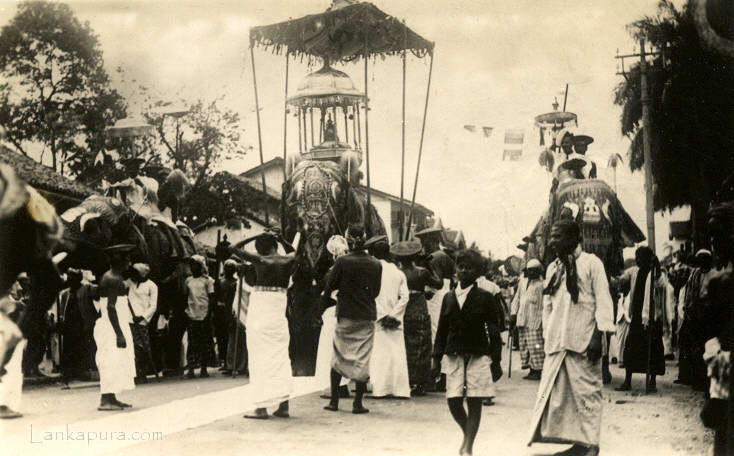
Sri Lanka possesses an exceptionally rich repository of these living traditions. From the rhythmic storytelling of Rookada Natya (traditional string puppetry) and the complex weaves of Dumbara Ratā Kalālā (Dumbara mats)—both inscribed on the UNESCO Representative List of Intangible Cultural Heritage of Humanity—to the sacred grandeur of the Kandy Esala Perahera, the deep roots of Hela Vedakama (traditional medicine), and our unique oral folklore, our island is woven from intangible threads.
The Anthropological Lens: A Shared Global Contribution
The recognition of Sri Lanka’s living heritage on the global stage owes a profound debt to a brilliant lineage of both local and foreign anthropologists. For decades, heritage conservation on the island was focused primarily on tangible archaeology. It was the immersive, ground-level research of these scholars that shifted the paradigm toward a “community-first” approach, transforming our understanding of culture from historical relics into a living, breathing ecosystem.
Eminent Sri Lankan scholars like Gananath Obeyesekere, S.J. Tambiah, H.L. Seneviratne, and Kitsiri Malalgoda provided groundbreaking insights into the island’s religious landscapes, caste dynamics, and ritual performances. Their work dismantled simplistic views of tradition, showing how rituals like Shanthikarma or the structural organization of the Kandy Esala Perahera function as vital systems of social meaning and community identity.
Concurrently, renowned overseas scholars brought invaluable comparative frameworks to Sri Lankan ICH. Anthropologists such as Bruce Kapferer, with his exhaustive studies on low-country demonic exorcism rituals (Tovil), and David Scott, who examined the intersections of political memory and cultural transmission, helped place Sri Lanka’s living traditions within global discourse.
Crucially, the dialogue between international and local scholarship has deeply enriched our understanding of how living heritage survives social change. The collaborative and independent ethnographic insights of scholars like Bob Simpson have structurally decoded the transmission of ritual knowledge, particularly within the southern Berava (drummer) caste communities. My own research in this domain has sought to expand on these insights by investigating how ritual specialists navigate cultural ambivalence, negotiate caste identity, and adapt their sacred craftsmanship and healing performances to modern markets and global tourism, illustrating the fine grain of local experience.
Furthermore, my own field studies documenting the existential struggles and cultural continuity of the indigenous Vedda community, alongside detailed analyses of globalization’s transformative impact on planetary and sacred pilgrimage rituals like Sri Pāda, have sought to provide the vital empirical baseline needed to bridge historical folklore with contemporary survival.
By documenting not just the art forms, but the lived realities, pedagogical lineages, and socio-economic challenges of the practitioners themselves, this research community provided the empirical foundation required to build national inventories and secure global validation.
The Crucible of Modernization
Yet, we live in a world of rapid social change, migration, digital transformation, and growing cultural homogenisation. In this environment, keeping ancient traditions alive is becoming an increasingly important challenge. When younger generations migrate or move away from ancestral villages, the chain of oral transmission breaks.
For modern heritage management, safeguarding this living heritage means looking far beyond rigid preservation alone. It means supporting the fragile communities that sustain these practices, creating dynamic spaces for younger generations to engage with them, and crucially, recognizing that traditions can evolve without losing their core significance. A tradition that cannot adapt often risks dying out.
Moving Beyond Mere Preservation
Therefore, the question facing Sri Lankan policymakers, educators, and citizens today is not simply how we preserve the past, but how we ensure that cultural knowledge, skills, and practices remain relevant and meaningful in the future.
To capture the imagination of the youth, traditional crafts like pottery, brasswork, or mask-carving must be linked to economic viability and modern design. Our rich folklore and performing arts need to find a home in digital spaces—through gaming, animation, and digital storytelling. When a young artisan sees a viable career path and global appreciation for their inherited skill, the heritage transitions from a historical burden to a point of contemporary pride.
The Choices We Make Today
Living heritage survives only when it is actively practised, shared, and passed on. It cannot be locked in a glass case; it must be lived on the streets, practiced in homes, and celebrated in communities.
Whether Sri Lanka’s breathtaking intangible wealth remains a vibrant part of our daily identity or fades into mere chapters of a history textbook depends entirely on the choices we make today. This International Day of Intangible Cultural Heritage, let us commit to not just remembering our traditions, but keeping them alive, adaptable, and thriving for generations to come.
*Premakumara de Silva, Department of Sociology, University of Colombo, A member of National, and UNESCO ICH Committee