


By Jehan Perera –
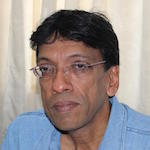
Jehan Perera
Foreign Minister Vijitha Herath’s participation at a civil society organised event to mark the 25th anniversary of UN Security Council Resolution 1325 indicated a willingness on the part of the government to work with civil society. So far the government has not been engaging proactively with civil society organisations and actively seeking their inputs. His speech at the event suggested a rethinking by the government of its relationship with civil society. The symbolism of his presence was not lost on those who attended. It suggested the possibility of a shift from distance to dialogue, and from mutual reserve to a more open approach to partnership.
This potential shift needs to be seen against the background of the experience of civil society organisations. Previous governments, including the Gotabaya Rajapaksa government which started its term of office with a severe assault (though it was mostly verbal) on civil society organisations through its NGO Secretariat, soon began to invite them for discussions especially when faced with problems of dealing with the international community. However, the NPP government has so far preferred to keep its own counsel, neither consulting civil society organisations nor explaining its plans to them to get their cooperation. This has created a sense of uncertainty about whether civil society would have space to contribute to national problem solving.
It was therefore significant that at the 1325 event which was organised by the Association of War Affected Women together with the National Peace Council and the Peoples Action for Free and Fair Elections, Minister Herath said that the government was willing to join hands with civil society to address problems. He also explained that the distance between the government and civil society in the first year was due to their focus on laying the foundations for the new direction that the country is taking. The explanation gave those present a basis to hope that the limited engagement so far was not a permanent position but a transitional stage.
Minister Herath in his speech also outlined the new direction that the government was taking in respect to women. It had passed new laws relating to prevention of domestic violence against women and had also appointed a National Women’s Commission, both of which had been proposed by previous governments which had failed to get them through parliament. These developments are to be welcomed because they suggest that the government is willing to complete unfinished commitments on women’s protection that had remained pending for many years.
UNSCR 1325
UN Security Council Resolution 1325 is about the need for women to have a more empowered role in peace and reconciliation processes. It recognises that women experience conflicts differently from men and that they must have a real say in negotiations, peace building and decisions that shape the recovery of societies after conflict. It calls on governments to include women at every level where decisions are made about war and peace. For Sri Lanka, the value of 1325 lies in recognising that women have carried much of the burden of the war, yet continue to have limited space in formal peace and governance processes.
One of the keynote speakers at the event, Prof Deepika Udagama, reviewed the global context in which the rule of international law no longer prevails. She noted that studies have shown that about three-fourths of casualties in modern day armed conflicts are women and children. Also, only about one out of ten peace negotiators were women. These figures illustrate both the vulnerability of women during conflict in which they are the main victims and the big gap that remains in allowing women to participate in decisions on peace.
The world once operated on a set of basic understandings about cooperation, shared rules and a willingness to resolve disputes through international institutions. That system was imperfect but it set certain expectations that most countries accepted. Today that sense of shared obligation is weakening. Powerful states increasingly act on the basis of their own immediate interests with little regard for collective principles or the authority of global bodies. As a result, rules that once helped to limit conflict or encourage respect for international commitments are observed less often, creating a sense of global disorder.
In this context, with the UN Secretary General’s position falling vacant at the end of this year, Prof Udagama proposed that Sri Lanka should advocate for a woman secretary general of the UN. Her argument was that global governance would benefit from leadership that reflects the experiences and insights that women bring especially in relation to the values sought to be upheld by UNSCR 1325. She suggested that Sri Lanka could champion this idea as part of its commitment to a more inclusive multilateral system.
But first Sri Lanka would need to deal with its own patriarchal dominance of men over women, which is deeply rooted in Sri Lanka, as it is in many parts of the world particularly in South Asia. A way to understand patriarchy is to see it as a system in which men hold most of the authority and women are expected to play supporting roles rather than leading ones. Despite women’s literacy exceeding that of men, and having elected the first woman prime minister in the world, the role of women in governance and decision making in Sri Lanka has been woefully inadequate.
Addressing Issues
Sri Lanka has the lowest proportion of women in parliament in South Asia with the exception of Maldives. Although the prime minister is a woman there are only three women in the cabinet which is 23 in all, making the women a small minority. At the local government level, thanks to the 25 percent quota for women in local government, women are numerically present. But they are disempowered in the councils. Due to a quirk in the electoral system, most of the women who are elected through the proportional representation scheme of the local government authorities are those in the opposition. They are therefore disempowered twice over, by being women in a patriarchal society and by being in the opposition.
These structural barriers must be taken seriously if Sri Lanka is to take up Prof Udagama’s challenge and is to advocate for a woman Secretary General in the UN. It needs to first get its own house in order. There need to be more women in positions of decision making at every level. The call for global equality will seem hypocritical if the country does not show progress on equality at home.
At the 1325 event, Minister Herath spoke of aiming for a 1/3 representation of women in decision making positions. An opportunity for the government to show its bona fides with regard to the empowerment of women would be to expedite the passage of the new electoral system for the provincial councils which contains a 25 percent women’s quota. But there is a question mark whether those elections will be held any time soon. There is concern that the government may utilise the strategy of the previous governments and continue to postpone the provincial council elections on the grounds that it cannot get all party agreement on the re-demarcation of electorates.
The people look to the NPP government to make a break with the past practice of governments to benefit themselves at the expense of the people. Provincial Councils are a mechanism by which two marginalised sections of the people can be brought into governance. The first are the ethnic minorities in the north and east and also in the central hills who will get an opportunity to be decision makers in provinces in which they are a majority or are present in substantial numbers. The second are women who will benefit from the 25 percent quota. The empowerment of these two groups and winning their trust and confidence in the government’s commitment to their wellbeing will contribute to the empowerment of the entire society and to Sri Lanka’s international credibility.
leelagemalli / November 25, 2025
At a time when free speech is severely restricted, this author describes this topic in a hilarious manner.
In fact, I couldn’t believe my eyes today when Sabahanayaka said, “I don’t care if you’re the opposition leader or not; what I’m saying are the guidelines, etc.” This is the shocking level of exchanges heard from the country’s top institutions today. 80% of traditional and decent levels of parlamentary procedures are being violently enforced by a group of facists who came to power by duping a gullible majority who would have been easy prey to any crook in a lanken type of election. Ironically, they take advantage of being elected through democratic means. Alas, Sri Lanka!
/
Ratnam Nadarajah / November 25, 2025
Hello Jehan
Prof. Udagama’s suggestion for a women UN secretary general is a welcome notion.But whether the US would support /endorse such a drastic change especially under Donald Trump is debatable
Back to your main theme of your write up
Yes it’s a very welcome move by NPP’s willingness to work along with civil society on matters concerning the welfare of women and other issues of national importance
Ratnam Nadarajah
/
RBH59 / November 25, 2025
The NPP Government is Clearly movinG in the right direction, and though the first year had some unavoidable shortcomings, these are already being corrected. Foreign Minister Vijitha Herath’s participation at the 1325 anniversary event signals a new openness toward civil society. This reflects an important shift from distance to genuine dialogue. Unlike previous governments that engaged civil society only under pressure, the NPP is adjusting its approach early… The initial focus on stabilisation is now giving way to broader consultation. This Willingness to rethink and listen shows responsible and mature governance…
. Civil society and citizens now have space to offer ideas and support national problem-solving. It is important that we encourage this positive direction and contribute constructively…..
/