

By Mahil Dole –

Mahil Dole
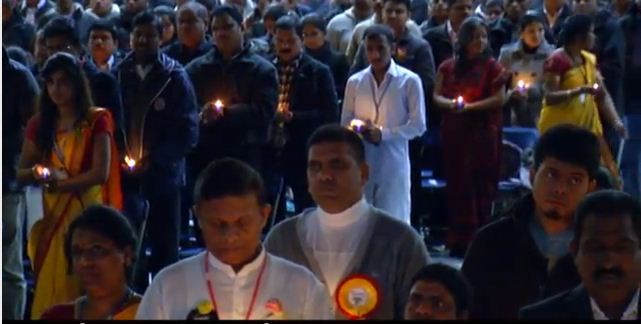
As preparations for commemorative events continue both overseas and, more quietly, inside Sri Lanka, two formulations have gained renewed circulation. The first asserts: “In any war, when a nation loses their right to self-determination and their sovereignty through immense sacrifices of life, that very loss becomes the birth of their nation state.” The second states: “No state should be allowed to project repression beyond its borders under the guise of counter-terrorism. Peaceful advocacy for Tamil self-determination and human rights is not extremism, it is a protected right under international law.”
These statements seek to convert the military outcome of 2009 into the starting point of a continuing claim to separate statehood while placing restrictions on the symbols and memory of the defeated organisation beyond legitimate security policy. Both require precise engagement. Any such engagement must also take account of the Indo-Sri Lanka Accord of 1987, which remains the principal bilateral framework through which the question of political accommodation has been addressed for nearly four decades, and of the newer organisational forms through which Tamil nationalist sentiment continues to express itself.
The Indo-Lanka Accord: Origins and Immediate Outcome
Signed on 29 July 1987 by President JR Jayewardene and Prime Minister Rajiv Gandhi, the Accord recognised Sri Lanka as a multi-ethnic and multi-lingual society and committed both governments to a negotiated political settlement based on the devolution of power. It provided for the introduction of provincial councils and led directly to the Thirteenth Amendment to the Constitution. In return, India undertook to ensure that its territory would not be used for activities prejudicial to Sri Lanka’s unity, sovereignty and territorial integrity, and an Indian Peace Keeping Force was deployed.
The Accord was an attempt to halt an escalating conflict by combining constitutional devolution with external security guarantees. It failed in its immediate objectives. The Liberation Tigers of Tamil Eelam rejected the framework, turned its arms against the IPKF, and continued to eliminate Tamil political figures who accepted settlement within a united Sri Lanka. The subsequent withdrawal of Indian forces left the Thirteenth Amendment in place but only partially implemented. Provincial councils were established, yet elections have been repeatedly postponed and key subjects, particularly land and police powers, have never been fully transferred.
Current Geopolitical Function of the Accord
Nearly forty years later the Accord functions less as a completed settlement and more as a durable instrument of Indian strategic interest. New Delhi’s core objectives have remained consistent: preservation of Sri Lanka’s territorial integrity, prevention of any external power from establishing a foothold in the north and east, management of Tamil Nadu domestic political pressures, and retention of decisive influence over Colombo’s external orientation. The call for “full implementation of the Thirteenth Amendment” allows India to address Tamil political aspirations in language that is internationally recognised while simultaneously reinforcing the principle that any such accommodation must occur inside a united Sri Lanka.
In the present environment of India-China competition in the Indian Ocean, this utility has increased. China’s substantial infrastructure presence has given Beijing long-term economic leverage. India’s response has combined economic assistance, security cooperation and continued emphasis on the 1987 framework. The Accord supplies a structured basis for engagement that is difficult for other external actors to match without appearing more directly intrusive. For Sri Lanka it remains both a constraint and a reference point: full implementation would require political decisions successive governments have judged to carry security and majoritarian risks, while incomplete implementation keeps the issue available as a point of bilateral friction and as a mobilising theme for Tamil parties and diaspora networks.
Continuity Through New Organisational Forms
Tamil nationalist activity has not disappeared; it has adapted.
One recent illustration is the Tamil National Green Organization (TNGO), now registered as a political party with the Election Commission of Sri Lanka. Led by a former provincial minister, TNGO seeks to fuse post-2009 Tamil national consciousness with environmental politics and community welfare in the Northern and Eastern Provinces. Its framing holds that environmental protection and Tamil national identity reinforce each other. Tree-planting campaigns, particularly those timed to the Karthigai period in November, are presented both as ecological acts and as gestures that “cool the soul of Tamil nationalism.” The organisation commemorates the Maaveerar period, stresses the continuity of the underlying causes of the earlier armed struggle, and argues that the struggle must now proceed through democratic means. It is critical of what it terms “fake Tamil nationalists” who dilute Tamil identity into broader frameworks, and it engages with other actors in the Tamil nationalist spectrum.
At the same time, TNGO undertakes practical green work, biodiversity awareness, student environmental examinations, home-gardening competitions, and social-welfare activities such as food distribution. Membership is open to Sri Lankan citizens over eighteen who accept its rules. Its registration as a political party is significant: it creates a formal, legal channel through which grievances and claims can be pursued inside the existing constitutional order rather than outside it. In this respect it exemplifies a wider pattern. Older networks continue under new names, and fresh organisations emerge that combine residual nationalist sentiment with other agendas, environmental, welfare or cultural, while remaining within the democratic process. Registration and participation in elections do not dissolve the underlying narrative of unfinished self-determination; they relocate it into the realm of legitimate political competition.
Parliamentary Rhetoric and the Reinforcement of Security Perceptions
The same adaptive continuity appears in parliamentary language. Speaking in parliament on Colombo’s decision to take control of four district hospitals in Tamil areas, an Ilankai Tamil Arasu Katchi member warned: “If the Anura Kumara government snatches provincial powers through anti-Eelam-Tamil micro-politics that absorbs the Provincial Council’s power structures into the central government, we will again demand Tamil Eelam.” It is of course possible that the remark was political rhetoric, a sharp expression of frustration over the incomplete devolution under the Thirteenth Amendment rather than a literal programme.
Yet this is not how such language is received in Colombo. A government that entered office promising to address historical grievances in the north and east finds itself constrained by a security establishment that continues to register residual signals, whether diaspora events that raise altered LTTE flags, memorials for Velupillai Prabhakaran, occasional attempts to finance activity, or statements from Tamil leaders in Sri Lanka or Tamil Nadu that revive the Eelam claim or insist that Prabhakaran and his family remain alive. Each such episode is noted as evidence that the danger has not fully passed, supplying further justification for maintaining the global ban on the LTTE and for caution over the full transfer of provincial powers. The result is a self-reinforcing cycle: residual nationalist rhetoric and overseas commemorations sustain the security rationale, while that rationale in turn limits the political space in which Tamil grievances can be addressed inside the existing constitutional framework.
The Claim that Defeat Creates Statehood
Against this background the assertion that military defeat itself constitutes the birth of a nation-state must be assessed. Self-determination, as recognised in the United Nations Charter and subsequent instruments, primarily protects peoples from external colonial domination. It does not establish a general right to secession from an existing state when an armed movement is defeated. The overwhelming majority of states uphold territorial integrity as a foundational principle. Where internal conflicts have ended in the defeat of a secessionist project, the subsequent task has been the restoration of equal citizenship and the redress of genuine grievances inside the existing state.
The LTTE rejected the very framework of the Indo-Lanka Accord and the Thirteenth Amendment. To treat its later military defeat as the constitutive act of a separate state is therefore to set aside both that rejection and the settled international preference for territorial integrity. Peaceful advocacy for the rights of Tamil citizens, language, land, equal protection of the law and meaningful participation, remains legitimate. Converting that advocacy into a claim that the 2009 outcome itself founds a new sovereign entity does not. Organisations such as TNGO, by seeking registration and operating through democratic channels, illustrate one available path: the pursuit of specific grievances and environmental or social objectives inside the constitutional framework rather than through a renewed claim to external self-determination.
The Distinction Between Rights and Organisational Continuity
The second circulating statement correctly affirms that peaceful human-rights advocacy is protected and that counter-terrorism powers must not become a pretext for ordinary political repression. The necessary clarification concerns the boundary between protected speech and residual activity linked to a still-proscribed organisation. International law does not require any state to treat the symbols or political programme of a listed terrorist organisation as immune from regulation merely because they are presented as cultural or memorial. Sri Lanka’s Prevention of Foreign Terrorist Fighters Bill, approved by a sectoral oversight committee, implements obligations under Security Council Resolution 2178; it criminalises support for terrorist activity without prohibiting discussion of rights within a united Sri Lanka.
When advocacy materials present every limitation on organisational symbols or every residual security measure as transnational repression, they collapse this distinction. The adaptive tactics now visible, local commemorations that omit flags while overseas events retain them, registered parties that combine environmentalism with nationalist memory, and dossiers that recast security laws as inherently abusive, illustrate an attempt to keep the larger claim alive under the cover of protected speech and democratic participation.
Managing the Residual Phenomenon.
A coherent response rests on two lines. Equal citizenship and the redress of concrete shortcomings in language policy, land administration and the equal application of law should be pursued on their merits; such measures strengthen the practical case that political accommodation is realised inside the existing state. At the same time, the organisational ban, the prohibition on material support and cooperation with foreign jurisdictions on residual networks remain necessary precisely because the narrative of unfinished nationhood continues to be cultivated, whether through diaspora events or through newer local formations that preserve elements of that narrative inside legal channels.
Diplomatically, Sri Lanka’s position is strongest when it affirms the rights of all citizens while declining to treat the military defeat of a proscribed organisation as the constitutive act of a new state. The Indo-Lanka Accord, still formally in force yet incomplete in practice, continues to define the available space for that accommodation. States are entitled to maintain the territorial settlement that emerged from an internal conflict, particularly when the defeated party rejected earlier political compromises and remains listed as a terrorist organisation by multiple governments. They are simultaneously obliged to ensure that citizens enjoy the full protection of the law and meaningful avenues for political participation, including through registered parties that choose to operate inside the constitutional order.
National security policy that recognises both the historical character of the LTTE and the continuing utility of its symbols and narratives is better placed to manage the residual phenomenon than policy that either ignores it or treats every commemorative act as an imminent threat. The former approach requires sustained intelligence work, clear legal distinctions, and selective political accommodation on genuine rights issues. The latter approaches either concede the narrative or reinforce it. The dual track now visible, quiet local commemorations that must negotiate venues and omit flags, explicit overseas events, registered organisations that fuse environmentalism with nationalist memory, and advocacy dossiers that seek to delegitimise the security framework, shows that the contest has moved from the battlefield to the domain of law, memory and international pressure. It has not ended.
(This article draws on the writer’s direct experience as a member of law enforcement, a masjid trustee, and a member of the Sri Lanka Wakf Board)
*The writer is a retired Senior Superintendent of Police, former head of the counter terrorism desk at the state intelligence service, a former member of the Sri Lanka Wakfs Board, and the author of “Security Beyond Enforcement: Practical Approaches for a Safer Nation” (2026). Email-mahildole54@gmail.com