

By Jehan Perera –
Jehan Perera
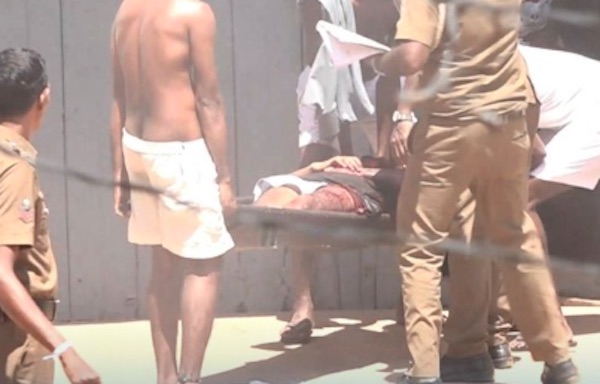
The prison violence in Negombo has become the first major crisis to confront the government since it came to power. The government may or may not be responsible for creating the conditions that have accumulated over decades and made the prison system a powder keg. The fact is the government’s Ratama Ekata anti-drug crackdown boosted the countrywide prison population from 28,000 in late 2024 to 41,000 in 2026. The conditions of imprisonment include chronic overcrowding, poor infrastructure, inadequate staffing, the penetration of organised crime and drug networks into prisons, and the long neglect of prison reform by successive governments. The Negombo prison was housing approximately 2,600 inmates at the time of the clashes although it was built for only about 650. By the time order was restored, 29 people, including seven prison officers, had lost their lives and more than one hundred others had been injured.
Justice Minister Harshana Nanayakkara accepted responsibility before parliament, visited the prison and announced immediate measures including legislative changes to facilitate bail and alternatives to remanding prisoners. The NPP government needs to accept responsibility for its failure to anticipate the danger, to respond with sufficient speed and competence once the problem had erupted. A dangerous situation can be observed countrywide with more than 42,000 prisoners being held in prisons designed to accommodate about 10,000 inmates. The magnitude of the Negombo prison tragedy needs to be understood not merely as an isolated incident but as a warning that the government cannot postpone structural reforms indefinitely. A government elected on the promise of changing the system cannot justify repeating the failures of its predecessors on the basis that it is sincere and uncorrupt unlike them.
The failure to move beyond promises has become evident in several other sectors as well. Farmers continue to agitate over unresolved problems. Plantation workers continue to seek meaningful integration into national life. Many of them who were victims of Cyclone Ditwah continue to live in miserable conditions due to the government’s slowness in dealing with their problems of their lack of ownership of lands and homes. The Mylathamadu cattle farmers of Batticaloa have issues once again even after two presidents, President Ranil Wickremesinghe and now President Anura Kumara Dissanayake ordered evacuation of intruders in terms of court orders. But local police and Mahaweli Authority officials seem slow to take any actions even to the extent of not complying with judicial decisions. Victims of past human rights violations and thousands of families of missing persons are still waiting for justice. The promised repeal of the Prevention of Terrorism Act has yet to materialise. Prison reform has now joined this growing list of deferred commitments.
NPP Pledges
The National People’s Power election manifesto promised not merely honest government but systemic transformation. Under the section dealing with prisons, it pledged to restructure the prison system, reduce overcrowding, expand open prison facilities, strengthen rehabilitation through education, vocational training and psychological support, establish a formal parole system and transform prisons from places of punishment into centres of rehabilitation and reintegration. Those promises reflected international best practice and recognised that a humane prison system is essential to a democratic society. Yet nearly two years into its term little visible progress has been made in implementing these reforms.
Sri Lanka has witnessed different types of prison violence. Some have erupted spontaneously because of intolerable prison conditions, overcrowding and frustration. Others have occurred under circumstances that raised alarming questions about state complicity. The massacre of 53 Tamil political prisoners inside Welikada Prison during the anti-Tamil violence of July 1983 remains one of the darkest chapters in the country’s history. Those prisoners were not protected despite being under state custody. The Mahara prison violence of November 2020, in which eleven inmates were killed after protests over Covid conditions, similarly generated serious allegations regarding the targeted use of weapons and led to widespread calls for an independent investigation.
Following the deadly violence at Mahara Prison during the Covid pandemic, then opposition party leader Anura Kumara Dissanayake declared in parliament that “those who are remanded and imprisoned are under the custody of the state. Therefore, the primary responsibility for the safety of the lives of the prisoners and detainees who are in state custody lies with the government.” He further said that “it is entirely unacceptable in a democratic nation that upholds human rights for prisoners who are under the protection of the state to be gunned down while in government custody.” But in the Negombo tragedy once again the state, with President Dissanayake at the helm, was unable to protect the inmates though there is no evidence that the government orchestrated the violence. Being in power for two years there is a rightful expectation that it could have taken better preventive action.
Urgency Needed
There are two special conditions, however, that make the Negombo prison tragedy a possible turning point rather than merely another episode in Sri Lanka’s long history of prison violence. The first is that until these events the country had enjoyed an extended period without major organised political or communal violence. This improvement was recognised internationally when Sri Lanka rose thirty places in the 2025 Global Peace Index to rank 67 among 163 countries. The Index measures countries on three broad indicators, namely the level of societal safety and security, the extent of ongoing domestic and international conflict, and the degree of militarisation. The improvement reflects the country’s recovery from the years of political upheaval and economic collapse and suggests that Sri Lanka is moving towards a more peaceful future.
The second distinguishing feature is that the present government has no known links to organised crime or the underworld that has so often been associated with sections of the political establishment in the past. This is one of its greatest strengths. President Anura Kumara Dissanayake has spoken publicly about the nexus between organised crime, drug trafficking, money laundering and politics, and has challenged political parties to take action against members who maintain links with criminal networks. That willingness to confront organised crime gives the government a credibility that previous governments lacked. But integrity by itself is not enough. Honest intentions must be matched by administrative competence and political will. A government that seeks to change the system must demonstrate that it can reform and manage the institutions of the state more effectively than those who came before it. The Negombo tragedy suggests that this remains a major challenge.
The government’s greatest asset remains the trust that the public has placed in its sincerity. Unlike many previous governments, it is not burdened by allegations of protecting organised crime or profiting from corruption. That gives it a unique opportunity to undertake reforms that others could not credibly pursue. It needs to develop the confidence to implement on multiple fronts. The Negombo prison tragedy should become the catalyst for implementing the wider programme of reform promised in the election manifesto. Prison reform cannot be viewed in isolation. It is part of the broader commitment to change the system, strengthen public institutions and ensure that the state serves the people with competence as well as integrity. The reforms promised to rice farmers, cattle herders, plantation communities, victims of past human rights violations and all those who looked to the government for a new beginning deserve the same sense of urgency. Other priorities cannot justify postponing the structural changes that the NPP promised and the country has waited for decades.
Naman / July 14, 2026
People from different religious or ethnic groups erected very glad to see AKD becoming the President and later for NPP getting overwhelming parliamentary majority. People has had enough of pseudo patriots who were behaving like MAFIA running various nefarious activities.
It is going to be be two years since the current government was elected to bring about the STRUCTURAL REFORMS/ SYSTEMIC TRANSFORMATION. Speed of taking action is very important for the people to keep the faith in AKD’s NPP leadership.
/
Naman / July 14, 2026
Recent announcement by the Deputy Defence Minister Major General Aruna Jayasekara that the owners of the private lands around the High security Zones of N& E will not be given back their lands is a quite a DISAPPOINTMENT for the Tamil Speaking Citizens (TSC).
Why do we need this high security zones after the brutal elimination of the Tigers. I do hope that the mentality of majoritarian rule/control isn’t there with AKD’s government.SL Tamils are not the enemies of the state. They do want to live in a peaceful harmonious & prosperous united SL.
Lands around the Palaly Airport could be purchased from the original owners at an agreed price in order to develop the Airport to a REALLY big International AirPort.
/
Ajith / July 15, 2026
“Other priorities cannot justify postponing the structural changes that the NPP promised and the country has waited for decades.”
If AKD really interested in the country, Sinhalese cannot rule all the people of this country. It is hand over the power of the North East Tamil people who were in majority in the North East and Up country Tamils to become the rulers of their own places.
/
SJ / July 15, 2026
Never think of the Muslims.
Are they to be ruled by Tamils, or rather the striped kind?
/
Naman / July 15, 2026
NPP Government has to tackle issues of multiple nature.
1] Alleviating poverty by improving the economy of the country.
2] Reducing the cost of living
3] Aiming to keep the prices of essentials items low/affordable.
4] Reducing the Air & Noise pollution
5] Being prepared to face natural disasters–Floods/Cyclones/ Droughts
6]Ensuring the Food Security
7]Tackling Racial &religious HATRED in the country
8] Ensuring Road safety by disciplining errand drivers.
9]Defence officials to be PROFICIENT in all 3 languages & to be from ethnic minorities too.
10] Instilling MORALITY/ HUMANITARIANISM in the country
to continue
/
Native Vedda / July 17, 2026
Naman
–
“Reducing the Air & Noise pollution”
–
First of all, there should be a blanket nationwide ban on religious organizations using loudspeakers in Sri Lanka. Religious institutions should use Facebook Live, YouTube, Instagram, Zoom, and other online platforms to relay their religious messages electronically, so that whoever wants to listen to all that mumbo jumbo can use Bluetooth devices or earpieces to enjoy their freedom.
–
Those who enjoy their religious freedom should not infringe upon my personal freedom to live in a noise-free environment.
–
Hope AKD would take notice of these religious noises.
/
Naman / July 15, 2026
11] Laws enacted to protect the youth from sexual predators from lay or clergy backgrounds.
12] supporting the long slaved up country estate workers
13] Helping the Drug addicts/users to wean off the narcotics as well as alcohol abuse.
14] Corruption/Bribery FREE public administration
15] Changes to Educational system in order to have graduates/technical experts/ vocationally trained ones that will be needed to develop the country.
Sending them overseas as what is currently happening will NOT help the motherland to become prosperous.
16] Improving the Transport system is a must to develop the country
/
Rohan25 / July 15, 2026
Sri Lanka’s modern crises stem from a continuous cycle of majoritarian ethno-religious politics and catastrophic economic mismanagement dating back to its 1948 independence. For decades, successive governments weaponised Sinhala-Buddhist nationalism to consolidate power, institutionalising racism, disenfranchising minorities, and triggering a 26-year civil war. This structural focus on ethnic division consistently sidelined sustainable fiscal planning, ultimately fracturing the social fabric and causing total economic bankruptcy. 1948 Disenfranchisement: Passed citizenship acts stripping 700,000 Up-Country Tamils of voting rights and citizenship to instantly reduce minority political leverage.1956 “Sinhala Only” Act: Replaced English with Sinhala as the sole official language, purging Tamil public servants and causing deep institutional alienation. State-Sponsored Colonisation: Funded agricultural schemes relocating Sinhalese farmers into Tamil-majority areas to strategically dilute minority voting power.1972 Constitution: Removed minority protections, declared a unitary state, and granted Buddhism foremost place to cement an ethnocratic hierarchy. State-Backed Pogroms: Instigated periodic anti-Tamil riots (1956, 1958, 1977) culminating in the 1983 Black July pogrom, which ignited the civil war. and this discrimination still continues.
/
The Truth / July 16, 2026
Mr 25, Can you explain how you get upvotes far in excess of the ethnic division in Sri Lanka, even the common opinion polls which are against your narrow opinions strongly ?
How do you assess your integrity ? Kavuda Hora ?
Do you think highly of yourself like our friend Leela from Germany ?
At least Leela looks so impressive when standing next to those Aryans in Germany.
When you stand next to the Aussies , you look like an empty Beer can !
/
Rohan25 / July 17, 2026
It is truly touching how much time, energy, and mental real estate you dedicate to me, my upvotes, and my height. If I could monetize your obsession, I would be as rich as you pretend to be in London. Tell me, do you practice obsessing over strangers in the mirror, or does it just come naturally? You ask who the thief is while actively trying to steal my peace of mind with the same copied-and-pasted questions. The only thing being stolen here is your own tranquility regarding my internet popularity. At least an empty can serve a purpose—it holds more value than the empty, recycled insults you keep copy-pasting into my inbox.
/
Rohan25 / July 17, 2026
Your fixation on my metrics is more dramatic than a prime-time British soap opera. Since you clearly enjoy my content enough to study my statistics and critique my posture next to ‘Aussies,’ I will be sure to keep giving you a front-row seat. What shall we analyze next week? I would rather look like an empty beer can next to Aussies than spend my life in London acting like an empty recycling bin for other people’s achievements. It sounds like you need to start a support group for people whose entire self-worth depends on the height of the individuals they stand next to. It is simple math: my upvotes exceed ethnic percentages because—shockingly—people of all backgrounds recognize logic. I know that is a foreign concept when you view the entire world through a tribal lens. As for my integrity, it is doing great but thank you for checking in from your permanent residency on my profile page.
/
Rohan25 / July 15, 2026
Post-Conflict Tamil Repression in Sri Lanka. Militarisation & Land Grabs: Heavy military occupation in Northern and Eastern Provinces deprives Tamils of private and agricultural land. Demographic Engineering: State-sponsored Sinhalese colonisation alters traditional demographics and systematically erases local Tamil and Muslim heritage. Cultural Suppression: Authorities target Hindu sites for Buddhist redesignation while actively banning peaceful civil war memorials. Judicial Failure & Abuse: Government bodies refuse to prosecute war-era crimes, weaponize the Prevention of Terrorism Act (PTA), and ignore enforced disappearances. Economic Exclusion: Tamil regions suffer disproportionately high poverty rates and restricted access to essential public services. Political Demands: United Tamil political parties demand long-overdue provincial elections, regional autonomy, and true power-sharing within a united state. Because state rhetoric regarding “national reconciliation” has failed, the UN continues collecting and preserving evidence of conflict abuses to pursue external accountability.
/
Rohan25 / July 15, 2026
The Tamil population dropped significantly since independence. The percentages involve two distinct groups: Sri Lankan Tamils (indigenous to the island) and Indian Tamils (brought over by the British as plantation labourers). The 1946/1953 Censuses: Shortly around independence, the total Tamil population (Sri Lankan and Indian Tamils combined) made up roughly 23% to 25% of the island’s population. The 2024 Sri Lankan Census: Preliminary data indicates that Sri Lankan Tamils constitute approximately 12.3% of the population, while Indian/Up-Country Tamils comprise about 2.8%, bringing the total Tamil population to roughly 15.1%. This decline happened 1) Mass Repatriation to India: Immediately following independence, the Sri Lankan government passed the Citizenship Act of 1948, which stripped the vast majority of Indian Tamils of their citizenship. Under subsequent pacts between Sri Lanka and India (such as the 1964 Sirima-Shastri Pact), hundreds of thousands of Indian Tamils were systematically repatriated to India, causing an immediate drop in the island’s total Tamil percentage. 2. The Civil War and Diaspora: The 26-year civil war, punctuated by anti-Tamil pogroms (such as Black July in 1983), forced a massive displacement of Sri Lankan Tamils. An estimated one-third of the Sri Lankan Tamil population fled the country, creating a large diaspora in countries like Canada, the UK, India, and Western Europe.
/
SJ / July 15, 2026
When did the “Indian Tamil” begin to count for the Jaffna Tamil nationalist?
they wre viewed with worse contempt than the ‘low caste’ Tamils of the North.
*
Do you know how many Tamil MPs collaborated with the UNP in that evil act?
/
Rohan25 / July 16, 2026
Let me get this straight: because Tamils aren’t a flawless, utopian monolith, state-sponsored marginalisation is totally fine? Brilliant logic. By that standard, given the massive caste and regional divides within the Sinhalese community, the state should just oppress them too, right?
Also, love how you casually rewrite history. Yes, a handful of elite Jaffna MPs voted to strip Indian-origin estate Tamils of their citizenship. It’s almost like… politicians can be self-serving? But let’s not let the actual facts get in the way of your narrative: the vast majority were against and broke away immediately to form the Federal Party specifically to fight that betrayal. Using a 1948 voting record of a few elites to justify decades of state-sponsored, structural discrimination against an entire population in 2026 is top-tier mental gymnastics. If you’re going to audition to be the state’s chief apologist, at least pick a less lazy script.
/
Rohan25 / July 16, 2026
Yes, it is true that caste and regional prejudices exist among Tamils, just as they do among the Sinhalese. But pointing out our internal flaws does not magically justify the Sinhalese state’s institutionalized discrimination against the island’s Tamils. The existence of Tamil prejudice doesn’t give a government the green light to deny citizens their language rights, colonize their lands, and systematically marginalize them. Let’s not pretend private discrimination is equal to state-sponsored disenfranchisement. You’ve clearly mastered the art of false equivalence! Pointing to Tamil caste issues to excuse the Sinhalese state’s institutionalized marginalization of all Tamils, including Indian origin estate Tamils, is a brilliant distraction tactic. Private, community prejudices are bad, but state-sponsored discrimination backed by the military, systemic laws, and state apparatuses is on a completely different level.
/
SJ / July 15, 2026
“The 26-year civil war, punctuated by anti-Tamil pogroms (such as Black July in 1983),”
When did the 26 year civil war start? If it ended in 2009 it could have started only in 1983.
An interesting punctuation to occur right at the start!
You really can be funny. Thanks for the good laugh.
/
Rohan25 / July 16, 2026
Glad I gave your lone brain cell a workout. “Punctuated” means marked at intervals, not “only happened once.” Both Black July and the war ignited in July 1983—mind-blowing, I know, but two things can happen in the same month. Your basic math isn’t the historical breakthrough you think it is, but thanks for publicly showcasing your complete lack of both history and vocabulary.
/
SJ / July 17, 2026
““Punctuated” means marked at intervals, “
That is exactly what I had in mind.
How can an event not happening during a period but at the very beginning ‘punctuate’ the period?
*
Houdini, you imagine that you are clever, but your dishonesty is as transparent as your bigotry.
/
SJ / July 17, 2026
“Glad I gave your lone brain cell a workout”
Do you have a joint brain by any chance?
/
Rohan25 / July 18, 2026
At least mine are connected . and they are both vastly outperforming yours right now. What’s your excuse? Did your last two brain cells fight to the death over that sentence?
/
Rohan25 / July 15, 2026
Beyond deliberate population reduction, the state systematically excluded Tamils from public employment. Historically verified data confirms overwhelming Sinhalese dominance in Sri Lanka’s state apparatus, law enforcement, and military. Following the Sinhala Only Act, Tamil representation in civil administration plummeted from a disproportionately high level under British rule to well below their population share by the late 20th century. Consequently, the Sinhalese secured over 90% of civil service roles, while Tamil representation dropped to approximately 8.5%. Furthermore, during the civil war against the LTTE, the military and police became nearly 99% mono ethnic. International observers note that this composition turned the security forces into a perceived occupying army in the Tamil-majority Northern and Eastern provinces, creating a major barrier to reconciliation.
/
DIL / July 15, 2026
Jehen, you’re on the ball but it has to be taken in context. The way NPP operates involves consensus decision making, with individual brilliance or domination only secondary. It’s different to the various types of democratically elected dictators we had in the past in SL, and different to the dictatorships in high growth countries like Singapore and Vietnam. It is plainly idealistic to assume NPP can implement with speed, when the very vehicle to achieve this, the state sector is in such a run down condition. Moreover, a bankrupt economy, corruption tolerant, falsely religious, selfish and racist society, with a private sector dominated by crony capitalists doesn’t allow the space for any proper objective government to function efficiently in a short period of time. It can be argued whether, with their massive electoral majority, a more carrot and stick type approach would have been appropriate, but again if more drastic measures to drive performance were taken, it is the same people like Jehan who would have been shouting out loud and appealing to western democracies to intervene. So it’s a balancing act for NPP government and patience is absolutely needed
/
Lester / July 15, 2026
This article reminds me of the story, “Ship of Fools.”
https://theanarchistlibrary.org/library/ted-kaczynski-ship-of-fools
The ship is heading towards an iceberg, but the passengers are more concerned about their personal grievances, rather than the ship changing course. Eventually the Captain gives everyone what they want, but the ship hits the iceberg and everyone dies.
Similarly, S Lanka is headed towards economic disaster , yet some individual groups are only concerned with their personal grievances.
/
What wouldn't I do for a nut / July 17, 2026
I wonder which fool wrote this:
Lester / July 8, 2026
22 10
Champa,
France will win. Messi is superb, but the French team is next level. I am inclined to bet $20K USD on France winning the final, if the stock market wasn’t doing so well. Plus those betting sites only take cryptocurrency.
/
chiv / July 17, 2026
What ,
Similar to fool s investment/ stock market achievements
The con has a bridge to sell and
the sucker has conspiracies to spin.
Made for each other
🤣😂😂🤣😅
/
Naman / July 16, 2026
SJ
In Tamil Nadu the Muslims call themselves as Tamils FIRST and then only as Muslims. The majoritarianism as practiced in SL made use of the Muslims to divide the minority groups like the British who were very adept at dividing the people. Ceylon could have prospered had there been Federal Governments for the provinces from early 1950’s. Ideally TWO Federal States from the start. Tamil speaking areas as one Federal state
/
Rohan25 / July 17, 2026
SJ’s political blueprint uses majoritarianism wrapped in a nationalist veneer. This approach exemplifies the exact administrative mediocrity previously flagged by all Sinhalese led governments since independence. By weaponizing the Muslim electorate to fracture the broader minority vote, SJ merely replicates British ‘divide-and-rule’ tactics. Sri Lanka stands in stark contrast to Tamil Nadu, where Tamil identity unites across religious lines, and missed a critical window by rejecting a two-state federal model in 1950. Instead, the state prioritises thriving ethno-fascism over economic prosperity. SJ now seeks to further balkanise the Tamil population along caste and regional lines (Native vs. Indian origin)—while keeping the Sinhalese electorate unified—to permanently entrench Sinhalese Buddhist hegemony.
/
SJ / July 17, 2026
Rohi,
Do I need to deal with your bigotry again?
I have said enough thus far.
/
Rohan25 / July 18, 2026
Ah, my favorite broken record is back. I am genuinely flattered by how closely you study my mind; your speed is so impressive that you must have my notifications turned on. It is lovely having a personal editor who works for free. Keep proofreading. However, your speed clearly compromises your comprehension. Did you actually read it this time, or just copy-paste your usual outrage? It is a new day, but the same selective hearing. Let me know when you are finally ready for the full picture. Until then, searching my comments for faults won’t fill the void in your arguments. You search my history like you are looking for a personality—let me know if you find either. If you combed your own logic this hard, you might actually make a valid point.
/
Rohan25 / July 18, 2026
Calling me a bigot for stating the truth is a cute attempt to flip the script, but we both know who has the fragile ego here. The truth only bothers you because it exposes your own biases. Deal with reality instead of making up fantasies
/
SJ / July 18, 2026
I called you what you are, and be pleased that there is plenty of company here.
BTW
Bigots are generally selective with their truths.
/
Rohan25 / July 19, 2026
Ah, the ‘truth’ lecture. Coming from someone who lives exclusively in my comment section, it’s almost poetic. I’m flattered by how much time and energy you spend thinking about me. It must be exhausting to be this obsessed with someone you claim to dislike. Your dedication to stalking my comments is truly touching. Do you have a newsletter I can subscribe to? It’s cute that you think your opinions are universal truths. Projection is a strong look on you, but it’s getting a bit repetitive. Nothing hurts a troll more than realizing they aren’t getting under your skin. You seem to care a whole lot about what I say for someone who claims to be unimpressed. I’d offer you a tissue, but I’m fresh out. Thanks for the feedback! I’d take it more seriously, but I generally don’t take life advice from my most dedicated fan. If bigots are selective with truths, you must be a saint—seeing how you completely avoid facts altogether.
/
SJ / July 17, 2026
True about Tamilnadu, where they are treated with due respect by the Tamils, especially after Periyar.
From the time of P Ramanathan, the Muslims here were disrespected by Tamil nationalists.
Do not shift the blame. The Sinhalese did nothing to divide the minorities.
Tamil bigots have much to answer for. They treated the Hill Country Tamils too with contempt, and they refuse to be part of the Tamil nationalist project.
*
Muslims in the Jaffna Peninsula for long felt that they were part of the Tamil community. Who screwed it up?
A process begun by Tamil bigots in the 1970s ended up in the expulsion of Muslims in 1995.
Muslims elsewhere were assertive of their distinct identity but had warm relations with Tamils in the Eastern Province. Who screwed it up?
You talk of genocide. Do you remember the Kathankudi mosque massacre, about which Tamil nationalists should hang their heads in shame?
*
Search within your heart first.
/
Rohan25 / July 18, 2026
While the LTTE undoubtedly committed severe atrocities against Muslims—including the 1990 Kattankudy massacre and the forced expulsion of 75,000 Northern Muslims—your narrative exhibits a selective bias by absolving the state and other factions of their roles in the conflict. First, the assertion that Sinhalese leadership did not divide minorities is historically inaccurate; successive state governments systematically employed divide-and-rule tactics, from the 1948 disenfranchisement of Hill Country Tamils and the 1956 Sinhala Only Act, to the weaponization of Muslim Home Guards in the East. Furthermore, despite Sri Lankan Muslims being a historically Tamil-speaking linguistic group shaped by regional integration, rather than purely Arab lineage, modern genetic studies have indeed proven what Sri Ponnambalam Ramanathan stated, that they are indeed predominantly and overwhelmingly of Tamil descent and the so called blanket Arab ancestry in them is very minimal and highly diluted over the centuries from mass South Indian Tamil Muslims migration. Opportunistic factions within the community profited from anti-Tamil pogroms, while the Muslim elite with Sinhalese-dominated regimes to the detriment of Tamil rights. Genuine historical justice demands mutual accountability from Tamil militants, state institutions, and paramilitary forces alike, rather than the exclusive condemnation of a single actor. Your narrative suffers from a selective bias by absolving the state and minorities of their respective roles in the fractured conflict
/
Rohan25 / July 18, 2026
While the LTTE undoubtedly committed severe atrocities against Muslims—including the 1990 Kattankudy massacre and the forced expulsion of 75,000 Northern Muslims—your narrative exhibits a selective bias by absolving the state and other factions of their roles in the conflict. First, the assertion that Sinhalese leadership did not divide minorities is historically inaccurate; successive state governments systematically employed divide-and-rule tactics, from the 1948 disenfranchisement of Hill Country Tamils and the 1956 Sinhala Only Act to the weaponization of Muslim Home Guards in the East. Furthermore, despite Sri Lankan Muslims being a historically Tamil-speaking linguistic group shaped by regional integration, rather than purely Arab lineage, modern genetic studies have indeed proven what Sri Ponnambalam Ramanathan stated, that they are indeed predominantly and overwhelmingly of Tamil descent and the so called blanket Arab ancestry in them is very minimal and highly diluted over the centuries from mass South Indian Tamil Muslims migration.
/
SJ / July 18, 2026
Rohi
What I seem to be to you is irrelevant. You tried every trick in the book including nasty invective to escape reality.
Muslims and Hill Country Tamils do not want to be part of the Tamil separatist project. That is a fact of life.
But you seek the easy way out by blaming those communities.
The more the likes of you go on with your sectarian utterances, the less they will like to have anything to do with Tamils or their narrow nationalism.
You will only transform disinterest into hostility. (Perhaps it is your goal.)
*
I am aware that efforts to inform someone packed with anti-Muslim, anti-Malayali, anti-low-caste prejudices besides many more is a waste.
But at times it is too unbearable.
/
Rohan25 / July 19, 2026
I must applaud your sudden, deeply moving concern for Hill Country Tamils and Muslims. It takes a truly special kind of talent to weaponize their struggles just to serve up a platter of Sinhalese Buddhist fascism. Let’s be honest: you don’t actually care about the estate workers, the Muslims, or low-caste Tamils. You are just using them as a convenient shield to hide your own bigotry. Stating historical facts isn’t prejudice; rewriting history to coddle your myths is. Your desperate attempt to twist reality with nasty invective is a textbook escape route. What you think of me is irrelevant, but your clumsy attempt to divide and conquer to please your Sinhalese masters is showing.
/
Rohan25 / July 18, 2026
Opportunistic factions within the community profited from anti-Tamil pogroms, while the Muslim elite with Sinhalese-dominated regimes to the detriment of Tamil rights. Genuine historical justice demands mutual accountability from Tamil militants, state institutions, and paramilitary forces alike, rather than the exclusive condemnation of a single actor. Your narrative suffers from a selective bias by absolving the state and minorities of their respective roles in the fractured conflict
/
The Truth / July 18, 2026
Mr much less than 25
You justify everything of the terrorists while distorting everything of others !
I suppose people who look like you are peculiar !
Have you considered why even in US , Dubai and Europe your kind is treated with contempt.
Even in India the North has no regard for your types..
Get the picture ?
Change your color and appearance.
Try to be a regular, honorable human 25,
/
Rohan25 / July 19, 2026
Fascinating. Did you move all the way to London just to spend your free time obsessing over my skin colour and appearance? I’m flattered by the undivided attention. That is a lot of words just to admit you spend your days thinking about what I look like. Should I be worried, or do you just need a hobby? Imagine living in one of the most vibrant cities in the world and choosing to spend your day writing paragraphs about my appearance. Seek mental help. An internet troll lecture on how to be a ‘regular, honourable human’ might just be the peak comedy of 2026. Keep it coming Ah, yes. Nothing screams ‘honourable human’ quite like hiding behind a screen in London, projecting deep-seated insecurities onto strangers. You are lecturing me on global reputation while actively acting like a textbook reason why people mute comments. The irony is delicious.
/
The Truth / July 19, 2026
25, Obsessing !
Puking over the nonsense you write it should be.
By the way do you want your children to grow up Dravidian or become westernized ? Will they like to live in Tamil Nadu or under the sun god Prabhakaran ?
Give me a honest answer, if that is possible for you
/