


By Jehan Perera –
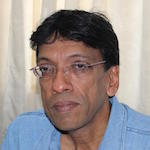
Jehan Perera
The present government is keenly aware it came to office with an overwhelming mandate from the people that is widely interpreted as one for “system change”. Its leaders often speak as if this mandate is a form of ownership, held in trust by them. This attitude is creating problems for both the government and the country. In democratic theory, legitimacy arises not solely from electoral victory but from the ongoing consent and participation of all citizens. The principle of democracy entails governance that reflects the will of the people, not just the majority, and ensures that minority voices are heard and respected.
Sri Lanka is not a homogenous society. It is plural, layered and rich with many traditions, beliefs and identities. It was only in 1835 the entire country came under one rule and as one country by the British. A mandate for system change does not mean that those who won the election are its only guardians. It does not entitle them to decide by themselves what that change should look like, nor to act without listening to those who must live with the consequences. As the government enters its second year, it needs to recognize that democracy is not only about the mandate received at election time. This mandate can be lost as former President Gotabaya Rajapaksa and his government experienced in 2022.
Governance in a democracy is about engaging in a process of dialogue and consultation with the people and with other stakeholders that never ceases. One of the key promises in the NPP manifesto was educational reform. The government announced its programme about three months ago to the people of the country who had no clue about it. It is understandable that this announcement was followed not by progress but by protest. The reforms were criticised, sometimes on reasonable grounds and sometimes on imagined ones. The story was spread that history was being de-emphasised. Trade unions claimed that the curriculum changes would commercialise schooling. Others said that local values were being replaced by foreign ones.
These concerns, whether valid or not, would have been better addressed if the government had presented its case for the educational reforms before announcing the reforms. In a sense, the government created the conditions for the opposition to the reforms to consolidate. It did not circulate or discuss the reforms with the teachers, academics, religious leaders or parents who would be directly affected. No preliminary consultations were held with the opposition or with civil society. What was presented could instead have been a draft for discussion and revision. Had the government engaged in open discussion at an early stage, many misunderstandings might have been avoided.
Retreat Again
The government is now on the defensive in the education sector gain with regard to another issue. This is its proposed reform of laws to prohibit corporal and mental punishment of children in schools and in the home. The Human Rights Commission of Sri Lanka has noted in a statement that “the prohibition of corporal punishment is an internationally accepted good practice” and is recognised in the Convention on the Rights of the Child. The HRCSL welcomed the government’s initiative to strengthen the protection and dignity of children through the proposed amendments to the Penal Code, which seek to prohibit all cruel, degrading, and harmful punishments, both physical and non-physical, against anyone under 18 years of age. But once again the government failed to discuss its proposed reforms with relevant parties, including the opposition and civil society prior to announcing them and now appears to be on the retreat on this issue too.
Teachers’ unions and a host of religious prelates are at the forefront of the opposition to the government’s proposals. Their concern is that if corporal punishment is outlawed, the schools will become unmanageable. However, countries like India and Japan have successfully implemented laws protecting children from corporal punishment without compromising school discipline. The Right to Education (RTE) Act of 2009 in India explicitly prohibits corporal punishment and mental harassment in schools. This prohibition makes such actions a punishable offense. The act covers physical punishment inflicted by teachers, parents, and other adults, ensuring a safe and supportive learning environment for children.
Likewise in Japan, corporal punishment is explicitly prohibited in schools under Article 11 of the School Education Law. This prohibition, established in 1947, aims to prevent physical disciplinary actions. While the law allows for disciplinary measures, it specifically excludes corporal punishment. Neither India nor Japan has descended into chaos. Instead, teachers were equipped with new methods to maintain order without violence. Enlightened governance means leading society towards higher standards, not merely following whatever opinions are most vociferous at the moment. President Anura Kumara Dissanayake has said that the government will not proceed with laws that are not accepted by the people. It would have been better if he had said that the government will speak with the people until understanding is reached.
Overcoming Failure
The failure to engage in consultations has put at risk yet another endeavour of the government. President Dissanayake and the government leadership have repeatedly insisted that they are committed to treating every citizen equally and without discrimination. Sexual minorities with different sexual orientations are equally to be protected. They have been an ostracized group since the advent of the colonial period. In the past, records show that Sri Lankan society was tolerant of sexual differences. Historical accounts indicate that pre-colonial Sri Lanka exhibited tolerance toward sexual diversity, with references to same-sex relationships in ancient texts and inscriptions.
The NPP manifesto includes a commitment to decriminalize same-sex relations and expand LGBTQ+ rights in Sri Lanka. The manifesto pledges to revise discriminatory laws, including sections of the Penal Code that criminalize same-sex intimacy, and proposes to provide constitutional protections against discrimination based on sexual orientation and gender identity. However, the government announcement that it was inviting persons of different sexual orientations to visit Sri Lanka as tourists has been interpreted by sections of the religious clergy and nationalists as being against Sri Lanka’s culture. The government now appears to wish to distance itself from its own message and also back off from the larger cause of amending the penal code in regard to same sex relations.
Instead of seeing dialogue as weakness or unnecessary, this is the means by which a divided society finds common ground. The problems the government is encountering in its attempts at enlightened reform suggests that it should engage in more discussion and dialogue with relevant parties without backtracking. Consultation does not delay progress but rather it makes progress possible. Without it, even the best reforms may falter and sputter to a halt. The government must forge partnerships beyond its own circle. Civil society, religious leaders, teachers, unions and minority groups are not obstacles to reform. They are engines of change when properly engaged.
The practice of dialogue and consultation with relevant parties will also be necessary in the national reconciliation process. The government’s success at the UN Human Rights Council sessions last month needs to be sustained by delivering on the promises it made. There is much that the government needs to do on the ground to sustain the national reconciliation process. It needs to be releasing military-occupied lands of the people, unearthing mass graves, identifying perpetrators and holding them accountable, and providing reparations to victims and their families. It also needs to hold the provincial council elections. First of all, it needs to engage in consultation and dialogue with the people and relevant parties so that they understand and appreciate the need for government actions in this regard.
chiv / October 21, 2025
Teachers union and host of Religious prelates (LOL ) are at the forefront of the opposition to government proposal to ban corporal punishment. There concern is that if it is outlawed schools will become unmanageable.
How pathetic is our 2500 civilization, culture , traditions, rituals, upbringing, values …… blah . . . . . . . blah
How do majority of those countries manage schools effectively without it ??
Is there any set criteria for CP, how much of beating, canning, flogging, slapping is acceptable ????
In that case why not make child abuse legal , how to differentiate punishment from abuse, is there some criteria considering the number of beating / slapping ??
I’m not a Sociologist or even Psychologist . But definitely know, Lanka is nothing but SHAM hypocrisy.
The psychology behind most domestic violence or spousal abuse is that
” my father did it , so it must be right “. How different is corporal punishment from domestic abuse.
How effective is CP, when there is no values, no discipline whatsoever at home, child doesn’t know the difference between right / wrong, parents are corrupt, criminals or involved in illegal or unlawful activities, our own Law Breakers in parliament setting examples . . . . . . .
Lanka is known for Human Rights violations, how on earth are they going to expand LGBTQ+ rights.
/
RBH59 / October 21, 2025
Discussion must accompany reform—this is the right direction, and it’s what the NPP seems to be following. The Argalaya needs, If the current path continues toward openness, justice, and inclusion, then there is real hope for the country. We’ve already seen what the so-called “experienced” parties did when they were in power—mismanagement, corruption, and underground deals that drained the nation. Many of them now pretend they had no knowledge of the drug trade and other illegal activities that flourished under their watch. The NPP has been honest: they are not magicians who can fix everything in one year—but they have a clear vision, and that’s exactly what the country needs right now.
/
Naman / October 21, 2025
First of all, it needs to engage in consultation and dialogue with the people in bringing about a new constitution. This is what Tamils living in SL and abroad are hoping for. A constitution that protect their RIGHTS to live as EQUALS is a MUST for Tamils. PMs to Presidents before had acted against the interests of the Tamils. Those Tamils who emigrated as refugees by their hardworking and perseverances succeeded in their endeavours.
/
Naman / October 21, 2025
Having the Provincial council elections at the present time is not a good idea.
It will only give OXYGEN to the unwanted politicians. It is just a waste of money
/