

By Vishwamithra –
“There is no liberty if the power of judging be not separated from the legislative and executive powers.” ~Montesquieu, The Spirit of the Laws
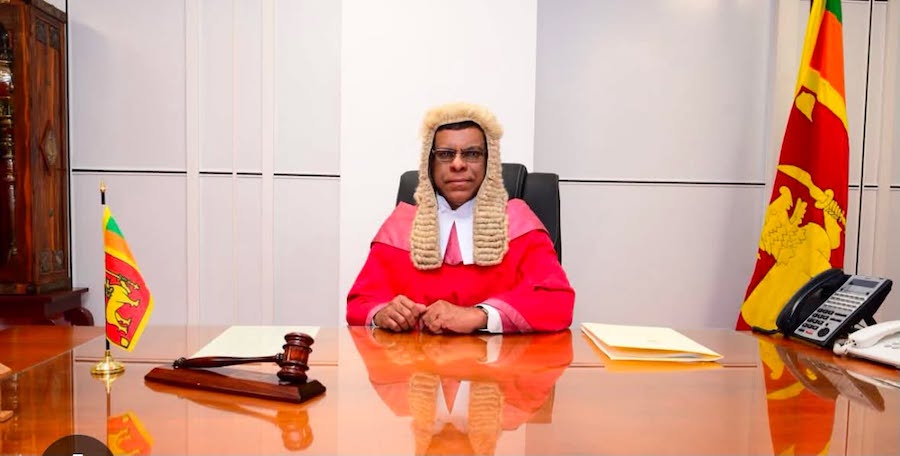
The mandate that propelled President Anura Kumara Dissanayake and his National People’s Power (NPP) coalition to a historic landslide victory was anchored to an explicit, uncompromising promise: the total dismantle of state capture, the eradication of institutional corruption, and the resurrection of an independent rule of law. Yet, less than a year into its transformative governance, the administration has engineered a high-stakes constitutional standoff that threatens to dismantle the very democratic safeguards it swore to protect. The government’s aggressive legislative push to amend the Constitution and the Judicature Act—exclusively designed to extend the statutory retirement age of apex and appellate court judges—has ignited a volatile civil and institutional war with the country’s legal fraternity. What the state defends as a masterstroke of administrative efficiency, critics decry as a dangerous encroachment on judicial autonomy that threatens to plunge Sri Lanka back into the dark cycles of executive overreach.
On its surface, the government’s operational defense carries an undeniably logical, technocratic weight. Sri Lanka’s palace of justice is effectively paralyzed, drowning under a staggering, catastrophic mountain of more than 1.1 million pending court cases. This institutional logjam leaves victims and litigants trapped in legal limbo for decades, decimating public confidence and crippling the island’s fragile, post-default economic recovery by deterring foreign investment. The Cabinet argues that raising the mandatory retirement age of Supreme Court justices from 65 to 67, and Court of Appeal judges from 63 to 65, is a vital, stabilizing intervention. In a country experiencing an acute brain drain and a severe shortage of specialized public sector personnel, the state insists that it cannot afford to arbitrarily discard its most experienced, veteran legal minds at the peak of their intellectual and jurisprudence capacities.
Furthermore, the administration points out that adjusting judicial retirement ages aligns Sri Lanka with modern global benchmarks, reflecting longer life expectancies and mirrors systems in established democracies where apex court jurists serve well into their late sixties or seventies. From this perspective, the amendment is not a political conspiracy, but a necessary, pragmatic toolkit to maintain judicial continuity, maximize bench output, and systematically chip away at a crisis of institutional delay that predates the current government by generations.
However, in the volatile theater of Sri Lankan constitutional history, context is everything, and the line between pragmatic reform and political subversion has historically been razor-thin. The fierce, unyielding resistance mounted by the Bar Association of Sri Lanka (BASL) and the Judicial Service Association of Sri Lanka (JSASL) does not stem from a stubborn rejection of structural modernization. Rather, it arises from the ad-hoc, opaque, and highly suspect timing of this sudden legislative maneuvering. By fast-tracking these sweeping changes precisely as sitting Chief Justice Preethi Padman Surasena approaches his mandatory retirement timeline, the administration has created an undeniable, damaging public perception. It looks less like a holistic, systemic overhaul of the judiciary and more like a tailored, personalized intervention meant to extend the lease of specific, favored individuals occupying the highest echelons of legal power.
In constitutional governance, public perception is a powerful force, and the erosion of appearance is an erosion of legitimacy. When an executive branch backed by a commanding, super-majority parliament unilaterally reshapes the career timelines and structural tenures of active judges without sweeping, non-partisan, and open public consensus, it sends a chilling warning through the halls of justice. It signals to the bench that their career security and longevity are fluid variables, deeply dependent on the political calculations and goodwill of the ruling regime. This opens a hazardous gateway to institutional subservience. Judges, consciously or subconsciously, may face systemic pressures to align their judgments with the executive’s agenda to secure or comfortably enjoy these newly minted tenure extensions. International observers, including the Commonwealth Lawyers’ Association, have raised urgent red flags, warning that such arbitrary, top-down manipulation of judicial tenures directly risks replicating catastrophic institutional collapses seen in other developing nations, where the subversion of the judiciary served as the final prelude to absolute autocracy.
To understand the profound alarm rippling through Colombo’s legal circles, one must examine the deep, scarred historical precedents of Sri Lanka’s recurrent judicial crises. This island nation is no stranger to the weaponization of the legislature against the judiciary. The current standoff feels hauntingly familiar to observers who remember the systemic degradation of the courts under successive regimes. In 1999, the controversial appointment of Sarath N. Silva as Chief Justice by President Chandrika Kumaranatunga marked a highly politicized era, where the apex court was increasingly viewed as an extension of executive will, deeply damaging the judiciary’s moral authority.
The crisis reached a brutal, unprecedented climax in 2013 under the Mahinda Rajapaksa administration, when Chief Justice Shirani Bandaranayake was subjected to a highly politicized, legally flawed impeachment process. Bypassing clear procedural safeguards and ignoring Supreme Court rulings that declared the parliamentary select committee’s proceedings illegal, the Executive used its parliamentary majority to remove a defiant head of the judiciary who stood in the way of majoritarian legislation. Bandaranayake’s ouster proved that when the ruling party views the judiciary as an obstacle rather than a co-equal branch of governance, it will use the raw power of parliament to break it.
Even the subsequent administration under Maithripala Sirisena, despite its “Good Governance” platform, manipulated judicial dynamics through strategic delays in appointments and promotions, treating the Constitutional Council as an arena for political bargaining. The NPP’s current effort to bypass broad public and legal consultations to adjust tenures via its super majority echoes these historic patterns. It reinforces the tragic Sri Lankan precedent that the judiciary is a territory to be managed and re-engineered whenever a government secures enough seats in parliament to rewrite the rules.
Moreover, the government’s hyper-fixation on retirement ages is a superficial, band-aid solution applied to a profound, systemic disease. Sri Lanka’s judicial paralysis is not caused by a sudden, mathematical shortage of elderly judges; it is the direct consequence of decades of severe, deliberate state under-investment. The state currently allocates a meager, insulting 0.57% of its total government expenditure to the administration of justice. This institutional starvation is the true culprit behind the 1.1 million stalled cases. It is the reason why Sri Lankan courts completely lack modern digital case-management networks, why physical courtrooms are crumbling, why stenographer shortages routinely abort daily trials, and why critical vacancies on the appellate benches are left unfilled for months on end. Extending the retirement limits of a broken, resource-starved system without fixing its internal mechanics does absolutely nothing to accelerate the alacrity of justice; it merely ensures that an aging, exhausted bench presides over an increasingly inefficient system.
If the AKD administration truly wants to fulfill its anti-corruption mandate, it must pivot away from quick-fix constitutional amendments and embrace the painful, structural overhauls demanded by the international community and domestic watchdogs. As explicitly detailed in the International Monetary Fund’s (IMF) Governance Diagnostic Assessment, restoring genuine integrity to Sri Lanka’s courts requires the immediate codification of a formalized, transparent judicial code of conduct and the implementation of independent, rigid disciplinary frameworks. True reform means expanding the total number of courts, fully digitizing the filing and archival ecosystems, and ensuring that judicial appointments are handled by an entirely insulated, non-political body.
The current crisis is now hurtling toward a definitive, historic legal showdown. Because the NPP possesses the raw legislative numbers to ignore parliamentary debate and steamroll the opposition, the ultimate defense of constitutional sanity rests with the Supreme Court itself. Civil society groups and legal coalitions are mobilizing to challenge the bill before its formal enactment. Constitutional lawyers argue that altering the core structural terms of the third branch of government directly impacts public sovereignty, meaning it cannot be legally executed without a binding national referendum.
President Dissanayake and the NPP stand at a critical, defining crossroads of their young administration. They can choose to execute a short-sighted legislative victory using their brute parliamentary power, cementing an extension that will permanently stain their reformist credentials, alienate the legal community, and fracture the separation of powers. Alternatively, they can pause, exhibit the humility of true statesmanship, heed the warnings of the Bar, and subject all judicial reforms to a transparent, inclusive, and holistic public review. For a government that promised an absolute break from the arrogant, majoritarian politics of Sri Lanka’s past, the choice should not just be obvious—it must be mandatory. Protecting the fierce independence of the judiciary is not an annoying obstacle to efficient governance; it is the ultimate, definitive measure of it.
*The writer can be reached at vishwamithra1984@gmail.com
Jit / July 29, 2026
Only 62 judges out of a total cadre of 388 attended the meeting convened by the Judicial Services Association last week — a mere 16.2%!! Is that majority?? They did not even have the quorum!! Utter flop! Which means 83.8% of judges did not support the protest narrative against extending the retirement age. Yet the media inflated it beyond recognition. Unbelievable!! What kind of joke is this?
Why would the judiciary suddenly become “impartial” or “compromised” simply because the same judges who delivered fair, balanced judgements yesterday are allowed to continue for another two years? If lawyers in their late 70s and 80s can still argue cases before the bench, why on earth can’t judges serve until 65 or even 67? Many countries allow judges to serve until 70.
What exactly is the connection between fair judgement and retirement age? There is none!! This panic is manufactured — loud voices trying to create fear but the fear is ‘within’ – it is obvious!!
/
Professor ANI Ekanayaka / July 29, 2026
It is not a case of how many judges are for or against the government’sstubborn controversial proposal to extend the retirement age. These are not matters to be decided by majority vote. The reality is that rightly or wrongly there are widespread public apprehensions that this move is being made by this JVP government at this time, so as to ensure the continuation in office of sympathetic judges who will continue the process of relentlessly putting away its detractors. But it is a cardinal principle of law enforcement that justice must not only be done, it must appear to be done. Consequently given current public perceptions and anxieties , it behoves those judges who will be the immediate beneficiaries of the proposed legislation, to reassure the public that they for their part will retire on the due date in terms of existing provisions and not take advantage of the privilage of extension offered under the proposed legislation. That is the honourable thing to do. Otherwise the judgments they deliver during a period when their retirement age has been controversially extended through the brute force of a parliamentary majority, may lack public credibility.
/
Jit / July 30, 2026
“…These are not matters to be decided by majority vote. …”
Where does it say it should not?
Did you not hear the explanation Cabinet spokesperson gave regarding sections 1,2,3,6,7,8,9,10,11, 30/2 and 62/2?
–
“….Consequently given current public perceptions and anxieties..”
Anxiety of which public? The united rogues front? The mafia ‘community’??As far as people are concerned they all want justice delivered quicker, so they want to see already filed cases go uninterrupted until the end. One of the main complaint against the government is that they dont take quick actions to stop ‘drag’ the cases!
–
“….Otherwise the judgments they deliver during a period when their retirement age has been controversially extended …”
If judges routinely base their decisions on arguments presented by lawyers in their seventies and eighties, on what grounds can anyone claim that a 67‑year‑old judge is suddenly “too old” to serve?
You call yourself a professor, right??? So you must know that in many countries judges work until 70 or 80? So the judgements they make have been no good – rotten??
/
Mani / July 30, 2026
You are spot on, Prof. Ekanayake!
/
SJ / July 30, 2026
“These are not matters to be decided by majority vote. “
They shall be decided by the official spokespersons of God Almighty.
/
SJ / August 1, 2026
The Lord haveth four thumbs
/
SJ / July 30, 2026
Attendance could carry risks that good judgment would persuade one to avoid.
/
chiv / August 1, 2026
Ex Police Chief and Defense Sec , Pijitha/ Hemasiri sentenced to death, for dereliction of duty, AIDING and ABETTING MURDERS, failing duty despite intelligence.
Hope next to follow are Sallay the serial killer and Master mind. ( remember the guy with pea sized brain weaving stories in CT ).
If only, known criminals are made accountable, then any amount of Constitutional amendments is fine with me.
Up to now ruling governments made amendments to save murders ( like Pujitha’s nomination by SHAM Constitutional Council ), criminals, corrupt, extend power, postpone elections . . . . . . from the time of JR this has been a regular event..
The constitution we have now is not even worth the paper it’s printed.
It’s CONSTIPATION, massive loads of accumulated S…
/
chiv / August 1, 2026
Final statement after sentencing by Hemasiri SAYS IT ALL.
/
Realsinhalabauddhaya / August 1, 2026
As a proud Sinhala Bauddhaya, I am so proud of the following members of my tribe:
DIG Prasad Ranasinghe arrested
DIG Uditha Liyanage arrested
DIG Anura Senanayake arrested
DIG Vass Gunawardena arrested
And now, IGP Wickremaratna shot himself while IGP Pujitha Jayasundara is on Death Row.
Can any other community claim such a thing.?
A Tamil, Burgher, Malay or Muslim DIG?
/
old codger / August 1, 2026
RSB,
“Can any other community claim such a thing.?”
As I see it, the problem is that all the DIGs are from your tribe. If a few Tamils, Muslims, etc were also appointed, then they too would get the chance to be arrested too, don’t you think?
/
Realsinhalabauddhaya / August 1, 2026
Oops, I forgot IGP Deshabandu.
/
Ajith / August 1, 2026
“Hope next to follow are Sallay the serial killer and Master mind.”
Salley the serial killer and Master mind did not have the executive power. He must have just followed the orders of the person who had executive power. Who master mind the executive power? It happened in 1978? Who mastermind the Special status to Buddhism? It happened in 1972? Who master mind the Colombo to Kandy march to torn Banda-Chelva pact? It is the same executive Power of the master mind. The Blood of master mind Continued until 2024?
/
SJ / August 2, 2026
“Salley the serial killer”
Mr A has all the evidence which he will dare not reveal.
/
Ajith / July 29, 2026
“The NPP’s Judicial Tenure Gambit & The Battle For Sri Lanka’s Soul”
The NPP is now a political party rather than a militant group like any other political party. The history of this island since 1948 shows that British rule to the governments have changed the constitutions and laws based on the rulers wishes rather than the interest of the country or people of different groups. Unfortunately or Fortunately, this country lost its all democratic principles and become a land of blood and lawlessness. People of this island confused and unable to find a way to come out of the misery.
The country need a complete change not to react to one change now and another change next and continue this cycle. Both Constitutions need a change but rulers are unable or unprepared to change it. In fact, you don’t need these number of prisons or prisoners or judges. In fact, you can reduce to its minimal with only past leaders, past judges etc.If a proper System in place most of the political parties become ineligible to govern.
/
SJ / July 30, 2026
“The NPP is now a political party rather than a militant group like any other political party.”
So, other political parties are militant groups, are they?
Interesting.
/
Ajith / July 31, 2026
“So, other political parties are militant groups, are they?”
Yes, most of the political parties including UNP and SLFP behaved like militant groups. There are number of Tamil militant groups turned into political parties such as PLOTE, EPRLF, TELO, EPDP, TVMP all one time militant groups. against government militant group and join with government militant (you called them military)
/
SJ / August 1, 2026
So, now it is only the NPP that is not a militant group.
It takes a truly twisted brain to reason in this manner!
/
leelagemalli / August 2, 2026
Mr SJ,
Claiming a Violence-Free Image While Actions Raise Serious Questions: Sri Lanka’s Prison Crisis and Accountability Concerns
–
Prison-related crimes continue to be a serious concern in Sri Lanka; however, the manner in which the government in power has responded to these incidents raises profound ethical and moral questions.
Those who portray the JVP as having moved away from its violent past and being a violence-free political force now face criticism over the actions taken while holding power.
The deaths of innocent inmates and around ten police officers during recent Negombo prison clashes have caused widespread concern, particularly as questions remain about whether the Minister of Justice and Prison Affairs and other responsible authorities were fully informed and prepared.
Instead of providing transparent explanations, officials incl. minister of defence have either remained silent or defended their actions, leaving unanswered questions about the loss of innocent lives.
Among those killed were young inmates who had been serving short sentences, including individuals accused of petty drug-related offences, whose families had hoped they would reform and return to society with a better future.
Further clashes, including incidents reported at Mahara Prison, have deepened concerns about the government’s approach to handling prison violence.
While authorities describe these operations as efforts to eradicate prison crimes, the lack of transparency, accountability, and public communication has led many to question whether the methods being used truly reflect justice, human rights, and democratic values.
/
Velu / July 29, 2026
Retirement age of judges:
If the politicians (particularly presidents, prime ministers, and ministers), Drs., and lawyers can practice even after 75-80yrs of age, what is the big fuss extending the retirement age of judges to 62-65. In some countries there is no retirement age for supreme judges, they serve until they go into the coffins after 80yrs of age.
/
Jit / July 30, 2026
The very crooks who bled the Central Bank, the Treasury, and every corner of public wealth — along with the underworld mafia selling narcs to kids – want their cases either dragged, buried, stalled, or tossed out under the convenient banner of “no evidence.” Of course their lawyers are howling; their entire survival hinges on keeping the justice system rotten and toothless. It’s hardly advanced mathematics, is it??
/
leelagemalli / July 29, 2026
Readers,
Much of what people see today; both on television and across social media; often creates an illusion rather than reflecting the realities experienced by ordinary citizens.
Political messaging has become increasingly focused on shaping perception instead of addressing substance.
The President frequently makes claims that critics argue are inconsistent with the facts, yet they are repeated with confidence and little sign of reflection or accountability.
Whether this is simply a political communication strategy or a product of deeper influences is open to debate. Meanwhile, social media activists aligned with the ruling NPP appear determined to project an image of overwhelming public support, raising questions about how much of that popularity is genuine and how much is carefully cultivated. History offers many examples where governments relied heavily on propaganda to sustain public confidence, but such narratives eventually collided with reality. The real question is how long perception alone can substitute for measurable results.
/
leelagemalli / July 29, 2026
cont.
Nearly twenty months into its term, the government has yet to deliver many of the transformative changes that were promised, and questions remain about the competence and effectiveness of its leadership. While efforts to identify and expose corruption are a positive step, corruption alone is not the principal obstacle preventing Sri Lanka from moving forward.
–
Weak law enforcement, inconsistent implementation of existing laws, persistent poverty, and deep-rooted cultural and political influences continue to undermine governance. Recent events, including reports of disorder and alleged drug-related activity during the Dewundara Perahera despite the government’s strong anti-narcotics rhetoric, have only strengthened public skepticism about its ability to maintain law and order.
–
Ultimately, lasting progress will depend not on slogans, publicity campaigns, or political narratives, but on consistent governance, credible institutions, and tangible improvements in the daily lives of the people.
/
leelagemalli / July 29, 2026
Serving judges, together with many members of Sri Lanka’s legal fraternity, have reportedly voiced strong opposition to the government’s move to extend the retirement age of judges through legislation passed in Parliament.
–
https://www.youtube.com/watch?v=TlzbTn2PjGo
–
Critics argue that such a constitutional change may require approval through a national referendum rather than by a parliamentary majority alone, although this remains a matter of legal interpretation and would ultimately be determined through the country’s constitutional process.
According to several legal experts, if the legislation is successfully challenged, it could trigger a major constitutional and political crisis for the government.
–
Some even believe that the outcome of such a dispute could significantly weaken the administration, although any prediction that it would lead to the government’s downfall remains speculative and will depend on future judicial and political developments.
/
Roxie de Abrew / July 30, 2026
Thank you, Vishvamithra, for your excellent analysis.
Your article clearly explains why Sri Lanka’s judicial system has become so dysfunctional, with well over a million cases awaiting resolution. However, one fundamental question remains: will extending the tenure of judges by two years make any meaningful difference to the efficiency, independence, or overall performance of the judiciary?
The JVP/NPP came to office on the back of sweeping promises of systemic reform. Nearly two years on, the tangible outcomes remain difficult to identify. Instead, public attention is increasingly drawn to the spectacle of former political leaders—both influential and insignificant—being handcuffed, arrested, or evicted from official residences. While accountability is important, it is not, by itself, a substitute for good governance.
Many Sri Lankans are disappointed by the lack of visible improvements in their daily lives. The public sees lengthy meetings, announcements, and administrative activity, but few measurable short- or long-term gains in economic or social well-being.
With significant external debt repayments looming, the Government’s real test lies ahead. Unless it delivers meaningful economic progress and institutional reform, public disappointment could quickly give way to widespread anxiety and distress.
/
DIL / July 30, 2026
The government’s logic in this argument is sound. The people want justice issues sorted quickly and it’s great to see decisive action been taken using the 2/3 majority we the people gave them. Keen to see this government making more decisive actions like this, as the people overwhelmingly trust them and support them. This country requires decisive good decisions like this more and more where obviously there is no personal gain for anyone in government other than benefits of expediting cases for the people.
/
Roxie de Abrew / July 30, 2026
Dil,
As a Citizen of Sri Lanka, I loathe the Govt extending the terms of the CJ and other Judges who are delivering outcomes favourable to the Govt.
Please refer to the comment above, which says the NPP/JVP relishes past Leaders of SL displayed in shackles and sackcloth.
The masses, of course, are starving; does the Hon PM care? She went to France a few weeks ago, and then she was seen with a tray at the Vel festival.
/
SJ / July 30, 2026
RdA
Personally, I think that our retirement age is pretty low considering the age at which people start work in some professions.
Also life expectancy and general health conditions have improved over the years.
But extension of retirement age is best applied across the board. One way is to have a pensionable age where one may retire voluntarily and a maximum age for employment.
*
The unsaid issue is that the government’s motives are suspected by others.
/
LankaScot / July 31, 2026
Hello SJ,
Correct me if I’m wrong, but there is no Universal State Pension in Sri Lanka. In most European Countries (including the UK) they are extending the age of Retirement upwards. In the UK it used to be 65, now it is 66 and about to rise to 67.
Government Employees used to have their own Schemes, however I think they are linked to the Standard State Pension Ages now..
These ages are not mandatory, you can delay your pension for a few years.
Judges currently should retire at age 70 and about to increase to 75.
Many people carry on working after Retirement Age as the Pension is insufficient to live on. Healthy Life expectancy in the UK has declined by about 2 years recently.
There is no Mandatory age for Politicians to retire in the UK (like the US).
Best regards
/
SJ / August 1, 2026
LS
Thanks.
Only government jobs are pensionable. State corporations do not offer pensions but have a provident fund.
/
old codger / July 31, 2026
SJ,
“retirement age is pretty low considering the age at which people start work in some professions.”
In Australia for example, one can work even up to 75 or 80 if one is able to. But then Australia doesn’t have millions of 20 year olds waiting for you to retire.
/
SJ / August 1, 2026
oc
Comrade NM Perera lowered the retirement age to 55 to address unemployment I was told then.
It did not work and the real retirement age soon became 60 with annual extensions after 55. That was some 15 years ago. I am not sure if that has been changed.
/
SebastianSR / August 2, 2026
In Australia for example, one can work even up to 75 or 80 if one is able to. But then Australia doesn’t have millions of 20 year olds waiting for you to retire.
If Old Codger is implying that Sri Lanka has millions of 20 year olds waiting for you to retire, that was true in 1981. Since 2022 the demographic pyramid of Sri Lankan passed the inversion point, with more retired people than working people. So, within this decade SL will face a tax base (number of working tax payers, or even VAT payers) decline; government income will INEVITABLY shrink. This has aready happened in Japan, South Korea, EU are countries who have also got their demographic pyramids udside down, but they have the means to solve the resulting solcial issues, but not SL. The country is too poor to attract young overseas labour.
/
old codger / August 2, 2026
SSR,
There are still lots of people waiting for government jobs. I know an IT-qualified youngster who switched to being a Customs officer, for the perks and guaranteed pension. Some things never change..Further, the decline in interest rates has hit those who live on invested EPF earnings .
“The country is too poor to attract young overseas labour.”
Not really. According to official sources, there are about 400,000 foreign workers here, from building tradesmen to surgeons. There would be even more if not for restrictions.
/
old codger / August 2, 2026
Sorry, that should be 40,000, not 400,000. But there is indeed a greater number of workers on tourist visas.
“There is no exact, real-time census of the number of foreign workers currently in Sri Lanka, but government and international organizations estimate the total population of international migrants to be roughly 38,000 to 40,000. This figure represents only about \(0.2\%\) of the country’s total population.”
/
SJ / August 2, 2026
oc
You could have left it the way it was.
A zero this way or that does not bother many here.
/
leelagemalli / July 30, 2026
RDA,
.
worth watching the video below
.
https://www.youtube.com/watch?v=M0–9xQMpJk
/
DIL / July 31, 2026
Judicial decisions have been made only based on sound legal principles. “Outcomes favourable to government” if implied as “biased towards government” , it’s an absolute lie IMO, can Roxie give examples. Also remember that such irresponsible comments may constitute “Contempt of Court”. If you are against the age decision, that’s fine. You’re entitled to that. but don’t make up crooked lies. Those against including BASL do not give any reasonable validation to their objections, but that is not surprising, considering who the power brokers in it are, their history and where their motivations stem from.
/
Pandukabaya / July 30, 2026
Nonsense. Typical majoritarian herd instinct, reminds me of Gota’s ‘Vipath Maga’squad who now uncritically cheers for AKD.
It is also lacking in logic. Cheering the Gvt because they are ‘acting on a 2/3 maj’! But the NPP Manifesto on which they were elected NOWHERE mentioned increasing the age of retirement of superior court judges as a solution to the many evils of a dysfunctional legal/ judicial system!!
No personal gain for anyone?? Except for the AKD Gvt which will have a tame CJ for the next two years to agree with their political decisions! How blind are those of the Red brigade propagandists who refuse to see what is in front of their faces!
/
leelagemalli / July 30, 2026
Pandu@
Extending the retirement age of judges through constitutional manipulation is neither a judicial reform nor a credible solution to Sri Lanka’s backlog of delayed investigations.
Even senior lawyer Lal Wijenayaka, despite being a prominent figure within the NPP, has reportedly disagreed with this approach, reflecting concerns shared by many in the legal fraternity. It is unrealistic to assume that because Anura Kumara Dissanayake is President, merely extending judicial tenure will suddenly accelerate years of stalled cases.
Such political interference with the structure of the judiciary risks undermining judicial independence, inviting criticism both domestically and from the wider Commonwealth community. A government that came to power promising institutional integrity cannot afford to weaken one of the very pillars of democracy under the guise of reform.
–
The NPP was elected on the promise of ushering in a new political culture, yet many citizens increasingly see familiar patterns rather than meaningful change.
–
While the government has gained public attention by prosecuting selected political figures, critics argue that this alone cannot substitute for consistent, impartial governance or systemic anti-corruption reforms. Allegations involving figures within the current administration continue to circulate, yet there appears to be little urgency in addressing them with the same vigour shown toward political opponents.
/
Pandukabaya / July 31, 2026
@leelagemalli, what you and the author of this article say makes good sense. Unfortunately, there are those blinded by political partisanship and /or a desperate faith in messiahs who can’t see the dangers looming ahead. This is what happened during the terrible time of Gota R. So, what to do but watch till we see the past repeat itself. Those who never learn from history are doomed to repeat it!
/
Ambal / July 30, 2026
Our uncle Sam served as an MP …..
What the fuss …..
/
Rajash / July 31, 2026
vishwamithra1 – one of the promise AKD made is to abolish the executive Presidency.
Not sure why you decided to ignore it in this blog of yours.
Do you think AKD will abolish the Executive Presidency before his term expires?
—-
Roahn25 – please don’t hijack this blog to debate about my Profile Name
===
/
Rohan25 / July 31, 2026
I appreciate the fan club, but you seem a little obsessed with me and your mangled name. I hadn’t even posted anything here until now. It’s flattering that you think about me so much, but I usually prefer to actually post before being accused of hijacking a thread. Kindly find someone else to obsess over. You are arguing with ghosts; I haven’t even posted here.
/
The Truth / August 3, 2026
Mr 25, I have some good news for you . My hubby thinks you would be a good man to have a drink with ( Hope you are not a ‘man’ like Ranil, the squeaky voiced poof !)
You are far more Westernized than the OC ,Leela, SJ crowd and more polished too.
He thinks you carry some trivia knowledge and also eager to expand your mind.
So next time you are in these parts let us know.
As you are aware the custom here is to return the drinks.
So don’t get up and leave with a silly excuse after the first round ( which we will take care of).
Do order a round and we will do likewise. ( will Leela from Germany be with you, since he is now family?)
Let us make a good evening of it and drink to the good health of the sad South Asians ( Tamil Nadu ) we have left behind !
By the way, what are they protesting about now in South Asia ? They don’t like their names ? Naturally with names like Row 25, Leela, I don’t think their parents liked them very much !
/
LankaScot / August 3, 2026
Hello Deepthi (The Truth).
Does you husband lock you in a Closet when you use the Cringeworthy term “Hubby”?
Best regards
/
The Truth / August 3, 2026
Lost Soul from Scotland, Why are you minding these things ?
After all you met all those now in high places-Trump, Burnham, Sunak while you were repairing computers in a court house.
With some you even had fish and fries
Just keep to that high company.
/
Toddydrinker / August 3, 2026
Truthie,
*As you are aware the custom here is to return the drinks.*
Hey girl, are you the barmaid with the hydraulic bra at that East End pub ? Remember the day you forgot to recharge the battery and your whatsits reached your knees just as you bent over? I was there, how hilarious 🤣🤣
/
The Truth / August 3, 2026
Oh Toddy the dust under my heels from Tooting !
Which pub would that be ?
” Wogs n’ Curry ” ?
Where do you have your toddy ? May be at Leela boy’s ancestral Walauwa ?
Is your family in the same category as Ranil’s ?
“You all” are the same, wogs who wannabe English !
/
leelagemalli / August 3, 2026
R25 and all other readers,
It is now evident that these statements are intended solely to provoke you, R25 as a Tamil and to discourage you from discussing the topics of your choice. Judging by the quality and maturity of the comments, not even most teenagers would behave in such a manner.
–
This abusive individual by name Deepthi, TT or Lester appears to be generously rewarded by the Rajapaksa camp for wasting people’s time and attempting to derail meaningful discussion. It is quite possible that this person has no real connection to life in London at all, but is instead hiding anonymously somewhere, much like Lester.
–
I believe the most sensible course of action is to ignore these disrespectful and inflammatory comments from this point forward. Unfortunately, some people choose to indulge their worst impulses rather than engage in civil discussion.
–
In my opinion, this individual, who has persistently pursued and harassed you,me, OC and LS may be suffering from mental health issues. Ruchirababa has not appeared for some time, and no one knows where that person is. It is possible that the same individual is now operating under another anonymous identity. Likewise, Lester no longer appears to be active on the CT Forum these days.
/
CChampa / July 31, 2026
The self-serving JVP/NPP tipsy government is planning to amend the Constitution to raise the retirement age of the judges without a request from them. I think the government is pondering something else.
Sri Lanka’s Constitution became a ping-pong ball with the 19th, 20th and 21st Amendments, which weakened, restored and again weakened the Presidential powers at the whims and fancies of ruling governments.
Now, the new government is planning to present the 22nd Amendment to extend the retirement age of the Supreme Court and Appeal Court Judges. If this works out as planned, there is a high possibility that the government will introduce the 23rd Amendment to extend the President’s tenure without a Referendum. I do not see any other reason for the proposed 22A other than as a lobbying effort for a future 23A. Whether Sri Lanka’s esteemed judges value public trust, independence and ethical principles over personal benefits is yet to be seen.
/
Naman / August 1, 2026
I wonder WHAT is preventing the NPP government from presenting a BRAND NEW CONSTITUTION. This should sort out the ethnic and religious issues
hopefully. Drafting of it has been taking decades! Implementation of the new constitution will be the foundation for the national reconciliation and economic growth of the country. People are awaiting for the results of INVESTIGATIONS into the Easter Bombings on 21/04/2019.
/
CChampa / August 1, 2026
Naman, again!
Which part of the current Constitution erodes national unity, promotes ethnic and religious issues and suppresses economic growth? Please provide the exact Chapter, Article, and Section of the Constitution you are referring to.
/
Ajith / August 2, 2026
“I wonder WHAT is preventing the NPP government from presenting a BRAND NEW CONSTITUTION. This should sort out the ethnic and religious issues
hopefully.”
There should be many issues faced by NPP. They do not trust on the people, particularly Buddhist Sinhalese speaking people. They knew well during the 2019 Presidential election Buddhists Sinhalese gave almost two third majority to Gotabaya Rajapaksa. JVP/AKD did not even got 4% votes. Gota messed up the government and brought the country in bankruptcy and the opportunity came to AKD/NPP. Even if UNP and Sajith did not divide the votes during 2024, AKD/NPP will not be in government. So, AKD/NPP cannot touch the issue of special status to Buddhism (Constitution) because NPP have to face the election. The question for AKD/NPP whether country or party comes first.
/
Naman / August 1, 2026
“ what is Sri Lanka’s soul?
Sri Lanka’s soul is its deep spiritual roots, diverse cultural harmony, and resilient heritage. It lives in ancient sacred sites, warm local communities, and quiet nature”
Has SL got a soul is a big question.
If it really had a soul the TSC of Ceylon/SL would not have been subjected to the worst kinds of violence perpetuated by the state.
The Tamil Speaking Citizens would have continued to stay in the country and made it to be like SINGAPORE!
/
SebastianSR / August 2, 2026
If it really had a soul the TSC of Ceylon/SL would not have been subjected to the worst kinds of violence perpetuated by the state. The Tamil Speaking Citizens would have continued to stay in the country and made it to be like SINGAPORE!
Singapore is a city state whose underdogs are the immigrant workers who come in by day and leave by evening, with democracy replaced bya dirigist government. Sri Lanka (or any other macroscale country) can never be like Singapore. Instead, the better comparison is with Malaysia, with a climate, a colonial history and an ethnic structure very similar to Sri Lanka. The Malay-Muslim (58%) are a majority (similar to Sinhala-Buddhist), while the Chinese (22%) are the minority (similar to Tamils), and held a good part of the business and professional infrastructure (just as the tamils did in 1948-1970). The Malay-Muslims inposed Draconian discriminatory policies on the Chinese (far more Draconian than those of Banda’s sinhala only etc). The Chinese minority did not follow the stupid military path taken by Eelam Tamils, but instead followed an astute agenda of cooperating with the Malays further consolidating their deminant trade position, perhaps imitating the Jews of USA who do not ask for the US national anthem to be sung in Yiddish even in Harlem.
/
SJ / August 2, 2026
Comparison with Malaysia is just as stupid as comparison with Singapore.
There are lessons to learn from every multi-ethnic society about harmonious coexistence.
But there are no model solutions.
/
Naman / August 1, 2026
As long as the Government has the good intentions of speeding up the Judiciary, there should not be any issue on extending the retirement age of the current and future judges.
Appointment of the wrong ones to Chief Justice post like the appointment of Sarath N Silva as Chief Justice in 1999 had put the SL on a downward spiral towards the ECONOMIC ruin and loss of so many innocent people of SL.
/
Naman / August 1, 2026
Did NPP government intentionally did not promote a Tamil Judge?
“ Retired High Court Judge Manikkavasagam Ilanchelian was not promoted to the appellate courts due to time-sensitive procedural constraints and administrative inaction before his mandatory retirement age. Despite topping the seniority list, he reached his retirement age of 60 in January 2025 without the required executive recommendation and Constitutional Council approval being finalized.
Could someone answer please
/
SJ / August 1, 2026
He perhaps was denied a favour, however deserved
But there was visibly no planned injustice.
/
Ajith / August 1, 2026
“Did NPP government intentionally did not promote a Tamil Judge?”
I think NPP government did it intentionally. If he promote Tamil or Muslim Judge , then many will say that it is Tamil or Muslim judge sentenced former IGP and defence secretary. Now, it is Sinhalese judges punish Sinhalese defence and police heads. Who is next?
/
SJ / August 2, 2026
So he knows that the denial was not only intentional but also knows the reasons.
WOW!
/
SebastianSR / August 2, 2026
It is easy to prove that most of Visvamitra’s article has been generated using AI.
The logic of the article is also fundamentally false. It should have argued that there should be no
retirement age limit for nybody except as mendated by an individuals health, and the nature of the job. A manual worker may need to retire early and the 55 year rule may be optimal, but if he wants to work till 80, and still runs the marathon, that should be his previlage. That is, discrimination based on AGE should be terminated, be it for supreme court judges, school teachers or manual workers. In any case, in a country like Sri Lanka where the old-aged (retired people) cohort has exceeded the number of young people, with the population pyramid inverted, they will have toinevitably raise the retirement age. But that cannot run indefinitely. Right now the number of tax payers in only about 1 million, and the number of VAT payers is only 18-20 million. These will drop drastically while the number of pensioners, and old people without pension but dependent, will increase rapidly. IMF will not bail you out. The 1% ultra-rich have already off-shored their wealth.
/
Naman / August 2, 2026
Ido agree with Sebastian, the age of retirement has to be increased to 67 to 70 years depending on how the person performs. Quality Assurance in all sorts of professions needs to be implemented. I always wonder whether the prison doctors truthfully find the high profile individuals who are arrested are admitted to the prison hospital or government hospitals.
RW , the Buddhist monks
/