

By Raj Sivanathan –

Raj Sivanathan
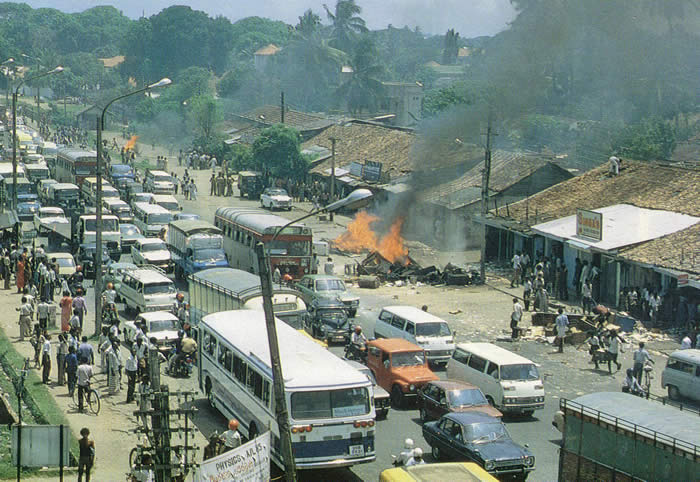
Every year in July, Sri Lankan Tamils across the world pause to remember one of the darkest chapters in the country’s modern history. The events of July 1983—widely known as Black July—left deep scars on the nation. Thousands of Tamil families were displaced, homes and businesses were destroyed, innocent civilians lost their lives, and the violence marked a turning point that ultimately led to nearly three decades of civil war.
Forty-three years have now passed.
Sri Lanka has changed. Governments have changed. Generations have changed. Yet the memory of Black July continues to shape the relationship between the State and many Tamil citizens, both within Sri Lanka and throughout the global diaspora.
President Anura Kumara Dissanayake and the National People’s Power (NPP) Government came to office promising a break from the politics of corruption, abuse of power and failed governance. Their message has centred on accountability, transparency and rebuilding public confidence in democratic institutions.
The NPP Government bears no responsibility for the decisions taken by the administration of President J. R. Jayewardene in 1983. Responsibility for historical events belongs to those who governed at the time. Every democratic government, however, inherits a broader responsibility: to acknowledge moments when the State failed to protect its citizens and to demonstrate that such failures will never be repeated.
For many Tamils, Black July represented a profound loss of confidence in the State’s ability to guarantee equal protection under the law. The events also transformed Sri Lanka’s demographic and political landscape by accelerating the growth of the global Tamil diaspora.
Today, members of that diaspora are respected professionals, academics, entrepreneurs, engineers, doctors and public servants across Australia, Canada, the United Kingdom, Europe and elsewhere. They continue to contribute to Sri Lanka through remittances, humanitarian assistance, investment, education and knowledge transfer.
This raises an important national question: can Sri Lanka build lasting reconciliation without formally acknowledging one of the defining tragedies in its post-independence history?
Around the world, societies emerging from conflict have often recognised that acknowledging historical suffering strengthens democracy rather than weakens it. Germany, South Africa and Rwanda each adopted different approaches, but all accepted that remembrance has an important place in national healing.
Sri Lanka’s path will necessarily be its own. Nevertheless, there is an opportunity for the current Government to demonstrate that acknowledging the suffering of innocent victims is consistent with democratic values and national unity.
Constructive initiatives could include:
• A formal acknowledgement of the suffering experienced during Black July.
• An inclusive national day of remembrance for all innocent civilians affected by ethnic violence.
• Continued progress on reconciliation measures including language equality, land issues, missing persons, detainees and meaningful political dialogue.
• Greater engagement with the global Tamil diaspora as partners in economic development, investment and nation-building.
Acknowledging history is not about assigning blame to today’s generation. It is about demonstrating that the democratic State recognises the suffering of its citizens and is committed to ensuring that such events never happen again.
Economic recovery and reconciliation should not be viewed as competing priorities. Trust, inclusion and equal citizenship are essential foundations for sustainable investment, social stability and democratic resilience.
Forty-three years after Black July, Sri Lanka cannot change its past. It can, however, determine how that past shapes its future. By acknowledging painful history with honesty and compassion while strengthening democratic institutions and equal rights, the country can move towards a future where every citizen—Sinhalese, Tamil, Muslim and Burgher alike—feels equally respected, equally protected and equally at home.
Such a step would not erase the pain of history, but it could become an important milestone in building a more united, confident and democratic Sri Lanka.
Naman / July 23, 2026
What are the ways the RECONCILIATION can be made to happen?
1) Reduce the amount of the Defence officers (security forces) greatly in the N&E of SL
2) Enlist TSC into the Security Force
3) Make security forces proficient in all 3 languages
4) Stop the Security Forces involvement in running hotels tea boutique and in agriculture thereby DEPRIVING the locals’ livelihoods
5) Increased government jobs for the Tamil Speaking citizens (TSC)
6) Rehabilitated EX LTTE members be helped to become useful members of the society
7) new industries in N&E
8) Promotion of Tourism in the N&E
9) Developing the Palaly Airport; KKS &Trinco harbours
10) shipping connections to Tamil Nadu increased
etc etc
/
Anpu / July 23, 2026
This is 6 years ago. Has it chnged for the better? NO https://srilankacampaign.org/wp-content/uploads/2023/09/Sri-Lanka-Campaign-No-Place-for-Soldiers-June-2020.pdf
/
CChampa / July 27, 2026
naman
Your list is a joke. This is a short reply to it.
.
Your proposals 1) to 10)
1) Reduce the amount of the Defence officers (security forces) greatly in the N&E of S.
— Who the hell are you to decide that? You are not an expert in defence or security.
.
2) Enlist TSC into the Security Forces.
— Tamil language proficiency is not listed as a qualification to join the Security Forces. You need to meet the citizenship, education and age limit requirements to be qualified along with security clearance.
.
3) Make Security Forces proficient in all 3 languages.
—- For what? The majority speaking language in the country is Sinhala and the second widely spoken language is English while Tamil is a minority language. Tamils should learn Sinhala for their own benefit for Sinhalese have no benefit in learning Tamil.
1/3
/
CChampa / July 27, 2026
Naman
Your proposal 4) Stop the Security Forces involvement in running hotels tea boutique and in agriculture thereby DEPRIVING the locals’ livelihoods.
—– The economic centres run by Security Forces generate income for the government which is being utilized for the maintenance and development of infrastructure. There is no proof that they are deprived of local livelihood. Instead, they have provided employment opportunities to the locals, most of whom never engaged in meaningful occupations before.
.
5) Increased government jobs for the Tamil Speaking citizens (TSC)
Again, government jobs are not categorized based on racism. Like any other country, you need to fulfil specific qualifications to join the state service.
.
6) Rehabilitated EX LTTE members be helped to become useful members of the society.
—- They have not maximized the second chances offered to them and vocational training provided to them to become useful members of the society. Some were even involved in criminal activities.
7) new industries in N&E
——- Like what? List them.
2/3
/
CChampa / July 27, 2026
Naman
Your proposal No. 8) Promotion of Tourism in the N&E
——- List all tourist attractions in the N & E.
.
9) Developing the Palaly Airport; KKS &Trinco harbours
——- For what? How many cargo ships will arrive at Trinco harbour? Not even 10 per month. How many ships will arrive at the KKS harbour? Zero! The same story applies to Palaly too. All the three projects will end up as white elephants with the government trapped in more debts.
.
10) shipping connections to Tamil Nadu increased
etc etc.
For what? Oh, I forgot! For the Tamil Nadu cocaine business, right? Drug dealers transport drugs in fishing boats disguised as fishermen while others trespass in our territorial waters for illegal fishing. Sri Lanka should charge any foreign vessels engaged in commercial activities including fishing in our Exclusive Economic Zone (EEZ) which is 200 nautical miles (approx. 370 kilometres) from the shoreline.
3/3
/
Rajash / July 24, 2026
Infrastructure development – make A9 an express highway,
modernise railway link, its a shame that in this modern age Colombo to KKS a 209 miles journey take almost 8 hrs. In most countries its done under 3 hours.
frequent and affordable air links to Palaly
and finally recognise and legitimise the Malayaga Tamils toiling in the tea estate for over 100 years. Improve their living conditions, house building, proper education, provide upward social mobility.The author failed to mention Malayaga Tamil.
/
Ratnam Nadarajah / July 24, 2026
A very good article Raj thank you
Naman you have set out above. the various initiatives AKD and NPP could and should undertake without delay
Yes it’s time to reconcile and move forward but you need two to tango!
Time is not on our side
Ratnam Nadarajah
/
Rajash / July 25, 2026
Ratnam Nadarajah :
“Yes it’s time to reconcile and move forward but you need two to tango!”
====
But there is more than Two!
/
Ajith / July 24, 2026
“What are the ways of the reconciliation can be made?”
I have a different view on the reconciliation process should be made. First I don’t think that racism and Buddhism extremism start from 1983, it starts from 1948. President clearly stated in his speech at UN that both racism and religious extremism are the problem of the country . Both political parties should take full responsibility to it.Tamil politics also made some contribution to it but it is minor. This government cannot do much but they can make the system change where Tamils to share the power enable them to develop their traditional home themselves.
/
Nathan / July 24, 2026
Ajith, You are recommending a stance, that had failed.
/
Ajith / July 25, 2026
Failure in the past does not mean failure for always. System change is a necessity.
/
Nathan / July 25, 2026
Good luck!
/
SJ / July 26, 2026
Repeated failure has its warnings.
/
SJ / July 25, 2026
“… racism and Buddhism extremism …starts from 1948. “
What then triggered the 1915 anti-Muslim riots?
*
Perhaps anything anti-Muslim does not count as racism or extemism!
/
Ajith / July 26, 2026
“Perhaps anything anti-Muslim does not count as racism or extremism!”
You can count that as the start of religious extremism. But that happened under the British rule. You all took part it in the anti Tamil racism since 1948 under Buddhist Sinhala racism, specially special status to violent Buddhism.
/
CChampa / July 27, 2026
Ajith
In your earlier comment, you say, “Tamils to share the power enable them to develop their traditional home themselves.”
Who are you trying to deceive?
Every MP, including Tamil MPs, were granted SLRs. 10 million each year for infrastructure development in the constituencies/home towns they represent.
In the 5-year period, every Tamil MP has received SLRs. 50 million from the government development fund!!!!
You ask your own MPs in the North and East what they have done with the government money for decades. You already had power and money. Stop blaming the Sinhalese Buddhists for issues that they are not responsible for.
/
Roxie de Abrew / July 24, 2026
Events similar to those in present-day Gaza have happened progressively in Sri Lanka from 1957 onwards. The events continue unabated.
/
SJ / July 25, 2026
What then drove DSS to start his colonization schemes in the East?
/
Native Vedda / July 26, 2026
“What then drove DSS to start his colonization schemes in the East?”
–
It is exactly what China has done to Tibet and Tibetans since its “Peaceful Liberation of Tibet”.
–
Actively promoting forced integration into the colonising group, social destruction, external political control, economic dependence of internal groups, and so on.
–
Come to think of it, what Mao did was good for the people unlike the nasty capitalist, ….. DSS.
/
Anpu / July 26, 2026
What about you telling us? Tx
/
SJ / July 27, 2026
A
Surely you are intelligent enough to know what I implied.
I am not here for history lessons for beginners.
/
Rajash / July 24, 2026
“Around the world, societies emerging from conflict have often recognised that acknowledging historical suffering strengthens democracy rather than weakens it. Germany, South Africa and Rwanda each adopted different approaches, but all accepted that remembrance has an important place in national healing.”
===
Except in Gaza, Now South Lebanon and Iran.
/
Nathan / July 24, 2026
Raj Sivanathan,
‘Can The NPP Government Take The Next Step Towards Reconciliation?’.
Tell me the earlier step you are referring to!
/
Native Vedda / July 26, 2026
Nathan
–
” Tell me the earlier step you are referring to!”
–
Name and shame those who were involved in the initiation, instigation, planning, logistical facilitation, execution of the destruction, and the protection of the perpetrators, as well as those state officials who failed to carry out their responsibilities regarding:
–
All riots against the people of this island at different times.
The destruction of the Jaffna Library.
…
–
There are many more; however, this is enough for the time being.
/
Velu / July 24, 2026
Reconciliation and NPP:
No Sri Lankan government will ever take any meaningful effort to address the political aspirations of the minorities, particularly NE and Upcountry Tamils. Forget about the other major minority group, this group will survive with assimilation by the majority community. Whether it is UNP or NPP or SLFP or SLPP or SJP, they are bound to listen to the yellow/brown roped group which is the root cause for all the anti-Tamil programs, particularly after the Oxford educated SWRD’s 24hr official language act. If anything that can be done to address the aspirations of the minority community, it has to come through the Sinhala youth taking action similar to Aragalaya.
/
SJ / July 25, 2026
“Forget about the other major minority group, this group will survive with assimilation by the majority community. “
Nice one– they will all become circumcised Buddhists I guess!
/
Native Vedda / July 26, 2026
“Nice one– they will all become circumcised Buddhists I guess!”
–
What if they all became circumcised Arugam Bay Zionists?
/
SJ / July 26, 2026
It is a likelihood, but does not derive from the original suggestion.
/
Rajash / July 25, 2026
Naman: Rehabilitated EX LTTE members be helped to become useful members of the society.
===
What Society are you talking about ? Sinhala Society?
The predominant Vellala Tamil society in the North are not only alienating the rehabilitated EX LTTE members but blaming them for taking up arms and then surrendering meekly.
Vellala Tamils, who financed them and praised them when they were sacrificing their lives in the battle ground, are now shunning them and don’t want to do anything with them…and you want the Sinhala Govt to help them to become members of the caste ridden Tamil Society.?
if Tamils can find money to fight the Sinhala Govt why cant they find the money to help these ex Carders?
The ex Women carders are worse off.
So don’t blame the Sinhala Govt for the lack of rehabilitation of the ex LTTE carders.
First the Tamils have to accept them as their brothers and sisters.
Raj Sivanathan and we Tamils want to blame the successive Sinhala Govts. The Tamil politicians and so called commentators and journalists have to take their share of the blame.
/
Rohan25 / July 25, 2026
Ah, “Rajash”—the newest addition to the Indian lexicon, brought to you exclusively by this comment section’s resident pretend Tamil. Any actual Tamil or Indian knows the name is Rajesh. But hey, why let correct spelling get in the way of a poorly executed identity crisis?
/
Rajash / July 26, 2026
@Rohan25 …You are a joke and immature
I am not Rajesh.
In fact I am RajaSH
the capitals have significance…unfortunately the Capitals don’t appear on the post.
don’t rush to show your stupidity
/
Rohan25 / July 26, 2026
“If I am a joke, Rajash, then you are an even bigger one. ‘Rajash’ is clearly a deliberate or accidental misspelling of ‘Rajesh’—a fact obvious to anyone truly familiar with Indian or Tamil culture, much like knowing that ‘Mahesh’ is not ‘Mahash’. Despite being raised in the UK and being of mixed heritage, even I am aware of these basic naming conventions. Have you ever actually met anyone from India or Sri Lanka named ‘Rajash’? While younger parents today occasionally invent names, you are clearly not from that generation. It is obvious you manufactured this identity to impersonate a Tamil person, but your linguistic oversight has exposed the fraud. You can drop the act, Rajash.
/
Rajash / July 26, 2026
Rohan25 – is it a name? what is 25 for?
There is no numbers in Indian names
/
Rajash / July 25, 2026
Raj Sivanathan :
Today, members of that diaspora are respected professionals, academics, entrepreneurs, engineers, doctors and public servants across Australia, Canada, the United Kingdom, Europe and elsewhere.
===
…and they financed and elected Archuna Ramanathan .
he is a disgrace to the Sri Lankan Tamil Society.
/
Rohan25 / July 25, 2026
First we had Rajesh, and now we have “Rajash.” Truly groundbreaking stuff. Any Indian or Tamil person knows that name doesn’t exist, but let’s not let phonetics ruin a good masquerade. After all, what is a name or an identity when you are this desperate to fool a crowd?
/
SJ / July 26, 2026
Rohi,
AI found this for me:
“Rajash is a Sanskrit-origin masculine given name meaning “king or ruler” combined with “lord”,”
Based on that, will you not agree that Rajash has as much claim to be Tamil as Rohan has, as you claim?
BTW
Did everyone in the Cyanide Brigade have truly Tamil names?
/
Ajith / July 26, 2026
“Did everyone in the Cyanide Brigade have truly Tamil names?”
What is the name for your “Buddhist Sinhala Butcher Brigade” from 1958?
/
SJ / July 26, 2026
There was a question for a bigot and why does another come up with his silly diversion as always.
Do some people worship cyanide capsules?
/
Ajith / July 26, 2026
“Do some people worship cyanide capsules?”
You are the master of diversion. You want to cover up all your crimes joined with Srimavo, you bring cyanide as an excuse. Every one knew your tactics.
/
SJ / July 27, 2026
A
Give us a straight answer:
Why do you worship cyanide capsules?
/
SJ / July 26, 2026
By the way, Rajash was on these pages well before you crawled in.
I do not know why he took a long break, bur nice to have him back.
/
Rohan25 / July 26, 2026
Look at our favourite old snake, always slithering to the defence of Sinhalese supremacists. It must be exhausting being a quisling and being this wrong. For the record, ‘Rajash’ isn’t a Tamil name; even North India sticks to ‘Rajesh’. Yet, ‘Rohan’ is perfectly common in Tamil homes, beautifully blending its Sanskrit roots across cultures. Nice try at division, but your ignorance is showing. Better luck next time. Try to use Ai more effectively and research better.
/
SJ / July 26, 2026
Great
He is squirming again!
/
Rohan25 / July 26, 2026
From AI . Tamil people use the name Rajesh, which is a highly common masculine name across India. They generally do not use the name Rajash. Why Rajash” is not used
Pronunciation / Spelling Error: “Rajash” is not a standard Indian name. It is typically a misspelling, a typo, or a mishearing of the correct name, Rajesh.Linguistic Breakdown: In Indian languages, combining Raja + Isha rules dictates that the “a” and “i” merge into an “e” sound (resulting in Raj-esh). Leaving it as “Rajash” breaks this linguistic rule and strips the name of its traditional meaning. Better luck next time snake . Now start hissing.
/
Rohan25 / July 26, 2026
A malicious old man frequents this space solely to denigrate Tamil bloggers who expose Tamil suffering and demand justice. He consistently trivialises war crimes and marginalisation while backing state-sponsored Sinhalese-Buddhist supremacy and the Bandaranaike dynasty—one of the architects of the nation’s ethnic divide and bankruptcy. Pretending to be a neutral intellectual, he joins Sinhalese hardliners to muddy the waters whenever Tamil self-rule is discussed.
/
Rohan25 / July 26, 2026
he mirrors state-racist tactics by shifting the focus to Up-Country Tamils, caste issues, and Muslim communities. This is an opportunistic diversion; the ruling Sinhalese establishment holds the exclusive power to grant rights, not the affected Tamil population. His actions serve only to fractionally divide victims and shield the state from accountability.
/
SJ / July 26, 2026
I should clarify that a bigot crawled in as a plagiarist pilfering text from his guru who started as RSS and finally became an ocean ripple that died down.
/
Rohan25 / July 27, 2026
Attacking a retired blogger who exposed the Mahavamsa fairy tales on this forum doesn’t make you right; it just proves you only brave fights where the other party can’t respond. Plagiarising a scholar taught us our history; copying a snake like you would only teach us how to slither. How brave of you to attack a legendary blogger in his absence. Before he accidentally stumbled in to fix the anti-Tamil misinformation, this forum was just an echo chamber of fiction. Learning from him made us historians; learning from you would just make us venomous. Your obsession with a blogger who out-educated you years ago is embarrassing. He gave us history; you gave us fiction. Copying a genius is education, but copying a snake is just a health hazard. Enjoy the egg on your face.
/
SJ / July 27, 2026
Rohi
You admitted to plagiarism.
Do not deny it unless you are demented.
/
Rohan25 / July 27, 2026
Plagiarism means stealing original creative work, not repeating documented history. But please, keep confidently rewriting the dictionary—it’s highly entertaining. I didn’t realize you owned the rights to historical facts. Should I pay you royalties every time I mention World War II, or are you just confused about how reality works? Repeating historical facts isn’t plagiarism, but nice try. Do you always get this emotional when learning basic definitions, or is today a special occasion? If stating universally known facts is ‘demented,’ then every history textbook on earth belongs in an asylum. I’d offer to explain the difference to you, but I don’t have the time or the crayon
/
Rajash / July 26, 2026
@Rohan25 …You are a joke and immature
I am not Rajesh.
In fact I am RajaSH
the capitals have significance…unfortunately the Capitals don’t appear on the post.
don’t rush to show your stupidity
/
Rohan25 / July 26, 2026
Ah, my mistake! I didn’t realize capitalization was the thin line separating your multiple personalities. Getting this angry and defensive over a typo you made yourself is a bold strategy. So your defense for not being Rajesh is that you are RajaSH, but the ‘invisible’ capitals didn’t show up? Brilliant. Rushing to call someone stupid while fuming over your own mess is peak irony.
/
rajaSH / July 26, 2026
RajaSH,
It will appear that way if you try harder, you see.
/
Rajash / July 26, 2026
will try harder :)
/
SJ / July 27, 2026
Rajash
It is wise to avoid prolonged dialogue with sick bigots.
They can never be wrong.
/
Rohan25 / July 26, 2026
Ah, ‘trying harder.’ Is that what you call trying to cover up the fact that you aren’t Tamil and got busted faking a typo? Impressive pivot, but I’m not the one who needs to try harder here. Thanks for admitting you were wrong. Trying harder usually helps people see reality, glad you finally got there.””So you admit you were wrong. It only took me pointing it out for you to notice your own ‘typing mistake’.””Funny how that ‘mistake’ stayed completely uncorrected until you got caught out. How touching. You and your venomous, self-loathing cheerleader look absolutely radiant leaping to each other’s defense. You may now kiss the snake.
/
SJ / July 26, 2026
He has effortlessly made you look the comic that you are.
Do you want to confirm the impression?
Keep writing and look pathetic.
/
SJ / July 26, 2026
What does the rush of five sore thumbs say?
/
SJ / July 26, 2026
“@Rohan25 …You are a joke and immature”
You missed something more important.
/
SJ / July 26, 2026
Mr Sore Thumb do you want me to spell it out?
/
Rohan25 / July 27, 2026
The only joke here is you and Rajash being caught out and now fuming. I missed ‘something more important’? Sounds like you missed the entire point.
/
SJ / July 27, 2026
Poor Mr Sore Thumb certainly does not want it to be said.
So let us leave it for another day.
/
SJ / July 27, 2026
HA HA HA HA HA HO
That is a nice one.
/
Native Vedda / July 27, 2026
Rajash
–
“don’t rush to show your stupidity”
–
We not only insist on our right to be stupid, but we also take pride in displaying it publicly, all because we are Sri Lankans.
–
Don’t take away our birthright or our pride.
I will be very cross with you.
/
whywhy / July 25, 2026
The Sinhalese hates each other and the only weapon that unites them is
Anti Tamil Muslim issue ! Have we identified this as the core issue we
have for sorting out , before stepping into other National issues ? Is
reconciliation another name for dragging it on and on and on ? Forget
party politics , speak to all communities directly , educate them the
importance of being aware of life teachings , goals , and opportunities
to achieve them . Life will start to change and reconciliation won’t need
preachers . Right at the moment , it is a weapon in the hands of politics
and not in the interest of the general public . Let the public feel the need
and no force feeding .
/
SJ / July 26, 2026
ww
What you say applies to all groups of bigots, regardless of ethnicity.
They are arrogant and hence hate each other.
/
whywhy / July 26, 2026
S J ,
The maths is simple . The issues are about Demand and Supply .
Demand is from the weaker side in numbers and Supply is from
the stronger side in numbers on the system . So , my point is for
both sides is , to prioritise what the country needs most at this
moment and work for it which eventually pave the way to give
and take . You want to call it Reconciliation ? So be it . And when
I passed the ball to Sinhalese , they are holding the key here .
Thanks for your contribution .
/
leelagemalli / July 26, 2026
Hello WW, long time no see – thanks for the comment. To my knowledge, not only ethnic issues, but also many other crucial national issues in Sri Lanka have often not been addressed with genuine commitment once governments assume office.
Many people who voted for the NPP led by AKD did so hoping for “deep structural reforms” and a decisive break from the political culture of previous administrations.
However, some supporters now express disappointment, arguing that on several important national issues the government has not demonstrated the openness, flexibility, or responsiveness they expected.
Critics contend that certain leaders, including Prime Minister Dr. Harini Amarasuriya, have at times adopted a confrontational style in Parliament and in public that falls short of the standard they anticipated from an academic and reform-minded administration.
/
whywhy / July 27, 2026
L M ,
Hello hello , oh yes , after a brief space . We all need real breathing
space , don’t you agree ? I am learning to slow down and remain a
quiet observer as much as possible . Will continue on this forum
as long as it takes . Honestly pleased to see you and some other good
guys doing the rounds here for such a long time . Good job everyone .
/
Velu / July 26, 2026
Why why…
You are 100% right “Is reconciliation another name for dragging it on and on and on ?” But I don’t know to educate who? politicians or the Sinhala Buddhist monks (SBM). I believe the SBM will think of real reconciliation, porvided the politicians withdraw all the perks offered to them, including the BMW and Benze, and stop visiting them for no reason at all.
/
Native Vedda / July 26, 2026
Velu
–
“But I don’t know to educate who? politicians or the Sinhala Buddhist monks (SBM). “
–
For a change, try educating the masses. Be less religious, less nationalistic, less dogmatic, and less greedy—and more secular, more honest, more guided by reason and empathy, and more committed to the common good.
–
Every comment from old codger, nimal fernando, …. and others I am still learning to be all above, I mean to be less stupid.
/
whywhy / July 27, 2026
N V ,
That is very colourful decoration . Appreciate it .
/
leelagemalli / July 27, 2026
Hello NV,
By July 2022, the Rajapaksa family had been driven from power amid an unprecedented public uprising.
Former President Gotabaya Rajapaksa fled the country, first to Singapore and then elsewhere, while several family members reportedly sought temporary refuge before leaving. Many countries rejected them.
At the time, many believed the Rajapaksa political era had come to an end. Yet, only a few years later, Namal Rajapaksa, is once again drawing large crowds, not only in rural areas but also in urban (not just rural people but urbanites share the same mentality)centres close to Colombo.
Campaign events, where refreshments such as pastries (Malupan) are distributed, often attract enthusiastic supporters, creating an atmosphere more reminiscent of a celebrity gathering than a political meeting.
It raises a troubling question: how quickly have many (Thanakola eaters) forgotten the reasons that led to the mass protests of 2022? Rather than carefully evaluating political records, qualifications, and accountability, a significant number of voters appear willing to embrace familiar personalities once again. Media promotion and carefully crafted public images, including displays of religious devotion, seem to have helped rebuild the Rajapaksa brand despite its controversial past.
–
/
leelagemalli / July 27, 2026
cont.
Mahinda Rajapaksa’s enduring political appeal is largely rooted in the military defeat of the LTTE, an achievement that continues to overshadow many allegations of corruption, abuse of power, and governance failures associated with his administration. For many supporters, ending the war remains the defining legacy, while unresolved ethnic grievances, reconciliation, and balanced regional development continue to receive insufficient attention. More than four decades after Black July, genuine national unity remains elusive, and the Northern, Eastern, Uva, and several other provinces still face persistent development challenges. In my view, the current political leadership has also failed to bridge the divide between communities. Instead of fostering trust and reconciliation, political rhetoric often deepens existing divisions.
As a concerned Sri Lankan living in Europe, I fear the country’s political future remains uncertain, with old patterns re-emerging while the fundamental issues that have long divided the nation remain unresolved.
/
SJ / July 26, 2026
Educating yourself would be wise.
/
whywhy / July 27, 2026
Velu ,
” But I don’t know to educate who ? ” Native Vedda has been
very generous to this concern . As for your rest of the comments ,
they need a long detailed engagement which will lead to
swallowing up enough space on the page . But one thing I am
certain is , you empower the masses with the right information ,
they will look after the monks , pols and other toxic elements .
Thanks for your input .
/
Rohan25 / July 26, 2026
The 1933 Nazi book burnings and the 1981 destruction of the Jaffna Library stand as two of the 20th century’s most devastating acts of cultural erasure. While both events sought to eradicate cultural heritage, they differed in their immediate perpetrators, targets, and sociopolitical contexts:The Nazi Book Burnings (1933)Perpetrators: The German Student Union and the Nazi government, spearheaded by Joseph Goebbels.Motivations: To establish ideological uniformity by purging “un-German” ideas.Targets: Tens of thousands of books by Jewish, communist, pacifist, and LGBTQ+ authors.
/
Rohan25 / July 26, 2026
Contd: Context & Impact: Conducted simultaneously across 30+ German cities, this highly publicized campaign served as a performative preamble to systematic genocide. It remains a global symbol of totalitarian censorship, echoing poet Heinrich Heine’s warning: “Where they burn books, they will ultimately burn people.”The Burning of the Jaffna Library (1981)Perpetrators: State-sponsored mobs and security forces under the Sri Lankan United National Party regime.Motivations: To diminish Tamil cultural identity and historical legacy amid rising ethnic conflict.Targets: Over 97,000 volumes, including priceless, centuries-old Ola (palm-leaf) manuscripts.Context & Impact: As one of Asia’s largest libraries at the time, its destruction was an act of violence against an entire minority population. It inflicted profound psychological trauma on the Tamil community and is recognised as a pivotal catalyst for the Sri Lankan Civil War.
/
leelagemalli / July 26, 2026
Readers,
“Can The NPP Government Take The Next Step Towards Reconciliation?”
–
Pigs might fly !
–
Sri Lanka’s most urgent challenge today is not political revenge but economic recovery. The real test of any government is whether it can rebuild the economy strongly enough to meet future debt obligations and restore sustainable growth. Supporters of former President Ranil Wickremesinghe argue that his administration inherited a bankrupt economy, stabilized the country, secured the IMF programme, restored international confidence, and increased the country’s gross official reserves to around USD 6.2 billion within about 26 months despite unprecedented economic and political turmoil.
By contrast, they argue that the current NPP government, despite making ambitious promises of rapid economic transformation, has yet to demonstrate comparable progress in strengthening reserves, attracting large-scale investment, or accelerating economic growth.
If Sri Lanka is to comfortably meet its external debt repayments from 2028 onwards, critics contend that the country should already be building substantially stronger reserve buffers rather than losing valuable time.
/
leelagemalli / July 26, 2026
cont.
Political victories alone do not pay sovereign debt, create jobs, or strengthen a nation’s finances. Governments are ultimately judged by results, not by campaign rhetoric or criticism of their predecessors.
Many Sri Lankans voted for change expecting faster growth, greater efficiency, and cleaner governance. While anti-corruption efforts are important, they cannot substitute for economic performance.
–
If foreign reserves, exports, investment, tourism earnings, and productivity fail to grow at the required pace, the burden of future debt servicing will become even more challenging.
Reconciliation and accountability remain important, but the country’s overriding priority must be to build a resilient economy capable of standing on its own and safeguarding Sri Lanka’s financial future.
/
Rajash / July 26, 2026
Thank you all for hijacking Raj Sivanathan blog to debate my name and even do a research on it via AI.
I am honoured.
/
SJ / July 26, 2026
R
Are you not amused ?
/
Rohan25 / July 27, 2026
I do not care what name you use. I care that you are using a fake Tamil identity to misinform and muddy the waters. You are weaponizing caste, Indian-origin Tamils, and a clownish politician to deny Tamil people their rights. You are pretending to be a concerned Tamil when you are not. That is why I called out your bluff, and that is why you and your associate are fuming at being caught
/
SJ / July 27, 2026
“I do not care what name you use. “
That is cause for a great laugh after all the vile insults exploded on your face.
You are a great source of amusement.
/
Rajash / July 27, 2026
SJ – I am amused that Rohan25 is going on and on and on about my profile name.
/
Rohan25 / July 27, 2026
The only thing that exploded is your credibility. Caught in your own web of lies, you are now reacting with a comedic, angry meltdown. Your vile insults simply expose your panic, and your desperate scramble is thoroughly entertaining. Please, keep the show going! Resorting to personal insults only highlights your panic after being exposed. Your narrative has entirely collapsed, and your subsequent meltdown serves as entertainment rather than a valid defence.
/
CChampa / July 26, 2026
For 46 years the international community has been deceived by the Tamils about the anti-Tamil mob violence in July 1983.
I wonder why Tamils never held the then President of Sri Lanka J.R. Jayewardene accountable for the 1983 state-sponsored violence targeting Tamils? Why? Because he was one of them. He was a Malabar origin Tamil/Muslim, right? In 1987, the members of the current JVP government disclosed his actual origin.
.
This is the truth that Tamils concealed from the world.
1. The July-1983 mob violence against Tamils started on the night of July 23 when the bodies of 13 government soldiers who were killed by Tamil Tiger terrorists were brought to Colombo from Jaffna.
2. The anti-Tamil mob violence was orchestrated by the then UNP government led by President J.R. Jayewardene and Prime Minister R. Premadasa and executed by the mobs hired by them. It was pre-planned and state-sponsored. The mobs were provided with transportation, addresses of Tamil homes and businesses and armed with explosives and clubs. Tamils were burnt alive, beaten to death and their homes/businesses were destroyed by the mobs. The Police and the Military were directed to not stop them while all 17 Tamil MPs were provided state protection.
1/5
/
CChampa / July 27, 2026
Oooops! 43 years, not 46!
/
old codger / July 27, 2026
Ccchampa,
“The anti-Tamil mob violence was orchestrated by the then UNP government led by President J.R. Jayewardene ( a Malabar origin Tamil/Muslim, ) and Prime Minister R. Premadasa”.
So, can you prove that you aren’t of Malabar origin too?
According to AI, “Champaka” is a word in Malayalam. Something to do with fish.
/
Jit / July 27, 2026
🤣🤣🤣 true, she smells fishy..!!
/
chiv / July 28, 2026
Jit ,
that too , stale and rotten .
/
CChampa / July 27, 2026
old codger
AI is not proficient in Sinhala language or Buddhism. It is still learning and even admits that it may make mistakes.
And, why do I bother with your interpretation of the word “Champaka” which is totally different from the word “Champa”? For example, “cod” is a fish, but “codger” has nothing to do with fish, right?
For your information again, the Sinhalese, the real ones, the natives I mean, not the Malabar origins who took Sinhalese names, had no connection with Malabar or India.
Our Sinhalese history is the first, oldest and the only well documented history in the world.
The word Malabar is not even authentic. It was a name given by the Arabs.
Can you even find Malabar in Ptolomy’s original map where ancient Sri Lanka, known as Taprobana, was very prominent? (Taprobana was the Greek name derived from the Sinhala name ThapoRavana which means the Land of Ravana.)
/
old codger / July 27, 2026
Chhhh,
So, prove that you are a “real” Sinhalese by publishing your ge name. Simple. Is it Uruwarige?
What is wrong with the Arabs calling Kerala Malabar when you find “Taprobane” acceptable?
“Our Sinhalese history is the first, oldest and the only well documented history in the world”
You are wrong, darling.
“The oldest documented history book is usually considered to be Herodotus’s Histories, written in the 5th century BCE.
Herodotus is often called the “Father of History” because his work is one of the earliest surviving attempts to systematically record and explain past events.
Histories is not just a list of events; it includes investigation, sources, causes, and narrative, which is why it is treated as a foundational history text.”
Your Mahavamsa was written in the 5th century AD, a thousand years later.
/
SJ / July 27, 2026
CC
“…the Sinhalese, the real ones, the natives I mean….”
Which of the settlers are they?
The Kandyan elite are certainly not.
Descendants of toddy tappers, cinnamon peelers, fishers, craftsmen, drummers, launderers, barbers and cooks cannot be “real” Sinhalese. Among others, many are descendants of South Indian mercenaries, captives in wars and runaway slaves.
Many of the Govi had switched caste.
Where do you fit in?
/
SJ / July 27, 2026
The Kandyan elite are certainly not ‘the real ones’..
/
LankaScot / July 27, 2026
Hello CChampa,
“The name is the ancient Greek transliteration of the Sanskrit word Tamraparni or the Pali word Tambapanni (tambato meaning copper/red + panni meaning hand or leaf/shore)”.
Now where is your evidence for Ravana outside of the Ramayana. Neither the Dipavamsa nor the Mahavamsa mention Ravana.There are no Inscriptions or Documents of Sri Lankan Origin that mention Ravana. It is not until the 16th Century that he is mentioned in Sri Lankan mythology; probably introduced by the Tamils in Jaffna. I am sure that SJ/OC and possibly Rohan will probably know much more than me. However as Native was around when Vijaya invaded he probably knows much more. But then again the Ramayana was composed much later than Vijaya’s arrival.
Best regards
/
LankaScot / July 27, 2026
Hello Champa,
16th Century mention of Ravana in Sri Lanka – ” Ravana Rajavaliya (or Sri Lankadvipayaye Kadaim), a c. sixteenth-century text examining one of the earliest examples of the Sinhala textual tradition that employs a narrative of Ravana.”
– https://sangam.org/new-meanings-for-ravana/
Best regards
/
Native Vedda / July 27, 2026
CChampa
–
“Because he was one of them. He was a Malabar origin Tamil/Muslim, right? In 1987, the members of the current JVP government disclosed his actual origin.”
–
I regret earlier demanding that Rajash let us enjoy our right to “be stupid, while also taking pride in displaying it publicly, simply because we are Sri Lankans.” It did not mean that you had to go so far as to exercise that right.
–
It was not members of the JVP who disclosed J.R. Jayewardene’s actual origin. It was the late Dr. James T. Rutnam who first revealed it in the Tribune of 30 August 1957, well before 1987. Please refer to Tamil Times, June 1985, “Junius Richard Jayewardene: A Legacy of Thambi Mudaliyar”, pages 12–15:
https://noolaham.net/project/32/3139/3139.pdf
–
You should not rush to fabricate facts. Doing so only makes you look irredeemably stupid.
/
Jit / July 27, 2026
All Sri Lankans, whether Sinhalese, Tamil, Muslims, or Burghers…aren’t they all a mixed bag??? Who can claim they are “PURE” as spring water??? Hands up please!!
/
CChampa / July 27, 2026
Keyboard Vedda
Thank you for the proof that J.R. Jayewardene wasn’t a Sinhalese, which he never admitted.
I have not heard of Dr. James T. Rutnam before.
/
Native Vedda / July 27, 2026
CChampa
–
“I have not heard of Dr. James T. Rutnam before.”
–
When you’ve had your head stuck in unknown and unhealthy places for so long, it’s no surprise that you’re unaware of many things happening in the real world. You’ll have to pull it out from wherever it is first.
–
Here’s a piece of free advice: make it a habit to fact-check before you start banging on the keyboard.
/
Native Vedda / July 27, 2026
CChampa
–
“Thank you for the proof that J.R. Jayewardene wasn’t a Sinhalese, which he never admitted.”
–
It is not just J.R. Almost everyone in Sri Lanka, except my people, is descended from South Indian Kallathonies —including you.
/
SJ / July 27, 2026
“I have not heard of Dr. James T. Rutnam before.”
That is a measure of your understanding of this country.
/
Native Vedda / July 27, 2026
CChamba
–
“The July-1983 mob violence against Tamils started on the night of July 23 ………”
–
This is an utter lie.
–
Violence against minorities did not begin in 1983, nor did it end there.
–
For your information, the major riots are listed below:
–
1915 Sinhalese–Muslim Riots
1956 Anti-Tamil Pogrom
1958 Anti-Tamil Pogrom
1977 Anti-Tamil Riots
1981 June violence during the District Development Council election and the burning of the Jaffna Library
1983 Black July
2001 Mawanella Riots
2018 Anti-Muslim Riots
–
…
–
I have listed some of the major episodes of communal violence above.
–
If you truly believed that the riots against minorities were wrong, what did you ever do to stop them?
–
I cannot help wondering whether you, too, participated in those riots and shared in the looting.
/
CChampa / July 26, 2026
3. The ordinary Sinhalese did not take part in the July 1983 anti-Tamil violence. Instead, they protected their Tamil neighbours by hiding them in their homes and protecting them from organized government mobs. Many were sheltered in Buddhist temples too. In some areas, mobs surrounded the houses of the Sinhalese and Buddhist temples where Tamils were sheltered, and demanded they surrender Tamils. But, the Sinhalese, mostly the Sinhalese women, and Buddhist monks refused and saved Tamil victims even at the risk of their own lives. Some brave Sinhalese women went to mobs, talked to them and sent them away. The displaced Tamils had nothing left other than the clothes they were in. Their homes were burnt. Tamil families who ran away from mobs were given protection, food, clothes and other necessities for weeks in Sinhalese homes until it was safe for them to go out.
.
4. Later, the Sinhalese ensured safe transition of the Tamils who were under their care for weeks to temporary shelters in schools and Hindu Kovils. The government then transported them to Jaffna.
2/5
/
CChampa / July 27, 2026
5. The 1983 state-sponsored violence against Tamils, which started on July 23, continued until July 25. But, the then President J. R. Jaywardene did not take any action to stop it. Instead, he allowed the violence, looting and killings to continue for two days and declared curfew only on July 25.
.
6. In the meantime, the ordinary Sinhalese who had nothing to do with the 1983 anti-Tamil mob violence were labelled as monsters and murderers and received international condemnation and social backlash. But, there was no condemnation against the then government leaders either by the international community or Tamils.
.
7. The state-sponsored July 1983 anti-Tamil violence provided the LTTE Tamil Tiger terrorists a lifeline. As a result, the terrorists became freedom fighters overnight. Their terrorist network spread all over the world. Funds started pouring into their international bank accounts and they easily acquired sophisticated weapons and communication devices and overseas combat training to carry out terrorist attacks in the country.
3/5
/
Native Vedda / July 27, 2026
CChampa
–
“…………………………… As a result, the terrorists became freedom fighters overnight.”
–
So, you agree that it was the Sinhala Buddhist stupid state which, wittingly or unwittingly, created and sustained the LTTE for all those years.
–
When are you going to gracefully retire from commenting on subjects you haven’t got a clue about?
/
Native Vedda / July 27, 2026
CChamba
–
The above list is not exhaustive. It does not include incidents in which people were killed by the armed forces or by thugs.
/
CChampa / July 26, 2026
5. The 1983 state-sponsored violence against Tamils, which started on July 23, continued until July 25. But, the then President J. R. Jaywardene did not take any action to stop it. Instead, he allowed the violence, looting and killings to continue for two days and declared curfew only on July 25.
.
6. In the meantime, the ordinary Sinhalese who had nothing to do with the 1983 anti-Tamil mob violence were labelled as monsters and murderers and received international condemnation and social backlash. But, there was no condemnation against the then government leaders either by the international community or Tamils.
.
7. The state-sponsored July 1983 anti-Tamil violence provided the LTTE Tamil Tiger terrorists a lifeline. As a result, the terrorists became freedom fighters overnight. Their terrorist network spread all over the world. Funds started pouring into their international bank accounts and they easily acquired sophisticated weapons and communication devices and overseas combat training to carry out terrorist attacks in the country.
3/5
/
CChampa / July 26, 2026
8. Despite claims by Tamils, the documentary evidence in the aftermath of the July 1983 anti-Tamil violence in the Colombo District proved that there had NEVER been any discrimination against Tamils. This is the statistical evidence related to the 1983 violence.
.
i.. Almost 8,000 Tamil homes have been completely destroyed and approximately 150,000 Tamils have been displaced. According to government estimates, 371 Tamils were being killed and according to unverified sources, the number of deaths was as high as 3,000. Overall, prior to July 1983, there had been 150,371 to 153,000 Tamils living in the predominantly Sinhalese areas. The number indicates 19 Tamil persons per household which is not practical. It is possible that not all Tamil houses were destroyed.
.
ii. Around 5,000 shops or businesses belonging to Tamils have been destroyed or looted which means that Tamils have been smoothly running businesses in Sinhalese areas and their customers were Sinhalese.
.
iii. Seventeen (17) mega scale factories and warehouses, either owned or run by Tamils, were destroyed which also indicates that Tamils were freely living and working in predominantly Sinhalese areas at the time of the 1983 anti-Tamil mob violence.
4/5
/
Native Vedda / July 27, 2026
CChampa
–
“Despite claims by Tamils, the documentary evidence in the aftermath of the July 1983 anti-Tamil violence in the Colombo District proved that there had NEVER been any discrimination against Tamils. “
–
Thanks, I believe you.
/
CChampa / July 26, 2026
9. As for the “fake no reconciliation claim”, prior to July 1983, there had been 190,414 Tamils, including 19,824 Indian Tamils, living in the predominantly Sinhalese Colombo District. However, by 2012, the number was as high as 259,379 Tamils with 27,000 being Indian Tamils living in the same District!!!!
How many Tamils are living in the Colombo District today? I don’t know for sure but maybe over 300,000, and shops, small businesses and factories owned by Tamils may have increased to at least 9,000 which is even higher than pre-1983 but they still complain that there is no reconciliation!!!!!
.
10. From July 1983 until today – for 46 years – the Sinhalese were accused of a crime they never committed while Tamils continued their “bogus discrimination claims” against the Sinhalese.
5/5
/
CChampa / July 27, 2026
Sorry! It 8s 43 years, not 46!
/
Rohan25 / July 27, 2026
Several prominent post-independence Sinhalese nationalist leaders in Sri Lanka traced their paternal ancestry back to South Indian or Tamil immigrants who arrived on the island during the late medieval or colonial periods. In Sri Lankan political history, critics and historians often highlight these lineages to point out the historical irony of leaders adopting hard line nationalist or anti-Tamil policies to cement their political legitimacy among the majority Sinhalese Buddhist electorate. The Bandaranaike Family: The direct male lineage of the Bandaranaike family is traced back to Nilaperumal Pandaram, a Tamil high priest who migrated from Tamil Nadu, India, in the late 15th or early 16th century. The family took over the priesthood of the Nawagamuwa Pattini Devalaya. Over generations, they assimilated into the Sinhalese community, changed their family name to the Sinhalese form “Bandaranaike”, and adopted Portuguese surnames like “Dias” while serving colonial administrations. The Irony: S.W.R.D. Bandaranaike, a descendant of this lineage, rose to power by championing the 1956 Sinhala Only Act, which disenfranchised the Tamil language, fractured ethnic relations, and served as a foundational catalyst for the civil war.
/
Rohan25 / July 27, 2026
The Jayewardene Family: The paternal ancestry of the Jayewardene family traces back to a merchant family from the Colombo Chetty community, who migrated to Sri Lanka from India’s Coromandel Coast (modern day Tamil Nadu) during the Kandyan period. A paternal ancestor, Don Adrian Wijesinghe Jayewardene, married into a prominent Sinhalese family from Welgama and adopted the name Jayewardene. The family subsequently assimilated completely into Sinhalese customs, names, and elite colonial circles. The Irony: As President, J.R. Jayewardene oversaw a period of intense ethnic polarization. His administration’s rhetoric and handling of the state machinery during the Black July anti-Tamil pogroms of 1983 heavily contributed to the outbreak of the 26-year armed conflict.
/
Rohan25 / July 27, 2026
The Ratwattes are a prominent aristocratic family of the Radala caste from the Kingdom of Kandy. While ethnically, culturally, and politically Sinhalese Buddhist today, historical, architectural, and sociological evidence traces the broader Radala nobility—and the concept of the Walawwa (manor house)—to South Indian roots. During the 18th and early 19th centuries, early Ratwatte ancestors (such as the Ratwatte Dissawa of Matale) served as high-ranking courtiers and regional governors under Kandy’s South Indian Nayakkar kings.Cultural Integration: As the Nayakkar rulers adopted Theravada Buddhism to assimilate, the Kandyan elite simultaneously integrated South Indian court culture, attire, and administrative habits. Historical texts like the Deepa Varnanawa trace the term Walawwa to the trading and land-owning Nakarattar (Chettiar) and elite clans of Tamil Nadu and Andhra Pradesh. Over centuries, South Indian aristocrats and merchants, Tamil and Telugu origin migrated to Sri Lanka, adopted Sinhalese names, converted to Buddhism, and established expansive estates that formed the foundation of the Kandyan Radala caste system.
/
Rohan25 / July 27, 2026
Anthropological research, notably by Prof. Gananath Obeysekera, confirms that a significant portion of Sri Lanka’s historic ruling class directly descended from or intermarried with South Indian lineages. Largely Tamil but many from the Tamil/Telugu speaking Madurai Naickers.
Unlike the elite families mentioned above, Ranasinghe Premadasa and Cyril Mathew did not belong to the traditionally dominant Govigama caste, and their political paths relied on different socio-economic dynamics. • Cyril Mathew: Belonging to the Wahumpura caste, Mathew became one of the most vociferous, hardline anti-Tamil voices within the United National Party (UNP). He published fiery ethno-nationalist literature like Sinhalese! Rise to Protect Buddhism. Critics suggest his extreme rhetoric was a tool to construct a flawless “majority hero” persona, overcompensating for his lower status within the traditional Sinhalese caste hierarchy. Ranasinghe Premadasa: Rising from the micro-caste of the Hinna/Kuruppu community, Premadasa was keenly aware of class and caste barriers. While he deployed majoritarian populist themes—such as his Gam Udawa (Village Awakening).
/
Rohan25 / July 27, 2026
The Kuruppu and Hinna clans of Sri Lanka trace their origins to medieval waves of migration from the Malabar Coast (modern-day Kerala, India, which was ancient Tamil Chera Nadu pre 14Th Century). Over centuries of geographic proximity and intermarriage, these South Indian communities completely integrated into the socio-cultural fabric of the Sinhalese people, adopting the Sinhala language and Buddhist religion while leaving distinct traces in family names and ancestral structures.
/
Rohan25 / July 28, 2026
The other anti-Tamil hardliner Lalith Athulathmudali’s family name directly reflects the Mudali (or Mudaliyar) title, a hereditary administrative rank created during the Portuguese and British colonial eras that traces its roots to South Indian and Chola-era chieftains. The term itself comes from the Tamil word Mudali, meaning “first” or “person of first rank.” This historical naming convention adds layers to his political legacy in Sri Lanka, where many prominent families traditionally identified with the Sinhalese Govigama elite actually hold genealogical links to Tamil and South Indian ancestors who assimilated and rose to prominence under successive colonial administrations
/
Rohan25 / July 28, 2026
Lastly Gamini Dissanayake remains a deeply polarising figure in Sri Lankan history, strictly documented within the traditional Sinhalese Radala (Kandyan aristocratic) lineage despite broader sociological links to South India. Critics and Tamil historians link him to anti-Tamil violence, citing provocative rhetoric and alleged roles in the 1981 Jaffna Library burning and 1983 Black July riots. Born to Andrew Dissanayake (MP from Kotmale) and Welagedara Samaratunga Kumarihamy, both from elite, land-owning Kandyan families. Dissanayake” derives from Disawa (a Kandyan provincial governor), firmly rooted in the Radala/Govigama elite. No historical evidence or genealogical records indicate direct South Indian Tamil ancestry in his immediate family tree. However, on a broader sociological context, the 18th-century Kandyan throne was held by the South Indian Nayakkar dynasty, leading many Telugu- and Tamil-speaking nobles to marry into Radala families, adopt Buddhism, and assimilate into Sinhala culture. Modern genetic and anthropological data confirm high shared ancestry between the Sinhalese and South Indian populations due to millennia of continuous migration.
/