

By Sunil J. Wimalawansa –

Prof Sunil J. Wimalawansa
Abstract:
Sri Lanka has excellent resources, including fabulous weather, water, climate, and a trainable workforce, and is devoid of major natural disasters. It traded its strategic resources and considerable potential for global prosperity for a misguided, large-scale relocation and small-scale agrarian fantasy. Political greed led to rural colonization, environmental ruin, and the rise of predatory cartels. Fragmented land, debt cycles, and ecological collapse replaced innovation and trade. What could have mirrored Singapore became a cautionary tale of manufactured economic self-sabotage. Reversing this trajectory demands urban resettlement, development of infrastructure and utilities, power grid, dismantling corrupt monopolies (especially rural), and holding leaders accountable. Until then, the myth of “development” will continue masking a deliberate assault on prosperity, ecosystems, environment, and the future. Sri Lanka was once set to become the Indian Ocean’s Singapore. With strategic geography, world-class harbors, a profitable national airline (then), and vast coastal and deep-sea territories for fishing and energy generation, the nation had every advantage. Its natural assets—pristine beaches, lush rainforests, water heritage, diverse climates, and rich history and cultural heritage—offered immense potential for high-end tourism, medical travel, and hospitality-driven industries.
Introduction
Sri Lanka was once poised to become the Singapore of the Indian Ocean. With strategic geography, world-class harbors, a profitable national airline, and vast coastal and deep-sea territories for fishing and energy generation, the nation had every advantage. Its natural assets—pristine beaches, lush rainforests, diverse climates, and rich cultural heritage—offered immense potential for high-end tourism, medical travel, and hospitality-driven industries.
Its universities could have welcomed international students, generated foreign exchange, and fostered global diversification and collaboration. With an educated, multilingual, and trainable workforce, abundant inland water resources, and a legacy of ancient civilization, Sri Lanka was well-positioned to become a regional hub for finance, trade, research, and innovation. The Colombo Plan inspired Singapore’s development blueprint—drafted initially in Sri Lanka.
 Nevertheless, instead of embracing urban dynamism and industrial growth, political leaders of the country chose rural colonization—resettling families into uninhabited jungle regions without basic infrastructure. Settlers in Mahaweli Zone C and other areas mainly relocated from the southern wet regions to the northern and western dry areas, where rainfall is scarce for much of the year. Promised irrigation alone failed to transform these regions into thriving communities. Many families did not have access to safe drinking water, sanitation, electricity, healthcare, or education.
Chronic Kidney Disease of Uncertain Origin as a Case Study in the Region
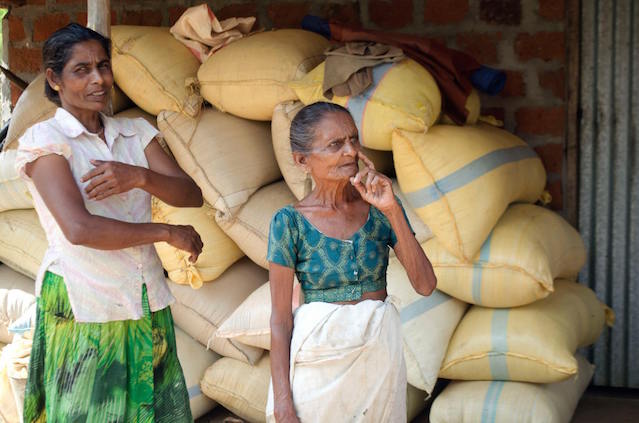
Poorly planned settlements are simply asking for trouble in the years to come. These settlers became subsistence farmers, supplying food to cities (feeding the wealthy) while living in poverty. Trapped in cycles of ill health and economic despair, they faced rampant diseases and premature death, as well as three decades of the LTTE war, which killed thousands of civilians in that region. Despite decades of warnings, governments failed to provide public health interventions; they continue to neglect the entire region. The prevalence of chronic kidney disease of uncertain origin (CKDu) soared—linked to prolonged consumption of contaminated groundwater.
The introduction of thousands of tube wells and agro-wells in the 1990s worsened the crisis, drawing hard water laden with calcium salts and fluoride ions, which are known to crystallize in the kidneys, leading to renal failure, which takes several years to manifest. Once CKDu reaches Stage IIIB renal failure, it becomes irreversible (click the links below). Clean water could have prevented much of this suffering and reversed early renal impairment. It would have been over a thousand times more economical than the current faulty approach of wait and treat.
[Wimalawansa, SJ, Dissanayake, CB, Environments, 7(2), 1-26, 2019; DOI: 10.3390/environments7010002 https://www.mdpi.com/2076-3298/7/1/2
Wimalawansa, SJ, Dissanayake, CB. European Journal of Medical Research, 28, 221 (2023). DOI: 10.1186/s40001-023-01162-y https://link.springer.com/content/pdf/10.1186/s40001-023-01162-y.pdf ]
History and the (lack of) Progress of CKDu in Sri Lanka
Despite three decades having gone by from the first identification of this deadly CKDu, even to date, and knowing that poor-quality drinking water is the fundamental cause, still less than 40% of the population in these regions has access to potable water. Families have lost their livelihoods, children have dropped out of school, and malnutrition is rampant. Others have relocated back to the south to save their children from getting CKDu. This voiceless population faces significant socio-economic challenges across the region, yet successive governments have not properly acted to address them. They failed to act to prevent this calamity via public education and the provision of potable water to the regions. Instead, it continues to focus on having renal dialysis units and building a renal hospital in Polonnaruwa. Prevention is the cure, not treatment.
Such specialized medical facilities were unnecessary and worthless if the government had taken firm actions from the beginning to provide clean, potable water to all inhabitants in the affected and neighboring regions. That would have prevented persons from developing CKDu and deaths, and eliminated the disease by now, rendering renal hospitals unnecessary―the disease is entirely preventable. Regional intermediaries exploit local farmers, while the state refuses to intervene—choosing not to purchase rice directly or regulate market abuses due to entrenched conflicts of interest. This is not merely a story of missed opportunity. It is a deliberate act of economic sabotage—an abandonment of national potential in favor of political expediency.
The Agrarian Illusion: A Political Fantasy with Devastating Consequences
Instead of investing in modern cities, creating proper infrastructure, sustainable developments, and integrating sustainable growth and process into global commerce, Sri Lanka’s political leaders continue to promote outdated and misguided ideals of small-plot subsistence farming as a path to food self-sufficiency. The insane ban on inorganic fertilizer was the nail in the coffin that led to the collapse of agricultural output. Besides, they discouraged group activities and larger-scale farming. This idealized view overlooked economic factors, as farming costs needed to maintain crops often outweighed outputs, leaving farmers with distant, fragmented plots that yielded low productivity. Besides, they had no access to modern technology, transportation, or markets.
They sold the public, especially those families who moved from out of the region, health and education, a dream of self-sufficiency—one rooted not in economic logic, but in populist ambition: fragmented land, unproductive agriculture, the reliance on monoculture, the population trapped in dependency for decades. Even today, there is no way out for these destitute families. The policy was less about development and more about securing political loyalty and oppression through dependency. This resulted in decades of sustaining poverty, stagnation with no potential for growth, poor health, and education opportunities, which significantly wasted national potential. This was not development but was a vote-harvesting scheme dressed up as national policy.
The Rise of Rural Cartels: When Corruption Becomes Infrastructure
Out of this chaos emerged a new elite: politically connected families and corporations that monopolized land, water, crop purchases, food processing, and market access. These cartels did not just exploit the system—they became the monopoly system. Colonization schemes left their intended beneficiaries burdened by debt, coerced into (forced) labor, and deprived of intervention and progress.
While the land suffered, rich ecosystems were bulldozed into monoculture wastelands—sugarcane, rice, and other cash crops replaced biodiversity with barren uniformity. Wildlife habitats vanished, and human–elephant conflict intensified, leading to increased deaths on both sides. Water tables collapsed, forcing residents to drill deep tube wells that yielded naturally contaminated groundwater. The resulting hard water contributed to chronic dehydration.
With human encroachment on the jungle, wildlife habitats have been reduced. Human‒elephant confrontation and associated deaths escalated. Water tables collapsed, requiring inhabitants to dig deep tube wells to extract naturally contaminated groundwater. The habit of consuming less water due to hardness caused chronic dehydration.
Meanwhile, associated physical, emotional, and economic stresses, particularly among men, drove increased daily alcohol consumption. This elevated the risk of developing CKDu, kidney stones, and related conditions. Chronic dehydration amplified calcium-fluoride crystallization in renal tissues, accelerating progression to kidney failure. Collectively, these changes permanently altered the local lifestyles of these migrated families for the worse and reduced life expectancy. The environment also paid a heavy price for political short-sightedness.
The Missed Urban Miracle: What Could Have Been
 Suppose officials had shown greater vision and empathy and conducted thorough ground assessments—such as water and soil testing and developmental feasibility studies—before relocating families. In that case, the project might have been more successful. Despite Sri Lanka’s enviable geographic position, associated challenges like transporting produce and the government’s reluctance to invest in infrastructure improvements (trade routes) in dry-zone regions caused suffering among the population. Instead, the nation should have pursued a bold strategy to build a modern, service-driven economy that generates higher foreign currency earnings and reserves—allowing for the import of food at lower cost while exporting innovation, advanced services, and high-value goods globally. It is not too late to shift course from impossibilities to reality.
By investing in good infrastructure, access roads, healthcare, fostering education and research, and creating a business climate attractive to global capital in these regions as well. It could have mirrored the transformative successes of Singapore or Hong Kong. Such a vision would have turned the country into a thriving hub for trade, finance, technology, and tourism, lifting millions out of poverty through meaningful employment, entrepreneurial opportunities, and sustainable economic growth. Instead, short-sighted policies prioritized subsistence over strategy, clinging to outdated models and short-term gains, and failed to harness the full potential in these regions for the benefit of the nation. The price of this choice has been decades of lost opportunity, persistent poverty, ill health and misery, and a staggering economic cost that continues to hold the nation back. Instead, it chose subsistence over strategy.
A Blueprint for Recovery: What Must Be Done
Reversing this trajectory demands more than policy tweaks—it requires a complete overhaul of the development model. This includes fostering innovation through strategic R&D, investing capital in infrastructure, FDICs, and instituting long-term, strategically guided reforms for sustainable success. That includes:
* Urban Resettlement with Dignity: Relocate rural populations to cities with access to education, healthcare, and employment.
* Environmental Protection: Revoke licenses for industrial agriculture in ecologically sensitive zones.
* Asset Confiscation: Seize holdings from those who profited from systemic exploitation and used that for local development.
* Political Accountability: Appoint an independent committee with legal power to investigate and hold people accountable for decades of economic mismanagement and harm done to people.
Call It What It Is: Economic Assassination
This is not an unfortunate misstep—it is economic assassination, executed through decades of deliberate policy failures, systemic neglect, to strengthen political expediency. From underfunded healthcare and exploitative labor to the abandonment of vulnerable communities, the collapse of the region (and the nation) was engineered, not accidental. Naming it for what it is shifts the narrative from passive acceptance to active resistance.
It demands accountability, bold reform, food safety, energy/power, and food security, and a refocusing of national priorities that center on human dignity and prosperous, sustainable development, over personal and political gain. The time for euphemisms is over; clarity is the first step toward justice. This was not an accident. It was a calculated betrayal of national potential. Until the public sees through the rhetoric—until it recognizes that this is economic assassination, not development—the cycle will continue. The nation deserves better; voiceless people who live in dry zonal regions deserve better. It is time to demand that the leaders not engage in politicking; instead, force them to do the right thing for the people, for the right reasons.
*Dr. Sunil J. Wimalawansa (Professor of Medicine, Endocrinology, & Human Nutrition)
SJ / August 13, 2025
“Sri Lanka has excellent resources, including fabulous weather, water, climate, and a trainable workforce, and is devoid of major natural disasters. “
Nice to know for someone who experienced the 1964 cyclone besides knowing of several others once in a few years.
Luckily I was not witness to earth slips except one near the Mahaweli river bridge at Peradeniya.
Tsunami was a freak event, but floods ans heavy winds are not.
*
Let us not fatter ourselves.
/
old codger / August 13, 2025
SJ,
Don’t forget the world’s most advanced irrigation system.
/
SJ / August 13, 2025
Let us not flatter ourselves.
/