

By W.A. Wijewardena –

Dr. W.A Wijewardena
Ellepola: CBSL’s leading economist
My relationship with H.M.R. Ellepola, former Executive Director, dates back to the late 1970s, when I was an economist in the Economic Research Department. At the time, he was a Senior Economist in the Department, overseeing the public finance division. He had just returned to the bank after completing a stint at the Finance Ministry as an adviser on fiscal affairs. With that experience, he was the most suitable person to handle public finance matters in the bank.
This was in 1978, and the new Government that had been voted into power had already begun liberalising Sri Lanka’s economy. Given the country’s pressing socio-economic issues, it had also decided to accelerate the mega Mahaweli Development Project, which had originally been planned for completion over 25 years, to just six years.
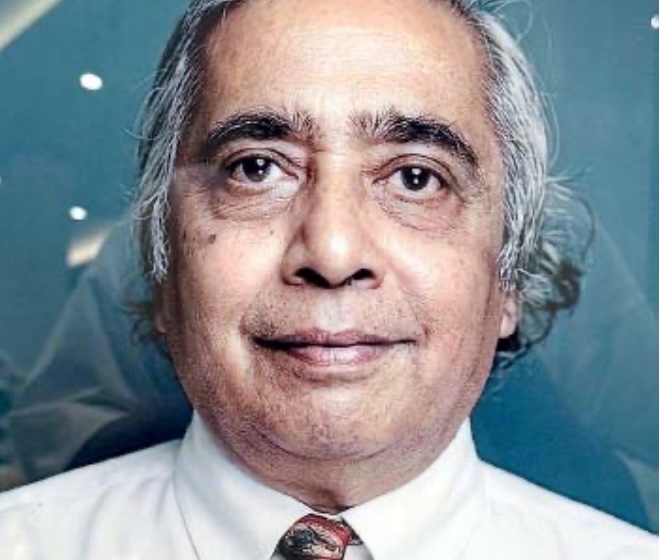
H.M.R. Ellepola
Such acceleration would naturally have far-reaching consequences for the country’s fiscal, monetary, and exchange rate policies. I recall the then Deputy Governor of the bank, Dr. W.M. Tillakaratne, calling some selected officers of the Economic Research Department to his office and advising us to prepare an urgent report for submission by the Central Bank to the Government, highlighting the impact such acceleration would have on the broader macroeconomic scenario and how the Government should mitigate the adverse consequences.
The assignment was entrusted to two senior economists, namely Dr. Nimal Sanderatne and H.M.R. Ellepola. I was placed directly under Ellepola and was asked to quantify the basic materials—such as cement, sand, steel, and metal—needed for construction and assess their availability within the country. If there was a shortfall, I was to identify the import liberalisations that should be introduced to ensure their ready availability to contractors. I completed my part of the assignment under Ellepola’s expert guidance.
Studying on both sides of the Atlantic
Ellepola joined the bank after completing an honours degree in economics at the University of Ceylon. He pursued postgraduate studies on both sides of the Atlantic, earning a Master’s Degree in banking from the London School of Economics and another Master’s in public policy from Harvard University.
With these academic credentials in his repository of knowledge, he was well equipped to serve the bank in almost any capacity. That was precisely how he served throughout his career. He worked in Economic Research as a Senior Economist, Deputy Director, and Additional Director; managed the bank’s development lending arm, which provided funding to small and medium enterprises through lending banks; and, as Executive Director, oversaw currency issue, public debt management, and the Secretariat Department of the bank.
He was also Secretary to the Monetary Board, a prestigious position reserved for officers of proven ability and integrity. In addition, he served as Vice Chairman of the Institute of Bankers of Sri Lanka, the body established by an Act of Parliament to provide professional qualifications to bankers. In all these positions, Ellepola made significant contributions to the bank and the nation.
Inflation’s ugly head
In the early 1980s, Sri Lanka was afflicted by very high inflation—above 25% for most of the period—arising mainly from the expansion of Government expenditure programs. This posed a significant challenge to the Central Bank, which was required to stabilise prices to enable the private sector to undertake investment and generate the expected economic growth.
When the situation became critical and no quick solution could be found within the prevailing resources of the Economic Research Department, Governor Warnasena Rasaputra brought Ellepola from Development Finance and entrusted him with the task of bringing inflation under control. He was a Deputy Director at the time, and I was the Senior Economist assisting him in this work.
In those days, the Central Bank relied mainly on quantitative credit controls as its principal instrument of monetary policy; market-based monetary policy and the management of the reserve money base to control the money supply, and thereby price escalation, were still unknown at the bank.
I recall Ellepola and me sitting until midnight almost every day, writing papers for submission to the Board members as circulation papers the following day. This monetary policy was severe, but Governor Rasaputra defended it as a necessary “shock treatment” to tame inflation, which was regarded as public enemy number one.
Within two years, inflation was brought down to a manageable level through this shock treatment, and the bank relaxed its tight credit controls so that the economy could move along its medium-term growth path. With the special assignment successfully completed, Ellepola moved back to Development Finance, this time as its Director.
Breakthrough policy papers
Ellepola was adept at generating new ideas that others would later bring to fruition. While he was in the Development Finance Department, I recall that he prepared two blueprints that served as policy guidelines for two issues facing Sri Lanka’s financial sector at the time.
One was a paper on establishing a credit information system in the country. The other dealt with how Sri Lanka should promote the credit rating of financial institutions by establishing a domestic credit rating agency. I became a beneficiary of these two policy documents many years later, when the two institutions were established in the country with my direct involvement in their operations.
In 1990, the bank asked me to establish the Credit Information Bureau, known by its acronym CRIB, and Ellepola’s blueprint became my guide in setting up the bureau. In 1998, as Superintendent of the Employees Provident Fund, I was involved in bringing Duff and Phelps Rating Agency, the predecessor of today’s Fitch Ratings, to Sri Lanka. I shared Ellepola’s policy document with its first head, the late Ravi Abeysuriya, and it provided valuable guidance on how the agency should deal with Sri Lanka’s financial institutions. These were, in fact, unpublished contributions by Ellepola to the bank and the country.
Stint at Seychelles’ Central Bank
Then came a welcome break for Ellepola. The Central Bank of Seychelles had asked the Central Bank of Sri Lanka to nominate a suitably experienced senior officer to streamline its monetary policy framework and help publish its annual economic report and staff papers. Ellepola was nominated and secured the position.
He later told me that he broadened the definition of the money supply to include broad money, introduced reserve money control as the monetary policy framework, assisted the bank’s officers in drafting the economic report, and introduced an annual staff papers publication system. This exposure further strengthened his own understanding of monetary policy and of how a central bank should communicate with the public.
He firmly believed that a central bank must, of necessity, communicate with people in language familiar to them. This is a technique that almost all central banks in the world should master when explaining what they are doing, why they are doing it, and how it will affect the public at large.
This approach had already been introduced at the Central Bank of Sri Lanka by Governor Rasaputra through a new communication initiative. He had asked the specially hired Silumina journalist, Mervyn Silva, and me to publish a monthly Sinhala journal titled Satahana and its English counterpart, The News Survey, in the style of the IMF’s *Finance & Development*, to educate the public on complex economic matters in simple language. Ellepola told me that he introduced a similar mechanism at the Central Bank of Seychelles.
Preparation of Central Bank’s Budget
After Ellepola returned to CBSL, he was elevated to the position of Executive Director, a post now known as Assistant Governor. He oversaw the bank’s service functions, including secretarial services, currency, buildings, and staff services.
In this position, he made another breakthrough contribution to the bank: the preparation of its annual Budget, with the assistance of K. Jeganathan, an officer competent in accounting and finance. Although the Central Bank was a premier institution in the country, it did not then have a proper Budget of the kind found in other public and private sector institutions. There had been no perceived need for one because the Central Bank, unlike other institutions, could finance its own expenditure simply by creating new money.
Thus, the bank faced no cash flow or liquidity constraints. In practice, when the bank incurred any expenditure, such as salaries and wages, the currency issue account was credited and the charges account was debited. At the end of the period, the balance in the charges account was transferred to the revenue account to ascertain the bank’s profits. Ellepola and Jeganathan introduced, for the first time at the bank, a budget similar to that of the Treasury. Ellepola’s exposure to the Treasury in the 1970s may have helped him in this task. The budget prepared by Ellepola and Jeganathan became the foundation of the detailed Budget now used by the Central Bank.
Monetary Board Secretary
In his capacity as Executive Director, Ellepola was appointed Secretary to the Monetary Board and Vice Chairman of the Institute of Bankers of Sri Lanka. Both were premier positions within the Bank, reserved for officers of exceptional ability and proven integrity. The Secretary to the Monetary Board must always maintain the highest standards of integrity and confidentiality, as a great deal of market-sensitive information passes through the Board. If such information were leaked to the market, outsiders could benefit unfairly by receiving it before others. Ellepola, having cultivated these qualities throughout his career at the Bank, was ideally suited to hold that position.
Bankers’ Institute Vice Chairman
It was as Vice Chairman of the Institute of Bankers that Ellepola made one of his most important contributions to the Central Bank and the banking industry. He worked first with Deputy Governor S.T.G. Fernando and later with Deputy Governor Palani Amarasinghe, both of whom served as Chairmen of the Institute and allowed him to function independently.
I was associated with Ellepola as the Institute’s Director of Studies, a position equivalent to that of a university dean, in the 1990s, and later as its Chairman when I was elevated to the position of Deputy Governor in 2000. Although our roles changed over time, the relationship between Ellepola and me remained cordial, collaborative, constructive, and mutually beneficial.
Whenever I made proposals to improve the Institute, Ellepola listened patiently and offered suggestions to strengthen them. Likewise, when Ellepola made proposals, I extended the same support. Together, we amended the curricula of the Institute’s courses to meet the emerging demands of the industry, introduced the new Postgraduate Diploma in Bank Management to help senior bankers acquire advanced academic qualifications, published several books on banking, upgraded the Institute’s journal for bankers, and improved its examination and assessment structure.
In administering the Institute, Ellepola discussed with the Governing Board the need to bring in new blood so that, one day, they could take over its management. Some of the young people recruited under this scheme left the Institute after a few years. However, three women chose to remain, rose to higher positions, and now run critical areas of the Institute’s administration.
Strengthening the Bankers’ Institute
The Institute did not have a proper convocation system at the time. It was merely a gathering held in the auditorium of the Central Bank building. Ellepola elevated the annual convocation to the standard of a university ceremony and moved it to the main hall of the Bandaranaike Memorial International Conference Hall. He also introduced a system of recognising senior bankers by awarding them Honorary Fellowships. This became a major annual event of the Institute and continues to be practised by its management today.
Unsung hero
Ellepola made these contributions to the bank and the national economy without fanfare. He remained a quiet and largely unknown figure even within the Central Bank. Only those who worked closely with him fully appreciated his value. For that reason, he was truly an unsung hero of the Central Bank.
*The writer, a former Deputy Governor of the Central Bank of Sri Lanka and an ex-Director of Studies and Chairman of the Institute of Bankers of Sri Lanka, can be reached at waw1949@gmail.com