


By Siri Gamage –
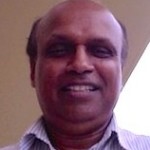
Dr. Siri Gamage
It is with deep sadness that I learned of the passing of my former colleague at the University of Peradeniya, Dr. Michael Fernando. Michael was a unique individual who had not only mastered systems of knowledge and ways of thinking from both East and West, but who also applied them thoughtfully and effectively within the university and in the wider society.
My association with Michael goes back to the early1970s and continued until the mid-1980s, when I was working in the Department of Sociology at the University of Peradeniya. Michael was attached to the Department of Sinhala. After his return from doctoral studies in East Germany (correct me if this is inaccurate), we often discussed the nature of government services and social conditions under communist and socialist systems, particularly in relation to low-income families. He offered valuable first-hand insights into life there—insights that were difficult to obtain at the time due to the bias and limitations of Western media narratives.
Dr. Michael Fernando
Michael served in the Department of Sinhala, which produced world-class intellectuals such as the late Professors Ediriweera Sarachchandra, D. E. Hettiarachchi, Ariya Rajakaruna, P. B. Meegaskumbura, Anuradha Seneviratne, and Siri Gunasinghe, among others. The distinctive feature of these scholars was their wide reading and deep research into their own society and culture—its institutions, rituals, history, and creative works—in order to understand language, customs, and ways of thinking and acting. In essence, their task was to describe how society and people functioned in particular contexts, and to identify the forces that shaped consciousness and social behaviour.
While Michael was part of this intellectual tradition and contributed meaningfully to it, he also brought a distinctive perspective grounded in his extensive engagement with Marxist and Leninist literature, as well as with social systems that did not follow capitalist modes of production and exchange. His affiliation with the Ceylon Communist Party supported this intellectual orientation. His thinking was shaped by wide reading, lived experience, and sustained reflection on the social, economic, and political contradictions of Sri Lankan society.
Intellectual contributions within Sinhala scholarship were neither uniform nor neutral. Some scholars were oriented toward reinforcing traditions and institutions that could be seen as elitist and exploitative of the masses. Others—particularly those influenced by socialist and communist thought—sought to articulate the perspectives of marginalised and disempowered groups. These scholars were not only concerned with describing traditions, customs, rituals, and creative expressions, but also with speaking truth to power by offering social, cultural, political, and economic analyses grounded in the experiences of the disadvantaged. This was a vital contribution at a time when these groups lacked a public voice. Michael was supported in this endeavour by like-minded scholars from departments such as History and Political Science.
The 1970s and 1980s were decades marked by the rise of anti-systemic political and socio-cultural movements and by severe state repression. These included the JVP-led uprising in 1971 and the violent state repression of the late 1980s, as well as the emergence of the LTTE and its struggle for a separate state in the North and North-East. Competing Sinhala and Tamil ethno-nationalisms sought public support, while both uprisings created the conditions for intense political debate and analysis of alternative social futures beyond abstract Marxist or ethno nationalist texts. Print media increasingly carried discussions on the rights and wrongs of the parties involved and on the urgent need for ethnic and political reconciliation.
Although the influence of the Communist Party was declining and public attention had shifted toward more radical movements, Michael continued to contribute thoughtfully to discussions on politics, war, peace, and reconciliation from a socially just perspective. He was not loud or rhetorical; rather, his interventions were measured, well-reasoned, and grounded in substance. His analyses of society, culture, institutional frameworks, and necessary reforms reflected deep contextual knowledge and genuine concern for disadvantaged communities—particularly workers in tea estate plantations.
In his later years, recognising the need for systemic change within evolving political realities, Michael resigned from the Communist Party and extended his support to the National People’s Power movement and its campaign as a candidate. On many counts, it was the right choice.
Michael belonged to a remarkable generation of bilingual and trilingual intellectuals trained in indigenous Sinhala and Indian traditions of scholarship as well as in Western intellectual frameworks. The University of Peradeniya—earlier the University of Ceylon—produced many such scholars during what some describe as its golden era. They used their privileged positions to advance knowledge, nurture critical traditions of thought, mentor younger scholars, and provide students with conceptual tools to understand society, culture, institutions, and rituals. Michael was both a product of this era and a contributor to its intellectual and socio-political legacy. He will be sadly missed by many former academics, literary critics, political activists and students.
May he attain Nibbāna.
Velu / February 2, 2026
Dr. Gamage,
It is very interesting to read about your contribution about the passing away of Dr. Michael Fernando. You have mentioned about several intellectuals from the Department of Sinhala, how/what they did an excellent job. I am curious to know what their contributions were in relation to multilingual mutireligious, and multicultural nature of of the country. In other words were they part and parcel of only Sinhala-Buddhist country or something else. I know there will be harsh rebuttal to me, but don’t care about it. SJ to you for you one/word wise crack.
/
Nathan / February 2, 2026
I seldom read articles of praise on individuals. (should you wish to know why, please ask for it.)
I just read your comment.
Between the two of you who is the crack?!
/
SJ / February 4, 2026
Thank you Siri.
Yes, he was awarded his PhD in East Germany.
He was a committed Marxist and was most secular in outlook.
In 1983 May, soon after communal attacks were provoked in the campus by mischief makers, the VC was keen to calm down tension. Michael was approached because of his credibility as a secular person. Although he despised the UNP administration, he consented to visit a few halls of residence to talk on the need for communal harmony among students. His talk was well received by all students. I had the fortune to accompany him.
He was an exemplary teacher who took interest in theatre, and most importantly a very good and kind human being
/