

Veluppillai Thangavelu
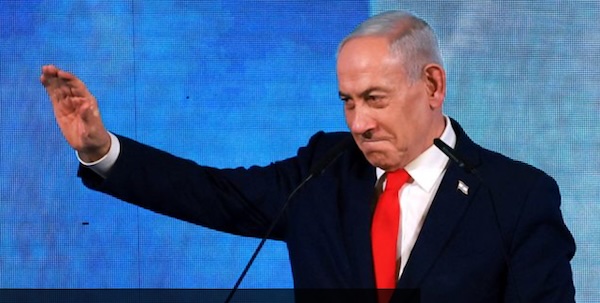
Israel, a country accustomed to political crises, has entered another period of uncertainty following the parliamentary elections held on October 27, 2026. Prime Minister Benjamin Netanyahu, Israel’s longest-serving leader, has emerged from the election with his Likud party remaining the largest single party in parliament. Yet the election has failed to give him the parliamentary majority necessary to continue governing with his existing coalition.
The results have produced a remarkable political paradox. Netanyahu’s right-wing and religious alliance secured 53 seats in the 120-member Knesset, eight short of the 61 required for an outright majority. The opposition alliance led by former military chief Gadi Eisenkot secured 48 seats, while two Arab-led political parties won 19 seats between them.
For the first time at this scale, Arab political representation has become central to the struggle over who governs Israel. The Arab parties, frequently excluded from the calculations of Jewish-majority political alliances, now possess enough parliamentary seats to change the balance of power.
Composition of the newly elected Knesset – 53 Netanyahu bloc, 19 Arab parties, 48 Eisenkot bloc 120 seats in total. An outright parliamentary majority requires 61 seats.
The political arithmetic is straightforward, but the ideological divisions are not. If Eisenkot’s 48 seats are combined with the 19 seats held by Arab parties, the total reaches 67, comfortably exceeding the majority threshold. However, several Jewish-majority opposition parties have opposed forming a government dependent on Arab parliamentary support.
Consequently, Israel faces a situation in which a numerical majority opposed to Netanyahu does not automatically translate into a workable governing coalition.
The latest development is that President Isaac Herzog has entrusted Eisenkot with the responsibility of forming a government. On November 10, the newly elected Knesset was sworn in without a new administration in place. Eisenkot has until December 6 to assemble a coalition, with a possible extension until December 20.
If he fails, Netanyahu may be given an opportunity to form a government. If neither leader succeeds, Israel could face yet another parliamentary election.
This deadlock reveals something much deeper than the personal rivalry between Netanyahu and Eisenkot. It exposes the contradictions between Israel’s identity as a Jewish state, its democratic parliamentary institutions and the political rights of its substantial Arab population.
Israel is often described internationally as a Jewish state. That description reflects its founding national identity, but it does not fully describe its demographic composition.
According to Israel’s Central Bureau of Statistics, the country’s population reached approximately 10.3 million in September 2026, including about 2.17 million Arabs, representing roughly 21.7% of the Israeli population when foreign nationals are excluded from the percentage calculation.
These Arab communities include Muslims, Christians and Druze, with distinct religious and political identities. Many Palestinian citizens of Israel identify nationally as Palestinians while holding Israeli citizenship. Their political interests cannot be reduced to a single position on the Israeli–Palestinian conflict.
Arab citizens vote in parliamentary elections, elect representatives and participate in public institutions. Yet they have also faced longstanding disputes over equality, public investment, land rights, national identity and political representation.
The 19 seats won by the Joint List and Raam are therefore significant beyond the immediate coalition negotiations. They demonstrate the electoral influence that Arab citizens can exercise within Israel’s parliamentary system.
The Joint List secured 11 seats, while Raam won eight. Raam has indicated willingness to participate in a governing coalition, while the Joint List has expressed greater interest in supporting an alternative administration from outside the government. These differences are important because Arab political parties do not constitute a single ideological organization.
The central question is whether Israel’s Jewish-majority parties are prepared to recognize Arab parliamentary representatives as legitimate partners in determining the country’s government. For parties committed to preserving Israel’s Jewish national character, cooperation with Arab parties raises concerns about national security, the Palestinian question and the ideological direction of government. Other Israelis argue that excluding elected Arab representatives from meaningful political participation undermines the principle of equal citizenship.
The present deadlock brings these competing interpretations of Israeli democracy into unusually sharp focus.
Netanyahu himself remains at the centre of the crisis. Having served as prime minister longer than any other Israeli leader, he has exercised enormous influence over Israel’s security policies, foreign relations and domestic political divisions. His political career has been built partly on the argument that Israel requires experienced leadership to confront regional threats, including Iran, Hamas and Hezbollah. His supporters regard his emphasis on military deterrence, intelligence capabilities and strategic relations with Washington as essential to Israel’s security.
His critics, however, question his handling of the Palestinian conflict, his dependence on far-right coalition partners and his responsibility for the political and security decisions preceding the Hamas-led attacks of October 7, 2023. Netanyahu also faces a longstanding corruption trial involving allegations of bribery, fraud and breach of trust. He denies wrongdoing. These criminal proceedings are separate from the political disputes surrounding his government, and the presumption of innocence remains applicable unless a court determines otherwise.
A loss of office would not itself establish guilt. Nevertheless, Netanyahu’s departure from the premiership could change his political leverage and the environment in which the legal proceedings continue. His political survival therefore involves two distinct questions: whether he can assemble another governing coalition and how his criminal proceedings will ultimately be resolved. Neither question has yet received a definitive answer. The security challenges facing Israel will not disappear with Netanyahu’s departure, should another leader succeed in forming a government.
Israel confronts a complex regional security environment involving Hamas in Gaza, Hezbollah in Lebanon and Iran, which has supported several armed organizations opposed to Israel. Hamas and Hezbollah are distinct movements: Hamas is a Palestinian Islamist organization, while Hezbollah is a Lebanese political and armed movement. Both have fought Israel, but they operate in different political and territorial circumstances.
The Hamas-led attacks of October 7, 2023, profoundly changed Israeli security thinking. The subsequent war in Gaza caused extensive destruction, mass displacement and a humanitarian crisis among Palestinians, while Israel maintained that its military operations were necessary to prevent further attacks. The conflict subsequently expanded beyond Gaza. Confrontations involving Hezbollah, Iranian-backed groups and Iran itself brought the region into a broader military crisis.
In February 2026, the United States and Israel launched military operations against Iran, further transforming the regional security situation. The conflict has affected international trade, energy prices and relations between Washington and its Middle Eastern partners.
These developments have intensified a fundamental debate over Israel’s security strategy. Supporters of military deterrence argue that Israel must retain the ability to respond decisively to threats from armed organizations and hostile governments. Critics contend that military operations alone cannot resolve the underlying political conflicts and may create additional instability.
The question for any successor to Netanyahu is therefore not simply whether Israel should maintain a strong military. That position enjoys broad support across much of the Israeli political spectrum. The more difficult question is how military strength should be combined with diplomacy, regional agreements and a political approach to the Palestinian question.
Eisenkot’s background as a former chief of staff of the Israel Defense Forces makes it unlikely that a government led by him would abandon Israel’s established security priorities. Nevertheless, differences could emerge in relations with Washington, the management of military operations and the willingness to pursue diplomatic arrangements. A change of prime minister would not necessarily mean a fundamental change in Israeli policy toward Hamas, Hezbollah or Iran.
Israel’s relationship with the United States is another area in which the political consequences could extend far beyond the Middle East. For decades, Washington has regarded Israel as a major strategic partner. American administrations led by both Republicans and Democrats have provided substantial military assistance, advanced technology, intelligence cooperation and diplomatic support.
Under a ten-year agreement signed during Barack Obama’s presidency, the United States committed itself to providing Israel with $38 billion in military assistance between fiscal years 2019 and 2028, subject to congressional appropriations. This includes approximately $3.3 billion annually in military financing and another $500 million for missile defence programmes.
The agreement reflects an institutional relationship that extends well beyond the political fortunes of individual American presidents or Israeli prime ministers. However, that relationship is now facing increasing scrutiny within American politics.
The US congressional midterm elections held on November 3, 2026, delivered substantial gains to the Democratic Party, which secured control of both the House of Representatives and the Senate. The result represents a major political setback for President Donald Trump, although he remains president and retains significant executive authority.
Public dissatisfaction with the cost of living, Trump’s economic policies and the war involving Iran contributed to the electoral outcome. Reuters reported that frustration over the economic consequences of the war was an important factor in the Democratic gains.
It would nevertheless be an oversimplification to attribute the Republican defeat entirely to American support for Israel. American voters were responding to several interconnected issues, including inflationary pressures, energy costs, tariffs, immigration policies and the consequences of military involvement overseas. The distinction is important. Opposition to a particular military campaign does not necessarily mean opposition to Israel’s existence or to all forms of US–Israeli security cooperation.
Yet there is evidence that the American public is increasingly questioning the costs of military involvement in the Middle East. A Reuters/Ipsos survey published on November 10 found that 71% of American adults wanted Congress to pass legislation ending the war with Iran. The survey also found substantial support for repealing Trump’s tariffs, while cost-of-living concerns remained a leading public priority. These findings suggest that Americans are increasingly concerned about the domestic consequences of foreign military commitments.
For Israel, the implications are significant. A Democratic-controlled Congress could subject future arms sales, military assistance and the conduct of regional operations to closer examination. Congress has constitutional authority over federal appropriations and can exercise oversight of American foreign policy. Nevertheless, President Trump retains important executive powers, and major changes in legislation would face procedural and political obstacles.
The immediate result may therefore be a more contested relationship between the White House and Congress over Middle Eastern policy rather than an abrupt termination of American support for Israel. Negotiations over the next long-term military assistance agreement, intended to succeed the arrangement expiring in 2028, could become particularly important. The Congressional Research Service has already identified possible changes in the structure of future assistance, including greater emphasis on joint defence programmes rather than direct military financing.
For Netanyahu, the simultaneous political developments in Israel and the United States present a difficult environment. At home, his parliamentary alliance lacks the seats required to form a majority government on its own. Abroad, the American political landscape is changing as Democrats prepare to exercise greater control over congressional oversight and spending.
Nevertheless, Netanyahu should not be regarded as politically finished merely because his coalition lost its majority. His Likud party remains the largest single party in the Knesset. His political opponents are divided over the participation of Arab parties, relations with religious parties and the conditions under which they might form a government. These divisions could allow Netanyahu to remain in office while coalition negotiations continue. They could also become relevant if Eisenkot fails to secure parliamentary support.
The corruption proceedings add another layer of uncertainty. As of November 2026, Netanyahu’s trial has continued into the defence phase, with no final verdict reported. The proceedings concern allegations that must be determined through the judicial process, independently of the election result.
The wider question is whether Israeli politics can move beyond the dominance of a single leader. Netanyahu has shaped Israeli political life for so long that debates over national security, judicial authority, relations with the Palestinians and ties with Washington have frequently become debates about Netanyahu himself.
A post-Netanyahu government would inherit the same unresolved problems: the future of Gaza, the status of the West Bank, relations with the Palestinian people, the influence of religious parties, the position of Arab citizens and the regional confrontation involving Iran. None of these questions can be resolved simply by replacing the prime minister.
The Arab parties’ unprecedented parliamentary influence is perhaps the most revealing feature of the 2026 election. Israel defines itself as a Jewish and democratic state. Its democratic institutions provide Arab citizens with voting rights and parliamentary representation, while its Jewish national character remains embedded in important aspects of its constitutional and political framework.
The current coalition negotiations raise the question of how those two principles operate when Arab representatives possess the votes necessary to determine who governs. If Arab parties are included in a coalition, or provide parliamentary support to a government from outside, their influence could become more visible in national policymaking. If they remain excluded despite holding decisive seats, the debate over political equality and democratic participation is likely to continue.
The issue is not whether Jewish and Arab citizens share identical political views. They clearly do not. It is whether political disagreements can be accommodated within a parliamentary system in which all citizens possess an electoral voice.
Israel’s future will also depend on developments beyond its borders. A lasting reduction in regional violence would require more than a change of leadership in Jerusalem. It would involve difficult decisions concerning Palestinian political rights and security, the governance and reconstruction of Gaza, the prevention of attacks on Israeli civilians, relations with neighbouring states and the regional role of Iran. The United States will remain central to many of these questions. But Washington’s domestic political divisions may increasingly influence the conditions under which it provides diplomatic and military support.
Israel thus stands at the intersection of three major developments: a parliamentary deadlock that could end Netanyahu’s premiership, the growing political importance of its Arab citizens and a changing American political environment in which overseas military commitments face renewed scrutiny.
The coming weeks will determine whether Eisenkot can translate his parliamentary support into a government, whether Netanyahu can find another route to power or whether the country must return to the polls. Whatever the outcome, the political crisis has already demonstrated that the future of Israel cannot be understood solely through the fortunes of Benjamin Netanyahu.
It must also be understood through the aspirations of its Jewish and Arab citizens, the unresolved Israeli–Palestinian conflict and the changing strategic priorities of the United States. The central challenge for Israel is not merely who will become its next prime minister, but how a deeply divided society can establish stable government while addressing questions of democracy, equality, national security and peace.