

By Mohamed Harees –

Lukman Harees
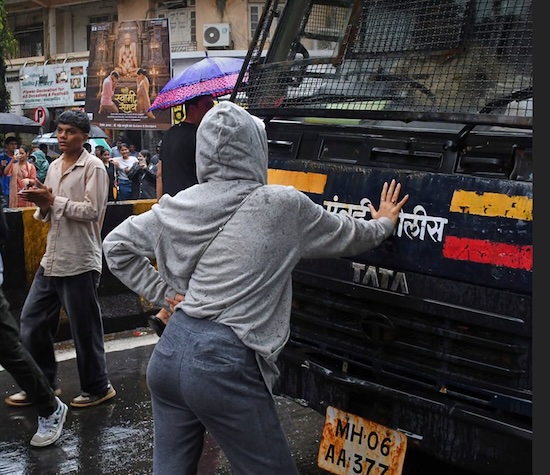
The recent CJP movement in India, triggered by alleged NEET paper leaks, student suicides, and a deep crisis of trust in public institutions, offers an important lesson for Sri Lanka and the wider South Asian region. It shows that when governments fail to protect fairness, dignity, and opportunity, youth mobilisation can rapidly transform grievance into mass political dissent. The deeper lesson is that this is not simply about examination malpractice; it is about the collapse of legitimacy when states become unresponsive to the lived realities of young people.
The Indian protests also reveal the dangers of dismissive elite language and securitised responses. Reports linked the agitation to the alleged “cockroach” remark from CJ, directed at unemployed youth and to the movement’s ironic reappropriation of that insult, turning stigma into solidarity and protest identity. Those matters dynamically because contempt from authority often intensifies alienation, particularly among students and job seekers already burdened by insecurity and uncertainty.
The CJP movement in India
The CJP protests emerged amid allegations of a NEET leak, wider exam irregularities, and student suicides in the aftermath of the crisis. Reporting indicated that protest leaders framed the issue as a national emergency, demanded accountability from the education ministry, and sought compensation for bereaved families. The movement was not limited to a single university cohort; it drew students, parents, teachers, and citizens into a broader moral challenge to the state.
What makes this movement especially significant is that it connected educational justice to mental health, social mobility, and the future of work. When exams that determine life chances are perceived as corrupt or arbitrary, the injury is not only procedural; it is existential. Young people understand such failures as evidence that merit has been hollowed out and that hard work no longer guarantees dignity or advancement. The Modi government already conceded one of their prime demands, namely the resignation of the Education Minister.
The protests therefore reflect a crisis of governance rather than a narrow administrative scandal. A state that cannot secure fair access to education cannot convincingly claim to be serving the aspirations of its youth. In that sense, the CJP movement became a referendum on whether public institutions still possess moral authority.
Parallels with Dhaka and Kathmandu
The protests in Dhaka and Nepal are useful comparators because they highlight a region-wide generational anger rooted in exclusion, economic frustration, and distrust of political elites. In Bangladesh, student-led street politics has repeatedly shown how quickly education-related grievances can merge with broader discontent with authoritarian practices, corruption, and the closing of civic space. In Nepal, recent Gen Z mobilisation has likewise been read as a response to structural insecurity and a political order that appears detached from youth expectations.
The common thread across these uprisings is not simply youth activism but youth abandonment. Across South Asia, the promise that education leads to secure employment, fair competition, and social mobility has weakened. When that promise collapses, students and graduates begin to see the state not as a guarantor of opportunity but as a gatekeeper of humiliation.
These movements also show how digital platforms and street protest now reinforce each other. Outrage spreads quickly online, but it becomes politically powerful only when it is anchored in concrete experiences of betrayal: leaked exams, unpaid bills, blocked futures, and a sense that ordinary people are being told to endure conditions that elites would never accept for themselves. That is why the youth movements of India, Bangladesh, and Nepal should be read together, not as isolated events but as symptoms of a regional crisis of representation.
Lessons from Aragalaya
Sri Lanka’s Aragalaya offers the clearest South Asian precedent for understanding how legitimacy can unravel when a government loses touch with citizens’ daily suffering. Aragalaya was driven by economic collapse, shortages, inflation, and the perception that political elites had insulated themselves from the consequences of their misrule. Like the student-led protests in India, it was fuelled by a sense that ordinary people were being forced to bear costs created elsewhere.
The Aragalaya also showed that protest can be a powerful democratic corrective when formal institutions fail to respond. It was not simply anti-government anger; it was a demand for accountability, dignity, and a different political ethic. That makes it directly relevant to the current discussion of South Asian youth protests: in each case, the street becomes the place where blocked citizenship is performed and reclaimed.
For Sri Lanka, the Indian protests offer a warning. The country cannot assume that youth frustration will remain fragmented or manageable if educational opportunity, employment, and public trust continue to erode. The lesson of Aragalaya was that accumulated grievance can erupt suddenly. The lesson of CJP is that even a technical failure in examination governance can trigger a wider moral and political reckoning.
Democratic authoritarianism and divisive politics
A common pattern across the region is the emergence of what may be called democratic authoritarianism: regimes that retain electoral forms while weakening accountability, narrowing dissent, and treating criticism as a threat rather than a democratic signal. Such systems often rely on polarisation, identity politics, and selective nationalism to consolidate support while avoiding substantive reform. In this environment, divisive politics and racism become instruments of governance rather than accidental by-products. This matters because young people are unusually sensitive to hypocrisy. They can tolerate hardship when they believe institutions are fair, but they revolt against systems that ask for patience while delivering contempt. When governments respond to protest with force, denial, or ridicule, they reveal the very instability they are trying to suppress.
South Asia’s political future therefore depends on whether governments can move beyond reactive authoritarian habits and rebuild trust through inclusion. That requires more than promises after a crisis; it requires a change in governing style, one that takes youth grievances seriously before they metastasise into collective rage.
Toward a new social contract
A new social contract in South Asia must also be anti-divisive. Governments cannot continue to exploit ethnic, religious, or regional fault lines for political gain while failing to deliver on basic social justice. The future stability of the region depends on the state’s ability to treat young people not as a demographic problem but as democratic partners in national renewal. For Sri Lanka, that means drawing a line from Aragalaya to the present: if the state wants stability, it must earn legitimacy through fairness, transparency, and responsiveness. The Indian CJP movement shows how quickly the absence of those qualities can turn despair into protest. The broader South Asian lesson is simple: when youth are ignored, mocked, or excluded, they do not disappear; they reorganise politics.
The central implication for Sri Lanka is the need for a new social contract between the state and its citizens, especially between the government and youth. Such a contract would recognise education, fair recruitment, mental health, and decent work not as favours but as public obligations. It would also reject the idea that youth must endlessly absorb crisis while elite institutions remain unaccountable.
Conclusion
The CJP protests in India, the youth mobilisations in Dhaka and Nepal, and Sri Lanka’s Aragalaya all point to the same conclusion: South Asian states are facing a legitimacy crisis rooted in unmet youth aspirations. The task ahead is not merely to manage dissent but to redesign governance around dignity, fairness, and inclusion. If governments continue to practise democracy in form while governing through authoritarian habits in substance, the region will remain vulnerable to repeated waves of protest and rupture.
A genuine response requires a new social contract that is sensitive to the social, educational, and psychological needs of young people. That is the only durable route to political stability, democratic credibility, and regional renewal. To respond meaningfully to Gen Z discontent, governments must move beyond symbolic consultation and create real channels of youth participation in decision-making. This means reserving structured spaces for young people in local councils, education boards, advisory committees, and policy review bodies, so that youth representation is not occasional or decorative but institutionalised. When young people see their peers involved in governance, policy begins to look more legitimate and less distant from everyday life.
Governments should also invest in concrete opportunities that speak to youth aspirations: transparent recruitment systems, internships, apprenticeships, digital skills training, entrepreneurship support, and merit-based pathways into public service. These measures matter because Gen Z is not only demanding protest rights but also demanding a future. If public institutions fail to create fair entry points into work and civic life, frustration will continue to deepen, and political alienation will harden.
Equally important is the need to protect young people’s mental health and dignity. Youth policy must include counselling support in schools and universities, grievance mechanisms for exam-related stress and injustice, and safe channels for reporting corruption, harassment, and abuse. A generation that feels heard, respected, and included is far less likely to turn to despair or confrontation. The task, then, is to make governance participatory, responsive, and aspirational—so that youth are not treated as a problem to be managed, but as citizens to be empowered.
Jit / July 26, 2026
The only core point from the CJP movement is that long held tyrannical regimes do not have long shelf life anymore, as they used to in the last century. A new generation with easy access to views, information and discussions are making waves in many countries and the corrupt old guard is experiencing the tectonic plates are already moving violently right under their feet. The main message is that today’s youth do not tolerate old guard’s rubbish anymore and they want to see a better world with widespread social justice and it looks an achievable objective now than it was a few decades ago.
/