

By Vishwamithra –
“All governments suffer a recurring problem: Power attracts pathological personalities. It is not that power corrupts but that it is magnetic to the corruptible.” ~ Frank Herbert
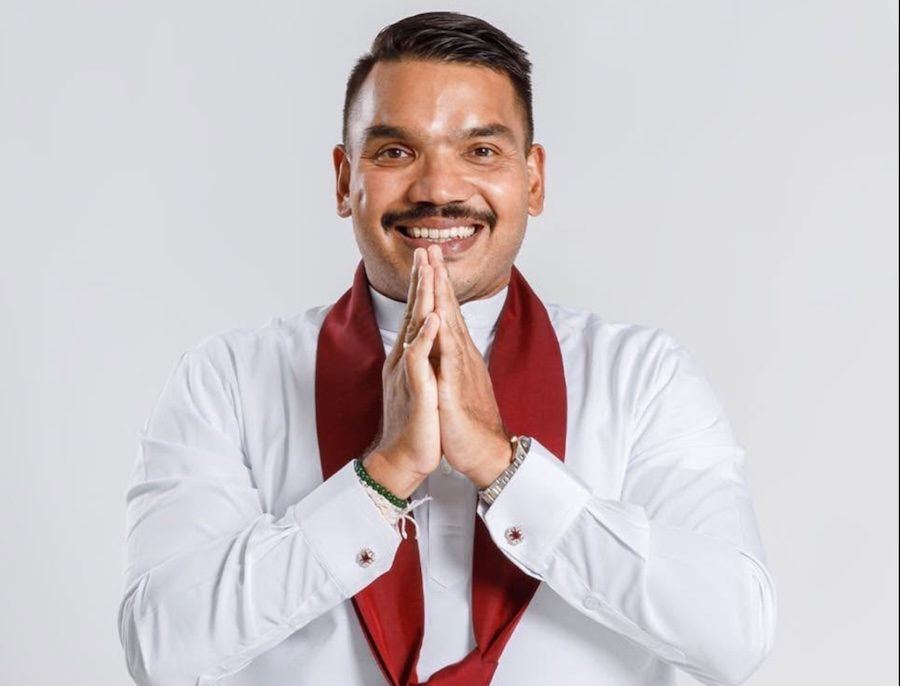
Namal Rajapaksa’s epilogue may already be taking shape. It is unusual for a politician’s legacy to acquire the atmosphere of a closing chapter before his fiftieth birthday. But dynastic politics accelerates both promotion and decline. The family name that opens every door can eventually become the weight that makes it impossible to walk through one.
Namal Rajapaksa
For the man so often called “Namal Baby,” the question is becoming uncomfortable: what remains of the heir when the public no longer wants the inheritance?
His arrest on September 4, 2026, and remand until September 18 have sharpened that question. The Bribery Commission alleges that he received Rs. 100 million in connection with an aircraft procurement transaction involving Sri Lankan Airlines. Namal denies wrongdoing. His lawyers contest evidence. These remain allegations, and remand is no verdict of guilt. Any criminal judgment must rest on evidence tested in court.
The political reckoning, however, extends far beyond the courtroom.
Namal’s predicament exposes the central weakness of hereditary politics: a surname can supply recognition, connections and a ready-made platform, but it cannot indefinitely supply legitimacy. Eventually, the beneficiary must explain why the country needs him.
Being available to continue the family business is an inadequate answer.
The Rajapaksa political project made the family extraordinarily difficult to separate from the state. Its appeal rested heavily on the idea that national security, political stability, and strong leadership resided in a particular household. Within that logic, the emergence of another Rajapaksa could be presented as continuity. Outside it, the same succession looked like a country being asked to renew a family’s claim on power.
Namal inherited that contradiction. Every advantage attached to the name came with an obligation to answer what the name represented.
It would be unjust to hold a son criminally responsible for his father’s actions. It is entirely reasonable to hold a politician accountable for the political tradition he chooses to represent. Namal cannot draw authority from the dynasty while expecting voters to disregard its record. An inheritance accepted for its advantages cannot be disowned whenever the liabilities arrive.
Sajith Premadasa faces a version of the same dilemma. His father’s name gives him instant recognition, but it also brings an inherited argument into every contest. Ranasinghe Premadasa’s legacy encompasses both an identification with the poor and bitter controversy over the exercise of power. The son cannot determine which memories the surname awakens. What inspires loyalty in one household can provoke distrust in another. An inherited name introduces a politician to the electorate long before he has the opportunity to introduce himself.
The danger for Sajith, as for Namal, is that ancestry becomes a substitute for a persuasive account of his own leadership. A father’s achievements cannot establish a son’s competence, just as a father’s failures cannot establish a son’s guilt. Yet hereditary politics invites precisely that confusion: it asks voters to recognize a family connection as a qualification, then objects when they regard it as a liability. For Sajith, the challenge is to give voters sufficient reason to choose him on his own merits. Until then, the name that makes him visible can also make it harder for him to be seen.
Those liabilities acquired a devastating human meaning in 2022.
Sri Lankans endured shortages of fuel, food and medicine as the economic crisis consumed everyday life. Protests culminated in Gotabaya Rajapaksa fleeing the country and resigning. The distance between the promise of commanding leadership and the reality of national breakdown became impossible to conceal.
For a family whose political appeal depended so heavily on strength, that collapse was ruinous. Citizens had been asked to trust the people at the top. They were then left struggling to obtain the essentials of life.
No campaign photograph can make that experience disappear. No invocation of past glory can settle the question of responsibility.
The 2024 presidential election gave Namal a brutal measure of the distance between inherited prominence and public consent. He received 342,781 votes—2.57 per cent of the valid vote. Whatever qualifications his supporters attach to that result, it offered no credible mandate for restoration.
That figure should haunt the succession project. The name was familiar. The family’s history was familiar. The candidate had national recognition. Yet recognition produced remarkably little support.
There is a deeper humiliation here than losing an election. A dynasty prepares its heir on the assumption that the public will continue to find the family indispensable. The electorate demonstrated how easily that assumption could collapse.
Even the nickname “Namal Baby” now carries a political sting. What might once have conveyed affection or privileged familiarity also suggests a politician permanently introduced through his parentage. A would-be national leader cannot remain forever the promising son. At some point, he must possess an authority that survives without the family portrait behind him.
Youth, by itself, provides no answer. A younger face can preserve an exhausted political culture as faithfully as an older one. Renewal requires changes in conduct, accountability, and distribution of power. It demands an explanation of what went wrong and what would prevent it from happening again.
The difficult questions therefore remain. What would Namal do differently? Which habits of the Rajapaksa era would he reject? What limits would he accept on his own power? What institutions would he strengthen even when they inconvenienced his family?
Until those questions receive convincing answers, the promise of a new generation amounts to a request for another turn.
Yet anyone writing about his final political obituary should exercise caution. Electoral humiliation does not automatically destroy a political organization. Disappointment with one government can create opportunities for its defeated opponents. Public anger can fade, fragment, or turn elsewhere.
Namal could return to greater relevance. That possibility makes scrutiny more necessary, not less.
It also places responsibility for those now pursuing accountability. Investigations must withstand examinations. Prosecutors must prove their cases. Political leaders must resist the temptation to treat an arrest as an achievement in itself. A flawed prosecution can hand out a weakened dynasty for the persecution narrative it needs to recover.
Sri Lanka deserves justice strong enough to survive without applause.
But the Rajapaksas’ supporters face an equally demanding obligation. Allegations of political revenge cannot serve as a permanent exemption from investigation. Prominence does not establish innocence any more than public anger establishes guilt. A family that asks to govern must accept searching scrutiny of its conduct.
The most consequential outcome would be a country in which accountability no longer depends on which surname is in office. Otherwise, the fall of one dynasty merely creates vacancies for another.
That is what makes Namal’s predicament larger than the fortunes of a single politician. His career tests whether Sri Lanka can finally distinguish public leadership from family succession—and whether a famous name can be required to earn what it once expected to inherit.
His epilogue is not finished. He still has choices. But any credible new chapter would require more than waiting for public frustration to swing back in his direction. It would require an honest reckoning with the political inheritance on which his ambitions rest.
For years, that inheritance made the future appear reserved.
The electorate has served notice that it is not.
*The writer can be reached at vishwamithra1984@gmail.com
Nathan / September 9, 2026
I have said before that I will stop commenting if ever Namal gets to be President. No going back!
/
Roxie de Abrew / September 11, 2026
Hi Nathan,
Maybe you will stop commenting, as NR’s Leadership will not be requiring any negative comments!
Nathan, when I look at leadership alternatives to the existing one, NR is a stand-out candidate.
He will deploy the youthful SLPP Team that assisted the saviour, RW, in his successful quest to revive the economy.
NR also has the youthful capacity to draft a New Constitution that will ensure proper governance and meet the power-sharing aspirations of minorities.
/
old codger / September 11, 2026
Roxie,
“He will deploy the youthful SLPP Team that assisted the saviour, RW, in his successful quest to revive the economy.”
Then, why wasn’t he in the team himself? Or, he could have saved his uncle by getting him to deploy the same team, right?
/
nimal fernando / September 12, 2026
Rox,
–
“the saviour, RW, in his successful quest to revive the economy.”
–
–
The IMF gives a blueprint, a strict set of guidelines that should be implemented …….. none of which are Ranil’s ideas or economic knowledge/expertise.
–
He had to strictly implement the blueprint given by the IMF …….. to get the financial assistance from the IMF ……… for the country to recover.
–
That’s what Ranil did: nothing more.
–
Anyone could’ve done it …….. even the other – losing – candidate Dulles Allahperuma: the IMF would’ve held his hand and guided him.
–
There is no great or small magic in what Ranil did.
–
–
Ranil’s stooge Vajira Abeywardena, who won’t have a job without Ranil, says little children (the people in the country) don’t understand what Ranil did!
–
Like you, Vajira himself don’t understand what the IMF does: how the IMF operates!
–
Talk about mental-infants (little-children) – who can write a few passable words of English – crawling around the country!!! :))))
/
old codger / September 11, 2026
Nathan,
Our people have a herd mentality. One of these days even CT might be full of Professors promoting Namal. Don’t make rash promises.
/
Nathan / September 11, 2026
Thanks, old codger. I’ll stick to my moment of glory.
/
SJ / September 10, 2026
V, I suspect that JP has stolen the march on you.
/
old codger / September 11, 2026
SJ,
I suspect that dear Vishwa is leaning heavily on AI nowadays to write his pieces.
/
whywhy / September 10, 2026
Our guys have eyes but they can not see anything , not
because of blindness but arrogance and ignorance .
They visit , study and live in developed countries and
coming back home blind dumb and deaf to lead the
masses by fooling them through all available avenues
created and kept in reservation for them by their family .
Certainly this has to change , but who the hell is
qualified to change it ? Has Democracy left a loophole for
families to use it for their vicious desires ?
/
leelagemalli / September 10, 2026
WW, In general, I am against generalizations about anything. However, you may be right that our people too often comment without first examining all five senses of the evidence before them. Take the case of Namal Rajapaksaor anyone else: if a mere statement by an exiled Sri Lankan entrepreneur is sufficient evidence to arrest someone and have them remanded, then why does the same law appear to be blind when allegations are made that Wasantha Samarasinghe, a Minister in the present government, received similar millions from the same entrepreneur, Nimal Perera, who remains in Australia and refuses to return to Sri Lanka? If someone is to be arrested, there must be a consistent, objective, and legally defensible basis for doing so. The government, the CID, and everyone involved in the administration of justice—including the judiciary, whose independence is increasingly questioned—must apply the law equally, regardless of political affiliation.
Tbc
/
whywhy / September 10, 2026
L M ,
I maintain this position since very long with bitter experiences
we are going through , throughout our lives . Unimaginable .
Just look at our hospitals . Do the doctors in our country ever
think of running the hospitals they are working , to a standard
they have seen in countries where they took some training ?
And imagine , the same is the case with all other departments .
they simply learn to use tools but when it comes to customer
service , not up to the mark . So , generalisation get in there
because the attitude is widespread across the country and the
symptom is ” Swollen Head ” syndrome .
/
leelagemalli / September 11, 2026
WW, thanks.
Unfortunately, Sri Lanka still places an outdated social hierarchy on university degrees and professions, particularly medicine. Doctors are often elevated above other professionals simply because they hold a medical degree, even when they do not possess postgraduate qualifications; something that is far less pronounced in many Western societies. Where I live, doctors are regarded primarily as professionals, much like biochemists, scientists, and researchers; in some academic settings, researchers working at universities may even enjoy greater professional recognition. Sri Lanka urgently needs to rethink this culture and, more importantly, the way public investment in higher education is treated. When taxpayers finance a student’s university education, that investment should carry a reasonable obligation to society. Graduates who leave the country immediately after receiving publicly funded education should either fulfil a period of national service or contribute towards repaying the cost of their education. A structured repayment model, similar in principle to systems used elsewhere, could allow graduates to repay publicly funded educational support over the first 10–15 years of their professional careers. Everyone should understand that public education is not cost-free—it is paid for collectively by the citizens of the country.
Tbc
/
leelagemalli / September 11, 2026
cont.
At the same time, Sri Lanka needs to reconsider the prolonged disruption caused by repeated university strikes and political activism. Students should have the right to express their views, challenge governments, and participate in democratic debate, but that right should not become an excuse for indefinitely remaining within the university system while the financial and social burden is transferred to the wider population.
–
Student leaders and political organisations, regardless of their ideology, should be reminded that universities are funded by the public and exist primarily to educate and prepare young people for productive lives.
–
The longer students remain unnecessarily within the system, the greater the cost to the nation. Sri Lanka therefore needs a serious, structural reform of higher education; one that respects students’ rights while also recognising taxpayers’ rights and the enormous public investment behind every university graduate. Such reform must rise above partisan politics and ideological extremism; otherwise, replacing one political establishment with another will achieve little more than changing the people who control an outdated system.
/
leelagemalli / September 10, 2026
cont.
We stood firmly against the corrupt and destructive politics of the Rajapaksa family, and we will continue to do so; but opposing them never meant abandoning the fundamental principles of justice.
–
Selective justice is not justice, and political rhetoric from AKD or anyone else cannot substitute for due process, evidence, and equality before the law. If the law is to have any credibility, it must be blind to power, party, and popularity. Basta.
/
The Truth / September 10, 2026
Leela now I have a companion in Namal , an heir !
OC and you abused me calling me a Hairy deepthi.
Now with this heir , we have two vs you two.
You know which team is stronger.
Like Ranil this OC also has no guts, only talk !
/
nimal fernando / September 10, 2026
“dynastic politics”
–
–
Very many people don’t think or see beyond their noses.
–
Donald Trump was the price worth paying ……. for disruption ……. to break America …… from getting entrenched in dynastic-politics ……. Bushes, Clintons, ….
–
America will recover from Trump …….. but dynasties ……. would have made America ……. South Asian, South East Asian ….. North Korean ……. Lankan ……
–
Where would Lankans escape? …… Even the Rajapakses?
/
chiv / September 10, 2026
Nimal,
I still find Sham Lanka special.
There are dynasties of autocrats
( like North Korea), monarchs, democrats ?? ( Nehru family) , Nehru military rulers, Socialist / Communist
( Cuba )
But none can claim 75 years of people elected family dynasties
Senanayakas , Bandas ,
uncle/ nephew, Premas .
……. Rajapaksas ,
elected by our very own
😅🤣😂
In future, I will not be surprised to see this mentioned in history book glorified as an achievement just like
Country like no other, miracle of Asia , 2500 year civilization ……….
75 years of democratically elected
FAMILY KLEPTOCRACY
/
SJ / September 10, 2026
c
Is the current president of Cuba a relative of Fiedel by any chance?
*
Note: Raul was in the team that overthrew Batista. (It could even have been Che after Fiedel, had he not chosen a wider reach for his mission.)
/
nimal fernando / September 11, 2026
1/2
–
chiv,
–
I feel finally things are slowly breaking down/through.
–
Few reasons ……. mainstream media TV/newspapers no longer dominate …….. true ground situation is now mostly pumped out by independent YouTube channels …….. that have few vested interests ……. few axes to grind …..
–
Buddhist priests are slowly losing their stranglehold/grip ……. they are justly ridiculed and exposed on YouTube channels …….. by Gen Z.
–
AKD & Co are smarter than I first envisaged ……. smart to take things along slowly. Observe how they chased away Mahinda from his state-provided residence. Took the time but through proper legal means achieved the desired result with class – class few other pols have displayed (contrast that with the dismissal of Shirani Bandaranayake, Deshabandu’s appointment etc.)
–
Native has the class/smarts to realize what has transpired ….. and to go and hide ….. not to hang around and try to pump out futile consolation-al BS. :))))))
How they got rid of the well entrenched Cricket Board is a lesson to previous pols …. in how to get results working silently behind the scenes!
/
chiv / September 13, 2026
Nimal , yes
Slowly but gradually I am seeing some changes .
The process
Ain’t easy.
Pardon for re quoting
In critical care ( ICU )
“any sign of improvement is clinically considered a better prognosis.”
HOPE
/
nimal fernando / September 11, 2026
2/2
–
Everyone from all sides play the race/ethnic card ….. the Sinhalese the Buddhist card ……… when pushed to the wall and see their voter-base eroding.
–
Now, most pols’ true nature/character/lifelong-intentions are exposed …… like never before.
–
Even Ranil played the Buddhist card …….. and got replied with empty chairs! :)))
–
Things are changing ………. slowly but surely.
–
AKD first has to put runs on the board …….. to build up credibility with the people ……. before he can move on to break-down other greater social ills.
/
chiv / September 11, 2026
I did not mean any thing about current affairs, Even Lanka has new government.
Fidel was in power 1959 to 2006, almost 5 decades.
When he decided to step down power passed to his YOUNGER BROTHER
Raul Castro who served as President for a decade, from 2008 to 2018
That’s total 60 years of family rule
/
Jit / September 11, 2026
“….That’s total 60 years of family rule…”
And Chiv, what did they achieve?
Not much. I am totally against stupid American imperialism and expansionism……and their dirty fingers on Cuba, but aren’t Cubans in a worst mess than they were in 1959? What went wrong??
/
SJ / September 11, 2026
Cuba had economic trouble after the fall of the USSR as its economy was bonded with the USSR in the context of US sanctions. It struggled, but public support has sustained Cuban government. Under Trump the economic and political pressure has intensified, to include its blockade of fuel supply, among other things.
One may ask one’s self why there is no mass uprising yet in Cuba despite all of this, while smaller problems have overturned governments elsewhere.
(BTW, there was a mass protest about shortages many months ago but resolved through consultation than force.)
The country in the biggest economic mess today is really the USA.
/
SJ / September 11, 2026
c
As I explained it was not simply a matter of passing the baton to a sibling.
Raul was perhaps the most senior member of the Communist Party after Fiedel and Che.
The way Party affairs are conducted in Cuba are far more democratic than in the US (like for example, the Democrats in the US choosing a zombie as presidential candidate to prevent a socialist getting in, and the scheming in the British Labour Party to keep Corbyn out)
Neither Fiedel nor Raul cultivated family succession.
North Korea ha been rather an exception than the rule in socialist countries.
*
Did anything change significantly in Cuban politics after the ‘end of family rule’?
/
nimal fernando / September 12, 2026
chiv,
–
There was a Cuban poet ……. locked up in jail for over 22 years for writing a few offensive words about ol’ comrade Fidel. All he had to do was to withdraw the few lines to be set free. But he wouldn’t.
–
His sticking to his principles is up there with Ranil! OC will vouch! :))))
–
–
I don’t know how the sanctions have affected …… but at one time Cuba had the best Health-Care in all of Latin America. Perhaps even better than for the insurance-cover-less poor/disadvantaged Americans.
–
One of my kids toured Cuba sometime back ……… and says things were good back then.
–
–
When we visited Latin America ….. the thriving country was Chile ……. it was just obvious as soon as you crossed the border from Bolivia.
–
Though he was a brutal dictator ……. ol’ Pinochet did some good work with the ‘Chicago Boys’ for the economy.
–
It shows …… Right or Left dictators/brutes …….. can do some good things for their people ……
/
chiv / September 13, 2026
Nimal ,
I was amazed to see the Cuban health care shown in one of Micheal Moore ‘s movie. ( I believe second one…. Fahrenheit)
High standard at a very low cost
In early 90’s few of my friends from US traveled
to Cuba on Lankan passport and had few positive things to share
At the time a non US passport holders were allowed to travel from Canada / Mexico without restrictions
During my residency training
two of our consultants were from Cuba
shared their childhood ordeal under Fidel before fleeing to US with family as refugees.
Both went on to complete studies in the US.
/
chiv / September 13, 2026
Sorry not Fahrenheit
It s ” Sicko ” comparing US health care with other countries. Including Cuba.
/
Native Vedda / September 11, 2026
nimal fernando , my mate
–
“Where would Lankans escape to? … Even the Rajapaksas?”
—
Why escape when there’s a safe sanctuary at home: Parliament, Sinhala-Buddhist nationalism, racism, corruption, and impunity?
/
nimal fernando / September 11, 2026
Native,
–
Man, feel lonely hiding? Go full delusional ……. you won’t feel lonely here. :))))))
–
Another thing for you to worry about ………. what your favourite uncle Mao left behind! ………… https://www.youtube.com/watch?v=BGNc-iImF50
–
–
They always had the country’s/people’s interest at heart. True to their nature …….. it was the great pristine Sinhala-Buddhist, infallible, scrupulous and incorruptible patriots, the Rajapakses, …….. that gave a piece of land, 100 yards from the president’s office ………….freehold for eternity to the Chinese.
–
Imagine China giving land freehold to anyone yards from the Tiananmen Square! ……. It always has to be Lankans for such wisdom!
–
To his credit, it was Sirisena who converted it to a 100-year lease. …….. While ol’ Ranil was busy robbing Banks/EPF with the ol’ Colombo Chetties! ……… He only remembers Sinhala-Buddhists for votes …….. and for Sanga Samuluwas to save his skin from gaol.
/
Native Vedda / September 11, 2026
Namaste nimalji
–
“Another thing for you to worry about ………. what your favourite uncle Mao left behind!”
–
I listened to the entire discussion.
–
Both Indians seem confused and are talking BS. What exactly are they talking about?
–
Are they suggesting that the combined forces of Chief Minister Vijay’s party, TVK, the Sri Lankan Tamil diaspora, Tamil-speaking Sri Lankans (essentially the Jaffnies), China, Pakistan, etc., are conspiring to establish Tamil Eelam in Tamil Nadu and the North and East of Sri Lanka simply because the word “Tamil” is common to both Tamil Eelam and Tamil Nadu?
–
As I have remarked many times before in this forum, China is only 4,000 miles away, while India is just 30 miles away from Sri Lanka.
–
Has this got anything to do with Indian Defence Minister Rajnath Singh’s recent visit to Sri Lanka? Perhaps it has something to do with Xi Jinping’s forthcoming visit to India?
–
I am too tired of listening to all these conspiracy theories.
–
Please clarify.
/
nimal fernando / September 12, 2026
“I listened to the entire discussion.
–
Both Indians seem confused and are talking BS. What exactly are they talking about?”
–
–
Native,
–
I’ve to confess ……. I didn’t listen to it …….. only the first minute or two. “Anglo-philic” Indians confuse me ……. more than I’m already!
–
Saw it and thought you’ll be interested. :)))
–
From what little I’ve gathered ……. long before it really happened ……. some British University ……. carried out a hypothetical piece/academic-investigation/paper about the partition of India into India and Pakistan: which happened later.
–
Now a similar “exercise” has been carried out by a Chinese University in Hong Kong …….. the partition of Lanka into Lanka and Eelam.
–
The 2 gents are “hypo-thising” about China’s true intentions/designs for Lanka and its implications for Tamil Nadu and India.
/
old codger / September 12, 2026
Native,
“Both Indians seem confused and are talking BS. What exactly are they talking about?”
The Indian media (except for a few like the Wire and Print) are pretty paranoid and excitable. Modi has managed to reduce the level of discussion during his watch.
/
SJ / September 12, 2026
Modi was heavily backed by corrupt Indian big business and most of the mainstream media to bring him to power and keep him in power.
The India media are prisoners of their own folly.
/
chiv / September 13, 2026
OC, trust me
though I lhave lived a decade never ventured into
local or national political news / media .
😅🤣😂😂🤣😅
Absolute
BS …..BS…….BS
/
SJ / September 13, 2026
c
Look at it positively:
Had you ventured, you may have had things as nice to say about the place as you have about Sri Lanka.
/
chiv / September 14, 2026
SJ,
I do.
I still say nice things only to my wife, that too in private.
It’s good that she has traveled few places to know the difference.
Often she too feels the same way.
My family think, Lanka is a place to visit and stay.
Right now, I’m confused with my own views on Lanka , India and the U.S
( you know what I mean )
/
SJ / September 14, 2026
As far as marriage goes, you are a survivor.
/
nimal fernando / September 11, 2026
2/2
–
Man, Don’t you find all this entertaining?
–
The trick is to keep your eyes shut tight …….. and ask other to open their eyes wide.
–
If you keep your eyes shut ……. you don’t have to hide ….. you don’t know where you are ……. wherever is fine.
–
Your Ranil won’t tech you any of these tricks!
/
Native Vedda / September 11, 2026
nimal fernando
–
Why is The Island newspaper so keen on promoting Namal Baby’s speech in Parliament?
Rather than questioning AKD/NPP, Namal Baby should first review the history of their rule (one way or another) from November 2005 to September 2024.
/
nimal fernando / September 12, 2026
Native,
–
This popped up on YT.
–
Rejoice! ……… after 2500 years of going backwards ……. Lanka has finally arrived in the modern world ……… at last, a first-world speech ………. of all things in Sinhala! ……….. https://www.youtube.com/watch?v=LnxqmwgF0kY
–
–
For ye half-assed mimickers …….. who are called Wogs in ye beloved Old Blighty ……. he also speaks better English than ye Uncle Tom Ranil’s Singlish!
–
Eat ye hearts out ……. couldn’t have happened to a nicer lot! :))))
/
nimal fernando / September 12, 2026
Native,
–
If a man doesn’t rob, murder, violate laws.
–
Doesn’t appoint a relatively small cabinet of 37 + 2 ministers.
–
Doesn’t appoint 82 “advisors.”
–
Doesn’t take the wifey to Wolverhampton – is ol’ Wolverhampton such a great place ……. worth going to jail for?
–
Can you just accept the truth as is and move on with life …….. or do you want to get into a philosophical argument ……… about imaginary things?
/
old codger / September 12, 2026
Native,
“Why is The Island newspaper so keen on promoting Namal Baby’s speech in Parliament?”
Ever heard of Shamindra Ferdinando?
On a similar note, why does the Daily Mirror devote so much space to the doings and sayings of a person it calls “ex-diplomat Kananathan” ?
/
Naman / September 10, 2026
“ Every advantage attached to the name came with an obligation to answer what the name represented.”
As far as for the Tamil Speaking Citizens of SL (TSC) Rajapaksa name is synonymous with crimes against humanity/war crimes.
For the entire SL nation the name RAJAPAKSA is associated with FORCED disappearances/white van’s service/ Grabbing the Tamils and others assets/ accumulating foreign currencies overseas/ using thugs and underworld against those who are voicing injustices. Rajapaksas promoted the Drug culture initially in North and East. This then has spread all over the country
It is still sickening to see them FREELY travelling around in luxury vehicles.
Namal R has to prove to the public that he passed the Law examination legitimately
We still don’t know why Chinese Government giving respect and greetings to Mahinda R. Is it because of getting hold of Hambantota harbour for nine decades!!!
/
SJ / September 12, 2026
Should not the credit for “FORCED disappearances/white van’s service/ ” go to R Premadasa?
The Chinese are nice to people who have been nice to them. Nixon I guess is liked more in China than in the US. Beside recognition of the PRC as the sole legitimate government of China he did nothing to hurt or annoy China.
Hambantota came late in MR’s political life. MR turned to China for that project only after some countries (in Europe, North America and South Asia) that he approached for help turned him down.
Transfer of control of the harbour to the Chinese company by a long lease was the handiwork of Ranil W, desperate for cash to service some debts (none of them Chinese though). To his credit MR denounced that move. What was ridiculed as a white elephant is now flying for its Chinese managers.
Somehow the Chinese do not care much for RW. Nor do they seem to care for much for MR’s brothers.
/
Jit / September 10, 2026
When his cases were fast tracked and verdicts given after the 22A, will he even have time left to contest elections?
/
Naman / September 10, 2026
The loophole through which Namal R got into the parliament i.e. National List needs to be changed so that unworthy especially politicians are put forward by the Political parties to become Member of the Parliament. Ranil.W & Ravi K too got into the parliament by that means. The National List MPs should be of high calibre who can contribute their expertise to the country.
/
SJ / September 11, 2026
Had not this loophole been used by the TNA to smuggle in unelected people?
/
Naman / September 10, 2026
I am somewhat pleased to hear that the Parliamentarian Arching Ramanathan had been given the LAST warning in order to behave appropriately in the Parliament.
The standards of the parliament needs to be maintained if we Sri Lankans are to be shown to the world as CIVILISED people. We don’t want to see the scenes of the past like throwing chairs/ chilli Powder/ heavy books etc at the other MPs. I do hope that A Ramanathan will behave gentlemanly from now on i.e. he can express his opinions during his allocated times in a tone that doesn’t cause EARACHE. He should NOT be interrupting other speakers
/
SJ / September 11, 2026
There are many people who feel that AR is the sole voice of consistent Tamil protest in Parliament.
I am sure that there are a few here.
BTW, when did you first notice the antics of ‘Arching Ramanathan’?
/
Naman / September 10, 2026
Namal Rajapaksa’s planned September 12 th meeting in the ancient capital of SL to whip up uprising against the NPP GoSL is highly distruptive venture wasting the police forces precious time & tax payers money. Hope he cancels it.
/
Naman / September 10, 2026
The quote that appeared 10 years ago in CT article regarding ” APITH SINHA LE” ,
needs to be shared AGAIN as it is still very appropriate.
“these were ignorant and desperate strategies of a defeated, discredited, depraved, depleted and despondent group indefatigably employed to grab political power whenever an opportunity affords. They for sure will leave no stone unturned to ensure rift, division, confusion and pandemonium”
This is what I am expecting on 12/09/2026.
/
RBH59 / September 10, 2026
Seventeen years after the end of Sri Lanka’s civil war, the latest report by the United Nations High Commissioner for Human Rights says that the Sri Lankan government must do more to find the truth and provide justice. Many families of victims are still waiting for answers.
/
Ajith / September 10, 2026
End of the Family Kingdom?
/
Douglas / September 10, 2026
The main complaint against arresting Namal “Baby” relying on a “statement ” by a questionable “businessman” is a mockery of justice. The ‘Big Pandits’ (based abroad and eating ‘Lotus’) propagate this falsehood without knowing the facts. Of course, that ‘Affidavit’ by an associate of Namal is ‘ONE’ of the pieces of evidence against Namal. Much more unchallengeable and irreconcilable evidence will be made available, and well-recorded evidence will be unfolded in court as and when the case is taken for proper hearing.
However, having said that, Namal Baby’s ‘Dreams’ of becoming an ‘Heir’ to the ‘Kingdom’ have definitely been decimated if any of the court cases are decided against him. If he receives a guilty verdict and is sentenced to two years or more, he will be ‘Unqualified’ to contest any election for SEVEN years. That ‘Ladder’ he and his goons have placed to reach ‘2029’ will definitely crumble.
/
leelagemalli / September 12, 2026
https://www.youtube.com/watch?v=mUbdMmlE9fg
–
What we experience inthe country today – Democracy or Demo-Crazy led by Thambuththegama hate speaker ?
.
Let’s get to know the facts about our Douglass (real bloodsuckers) or similar two-legged grass-eaters. Only then can our society be progressive. These people are real fascists and supporters of fascists. As long as this culture dominates in my homeland, nothing will change for the common good.
/
leelagemalli / September 12, 2026
Habaraduwa (near to Unawatuna)was another hotspot for JVP bloodsuckers from 1989 to 1992. I have no doubt that Douglas and others were the true thugs at the time when my peers were ruthlessly murdered by blood-sucking JVPrs. Traumatised victims will come to light in the coming months as the opposition gains strength in the country, revealing their own heartbreaking stories.
/
Douglas / September 10, 2026
To talk of a “Heir”, there must be a ‘Kingdom’. That ‘Kingdom’ is on fire. Look at the events:
1. An investigation has been launched into a ‘Fraud’ committed by the ‘Queen Mother’ in collecting funds into her ‘Siriliya’ account from the banks, purporting to be donations to present a ‘Skan’ machine to the Apeksha Cancer Hospital, Maharagama. China has already ‘DONATED’ this machine for free. A director of this ‘Siriliya Fund’ – Sumanadasa Abeywickrama, the ‘Royal Astrologer’ and the ‘Black Magician’ of the ‘Royal Family’ was summoned to the Bribery Commission to record a statement regarding the collection and misuse of funds by the ‘Queen Bee’ , Shiranthi Rajapakse.
2. The Rtd. Vice Air Marshal, Roshan Gunathilaka was summoned to the FCID to record a statement on a ‘Fraud’ committed by ex-President Gotabahaya Rajapakse in the purchase of a ‘Mig Jet”.
3. Two days ago, Yoshitha and Rohitha Rajapakes were summoned by the FCID to record a statement on a fraud committed in the purchase of a ‘Tea Estate’ of 135 acres with a ‘Bungalow’.
Isn’t the ‘Kingdom’ on fire? Yes, it is. Will there be a ‘Kingdom’ left for “Heir” to be ‘Crowned’?
/
SJ / September 12, 2026
D
Flames can be doused.
Remember how JRJ let off all manner of offenders under a general amnesty in 1977?
/
Douglas / September 10, 2026
II. Remember, in opening this ‘Siriliya’ fund account, the ‘Queen Bee’ produced an ‘Identity Card’ bearing the number ” 222222222V. The purpose of the fund was to do ‘Charity Work’
It has been established that the funds of this account were used to purchase a property with a house in Colombo 7. Perhaps this ‘Royal Astrologer/Black Magician’ Sumanadasa Abeywickrama would be questioned on this transaction too. Remember, he was also involved in the building of ‘Malvana Mansion’ that was designed for Basil Rajapakse, but ultimately found no owner.
You will see all the ‘Kings’ of this ‘Kingdom ‘, viz. Chamal, Basil, GR, Namal, Yoshitha, Rohitha, Sashenrda, Shavendra, the ‘Queen’ Shiranthi, and the ‘Court Henchmen’ are in trouble. Will there be a ‘Kingdom’ and a ‘Throne’ to live and ascend?. Don’t CRY when it falls.
/
Douglas / September 10, 2026
Let us set aside these ‘Heavy’ staff and enjoy life at least for a while. Watch:
https://youtu.be/5D74Mab2q4Y?si=JEM-7VvC6RrM1d2T
Is this how ‘Gen Z’ watches the present political situation in the country?
Relax. Have fun and enjoy.
/
SJ / September 10, 2026
Te Filipinos had seen to the end of the Marcos empire we thought.
His son is now in the saddle. The US can work miracles?
Iranians had seen off the Pahlavi dynasty we thought.
Reza Pahlavi’s son recently made a bid for the lost throne. Sadly for him, the US could not work the miracle.
Let us welcome good news for what it is worth, but let us not build castles in the air.
/
old codger / September 11, 2026
SJ,
If Namal goes to jail, wouldn’t that give him a chance to get a proxy elected on a sympathy vote? The proxy could pardon him. Old story.
BTW, it seems that Gnanasara will be back in jail soon.
/
SJ / September 12, 2026
oc
Day dreamers despise any who disrupts their happy moments.
Real politics is cruel to them, and I only try to soften the blows.
*
It need not take a proxy to pardon him. Do not rule out the JVP(NPP) pardoning him in the name of Maithri (pun intended), under guidance from their foreign mentors.
/
nimal fernando / September 12, 2026
OC,
–
“The proxy could pardon him.”
–
–
All the more reason to hang him! Firing squad or a disappearance …… an “accident.”
–
What’s good for Lasantha, Thajudeen, Eknaligoda, ………. is good for him too!
–
Only problem, would Ranil object? :))))))
/
old codger / September 12, 2026
Nimal,
But he can’t be actually hung, unless he takes the easy way out like Kapila Chandrasena, his fall guy.
/
old codger / September 12, 2026
“Only problem, would Ranil object? :))))))”
Yes, but he could suggest a session in Batalanda.
No no, I didn’t write that. 🤣🤣🤣🤣🤣🤣
/
SJ / September 12, 2026
oc
You seem to have let out some air from the balloon, without a bang.
/
nimal fernando / September 13, 2026
OC,
–
“Yes, but he could suggest a session in Batalanda.”
–
–
Shhhhhhhh! …….. Some crazy “Ranil’s wisdom” guy ……… might suggest that as an Ayurvedic treatment for constipation.
–
And ……. treatment-clinics will pop up all over! :))))))
/
Ajith / September 11, 2026
The question remaining for us now, how far the people who have given the mandate for a better future remain with the same mandate and the NPP/AKD will make it happen?
The people of this country was ruled by two political parties with few families with one focus of racism and religious extremism. Until 2024, people accepted the rule by two political parties with few families with racism and religious extremism. Most of the time they gave two third majority or majority for them with full knowledge of what they are doing wrong but they felt it should be right. This happened for over 75 years. Can we trust that they have changed and they remain if NPP give proper devolution of power for other communities? At the same time will the NPP prepared to share the power with other communities? So far, there is no answer from the People or NPP?
/
leelagemalli / September 11, 2026
Rational Thinkers,
They came to power portraying themselves as the most knowledgeable, disciplined and competent political force Sri Lanka had ever seen—“walking libraries,” as they proudly described themselves. But after nearly two years in office, Sri Lankans have every right to ask: where is that extraordinary competence? We are witnessing a government in which even routine matters such as tenders and basic administrative decisions repeatedly appear to become problematic, contested or rejected. Ministers who were presented as exceptionally capable have yet to convince the public that they possess the experience and depth required to run a modern state. More seriously, the country’s leadership must be able to stand confidently before the international community and defend Sri Lanka’s interests.
Tbc
/
leelagemalli / September 11, 2026
cont.
–
https://www.youtube.com/watch?v=EY8udVzlJBA
–
If even the Prime Minister is not yet demonstrating the necessary authority and international confidence across critical areas such as education, health and foreign affairs, what message does that send to the world about the capacity of the government? And now, with President Anura Kumara Dissanayake reportedly stepping back from physically attending the forthcoming UN General Assembly and leaving the country’s representation to the Foreign Minister, Sri Lankans are entitled to question whether this government has the diplomatic strength and preparedness to represent the nation at the highest international level. This is no longer simply about personalities or political preferences—it is about Sri Lanka’s credibility, bargaining power and national interests.
Even more alarming is the apparent lack of transparency surrounding major bilateral understandings and international commitments. At a time when India and other partners are keen to advance long-pending agreements, Sri Lanka cannot afford to enter into arrangements that are not fully understood, publicly explained and subjected to proper parliamentary scrutiny
–
Tbc
/
leelagemalli / September 11, 2026
cont. If our leaders themselves are not sufficiently clear about the long-term consequences of these agreements, the danger is not merely political embarrassment—it could mean commitments that future generations will have to live with. Parliament must not be treated as an afterthought, and the public must not be expected to discover major national decisions only after they have effectively been made. This is particularly difficult to accept because transparency, accountability, competence and clean governance were not minor promises of the NPP—they were central to the very argument on which they sought the people’s mandate. Twenty-four months is enough time to demonstrate whether those promises were genuine. Yes, there may have been some positive steps, and those should be acknowledged. But compared with the enormous expectations created by their rhetoric before taking power, the delivery so far appears painfully small.
/
leelagemalli / September 11, 2026
cont.
Sri Lankans did not vote merely for a change of faces; they voted for a change in the way the country would be governed. The government therefore needs to understand the gravity of the moment: the issue is no longer whether the NPP can claim good intentions. The issue is whether it has the competence, transparency and courage to protect Sri Lanka’s interests when the stakes are genuinely high.
/