

By Tharindu Gamage –
Tharindu Gamage
Introduction
More than sixteen years after the end of Sri Lanka’s civil war in May 2009, the nation stands at a decisive juncture. While physical reconstruction has advanced, deep seated challenges in reconciliation, justice, and inclusive development continue to obstruct lasting peace. The nearly three decade long conflict left a legacy of trauma, displacement, and socio-economic disruption particularly in the Northern and Eastern Provinces. This article traces the trajectory of peacebuilding in Sri Lanka since 2009, examining key achievements, persistent gaps, and opportunities for reform. Drawing on policy analysis and field insights from Mullaitivu, a district among the most affected by the war, it assesses the effectiveness of post-war initiatives and proposes strategies for fostering sustainable peace and inclusive development in post-conflict societies.
This article examines the trajectory of peacebuilding in Sri Lanka over the past 16 years, focusing on its achievements, persistent challenges, and the way forward. It combines policy analysis with field insights from Mullaitivu, a district that remains one of the most affected by the war. By analysing post-war initiatives, the article aims to contribute to scholarly and policy debates on sustainable peace and development in post-conflict societies.
Progress Since 2009
In the aftermath of the civil war, Sri Lanka witnessed a significant expansion of infrastructure, with extensive investments in roads, railways, schools, and hospitals, particularly in the Northern and Eastern Provinces. The resettlement of internally displaced persons (IDPs) was also prioritized, with more than 90% of the estimated 300,000 war-displaced returning to their areas of origin by 2015 (UNHCR, 2015).
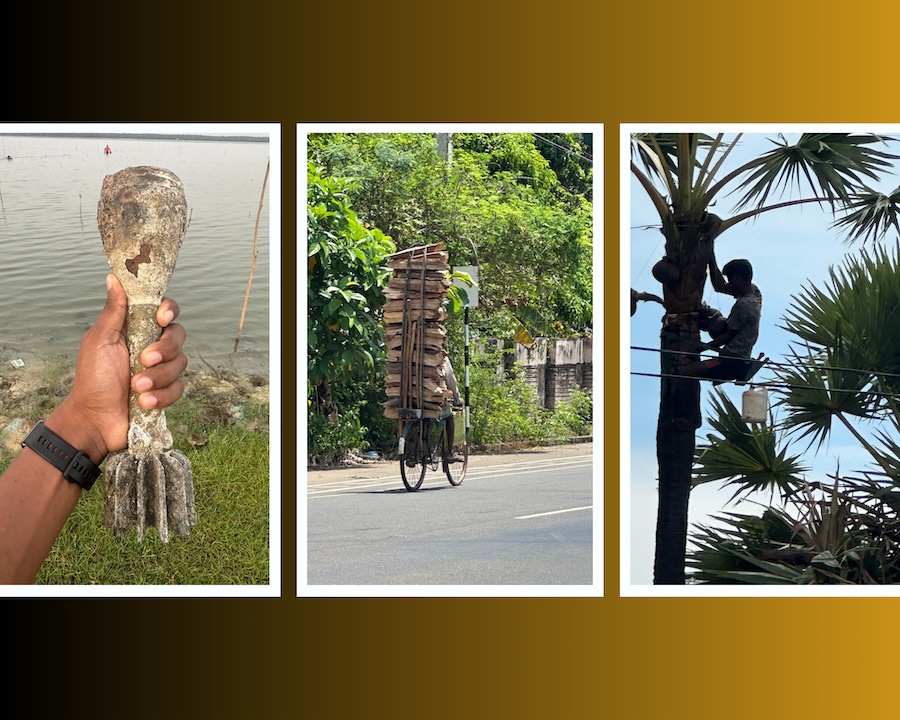
Demining efforts by organisations such as The HALO Trust and the Sri Lanka Army have made substantial progress in removing unexploded ordnance. According to the National Mine Action Centre, over 90% of contaminated land has been cleared by 2023. Educational and health indicators have also improved. School enrolment rates in the North and East returned to pre-war levels by 2018, and maternal and infant mortality rates dropped significantly (Department of Census and Statistics, 2021).
Institutionally, Sri Lanka established the Lessons Learnt and Reconciliation Commission (LLRC) in 2010, followed by the Office on Missing Persons (OMP) and the Office for Reparations. The LLRC’s recommendations led to limited progress in terms of language rights and symbolic reconciliation measures, such as the singing of the national anthem in Tamil on Independence Day in 2016.
Despite these developments, concerns remain regarding the sustainability and inclusiveness of peacebuilding efforts, especially in regions like Mullaitivu, where the scars of war remain deeply etched in everyday life.
Pitfalls and Ongoing Challenges
Despite visible infrastructural recovery and policy level efforts, several critical gaps persist in Sri Lanka’s peacebuilding journey. The most prominent issue is the lack of a comprehensive transitional justice process. Mechanisms such as the Office on Missing Persons (OMP) have been criticized for limited transparency, insufficient outreach, and lack of victim trust (ICG, 2020).
Land related grievances remain unresolved, especially in places like Keppapilavu, Mullaitivu, where people continue to protest the military’s occupation of civilian lands. Military presence in the North and East has been normalized, with large tracts of land still under military control. This not only delays resettlement but also undermines civilian governance and freedom of movement (Centre for Policy Alternatives, 2022).
Economic recovery has been uneven. War-affected regions, particularly Mullaitivu, continue to suffer from high poverty, limited market access, and underemployment. Youths lack vocational training opportunities, and many families struggle with debt and lack of capital to rebuild their livelihoods. Despite remittances from the Tamil diaspora, local development remains stagnant due to poor coordination, lack of infrastructure (e. g., no fishing harbour, shopping malls, or proper irrigation systems), and an over-reliance on ad hoc aid.
Education and cultural isolation are also concerning, students in the North rarely access national-level facilities like museums, the planetarium, or science exhibitions in Colombo. There are also no air-conditioned buses or railway lines reaching Mullaitivu, further deepening the sense of neglect and marginalisation.
Case Study: Mullaitivu District
Mullaitivu stands as one of the most heavily affected districts during and after the war, symbolising both the resilience of war-affected communities and the failure of state and non-state actors to meaningfully address long-term needs. Despite considerable donor funding and government attention during the immediate post-war years, sustainable peace remains elusive.
Demining activities conducted by The HALO Trust and the Sri Lanka Army have been essential in making the land habitable. Yet, many areas were declared safe only by 2022–2023, delaying full resettlement and agricultural activity. In Keppapilavu, families continue to demand the return of lands still occupied by the military. This unresolved grievance fuels frustration, particularly among youth who feel ignored by both the state and Tamil political leadership.
Although infrastructure such as roads has improved, Mullaitivu lacks basic economic and recreational facilities. There is no shopping mall, cinema, fishing harbour, or large scale processing plant, despite the area’s heavy reliance on fishing and agriculture. Farmers face irrigation challenges due to the absence of an integrated water management system, and fishermen struggle without adequate cold storage or modern fishing gear.
Students in Mullaitivu schools are deprived of exposure to national-level learning opportunities there are no school trips to the planetarium, museums, or financial institutions in Colombo. Moreover, school infrastructure remains poor, not a single public school in the district has a swimming pool, and IT and language labs are insufficient and comparatively not developed as other areas of the country.
Diaspora engagement has not always translated into meaningful development. While millions of rupees are sent from abroad, local populations report that only minor welfare programs like dry ration distributions are implemented. long-term capital investments that would enable entrepreneurship and job creation are rare. Without land deeds or collateral, many cannot access loans from financial institutions, perpetuating economic stagnation.
There is a growing sentiment that certain diaspora actors prefer to maintain a narrative of suffering to uphold refugee status abroad, rather than genuinely transforming ground realities. This highlights the urgent need for greater transparency, accountability, and development oriented partnership between diaspora communities and local stakeholders.
The Way Forward
To ensure sustainable peace in Sri Lanka, particularly in vulnerable regions like Mullaitivu, a paradigm shift is needed from symbolic reconciliation to structural transformation. This includes implementing inclusive economic development policies, restoring trust through transitional justice mechanisms, and empowering local governance.
Economic empowerment must go beyond short-term aid. Targeted financial inclusion programs such as microfinance schemes, youth entrepreneurship grants, and access to collateral free credit are crucial. The government should work with NGOs and diaspora organisations to launch capital-investment funds, business incubators, and vocational training centres tailored to the region’s needs.
Addressing land rights is fundamental. Expediting the release of civilian lands from military control, issuing land deeds, and resolving land disputes through independent commissions can restore dignity and security. Without land ownership, residents remain excluded from formal financial systems and sustainable recovery.
Diaspora engagement should be channelled into long-term development, not short-term relief. This requires improved monitoring and transparency in fund disbursement, community led project design, and partnerships with local cooperatives and Small and Medium-sized Enterprises (SMEs).
Education and cultural integration must be strengthened. Schoolchildren from war-affected areas should be given access to national institutions and exchange programs. Investment in school infrastructure, teacher training, and STEM education can help bridge the rural urban knowledge gap.
The central government must commit to genuine reconciliation through legal reforms, decentralisation, and addressing wartime abuses. Trust can only be rebuilt when justice is visible and communities feel heard, represented, and respected in political and developmental decisions.
Conclusion
Sixteen years after the end of Sri Lanka’s civil war, the country stands at a critical juncture. While considerable progress has been made in infrastructure development and resettlement, the underlying drivers of conflict ethnic marginalisation, land dispossession, economic exclusion, and weak reconciliation remain unresolved. The case of Mullaitivu reveals the deep disconnect between high level policy rhetoric and ground level realities.
True peacebuilding must go beyond repairing physical structures; it requires addressing emotional scars, political grievances, and socio-economic inequalities. A people centred approach, supported by genuine political will, community participation, and responsible diaspora involvement, is essential for creating a just and lasting peace. Only then can Sri Lanka move from a post-war context to a truly post-conflict society.
References.
Centre for Policy Alternatives (2022) Land Occupation and Protest: Keppapilavu and Beyond. Available at: https://www. cpalanka. org (Accessed: 10 June 2025).
Department of Census and Statistics (2021) Sri Lanka Labour Force Survey Annual Report 2020. Colombo: DCS. Available at: http://www. statistics. gov. lk
International Crisis Group (ICG) (2020) Sri Lanka’s Transition to Nowhere. Asia Report No. 302. Available at: https://www. crisisgroup. org
Office for Reparations (2021) Annual Progress Review 2020. Colombo: Government of Sri Lanka.
The HALO Trust (2023) Sri Lanka Mine Action Summary. Available at: https://www. halotrust. org
UNHCR (2015) Sri Lanka: 300,000 IDPs Return Home. Available at: https://www. unhcr. org (Accessed: 10 June 2025).
Nathan / August 14, 2025
… The nearly three decade long conflict
The conflict had been there much longer. The war highlighted the width of the divide!
/
roynathan / August 15, 2025
Well written Tharindu. It is well known that the govt officials appear to have no interest in solving the basic issues faced by the war victims. Politicians ,including Tamils, are there for rich peoples interest and welfare. Poor people will remain poor always. Two days ago , a Sinhala forest dept officer in Vanni was threatening a Tamil villager with pistol over a claim in land. War against impoverished Tamil villagers is now carried on by forest dept and archaeology dept officials with the assistance of monks. These officers ,policemen in the area and Ministers who visit North cannot communicate in Tamil language with local residents which create more and more suspicion and anger among Tamils. Don’t know whether Sinhala superior race pride and ego prevents them to learn at least a few sentences in tamil. In short the future of the tamil villagers is very grim.
/
Rohan25 / August 15, 2025
This is what I stated, Sinhalese public servants from the forestry, archaeology and the Mahaveli in cohorts with Buddhist monks and powerful Sinhalese extremists down south, coming to the north and east and threatening Tamil villagers to claim and steal their lands under various excuses, aided and abetted by an occupying Sinhalese armed force, that recently fought a war based on ethnicity and religion and police which is also 99% Sinhalese and hardly speaks Tamil.
/
Rohan25 / August 15, 2025
However, people do want the truth to be told and when you inform them accused as racist and being a trouble creator, as they want all this swept under the carpet and many also are overt and covert supporters of state-sponsored Sinhalese racism and marginalisation of the island’s Tamils, despite claiming to be otherwise. This is the reason they do not want any international arbitration or inquiry with regard to war crimes, federalism, self-rule with land( public and private lands) and police powers to the north and east, as this will stop their agenda to steal these areas from the Tamils to the Sinhalese
/