

By Ravi Perera –

Ravi Perera
“History is not the past. It is the present. We carry our history with us. We are our history” ~ James Baldwin American civil rights activist and essayist
It is nearly 80 years since independence, a period long enough to discern the nation building capabilities of a people, as well as their inherent ways and philosophies. Decidedly, the show has not brought down the house. Many neighbouring countries, starting with a much lower base, have marched ahead. There is a gaping mismatch between the hype and our actual performance, big talk but small deeds.
As a nation we are inclined to turn to history for validation. The popular choice is not objective history or well corroborated research, but legends, mainly oral traditions and romanticized sagas. To please our senses the story should end happily; the heroic race triumphed in war, the handsome prince won the hand of the beautiful maiden, governance was wise and just, there was amazing technology, there was plentitude, peace reigned. Myth over fact, embellishment over reality, a preference that points to a certain temperament and an outlook.
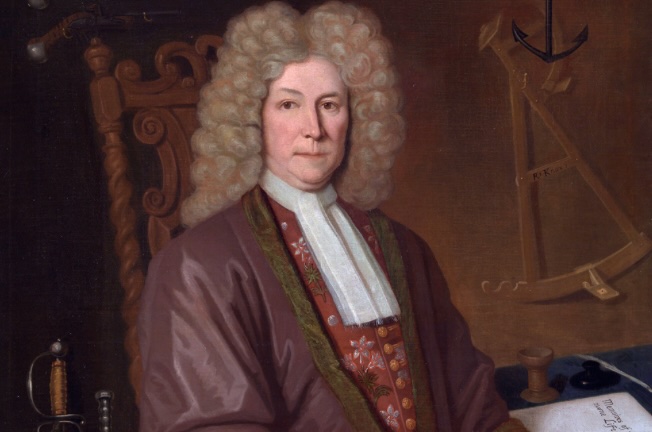
Robert Knox’s “An Historical Relation of Ceylon” is undeniably a valuable guide to 17th Century Ceylon. This is of course no mere tale. Knox lived as a captive of Rajasinghe ii, King of Kandy, in the doomed Kingdom for 20 years. An Indiana Jones of a sort, only that there was no escape from the agonies for two long decades.
While this kingdom slumbered, the world had moved forward. Isolated and insular, the hapless subjects of the Kandyan kingdom were enacting scenes that had gone on for centuries; living instinctively, performing their daily functions habitually; a people distinguished only by their poverty and ignorance. Upon his eventual escape Knox wrote the famous book, published in 1681, the first English book on Ceylon. Unlike many other “histories”, a contemporaneous record.
Son of a sailor (his father Robert Knox Snr, a Captain of a commercial ship) Robert Knox was no scholar. Having studied at a London school, he found the call of the sea irresistible, at the age of 14 joining his father on ship. Yet, his account of the strange and foreign land he was interned in; its people, geography, culture, flora and the fauna is more than competent, carries unity, realistic and credible.
Here, we are drawn unavoidably to contrast with the local culture; would the then social order have permitted a native to put on record his observations of the scene before him in that objective manner? True, we had no printing, and we do not know the level of literacy then prevailing, either in spread or depth, yet it is worth speculating whether the system allowed for such examination.
The issue here appears more complex than the mere lack of literacy or freedom. In modern times, more than a million Sri Lankans have chosen to move overseas, UK, USA, Australia, Canada, Middle East, Japan, Africa being desired destinations. Some of these recent immigrants are well educated. Yet there is hardly any writing by them of their adopted country; the lay of the land, its social standards, governance, the ways of its people. The immigrants’ interests are mundane, inward, eyes that only see what they want to see.
Robert Knox Snr had brought his ship to Trincomalee to repair damage caused by a storm while at sea. He was not trading with Ceylon, nor was his country at war with Ceylon. He and a group of sailors, including his son, were inveigled ashore by native officials, taken prisoner and marched to Kandy.
The prisoners were dispersed among various villages. The captain and his son were somewhat favoured in custody; meals were brought to them twice a day while the others had to go to village houses for the meagre food that the villagers could afford to share.
“The country being hot and their houses dark and dirty, my father chose an open house, with no walls. They placed a bedstead only with a mat upon it for him, which in their account is an extraordinary lodging, and for me a mat upon the ground”
Captain Robert Knox Snr soon caught the “fever”, perhaps malaria.
Dispirited and sick, Captain Robert Knox died a broken man before long. His son Robert Knox asked the villagers for help to bury his father. To his horror they sent him- “a rope to drag him by the neck to the woods. They could afford me no other help, unless I would pay for it” Eventually, Knox with the help of the “black boy” (a South Indian boy who had joined the ship as a cabin boy) managed to dig a grave in the woods to bury his father.
Robert Knox was a keen observer of the land, the people and their ways.
He noted the extremely Spartan existence of the average subject in the Kingdom. “Their dyet and ordinary fare, is but very mean, as to our account. If they have but rice and salt in their house they reckon they want for nothing. For with a few green leaves and the juice of a lemon with pepper and salt they will make a hearty meal”. And their dwelling places “their houses are small, low, thatched cottages built with stick, daubed with clay…” As to the furniture, their furniture is but small. A few earthen pots, a stool or two without backs. For none but the King may sit upon a stool with a back”.
“For the Chingulays are naturally, a people given to sloth and laziness; if they can but any ways live, they abhor to work; only what their necessities force them to, they do, that is to get food and raiment. Yet in this I must little vindicate them. For what indeed should they do with more food and raiment, seeing as their estates encrease, so do their taxes also?”
“In their wars there is but little valour used, although they do accomplish many notable exploits. For all they do is by crafty stratagems”
“These people are very ambitious of their titles, having but little else they can boast in; and of names and titles of respect they have great plenty in their language”
“The better sort of women, as gentlewomen or ladies, have no other pastime, but to sit and chew betel, swallowing the spittle and spitting out the rest”
“They are especially careful in their marriages, not to match with any inferior caste. Riches cannot prevail with them in the least to marry those they must eclipse and stain the honour of their family”
“Their learning is but small. All they ordinarily learn is to read and write. But it is no shame to a man if he can do neither. Nor have they any schools wherein they might be taught”
“They have no clocks, hour glasses or sun dials but keep their time by guess” No surprise that even today punctuality is not respected in this country!
“Here are no laws, but the will of the King, and whatsoever proceeds out of his mouth is an immutable law”
“The king they call by a name that signifies somewhat higher than a man, and next to god”
A description of the then people that throws light on today’s Sri Lankan politics- “They are crafty and treacherous, not to be trusted upon any protestations; for their manner of speaking is very smooth and courteous, insomuch that they who are unacquainted with their dispositions and manners may easily be deceived by them. For they make no account for conscience of lying, neither is it any shame or disgrace to them if they are catched in telling lyes; it is so customary.”
I came across the most spoken of Knox quotation, an observation that an ordinary farmer in the country is fit for kingship when the mud from the field is washed off him, long before I found the Knox book. Looked at from the familiar aspect of our post-independence leadership, I thought that this was tongue-in-cheek on the part of Knox. If they were anything like our present-day leaders, our kings were of peasant mentality, with only the mud washed off them!
Compared with the standards of his country, our King and his court were functionally illiterate. Europe was astir, this was the century of Issac Newton, Galilei and Descartes. Even Robert Knox who had joined ship at the young age of 14, had seen much (Africa, East Asia, India), had a broader view of the world, and possessed eyes more discerning than anyone he encountered here. His book, intelligent and sympathetic, was very successful, translated into several European languages
That so-called compliment was not an observation of Knox. It was a claim of a segment of the natives, with self-interest in the sustaining of a delusion.
The actual text from Knox’s manuscript reads:
“…it is a usual saying among them, that if they want a king, they may take any man, of either of these two counties [Udunuwara and Yatinuwara, around Kandy] from the plough, and wash the dirt off him, and he by reason of his quality is fit to be a king”
This is the same as a member of a leading political family of today asserting that if the various shenanigans committed by them can be ignored, they could yet be considered good leaders.
A failed political culture peddling a myth.
Jit / August 9, 2026
Even I myself have, and am guilty of quoting Knox in some instances. But then again it occurs to me how fair is it to see the country through the lens of an absolute alien.
/
LankaScot / August 9, 2026
Hello Jit,
Isn’t it strange that another Alien (me) still sees a fair bit of Truth in Knox’s comments about life in Sri Lanka. But then again I live about 4km, as the Crow flies, from his house at Lagundeniya. His Eladatta home is close to my Daughter in Law’s old house near Daulagala.
Best regards
/
Jit / August 11, 2026
LS, I used the word “alien” certainly in a light, non-derogatory sense. My point is that cultural familiarity acquired after one’s twenties has natural limits, particularly with no fundamental knowledge of native languages. It cannot replicate the formative learning that occurs earlier in life. Most instinctive cultural fluency develops before our twenties, when immersion, cognitive plasticity, and adolescent analytical skills shape how we absorb history, social norms, and the subtler behavioural codes that define a society.
For nearly twenty years, since his 19th birthday, although Knox lived a somewhat normal life in captivity, it was confined to a village called Eladetta. He didn’t have any knowledge or experience of what happened to the south or north of a Kandyan village. That is absolutely like a frog living in a well and telling the whole world that the world is an ocean!
Cultural dynamics are complex, fluid, and often contradictory. Even after three decades of lived experience since my birth, and with extensive travel and living in many different parts of the land, I still cannot claim to fully grasp every dynamic or reach definitive conclusions about our culture or our people.
/
The Truth / August 11, 2026
Jit, Why is it so difficult to grasp the culture of your people? Just examine what you see around you, your economy, your chaos, your leaders… you should grasp what is right in front of your eyes.
/
LankaScot / August 11, 2026
Hello Jit,
I have read Knox’s book and find his observations pretty accurate given the time that has elapsed. He describes Digligy-nour (Rajasinghe’s Capital near Nuwara Eliya) fairly accurately, so he must have been there. He also describes many things about Court Etiquette that he surely saw himself. He saw the 1664 Comet which was even seen in England, blamed for the Plague and Fire of London. This Comet was also blamed for the Sri Lankan Rebellion in 1664. His description and naming of the Flora and Fauna also aligns with my observations here in Central Province and I concur with his calling Rajasinghe II a Tyrant (I would say monster).
By the way with your phrase “My point is that cultural familiarity acquired after one’s twenties has natural limits, particularly with no fundamental knowledge of native languages. It cannot replicate the formative learning that occurs earlier in life”, you have negated the Science of Anthropology and Leonard Woolf’s writings.
I couldn’t put myself in the shoes of 17th Century Ship’s Captain, so how can you put yourself in the සෙරෙප්පු (sereppu- Sandals) of a Sinhala Peasant from more than 300 years ago?
Best regards
/
Jit / August 12, 2026
LS, it is not my intention to argue about your knowledge about Knox or Wolf. You may also well rooted and familiar with many aspects of the society you now live in, and that’s perfectly understandable. But whether it’s Knox or Wolf, what they recorded were mostly surface‑level observations — the everyday trivia that any outsider can note down in an unfamiliar place.
My point is about something deeper: cultural fluency — the instinctive grasp of social norms, emotional cues, and subtle behavioural codes that define a community. These cannot be simply acquired through observation. They are forged in early childhood through family, extended kin, and the tightly woven social networks that underpin core insights of a collectivist society. In this light, both Knox and Wolf; shaped by childhoods, cultures, and values in individualistic societies, could hardly attain the native fluency of the societies they later inhabited.
I say this with confidence because I grew up that way, in a village in Kandy, surrounded by those bonds until my early twenties. The emotional nuance, the unspoken expectations, the way relationships breathe and move in that culture — these are difficult for any outsider to fully internalize, especially without the many hues of local language or the formative experiences that anchor those instincts.
/
LankaScot / August 12, 2026
Hello Jit,
When I see a 2 year old here in Central Province repeating Sādhu, Sādhu, Sādhu, it is not through any “instinctive grasp of social norms”. It is learned behaviour assimilated in many different ways, but the words are not “hard wired” into the Child’s DNA. Do British Children kneel down and touch their Elder’s feet? Is that gene missing from their DNA?
As the Jesuits (and possibly Aristotle) said “”Give me a child until he is seven and I will show you the man”. Indoctrination of Children is insidious. However we knew at a very early age that what was “taboo” in our Family was not in others. Can Instinct explain these differences? Social norms are learned, Children’s Brains learn languages very quickly. That is the result of Millions of years of Evolution. To use the language of my Childhood “We’re a’ Jock Tamson’s bairns”.
Best regards
/
Jit / August 13, 2026
Thank you LS, I’ve said what needs to be said on the particular aspect of the discussion and have nothing further to add.
/
Jit / August 10, 2026
The way I phrased it doesn’t fully reflect the point I was trying to make. Apologies – and hope you can capture what I really meant.
/
The Truth / August 10, 2026
This Jit is another Leela !
” hope you can catch what I really meant” ! !
Why cant he simply tell us what he meant ? Comic !
They keep coming out of the woodwork.
/
old codger / August 10, 2026
Jit,
Very few of those who aren’t absolute aliens write the whole truth about the country. The impression he gives is that the locals were quite happy with the way they lived, because they had no knowledge of any other way.
This guy Knox spent 20 years here. To be sure, he considers himself vastly superior, but then his country had already produced Newton, as the author says.
/
Jit / August 10, 2026
OC, that was my position for a long time too. But I’m starting to see the other side now. This isn’t about whether Knox was right or wrong — it’s about the more fundamental question of – why anyone should treat Knox as an authoritative voice at all?
If I lived in England for ten or twenty years and then published my personal impressions of “the white fellows,” whether I’m right or wrong is irrelevant. Why should John Williamson from Southampton or Mary Blacksmith from Essex take me – that outsider’s chronicle as a serious account of England?
That’s the point: we often elevate an outsider’s subjective snapshot into something far more definitive than it deserves.
/
LankaScot / August 11, 2026
Hello Jit,
I don’t think that Knox was writing for a Sri Lankan audience. That was more than 300 years ago. Robert Burns wrote in the late 1700s a poem called “To a Louse” –
He was standing in Church and observed a Louse on an Upper Class Lady’s Bonnet.
The Last verse reads –
“O wad some Pow’r the giftie gie us
To see oursels as others see us!
It wad frae monie a blunder free us
An’ foolish notion”.
What Burns meant was that if we could see how other people see us, we might learn some lessons and refrain from saying, thinking or doing stupid things.
Do you think Knox’s observations on Rajasinghe’s Tyrannical Behaviour were wrong? Remember Britain had not long emerged from a Civil War due to Charles II’s Autocracy.
We can all benefit from some one else’s outlook/viewpoint.
Best regards
/
The Truth / August 11, 2026
Dont write such gibberish Jim ( jit) ,the intending writer on life in UK
We all know that even if you lived for a hundred years in UK or Leela man’s Germany, you will not write a coherent account of that country. No Sri Lankan has done it , they are not designed for such things. As much as Sri Lankans can never make an empire or even create a wealthy country.
The mere fact that you just equate Robert Knox with someone like Jit and ask what if Jit wrote about UK, tells me you are a typical guy from there, full of himself, a lot of words but no substance.
You really don’t understand writing do you ? Even when it comes to history what we write is utter nonsense, The few better historians Sri Lanka talks so much about are products of Western universities. What about the products of Sri Lankan universities ?
/
old codger / August 11, 2026
Jit
We wouldn’t have to take outsiders seriously if our own secular histories existed. What we have are pious paeans to kings and their doings.. Thankfully, some of their wickedness is also recorded. But is there any social commentary, any observations of ordinary life? As far as I know, ordinary people are depicted as paying taxes , building stupas, digging tanks etc.
It took another foreigner , Leonard Woolf, to tell us about a village in the jungle.
As I have mentioned elsewhere, social conditions were discussed and secular histories existed in the West, and that was the pedestal that Knox was looking down from.
/
Jit / August 13, 2026
I don’t necessarily disagree with you OC. However, I hope you can also see the point I’m trying to express.
/
old codger / August 9, 2026
“they may take any man, of either of these two counties [Udunuwara and Yatinuwara, around Kandy] from the plough, and wash the dirt off him, and he by reason of his quality is fit to be a king”.
Shades of D.A. Rajapaksa, who it is claimed, was working in his paddy field when first called to politics.
Giruwapattuwa is the new Yatinuwara.
/
The Truth / August 10, 2026
OC I have heard that this DA Rajapaksa was an alcoholic .
What do you think he drank ?
Single Malt like our Scotty or Kasippu like our lovable Leela ?
/
LankaScot / August 10, 2026
Hello Deepthi (The Truth)
The truth is, about the only Single Malt that I can thole is Glenmorangie. I can drink some brands of Blended Whisky, but a McEwan’s Export or Newcastle Brown are preferable. I even like Sri Lanka’s Lion Beer, I keep a couple in the fridge, in case any visitors like a Cold Beer. Sorry to be so Plebeian😢. Robert Knox is welcome to one any time he visits.
Best regards
/
The Truth / August 11, 2026
Scotty I am beginning to like you.
You understand things so much better than many of the pathetic guys on this forum .
We must meet up sometime either here or there, but then the pleasure is gone for good, no more anonymity !
Yet we could be friends. I don’t find your admirable qualities in the men over there. So pompous, self-satisfied and crude.
May be a culture thing. Or maybe even a DNA thing !
/
LankaScot / August 11, 2026
Hello Deepthi (The Honest Truth),
Sounds like a “Will you walk into my Parlour, said the Spider to the Fly” type of Invitation; did you ever work at GCHQ or 85 Albert Embankment, Vauxhall, London, SE1 7TP?
Best regards
/
leelagemalli / August 12, 2026
The Truth aka Hairy Deepthi,
.
Did the Rajapaksa propaganda machine finally cut you a cheque for your relentless gaslighting on CT and other forums, or have you simply run out of clients during your European trip?
Your pattern is painfully obvious: hiding behind anonymity, inventing narratives, attacking anyone who challenges them, and repeatedly parroting talking points that serve the interests of those you defend.
–
People can see through this act. If you are genuinely independent, then stand behind your claims openly, provide evidence, and debate the facts instead of hiding behind anonymous insults and manufactured narratives. Until then, your attacks say far more about your credibility and agenda than they ever will about the people you target.
/
The Truth / August 9, 2026
Leela I wonder if our buddy Scotty man will be the next Robert Knox. He is a prisoner of his extended family desperate for dollars.They must be calling him IMF in that village in the hills
I think Scotty will say Leela was the most interesting Chingulaya he met. None can question that. Leela is a most interesting product of a Third World country.
Jit says Knox is alien. But you Leela prefer to live in an alien country ( Germany ?) like millions of Chingulayas.
Since Scotty is an alien , do you think he sees you differently from Jit who presumably sees everything through native eyes?
/
leelagemalli / August 10, 2026
Hairy Deepthi aka TT,
Why on earth are you so busy going after me and everyone else when you might want to take your own medicine first?
–
Perhaps, before giving lessons on education, intelligence, morality, or vocabulary, take five minutes to read your own comments—because not a single one sounds particularly normal when viewed objectively. “Chingulla” may be your latest linguistic discovery, but adding a new word to your vocabulary does not automatically add substance to an argument.
You have somehow mastered the fascinating art of insulting anyone who disagrees with your personal narrative and then presenting your assumptions as though they were established facts. You judge people’s backgrounds, choices and circumstances while apparently never wondering what caused your own obsession with attacking strangers.
/
LankaScot / August 10, 2026
Hello Deepthi (The Truth),
Here’s a quote from Knox “The institution of casts is the most formidable engine which was ever devised for perpetuating the subjugation of man ; for sacrificing the many to the pride of a few ; for keeping down the growth of the intellectual faculties, and for repressing the free expansion of all the social sympathies.”.
I couldn’t agree more, Knox sounds like a Digger or Leveller from the Civil War days. But then you would have been on the opposite side supporting King Charles 1st. That would have caused you a fair bit of “Cognitive Dissonance” supporting a Scot (born in Fife)? Mind you Charles met a bad end unlike King Rajasinghe II who arbitrarily executed 2 men who rescued him from a feigned drowning.(Robert Knox P91). Rajasinghe lived to about 80, if he was born in 1608 (possibly).
By the way people are pretty much the same all over the World, depending to some extent on their circumstances.
Best regards
/
The Truth / August 12, 2026
Scotty aka Leela’s Buddy ( So claims Leela the mad hatter),
In a society like Sri Lanka ( and of course Tamil Nadu) caste is a good idea. Otherwise how do we keep away undesirables like Leela from our parties.?
This guy claiming high status just because he crept in to Germany ,will crash our parties. That cool beer you have in your house will be gulped down by him ! Not even a word of thank you ! He will also harass us ladies thinking he is a hit from Germany . He will not stop talking about his 3 million Dollars ! How gross to talk big about money and not a remarkable amount too! Most houses in my neck of the woods is more than that !
See these low caste fellows, crash the party , misbehave, talk rubbish and drink our beer !
Unacceptable !
/
LankaScot / August 10, 2026
The above quote re “Cast” is from the 1817 Preface which included Knox’s original Text of ” HISTORICAL RELATION OF THE ISLAND OF CEYLON,”. It was possibly by PHILALETHES, however the sentiment still stands.
Best regards
/
leelagemalli / August 12, 2026
Leave my buddies in peace.
–
None of them would ever stoop to your level, and frankly, I have never encountered anyone quite like you in the real world. The sheer viciousness, hostility, and obsession you bring to these forums is beyond anything I have seen. Either life has reduced you to someone who has lost every sense of decency, or you were brought up in an environment where hatred, vindictiveness, and personal attacks were treated as normal. Either way, your behavior speaks volumes about you. People like you, who operate like paid lackeys for political goons and spend their time spreading hatred and manufactured narratives across forums, deserve to be exposed for what they are—not allowed to intimidate or silence everyone else.
/
The Truth / August 12, 2026
Leela boy, who are these buddies you refer to ? Did they consent to this taking over by you ?
Are you guys in a conspiracy to bring down the Sri Lankan government and reinstate Ranil ?
Good luck Leela and his buddies, I always knew you are mad !
No wonder you obsesses about hairy Deepthi !
/
leelagemalli / August 12, 2026
Hairy Deepthi,
I respect SJ, OC, LS, NV and the few others whom I believe genuinely worked for the country. I do not claim to have personal loyalties or political buddies. But before speaking contemptuously about caste, creed, Tamil Nadu, or ordinary people who helped Sri Lankans during our darkest hour, ask yourself: did you not depend on some of those very people as customers, and did they ever treat you as less than human? By July 2022, Sri Lanka was in an unprecedented economic crisis. Ordinary people in Tamil Nadu collected and sent food and essential supplies to help Sri Lankans, while India provided vital economic assistance when Sri Lanka desperately needed foreign exchange. We should remember such assistance with gratitude rather than respond with prejudice or contempt.
The country must also have an honest discussion about foreign reserves and why they matter enormously to a bankrupt country. When Sri Lanka ran out of usable foreign exchange in 2022, the consequences were immediate: shortages of fuel, medicine, food and other essential imports.
/
leelagemalli / August 9, 2026
Readers,
We Should Slowly Learn to Respect Original Texts When Citing Them
–
Robert Knox’s much-repeated observation about a farmer being fit to be king deserves to be read in its original context, rather than used as a convenient political slogan. Knox actually wrote: “it is a usual saying among them, that if they want a King, they may take any man, of either of these two Counties, from the Plow, and wash the dirt off him, and he by reason of his quality and descent is fit to be a King.” The crucial words are “it is a usual saying among them” and “by reason of his quality and descent.” Knox was reporting a saying associated specifically with the people of “Udunuwara and Yatinuwara”, whom he described as having particular status and ancestry. He was not simply declaring that every Sri Lankan farmer possessed an inherent capacity for kingship. [Original digitized text of Knox’s 1681 book](https://books.lakdiva.org.lk/knox/p1_c01.html?utm_source=chatgpt.com)
–
/
The Truth / August 10, 2026
Leela Please explain why ” we should slowly learn “?
Why cannot the Chingulays learn fast, like you ?
/
old codger / August 10, 2026
LM,
“We Should Slowly Learn to Respect Original Texts When Citing Them”
It applies to other authors besides Knox,, whose quotes are often used to pat ourselves on the back.
For instance, Arthur C Clarke is said often to have been a fan of Buddhism because of his vegetarian inclinations. But, in one of his books, he criticised the practice of forcing young boys to memorise thousands of Gathas , losing their childhood. In “Fountains of Paradise “, he proposes levelling the top of a mountain analogous to Sri Pada for a Space Elevator.
.
As for Sri Lankan passivity, compare it with the English rebel Wat Tyler, who led a peasants revolt as far back as 1381. Do we have anything like that?
/
The Truth / August 11, 2026
OC , it is good you support your side-kick Leela.
He needs you !
At least there is some logic in you. Leela is just pure amusement !
/
leelagemalli / August 11, 2026
OC,
.
It is simply a fact that many Sri Lankans, in general, seem to love hearing themselves being overrated, while having very little interest in respecting the facts.
–
You can see the same attitude right here in this CT forum. How many of them actually have the courage to face the facts when those facts challenge their cherished myths?
Sadly, it is only a handful. Hairy Deepthi and her avatar, Lester, keep chasing us whenever we challenge their untruths, distortions, and teasing remarks. I genuinely wonder when our people will finally learn to respect the truth and distance themselves from the myths constantly propagated by deceitful media, politicians, and religious fundamentalists.
I used to believe that Buddhists, of all people, would be less susceptible to religious fundamentalism. But the reality is quite different: there are plenty of Sinhala Buddhists who behave no differently from religious fundamentalists, defending myths and comforting narratives rather than facing uncomfortable facts.
–
Until we learn to separate truth from mythology and fact from blind pride, we will continue fooling ourselves.
/
leelagemalli / August 9, 2026
As a Sri Lankan expatriate living in Europe, I have increasingly noticed how information from our home country is sometimes twisted or selectively presented for political or personal gain. Repeated often enough, such distortions become “public perception”, even when they have little connection with the original facts. We see the same pattern in popular sayings. Take the Sinhala Buddhist saying “ලේ කිරි කර දුන් මව්ට සැලකිය යුතුයි” (lekirikara dun mawata salakiya yuthuyi)—the idea that a mother turns her own blood into her baby’s milk. It is a powerful metaphor, but literally it is biologically incorrect: mammals have specialised mammary glands that produce milk; blood is not simply transformed into milk. Yet the saying is repeatedly used in bana preaching and public speaking because it is emotionally powerful and memorable. Likewise, many myths and half-truths continue to shape Sri Lankan society—and this is certainly not unique to Sri Lanka, but common across South Asia and many cultures worldwide; We need to learn to distinguish a powerful story from a proven fact, a traditional saying from original evidence, and political repetition from truth.
/
P.Rajeswaran / August 10, 2026
Robert Knox in his book – An Historical Relation of Ceylon – in the period 1658, states that people lived at that period in Anuradhapura were Tamils
/
Nathan / August 10, 2026
Tamils were chased out of Anuradhapura during 1977 riots. A few frightened youth showed up at the YMCA, Jaffna.
/
SJ / August 11, 2026
There were attacks, even in the train to Jaffna.
Not quite chasing out like that of the Muslims from Jaffna.
/
SJ / August 11, 2026
RR & N
If I read the pair of you together, Anuradhapura was predoinantly Tamil at the time of Knox and became Sinhalese after 1977.
Intereting
/
LankaScot / August 11, 2026
Hello SJ,
I found the mention in Knox’s book and it is not quite what he said, This was from the section about his escape – “From Anarodgburro it is two days journey further, through a desolate wilderness, before there is any more inhabitants ; and, these inhabitants are neither under this king nor the Dutch ; but are Malabars, and under a prince of their own”.
It looks like many of the Towns and Villages close to Anuradhapura were occupied by Malabars (Tamils) that didn’t speak Sinhala. Knox also mentions them near the end of his book. “These Malabars then are voluntary inhabitants in this Island, and have a country here ; though the limits of it are but small : it lies to the northward of the king’s coasts, betwixt him and the Hollander”.
Best regards
/
old codger / August 12, 2026
LS,
“It looks like many of the Towns and Villages close to Anuradhapura were occupied by Malabars (Tamils) that didn’t speak Sinhala.”
I have seen a colonial-era concrete signboard at Medawachchiya railway station, which gave its name as “Medawachchi”. I don’t know if it’s still there.
/
LankaScot / August 12, 2026
Hello OC,
I think Knox must have passed close to Medawachchiya during his escape along the Malwathu Oya to Mannar. Until he got near the Dutch Fort everyone he met spoke Tamil and most did not understand Sinhala.
People in my area are still reluctant to visit further North than Anuradhapura (where we have relatives). I only know a few that have visited Trincomalee in the East.
Best regards
/
old codger / August 12, 2026
Here is the passage:
“Being entred into thisTown, we fate our felves under a Tree, and The People proclaimed our Wares, for we feared to rush intotheir Yards, aswe at them.
ufed to do in other places, left we fhould fcare them. The People ſtood amazed as foon as they faw us, being originally Malabars, tho Subjects of Cande. Nor could they underſtand the Chingulay Language inwhich we fpake to them. And we ſtood lookingone upon another until there came one that could fpeak the Chingulay Tongue :
Who asked us,from whence we came? “
/
LankaScot / August 11, 2026
Hello P.Rajeswaran
In Robert Knox’s book I can’t find any mention of Tamils in Anuradhapura. However I did find this –
“At this city of Anurodgburro is a watch kept, beyond which are no more people
that yield obedience to the King of Candy.” Chapter II page 11.
I might have missed it, sometimes Knox spells thing differently.
Best regards
/
SJ / August 12, 2026
LS
Gossip moves faster and wider than fact.
/
old codger / August 12, 2026
“Being entred into thisTown, we fate our felves under a Tree, and The People proclaimed our Wares, for we feared to rush intotheir Yards, aswe at them.
ufed to do in other places, left we fhould fcare them. The People ſtood amazed as foon as they faw us, being originally Malabars, tho Subjects of Cande. Nor could they underſtand the Chingulay Language inwhich we fpake to them. And we ſtood lookingone upon another until there came one that could fpeak the Chingulay Tongue :
Who asked us,from whence we came? “
/
The Truth / August 12, 2026
Scotty for these people propaganda is the thing, lies included.
/
old codger / August 12, 2026
LS,
I did read a passage where Knox says he found the people of Anuradhapura speaking a language that he couldn’t understand. Not Tamils specifically.
/
The Truth / August 11, 2026
Jit what nonsense you write.
Forget UK, if you wrote about Sri Lanka ( something you claim to have a unique knowledge about) and also OC, Native and Leela also writes about Sri Lanka, whose version is authentic ?
I would say all 4 would write nonsense.
/
leelagemalli / August 11, 2026
Sri Lanka’s problem is not only underdevelopment; it is the inability to build consensus on issues of national importance. Despite having social indicators such as life expectancy, literacy and child mortality comparable to many developing countries, we repeatedly allow political ideology, emotion and subjective thinking to override evidence and objectivity.
Development projects and reforms are often opposed simply because of who proposes them. JVP, Peratugami, SLPP and now NPP sentiments have, at different times, shaped public thinking more strongly than facts or national interest.
–
https://www.youtube.com/watch?v=v2earWYlarw
–
This is where analysts and intellectuals must speak honestly. The NPP has come to power with strong public communication, but much of its governance so far appears inexperienced and, in some areas, weaker than even previous governments. The NPP is a broader coalition, but the JVP clearly exercises strong influence within it. There are serious questions about this political mentality that deserve open debate. Leaders such as Dr. Harini Amarasuriya, therefore, have a responsibility not to remain silent when important national issues demand clarity. Sri Lanka does not need another political camp defending itself at all costs. It needs citizens and analysts willing to judge “every government, every project and every policy by facts, results and national interest—not by political loyalty”.
/
nimal fernando / August 12, 2026
“the Chingulays are naturally, a people given to sloth and laziness; if they can but any ways live, they abhor to work”
–
–
What an observation! …….. No wonder, so many take up politics as a living! ROFLMAO
–
–
“In their wars there is but little valour used, although they do accomplish many notable exploits. For all they do is by crafty stratagems”
–
Ranil to a T! ……… 250 years even before he’s born! :))))
–
–
All the history I know, I learnt from my college reference Playboy …….. but thanks to Ravi, Knox’s is one I’ll read now.
–
–
A culture is what helps “a people” to survive in their particular environment …….. that they carry with them long after it has passed its use by date. …….. The “shedding” comes with events, “happenings” beyond their control ……. with passage of time: eons.
–
The realization dawns after the fact/event.
–
The point missed by most ………. the same results can be achieved with pure intellect alone ………. circumventing the pain, misery and the eons.
–
Much is achieved by thinkers ………. than recorders/analysers of histories.
–
That’s why Siddhartha Gautama forsake everything and walked into the jungles to concentrate on pure thought.
–
Lanka needs a few thinkers ……… than almost all other disciplines.
/
LankaScot / August 12, 2026
Hello Nimal,
I remember somewhere in Knox’s book that the Sinhalese were reluctant to acquire any wealth because the King or his Tax Collectors would steal it. Maybe he was saying it “tongue in cheek”.
Best regards
/
The Truth / August 12, 2026
Leela my entertainer , Who the hell is Alice ?
Oops, sorry, who the hell is Deepthi?
Only the other day I met this insignificant looking Sri Lankan woman ( they all look like that !) in the tube. She looked extremely nervous .I asked her what the problem was.
She said a countryman called Leela was sending her hate mail. He had now hired a ruthless assassin who goes by the name of R 25 to do her in. Her name was Deepti. The contract value 3 million smackers.
I assured Deepthi that although she had entered UK on false pretenses ( of being a student) she was safe here. This big shot assassin R 25 would have been a success in Sri Lankan jungles, but here because of his color would stand out like a spilled shodi.
So this cunning R 25 has now taken to money laundering like many of his kind. He is a natural crook.
Deepthi had one health problem, non-stop sneezing. She said it was a nervous condition, every time she received a hate mail from Leela, she sneezed !
That is the Trurth
/
LankaScot / August 12, 2026
Hello Deepthi (The Truth).
John Buchan (39 Steps) would have encouraged you to write this short story up as a book. You could have been famous as Sri Lanka’s Agatha Christie.
Best regards
/
leelagemalli / August 13, 2026
My Dear LS,
–
I honestly feel that you and I should not be so naïve as to keep responding to every disparaging remark directed at us by this particular commenter. From what I can see, OC and several others have already chosen to ignore her, perhaps wisely so. There is no point in allowing ourselves to be drawn into an endless exchange with someone who appears to have assumed, quite inexplicably, that she has been given some special authority to pass judgment on everyone else.
–
What is particularly troubling is the confidence with which she makes personal accusations and insulting remarks about R25, you, me, OC and others, despite clearly knowing very little about our actual lives, backgrounds or circumstances. Statements about Tamils, Tamil Nadu, eating with one’s fingers, drinking kasippu, and similar cultural insinuations are not arguments or evidence of superiority; they merely expose the weakness of the person’s reasoning.
Tbc
/
leelagemalli / August 13, 2026
cont.
I would therefore urge you not to take these remarks seriously or feel obliged to defend yourself every time. A person who repeatedly resorts to personal insults eventually reveals far more about herself than about those she attacks. We can disagree with one another, but there must still be a basic level of decency and respect. No one has been appointed the judge of the character, culture, education or worth of everyone else in this forum.
–
Perhaps the most appropriate response is simply to rise above it. Let her continue if she wishes; the more she speaks in this manner, the clearer it becomes to everyone who is being reasonable and who is not. Our dignity is better preserved by refusing to participate in such exchanges.
/
The Truth / August 13, 2026
Scotty I dont think our simpleton Leela has heard of Agatha Christie.
/
leelagemalli / August 13, 2026
Hairy deepthi,
.
“You could have been famous as Sri Lanka’s Agatha Christie.” How could that ever have been possible ? You have spent so much of your time attacking us as South Asians, attacking Tamil Nadu, and attacking almost everyone in this forum. Yet you seem strangely unaware that the fingers you keep pointing at others are also being pointed back at you.
It is difficult not to wonder whether you have been so thoroughly influenced and exploited by the people around you that you have little room left to think independently. Perhaps that is why you repeatedly resort to attacking anyone who disagrees with you while placing yourself on some imaginary higher ground.
Hardly a single person in this forum—man or woman—has escaped your personal attacks and your remarkably limited vocabulary. And somehow, you so often finish with the words, “That is the truth.”
Calling something “the truth” does not make it true. Sometimes it only reveals how desperately someone wants the last word.
/
leelagemalli / August 13, 2026
I sometimes wonder why Sri Lankan media and public discussions continue to give so much attention to Robert Knox when we have our own highly qualified historians, archaeologists and researchers who have spent decades studying Sri Lanka from a much broader and more modern perspective.
Knox lived in Ceylon in the 17th century and his writings are certainly valuable as a historical source, particularly for understanding what one European observed during that period. But he was a foreign visitor and captive writing from his own time, with the limitations and prejudices that naturally came with it. His account should therefore be treated as one historical source; not as the definitive authority on Sri Lankan people, culture, history or resources.
–
What concerns me is that we sometimes seem more fascinated by what a European said about our country centuries ago than by what “our own historians, archaeologists, epigraphists and researchers have discovered through modern evidence”. Sri Lanka has an enormous body of archaeological, historical and scientific research that can tell us far more about our ancient civilizations, society, technology, environment and people.
There is nothing wrong with quoting Robert Knox when discussing 17th-century Ceylon, but surely we should put his observations into context and give equal; or greater attention to the generations of Sri Lankan scholars who have studied our past using archaeology, inscriptions, literature and other evidence.
/
LankaScot / August 13, 2026
Hello Leelagemalli,
All Historical Documents are Valuable, even the biased and inaccurate ones. The only Sri Lankan Historical Document (that I have found) that deals with Sri Lankan History from a non Religious Perspective (mainly) is the Rajawaliya. It ends its coverage around the 1650s (near Knox’s time). I cannot find a single Secular Sri Lankan Historian from this period. Maybe you can mention some that wrote in Sinhala, Portuguese, Dutch or Tamil?
My friend in Qatar (a Hindu) from Gujarat claimed that there were no Historians writing in Ancient Times. He hadn’t heard of Cornelius Tacitus, Flavius Josephus, Suetonius, Pliny the Younger or even Herodotus from the 5th Century BC.
By the way I recognise most of the Flora and Fauna mentioned by Knox. The names he used (Sinhala) are still pretty much the same, like the Sinhalese he uses the word Tiger for Leopards.
Best regards
/
leelagemalli / August 13, 2026
1)Gananath Obeyesekere, The Many Faces of the Kandyan Kingdom, 1591–1765: Lessons for Our Time (Colombo, 2020).
–
2)H. A. I. Goonetileke, “Robert Knox in the Kandyan Kingdom 1660–1679: A Bio-Bibliographical Commentary,” Sri Lanka Journal of the Humanities, Vol. 1, No. 2 (1975), pp. 83–151.
–
3)K. W. Goonewardena, “Some comments on Robert Knox and his writings on Ceylon,” University of Ceylon Review, Vol. 16 (1958), pp. 39–52.
–
4)Channa Wickremesekera, Kandy at War: Indigenous Military Resistance to European Expansion in Sri Lanka, 1594–1818 (2004).
–
“Military Organisation in Pre-Modern Sri Lanka: The Army of the Kandyan Kings,” South Asia: Journal of South Asian Studies 27 (2004), pp. 133–151.
–
5)Lorna S. Dewaraja, The Kandyan Kingdom of Sri Lanka, 1707–1782.
–
| Source | Perspective | Approx. period |
| —————————————— | —————————————- | ————————– |
| **Robert Knox** | English captive/trader | 1660–1679 |
| **Philippus Baldaeus** | Dutch Protestant missionary | 1650s–1670s |
| **VOC records** | Dutch commercial/colonial administration | 17th century |
| **Sinhala/Pali chronicles** | Indigenous court/religious tradition | overlapping period |
| **Kandyan literary/manuscript traditions** | Indigenous perspectives | overlapping period |
| **Portuguese records** | Colonial/military perspective | late 16th–mid-17th century |
| **Later European travellers** | Diplomatic/travel accounts | 17th–18th century |
| **Modern Sri Lankan historians** | Critical reconstruction | 20th–21st century |
/
LankaScot / August 13, 2026
Hello Leelagemalli,
William Dalrymple is a Scottish Historian with an Encyclopaedic Knowledge of Eastern History. He also has a great sense of Humour – https://www.youtube.com/watch?v=iI8KmWVGOYw&t=3638s
Read his brilliant book “The Golden Road: How Ancient India Transformed the World” where he explains how Persian and Arabic Scholars bought Indian knowledge to the Western World.
His book on Modern India “Nine Lives” is to me very Alien in terms of the Lifestyles that he recounts “The sort of world where a committed, naked naga sadhu could also be an MBA was something I was to become used to in the course of my travels for this book”. Highly recommended.
Best regards
/
The Truth / August 13, 2026
Leela my passion and logic has silenced all these oldies.
Only you survive.
Let me get some instructions from Namal baby !
/