

By Jehan Perera –
Jehan Perera
The tabling of the 22nd Amendment has brought the significance of constitutional change once again to the centre of public attention. The controversy surrounding the proposal has become larger than the question of two additional years for judges. It has raised a more fundamental question about the direction in which the new government is taking Sri Lanka. In its 2024 election manifesto, the NPP promised to introduce a new constitution while implementing the existing constitutional framework till then. It pledged to hold long overdue provincial council elections within a year, and implement the constitutional guarantees already contained in the existing Constitution. It therefore has to think beyond whether it can secure the numbers to pass an amendment and whether the manner in which it exercises its majority strengthens or weakens confidence.
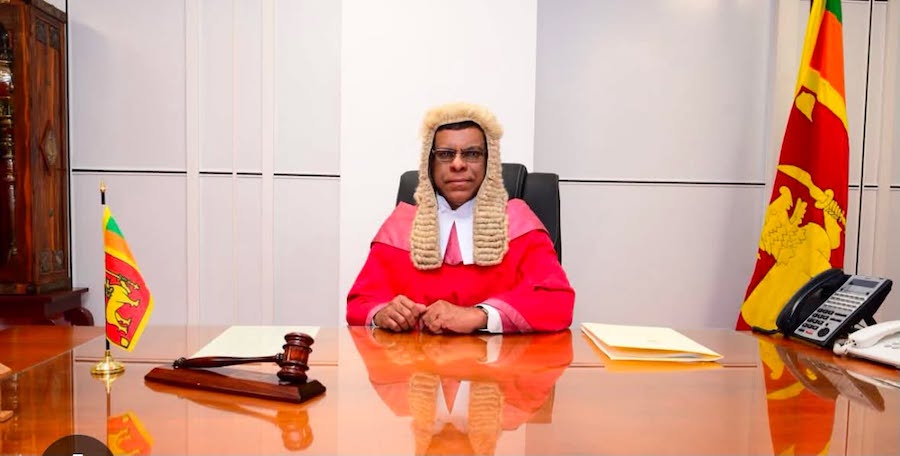
A significant warning has now come from outside Sri Lanka with regard to the 22nd Amendment that the government will soon be debating in parliament. UN Special Rapporteur on the independence of judges and lawyers Margaret Satterthwaite has formally raised concerns with President Anura Kumara Dissanayake about the proposed amendment. She warned that extending the retirement age could undermine judicial independence and public confidence in the judiciary and pointed to the particular danger of applying the change to judges who are already serving. The government needs to take this and other international observations seriously. The UN Special Rapporteur’s unexpected intervention carries particular weight. The government needs to explain clearly why the change is necessary and why it should apply to sitting judges to the international community as much as to the Bar Association of Sri Lanka.
Sri Lankans have lived through decades of corruption, impunity, political violence and abuse of state power. They understand the sentiment that drives the government’s determination to clean up the country. They are also more likely to judge the government by its intentions and by the results it produces. The international community will tend to look more closely at the rules being changed, the institutions affected and the precedents being created. But even here the government cannot take the national electorate’s forbearance for granted. The latest “Mood of the Nation” poll conducted by Verité Research found that government approval had fallen from 65 percent in February 2026 to 50 percent in July. The proportion who believed the economy was getting better declined from 64 percent to 41.63 percent which is still slightly higher than the 40.29 percent who said it was getting worse.
Domestic Understanding
At present, the government can be seen to be giving priority attention to the prosecution of criminality and corruption committed over the past several decades which indeed accords with public sentiment. Long buried evidence is coming to light. Sri Lankans who have lived through the impunity of the past decades will understand the government’s determination to uncover what happened. They know the history and remember the disappearances, killings, corruption scandals and political interference that have too often remained unresolved. But that level of domestic or national understanding cannot necessarily be expected from international experts, many of whom occupy their positions for only a limited period. They will look at the institutions and laws before them. The Special Rapporteur’s intervention illustrates this approach. She is asking whether the proposed change is consistent with internationally recognised safeguards for judicial independence.
On the positive side, Sri Lanka’s longer term international partners have welcomed the country’s economic recovery and anti-corruption programme. The IMF’s most recent review described performance as generally strong and noted progress on governance and anti-corruption reforms. The EU’s latest assessment notes that the government has committed itself to repealing the Prevention of Terrorism Act (PTA), reforming the Online Safety Act (OSA), protecting civic space, strengthening accountability and advancing reconciliation. But it also warns that implementation remains slow and uneven. The government would be making a mistake to regard international concern about governance as a secondary matter. The country needs the international community for aid, trade, investment, debt restructuring, technical assistance and access to markets.
At the present time, the European Union’s GSP+ scheme is of considerable economic significance, and Sri Lanka intends to reapply when the current arrangement ends in 2026. This is why the government should be especially careful about the 22nd Amendment. Its strongest response would not be to dismiss the international criticism as foreign interference, but to engage with it seriously and transparently. A government with a two thirds majority can impose its will but a government seeking to rebuild Sri Lanka’s democratic institutions should seek to persuade both its domestic and international critics and build confidence in them in its commitment to reform. Chief among the issues the international community has flagged are the reforms long expected from successive Sri Lankan governments concerning the PTA, the OSA and provincial council elections. They all concern the balance between state power and the rights of citizens.
International Confidence
There may well be a temptation to justify greater centralisation by pointing to the Herculean task of cleaning the Augean stables. The government is confronting entrenched corruption and criminality, and may reasonably argue that decisive action requires authority. But the danger is that the means used to clean up the past can reproduce some of the very habits of concentrated power that produced the problems in the first place. President Dissanayake has said the government would not implement the Online Safety Act in its present form and reaffirmed its commitment to repeal the PTA and replace it with new legislation. The NPP manifesto also promised to devolve political and administrative power and to hold provincial and local government elections. Yet the provincial councils remain without elected representatives. These promises now need to become reality.
The re-emergence of the proposed NGO registration and supervision law illustrates the same concern. The government says the legislation, which first appeared in 2018 under the Sirisena Wickremesinghe government and reappeared in 2020 under the Gotabaya Rajapaksa government, is intended to strengthen regulation and reduce the risks of money laundering, terrorist financing and proliferation financing in line with Financial Action Task Force (FATF) requirements. But regulation should not become a targeting od NGOs. The draft law has raised concern because of the breadth of its definition of NGOs which sweeps into its fold any and all voluntary societies and the extensive powers it appears to give the state over non-profit organisations. A regulatory framework is legitimate and necessary. But a law requiring voluntary and not-for-profit organisations to operate through renewable state licences given for three years at a time, backed by extensive powers to impose penalties or suspend organisations, could create a chilling effect on civic activity.
A meeting held last week between NGOs and JVP General Secretary Tilvin Silva provides a more encouraging example of engagement. Civil society representatives raised their concerns about the draft law and the General Secretary listened and undertook to convey them to the government leadership. The exchange was cordial, mutually respectful and hopefully productive. That spirit of listening is what is needed more widely.
Sri Lanka is today poised for recovery and self-sustaining economic and political development. But the gains remain vulnerable. Sri Lanka needs both domestic legitimacy and international confidence. While tackling criminality and corruption and confronting the formidable opposition to its programme, the government needs to start delivering on its promises to reduce the powers of the state that were abused in the past. That means repealing the PTA, reforming the OSA, restoring elected provincial government, strengthening independent institutions and ensuring that civil society has the space to contribute to national development. It needs to win over its opponents and detractors by heeding their concerns and finding just and upright solutions. The test of the government’s democratic commitment will be how responsibly it chooses to use its power.
Mani / August 18, 2026
Good analysis, Mr. Jehan Perera. Isn’t it revealing that this so-called progressive government which slavishly follows the dictates of the bastion of the world capitalist order, the IMF, when it comes to the economy, fails to comply with rather simple, international democratic and human rights standards, whether its the PTA, OSA, NGOs or the justice system? And is willing even to jeopardise trade opportunities, such as GSP+ by doing so? Is it a case of sheer incompetence or the right hand not knowing what the left hand is doing or both?
/
Ajith / August 18, 2026
“Sri Lanka is today poised for recovery and self-sustaining economic and political development. But the gains remain vulnerable. Sri Lanka needs both domestic legitimacy and international confidence.”
AKD/NPP have to agree on the demand because it depends on the support of international demand.
/
Jit / August 18, 2026
Did we consult the international when we created the Executive Presidency without people’s vote in 1978? And when we divided this tiny land into 9 governments with the 13th? When Mahinda extended the term to infinity? Crazy isn’t it – but real!
/
Ratnam Nadarajah / August 18, 2026
Yes Jehan , the government should And must heed to domestic and international concerns regarding the the 22nd amendment to the constitution
Its priority is to maintain law and order so that the citizens are free and able to carry out their business and duty without undue hindrance
Local polls must be held with out any undue delay to maintain the credibility and confidence of the electorate
Economic growth need to be accelerated to sustain stability
Ratnam Nadarajah
/
Naman / August 18, 2026
“ The test of the government’s democratic commitment will be how responsibly it chooses to use its power.”
Sensible people of the country believe AKD will be acting to safeguard the interests of different ethnic and religious groups. Those who committed CRIMES of various forms
should be subjected to the JUDICIARY as speedily as possible.
The current government should rely on its own people to work towards economic prosperity and ethnic and religious harmony.
I can not understand why extending the age of retirement should affect the judiciary independence.
Sometimes the Judges Who had given wrong judgements needs to be punished
/
Naman / August 18, 2026
I do know that some of the people who had worked for the Tri forces campaigned along with the JVPers.
That should not be the reason for them to get jobs in the government. This gives rise to some doubt about whether the minorities desire for achieving true reconciliation
/
Naman / August 18, 2026
The tourists who visit SL finds its citizens so amiable and pleasant.
But why do they always try to outsmart the one next to them?
Their brains are more focused on how they can make their wealth in an easy manner. I found those people working hard to keep our roads clean are the most sincere ones. Our country will be far ahead if all those working for the government sector did do too.
/
Naman / August 18, 2026
It will be of great benefit to our country if AKD watch the way the President of Burkina Fasso Ibrahim Traore is governing. SL needs a strong leadership
/
Douglas / August 18, 2026
The UN Special Rapporteur on the Independence of Judges and Lawyers had pointed out to the President of S/L that the ’22A ‘, if passed, will undermine the independence of the judges and Public Confidence.
What are the provisions of the “22A” as published in the Government Gazette dated 2026-08-07?
1. ” Remove section 5 of 107 and insert – “Retirement age of Supreme Court judges as 67 and Court of Appeal judges as 65. However, the Chief Judges shall retire on reaching 67 years of age or on completion of six years of service, whichever comes first.
2. In section 137, increase the number of judges from 17 to 24.
The ‘Public Confidence’ has already been mandated, and ‘NO’ outside interference is entertained.
The independence of the Judges and lawyers is undermined. How?
The Government has decided to set aside this UN rapporteur’s advice. Welcome news.
For the UN – Please handle the ‘War situation in USA/Isreal/Iran/Lrbaonon/Gaza/Palestanian/Ukrai
Ukrain/Russia and the connected ‘Genocide’ and ‘Human Sufferings’ rather than fingering into progressive matters of countries that are struggling to bring ‘Discipline’ and ‘Order’.
/