

By Sarath Dissanayake –

Sarath Dissanayake
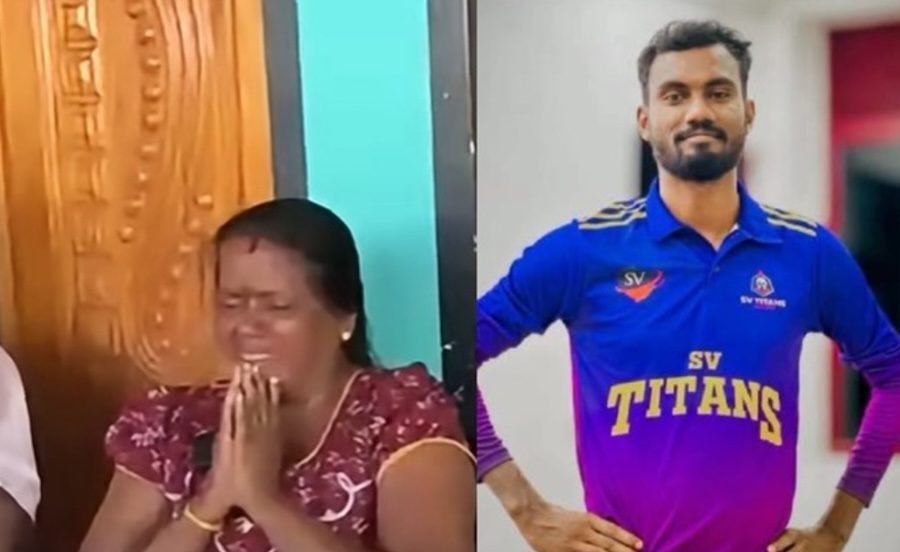
The harrowing predicament of Sivarasa Anojan, a 24-year-old Sri Lankan migrant worker facing a death sentence in the Kingdom of Saudi Arabia on blasphemy charges, has sent shockwaves through Sri Lanka. While the legal contours of his plight have been widely documented in the mainstream media, the broader implications of this crisis present crucial policy lessons for government leaders and expatriate workers alike.
Instead of merely revisiting established facts, this analysis explores what is at stake for the powers that be, demonstrating how diplomatic leverage in capital offense matters hinges on a distinct geopolitical matrix. Resolving such delicate standoffs necessitates objective judgment that balances formal legal regimes with the cultural nuances of the host country. It essentially demands a selective mix of quiet statecraft and open dialogue. Given the sensitivities involved, public clamor could be counterproductive, while structured, low-profile negotiations remain far more effective and timely.
Anatomy of a Tragedy: Background to Anojan’s Ordeal
To place the immediate diplomatic challenge in its proper context, one must examine the specific genesis of this case. Sivarasa Anojan, hailing from Kalmunai, traveled to Saudi Arabia to support his family. His ordeal began after a viral video circulated online showing a man kicking a stray dog that had accompanied a group of Hindu pilgrims. The video triggered a highly polarized debate on social media, during which derogatory remarks were made against Hindu deities. In an emotionally charged oversight, Anojan allegedly posted a retaliatory Facebook comment that Saudi authorities subsequently deemed insulting to Islam and the Prophet Muhammad.
Recognizing the gravity of his mistake, Anojan deleted the comment within minutes and issued a public apology. However, digital footprints are permanent; screenshots had already been captured and reported to Saudi law enforcement. On July 15, 2026, the Al-Ahsa Criminal Court sentenced him to five years in prison and a staggering fine of three million Saudi Riyals (approximately $800,000) under Article 6 of Saudi Arabia’s Anti-Cyber Crime Law. Believing that an appeal could reduce this heavy financial and custodial burden, Anojan’s defense pursued further judicial review. Instead, the prosecution cross-appealed under Sharia law, and on September 17, 2026, the Saudi appellate court dramatically escalated the punishment to capital punishment.
The Essence of Behind-the-Scenes Statecraft Vs Megaphone Politics
As the Sri Lankan government navigates this unfolding crisis, it is vital that all plausible avenues be pursued through every diplomatic channel at its disposal, ensuring that the broad multi-partisan approach leans heavily on low-profile back-channel engagements. While open channels are used to convey formal requests for a royal pardon, the ultimate efficacy of this clemency mission will eventually rest on behind-the-scenes statecraft that fully respects Saudi Arabia’s sovereign judicial process. By coordinating these steps discreetly, Colombo can offer Riyadh a path to exercise mercy without the pressure of international public scrutiny. Public protests or confrontational demands via megaphone diplomacy only weaken the government’s appeal, risk being self-defeating, and jeopardize prospects for a favorable resolution.
Moving forward, the recent cross-party appeal by parliamentarians, paired with the state’s move to mobilize a unified, multi-faith delegation to deliver the President’s plea to the Saudi King, represents the exact type of robust institutionalized response required. In fact, this calculated, disciplined strategy effectively separates state-level intervention from counterproductive public grandstanding.
A Classic Textbook Case: How Bilateral Synergy Saved Lives in Kuwait
Against this backdrop, the humanitarian appeal spearheaded and executed by the Indian Embassy in consultation with the Sri Lankan mission in Kuwait from 2008 through 2013 serves as a prime example of effective statecraft and cross-border crisis management. It offers valuable insights for foreign envoys tasked with navigating highly intricate legal regimes in the Gulf region. Faced with the impending capital punishment of two Indian nationals following a tragic workplace fatality that resulted in the loss of a Sri Lankan co-worker, both embassies meticulously aligned their strategies and conducted low-profile backdoor discussions seeking an equitable resolution. In the same case, a Sri Lankan national was tried primarily as an accomplice for aiding and abetting the crime, receiving a long-term prison sentence instead of a death warrant.
While the diplomatic teams explored all avenues for a lenient sentencing, their primary emergency focused on rescuing the two men facing imminent death warrants. The ultimate commutation of their sentences to life imprisonment became possible only through tedious, intricate high-stakes diplomacy undertaken by the respective missions. Backed fully by their home authorities, both embassies engaged in exhaustive, behind-closed-doors coordination for the sake of preserving the lives of the condemned nationals. By leveraging a robust, unified front, the two missions systematically steered through the complex layers of the host country’s judicial and social systems, achieving a major humanitarian breakthrough that pulled the two individuals back from the brink of death in the name of humanity.
(In accordance with diplomatic sensitivities and privacy protocols, the names associated with the historical 2008–2013 appeal have been strictly withheld in compliance with mutual obligations and out of due respect for the governments and officials involved)
Lessons for Policymakers and Diplomats
For policymakers analyzing the current predicament of Sivarasa Anojan, this historic bilateral initiative provides a compelling framework. It demonstrates that quiet institutional alignments can successfully overcome systemic legal hurdles that might otherwise prove insurmountable for a single mission acting alone. Successfully managing capital offenses within rigid judicial systems requires an intricate blend of strategic foresight, absolute discretion, and a deep respect for host-country sovereignty. In such precarious environments, public posturing or confrontational media campaigns often tend to backfire, risking diplomatic leverage and forcing host institutions to harden their stances to safeguard their authority from perceived foreign interference.
Beyond the immediate triumph of saving human lives, this robust collaboration left behind a lasting blueprint for regional cooperation. It proves that true diplomacy is measured not just in treaties signed, but in vulnerable lives protected. By pooling their resources and expertise, the respective diplomats averted a potentially explosive geopolitical crisis that otherwise would have resulted in a humanitarian nightmare with catastrophic consequences.
Expanding Diplomatic Footprint: Bahrain’s Magnanimity Toward Sri Lankans
It would be remiss to leave out the State of Bahrain—home to over 20,000 Sri Lankans—from this strategic analysis. Beyond Kuwait, my concurrent accreditation to Manama from 2008–2011 enabled seamless diplomatic engagements that culminated in groundbreaking bilateral achievements. Driven by a shared commitment to quiet humanitarianism, Bahraini authorities historically treated Sri Lankan expatriates—highly respected for their workmanship and loyalty—with the utmost care, esteem, and dignity.
This profound relationship was vividly demonstrated through the goodwill of the late Bahraini Prime Minister, Prince Khalifa bin Salman Al Khalifa, whose deeply ingrained pro-Sri Lankan sentiments catalyzed monumental bilateral relations. This strategic maneuvering culminated in his historic July 2009 state visit to Colombo, distinguishing him as the first foreign leader to visit post-conflict Sri Lanka, barely two months after the cessation of military hostilities in May 2009.
Bahraini Premier’s Donation and Generosity Manifest An Epitome of Humanity
In the aftermath of his historic visit, Prince Khalifa announced a generous $1 million donation to support post-conflict Sri Lanka and resettle and rehabilitate thousands of internally displaced persons in Sri Lanka, demonstrating profound empathy toward thousands of affected civilians. Handed to me by his envoy in Kuwait on the eve of his departure, this gesture stood as a lasting testament of his goodwill toward Sri Lanka. (https://reliefweb.int/report/sri-lanka/bahraini-premier-donates-us-1-million-idps-sri-lanka)
This unprecedented monumental generosity sparked a groundswell of bilateral friendship, ushering in a new era for Sri Lanka–Bahrain relations. Beyond its immense geopolitical significance—which fundamentally elevated Sri Lanka’s profile in the Middle East—this diplomatic milestone led Gulf Air to recommence direct flights to Colombo, carrying me on its inaugural flight from Manama in October 2010.
Policy Alternatives and Mission Reorientation: Mandatory Protocols for Expatriates
Historically, Sri Lankan diplomats in the Gulf have grown accustomed to managing conventional labor disputes such as wage theft, physical abuse, and contract breaches. However, the modern communications arena has fundamentally shifted the nature of these challenges. In the ME theatre of operations, migrant workers sometimes find themselves in conflict with host-country legal regimes, which remains a severe handicap across the Gulf nations, compounding their vulnerabilities and fundamentally altering their predicaments. Mission staff must reorient themselves to the complexities of shifting legal landscapes, operational frameworks, and host-nation regulations—a vital shift to remain effective amid the rigid judicial protocols of the ME region.
Concurrently, the most critical takeaway for the Foreign Ministry (MFA) and the Bureau of Foreign Employment (SLBFE) is the immediate overhaul of pre-departure protocols for departing domestic and low-skilled workers. Given that the current training programs focus almost exclusively on language skills, vocational tasks, and basic cultural etiquette, these workers often remain completely out of step with modern realities on the ground. To bridge this gap, the authorities must mandate case-study-driven training on the strict cybercrime, social media tools, and blasphemy laws of host nations. Because migrant remittances form the bedrock of the country’s foreign exchange reserves, the government has both a moral and economic obligation to streamline and institutionalize a robust mechanism to facilitate and provide legal aid to migrant workers when exigencies arise through embassies across high-risk jurisdictions.
Key Takeaways and Closing Remarks
Protecting vulnerable migrant workers in the Middle East remains one of the most demanding, high-stakes mandates in labor diplomacy—a reality I felt acutely during my tenure as Ambassador to Kuwait and Bahrain from 2008 – 2011. For South Asian expatriates navigating unfamiliar legal landscapes, linguistic barriers and limited embassy infrastructures often restrict the scope of available care, meaning operational success hinges entirely on a mission’s proactive vision and strategic advocacy.
Amid the unfolding crisis in Saudi Arabia, adopting a strategic framework represents the vital panacea to safely steer Sivarasa Anojan away from a catastrophic fate. Just as the historic breakthrough in Kuwait defused a potentially explosive crisis through absolute discretion, Anojan’s predicament demands the immediate activation of quiet statecraft and low-profile back-channel engagements. By anchoring Colombo’s multi-partisan appeal in non-confrontational strategies, diplomats can navigate the host country’s rigid judicial system, proving that structured, behind-the-scenes negotiations remain the most effective mechanism for preserving human life.
Ultimately, the lesson for sending states is two-fold: they must forge institutional alignments with like-minded countries and embassies to successfully navigate complex legal cases, and this strategy must be executed with unyielding respect for the host country’s sovereign legal regimes and Sharia law. Moving forward, sending nations are duty-bound to pre-emptively educate their migrating workforce on host-country ordinances, judicial procedures, and the severe statutory punishments associated with public expression or violations of religious sensitivities.
As former UN Secretary-General Kofi Annan once observed: “The purpose of diplomacy is to create spaces for dialogue and understanding, to bridge gaps, and to find common ground—even in the most challenging of circumstances.”
*The writer is a retired Ambassador and former Foreign Ministry Spokesman who served as Sri Lanka’s Ambassador to Kuwait and Bahrain from 2008 to 2011. He can be reached at schandrad@hotmail.com
Word of Caution: Readers are strongly advised to refrain from making racial or religious comments on this particular article. Such public posturing is counterproductive and severely jeopardizes ongoing diplomatic efforts to secure clemency for the accused. Thanks for your kind attention.
nimal fernando / October 2, 2026
Doesn’t Saudi Arabia has a exchange thing ……… exchange one life for another?
–
Send Sarath in exchange for Anojan.
–
Sarath is the diplomat: he knows all the moves.
–
Let him talk/diplomat himself out of it.
–
The true test ………. to show his skills are real.
/
deepa / October 3, 2026
Don’t you think Sarath’s perspective is timely, given the Mahanayakes’ recent statement where they also stress the urgency of state intervention?”
/
Native Vedda / October 3, 2026
deepa
–
” …. given the Mahanayakes’ recent statement where they also stress the urgency of state intervention?”
–
This is news to me. However, have they ever stressed the need to stop the killing of innocent civilians by thugs, the police, the armed forces, and others throughout the period since 1971, including during all those riots against ethnic minorities?
–
Have you personally ever wanted all those killings to stop?
/
deepa / October 3, 2026
Native Vedda Well my comment focuses strictly on Anojan’s current predicament, which hangs in the balance. I am not aware of whether the Mahanayakes have issued statements on past killings, but their current focus remains on the catastrophic fate of this migrant worker and the state intervention and clemency he badly deserves.
/
Native Vedda / October 3, 2026
nimal fernando
–
“Doesn’t Saudi Arabia has a exchange thing ……… exchange one life for another?”
–
Why not Gota the former hanging president?
/
deepa / October 3, 2026
Native Vedda and Nimal Fernando Please leave Sarath out of this, as his skills are far better suited and effective for the tedious, behind-the-scenes work of quiet diplomacy.
/
old codger / October 4, 2026
Native,
Now, that’s an idea.
/
deepa / October 3, 2026
Nimal Fernando, Please don’t kill the messenger who is just laying out the strategic facts. Trying to draw Sarath into the discussion as a ‘go-between’ is an unnecessary distraction. Please please
/
nimal fernando / October 4, 2026
I was expecting Sarath to comment.
–
Sarath is missing ………. now a deepa has suddenly appeared ……. and posting as many comments as Sarath.
–
Nice to meet the alter ego. Hello! :)))
–
–
Take it easy Buddy …….. things are not as serious out here as in the embassy …….. where people who come in for visa are dissolved in acid ………
/
old codger / October 4, 2026
Nimal,
It seems Deepa knows Sarath (and his linguistic quirks ) quite well………….
/
chiv / October 7, 2026
Hmmmmmmmm Deepa, Bhante , Lester ,,,,,,, ????? Sarath the on looker
OC may be right.
Killing three birds with one stone.
LOL
/
old codger / October 4, 2026
I think Sarath has taken a page out of that Bhante guy’s book. Bhante is Lester in disguise, of course.
/
SJ / October 4, 2026
oc
Deepa has a few things in common with Sarath.
Obsession with being always right and responding to every little comment.
But thankfully, shorter than Sarath’s.
/
leelagemalli / October 4, 2026
What about “hairy deepthi”?
/
The Truth / October 5, 2026
Leela, This hairy Deepthi only comments on brainless beauty-Leela !
/
leelagemalli / October 6, 2026
May Hairy Deepth’s Animal Instincts Give Way to Reason—for the Sake of Unbiased Debate
–
Public forums reveal more than opinions—they reveal character. Some people engage with facts, challenge ideas, and contribute meaningfully. Others like our Hairy Deepthi seem to have only one purpose: attack, provoke, and defend their political masters at any cost.
–
They ignore the substance of an argument, cling to empty talking points, and flood discussions with comments that add nothing except hostility and noise. Whether driven by loyalty, ideology, upbringing, or personal interest, this behavior undermines honest public debate. Worse, when repeated often enough, such comments can mislead those who genuinely come to a forum seeking the truth. A public forum is not a stage for partisan lackeys to blindly echo their preferred politicians.
–
If they cannot confront facts honestly, they should at least stop pretending that personal attacks are arguments
/
raja H / October 4, 2026
I am thinking that Ambassador Sarath is tired of being harassed by the old residents of CT. He has realized that being anonymous is useful sometimes.
/
nimal fernando / October 5, 2026
“Ambassador Sarath is tired of being harassed by the old residents of CT.”
–
–
If holding him to the truth is harassment ……. so be it.
–
–
Can he spread a false narrative of War-Crimes because he is an Ambassador?
–
–
Like in the nation, …… the era ……. where Praboos/VIPs had one rule and the ordinary denizens of CT had another rule …… has come to an end. :)))
–
Some are not very quick to catch on.
–
–
That’s the class discrimination Buddha, Christ, Marx and a host of others …….. fought against.
–
The struggle/fight has to be real …… mere lip-service won’t do. :)))
/
leelagemalli / October 6, 2026
Raja,
CT commenters are not always informed or thoughtful. Some continue to argue that AKD is the best choice for president, while many seem more interested in entertainment, attention, and upvotes than the seriousness of the message. At a time when the country and economy face serious challenges, discussions should focus on facts, experience, accountability, and solutions rather than hate and blame. Please think critically and don’t rely solely on popular comments. May God bless Sri Lanka!
/
nimal fernando / October 7, 2026
Hey rational thinkers …… listen up!
–
Straight from the horse’s mouth, no less …….. the head of WB, LM …….. giving his candid assessment how AKD has destroyed SL. ……….. https://www.youtube.com/watch?v=06MVeRwCByA
–
Whom should we believe …… some sorry Sad Sack sour-grapes guy ….. or the people who know even a little about Economics? :))))
/
LankaScot / October 3, 2026
Hello Nimal,
I was in Saudi around the same time as OC. He is familiar with many of the places that I visited or stayed when not offshore. I heard many horror stories about the Treatment of South Asian Workers (Male and Female). This was not too long after the 1977 execution of 19-year-old Saudi Arabian Mishaal bint Fahd Al Saud and her lover. The events were made into British Documentary “Death of a Princess” which enraged the Saudis. I had read the books on the Sauds by David Holden and Robert Lacey, but was advised not to take any books about Saudi into the Country.
This is the real extent of the executions from shortly after my last trip to Saudi in 1985 – “Between 1985 and 2008, Amnesty International recorded 1,695 executions, of which 830 were foreign nationals”. Previous Data is very sketchy.
By the way David Holden was shot dead (professionally) in Cairo just before his book was published He was a Journalist for the Sunday Times and apparently had operated as a Double Agent for the KGB and possibly the CIA. The Egyptian Secret Service killed him at the behest of ?
Best regards
/
nimal fernando / October 4, 2026
LS,
–
What you have written is pretty interesting ……. I had a lot of regard for Robert Fisk: excellent journalist with great insight and knowledge.
–
I haven’t still got my mind around …….. what we encountered in the ME and Africa. Unlike most other places we have visited, I’m still baffled.
–
It takes a bit of time ……. I’ll write later.
/
old codger / October 4, 2026
LS,
I spent enough time there to make local friends. What struck me was how generous they were. A guy would, off the cuff, invite you to his house and serve you a whole lamb, cooked up by his Sri Lankan maid of course. If you said you didn’t have a TV, he’d give you his spare. But you had to know whether you were talking to a Shia or Bedouin, and what not to mention.
But at the same time, most approved of Sharia and its brutality and were genuinely puzzled by our doubts.But hordes of them would also visit Bangkok, I presume not for the prayerful atmosphere. But then, Saudi Arabia doesn’t have mass graves dug by Buddhists, does it?
/
LankaScot / October 4, 2026
Hello OC,
I can top that, I was invited to a Celebration where a whole Camel was cooked with a Sheep inside. But to be fair the Celebration was attended by at least 200 people.
What you say is correct, I have been in the Middle of Nowhere when some Bedouin have appeared and invited us to share their Meal. That’s where I learned the 3 Cup (Qahwa or Shay) Rule. I have on a few occasions been hauled out of a Sand Dune by Bedouin and on some other occasions by a Jovial Qatari or Saudi with their Land Cruiser. None of them would take anything in return, but suggest that we (collectively) should always be ready to help those in need. Re-watching the film “Lawrence of Arabia a few months ago reminded me of the Arabic Customs (some good, some we would consider bad).
It may seem strange, but the Scottish Highlanders had the same sense of how you should treat visitors/strangers.
Best regards
/
deepa / October 2, 2026
On the latest on SA check story in the Daily Mirror of today. https://www.dailymirror.lk/breaking-news/Mahanayake-Theros-seek-State-intervention-to-secure-release-of-Anojan/108-351630?shem=aimgspe
/
whywhy / October 4, 2026
Saudi Arabia is truly owned by Saudis ? Ask Donald Trump or Mojtaba !
Unleash your diplomatic efforts to Pentagon ! One can even try Bibi
seriously . Even easier , let one of our Mahanayakas say he will convert to
Islam to save Anjan ! Big sacrifice . Saudis thrilled and Mahanayakas
straight to heaven and Anian home . All this fail , Mahinda can come
forward bcz No Namal , No Shiranthi so life boring and suicidal .
/
The Truth / October 4, 2026
Nimal, what diplomacy !
We should simply declare war on Saudi ! With their army bogged down in Houthiland our army will have an easy win !
One important matter however is we must have OC as the Defense Secretary and Leela as the General.
They know everything !
/
Native Vedda / October 5, 2026
The Truth less
–
“One important matter however is we must have OC as the Defense Secretary and Leela as the General.”
–
Alternatively, important matter however we must have Gnanasara as the Defense Secretary and Gota as the general commanding.
/
Native Vedda / October 5, 2026
The Truth less
–
“One important matter however is we must have OC as the Defense Secretary and Leela as the General.”
–
Alternatively, important matter however we must have Gnanasara as the Defense Secretary and Gota as the general commanding.
/
The Truth / October 5, 2026
Vedda the obsessive hunter , going on about meaningless subjects again ! This Gnasara guy is too crude for a fine intellect like you .
OC and Leela ( and of course old professor SJ)provide more scope for fun because of their pretenses .
OC says the Arabs he worked with in Saudi were generous. While chopping hands of alleged thieves and debauchery all over the world and also funding religious schools they fed our OC a camel .Why don’t they fund science education ?
What about all the corruption in the Saudi society, that is not thieving the priests will interpret ! How come one family owns most of the country ?
Any way ,any human will be more generous than OC and more intelligent than Leela !
OC please respond . Life must have some fun after all !
/
Sarath Dissanayake / October 5, 2026
Dear Readers, Thanks for the comments. Of course, I couldn’t stop laughing at the rumor mill comments suggesting that “D” is my avatar due to resembling my linguistic quirks (OC), that both share a few things in common (SJ), that “D” is posting as many comments as “S” (NF), and that “S” is tired of being harassed by old CT guards (Raja)—which seems funny. In fact, “D” should be thanked for stepping into the breach, though I have no clue who “D” is.
That said, I appreciate the kindness and empathy showered upon SA, whose fate should be our prime and collective concern at this hour of need in the name of humanity.
To be honest, I have been quietly reflecting on my father’s 50th death anniversary, which falls today, October 5th. He passed away exactly fifty years ago today (05.10.1976). He was at UOP from 1961–64; so were his 3 sons, who followed in his very footsteps, making UOP their alma mater as well. Of course, my mother did all the honors ever since my father’s sudden passing—a true hero in her own right.
Thanks for your kind attention.
/
leelagemalli / October 6, 2026
Sarath,
I increasingly feel that the country is facing a serious scarcity of effective diplomats. Many of the appointments made by the current government appear, at least from the public record, to have fallen short of what is required to protect Sri Lanka’s interests and serve ordinary people. Whether it is securing the release of a young man caught in religious tensions in the Middle East or responding appropriately to the Iranian vessels near the Port of Galle, there seems to be a troubling reluctance to act decisively within the framework of international law and humanitarian principles.
The Prime Minister, who entered office with high expectations and promises of meaningful change, now appears to many to be drifting far from the mandate given by the people. Less than two years into NPP governance, disappointment seems increasingly widespread, with little visible evidence of the fundamental “system change” that voters were promised. Instead, the country appears to be moving further from that aspiration, leaving many to wonder when, or whether, a genuine change for the benefit of the masses will finally emerge.
/
Sarath Dissanayake / October 6, 2026
LM
Thank you for sharing your candid points of concern on the current state of affairs. The gap between public expectations and NPP’s delivery on its promises has been at stake for people who voted this government to power for a system change. The government appears to be in quandary over real issues facing the country and people including the fate of SA.
Your points certainly validate the public discourse about the country’s institutional path forward.
Appreciate your taking the time to contribute to the discussion.
Regards
/
leelagemalli / October 6, 2026
Readers,
Whatever is said about any individual or government, the manner in which those in authority respond, depending on their capabilities and the way they engage with the outside world and conduct their international affairs, can play a crucial role in paving the way towards resolving difficult and sensitive issues. In earlier times, even when an underage housemaid was sentenced to death in a deeply troubling case, the government of Sri Lanka made considerable efforts to engage with the relevant authorities and convince them of the truth surrounding that incident. Compared with that approach, the present situation facing Nivas, a young Tamil from Sri Lanka, does not appear to have received the same level of attention or diplomatic support from the NPP government. Nor does it seem that sufficient efforts have been made to communicate with and convince the relevant authorities to reconsider the matter and find a way to resolve it. This lack of visible diplomatic engagement is deeply concerning, particularly when the consequences for a young person’s life could be irreversible.
Tbc
/
leelagemalli / October 6, 2026
cont.
There could also be serious repercussions beyond Anojan’s individual case. In today’s digital world, people can make comments on the internet without fully considering how those words might be interpreted by others, and such comments can potentially expose them to severe consequences, particularly where religious fundamentalism and intolerance are involved. If this case is allowed to proceed without determined diplomatic intervention, it may create a worrying precedent for others who could find themselves caught in similar circumstances in the future. Looking at the developments surrounding the incident, I still firmly believe that there is an opportunity to save this young man’s life if the proper diplomatic channels are activated and pursued with urgency, seriousness and determination. I sincerely hope that all responsible authorities, representatives and political leaders will give this matter their full attention. Nivas is a young man with his entire life ahead of him, and every possible effort should be made to protect his life, ensure that justice is served, and prevent this tragic situation from becoming an irreversible loss.
/
Sarath Dissanayake / October 7, 2026
Dear All,
Just wanted to let you know that the $ 1 million referred to in the paragraph titled “Bahraini Premier’s Donation and Generosity Manifest An Epitome of Humanity” is in fact a personal donation by the late Bahraini Prime Minister, Prince Khalifa bin Salman Al Khalifa as conveyed in the news release at link (https://reliefweb.int/report/sri-lanka/bahraini-premier-donates-us-1-million-idps-sri-lanka)
Thanks for your kind attention.
/
Sarath Dissanayake / October 7, 2026
Dear CT leaders,
Please continue to endeavor to lend your whole-hearted support and blessings toward the diplomatic endeavors seeking clemency for Anojan Sivarasa through all available means at our disposal. May God bless him and his family.
Public Humanitarian Appeals
Civil society organizations and family members have launched humanitarian petitions to amplify calls for mercy, highlighting Anojan’s youth, his expressed remorse, and his public apology.
Those wishing to add their support to these efforts can find active public petitions on platforms such as the Change.org Clemency Appeal and the iPetitions Save Anojan Campaign, which aim to encourage a compassionate and peaceful resolution.
/