

By Sarath Dissanayake –

Sarath Dissanayake
Author’s Note: Published below is Part II: “The Irony of Netanyahu’s Brinkmanship: Global and Regional Fallout”. This concludes the two-part series on the October 2026 legislative elections. Part I: explored “Israel’s Electoral Post-Mortem: The Caretaker’s Paradox & The Rigid Coalition Matrix”.
The Caretaker’s Leverage: Power Beyond the Mandate
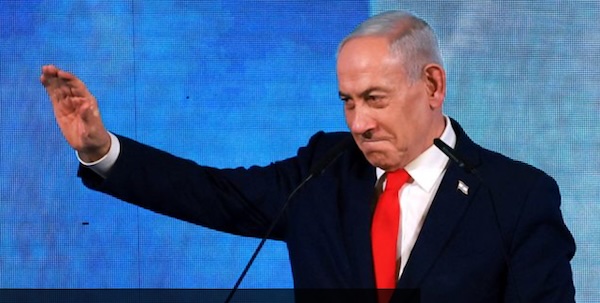
The primary geopolitical irony emerging from Israel’s October 27, 2026, legislative election is that a leader denied a democratic governing majority has captured near-absolute executive control over the regional security architecture. Under typical constitutional norms, a prime minister presiding over a fractured 53-seat minority bloc would face immediate political marginalization. However, the rules of Israel’s transitional statecraft dictate that until a new 61-seat majority coalition is formally sworn into office, the outgoing cabinet retains complete wartime executive authority.
While institutional watchdogs like the Israel Democracy Institute highlight a strict legal “duty of restraint” during caretaker transitions, supreme security crises operate as a historic exception to this rule. The High Court of Justice has historically avoided intervening in active military campaigns, and parliamentary oversight is functionally non-existent in the weeks before the new Knesset formalizes its security committees. Consequently, Benjamin Netanyahu wields the unrestricted legal authority to initiate major military offensives. This operational reality transforms a domestically paralyzed caretaker regime into a highly unpredictable regional wild card.
The Blue Tsunami: The 2026 U.S. Midterms as a Geopolitical Course Correction
The November 3, 2026, U.S. midterm elections delivered what political analysts are calling a historic electoral turnaround, as American voters went to the polls and inflicted a sweeping, landslide defeat upon the Republican Party. Dubbed a “Blue Tsunami,” the certified results see the Democratic Party capturing decisive control of both the House of Representatives and the U.S. Senate, effectively shattering the unified Republican governance of President Donald Trump’s second term. In a stunning development that broke a 32-year drought for statewide Democratic victories, the traditional conservative stronghold of Texas flipped blue, sending James Talarico to the Senate and Gina Hinojosa to the governor’s mansion. This historic realignment was mirrored across deeply entrenched red states, with Democrats flipping a staggering seven confirmed Senate seats; including Texas, Ohio, Kansas, South Carolina, Maine, North Carolina, and Iowa, while securing a commanding House majority estimated at 258 seats or more.
The Domestic Referendum: Tariffs, War Inflation, and Political Blame
Exit polls strongly indicate that this domestic bloodbath was a direct referendum on the administration’s aggressive policy initiatives. Domestically, voters expressed profound dissatisfaction with a severely strained economy and soaring daily costs driven directly by Trump’s expansive tariffs and his administration’s deeply unpopular, escalatory war with Iran. Vice President JD Vance explicitly pinned the party’s brutal losses squarely on the war with Iran, offering a blunt, unusually candid public assessment of the electoral post-mortem. This historic shift extends far beyond America’s borders, delivering an unmistakable, systemic rebuke to the administration’s broader foreign policy blueprint. For long-term allies and international observers, the “Blue Tsunami” is viewed as a decisive rejection of U.S. unilateralism and its persistent disregard for multilateral institutions like the United Nations.
The Systemic Rebuke: Alienation of Allies and the End of Unilateralism
Critics and analysts argue that Washington’s strategy of enforcing punitive embargoes, issuing aggressive threats, and attempting to dictate global terms at the behest of Netanyahu’s government has severely alienated traditional partners, creating unprecedented chaos and regional instability rather than securing peace. With the incoming 120th Congress poised to take power in January, the absolute loss of a legislative majority severely undercuts Trump’s capacity to act as a unilateral “world policeman”. By stripping the executive branch of unconditional funding and granting Democrats expansive oversight and subpoena powers, the American electorate has effectively placed a major constitutional brake on outward, unmitigated military expansionism, signaling a forced return to diplomatic accountability and multilateral statecraft on the global stage.
Flashpoint: Iran and the Regional Spillover
Tehran’s response to Israel’s internal political paralysis has been a calculated display of asymmetric deterrence. Rather than viewing the Knesset stalemate as a sign of weakness, Iran’s supreme command has treated the caretakers in Jerusalem as an active offensive threat. Banners displayed across Tehran invoking the destructive memory of the military campaigns earlier this year serve as a domestic reminder of the high stakes.
Iran’s strategic posture has moved beyond mere rhetoric, materializing in a two-pronged defense architecture:
Asymmetric Mobilization: Tehran has instructed its regional proxy network across Iraq, Yemen, and Syria to maintain operational readiness, treating any unilateral Israeli security maneuver as a trigger for a multi-front escalatory response.
The Conventional Threshold: The supreme command has signaled that further direct conventional attacks on Iranian infrastructure will lift all geographic limits on its missile response, raising the threat of a total regional war.
Netanyahu has openly leveraged this tension, proclaiming to his Likud supporters that the caretaker period presents a “singular historical opportunity” to eliminate the Iranian axis once and for all through combined action with Washington. This rhetoric forces Iran to anchor its strategy in immediate, preemptive deterrence, eliminating any room for diplomatic de-escalation and locking both nations into a permanent escalatory loop.
Trade Traps and Choke Points: The New Global Crisis
The fallout of this unresolved regional brinkmanship extends far beyond the borders of the Middle East, striking directly at the core of the global economy. The persistent threat of an unmitigated military campaign has placed the planet’s most critical maritime arteries under siege.
The economic shockwaves of this prolonged maritime risk are severe, manifesting in distinct structural damage:
Supply Chain Redirection: International shipping conglomerates have been forced to permanently bypass the Suez Canal, rerouting hundreds of commercial vessels around the Cape of Good Hope, which adds immense transit days and ballooning cargo costs to global trade.
Energy Market Spikes: With insurers charging prohibitive war-risk premiums for transit through the Strait of Hormuz, global energy projections indicate Brent Crude is on a trajectory to surpass $138 per barrel.
The Global Inflationary Ripple: This massive energy shock directly threatens inflation-sensitive manufacturing economies across Western Europe and East Asia, undercutting central bank recovery plans and stalling industrial production worldwide.
Concurrently, this permanent state of threat is reshaping the choices of regional players. Gulf Cooperation Council (GCC) capitals, recognizing that they cannot rely on a gridlocked Israel or a politically divided Washington to guarantee basic maritime security, are quietly pivoting. To shield their own multi-billion-dollar energy infrastructure, these states are fast-tracking direct, localized, back-channel stabilization agreements with Tehran, prioritizing immediate economic self-preservation over sweeping Western-led regional security treaties.
Key Takeaways: The Strategic Fallout of Unchecked Warfare
The interlocking deadlocks of late 2026 present a dangerous paradox for world peace and stability. The complete absence of a stable governing majority within the Knesset has not frozen Israel’s military apparatus; instead, it has insulated the executive branch from domestic accountability, leaving a caretaker leadership free to project strength through outward escalation
When this domestic survival strategy intersects with a politically embattled Washington administration and an unyielding Iranian deterrent posture, the structural mechanisms designed to preserve international peace begin to break down. The Middle East is no longer operating under a predictable framework of calculated diplomacy. Instead, it is governed by the volatile, unpredictable mechanics of a mandateless war, where a single tactical misstep in the waters of the Gulf or the skies of Iran can instantly trigger a global macroeconomic crisis.
In search of a diplomatic solution, long-term peace and stability can only be secured through a comprehensive, inclusive framework anchored within the United Nations. A durable resolution requires a balanced architecture that aligns the strategic interests of the GCC, regional stakeholders, and international powers. By transitioning away from the unpredictable logic of mandateless warfare and unilateral military postures, all parties can address core security anxieties through structured, institutional dialogue. Ultimately, halting the mechanics of regional contagion is not a concession, but a collective necessity; it is the only viable pathway to break the global trade trap, secure vital shipping lanes against economic asphyxiation, and guarantee lasting regional prosperity.
“The supreme art of war is to subdue the enemy without fighting. In an age of total friction, when leaders seek their mandates in conflict and empires run on transactional inertia, the true cost of war is paid by the silent arteries of global commerce and the fragile collective conscience of humanity.” – Sun Tzu, The Art of War (Adapted)
*The writer is a retired Ambassador and former Foreign Ministry Spokesman He can be reached at schandrad@hotmail.com