

By Basil Fernando –

Basil Fernando
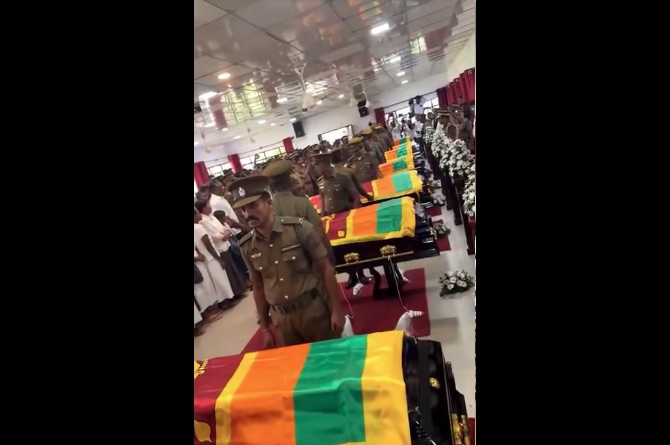
The deaths that have occurred over the past three days inside Negombo Prison have made headlines around the world. The exact number of those killed remains uncertain; as of this morning, reports suggest over 20 fatalities, with hundreds more injured.
This statement does not aim to examine the incident in detail, as the facts have not yet fully emerged. Instead, we address one of Sri Lanka’s most fundamental and long-standing issues: the protection of prisons and prisoners. Sri Lanka has one of the worst records in this regard globally, and successive governments have made little effort to address it.
We are not focusing solely on the present government’s responsibility, but rather on the obligations of the Sri Lankan state as a whole. This crisis has persisted for decades, making it far larger than any single horrific event. That broader context is crucial, as we may be confronting a profound problem tied to the nature of the Sri Lankan state – its past and its future.
In the wake of recent killings, any government and state in which such events occur must meet several obligations. First, it must review whether it has a comprehensive strategy for the protection of prisons and prisoners. If no such policy exists, or if it once existed but collapsed amid decades of violence and was never restored, then urgent action is needed.
The situation in Sri Lanka can be summed up in the famous nursery rhyme:
Humpty Dumpty sat on a wall,
Humpty Dumpty had a great fall.
All the king’s horses and all the king’s men
Couldn’t put Humpty together again.
The collapse of the Sri Lankan state over the last 40 years is of that magnitude, and nearly everyone acknowledges it. Yet this very admission often leads to paralysis—the problem seems so immense that it is allowed to be ignored. But as the Negombo incident and many earlier, even more horrific events show, such problems cannot be overlooked.
Sri Lanka is internationally known as a place where people are killed after arrest. The number of such deaths runs into the thousands, and neither Sri Lankan intellectuals nor the international community have made any serious attempt to address the issue. Perhaps this is because the prison system’s failure is merely one facet of the state’s broader collapse, making it seem impossible to tackle in isolation.
Whatever the reason, we are now facing the loss of human lives in a place meant to offer protection. In these circumstances, the Sri Lankan state has clear obligations, and their implementation now rests with the current government. The swiftest expected response would be for the government, on behalf of the state, to disclose its comprehensive plan for prison and prisoner protection. If no such plan exists, urgent action is needed to address a problem that has recurrently manifested itself.
When natural disasters strike, we mobilize every available resource, including communities, to develop a response. Yet no recent government has made similar efforts regarding prison and prisoner protection.
Second, we must ask whether Sri Lanka is descending into increasing anarchy and potential state failure. If so, solutions must be sought with far greater seriousness – for the survival of the state, the survival of communities, and above all, the protection of people. Even foreign investors and others will only be drawn to the country if order and security prevail.
This is a major calamity. In the face of such crises, those responsible should act as they would during natural disasters – not merely to downplay the situation, but to find lasting solutions. At present, it appears that no meaningful ideas exist for protecting prisons, prisoners, or even prison guards and staff.
One of society’s key protective institutions has now shown itself incapable of fulfilling that role. The prison system is fundamental to the modern protection mechanism. If it fails, other institutions falter too. The judiciary cannot function properly under the law if the prison system is unreliable – or worse, dangerous.
Another obligation is toward the public. Under these conditions, who would willingly enter prison? When the judiciary orders someone detained, it implicitly assumes a duty to protect them. Yet that duty risks becoming merely formal, impossible to implement because the very institutions meant to provide protection have collapsed.
Therefore, we offer the following practical suggestions: First, the government, on behalf of the Sri Lankan state, should clearly articulate a comprehensive policy for prison and prisoner protection. Second, there should be a full, open, and inclusive public debate to holistically understand what has occurred and address the issue before it is too late.
Finally, Sri Lanka has international obligations, having signed numerous treaties and agreements that emphasize the protection of prisoners and prison authorities. One viable path forward is to appeal to the United Nations and other bodies for assistance in developing a comprehensive strategy for Sri Lanka’s prison system.
If we fail in this, that failure will reverberate even more drastically in the years to come. We hope everything possible will be done to prevent such an outcome.
Ajith / July 8, 2026
Killings in Negombo in 2026 is not surprised for a Tamil person belong to Sri Lanka because most of us still remember the past which happened for the prisoners under the executive power, under the law of PTA in 1984, under the government of special status to Buddhism. They are simply terrorists under the law of this country. The killers were under the special status of Buddhism are heroes. In 1958, the killers of people are heroes of this nation. Today, we are remembering those who are killed in Welikade and suggesting recommendations but the fact is that we made heroes long before, and today the same heroes became under world powers. It is not to blame any one but to realise the truth.
/
SJ / July 8, 2026
“which happened for the prisoners under the executive power, under the law of PTA in 1984”
Which prison in 1984?
/
SJ / July 9, 2026
It was a simple question: “Which prison in 1984?”
No answer or too unwilling to admit error?
/
Native Vedda / July 10, 2026
Ajith
–
“Killings in Negombo in 2026 is not surprised for a Tamil person belong to Sri Lanka because most of us still remember the past ………………… “
–
True, Tamils also remember the massacre of LTTE prisoners held at Kanthan Karunai in Jaffna, allegedly carried out on the orders of our friend nimal fernando’s role model, Velupillai Prabhakaran. The LTTE also massacred around 600 police officers who surrendered to the organization in the Eastern Province.
–
The people of all communities on this island do not have a squeaky-clean record when it comes to prison massacres, mass killings, rape, ……… and other atrocities.
–
SJ, the one-time admirer of the LTTE, should be banging his head wondering why he ever defended the organisation.
/
Ajith / July 10, 2026
“Ajith,
True, Tamils also remember the massacre of LTTE prisoners held at Kanthan Karunai in Jaffna, allegedly carried out on the orders of our friend nimal fernando’s role model, Velupillai Prabhakaran. The LTTE also massacred around 600 police officers who surrendered to the organization in the Eastern Province.”
Well done Native,
First of all, you should know that those massacred in 1984, are not from LTTE. They were prisoners of TELO under the PTA in Welikade prison.You should remember the massacre of Tamils in Colombo happened in 1958. The massacre of Tamils in 1977 and the burning of Jaffna library happened in 1981. All these happened before the first attack of LTTE in 1983.The Sinhala only Act,Banda-Chelva pact Dudley – Chelva pact happen well before armed rebellion.
The people who master mind the Easter Bomb or the people who burnt Jaffna library in 1981 or Batalanda torture camp are the true causes of State terrorism under the special status to Buddhism , under the executive power which are misused for the families to cover up their crimes.
/
leelagemalli / July 12, 2026
Ajith,
.
This response is directed to you who, in my opinion, continues to justify or promote the LTTE’s actions on online platforms. My intention is not to reopen old divisions or encourage hostility.
Sri Lanka has suffered greatly because of decades of LTTE-conflict, and people from all communities have paid a heavy price. Instead of glorifying the past, we should acknowledge our mistakes, learn from them, and focus on building a peaceful and prosperous future together.
*
Resolving the Tamil issue in Sri Lanka will require cooperation and a shared commitment to rebuilding the country’s future. One view is that the Tamil diaspora, particularly those living in Europe, has the financial resources and professional expertise to contribute to the development of the Northern and Eastern provinces. The longer reconstruction and economic development are delayed, the more difficult life may remain for people living in those regions. Many Sri Lankan Tamils who settled in Europe left the country during the civil war for different reasons, including fear of the conflict, insecurity, and the hope of finding better economic opportunities. During much of the war, the LTTE exercised de facto control over large parts of the Northern and Eastern provinces, while the Sri Lankan government had limited authority in those areas.
–
Tbc
/
leelagemalli / July 12, 2026
cont.
The LTTE was designated as a terrorist organization by numerous countries, including the United States, the United Kingdom, the European Union, Canada, and India, because of its use of suicide bombings, political assassinations, forced recruitment, including the recruitment of children, and other violent tactics.
I have also met families who told me they fled because they feared the LTTE would abduct their underage sons and forcibly recruit them as child soldiers. Such experiences illustrate why many civilians felt trapped by the conflict and chose to leave the country.
*
The civil war caused widespread destruction to infrastructure, livelihoods, and communities, regardless of which side was responsible for the damage. According to various experts, rebuilding these regions will require investment, reconciliation, and cooperation among all stakeholders. Based on my personal experience in Germany, many Sri Lankan Tamils I have met come from modest economic backgrounds, with a significant number belonging to fishing communities. Fishing communities often face economic challenges in many parts of the world, and I have observed similar difficulties among fishing communities in countries such as Ireland. Supporting education, employment, infrastructure, and local businesses in the Northern and Eastern provinces could help create better opportunities for future generations while contributing to long-term peace, reconciliation, and stability.
/
SJ / July 10, 2026
Is a UNP-FP fan going a little off his rocker again?
/
nimal fernando / July 11, 2026
“rape”
–
–
Get your facts correct Native. The LTTE and the JVP never raped. It wasn’t in their armoury of weapons.
–
Rape was a main weapon of the Sinhalese.
–
Look at the Sinhalese. To put it mildly, good looks are not their strength/blessing.
–
How could such ugly (aesthetically challenged – the politically correct term) looking men (have doubts about women too) get good looking gals if they do not resort to rape?
–
–
Then there’s your idol Ranil! The poor sod couldn’t even get his limp pecker up to rape anyone …… had to watch young boys being raped with S-lon pipes by his minions: that’s what got him off. The spineless coward couldn’t do it himself: had to get someone else to get his thrills.
–
In a land devoid of role-models/heroes …… who would you rather choose? VP or Ranil?
–
For a grown man, you have never learned, Native …… just floating through life with the same stultified lifelong old prejudices that have been passed down for 2500 years.
–
–
A former unbelievably juvenile-stupid violent terrorist outfit, the JVP, is setting an example in good governance …….. at the same time dispelling old prejudices.
–
The NPP actions in the brief time they have been in power …….. is stranger to you ……… than 50 years of Ranil’s fictions!
–
Native you’ll never learn to discard your prejudices …… just a provider of entertainment. Good entertainment, I should add!
–
I’ve seen them …… all over the world. :)))
/
old codger / July 11, 2026
Nimal,
“How could such ugly (aesthetically challenged – the politically correct term) looking men (have doubts about women too) get good looking gals………..”
Are you sure you aren’t Titty Girl in disguise?
/
nimal fernando / July 12, 2026
I’m trying my best to arouse the ire of Lankans!
–
Don’t have much success …… as always. :)))
–
Have to come up with something new! :))))))
–
–
Now that LS is a Lankan ….. hope he’ll swallow the bait …… and give me a helping hand! :)))
/
nimal fernando / July 11, 2026
might’ve got truncated,
–
–
A former unbelievably juvenile-stupid violent terrorist outfit, the JVP, is setting an example in good governance …….. at the same time dispelling old prejudices.
–
The NPP actions in the brief time they have been in power …….. is stranger to you ……… than 50 years of Ranil’s fictions!
–
Native you’ll never learn to discard your prejudices …… just a provider of entertainment. Good entertainment, I should add!
–
I’ve seen them …… all over the world. :)))
/
Nathan / July 8, 2026
Whether it had happened in the past or not is not immaterial. It is a tragedy. I am certain that there would have been signs prior to the happening. That those warnings had been overlooked is truly reprehensible.
/
Nathan / July 8, 2026
Should read: is immaterial, not, is not immaterial ( Not always have a way of thrusting itself in!)
/
old codger / July 10, 2026
Nathan,
More complications for you:
Immaterial means “not material”
“Not Immaterial ” therefore means “not not material “
Therefore, “not Immaterial ” means “material”.
Has your head stopped spinning?
/
Nathan / July 10, 2026
No; It has just started!
/
leelagemalli / July 8, 2026
Dear Readers,
The recent prison tragedy in Negombo should serve as a wake-up call for Sri Lanka. Every life lost; whether that of a police officer, prison official, or inmate; is a national tragedy that deserves truth, justice, and accountability.
Governments are elected not only to make promises but also to protect lives through competent administration and effective institutions. When a serious security failure occurs, the public expects leaders to provide clear information, accept responsibility where appropriate, and demonstrate that lessons will be learned.
Many members of the public and political commentators have called on the Minister of Justice to accept political responsibility and resign.
https://www.youtube.com/watch?v=SyFUB-X07PY
Whether or not he chooses to do so is his decision, but public confidence depends on leaders showing accountability when serious failures occur. Expressions of sympathy alone cannot replace decisive action to prevent similar tragedies in the future.
/
Naman / July 8, 2026
1983 Welikada prison
Where political prisoners were butchered by other prisoners and thugs with Prison guards’ assistance
These are unpardonable crimes..
There were too many to mention
/
Native Vedda / July 10, 2026
Naman
–
“1983 Welikada prison
Where political prisoners were butchered by other prisoners and thugs with Prison guards’ assistance”
–
Of course, every massacre, every murder, every act of arson, and every other atrocity is unpardonable. Therefore, one cannot be selective by condemning only prison massacres. What about those victims who were targeted solely because they were Muslims (in prayer in the east)—unarmed, gathered in large numbers, and trapped in a confined space? Wouldn’t that amount to the very same kind of atrocity, whatever label one chooses to give it?
–
This was perpetrated under the direction of our friend nimal’s role model Velupillai Prabaharan.
/
Ajith / July 10, 2026
“This was perpetrated under the direction of our friend nimal’s role model Velupillai Prabaharan.”
All the UNP and SLFP leaders and party and governments misused the Special status to Buddhism , Executive Power purposely cover up their crimes against Tamil speaking people, divide the Tamil speaking people for their family Kingdom. JVP took arms against these high class rulers for the low country, low class Sinhalese. The Tamil Youths took arms against the same rulers for discrimination of Tamils. Those who served for high class families did the all crimes in the name of Buddha or buddhism which is against the Buddhism. Don’t put the blame on youths who fought against those misused the religion and power for their families.
/
Jit / July 9, 2026
The government can’t escape it: they must take absolute responsibility for this tragedy. The entire Cabinet is to blame. If they did what they did 24hrs after the incident – a new facility at Mahamodara – at least a year ago, most probably this incident wouldn’t have occurred. Sure, the NPP is doing a great job fighting this most cruel menace in our society with full force which was passed down to them by decades of political sponsorships starting from the JRJ and worst in Rajapaksha era. But if the NPP brags about having an overflowing treasury, they should have started building new prison facilities – yesterday!
/
nimal fernando / July 10, 2026
“The government can’t escape it: they must take absolute responsibility for this tragedy.”
–
–
Rejoice! At least some people are out there pointing it out! …… https://www.youtube.com/watch?v=INS5Jlh6b7g
–
Anura Fail!
–
In Lanka …… failure is always relative.
–
In comparison to the speed of light?
–
A question …… best left for STEM.
/
Jit / July 10, 2026
NF, when they started war against drugs almost after they were sworn in 20 months ago, which I vote with both hands up, didnt they know the already packed prisons would be packed wall-to-wall quickly?? Didnt they have that kind of basic IQ?? And what did they do for 20 months in that department? NOTHING! Now after so many corpses and hospital beds, Harshana is doing marathons to the government press to print gazettes declaring Mahamodara and Bogambara as ‘new’ prisons!! How many years away to see those two places become functional prisons? How many more are needed to house thousands of already overcrowded inmates in suitable places?? Horse has already bolted people!!
/
Douglas / July 9, 2026
The writer says, ” This crisis has persisted for decades”. Absolutely.
This is not the ‘First’ or the ‘Only’ massacres we have seen inside the prisons. There were many in the past. Do those incidents give the present authorities the right to quote those and exculpate them from the ‘Responsibility’ and ‘Accountability’ of hiding away from making changes with a view to either minimizing or eradicating these types of crimes inside the prisons? Not at all. That was what I saw in the Parliament on the discussion of this Negambo prison incident.
The problems are many inside prisons. (1) Overcrowding. (2) Prolonged periods of prisoners held without the conclusion of the cases. (3) Ill-treatment and ‘Favouritism’ inside the prison. (4) ‘Mafia’ operations within the prisons. (5) A circle of ‘Corrupt’ officials (from the highest to the lowest ranks) that manages the prisons. (6) lack or complete overlook of reviews of procedures. (7) The lack of political enthusiasm to correct the management of the prisons, etc…….etc….
How has the present ‘Political Authority’ shown its interest in addressing the above issues? Do we need a ‘Minister’ to ‘Admit’ responsibility and make a road show of ‘Promises’ by appointing ‘Committees’ to inquire and make recommendations? NO! We need a ‘Minister’ to be ‘PRO-ACTIVE’ who must devote his time and energy to ‘Revamp’ the systems and exercise due care and responsibility of avoiding these type of issues that persits for decades within the entire prison system’s operations. For example, for how long the entire Prison Department is without a ‘Head’?
/
leelagemalli / July 10, 2026
The deaths of 27 people at Negombo Prison in Sri Lanka, including around 20 inmates and 7 prison officials, occurred during a violent prison disturbance that involved clashes among inmates and a forceful response by security personnel.
–
https://www.youtube.com/watch?v=tusNatV7nT8
https://www.youtube.com/watch?v=O8VI5gkRwjk
While reports confirm that firearms were used and that many victims died from gunshot wounds, the exact circumstances surrounding each death remain under investigation. There have also been allegations that some of the armed personnel involved were not regular Negombo Prison officers but security personnel brought from outside the prison. These claims have raised public concerns that the response may have involved prior planning; however, such allegations have not yet been independently proven. A transparent and impartial investigation is required to establish how the deaths occurred and whether the use of force was lawful and proportionate.
Under international human rights standards, imprisonment does not remove a person’s fundamental right to life or humane treatment. Prison authorities and security forces may use deadly force only when it is strictly necessary to protect life from an immediate threat and when other measures are insufficient. Any use of force must be proportionate, and deaths occurring in state custody must be independently investigated.
/
Ajith / July 11, 2026
“A transparent and impartial investigation is required to establish how the deaths occurred and whether the use of force was lawful and proportionate.”
Did we have a transparent and impartial investigation established when 56 Tamil prisoners were massacred in Welikade prison in 1984?
Did we have a transparent and impartial investigation when Tamils were massacred in 1983?
Did we have a transparent and impartial investigation happened in 1958 and 1977, 1981?
Did we have a transparent and impartial investigation happened in 2009?
The fact is both UNP and SLFP or even JVP who had shared power with SLFP should answer first because you are accountable for all these crimes against humanity.
/
Naman / July 10, 2026
Prisoners need to be kept separately depending on the crimes committed by them.
Some who are sent to prison on minor charges may get in contact with people who had committed serious crimes and become hardened criminals.
The politicians in SL are generally in touch with THUGS who are the willing subservient people to provide security for themselves. Rajapaksas had in addition people working for the Presidential Security Division /STF/ Military Intelligence to carry out EXTRA-JUDICIAL violent acts.
Have we sorted out the —White Van activities between 2005 and 2025
—Thajudeen murder + MPs+ Journalists +NGOs + White flag carrying Political prisoners’ murders
/
Naman / July 10, 2026
The number of CRIMES committed increases proportionately to the degree of poverty in the country.
There is a great need to provide teenagers activities to do after school around their bode of residencies.
They need to protected from the individuals trying to hook them on to narcotics or to get involved in the drug trade. There should be a Presidential Commission on how drugs were introduced into the country as during the civil war there wasn’t any of the drug habits in the North and East. Did the STATE introduce it with the connivance of people from the ministry of Defence?
We need to look into the type of REHABILITATION that are undertaken in the Prisons. They should be deprived of smart phones etc and should be regularly medically checked out for any addiction to narcotics.
Should we not use some of the defence officers to work in the overcrowded prisons?
/
Naman / July 10, 2026
The Prison Doctors too should be checked out as they are quick to hospitalise VIPs–politicians Monks and the rich.
/
Naman / July 10, 2026
Politicians who had committed crimes tend regularly bump off the WITNESSES to their crimes.
We all hope that they we will within the reach of the LONG ARMS of the LAW!
/
leelagemalli / July 12, 2026
From Promised System Change to Public Disillusionment: Where Are Justice and Transparency Under NPP Rule?
–
The pattern is becoming increasingly difficult to ignore.
–
No matter how serious the failure, those in power appear unwilling to take responsibility or implement meaningful reforms to prevent similar incidents from happening again. More than 323 harbour containers, including cargo reportedly marked as hazardous, were released over a year ago. Yet the public is still being kept in the dark about what happened, with no ministerial resignation and no thorough investigation to establish accountability.
Similarly, the former Speaker promised to provide proof of the doctoral qualification that was used while campaigning under the title “Dr.”, despite allegations that the qualification had not been obtained at the time of the election. More than a year later, no evidence has been made public, raising serious questions about accountability and justice.
/
leelagemalli / July 12, 2026
cont.
The same lack of accountability can be seen in other major controversies. Procurement decisions involving low-quality coal for power stations reportedly resulted in significant financial losses that are ultimately being borne by the public, yet there has been no comprehensive investigation into the role of the responsible minister or officials.
–
Questions also remain over the reported loss of approximately USD 2.5 million from the state treasury, where concerns have been raised about oversight and responsibility, even after reports that a government official died by suicide in connection with the matter.
–
Most recently, the tragic incident in Negombo, which claimed more than 30 lives and injured many others, has again exposed what many see as a slow and ineffective response from the authorities. This government came to power promising a genuine “system change” based on transparency, accountability, and clean governance, but many citizens now feel that its actions have fallen well short of those promises.
/
leelagemalli / July 12, 2026
The value placed on human life in the country TODAY under NPP is increasingly being questioned. Mothers of those who were killed in the Negombo incident are now calling for justice and the protection of human rights. At the same time, serious questions have been raised about the government’s actions during the operation involving prison inmates. Can the government justify the use of force, and will there be an independent and transparent investigation to determine whether the actions taken were lawful and proportionate?
–
https://www.youtube.com/watch?v=iSxlnhA8mbc
/
leelagemalli / July 12, 2026
The island nation has once again been misled by his rhetoric, and public exaggerations have now worked to corner him as ruler, because most of them were just exaggerations. His leadership has failed to address even day-to-day issues, let alone perform miracles in this economically down nation, nor can he ever bring any powerful and significant reforms to eradicate any kind of increasing crime in this nation. If he leads our country, it will become another El Salvador, with more inmates than young people outdoors.
https://www.youtube.com/watch?v=wayB5ijeDDg
/
leelagemalli / July 12, 2026
Readers, Isn’t It Hilarious? We Live in a Country Where the Minister of Justice Admitted He Didn’t Know About “Firing Orders”
–
https://www.youtube.com/watch?v=77o7PB9U_OE
–
Nearly two years ago, Sri Lanka’s Minister of Justice publicly admitted that he was unaware of the procedures relating to prison “firing orders.” For many Sri Lankans, this was more than an embarrassing statement—it raised serious questions about ministerial competence and accountability.
The issue was not whether the minister personally issued such orders, but whether the person responsible for overseeing the country’s justice system should have a sound understanding of the legal and administrative framework governing the institutions under his authority.
–
The episode also prompted many to question the President’s judgment in appointing him to such a critical portfolio. If someone entrusted with the Ministry of Justice could publicly acknowledge a lack of knowledge about a significant aspect of prison administration, critics naturally asked whether he was the right person for the job. While some argued that ministers are expected to focus on policy rather than operational details, others maintained that a minister must possess sufficient knowledge of the core responsibilities of the office to exercise effective leadership and maintain public confidence.
/
leelagemalli / July 12, 2026
Readers,
The growing anger among the public is not simply about individual mistakes; it is about a deeper sense of disappointment over the gap between promises and performance. The NPP came to power presenting itself as a force for a new political culture; one built on transparency, competence, and accountability.
https://www.youtube.com/watch?v=bR2mRxpf58s
Yet many citizens now question whether the much-promised “system change” has become merely a change of faces while the same old patterns of poor coordination, lack of responsibility, and unanswered questions continue.
When ministers themselves appear unaware of major decisions within their own areas of responsibility (e.g trade, education, finance, justice etc), the public is left asking a fundamental question: if those holding power are not fully aware of what is happening under their watch, who is actually governing the country?
–
The people are tired of being treated as if political messaging can replace results. At a time when households are struggling with unbearable living costs and economic pressure, they expect honest explanations, not carefully manufactured narratives designed to protect reputations. The credibility of any government depends not on slogans, online campaigns, or the ability to control public perception, but on openness, accountability, and measurable performance.
–
If criticism is dismissed and inconvenient questions are buried beneath propaganda, the very principles that brought a government to power begin to weaken. A movement that promised to be different must prove that difference through action; not through speeches, excuses, or the management of appearances.
/