


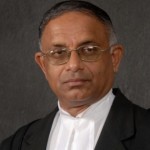
Dr. Jayampathy Wickramaratne PC
Sri Lanka’s constitutional journey remains marked by unresolved dilemmas: entrenched executive dominance, fragile fundamental rights, unfulfilled reform promises, and the persistent national question. These challenges have deepened inequality, strained ethnic relations, and weakened democratic accountability. The writer argues that constitutional supremacy must be firmly secured above transient political majorities, with judicial review extending to all acts of the State, including those of Parliament. Central to this vision is the abolition of the executive presidency, whose concentration of power has undermined Parliament and diminished popular sovereignty. Equally vital is the adoption of a modern bill of rights that safeguards equality, social justice, and human dignity and is enforced by an independent judiciary. Devolution of power is presented not as a concession but as a constitutional necessity—indispensable for unity in diversity and for laying the foundations of ethnic peace.
Based on the reports of the Steering Committee and the sub-committees of the 2015-2019 constitutional reform process, one could say that if a constitution had materialised, it would have been somewhere between a “reformist” and a “transformative’ constitution. On the other hand, if the 2000 Constitution Bill had been passed, the new constitution would have been a “transformative” one. On the 54th anniversary of Sri Lanka’s declaration as a Republic, the writer calls for a Third Republican Constitution that should be “transformative” rather than merely “reformist”.
The significance of the Aragalaya
Much has happened since 2000. The separatist war is over, but the ethnic conflict persists. The Aragalaya protest of 2022 marked a historic citizen-led uprising against authoritarianism, corruption, dynastic rule, and economic mismanagement, and was a turning point in the country’s democratic struggle. It symbolised the reclaiming of public space, the demand for accountability, and the assertion that ordinary citizens—especially youth—could challenge entrenched political dynasties. How should the new constitution respond to these developments?
The Aragalaya’s core significance lies in its role as a democratic awakening, in which ordinary citizens, transcending ethnic and class divides, reclaimed public space and demanded accountability from entrenched elites. It symbolised the rejection of corruption, nepotism, and unchecked executive power, while affirming the capacity of grassroots, youth-led mobilisation to force systemic change. As a basis for a new constitution, the Aragalaya underscored the urgent need to embed constitutional supremacy, end executive dominance, secure judicial independence, and strengthen institutional accountability—ensuring that sovereignty truly rests with the people and that governance cannot again be monopolised by dynastic or authoritarian rule. The Aragalaya fostered unprecedented solidarity among Sri Lanka’s diverse communities; it created bonds across ethnic and religious lines, making it far more difficult today for divisive forces to rekindle communal or sectarian hatred.
Aragalaya directly shaped the 2024 elections in Sri Lanka by delegitimising dynastical rule, energising youth and civil society, and embedding demands for accountability and constitutional reform into the electoral agenda. The protests created the political climate in which voters decisively rejected continuity and sought leadership promising systemic change.
NPP Victory in 2024
In 2019, Janatha Vimukthi Peramuna (JVP) formed a coalition called the National Peoples Power (NPP) with more than twenty organisations, including political groups, youth organisations, women’s groups, trade unions, and civil society organisations. Although it did not fare well in the 2019 Presidential elections and the 2020 Parliamentary elections, it was the primary beneficiary of the unprecedented protests against the political establishment in the wake of the massive economic crisis in 2022, which culminated in President Gotabhaya Rajapakse fleeing the country and resigning.
In the 2024 Presidential election, Anura Kumara Dissanayake of the NPP secured 42.31% of the vote in the first round. In the second round, preference votes from candidates outside the top two—Dissanayake and Sajith Premadasa of the SJB—were redistributed, and Dissanayake secured 55.89% of the combined tally and was declared the winner. Upon assuming office, President Dissanayake promptly dissolved Parliament. The subsequent election delivered a historic outcome: the NPP captured 61.56% of the vote and 159 of 225 seats, granting the party a decisive two-thirds majority to pursue constitutional reform.
In its election manifesto, the NPP pledged to introduce a new Constitution. Notably, the NPP committed to completing the 2015-19 constitutional reform process early. The main features of the Constitution would be a parliamentary form of government to replace the executive presidency, a new electoral system, fundamental rights to include economic, social, and cultural rights, rights of women, children, and the disabled, as well as “devolution of political and administrative power to provinces, districts, and local government units.”
The NPP’s main rival, the SJB, also committed itself to changing the present Constitution and formulating a new Constitution that would convert the form of government to a parliamentary system, include economic, social, and cultural rights, and provide maximum devolution based on the Thirteenth Amendment within a single country.
A transformative, “system-changing” constitution
How should a new constitution respond to the people’s cry during the “Aragalaya”, reiterated at the 2024 elections?
In essence, the Aragalaya’s cry for “system change” should translate into a constitutional framework in which sovereignty genuinely rests with the People and institutions are resilient against authoritarian capture. The new constitution must affirm that all power flows from the people and is exercised in trust, with accountability and in accordance with justice. Recognising the dangers of unchecked authority, corruption, and dynastic rule, there must be a clear commitment to a constitutional order that safeguards democracy, ensures transparency, and protects the independence of institutions.
The above can be realised only through a “transformative constitution” committed to “system change”, not a mere “reformist constitution”. The essentials of such a constitution lie in recognising that it is not a static text but a dynamic, evolving framework of governance. It must enable courts to interpret constitutional provisions in ways that respond to contemporary realities and advance justice and equality. A new constitution must therefore embody a strong commitment to social justice, requiring the state to dismantle systemic discrimination and ensure fairness and dignity for marginalised communities. Its legitimacy must also rest on participatory democracy, with citizens playing an active role in shaping institutions and contributing to the ongoing development of the constitutional order. Above all, a new constitution must be understood as a living instrument—capable of adapting to changing social, political, and economic conditions while remaining faithful to democratic values and fundamental rights. In this sense, the purpose of constitutionalism is not merely to preserve constitutional order but also to promote justice, equality, inclusion, and meaningful democratic engagement in a changing society.
Sri Lanka requires a modern, comprehensive bill of rights capable of addressing contemporary challenges, including equality, social justice, and human dignity. Rights must be real and enforceable rather than merely aspirational, and their protection depends on an independent and courageous judiciary. Likewise, devolution of power must be understood not as a political concession but as a constitutional necessity to empower the people at all levels. In a pluralist society, meaningful power‑sharing is indispensable for preserving national unity while respecting diversity and for laying the foundations for ethnic peace.
Supremacy of the Constitution
The supremacy of the Constitution should be the cornerstone of any truly transformative constitutional order. In the Sri Lankan context, it should mean that no state institution, nor any individual, family, or political party, can place itself above the law or manipulate institutions for personal gain. A transformative constitution must therefore enshrine the principle that all state power derives from and is limited by the Constitution, and that any act inconsistent with it is void.
To achieve this, the new Constitution must, at a minimum, provide that any law, subordinate legislation, or conduct inconsistent with its provisions is void, thereby affirming constitutional supremacy. It should guarantee unlimited judicial review of legislation, ensuring that no enactment escapes scrutiny. All existing laws must be interpreted subject to the Constitution, including the fundamental rights, unlike under the 1972 and 1978 Constitutions. Furthermore, all actions of Parliament, whether legislative or otherwise, must remain subject to judicial review. Finally, the jurisdiction of fundamental rights should extend to all actions of the state—legislative, executive, judicial, and otherwise—as well as to conduct by non-state actors, thereby securing comprehensive accountability under the constitutional framework.
An unalterable basic structure
Soon after a parliamentary election, the governing party often enjoys strong prospects of winning a referendum. But does this mean that a two‑thirds majority in Parliament, combined with 50% plus one of the People, can impose any constitution? Could it, for example, deny the freedom from torture to suspected terrorists or entrench one‑party rule? In the absence of entrenched safeguards, the risk of such perilous constitutional changes remains unchecked.
Sri Lanka’s constitutional reform process should pursue a carefully balanced approach to entrenchment. Provisions that safeguard foundational principles are essential to guard against abusive or opportunistic amendments. However, such protections must be drafted with precision and restraint. If entrenchment is framed too broadly, it can immobilise detailed or technical provisions, resulting in excessive rigidity and weakening the Constitution’s capacity to adapt to evolving democratic realities.
The most effective protection lies in a dual framework: confining entrenchment to the Constitution’s core identity while simultaneously empowering the judiciary to scrutinise constitutional amendments against those basic principles. This approach secures permanence where it is most necessary while preserving flexibility in other areas of governance. For Sri Lanka, the central lesson is that constitutional stability should not be achieved at the cost of democratic adaptability. A thoughtfully calibrated combination of narrowly defined entrenchment and principled judicial review provides the most reliable foundation for a constitutional order that is both resilient and responsive.
The writer submits that a future constitution should contain a set of basic principles that form an unalterable basic structure. On the eve of the 2024 Presidential elections, the Collective for Democracy and Rule of Law, a group of academics and professionals, proposed that a set of ‘Constitutional Principles’ be included in a new Constitution. They should be described as ‘immutable and inviolable values of democratic republicanism.’ These principles will embody the fundamental constitutional values that guide the new Constitution and future judicial interpretation of its clauses. The Collective proposed that the Constitution should recognise the following immutable and inviolable values of democratic republicanism and consociationalism: human dignity, social justice, economic justice, equality and the advancement of human rights and freedoms; ethnic, gender and social equality; the supremacy of the Constitution and the Rule of Law; regular, uninterrupted, free and fair elections and a multi-party system of democratic government; non-concentration of state power in one individual or institution; the assurance of accountability, responsiveness and transparency at all levels of governance; public authorities hold and exercise powers in accordance with the doctrine of public trust. The writer submits that the above principles could form the basis for an unalterable basic structure.
The NPP government was entrusted with a clear mandate to dismantle authoritarian structures and deliver constitutional reform, yet its continued inaction betrays that trust. Sri Lanka cannot afford further delay, for every day without reform entrenches executive dominance and erodes public faith in democracy. What is needed now is decisive action to abolish the executive presidency, entrench constitutional supremacy, advance devolution, and pave the way for social justice, so that sovereignty genuinely resides with the people and the promise of a just, democratic republic is finally realised.
(Excerpted from the writer’s forthcoming publication ‘Constitutional Conversations.’)
Naman / May 22, 2026
“ Third Republican Constitution that should be “transformative” rather than merely “reformist”.”
SL needs a New Constitution in order to bring the SYSTEM CHANGE but it needs to WAIT till those who brought the economic meltdown and those who were behind the massacres of so many innocent SL citizens are brought to justice. Country needs a gap period where AKD can expedite the judicial process. All those who call themselves will be very pleased when that happens. I would have been pleased if the USA government had allowed Gota Rajapaksa to join his family as a grandfather! What happened to the 17 million rupees that was found in the Presidential Mansion?
The current GoSL needs to keep the Presidential post in order to put the country in the RIGHT path. There should be no attempts made to have Provincial Councils Election prior to the adoption of the NEW CONSTITUTION
If AKD can do the right things with the powers he has a person belonging to any race religion doesn’t have to clamour for POWER SHARING
/
Ajith / May 22, 2026
“SL needs a New Constitution in order to bring the SYSTEM CHANGE but it needs to WAIT till those who brought the economic meltdown and those who were behind the massacres of so many innocent SL citizens are brought to justice. “
How long you have to wait till he finishes investigations? 5 years? 10 years? I understand another Batticaloa Monk also now give his support to bring new constitution? If he is really interested in new constitution as author pointed out, first you need to use your two third majority and people’s mandate to bring the system change and bring the laws to eliminate all the past governments or political parties out of politics and become is a true leader the people.
/
Naman / May 22, 2026
The News media (TV and newspapers)
should cease giving prominence to those ex-politicians who are out side the Parliament.
The New Constitution should be a SECULAR one and should exclude clergy from politics.
/
Naman / May 22, 2026
The current Tamil political parties should contribute towards the making of the transformative new constitution
that will SATISFY Tamil needs and expectations
/
SebastianSR / May 22, 2026
When did Tamil politicians agree on anything? Only when coerced by the Gun.
/
Naman / May 22, 2026
I welcome Mr Sumanthiran giving SUPPORT to AKD to carry out the programmes/projects in the interests of the country.
/
Ajith / May 22, 2026
“I welcome Mr Sumanthiran giving SUPPORT to AKD to carry out the programmes/projects in the interests of the country.”
Who is Sumanthiran? Is he a parliamentarian? Is he represent Tamil People? Did he support AKD in the presidential election? What is AKD’s programmes/projects to devolve power?
/
Jit / May 22, 2026
JW, are you not one of the very reasons, or causes, for the first sentence of your write up? How can you forget the history so soon?
/
SJ / May 22, 2026
That is a most unfair comment on a person who never subscribed to chauvinist politics.
/
SebastianSR / May 22, 2026
“JW, are you not one of the very reasons, or causes, for the first sentence of your write up? How can you forget the history so soon?”
Exactly.
/
SJ / May 22, 2026
How exactly?
/
Ajith / May 22, 2026
“The writer submits that a future constitution should contain a set of basic principles that form an unalterable basic structure. yet its continued inaction betrays that trust. Sri Lanka cannot afford further delay, for every day without reform entrenches executive dominance and erodes public faith in democracy. “
In fact, the so called 1972 Constitution or 1978 constitution are constitution of SLFP Government and UNP Government and all amendments are made for Political parties and Politicians, not for the people of Sri Lanka. If there is another constitution from NPP/JVP then it is another constitution for NPP not for the people. NPP government is another form of Government that was used “Aragalaya” demands of system change but in fact it is only a change of government like the government of Ranil Wickremasinghe. It is a waste of time spending time and money on investigations of few who misused power for another three years without any real change. If the elected 159 MPs are truly committed to the principles of equality, justice, devolution of power then you don’t need to afraid or delay on implementing them as early as possible.
/
SebastianSR / May 22, 2026
If the elected 159 MPs are truly committed to the principles of equality, justice, devolution of power then you don’t need to afraid or delay on implementing them as early as possible.
We know that elected leaders are never committed to such principles. We see the horrible examples in India and US, and in most of the 190-+ countries in the UN, even if we exclude foul states like Israel or Saudis, Iran, Afganistan etc. The solution to the problem is not elections but “sortition”, as already advocated by Plato in pre-Christian times Hellenic city states. Today it has been used in local government in France, Ireland and Canada. Basic Idea is An article on “Sortition” explicitly discussing the case of Sr Lanka appeared in the Island and in Michael Robert’s blog:. The article explores using sortition (selecting political representatives by lottery rather than standard elections) to bypass corrupt infrastructures and enact a clean systemic change in Sri Lankan politics.https://thuppahis.com/2023/01/02/crunchtime-resolving-sri-lankas-political-dilemma/
/
DIL / May 22, 2026
Naman, I endorse all your points. Secular state is required for SL to advance, till then it will stagnate. It appears that even with this government, anyone can wear a robe and utter anything or do anything, clearly above the law. So where is the equality? Definitely, not yet, although the current government is trying but not sure how sincere they are. Particularly, if the IGP had to get permission to arrest a monk, as alleged. Executive presidency will not be abused by a person like AKD, so that change is not immediately required, but this is an election promise that has to be done somewhere down the track, even if it’s in the next term.
/
SebastianSR / May 22, 2026
Secular should mean to exclude all religions, i.e., especially Abrahamic religions and Marxism too. The latter has a secular face but it is an adaptation of Christian eschatology to fit in with Victorian Materialism.
/
SJ / May 22, 2026
Your religion is anti-Marxism I guess!
/
LankaScot / May 24, 2026
Hello SSR,
Marx was was of Ashkenazi Jewish descent, born in Prussia. Engels was also born in Prussia from a rich industrialist Family with a Protestant Heritage.
Marxism has nothing in common with Christian Eschatology (or Islamic). There is no 2nd coming of a Messiah or any “End Times” in Marxism, although sometimes, when I read your anti-Marxist rhetoric, I can hear the distant rumble of Marx turning in his Highgate Cemetery Grave.
Best regards
/
leelagemalli / May 25, 2026
Hello LankaScot,
.
https://www.youtube.com/watch?v=Z_Xghe-05tk
–
If you truly want to understand the threat that the nation is currently facing, please watch this. I do not anticipate that the situation will return to July 2022 levels sooner than anticipated. Despite claims that previous governments were more corrupt than the current one, the known rebels have now demonstrated that they are completely unfit to lead this nation.
/
LankaScot / May 25, 2026
Hello Leelagemalli,
I watched the video carefully. My first thought was how is Sri Lanka managing to run a Primary Surplus, and then I thought maybe the IMF imposed it. The answer –
“Yes, the International Monetary Fund (IMF) imposed a primary surplus requirement as a central conditionality under Sri Lanka’s Extended Fund Facility (EFF) program”.
The Dr also commented on the huge increase in the price of Oil that has been addressed by temporary Subsidies on Diesel agreed by the IMF. He also suggests that in 2027 Sri Lanka should negotiate a new Agreement with the IMF. However much of this will depend on Trump’s War on Iran and the resumption of Oil Tanker Traffic through Hormuz.
Best regards
/
leelagemalli / May 25, 2026
LankaScot,
By the way, I missed the opportunity earlier to properly respond to your warning about being cautious when comparing Rwanda’s crimes with those occurring in Sri Lanka. My intention was never to downplay the suffering or abuses associated with Rwanda or elsewhere, but rather to emphasize that Sri Lanka’s own unresolved injustices deserve equal attention and scrutiny.
–
Even after nearly 17 years since the war officially ended, many Sri Lankans still witness suspicious deaths, alleged extra-judicial killings, political intimidation, and weak accountability mechanisms that continue to undermine public trust. The recent mysterious death of the suspended finance official who lived in Kuliyapitiya, reportedly connected to investigations surrounding the massive treasury-related financial loss, only deepened these concerns. Many people believe the circumstances required a far more transparent and independent investigation. Instead, the speed of events surrounding the funeral and the political silence that followed have raised further questions among the public.
/
Ajith / May 22, 2026
“I welcome Mr Sumanthiran giving SUPPORT to AKD to carry out the programmes/projects in the interests of the country.”
Who is Sumanthiran? Is he a parliamentarian? Is he represent Tamil People? Did he support AKD in the presidential election? What is AKD’s programmes/projects to devolve power?
/
old codger / May 22, 2026
I don’t see much point in changing constitutions. So far, those who wanted to always managed to change them. 1972, 1978, and the various amendments. Mahida gave himself a chance at a third term , but the people decided not to.
All our constitutions were supposedly well written and waterproof. So what’s new?
/
SJ / May 22, 2026
Who was VP?
Was he a parliamentarian?
Was he ever elected?
/
Ajith / May 23, 2026
Good question?
Who is SJ? Was SJ a parliamentarian? Was SJ elected? Was he a professor? Was he the mastermind of special status to Buddhism? Was he a spy for China? Was he servant for Srimavo?
/
SJ / May 24, 2026
When did Ajith go bonkers?
Did SJ drive him mad?
Or was he already?
/
SJ / May 24, 2026
Two more join him— but no answer.
/
nimal fernando / May 22, 2026
Any Lankan constitution is not worth the paper they are written on ……. the constitutions have been unashamedly flouted repeatedly: mostly by the ones who wrote them.
–
All Lanka needed was a man like AKD. He’s not wasting time writing blooming useless constitutions.
–
He’s busy writing history!
/
leelagemalli / May 25, 2026
Readers,
“The NPP government was entrusted with a clear mandate to dismantle authoritarian structures and deliver constitutional reform, yet its continued inaction betrays that trust. Sri Lanka cannot afford further delay, for every day without reform entrenches executive dominance and erodes public faith in democracy. What is needed now is decisive action to abolish the executive presidency, entrench constitutional supremacy, advance devolution, and pave the way for social justice, so that sovereignty genuinely resides with the people and the promise of a just, democratic republic is finally realised.”
*
For many Sri Lankans, the brief administration led by Ranil Wickremesinghe is now being viewed differently in hindsight. Despite lasting only around 26 months and operating under extremely difficult economic conditions, that government managed to push through several reforms, stabilize institutions to some extent, and restore a degree of international confidence.
–
Today, after more than 16 months of NPP rule under President Anura Kumara Dissanayake simply put known as the “the biggest liar”, many are beginning to question where the promised “system change” has actually materialized. Instead of momentum, the country appears stagnant; politically, economically, and administratively ; much like the still stinky waters of Beira Lake in Colombo.
/
leelagemalli / May 25, 2026
cont.
The government continues to blame the previous administrations for depleted reserves and economic collapse. Yet the reality remains that the IMF framework, debt restructuring process, and international negotiations now being relied upon were initiated before the NPP came to power. The same state machinery, public institutions, and officials that served previous governments continue to function today as well. If earlier regimes were condemned as corrupt and inefficient, then the public expected a clear difference in governance, transparency, and delivery from the current leadership. So far, however, many citizens feel they have seen more rhetoric than results, more excuses than accountability.
*
What frustrates people most is the growing gap between promise and performance. Citizens voted hoping for a transformative moment; a national awakening that would lift Sri Lanka beyond the failures of the past. Instead, many now fear the country is drifting once again toward uncertainty and decline, echoing the instability seen in July 2022.
–
Democracy gives governments time, but it also demands measurable progress. If tangible economic growth, investments, institutional reforms, and public trust are not restored soon, disappointment among the people will only deepen further.
/