

By Mohamed Harees –

Lukman Harees
Every four years, the World Cup is sold as proof that sport can rise above politics — that for one month, the world’s pettiness gives way to something bigger and cleaner. The 2026 tournament, co-hosted by the United States, Mexico and Canada, blew that fantasy apart. It didn’t transcend the political culture of its dominant host. It became a stage for that culture, broadcast to four billion people, revealing racism dressed up as security policy, corruption dressed up as diplomacy, and a governing body too compromised to referee either honestly.
Start with who was actually allowed through the door. More than 120 civil and human rights organisations issued a joint travel warning before a ball was kicked, cautioning that fans, players and journalists heading to the U.S. risked serious rights violations. That warning wasn’t hyperbole — it came true. A sweeping travel ban covering dozens of nations, including Iran, Haiti, the Ivory Coast and Senegal, meant ordinary supporters from those countries were locked out of watching their own teams, even while the players themselves received exemptions. For a time, fans from a group of African nations were told they’d need to post bonds of up to $ 15, 000 simply to be allowed to cheer. ICE agents were confirmed to be stationed at the stadiums themselves, prompting a stadium workers’ union to threaten a strike over fears its own members could be swept up. Call the arrangement what it is: a filtering system that sorts people more by origin than by conduct. That’s racism operating through bureaucracy rather than an open declaration.
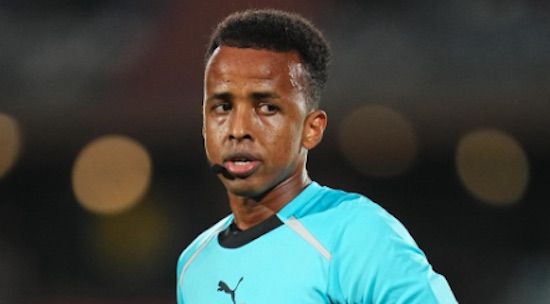
Then came the individual humiliations. Omar Abdulkadir Artan, Somalia’ s referee of the year and about to become the first Somali official to work a World Cup, arrived in Miami with a valid visa and every document in order — and was turned away over “vetting concerns” nobody would name. He flew home to a hero’s welcome, which tells you how the rest of the world read it. Iraq’ s leading striker, Aymen Hussein, was pulled aside at O’ Hare and interrogated for seven hours, with his phone searched, before being let through; others in his delegation, including a team photographer, weren’t so fortunate. Dozens of Moroccan and Scottish fans, some having already spent thousands on flights and hotels, had their travel documents revoked days before departure. Asked to explain the Artan decision, the White House’ s own point man on the tournament could only mutter that it was done “for very good reasons” — no evidence, no accountability. FIFA, whose entire purpose is to protect the integrity of its own competition, shrugged and insisted that visa decisions were a host government’s business. That isn’t neutrality. That’s institutional cowardice in the face of naked prejudice.
No delegation was more affected by this than Iran’s. With the war between Iran, Israel, and the United States still ‘raging’, Iran’s planned training base in Arizona became untenable, and the squad was pushed across the border into Tijuana. The players weren’t issued visas until roughly ten days before the tournament opened, and more than a dozen coaches, federation officials and support staff were denied entry outright — including the head of Iran’s own federation, and later its secretary general and a vice president. FIFA also stripped Iran of the ticket allocation that every competing nation is normally guaranteed, worth thousands of seats. The result was a team shuttling across an international border around its own matches, permitted into the country only in the narrow window before and after games, while its federation publicly accused the host of denying it “a level playing field and a competition free from discrimination.” Given that FIFA’s president had, months earlier, personally handed the U.S. president an inaugural peace prize of the federation’s own invention, nobody seriously expected Iran’s complaint to matter, and nobody was surprised when it didn’t. That is corruption in its purest form: a governing body too busy flattering power to defend the people it claims to serve.
Then came the moment that turned quiet disgust into open scandal. After USA striker Folarin Balogun was sent off for a reckless challenge against Bosnia-Herzegovina, triggering an automatic one-match ban, senior figures in the U.S. administration mobilised within minutes — the Commerce Secretary reportedly helping build a case for appeal, and the president himself phoning FIFA president Gianni Infantino to ask why the card had been shown at all. Within a day, FIFA’s disciplinary body suspended the ban under a probation clause, essentially never used this way before — reportedly the first time since 1962 that a World Cup red card didn’t produce a suspension. Belgium, the team facing a player who should have been sidelined, was furious, and its appeal was rejected within hours. UEFA called it a red line crossed. Even Sepp Blatter, no stranger to FIFA scandal, said the quiet part out loud: disciplinary rulings are supposed to be settled by evidence and independent process, not a head of state on the phone. This was corruption performed in broad daylight, live, with a presidential victory lap to go with it.
And then it happened again, this time with a superstar and a trophy on the line. Egypt led Argentina 2-0 in their round-of-16 match, closing in on one of the great shocks in tournament history, when a VAR review disallowed an Egyptian goal for a foul most commentators said fell well outside the range officials are supposed to review. Argentina then scored three unanswered goals in thirteen minutes, including a Messi equaliser and a stoppage-time winner, after officials also declined to review a challenge on Mohamed Salah in the build-up, which many former players thought merited a penalty. Egypt’s federation filed a formal complaint alleging “double standards” and demanded the removal of the entire officiating crew. Striker Mostafa “Zico” said plainly that the injustice was clear and that the tournament looked fixed; head coach Hossam Hassan went further, suggesting that there had been pressure on the referee to keep Argentina and Messi alive in the competition, and that he’d never watch the World Cup again because there was no justice left in it.
FIFA’s refereeing chief, Pierluigi Collina, publicly defended every call. Whether any of it amounted to deliberate manipulation, tied to broadcast interests, betting markets, or simply FIFA’s evident desire to keep its biggest global draw on the biggest stage for as long as possible, is impossible to prove from outside the video review room, and no evidence of match-fixing or betting fraud has surfaced. But the fact that a serious accusation like that could spread so fast and find so many believers, from Egyptian internationals to former Premier League stars, wasn’t an accident. It was the predictable result of a tournament that had already repeatedly taught its audience that the people running it bend when the right party leans on them.
Put it all together, and it isn’t a string of unrelated bad breaks. It’s a system working exactly as designed. Visa officers turning away a decorated referee on a pretext they refuse to name. A government spokesman answering “why” with a shrug. A governing body that spent a year cultivating a friendship with a head of state, only to discover its own rulebook has remarkable flexibility the moment that head of state calls in a favour. And when a team that isn’t politically connected gets the rough end of a debatable call, the reasonable assumption isn’t incompetence — it’s the same pattern the tournament trained everyone to expect. None of it happened because the World Cup is uniquely rotten. It happened because the World Cup is enormous, and enormous events expose how a society’s institutions actually behave under pressure, not how they describe themselves in press releases.
That’s the real indictment. For decades, the pitch for Western liberal democracy, and the United States above all, has rested on a claim of fairness: rules applied evenly, institutions independent enough to tell the powerful no, borders run by law rather than prejudice. The World Cup was meant to showcase that self-image. Instead, it produced a referee flown home without explanation, a team exiled to another country because its own government wasn’t trusted at the border, a disciplinary ruling that folded the instant a president called, and a knockout match so lopsided in the perception of fairness that a head coach could credibly suggest it had been arranged in advance. Strip away the pageantry, and what’s left is racism in the visa line and corruption in the boardroom, running in parallel through the same tournament, in front of the whole world.
There is also a version of this argument that says none of it is new — that World Cups have always been political theatre, that Russia hosted one in 2018 with its own record on rights, that Qatar hosted one in 2022 under conditions that drew years of criticism over migrant labour, and that pretending the United States is uniquely culpable ignores the sport’s history of looking the other way for whichever host pays the bills. There’s force to that. But a country that spends decades positioning itself as the alternative to that kind of governance forfeits the benefit of the comparison the moment it behaves exactly like the hosts it claims to be better than. A standard that can’t be cleared when the world is actually watching earns no credit for having been set in the first place.
The coverage gap is its own kind of evidence. Western outlets spent years, correctly, scrutinising Qatar’s migrant labour system before and during the 2022 tournament. That scrutiny was warranted. But it highlights how muted the same press has often been about the current US administration’s unequivocal military and diplomatic backing of Israel’s campaign in Gaza — a campaign South Africa has formally accused of genocide before the International Court of Justice, which the International Criminal Court has cited in issuing an arrest warrant against Israel’s Bibi and which has killed tens of thousands of Palestinians. The asymmetry between how forcefully a labour system in Doha was investigated and how gently a genocidal war waged by Tel Aviv, bankrolled largely by Washington, has often been covered is worth naming. That selectivity is one more piece of the same picture this tournament exposed.
A tournament is supposed to be an advertisement for the countries running it. What the United States put on display this summer was a host that couldn’t get its own referee through the airport, a team that had to live in exile just to compete, fans turned away with tickets already bought, a suspension that dissolved the moment the right man called, and a knockout match so contested that one of the sport’s biggest stars in Africa is off the tournament, calling it fixed.
The sleaze was never hidden — it was broadcast. The corruption didn’t hide in a back room; it happened on a phone call that the world learned about within hours. The hypocrisy sat in plain sight every time an official spoke about fairness and then bent it for the powerful. The racism ran quietly through visa queues and airport interrogation rooms, dressed up as procedure so nobody had to say the word. Institutions that were supposed to guard the game instead knelt before it — a governing body flattering a president one month and rewriting its own rulebook for him the next, a security apparatus that couldn’t distinguish a threat from a Somali referee with a valid visa. And underneath all of it ran the same commercial logic that has hollowed out so much else: matches scheduled for broadcast windows instead of player safety, controversies managed for optics instead of resolved for justice, a tournament sold as a gift to the world while the people actually living through it, the fans turned away, the players exiled, the officials sent home in shame, were treated as line items to be worked around.
What four billion people watched was not simply a bad World Cup. That’s a mirror — and the reflection staring back is racism and corruption, camera-ready, live, in prime time, for anyone willing to look at what was in the frame. Not a series of unfortunate incidents, but a single, coherent portrait of what happens when sleaze, corruption, hypocrisy, racism, institutional servility and total commercialisation are allowed to operate together on the largest stage sport has ever built, with nowhere left to hide. The next time we hear someone speak about Western values, the rules-based international order, or the beacon on the hill, remember the 2026 World Cup. It will be remembered as the worst in the tournament’s history. It earned that distinction fairly, and it deserves to keep it.
CChampa / July 12, 2026
Hats off to the Switzerland team for playing against a FIFA-cum-Referee-favoured team and not giving them an easy victory. It was again an all-Portuguese referee team.
How did Lionel Messi end up receiving 7 or 8 corner kicks that have never been seen by any other player in any other match? It doesn’t add up. On another occasion, he jumped on to a Swiss player, fell and was awarded a free kick. The entire time of the match, the referee acted like Messi’s baby-sitter.
I have nothing against Lionel Messi. But, disgraced Infantino and his chosen Referees are making the legendary player end his career as a cheapskate. Should a legend cheat as he did against Cape Verde?
The Iranian and Egyptian teams were discriminated against and robbed of their chances to be in the quarter finals. There were so many complaints against FIFA from other participating teams too, either on the pitch, substandard hotel accommodation or unfairly shifting the match time in favour of one team, etc., etc.
Amidst FIFA’s plain sight favouritism, racketeening and corruption, the tournament is still going on. Most people predict the finals will be between France and England. Anyway, 2026 could be the most viewed FIFA World Cup finals of all time.
/
Lester / July 14, 2026
Shocking.
The Controversial Remarks
‘Following France’s 1-0 World Cup victory over Paraguay, Senator Amarilla took to social media to heavily criticize Mbappé. Among her comments, she made deeply racist and dehumanizing insults, writing that he was a “colonized Cameroonian”. She further stated that he was a “brute who never learned to write,” and claimed that “the most educated creatures he ever listened to were chimpanzees”.”
She might be unaware that Mbappé mother is French. In any case, what is her opinion of S India? If she knew that they drink cow urine, she might go into cardiac arrest.
/