


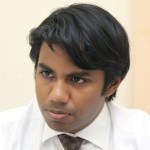
Asanga Abeygoonasekera
Thirty-one years ago, my father was caught in the chaos of an explosion meant for someone else. A woman, carrying death like a quiet ritual, struck the presidential campaign of 1994. Gamini Dissanayake was the target. My father, Ossie Abeyagoonasekera, stood beside him and was caught in the blast with fifty others. Two hundred were wounded, seventy-five gravely. He fought for seventeen days in a hospital before the struggle ended. I was sixteen, studying for exams that no longer seemed to matter. Life tilted toward a silence that has never lifted. I was an only child, and the absence that followed was complete.
The suicide bomber — a Tamil Tiger from the Black Tiger squad — was highly trained, delivering death with precision. It was the largest single attack of its kind, claiming many lives and perhaps changing the political course of the nation. In Sri Lanka, bombs and elections have too often shared the same stage.
I remember every detail: the smell of blood in the hospital corridor, his torn clothes, the shouts, the heavy silence after the doctors stepped out. Even now, the memory feels like a companion — stubborn, unyielding. Such loss teaches something strange: life continues, but without the symmetry of fairness.

Ossie Abeyagoonasekera (August 7th, 1950 – November 9th, 1994)
My father’s life was brief — forty-four years — yet vast in moral reach. Some adored him; others did not. At the funeral pier, a family approached me: “We want to keep one of his remains.” Another disapproved: “He should have stayed with the left.” Others insisted, “He should have been the nationalist he once was, not striking deals with the Tamils.” I never answered. I let their stories unfold — of love, anger, and unfinished arguments.
He pressed against the tide of power in a land that often mistook fear for order. In his library remain photographs: meetings with Indian and Chinese leaders, Indian Prime Minister to M. G. Ramachandran of South India, with Muammar Gaddafi, who gifted him The Green Book. Letters from U.S. Ambassador Teresita Schaffer and Britain’s High Commissioner David Gladstone trace the improbable intersections of his journey. Years later, Ambassador Schaffer told me, “Your father saw the depth of political challenges on the ground well.” She was right. He remained grounded, seeing hundreds of ordinary people every day until his death. Leaders shook his hand, yet he remained closest to the ordinary — quiet, human gestures that defined courage.

Ossie Abeyagoonasekera with Indian Prime Minister V P Singh
In 1988–89, my mother and I were sheltered in Bonn, West Germany, during Sri Lanka’s youth insurrection. My father visited several times. In one of his letters to my mother, he wrote of life’s uncertainty amid bloodshed — as if preparing me, unknowingly, for his death. He had been targeted more than once — at Kosgashandiya, at the Kadawatha rally — each time narrowly escaping. He knew the danger he navigated, perhaps had made a quiet pact with fate.
In Bonn, I witnessed the world shift as the Berlin Wall fell. Many years later, a German intelligence officer told me my father had taught him courage and integrity — fragile shields against the absurdity of politics and violence. He knew P. K. Hormis Tharakan in Colombo, later head of India’s RAW. Several accounts confirm his secret meeting with Prabhakaran in Chennai, though no official record exists. When silence could have protected him, he chose speech. When conformity offered comfort, he chose conviction. While imprisoned in 1982, he received a letter from Nelson Mandela: “Struggle continues, and victory is certain.” He lived by those words — quietly, without anger or applause. Had he lived, he might have championed what so many governments still struggle to uphold: the promise of “National Reconciliation.”

Nelson Mandela’s prison writing to Ossie Abeyagoonasekera
In 1982, he created the rice ration book — a small, defiant object weighted with justice. An investigator later remarked that had he printed enough, he might have toppled an autocrat who postponed elections through a fraudulent referendum. Yet he sought not victory, only the right to resist injustice. The rice ration book landed him in jail, where the government prosecutor labeled the case under “Naxalite,” marking him as a threat to the state.
In 1986, he travelled to Jaffna with colleagues Vijaya Kumaratunga and Felix Perera, risking his life to negotiate with the LTTE, seeking a political solution to Sri Lanka’s civil war. Many called him naïve, even a traitor — posters in Colombo labeled them as traitors negotiating with terrorists. Yet he believed principle must exist beyond public opinion. Years later, Rahim, a former LTTE deputy now in Canada, said, “We trusted him.” I asked, “Then why kill him?” Rahim replied, “He was not the target.” Trust and death coexist uneasily in our history.
Ossie entered politics young, alongside Vijaya, in a time when dissent was punished with death. After Vijaya’s assassination, he led the Sri Lanka Mahajana Party through years of violence and fear. He saved many lives — sheltering some at his government residence in Colombo 5 who had escaped the torture chambers of Batalanda, and helping others flee the country. One Tamilian found refuge in Paris, two others in Australia, all carrying immense gratitude for his courage.
In Jaffna talking peace with Tamil Tigers LTTE, L-R: Raheem, Vijaya Kumaratunga and Ossie Abeyagoonasekera
In 1988, at 38, he ran for president under the United Socialist Alliance, winning 4.63 percent of the vote — not ambition’s reward, but proof of defiance. Dr. Saman Kelegama who became the director at IPS, then part of his team drafting the election manifesto, later explained to me the depth of his vision. He supported the Rajiv Gandhi–Jayawardena accord for devolution, fought corruption, championed accountability as the first leader of the opposition in the Western Provincial Council, and secured compensation for victims of the July 1983 riots. Some critics saw collaboration with President Premadasa as a departure from his earlier stance, yet his commitment to principle remained unwavering. In 1994, he won a parliamentary seat in Colombo— second only to Ranil Wickremesinghe. Three months later, he was gone.
Life continues. Sri Lanka now faces crossroads similar to those my father confronted. After the 2022 people’s uprising, citizens turned to a third alternative political force, weary of the two mainstream parties. That alternative, led by President Anura Kumara Dissanayake, has launched anti-corruption and crime-busting initiatives. These measures matter, but their impact depends on courage — steadfast enforcement from top to bottom. There are signs of hope, yet power remains a creature resistant to accountability. External shadows continue to loom over administrations in Colombo.
My father’s legacy lies not in party or position, but in the quiet assertion that integrity matters, even when the world offers none. Politics, at its finest, is not a profession but an act of sincerity — fierce and unflinching. Sincerity shaped by love: the kind that confronts violence without illusion, preserving dignity when cruelty becomes ordinary.
Thirty-one years later, I still hear his voice in the silence. The world has not changed entirely. Violence persists in the same corridors of power, even in Palestine, whose cause he once defended. Power still corrupts; justice remains fragile. Yet his example endures — a man who acted because it was right, not because it was safe. That, too, is a form of resistance.
In remembering him, I see not despair but instruction — that courage, even when futile, is the only way to honour truth. Perhaps, in the end, that is enough.