

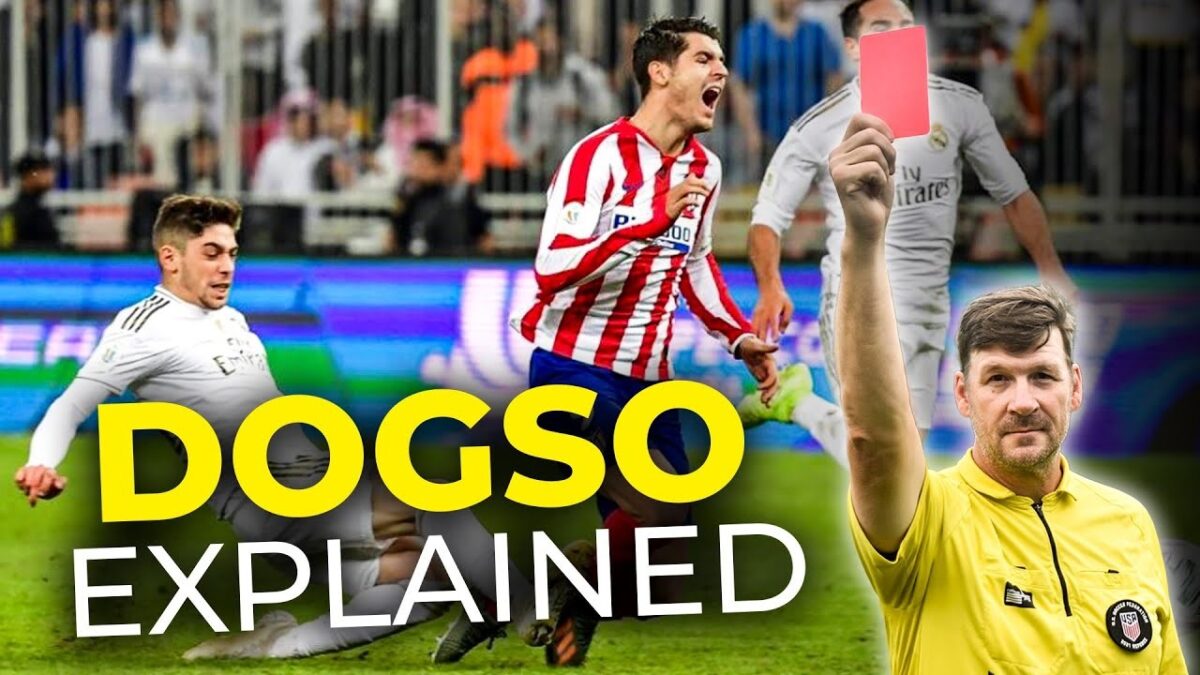
DOGSO is one of the most important terms in football officiating. It stands for Denying an Obvious Goal-Scoring Opportunity. If you think that something like this will happen, you can 1xBet login Sri Lanka register and bet on it.
This describes a situation in which a player illegally prevents an opponent from having a clear chance to score. Under the Laws of the Game issued by the International Football Association Board (IFAB), DOGSO usually results in a red card because it unfairly denies the attacking team a likely goal.
Referees do not automatically call DOGSO every time a foul occurs near the goal. Instead, they evaluate several key factors to determine whether the opportunity was truly obvious. The 4 most important ones are:
- the distance between the attacker and the goal;
- the general direction of play;
- the likelihood that the attacker could keep or gain control of the ball;
- and the position and number of defenders who could still challenge for the ball.
These considerations are often remembered as the 4 Ds. Those 4 principles are Distance to goal, Direction of play, Defenders, and Distance to the ball. And if you register and login into 1xBet Sri Lanka, you can also bet on such occurrences too.
For example, imagine an attacker racing through on goal with only the goalkeeper to beat. If a defender deliberately trips the attacker from behind before a shot can be taken, the referee will likely judge that the defender has denied an obvious goal-scoring opportunity. In most cases, 2 things will happen: the defender will be sent off and the attacking team will receive a free kick or penalty, depending on where the foul occurred.
A few additional considerations
However, the rules include an important exception. If the foul takes place inside the defender’s own penalty area, and the defender was making a genuine attempt to play or challenge for the ball. In this case other 2 things happen: the referee usually awards a penalty kick and shows only a yellow card instead of a red card.
This change was introduced to avoid the so-called “triple punishment” of the following 3 elements: a penalty, a red card and suspension. On the other hand, a red card will still be required if the defender does one of the following 4 things: hold, push, pull or deliberately handle the ball to stop the opportunity.
Finally, it can be said that DOGSO decisions are among the most discussed moments in football because they can dramatically influence the outcome of a match. Referees often rely on the Video Assistant Referee (VAR) to review incidents and ensure the correct decision is made.