

By Jehan Perera –
Jehan Perera
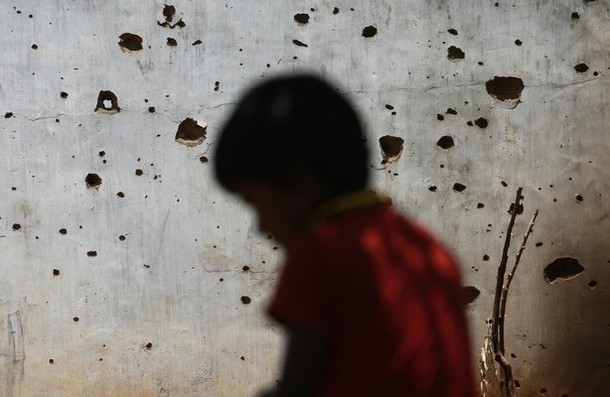
Time, it is said, is the great healer. But there are some wounds that will not heal with time. They need specific and focused treatment. The dates May 18 and 19, the two final days of Sri Lanka’s three decade long war, are less in the consciousness of the people than before. But the continuation of the untreated and unhealed wounds of the war continues to be seen in the many groups of people who gather to remember their loved ones on these days. In Colombo, a group of victim families and. committed activists from different communities gathered at Wellawatte beach and lit lamps.. These gatherings are also a political statement that the wounds of the war remain untreated and unhealed.
One of the key features of May 18 and 19 has been the polarized positions taken by Tamil and Sinhalese groups. Tamil groups mourn those who perished in the war, especially in the last battles, on May 18 while many Sinhalese commemorate the military victory on May 19. Since 2015 there has been a diminishing of tensions due to the more nuanced way successive governments have marked the end of the war. This was especially the case during the governments led by Ranil Wickremesinghe and is now also true of the government headed by President Anura Kumara Dissanayake.
The present government has done much to mitigate the sense of polarization between the state and the ethnic and religious minorities. The government’s insistence that it will treat all citizens equally and not support extremism in any form is appreciated by minorities who have often felt marginalized and viewed with suspicion in the past. But the government cannot afford to rest on its laurels merely because it is better than previous governments. It needs to take specific and focused action to heal the wounds of the past. Symbolic gestures and inclusive rhetoric are important, but they are not enough in themselves to deal with the consequences of a protracted ethnic conflict.
The unresolved issues are well known. They surface repeatedly in the resolutions on Sri Lanka passed at the UN Human Rights Council in Geneva. In 2015 Sri Lanka co-sponsored UN Human Rights Council Resolution 30/1 which called for reconciliation, accountability and constitutional reform including power sharing arrangements. This resolution and the ones that preceded it emerged from the demands of war affected communities and found resonance within the international human rights community. They include the issues of missing persons, disappeared persons, political prisoners, military occupation of civilian lands and accountability for alleged wartime abuses..
Most Capable
Under the NPP government, Tamil people have felt they can attend events commemorating those who died in the war in large numbers.. This is evidence that the country is changing in the direction of reconciliation. State institutions too have cooperated in this process in creating a conducive climate for memorialisation.. But despite the passage of 17 years since the end of the war, the emblematic issues remain unresolved although the government appears sincere in its desire to resolve them. Indeed, the government has deployed some of its most capable leaders to deal with these challenges.
President Dissanayake himself has taken on the task of reshaping public consciousness through speeches that emphasize unity rather than division. Minister of Justice and National Integration Harshana Nanayakkara has responsibility for institutions dealing with missing persons, reparations and reconciliation. Leader of the House Bimal Rathnayake has been entrusted with accelerating economic development in the north. Economic development is essential. The north and east require investment, jobs, infrastructure and opportunities for young people. Poverty and unemployment affect all communities and development can reduce feelings of exclusion. But economic development alone cannot resolve the deeper roots of ethnic conflict.
Protracted ethnic conflicts are rarely caused only by economic grievances. They are also about identity, dignity, historical memory and political power. This is where many governments in Sri Lanka have failed. They have believed that rapid development, highways, buildings and investment would be sufficient to overcome decades of mistrust. But communities that feel politically marginalized do not simply abandon their aspirations because roads are built or markets expand. Human beings seek recognition of who they are and a meaningful share in the decisions that govern their lives.. Language is particularly important. In Tamil majority districts, the government secretariats continue to be staffed by those who are only Sinhala-speaking. This is a constant reminder to Tamil speakers that they are not equal to Sinhalese in their dealings with the state.
Academic research on divided societies has shown that constitutional arrangements can either exacerbate conflict or reduce it. Countries such as Belgium and Northern Ireland provide examples where systems of power sharing have enabled communities with different identities to coexist peacefully within a common state. In Northern Ireland, peace became sustainable only when political institutions ensured that both communities had a guaranteed role in governance rather than leaving one side permanently subordinate to the other. Sri Lanka’s own efforts at political reform have focused largely on territorial power sharing through the 13th Amendment to the Constitution and the provincial council system.
More Belonging
The fact that the government leadership is now saying that provincial council elections will be held this year is therefore a positive development. It would restore democratic participation at the provincial level after years of delay and neglect. However, reforms need to go further. Provincial councils have remained weak institutions with inadequate powers and finances. Successive governments have hesitated to fully implement the provisions of the 13th Amendment, especially regarding land and police powers. These laws, including the language law, need to be fully implemented. The reluctance or incapacity of successive governments to do so, including the present one, has reinforced minority perceptions that promises of devolution are made but never sincerely implemented.
A new national narrative for Sri Lanka must therefore go beyond non racism and economic development. True reconciliation requires accepting diversity not as a threat but as the foundation of a united and peaceful country. Power sharing should not be viewed as a concession extracted under pressure. It should be understood as a democratic necessity in a plural society. The purpose of power sharing and giving equal rights to Tamil language speakers is not division but inclusion. It gives all communities a stake in the state and reduces the fear that political power will permanently remain in the hands of one community alone.
Sri Lanka has had leaders in the past who understood this reality. Prime Minister S W R D Bandaranaike attempted to reach a political settlement through the Bandaranaike Chelvanayakam Pact of 1957.. Today the political context offers another opportunity. The nationalist forces that dominated politics for many years have lost credibility due to their association with corruption, economic collapse and political mismanagement.. But where they did the right thing they are remembered positively as the late State Minister of Plantation Industries and Mahaweli Development in Sri Lanka Lohan Ratwatte still is in Batticaloa for having heeded the Tamil cattle farmers and appointing. a Tamil officer to deal with their problems.. The government has a two thirds majority in Parliament and enjoys significant public goodwill. This creates space for courageous leadership.
The time has therefore come for the government, opposition and minority political parties to put aside their bitter political feuds and engage with each other sincerely to arrive at a consensual political solution embedded within the Constitution. Sri Lanka has tried military victory, centralized rule and development centred approaches. None by themselves have resolved the ethnic conflict. The lesson of the past is that non racism and economic development are necessary, but they are not sufficient. Lasting peace in Sri Lanka requires power sharing, trust building and a political settlement that gives every community a sense of belonging to. a country they all feel is home.
Nathan / May 19, 2026
… The government’s insistence that it will treat all citizens equally and not support extremism.
Does that assure that whoever who forms the government would fall in line. Include Tamils in ministries of responsibility for a start.
/
SJ / May 19, 2026
“Include Tamils in ministries of responsibility for a start.”
Are all Tamil ministers in ministries of less responsibility?
The one for fisheries is screwing up his job.
/
Roxie de Abrew / May 19, 2026
Dear Jehan,
You do dream of good things, but unfortunately, they never happen.
Till the Sinhala Buddhist superiority prevails, ours will be a divided nation, lost in the wilderness, eternally searching for its soul.
The current rulers have not spoken even one word about ethnic reconciliation since their arrival.
Overall, they have no clue about governance.
/
leelagemalli / May 22, 2026
Roxie de Abrew,
Equal treatment for all communities—Sinhala, Tamil, and others—must remain the foundation of any society that aims for lasting peace.
https://www.youtube.com/watch?v=SjImYfGv3S0
At the same time, concerns are sometimes raised that a small number of individuals and actors across different communities, including in the North and East and among certain public or religious figures, may contribute to inflammatory rhetoric or narratives that risk deepening mistrust. Whether or not such claims are accurate in each case, the key issue remains the same: public speech and influence must be exercised responsibly, especially in a context where tensions can easily be reignited.
Peace cannot survive where provocative messaging, fear-driven narratives, or divisive language is allowed to spread unchecked. Sri Lanka’s long and painful history makes it clear that escalation between communities must never be allowed to take root again. Protecting free expression is essential, but it must be balanced with firm limits against incitement and hate speech—so that no individual or group, regardless of background or position, can push society back toward conflict.
/
Ajith / May 19, 2026
“Lasting peace in Sri Lanka requires power sharing, trust building and a political settlement that gives every community a sense of belonging to. a country they all feel is home.”
This is the message Tamil people wanted for past 78 years. However, politics of Sri Lanka by the high class Sinhalese intentionally brought Buddhism into politics to oppress Tamil speaking people of this nation. They not only oppress Tamil speaking people but misused the power to rob this nation in order to build their family kingdom which resulted in bankruptcy, corruption, dismantle of rule of law, riots, wars etc.
The development of the country can be build up only by the people of the land, not from elsewhere. Similarly, North East of Sri Lanka was historically occupied by Tamil speaking people and they should take part fully in the development of the nation. Similarly Sinhalese speaking people should develop their land equally. Even Tamil speaking people do not want the bloodshed politics or revenge taking politics. They need a permanent solution which cannot be changed by other than Tamil speaking People. That is sharing the power.
/
CChampa / May 19, 2026
The terrorism monument in Mullavaikkal (original Sinhala name is Mul Vakkada) beach is an “unlawful glorification” of brutal LTTE terrorism. Who allowed LTTE sympathizers to erect it and why is it still there?
A few months ago, based on a complaint by the Department of Coastal Conservations (DCC), the Police arrested several Buddhist monks and laymen for placing a Buddha statue in the temple premises located near the beach. LTTE terrorist sympathizers have erected a terrorism monument “right on the beach” in Mullavaikkal. Did they receive permission from the DCC and the Police? Why didn’t the Police remove the illegal, public provocative, terrorist glorification monument located directly on the beach and arrest the perpetrators?
/
Rohan25 / May 20, 2026
Stop lying and posting rubbish. The Tamil place name Mullivaikkal (முள்ளிவாய்க்கால்) translates directly to “a channel of thorns” or “a canal lined with thorny bushes”.It combines two Tamil words: Mulli (முள்ளி), A specific type of thorny plant or shrub.Vaikkal (வாய்க்கால்): A water channel, canal, or trench. As for the rest of your comment, it is full of racist rubbish.
/
Rohan25 / May 20, 2026
The harassment and suppression of Tamil remembrance events by the Sri Lankan state and Sinhala-Buddhist nationalists stem from deep-seated ideological divisions and historical denial. : Tamils mark 18 May to mourn the 2009 Mullivaikkal casualties, while the Sinhalese majority celebrates 19 May as a military victory over terrorism, viewing Tamil grief as LTTE glorification.
State-Sponsored Denial: The government uses national security laws, police forces, and military crackdowns to block memorials to systematically deny state-committed war crimes.
/
SJ / May 20, 2026
Did VP ever allow the remembrance of fallen heroes of rival movements?
His followers continue with that practice to this day.
*
While denouncing governments for politically motivate misdeeds, I wonder if there is no case for some honest self searching by those who speak for the victims?
/
Rohan25 / May 20, 2026
Nationalist Extremism: Sinhala-Buddhist groups actively disrupt peaceful vigils using racist intimidation and terrorist labeling to assert cultural and political dominance.International Consensus
Global bodies like the UN and Human Rights Watch state that denying Tamils the right to dignified mourning fundamentally prevents national reconciliation.
/
CChampa / May 20, 2026
Oii, when Mullavaikkal called “Mul Vakkada”, there were no Tamils there. There were only Sinhalese. All original Sinhalese place names in the North were Tamilized by adding “ns”, “ms” or “ls” at the end of the Sinhala word. The ancient names for Sri Lanka such as Salai, Sihala, Sielediba, Sailan, Saylan, Silan, Seilan, Ceilão, Zeylan, Ceylon all derived from the word “Sinhala”.
As I pointed out many times before, your Tamil history in Sri Lanka is only 115 years old. You came into existence in Sri Lanka only through the 1911 Ceylonese Census and Statistics. Why 1911? It was the first time a Tamil was appointed as the Superintendent of Census by the British colonial government. He (Ponnambalam Arunachalam: 1853 – 1924) invented the name “Ceylon Tamils” for a group of Malabars living in Jaffna and incorporated them as a new ethnic group in the 1911 Census and Statistics of Ceylonese. First, you learn your own history before responding to my comments.
/
SJ / May 20, 2026
I wonder what a paranoid bigot will look like!
/
SJ / May 20, 2026
Frankly I pity anyone who tries to reason with this character.
I meant CC
/
Jit / May 20, 2026
Oii, you learn to call people with some decency. Contributors here are not your blinking concierge!
/
CChampa / May 21, 2026
Oii Jit
Since when saying “Hello” in Portuguese become ìndecent?
/
Jit / May 22, 2026
Oii is considered a derogatory term in Sri Lanka particularly among the Sinhala Buddhists. Since when did you say good bye to your die-hard Sinhala Buddhist extremism, ditched your love for Sinhala everything and embraced your arch rivalry, invasive Portuguese culture? Or Thalagoya – kabaragoya theory at its best??
/
old codger / May 22, 2026
Jit,
“Oi” is the equivalent of “hello” in Brazilian Portuguese. In Portugal, it’s “Ola”.
Maybe Champa is a Brazilian ?
/
Jit / May 22, 2026
To be very frank, I am not too sure of her ethnicity OC 🤣
/
leelagemalli / May 22, 2026
oc,
–
Hello words (greetings):
Hola (Spanish)
Olá (Portuguese)
Hallo (German)
Ciao (Italian)
Ayubowan (Sinhala)
–
“May be Champa is a Brazilian”.
.
Would Brazilians agree with Champa or similar Sinhala radicals?
–
Champa does not appear to care about the facts about Buddhism; she only fights for the purpose of doing so.
Remember when the Rajapakshes accomplished this and were driven away to an escaping ship in July 2022?
A large proportion of Sri Lankans, in general, do not care about the facts and instead strive to enjoy the moment.
–
Best examples include R25, TT girl, Nutless boy, Ajith, and a few others.Deepthi, also known as TT girl, is one of a kind, as seen by her eccentricities.
–
Building consensus on common national issues remains a dead end in such a country, which is riddled with criminals of many kinds.
/
old codger / May 22, 2026
LM,
According to Nutless, she is Professor Deepthi Silva, who actually exists:
https://medicine.kln.ac.lk/index.php/prof-deepthi-c-de-silva
Lester also pretends to be Rev. P.J.Fernando of Birmingham, who also exists.
What a nut!
/
leelagemalli / May 22, 2026
oc,
Thank you. But, I can’t believe our hairy TT girl was ever a professor. According to what she writes, she is incapable of performing even the most basic office tasks.
Her general knowledge is significantly below the level of all degree holders. Assume the woman has been after me, pairing me with Rohan25, the racist. We are diametrically opposed characters. I’ve never had a racial performance in my entire life. I haven’t been getting along with any racists in or out of Sri Lanka.
/
SJ / May 22, 2026
Does a Barr Kumarakulasinghe calling himself Lester exist?
/
leelagemalli / May 22, 2026
OC,
Sri Lanka is going to face its next fall, similar to the days preceding the fall of Gotabaya’s government.
https://www.youtube.com/watch?v=ga0hqvpDfCw
/
LankaScot / May 23, 2026
Hello OC,
Professor of Genetics Aberdeen University? This is not the same Deepthi, however I will get confirmation from my contacts in Aberdeen.
Best regards
/
leelagemalli / May 23, 2026
oc /Lankascot/Chiv/NV
.
I just so happened to see this documentary tonight.
Because Deepthi’s upbringing can be similar to that of the African woman in the documentary below, could this be her destiny to act in the same toxic manner as she used to treat all of us in CT-forum by insulting us repeatedly?
–
https://www.youtube.com/watch?v=0DLrgqHuoFw
–
Accoridng to the psychologists, since such events, raped victims are generally thought to be extreamly condescending and narcissistic
/
old codger / May 23, 2026
LS,
Prof. Deepthi Silva is as real as Rev PJ Fernando of Birmingham. Both are probably unaware of the scurrilous activity on CT under their names. Maybe they would be interested?
/
Rohan25 / May 23, 2026
“My stance is rooted in human rights and equality. Advocating for Tamil rights does not make me anti-Sinhalese; it simply makes me pro-justice. If you view the demand for equality as racist, that is a reflection of your own prejudice.
/
CChampa / May 22, 2026
Oii! old codger, the impersonator
In Portuguese “Oi!” is equal to “Hello” in English which is a common greeting.
/
Lester / May 23, 2026
Does a senile Vellalar snake calling himself SJ exist?
https://www.lankaweb.com/news/items/2021/11/06/low-caste-malabaris-pretending-to-be-high-caste-jaffna-tamils/
/
Nutkeeper / May 23, 2026
How many @s does Lester have?
Sadly, only one
Which itches all day and makes him scratch
Which gives him an orgasm while he is buying stocks
A substitute for real life it isn’t
What a sad creature is LesNut
/
leelagemalli / May 23, 2026
If he doesn’t seem to know how many nuts he has, how can he know about @?
His mirror counterpart, or Siamese twin (TT girl), is now attempting to instruct me on wine. In fact, in our foundational classes, we even learned about the production of wines and the operation of wine analytics. Since the TT girl only seems to be thinking about cursing other people, we are forced to give in.
/
Rohan25 / May 20, 2026
Archaeological, epigraphic, and literary evidence support the presence of Tamil speakers in northern and eastern Sri Lanka since ancient times. While narratives from certain political and religious groups often claim Tamils are recent arrivals, historical data documents a Tamil presence alongside the Sinhalese since at least the pre-Christian era. Tamil-Brahmi scripts, dating from the 3rd to 2nd century BCE, have been discovered at ancient sites like Anuradhapura, Poonakari, and within the Jaffna peninsula, such as the Anaikottai seal. Regional Habitation: Megalithic burial sites bearing similarities to those in South India have been excavated along the eastern coast (e.g., Kathiraveli) and northern areas, indicating early settlements.Early Mentions: Pre-Christian inscriptions explicitly reference “Damedas” (the ancient Prakrit word for Tamils) and record Tamil merchants, sailors, and householders living across the island. Keep on lying
/
SJ / May 20, 2026
“The term Damedas (also spelled Damelas) refers to the ancient Indo-Aryan Prakrit term for Tamil people. Mentioned in early Sri Lankan Brahmi inscriptions and chronicles like the Mahavamsa dating back to as early as the 2nd century BCE, these early Damedas were primarily merchants, sailors, and traders involved in Indian Ocean maritime networks”
Where do householders come in?
/
CChampa / May 21, 2026
Rohan25
Really? What is the “archaeological, epigraphic, and literary evidence that supports the presence of Tamil speakers in northern and eastern Sri Lanka since ancient times?” I have been asking this question on this forum for nearly 11 years and never got a reply.
What “Tamil-Brahmi” scripts?
Brahmi (the original name was Magadhi) is NOT a language. It is a CODE. It can be translated into any language. The British decoded all Brahmi scripts, even the ones in India, with the help of the Sinhalese Buddhist monks, not Indians or Tamils. Because the decoding was in Sinhala.
/
Rohan25 / May 20, 2026
During the early Anuradhapura period (circa 5th century BCE to 10th century CE), Tamil mercenaries, traders, and regional rulers interacted with Sinhalese kingdoms. During this time, Tamil villages were established and sometimes assimilated into the broader society. The Jaffna Kingdom: By the early 13th century, following invasions and the fragmentation of earlier kingdoms, the Jaffna Kingdom arose as a distinct, organised Tamil political power in the north.The East: The eastern province had significant Tamil and Tamil-speaking communities by the 11th and 12th centuries, which were later politically organised under local Vannimai chiefs and feudal structures.
/
SJ / May 20, 2026
Channel of thorns? Rather funny.
The canal need not be lined with a specific plant. Not even abundance, mere presence of a plant in an area can be cause to name a waterway or a path after it.
There is a place called முள்ளியவளை (muLLiyavaLai) in the region. Not thorny though these days.
Etymology can be tricky as names need not always be rational.
Frankly I pity anyone who tries to reason with this character.
/
LankaScot / May 22, 2026
Hello SJ,
There is a wonderful Scottish Historical Researcher who goes by the Pen Name of “The Mumble”. We have had many conversations about his Methodology regarding how Words/Names change over time. He uses the term “Chisper” (an abbreviation of “Chinese Whisper”). He uses this to support his Historical Narratives. I reckon that he can turn any word into a form that suits his Narrative. He does have a comprehensive knowledge of Ancient History sprinkled with a bit of Mythology/Legend. Here is a Link to one of his papers –
https://www.academia.edu/108846391/CHISPOLOGICAL_SOLUTIONS_The_Exodus_Timeline_from_Joseph_to_Carthage
Remind you of anyone?
Best regards
/
old codger / May 22, 2026
LS,
I don’t know who the person you are referring to is, but a another escaped by the skin of his teeth yesterday. I am amazed and amused by his sheer brazen parochiality.
/
SJ / May 22, 2026
LS
It reminds me of a cut and paste bigot who is probably less skilled.
/
old codger / May 23, 2026
SJ,
There is plain “Waikkal” near Negombo, of course nowadays known as “Waikkalaya”. Is that a dry canal?
/
Ajith / May 20, 2026
“The terrorism monument in Mullavaikkal (original Sinhala name is Mul Vakkada) beach is an “unlawful glorification” of brutal LTTE terrorism.”
What happened to those Buddhist Sinhalese who lived “Mul Vakkada” until 1983? Do you know What is the language Lord Buddha of Sri Lanka speak? Is it Sinhala?
Enough is enough for your fabricated Buddhism to beg the people in poverty?Don’t suffocate the Sinhalese with your lies any more?
/
SJ / May 20, 2026
“What is the language Lord Buddha of Sri Lanka speak?”
I have not come across such a person.
If he was Sri Lankan, it is likely that he spoke some form of proto Sinhala
/
Rohan25 / May 21, 2026
That is not entirely accurate. Linguistic and archaeological evidence reveal that ancient Sri Lanka was a multilingual region. Both Proto-Sinhala and Proto-Tamil/Old Tamil existed alongside one another on the island long before the modern era. The linguistic history of Sri Lanka involved both language families developing in the region. Proto-Sinhala: Developed from Indo-Aryan Prakrits brought to the island by migrants from northern and eastern India (traditionally dated to the 5th century BCE). Proto-Tamil / Old Tamil: Belongs to the Dravidian language family. Archaeological evidence—such as pottery sherds with early Tamil-Brahmi scripts—shows that Tamil speakers migrated from the Indian subcontinent and inhabited Sri Lanka as early as the 2nd century BCE. Because both language groups have been on the island for over two millennia, ancient Sri Lankans historically spoke both languages, depending on the region and the era
/
CChampa / May 21, 2026
Ajit
Yes. Lord Buddha spoke in Sinhala.
I found one line of Lord Buddha’s preaching in a book written by a British. It means that Lord Buddha’s preachings were recorded on palm leaf books in its original form by Sinhalese Buddhist monks.
British settler colonists were fascinated by our duly recorded Sinhalese history. In 1845, after translating our palm leaf books, the British mentioned that the “ literature of Ceylon is the strongest proof of their advanced early civilization.” When the British finally left Ceylon, they took 100s of ships full of our treasure; books, gems, gold, silver, pearls, expensive fabric, minerals, etc., etc., etc. Even the ships belonged to the Sinhalese.
/
leelagemalli / May 22, 2026
Madam Champa,
We should stick to the historical facts when discussing why the Mahavamsa was translated first into German, then English, and later into Sinhala.
*
The Mahavamsa was not originally written in Sinhala but in Pali, the classical literary and religious language of Theravāda Buddhism. In ancient Sri Lanka, Pali was used for major Buddhist chronicles and scholarly works in the same way Latin was used in medieval Europe. If Gautama Buddha had spoken Sinhala, historians and archaeologists would expect to find early inscriptions, manuscripts, or ruins from his period in Sinhala as well; however, the earliest Buddhist inscriptions and texts discovered so far are in Pali, Prakrits, or Sanskrit-related languages, not Sinhala. Sinhala-speaking Buddhist monks preserved and transmitted these traditions for centuries, but the chronicle itself was composed in Pali so that it could be read and respected across the wider Buddhist world.
*
The first major modern scholarly translations emerged in German because 19th-century German scholars were among the leading experts in philology, Buddhist studies, and ancient Indian languages. Scholars such as Wilhelm Geiger produced critical editions and translations that later influenced English versions. This sequence of translations reflected the academic landscape of Europe at the time, not a lack of connection between Sinhala culture and Buddhist history.
/
SJ / May 22, 2026
She is plain bonkers.
Pleaseleave her alone.
/
leelagemalli / May 23, 2026
However, she is not as dangerous as Deepthi (TT), Mr. SJ.
–
The issue with TT is pathological.
–
Just observe how TT denigrates each and every one of us (OC, NV, and all others) in this forum.
/
CChampa / May 23, 2026
leelagemalli
What historical facts?
“Pali” is NOT a language. It is one of the three lyric poetries (reciting verses) used in the Sinhala language. The other two are “Sanskrit” and “Elu”.
Take the Pali verse “ekang samayang bhagava” (ඒකං සමයං භගවා). where it uses the Sinhala subvowal “binduwa” which is pronounced as “ng”.
“Ekang samayang” in Sinhala is “Eka samayaka” “එක සමයක” which was then converted to a lyric poetry by adding “ng” to recite as “ekaNG samayaNG Bhagava” “එක් සමයෙක්හි භාග්යවතුන් වහන්සේ” (At one time, the Blessed One).
As you see, the difference between Sinhala and Pali is only the latter’s verse form. Otherwise, they are the same language.
The names Pali and Sankrit were “invented” by the British to make them look like different languages.
The original name of Pali is “Gatha” and the original name of Sanskrit is “Sloka”.
The very first “Gatha” was recited by King Rawana (who was renamed as God Sumana Saman, who is believed to be the next Buddha) when Lord Buddha visited his abode in the Kingdom of Anavatapta, which was in SinhalaDvipa. He has recited “Gatha” to Lord Buddha while playing his musical instrument “Veena”. Wilhelm Geiger has intentionally omitted this section and many other sections from Mahavamsa.
/
Jit / May 20, 2026
What is wrong with any monument if people want to commemorate the very reasons behind those monuments? The JVP celebrates April and November incidents, do you want to stop those too? Why Tamil people cannot worship their dead ones if they want to? BTW do you know thousands of civilians were carpet bombed in the Nandikadal operation??
/
CChampa / May 22, 2026
Oi! Jit
What about all the Sinhalese who were killed by the bloodthirsty LTTE terrorists for 39 years? Shouldn’t they erect monuments in temples, intersections, bus stations, train stations, government office buildings, business centres, airports, markets, city halls, shopping malls, etc., to commemorate their dead ones too? This is the list of LTTE massacres that killed thousands of Sinhalese.
1. Kent farm massacre
2. Dollar farm massacre
3. Kokilai massacre
4. Yal-Devi train massacre
5. Jaya Sri Maha Bodhi massacre
6.Air Lanka flight massacre
7. Havelock Road massacre
8. Aluth Oya (Habarana) bus massacre
9. Colombo bus station massacre
10. Aranthalawa massacre
11. Peliyagodalla massacre
12. Armour Street bomb massacre
13. Sinking of Navy Ship Sagarawardana off-coast Mannar
14. Thotalanga massacre
15. Kallarawa massacre
16. Eastern Province massacre (1995)
17. Kolonnawa and Orugodawatte masscare
18. Central Bank massacre
19. Dehiwela train massacre (1996)
20. Mullativu camp massacre
21. World Trade Centre massacre
22. Dalada Maligawa massacre
23. Gonagala massacre
24. Lionair flight massacre
25. Town Hall massacre
26. Ratmalana massacre
27. Katunayaka Airport massacre
28. Kebithigollawa bus massacre
29. Digampathana bus massacre
30. Gomarankadawala massacre
31. Nugegoda shopping mall massacre
32. Okkampitiya bus massacre
33. Dambulla bus massacre
34. Fort Railway Station massacre
35. Weliweriya massacre
36. Piliyandala bus massacre
37. Dehiwela train massacre (2008)
38. Akuressa massacre
39. Colombo suicide air raid (2009 – last one)
/
old codger / May 22, 2026
Champa,
What is the total killed in all those “massacres” you claim?
/
SJ / May 22, 2026
oc
She is a sick woman. Be kind, and ignore her.
/
CChampa / May 23, 2026
Oi! old codger the impersonator
The answer is, over 70,000 were killed between 1983 and February 2009.
Your ”original” asked the same question in 2021 and this was my reply.
.
1. A report published by the Human Rights Watch (HRW) titled “Funding the War” published in March 2006, under the subtitle “Background”, stated the following:-
“Between 1983 and 2002, the Sri Lankan government and the Liberation Tigers of Tamil Eelam (LTTE, or Tamil Tigers) were engaged in a brutal war for control of Sri Lanka’s North and East that claimed over 60,000 lives and had huge economic costs.”
.
2. On November 8, 2006, Simon Gardiner of “Reuters” reported that “Well over 65,000 people have been KILLED in the conflict since 1983”.
.
3. On 3 February 2009, “The Guardian” reported that “The rebels have fought since 1983 for a separate homeland. More than 70,000 people have been KILLED since 1983”.
.
As obvious, the number of people killed by the LTTE terrorists between 1970 and1983 have been deliberately omitted. How many more people have been killed in the missing decade? Clearly, the estimated number of people killed by the LTTE for 3 decades should be in the range of 150,000-200,000.
/
old codger / May 23, 2026
Ccchamps,
An Atamastanadhipathi who lives nearby informed me that of those 70,000, there were only 3 humans, the rest were not following the Threefold Path, and had no QR codes.
/
Jit / May 23, 2026
So build statues for them all man! Who cares!!! And who stopped whom doing that?
/
Anpu / May 23, 2026
Send the names with evidence to Sri Lanka Casualties – https://lkdd.itjpsl.com/
/
CChampa / May 22, 2026
The illegal terrorist monument on the Mullavaikkal beach should be demolished!!!!
/
Jit / May 23, 2026
It is not on any beach man! It is on the land where thousands of civilians were vaporized into thin air!
/
Naman / May 19, 2026
” It needs to take specific and focused action to heal the wounds of the past.”
It is not one specific action that needs to be undertaken but MULTIPLE actions are needed asap.
1] Drastic reduction in the number of battalions who are occupying huge portions of lands in the North and Eastern Provinces of SL.
2] Reparations for the loss/damages to the minorities houses and businesses due to STATE facilitated violences that happened PERIODICALLY.
3] Any developments in the Tamil Speaking areas has to be subjected to the ENVIRONMENTAL assessments.
4] Water in sufficient quantities for the N&E should be assured. De-salinisation projects will be useful.
5] Bridge across Thalai -mannar and Rameshwaram will be beneficial to both the countries.
6] A new CONSTITUTION for SL in 2026 or 2027 will be welcomed by the minorities.
7] Laws should be enacted to prevent hatreds between the different ethnic and Religious groups.
8] we need to speed up the criminal cases over at least the last three decades .JUSTICE need to be meted out for the crooks and murderers.
9] The Palaly airport though it is called an INTERNATIONAL airport it doesn’t have all the facilities. Expansion is urgently needed.
10] Holding of the Provincial Elections needs to be on hold until a new CONSTITUTION had been INTRODUCED. Politicians, I know are very keen on it so that they can further DWINDLE the national coffers.
/
nimal fernando / May 19, 2026
Time heals all wounds and wounds all heels.
/
Ajith / May 20, 2026
“Time heals all wounds and wounds all heels.”
It took for you to say this phrase for 78 years. So, it will take another 78 years for justice.
/
nimal fernando / May 22, 2026
No, it won’t take that long from the day you come to the realization that there are many others who live in Lanka: just not the Tamils. :))
/
Rohan25 / May 20, 2026
Sri Lanka’s mid-May commemorations highlight unresolved ethnic fractures. On 18 May, Tamils observe Mullivaikkal Remembrance Day to mourn tens of thousands of civilian casualties. The very next day, on 19 May, the state hosts Remembrance Day to celebrate the military defeat of the LTTE, reflecting deeply conflicting narratives. The Tamil Perspective (18 May): Focuses on the mass atrocities, war crimes and forced disappearances of civilians in the final stages of the 2009 civil war. Tamils argue that celebrating a state military victory immediately following community mourning erases their suffering. The State Perspective (19 May): Focuses on preserving national sovereignty and eradicating terrorism, primarily honouring fallen state soldiers. While recent administrations have toned down triumphant military parades, the focus remains on state security. This continuous juxtaposition—and the state’s ongoing suppression of Tamil mourning, with many Sinhalese civilians harrasing, booing and insulting Tamils mourning their dead in Colombo and in some southern cities and the occupying Sinhalese armed forces and police harrasing mourning Tamil civilians in the north and east —illustrates a fundamental political debate regarding Tamil identity, recognition, and justice in Sri Lanka.
/
Rohan25 / May 20, 2026
For years, the Sri Lankan state heavily militarised the North-East, restricting or outright banning public Tamil commemorations while subjecting participants to surveillance and harassment. Human rights organisations, including Amnesty International, argue that denying the fundamental right to grieve signals a profound absence of inclusive reconciliation. Tamil nationalists argue that the state’s behaviour demonstrates a refusal to recognise Tamils as a distinct people with a right to collective memory. This fundamental lack of political devolution, coupled with the state’s emphasis on a unitary, majoritarian identity, historically fueled—and continues to sustain—the aspiration for Tamil Eelam (a separate state) as the only perceived guarantee of security and self-determination. Due to domestic blockages regarding justice, the debate has internationalised. For instance, countries with large diasporas, such as Canada, have formally recognized 18 May as Tamil Genocide Remembrance Day, adding external diplomatic validation to the Tamil perspective
/
Rohan25 / May 20, 2026
These two links offer ample proof of my assertion: the entire Sinhalese state structure—including the armed forces, government dignitaries, and the elite—operates under the dominance of a Sinhalese Buddhist President. While publicly championing reconciliation and disavowing racism, his administration has failed to honour these commitments. Compounding this hypocrisy, the state victoriously celebrates ‘War Heroes Day,’ a deeply controversial event that masks the deliberate mass slaughter of innocent Tamil civilians and the commission of war crimes during the conflict with the LTTE. Where are the government officials? Not even a low-level dignitary is permitted to participate in Tamil mourning without facing harassment and threats from the Sinhalese armed forces and police. Contrast this oppressive treatment with the state-sponsored jubilation of the Sinhalese majority.
https://www.dailymirror.lk/caption-story/17th-National-War-Heroes-Day-commemorated/110-340667.
https://srilankacampaign.org/mullivaikkal-2026-there-is-no-reform-without-justice/
/
The Truth / May 21, 2026
Hello 25, when are you going to be 26 ?
Does the Australian State (more civilized than South Asian cultures) work to Chinese needs? Does Tamil Nadu work to suit the Muslim needs ? Why should Sri Lanka be different ?
Rohan, as usual you write long stories about your race, going back to even the Apes in Africa. Your family having such a long history should be connected to Leela’s new rich family . Leela’s daughter comes with a big dowry ( 3 million dollars !). Your son has a long pedigree .
A very good match !
We can have that actor -chief Minister as special guest.
As the promoter I should be there.
You order the wine, not the cheap stuff that Leela gives OC !
/
leelagemalli / May 22, 2026
Madam TT (Deepthi),
“You order the wine — not the cheap stuff that L gives OC!”
For the record, I have never offered wine to anyone, nor would I. Even though I frequently travel back to my home country, that kind of accusation is entirely misplaced.
*
Your repeated personal attacks on other decent commenters in this forum reminded me of a real-life experience from years ago.
There was a woman in Colombo district, living near one of my batchmate’s homes, who constantly spoke negatively about everyone around her. She came from a very old-fashioned background and had spent time in the UK and several other countries, which seemed to make her believe she was somehow superior to everyone else. Yet despite her condescending attitude, her knowledge and understanding were not particularly impressive.
*
She criticised foreigners, Sri Lankan expats, neighbours; almost anyone she encountered. Her observations were always negative, dismissive, and filled with disparaging remarks. Sadly, she never seemed to realise how toxic and destructive that behaviour was.
Eventually, she became seriously ill, isolated herself from others, and was later found dead alone in her apartment. Even at her small funeral, some people quietly referred to it as “karmic retribution.” My grandmother would simply have said: “What comes around goes around.”
*
Your tone and behaviour here strongly remind me of that same culture of arrogance, condescension, and constant disparagement of others. Disagreement is one thing, but repeatedly belittling people only reflects poorly on the person doing it.
/
leelagemalli / May 22, 2026
Dear Readers,
writer’s article “Wounds That Time Alone Will Not Heal” reflects a reality that Sri Lanka still struggles with nearly seventeen years after the end of the civil war.
–
While many celebrated the military defeat of the LTTE in 2009 as a “war victory,” others argue that the outcome became possible largely because the LTTE had already lost many of its international networks, military strength, and political support. Over time, this military success was politically interpreted in different ways and used by various groups to strengthen their own narratives. Yet the deeper national challenge remains unresolved: Sri Lanka has still not found a sustainable political solution that satisfies minority Tamil communities, especially in the Northern and Eastern provinces. As Tamil political identity continues to gain confidence regionally, particularly with political developments in Tamil Nadu, pressures on Sri Lankan leadership are likely to increase, while many in the South continue to strongly oppose federalism or arrangements seen as close to it.
–
This situation requires careful and responsible leadership from all sides. Publicly inflammatory or disparaging remarks; whether from Sinhala nationalist groups or Tamil nationalist factions; only deepen mistrust and delay reconciliation.
/
The Truth / May 22, 2026
Dear Leela and 25,
From the many down thumbs I gather that many of your so called friends are not attending the happy family occasion !
What two faced scoundrels they are , just like their ancient ancestors out of Africa ! It is a shame these rascals ended up in the Subcontinent ! They have even given their names to the pristine waterways of the Subcontinent ,”thorny canal” ! True to their kind, thorny !
But we will celebrate the union of Leela family with 25 family !
Our Chief Guest ( actor/Governor) has promised a fight scene ( authentic movie like) and the two families will give a gala musical show like the Von Trapp family .
The wine is still an issue, even on this happy occasion our new rich Leela refuses to buy good Wine. He says this type of guests will not know the difference. He has put a cap of 4 dollars on a bottle !. The cheapest wine in the market, tasting like vinegar !
25, please go easy on the wine.
/
leelagemalli / May 22, 2026
“The wine is still an issue, even on this happy occasion our new rich Leela refuses to buy good Wine”
–
Wow, Moringa and Wade appear to have replaced “wine”. What a progress?What else can a foolish woman experience while being hounded by her customers on a daily basis?
–
Wine is not uncommon in this part of Europe, and if OC, MF, or anyone else is curious, I can point them toward some excellent wines from Milano, southern France, and southern Germany.I tend to swap wine gifts with neighbors and colleagues, and I was planning to take a few bottles along for friends in Colombo.
Even Ruchira Baba once mentioned Cognac in conversation (sitting in first class heading to UK)—though that may have been more about the moment than the drink itself.
/
The Truth / May 23, 2026
Leela my old friend ! You call yourself a decent commentor while accusing superior women of being street women !
Anyway I think 25 will not consider marrying into your lot, the Leela family. In the all important caste matter 25 is high while you guys are almost untouchable.
Also all your talk of giving 3 million dollars to Africa is all BS. You will not give even 10 dollars ! Just like Ranil and OC !
We all know you did not offer wine to OC. What wine for a ‘godaya” like you ! That is a civilized drink, especially the more expensive wines.
Beside, you will not even offer a cup of tea. You guys are too stingy , hoarding precious Euros to buy property in Western countries .
We can see all the BS that define your lot
/
Lester / May 23, 2026
Truth,
Are you sure he isn’t doing contract work for Google & Microsoft in rural Kandy? Don’t you know that 60’s Fortran is in great demand these days?
In the town where I was born
Lived a man who sailed to sea
And he told us of his life
In the land of submarines
So we sailed on to the sun
‘Til we found a sea of green
The NPP had to cut subsidies for the Veyangoda son-in-law’s used goods. Ranil needs his 10% from the IMF for the next jaunt.
/
Nutkeeper / May 23, 2026
How many @s does Liester have?
Sadly, only one
Which itches all day and makes him scratch
Which gives him an orgasm while buying stocks
A substitute for real life it isn’t
What a sad creature is Les of the Solo nut
/