


By Laksiri Fernando –
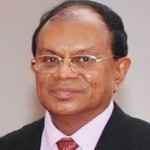
Dr. Laksiri Fernando
SWOT (strengths, weaknesses, opportunities and threats) analysis is normally used in business management, marketing, economic projects etc. However, it could also be used in political science or political analysis. Already, it is being used by some political parties and movements in developed countries to assess the strengths and weaknesses of their political campaigns. The following is what the AI Overview says about my request on ‘swot analysis in politics.’
“SWOT analysis in politics is a strategic planning tool used by parties and candidates to evaluate internal strengths and weaknesses against external opportunities and threats. It aids in crafting campaign messaging, mitigating vulnerabilities, and countering opposition, essentially identifying “friends, foes, and forces” to improve electoral or policy success.”
The above means, the NPP government or its constituent parties (JVP etc) can use this method in improving their contributions and successes. The same applies to the opposition parties and movements, including any minority movement fighting for their rights and/or self-determination. However, my objective is different.
While the above is an internal process, I am proposing an external and objective process in assessing the present government or any other government or any party/movement to the benefit of the country and people. The SWOT analysis could become an integral part of political science methodology.
At present there are about five or six books written on the SWOT analysis in general by the scholars like Alan Sarsby, Anja Bhm, Stefano Calicchio and jointly by Nadine Pahl and Anne Richter. There are many other books that refer to the SWOT methodology including in analysing political parties or political projects.
However, so far there is no single book directly on SWOT analysis and political assessments. Therefore, what I say here could be temporary and subject to review and change. I would therefore leave more profound use of the SWOT analysis to the younger generation. Also, as I am now living in Australia and also given my age (81), my knowledge of Sri Lanka’s empirical conditions might not be very strong.
This article is also limited to the internal, or the first part of the analysis, talking about strengths and weaknesses of the NPP government. The second part of the SWOT analysis on opportunities and threats will come soon.
What are the Strengths?
The NPP government has a two-thirds majority in Parliament. That is a clear strength. It was at the parliamentary elections in November 2024 that the NPP achieved this strength. They obtained nearly 62 percent of votes. Even at the presidential elections, this type of a victory could not be achieved in September 2024. Anura kumara Dissanayake (AKD) could obtain only 42 percent of votes at the first round. However, it is under his leadership that the NPP obtained the parliamentary victory within two months. Two thirds majority or 159 members in 225-member parliament means that the NPP government could even change the constitution or achieve any legislation without depending on others or the opposition. At the local government elections held in May 2025, the NPP was still leading although their voter base came down to 43 percent.
This government has a clear political legitimacy given the above victories. Apart from basing on the lower classes of society, the government is strongly supported by radical/progressive academics and professionals. The selection of Harini Amarasuriya, a former academic, as the Prime Minister shows this positive side. The composition of the Cabinet and appointments to various organizations and tasks also mainly being done from this intellectual sections of society. Some of them have undertaken these tasks with minimum benefits. This was not the case in past governments.
It is for the first time, that a coalition or an electoral movement led by the JVP (Peoples Liberation Front) won a parliamentary election and formed a government. Both the leadership and the membership of the JVP or even the NPP comes from lower classes of the society. The determination and commitment of the NPP government therefore is high and fairly reliable. There was somewhat a ‘comparable’ change in 1956, but that was horizontal, power going from urban to the rural. This is apart from its majoritarian character. However, the present change is more of vertical, a change within the class and social structure in the country.
A major strength of the government is also in its strong leadership. Whatever the weaknesses of Anura Kumara Dissanayake’s overconfident speeches, he is considered as a committed, faithful and people friendly leader. These qualities were absent among many of the past leaders and Presidents/Prime Ministers.
The present government has a strong anti-corruption drive appreciated by the international community and organizations (IMF, World Bank etc.) and democratic foreign governments. Although slow, the government has taken measures in implementing the anti-corruption policies through the re-establishment of the Financial Crimes Investigation Division. Arrests of dubious financial criminals, freezing of their assets, taking legal procedures and convictions are some measures. The government has given a clear message to the public servants regarding corruption. They have taken measures themselves to cut down excessive expenditure for their Ministers, Members of Parliament, including the abolition of pensions.
The JVP is basically a Marxist party. However, they have changed primarily their economic policies pragmatically to suit the national and international circumstances. This is a strength. However, their policies still appear as socialist or leftist. This is not a major problem as even Sri Lanka is called a Democratic Socialist Republic in the constitution. Their pragmatism is shown as they have agreed to the IMF reform programs diplomatically. Under the circumstances, the World Bank, the Asian Development Bank and European countries have opened their doors to help the country. This was clearly necessary under the circumstances of foreign exchange crisis and bankruptcy.
What are the Weaknesses?
The gap between theory and practice is the main weakness of the NPP government. This is common to many left leaning or Marxist governments. Their theories come from the ideology. Practice is what they face under capitalist circumstances, nationally and internationally. This gap is obvious when one compares what they promised, or written in their Manifesto, and what they actually do at present. Of course, this is common to many governments in Sri Lanka or elsewhere, and they can claim that what is written in the manifesto is about the broad vision and not limited to one term of office. This is partly correct.
Inexperience is the second most prominent weakness of the NPP government. This is apparent not only from the backbenchers, most of whom are holding elected positions in Parliament for the first time in life. When you consider the government as the Cabinet, majority of them are inexperience in the subjects they are responsible to handle. There are 23 Cabinet Ministers including the President and six of them are National List members. Most prominent inexperience of the government came to the light during the cyclone Ditwah disaster. The government was confused, except their boasted declarations, and took a long time to address the main issues. Even some of the non-governmental organizations (NGOs) were doing better in addressing the people’s grievances during the Ditwah disaster.
The government has not clearly explained how they would address the questions of minorities or primarily the Tamil question. During some visits to the North and the East, President Anura Kumara Dissanayake has expressed some flexibility. However, his adamant voice and gestures have not been for the liking of Tamil activists and intellectuals.
The government is also weak on the question of educational reforms. In the school system, they are following curriculums and textbooks introduced by the previous governments. That is not completely wrong. However, when they found an inappropriate website cited in the grade seven text book, they postponed the reforms without going ahead with a corrected textbook. This is a topic that should be discussed separately. What are their university reforms? They are also not taking any measures to protect children from inappropriate websites/social media.
Another most prominent weakness of the government is in international relations. There is no wrong in dealing with the IMF or the World Bank by the government although their rhetoric was different before coming to power. However, they or their officials have not bargained properly with the IMF and the World Bank on behalf of the ordinary people in the country. This was a weakness of many previous governments.
An organization like IMF makes proposals purely on the basis of economics. However, a government has to give equal prominence to people’s needs. To my knowledge, the IMF would not categorically oppose such a concern or approach. But it is not them, but the government who should bargain and ensure people’s needs. This has not happened even before, and it is particularly a weakness of the NPP government.
In respect of broader international relations, the NPP government is inexperience and weak. It is not only a weakness of the Minister, but the whole government and the traditions of foreign affairs. Sri Lanka should not be backward. It should establish very good relations with countries like India, China, America, Australia, Canada, all European countries etc. Sri Lanka should extremely be active and prominent within international organizations. All our embassies should be overhauled and the main tasks should be to promote our exports, country’s profile, and human resources.
There can be many other weaknesses but those can be overcome, given the commitments and strengths of the NPP government that we have discussed in the first part of this article.
Naman / June 30, 2026
“ When you consider the government as the Cabinet, majority of them are inexperience in the subjects they are responsible to handle.”
In UK, each political party has got a shadow Minister representing different departments of the government. SL needs to follow this tradition. This helps in the smooth transition of governments after each parliamentary election.
/
LankaScot / June 30, 2026
Hello Naman,
The Shadow Ministry does serve a purpose, however the “smooth transition” is mainly down to Permanent Civil Secretaries – “UK permanent civil secretaries are the administrative heads of government departments who guarantee continuity and impartiality during election transitions. Following the “Douglas-Home Rules,” they facilitate pre-election access talks with the opposition, safeguard civil service neutrality, prepare policy briefing documents, and manage the rapid, orderly handover of power to incoming ministers” from “Transitions: preparing
for changes of government” Institute for Government” 2009-
Does Sri Lanka have these Senior Personnel?
Best regards
/
Laksiri Fernando (Author) / July 1, 2026
Hi LankaScott,
Thanks for adding more factors and conditions in the democratic transition of governments in Sri Lanka and/or similar other countries based on British experience. Positive discussions are always necessary for the development of democracy and economy. Strengthening of Public (Civil) Service is of paramount importance. This is also a part of educational, particularly higher educational reforms. I have seen some potential, but not necessarily the activation.
/
chiv / July 3, 2026
Laksiri,
according to latest World Bank reports,
SriLanka is now upgraded from BANKRUPT to upper middle income status.
One of the reason may be there are tens of countries worse than us and overall Global economy is down facing headwinds.
I’m not an Economist hence will like to hear yours as well others opinion.
In my opinion, the New Govt cannot be any worse than decades of Rajapaksa corruption or Ranil / Pissu Sena’s mismanagement and back scratching.
The latest World Bank reports highlight significant economic recovery and Lanka weathering the storm, noting 5% GDP growth in year 2025
in comparison to
USA 2.1 % , UK 1.3, Singapore / Malaysia 4.5 or less, Australia 1.4, New Zealand 0.5
Asian countries with higher growth rate than Lanka , for year 2025 are
India 7%, Vietnam 7 – 8 % (highest), Philippines 5.5% followed by
Lanka 5% ……… and China, Indonesia (approximately 5%).
I’m aware that GDP alone doesn’t say the whole story, yet cannot be simply ignored.
/
Jit / July 4, 2026
Chiv, I am not really excited about those rankings by the WB to call us as upper middle class status or whatever. Remember under either MR, GR or RW (pre 2023) we were ranked as a “middle class” country? And then what happened? In a very short time we not only hit the bottom but even made a large hole there and were shooting down in a deep abyss! However, when you go thru’ the latest data, NPP govt has achieved quite a significant milestone in many spheres. There are the most significant improvements not only in economic domain but social, health, welfare, democracy. Just a few highlights I have observed just this year alone:
* The largest improvement in South Asia on the 2026 Global Peace Index, climbing 14 positions worldwide to rank 67th globally – Second in South Asia.
* Top Destination to travel for culture, safari, and natural beauty. Also ranked among the 50 Best Places to Travel in 2026.
* Good improvements in 2025 TI corruption index – ranked 107th out of 180, a climb of 14 places, with the score rising to 35 from 32…..contd…
/
Jit / July 4, 2026
……..contd
* Significant leaps in overall racial relations, civil freedom, economic developments, resource allocations and land re-allocation work in the north and east
* Total elimination of VIP political culture such as armed escorts, elite guards, residencies, pensions and culminating a very down-to-earth political culture
* Impressive 5.1% GDP growth – 7.2% surge in industrial sectors and a 3.4% rise in services.
* Currently maintaining a primary budget surplus
* Deficit Controls: The overall fiscal deficit is tightly capped at 5.1% of GDP
* Achieving a Primary Budget Surplus in the first quarter
* Significant resilience shown in economic and social wellbeing spheres with serious emergency/ disruptions from Cyclone Ditwah and the Middle East conflict
* And zero net monetary financing (no Money Printing) despite going through serious disasters within 12 months.
I am not telling that 100% of these results culminated due to the actions of the NPP government, such as fiscal re-structuring initiated with the IMF by Gota as a last resort to salvage his presidency. However, 9/10 goes to AKD and the NPP government without doubt for frugal management of tax payer money while fighting to achieve the least corruption in the state sector.
/
chiv / July 4, 2026
Thanks Jit
agree with your observations
/
Laksiri Fernando (Author) / July 1, 2026
Yes, you are right Naman. Your suggestion is good for all parties in Sri Lanka.
/
Naman / June 30, 2026
Weaknesses in the governance had been many since our country’s independence. This is reflected in our current state of the economy/
Morality/ ethical behaviour.
The way the minorities were treated by the government can be considered as threats to national unity and prosperity. The lack of TRUST among the various ethnic/religious/linguistic groups too are form of a huge threat.
/
Nathan / June 30, 2026
… the membership of the JVP or even the NPP comes from lower classes of the society.
This is a fallacious contention. It, erroneously, presupposes that the society is monoethnic.
Confirmation: Not explaining how they would address the Tamil question.
/
Paul / July 1, 2026
N, Aren’t all Sinhalese, Tamils, Muslims and Burghers divided by class? There are ‘lower classes’ in all these ‘races’.
/
Pandukabaya / June 30, 2026
References to ‘radical/progressive’ academics’ like Harini must be backed up by solid evidence of good performance after coming into power for a SWOT analysis to be credible. Otherwise, all this is merely words and indicates a bad analytical mind. So what is that performance exactly? Botched education reforms? Sitting on the CC and recommending her feminist chums to public office while rejecting intellects like Prof Arjuna Parakrama as a member of the Information Commission because he opposed her education reforms ? Or being the poster girl of the NPP while the JVP leaders bark? Remember how Harini was contradicted by Wasantha S on the supremesat controversy in Parliament and there was not a word from her in return?
I find this to be highly regressive not progressive. I prefer straight speaking Lalkantha. At least, one knows the devil for what it is.
/
leelagemalli / July 1, 2026
“References to ‘radical/progressive’ academics’ like Harini must be backed up by solid evidence of good performance after coming into power for a SWOT analysis to be credible. “
–
Did we ever have academics who failed to issue orders to the authorities and were unable to print grade 6 textbooks in the past? Leaving behind a 76-year curse that has only devastated this country?
–
This occurs when a society is dominated by rhetoric, gossip, and untruths, much like a puppet show.
In reality, Dr. Amarasooriya was teased by youths on the roadside today after failing to pronounce the country’s name in a public meeting. So her dignity and respect have already been taken away by her and his supporters. These persons were inflated to be highly educated for their power games, but not a single minister among them resembled prior cabinet’s prominent young men (Alisabry, Harin Fernando, Kanchana, Shehan, and others).
/
nimal fernando / June 30, 2026
Name the best Lankan president.
–
–
These are very simple matters. Doesen’t need truck-loads of words! :)))
–
–
High IQ does not guarantee intellectual honesty. But that’s the converse/flip-side.
–
To answer brutally stripped down simple questions with intellectual honesty require high IQ: very high IQ.
/
nimal fernando / June 30, 2026
“High IQ measures processing speed and pattern recognition, but it does not measure the desire to seek the truth. In fact, highly intelligent individuals often use their mental agility to rationalize prejudices or construct elaborate defenses for beliefs they already hold.
–
Intellectual honesty requires the courage to admit when you are wrong and the discipline to apply the same critical standards to your own ideas that you apply to others’. Because high intelligence does not guarantee these moral or emotional habits, brilliant individuals can be incredibly articulate while remaining entirely intellectually dishonest.”
/
nimal fernando / June 30, 2026
“Brainpower vs. Rational Thinking: Psychologists like Daniel Kahneman distinguish between intelligence (raw mental power) and rationality (the avoidance of bias). Intelligence is a tool, not a compass; it allows a person to build highly persuasive arguments, but whether those arguments are truthful or self-serving depends entirely on their character.
–
The “Myside” Bias: Research by experts like Dr. Keith Stanovich at the University of Toronto shows that people with high IQs are just as likely—if not more likely—to fall for the “my-side bias”. They are adept at selecting information to reinforce their previous attitudes and struggle heavily to leave their assumptions at the door.
–
Motivated Reasoning: Instead of following data to an uncomfortable conclusion, smart people are exceptionally skilled at motivated reasoning—using their advanced cognitive abilities to explain away facts that contradict their worldview.
–
–
Intellectual honesty is a choice and a character trait. While a high IQ can make someone more capable of understanding complex realities, it is completely independent of their willingness to accept them.”
/
nimal fernando / June 30, 2026
This leads to ol’ Kawabata’s “Thousand Cranes.”
–
Why does Harsha Gunasena ( 70% – 80% of Lankans look like him in one form or the other. I’m not signalling him out, just using him as an example) always gives a biased version of anything/reality?
–
And Ranjan Ramanayaka speaks the truth?
–
Unbeknownst to most, except the very perceptive, a person’s view of reality is guided by the “subconsciousness” they have formed of their own physical appearance from a very young age. How they think the world perceives them.
–
–
Day after day what’s displayed is people’s character flaws ……. not the truth ……. or the reality out there.
/
nimal fernando / June 30, 2026
Now those of you of extraordinary physical beauty
–
Who is the best Lankan president? :)))
/
old codger / June 30, 2026
Nimal,
“Now those of you of extraordinary physical beauty…….”
–
As far as I know, CBK was the most beauteous President. Ah, that smile which could make any red-blooded male forget even Water’s Edge !
/
nimal fernando / July 1, 2026
OC,
–
School days, I had a Burgher friend, we were going on a trip, one night I had to sleep at his house to start the trip early. He had four or five sisters: all beauties. One was a standout knockout. She had a great pair of legs, served us dinner in a mini skirt. I fell in love instantly; wanted to marry her. Until I heard her speak. She had a man’s voice. Love flew out the window!
–
CBK has a man’s voice!
–
You have been admiring Ranil too long …… ending up getting the same gender-preference! Time to abandon ship!! :))))))
–
Native has beaten you to it …… realised the errors of his ways …… and hiding! :))))
/
old codger / July 2, 2026
Nimal,
But I like mezzo-sopranos better than the regular ones🙂
/
nimal fernando / July 2, 2026
That’s a voluptuous Italian mezzo I used to like, not necessarily for her singing …… but she is hitting the skids now :))) …….. https://www.youtube.com/watch?v=2O9OfxS0r08
–
What do you think of this? ……… https://www.youtube.com/watch?v=pmMgvuV3Kmc
–
I have all the recordings of Four Last Songs ever recorded by all the sopranos ……. and that’s my favourite. Schwarzkopf, janowitz are pretty good. Kiri Te Kanawa’s first with Andrew Davis has the best music …… try them. Gals can sing too. :)))
/
old codger / July 3, 2026
Strange, Spotify has suddenly decided to play Roberta Flack as I write 🙂
/
old codger / July 3, 2026
Nimal,
But here is Elina Garanca oozing sex without taking anything off :
https://youtu.be/K2snTkaD64U?si=XwGgp7295w9Tz12d
/
nimal fernando / July 4, 2026
Nice!
–
Things off has no mystery …… peekaboo …… now you see, now you don’t …… is what gets the attention and intrigue ……. Ah, the mind!
–
Don’t the gals know it! And how to work it!
–
Looks like LS has misplaced his heart tablets. :)))
/
Rohan25 / June 30, 2026
Tamil civil society, activists and intellectuals reject the President’s gestures of flexibility as mere political optics masking an enduring, repressive status quo. Historical precedent dictates that inclusive Southern rhetoric rarely yields structural reform. This skepticism is validated by ongoing structural repression: persistent militarisation, active PTA enforcement, stalled land returns, and a refusal to implement meaningful devolution or accountability. Consequently, until the state takes verifiable action toward demilitarisation and political autonomy, presidential promises will be dismissed as empty branding.
/
Rohan25 / June 30, 2026
This skepticism is reinforced by ongoing structural repression, including Land Exploitation: Minimal progress on returning private land, alongside continued military occupation and state-backed religious land seizures. State Repression: Sustained heavy militarisation and the active enforcement of the Prevention of Terrorism Act (PTA). Centralised Power: Stalled negotiations on political autonomy and a refusal to implement meaningful devolution. Denial of Justice: A complete failure to address accountability or resolve cases of the forcibly disappeared. Ultimately, until the state addresses land rights, demilitarisation, and structural accountability, presidential pledges will be viewed as mere optic management.
/
Naman / June 30, 2026
“ movement to the benefit of the country and people.”
The NPP government should not continue to think like Rajapaksas or Bandaranaikes or UNPers to give preference ONLY to Sinhala Buddhist population in SL. It should work towards making the citizens IDENTITY as SRI LANKANS.
Any THREAT to this should be tackled at its buds.
/
DIL / June 30, 2026
Good try but I have to disagree on some. Anura’s speeches in Parliament are to the point and clearly sets policy, unambiguously. Your references may be for political speeches. NPP policies in their manifesto are being followed as I can see, but achievements can only be measured at the end of the term, when I think most could be accomplished. Have you seen anything better in Australia, I don’t think so, where recently, election promises given about taxation were broken.
DITWA was where this government exelled in delivery, 95/100.
Previous governments failed by giving to the less fortunate from resources that the country did not have. This government will not do that, it’s just a matter of time when resources will be enhanced and trickle downwards, the plans for that are being laid, but most are blind to this unfortunately or carelessly. The N-E issues are also, whether one likes it or not, tied to economics, and spread will eventuate with development.
The real weakness I can see is, government’s inability to harness strong talent at the highest levels to expedite delivery, but I restrain criticism unlike some other jokers who comment here, as I am not across the reasoning for that, and I am not a political person, just an independent commentor who reads stuff.
/
Pandukabaya / June 30, 2026
@Dil do not mask yourself as an ‘independent’ commentator. You are a transparent hack of the NPP, your arguments are ad hominem and driven by political bias. You say that ‘Anura’s ‘ speeches in Parliament clearly sets ‘policy’! Look at PERFORMANCE, not so called ‘policy’ which this Gvt is not even faintly acquainted with. Their actions contradict their speeches. You just be a fool not to realise that. We know it because we are living in this land.
/
DIL / June 30, 2026
@Pandukabaya , as an anti NPPer you have the liberty to call others what you want to, but don’t stoop down to the gutter without proof. Also better Specify where NPP performance is lacking, give some examples for credibility of your statement. I may be a fool but you must be a modaya. Happy now?
Those living on the land have and make use of the abundant opportunities they have to live, unlike those who expect handouts, use influence or bribes to get things done, expect and get favours from politicians whom they suck up to, and bottom line – exhibit utter selfishness without any concern for fellow countrymen. Grab and suck everything from the country using privileged status with those abundant rogue politicians and complain and make a hue and cry about having to pay taxes, which is the foundation for the services that are provided to the community. Bye.
/
leelagemalli / July 1, 2026
It is not about being anti-NPP, but about examining the facts and how they handle situations. Even simple concerns, let alone miracles, cannot be resolved today based just on intensified election rhetoric. Today, the mayor of Colombo is struggling to get away with the foul environment surrounding the Baira Lake districts. Today, the commerce minister officially stated that state sector employees can rely on “buying 20 kgs of rice” on a lease basis, as if the state sector employees are the most oppressive stratum of the nation today. Either these so-called ministers have completely lost their minds, or they have no empathy for any of the citizens in this country.
/
leelagemalli / June 30, 2026
Pandukabaya@
In Sri Lanka’s parliamentary tradition, the President, as the Head of State, has historically been afforded a high degree of respect during parliamentary proceedings, with members rarely interrupting or openly challenging presidential speeches.
–
https://www.youtube.com/watch?v=Oq8VfG3xUsg
–
However, the current President, Anura Kumara Dissanayake (AKD), is reported to have addressed Parliament more frequently than any of his predecessors during their respective terms. Critics argue that these frequent appearances are intended to defend or overshadow the shortcomings of an inexperienced Cabinet and its Members of Parliament. As a result, some members of the public have begun expressing frustration, viewing these repeated speeches as increasingly excessive and politically motivated.
–
Unlike in the past, when presidential speeches in Parliament generally attracted less public criticism, the current administration has faced growing opposition from sections of the public who object to what they perceive as provocative remarks by the President. Critics also contend that the President has commented on matters relating to the judiciary in ways that appear to anticipate or speculate about the outcomes of ongoing investigations or court cases involving opposition MPs and former ministers. According to these critics, such statements risk undermining public confidence in the separation of powers and the impartiality of the judicial process. They further argue that many of the President’s parliamentary remarks rely on unverified claims or hearsay, leading to concerns about his credibility and the diminishing level of public trust in his statements.
/
Pandukabaya / July 1, 2026
Entirely agree@leelagemalli
What the Gvt is trying to do with the judiciary is a good example. Monkeying around trying to extend the retirement age of the current Chief Justice who seems to be as bad as Sarath Silva through a one-off amendment even though opposed fiercely by ALL the lawyers. They have angered the farmers and the lawyers in equal measure!!
There is diminishing public trust in his statements for sure. I used to listen to AKD with much enjoyment from the Opposition benches. Not any more.
/
leelagemalli / July 1, 2026
Pandu@, just look at the “green thumbs” of the commenters who are still being caught by the dumb NPP.
And wired individuals like Lester have always sought to stand out by upvoting their own comments. This country’s people are similar to rubbish dumps in Wanathamulla; we must not be afraid to speak the truth now, at this vital juncture.
/
Lester / July 2, 2026
This individual “Leela”, from a slum in Chennai, is using AI to hide his broken English.
What is a “wired” individual?
/
NutsFirst SriLanka / July 2, 2026
“What is a “wired” individual?”
Long story, but let’s try and keep it manageable.
Let’s say a certain mathematically inclined individual has lost a nut, perhaps in an attack by suicide bombers. What can this individual do, given that he’s too poor to buy prosthetics? That’s where a brown ping pong ball comes in handy. Attached with a wire, of course.
/
SJ / June 30, 2026
“NPP policies in their manifesto are being followed as I can see”
Really?
Like the foreign policy of surrender to US and India and economic policy as dictated by the IMF?
/
JanakaNandasena / June 30, 2026
Positive public perception in anti-corruption is one of the important strengths this govt posses and same stands out against past govts. Probably the main reason, the IMF and some other business investors trust this government but have seriously overlooked by the foreign business community in general, basically because the reach out to investment opportunities are lacking due to weaknesses you have rightly highlighted. In this context, time is running out (after 2 years) for the government to gain public confidence for the next term, could be seen as a serious threat in my opinion. As an opportunity, public will continue to hold their patience as they are used to but should not forget that ‘aragalaya’ wasn’t far away in the history.
/
Ajith / June 30, 2026
“SWOT (strengths, weaknesses, opportunities and threats) analysis is normally used in business management, marketing, economic projects etc. “
I am not sure whether the SWOT analysis is applicable for JVP/NPP Government but the essence of the subject can be used to identify what strengths the country had since 1948 and what weaknesses it had and what opportunities we had and what opportunities we missed and and are threats we faced and how can we get rid or minimise the threats we faced.
I think the author did not even touch the subjects of opportunities and threats.
As a country this country’s strengths was it location, resources (Land and Sea) , hard working people, highly educated people, multi lingual, multi cultural), developed export sector).
Weaknesses: Poor management of Resources, Poor Diverted political priorities, Poor Policies, no accountability, racial and religious politics, destruction of judiciary, removal of resources etc.
Opportunities: Agreement and de-agreement,
Threat: Internal war, external influence or interference, corruption, misuse of power, incompetence.
/
Jit / July 1, 2026
I’m genuinely outraged to read that the President has appointed a new BOI board with Hulangamuwa as its head. It feels like a serious lapse in judgment, because Hulangamuwa should be held at least partially responsible for the massive fraud at NDB he failed spectacularly to detect billions in irregularities while serving as the bank’s external audit head.
I simply cannot understand why AKD continues to rely so heavily on this man across so many critical economic decisions when Sri Lanka has plenty of capable business leaders with far cleaner records. What frustrates me most is this persistent dependence on someone with such a questionable professional history, especially when there are far more credible and trustworthy people available to guide the country’s economic direction. Too much politics is not what people demanded and needless to mention one slip can undo a whole, lifetime of work!
/
Pandukabaya / July 2, 2026
This is an important point that has been missed so far. How was Hulamgamuwa appointed to this post by AKD with minimum accountability? Why was the Board of NDB allowed to get away scot free by the CBSL? What is Nandalal’ s role in permitting this to happen? Is this all not being engineered by a cabal as bad as or perhaps worse than RW’s bond scam rogues, Mahendran and Aloysious? Good questions for the red brigade slaves who like the three monkeys, see no evil, hear no evil and speak no evil of the ruling incompetents!
/
Jit / July 3, 2026
You are barking at the wrong wagon P!
CID broader investigations into the NDB fraud has found small scale illicit trade and foreign exchange money-siphoning activities stretching back as far as 2023. Having not being caught in the audits, perpetrators escalated it into large sums by late May 2024, exploiting the bank’s general ledger, system passwords, and weekend operational windows. Who was heading the government then? Ranil Wickremasinghe! Probably Ranil tried a Central Bank style heist at NDB too, thinking that he was going to win both upcoming elections ;)
–
The first crack in this massive fraud appeared in late 2025 when the Criminal Investigation Department (CID) got a tip. Few months later, CID arrested five suspects—including an NDB Deputy Manager and an IT General Manager. Who was heading the government then? Anura Kumara Dissanayake!
–
The core element of my flak was, AKD is already late but should ditch Hulan forthwith because Hulan should have taken the full responsibility as the head of NDB external auditors PYC, which seriously failed to detect this fraud for many years.
/
Lester / July 1, 2026
“The government has not clearly explained how they would address the questions of minorities or primarily the Tamil question.”
I wonder if the author is aware of the changing demographics?
https://www.colombotelegraph.com/index.php/demographic-projection-and-implications-for-sri-lanka-a-response-to-rajan-philips/
/
leelagemalli / July 2, 2026
Dear Readers,
There are growing public concerns about alleged discrepancies in tender procedures under the current NPP government.
–
https://www.youtube.com/watch?v=lGORMDlrfSU-
–
Critics have questioned whether some tenders were initiated or processed after official deadlines and have argued that, despite complaints and legal actions reportedly being filed, these matters have not received the same level of scrutiny as investigations involving political opponents. The linked video above is presented by its publisher as evidence supporting these concerns, and many are calling for an independent, transparent, and impartial investigation to establish the facts.
–
In a democratic society, allegations of wrongdoing—regardless of who is involved—should be examined fairly and openly. The public deserves transparency, accountability, and equal application of the law so that confidence in public institutions is maintained.
/
leelagemalli / July 2, 2026
May the eyes of our people be opened. Nowadays, few people dare to speak up, even when everything is clear. They may still believe that Jeppos will murder them.
.
https://www.youtube.com/watch?v=AlRlwnKiEnI
/