

By Punsara Amarasinghe –

Dr. Punsara Amarasinghe
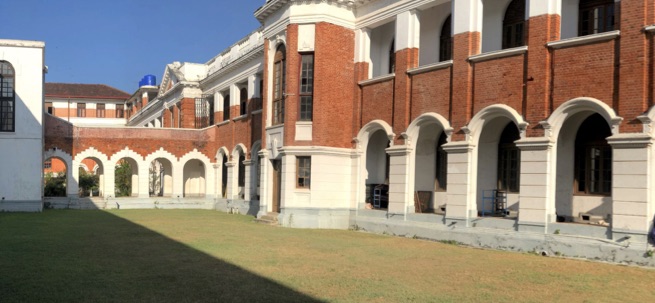
Royal College, Colombo, founded in 1835, was the first institution in the country to receive government patronage as a state-sponsored school. Sir Robert Wilmot Horton, then Governor of Ceylon, viewed the establishment of a secular school under colonial oversight as an essential means to train a generation of natives capable of serving in the bureaucracy. The subjects taught at Royal College—then known as Colombo Academy—reflected the quintessential Victorian ethos, with a particular emphasis on the classics at the heart of its curriculum. After 191 years of existence in various locations before settling in its present bastion in affluent Colombo 07, the very roots of classical studies seem to have all but vanished from Royal, save for the enduring Latin motto “Disce aut Discede” and a few Latin couplets in the college hall. Before the teaching of classics reached its moribund stage, I was perhaps among the last students to study Greek and Roman civilisation under Ms. S. Wijsinghe, the formidable headmistress of the Arts section.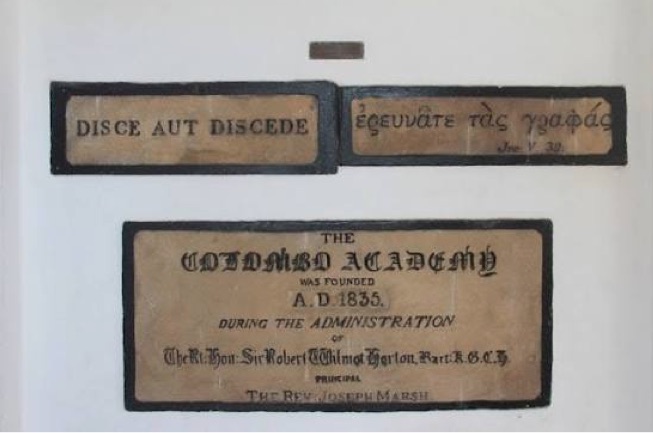
Today’s young Royalists—numbering over 9,000—might be surprised to learn how the earliest students of Colombo Academy committed to memory verses from Horace’s Odes in Latin and passages from the Greek New Testament. Those were the heyday of classical education, and Colombo Academy’s first tutorial staff included distinguished classicists like Rev. Joseph Marsh, the founder of the Academy, who earned a reputation as a Latin teacher at the Cotta Institution. In its early years, the upper school curriculum was notably advanced and classical, featuring works such as Demosthenes, Arnold’s First Greek Book, and Virgil (Books I–VI). With no formal legal education available on the island, the Academy introduced subjects for those aspiring to become advocates. In fact, the first generation of native advocates in Colombo were alumni of Royal College, whose legal acumen was undoubtedly shaped by the classical training provided by Rev. Marsh and Dr. B.C. Boake. The history of Royal College, written by its students in 1932, records how Rev. Dr. B.C. Boake assigned readings from Cicero’s defense speeches and Justinian’s Institutes, especially for students aiming for the legal profession in an era when that field was largely restricted to Europeans.
The Turnour Prize, the first organized prize at the Royal College prize giving, was established in 1846 in memory of George Turnour, the colonial civil servant who translated the Mahavamsa into English. Its scope was purely classical. In the initial stage of this coveted prize, readings from the Gospel of St. John in Greek and Caesar’s “Commentarii de Bello Gallico” were adopted at the prize test, and many distinguished sons of Sri Lanka, such as Sir Ponnmbalam Arunachalam, won it.
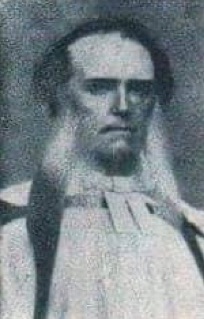
Rev. Dr. Barcroft Boake
The classical education at Royal College continued to flourish under the administrations of George Todd and J.B. Cull due to their predilection for classics. Especially, Todd, a man of modest disposition, changed the old classical curriculum at the school by introducing the new textbooks, which were akin to a stark emulation of British public-school tradition in the late 19th century. Todd, a classics scholar from Baliol at Oxford, attempted to implant a love for classical literature among the boys, which perhaps met with some funnier accidental episodes. During Todd’s time at Royal, there was a good story about one particular dull student. When the whole class was reading Aeschylus’s “Prometheus Bound” , this particular boy was in slumber, which invoked the obvious indignation of Todd , who asked the boy, “ Have you got Prometheus Bound ? The answer of the boy was “ No, Sir, I have given him to the book binder to be bound . To Baron Singho of the Pettah. The wrath of Todd abruptly turned into a good sense of humour, and he further asked the boy in his Stoic manner, “Do you think Baron Singho could bind Prometheus? ” and the boy’s answer was simple: “ Oh yes, Sir, easily”. Todd shut his eyes and went into a reverie. Perhaps in his mind’s eye he was picturing Baron Singho of the Pettah binding Prometheus to the rock. The mischievous boy left school before completing his Senior exam and became a most estimable Mudaliyar.
It goes without saying that the continuity of classics as the core area of Royal College’s curriculum kept its revered status until the end of the 19th century, and the English government scholarship offered by the colonial government was mainly dominated by the classical scholars from Royal. For example, J.J Casiechetty, the first recipient of this honoured scholarship, proceeded to Oxford to read classics in 1871. C.B Nicolas was another iconic Royalist who won the English University Scholarship in 1873 to study classics at Cambridge and rowed for his college boat club.
The structural changes embraced by Royal resonated with the timely needs of the island to satisfy the demands of the emerging bourgeois society of Ceylon, gradually sent classics away from its realm, and Royal College gave prominence to science subjects in the curriculum. This was emphasised by Sir Henry Macuulm , then Governor of Ceylon, at the opening of Royal College’s new Buildings in Thurston Road in the second decade of the 20th century. Remarks made by the Governor referring to teaching Greek and Latin to Easterners as a meaningless endeavour rebuked Rev. Stone, the warden of S. Thomas’ College, as an insult to scholarship. It was in that context Stone remained faithful to the discipline of classics as the core foundation of S. Thomas’ and under whose guidance young SWRD Bandaranaike excelled in Greek prose.
Royal College today has not a single hint of classics in its curriculum, which was sealed after school authorities removed teaching Greek and Roman Civilisation from the A/L subjects in the Arts section. Besides the college motto, the vast collection of books on Greco-Roman antiquities in the college library may stand as the only relic of Royal’s rich classical tradition. Perhaps, those books too would be a good platter for the insects in the days to come, or else they might find their way to a second-hand book store in the McCullum Road ( the man who cut off prioritising classics at Royal !), reminding us of Horace’s famous line from Ode 4.7 “ Pulvis et umbra sumus” .
*Writer is a lecturer at the Department of International Law, Faculty of Law, General Sir John Kotelawala Defence University
old codger / July 9, 2026
Perhaps it would be useful to introduce the study of Greek and Roman civilization for even one period a week in all schools, if only to dispel the impression that some Sri Lankans have, that while our ancestors were building Stupas, Westerners were in caves eating mastodons.
It would be good for many of us to wake up to the truth that much of our traditions whether to do with religion or the arts, are NOT indigenous. Let’s not talk about science or mathematics.
/