

By Udara Soysa –

Udara Soysa
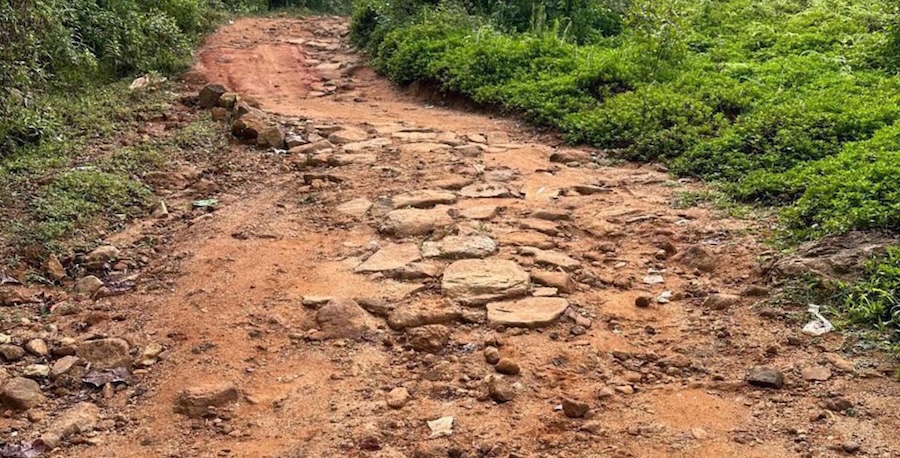
North Karadana Wewila – Karadana Watta By-Road is only 1.5 kilometres long, yet for more than 50 families it has become a daily reminder that development in Sri Lanka is often measured by visibility rather than necessity.
For many Sri Lankans, a road is something they rarely think about. It is simply part of everyday life—a means of getting to work, taking children to school, visiting relatives or reaching a hospital in an emergency. But for the residents of North Karadana Wewila – Karadana Watta, the road leading to their homes has become the defining challenge of daily life. What should have been an ordinary village access road has deteriorated into a dangerous and unreliable route, forcing over fifty families to navigate deep potholes, broken surfaces and hazardous conditions every single day. The road is only about 1.5 kilometres in length, yet its condition determines whether an entire community can safely access the outside world. For those who live there, this is not simply a matter of convenience. It is a matter of dignity, security and, increasingly, survival.
The residents recently submitted a petition requesting urgent repairs. It is a document remarkable not for angry accusations or political rhetoric but for its restraint. The petition simply explains the reality that these families face every day and respectfully asks the authorities to intervene before the situation deteriorates further. Behind those carefully chosen words, however, lies years of frustration. Roads rarely collapse overnight. They deteriorate slowly, almost unnoticed, with each passing season. Small cracks become potholes, potholes become craters and temporary inconvenience gradually becomes permanent neglect. Communities adapt because they have no alternative, and over time they begin accepting conditions that no citizen should ever be expected to accept.
Screenshot
Infrastructure is often discussed in terms of budgets, engineering specifications and development priorities, yet these technical conversations frequently ignore the people whose lives are shaped by those decisions. A road is not merely a strip of asphalt connecting two points on a map. It is the route a child takes to school each morning. It is the path a farmer uses to transport produce before it spoils. It is the only way an elderly patient reaches a clinic for treatment. It is the road an ambulance must travel when every minute determines whether someone survives. When infrastructure fails, it is not concrete that suffers—it is people.
The greatest concern expressed by the residents is not the inconvenience of travelling over damaged roads but the fear of what may happen when a medical emergency inevitably occurs. Every community experiences emergencies. A child develops severe breathing difficulties. An elderly resident suffers a stroke or heart attack. A pregnant mother requires urgent medical care. A road traffic accident demands immediate attention. In each of these situations, time is the single most valuable resource. Medical professionals frequently speak of the “golden hour,” the crucial period during which rapid treatment dramatically improves the chances of survival. Yet that golden hour loses its meaning if emergency vehicles cannot reach the patient quickly or safely. Modern hospitals, skilled doctors and advanced medical technology are of little use if a damaged road delays access to care.
This is why the condition of the North Karadana Wewila – Karadana Watta By-Road should concern more than just the residents who use it. It reflects a broader question about how Sri Lanka defines development and how public resources are allocated. Across the country, major infrastructure projects often dominate public discussion. Expressways are inaugurated with national ceremonies, bridges become symbols of progress and large-scale developments receive widespread media coverage. These projects undoubtedly contribute to economic growth, but they should not come at the expense of the basic infrastructure upon which rural communities depend. A nation cannot truly claim to have developed if citizens in remote villages remain uncertain whether emergency services can reach their homes when lives are at stake.
Perhaps the most troubling aspect of this situation is that communities like North Karadana Wewila often become invisible. Because they are small, they rarely attract media attention. Because they are rural, their problems seldom become national debates. Because they do not block highways or stage large demonstrations, their concerns remain confined to petitions and letters that too often disappear into administrative processes. Yet the constitutional promise of equality does not distinguish between urban and rural citizens. Every Sri Lankan contributes to the nation and deserves equal protection, equal public services and equal respect. Geography should never determine whether a person’s safety is considered a priority.
The economic consequences of neglect are equally significant. Farmers travelling over damaged roads incur higher transport costs and greater vehicle maintenance expenses. Workers risk arriving late or missing employment opportunities altogether. Schoolchildren face unnecessary danger during their daily commute, particularly during periods of heavy rain. Small businesses become less competitive because suppliers and customers are reluctant to travel. Over time, infrastructure neglect contributes not only to inconvenience but also to poverty, isolation and declining economic opportunity. A damaged road therefore affects far more than transport; it undermines the social and economic resilience of an entire community.
The petition submitted by the residents of North Karadana Wewila should not be viewed as another routine request awaiting budgetary consideration. It should be recognised as an early warning. Governments are often criticised for reacting only after disasters occur. Too frequently, infrastructure receives urgent attention only after a fatal accident, a preventable death or widespread public outrage. That pattern must change. Responsible governance is not measured by how quickly authorities respond after tragedy but by whether they act early enough to prevent tragedy altogether. Repairing a road before lives are lost is not merely an administrative decision—it is an affirmation that every citizen’s life carries equal value.
The people of North Karadana Wewila – Karadana Watta are not asking for extraordinary treatment. They are asking for the ordinary rights that every citizen should reasonably expect: a road that allows children to travel safely to school, enables farmers to earn a living, permits elderly residents to access healthcare and ensures that ambulances can reach patients without dangerous delay. Their request is modest, practical and entirely justified. The cost of repairing 1.5 kilometres of road can be calculated in rupees. The cost of failing to repair it cannot. If one preventable death occurs because emergency services were delayed by a road that authorities knew required urgent attention, the question will no longer be whether repairs were affordable. The question will be why action was postponed when the warning signs had already been placed before those responsible.
The North Karadana Wewila – Karadana Watta By-Road may never feature in glossy development brochures or political speeches celebrating national achievements. It is, after all, only 1.5 kilometres long. Yet sometimes the true measure of a government’s commitment to its people is found not on the country’s largest highways but on its smallest roads. For the families who depend on this road every day, repairing it is not about improving convenience. It is about recognising that their lives, their safety and their future deserve the same attention as every other community in Sri Lanka. A nation that aspires to equitable development cannot afford to forget places like North Karadana Wewila, because when a community is cut off by neglect, the road that disappears is not merely a road—it is the pathway to opportunity, healthcare, security and hope.