

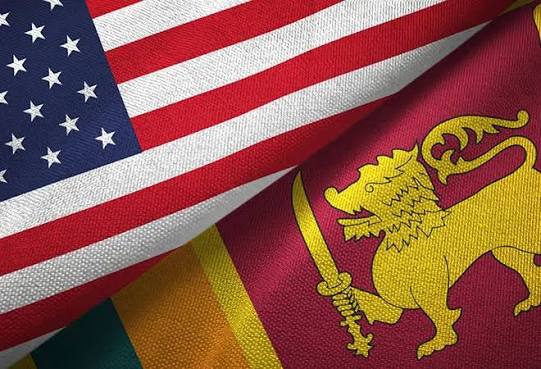
By Sarath Dissanayake –

Sarath Dissanayake
America at 250 and Sri Lanka at 2500: Navigating Post-Independence Sri Lanka: Part II
The 26-year-old Government – LTTE conflict came to a decisive end on 18th May 2009, a victory largely attributed to the leadership of then-President Mahinda Rajapaksa. By providing unwavering political backing to the armed forces, successfully managing international pressure, amidst an overwhelming peoples’ blessings, Rajapaksa enabled a military defeat of the LTTE and ensured full control over the entire country. Due to the protracted war, Sri Lanka had previously lagged behind its fast-growing South and East Asian neighbors, despite being one of the region’s most promising countries in the 1980s. Emerging from the shadows of war, the country quickly transitioned into one of the fastest-growing economies during the immediate post-conflict years.
Lost Opportunity, High Visibility Non-Viable Projects & Financial Crunch (2009)
The end of the LTTE conflict brought a profound sense of relief, and an unprecedented opportunity to unify the country, bring fractured communities together, and re-energize sustainable growth, economic recovery and financial stability. However, instead of prioritizing ethnic harmony, national reconciliation, power devolution and electoral reforms, the post-war regime pursued high-visibility, infrastructure-led growth models, albeit unsustainable financial obligations through non-liquid projects.
In doing so, the authorities borrowed heavily from international lenders at exorbitant rates for mega-scale commercially non-viable projects, such as massive international ports, airports, and cricket stadiums built in economically marginalized and backward regions. These excessive borrowings rapidly inflated the country’s external debt burdens without generating adequate foreign currency inflows / revenues to sustain repayment of loans and debt servicing obligations. Compounded by systemic corruption, institutionalized waste and lack of transparency, the country’s financial foundation became dangerously fragile and unsustainable.
Easter Sunday Bombings ; Quest for Accountability and Justice (2019)
On April 21, 2019, Sri Lanka was rocked by a series of deadly suicide blasts targeting three prominent churches and several luxury hotels in Colombo and suburbs. The devastating attacks claimed at least 269 lives, including 45 foreign nationals, and left over 500 people maimed, fracturing the country’s decade-long post-war peace. Although ISIS initially claimed responsibility, the subsequent investigations revealed that a homegrown Islamist extremist group was responsible. Beyond the tragic loss of lives and reigniting communal tensions, the bombings dealt a severe blow to the vital tourism sector, which was just rebounding after years of stagnation. The bombings triggered a sharp decline in visitor arrivals and investor confidence, which severely hindered Sri Lanka’s forex inflows while weakening its economic and financial standing, just months before the unprecedented COVID-19 pandemic outbreak.
After years of political deadlock, the incumbent government fast-tracked investigations into Easter Sunday carnage, under pressure from the Catholic Church and victims’ families. Most notably, authorities have instituted legal proceedings against certain military and police officials, citing their alleged failure to act on prior intelligence warnings. The Catholic Church, alongside survivors and families of victims, continue to maintain pressure on the powers that be, demanding that authorities bring the perpetrators to book and mete out justice to all victims.
COVID Pandemic and Its Crippling Impact on Sri Lanka (2020 – 2021)
The COVID pandemic accelerated Sri Lanka’s structural vulnerabilities, crippling its key foreign exchange earners, and plunging the country into its worst economic crisis since independence. Though the pandemic was initially managed through military-enforced lockdowns, the domestic and international economic fallout shattered the country’s fragile financial stability and economic recovery. Coming on the heels of the devastating Easter Sunday bombings, the pandemic sparked an avalanche of crises, completely choking off the country’s primary channels of foreign currency inflows.
The global freeze on international travel completely paralyzed the local tourism industry, which generated over four billion dollars annually. At the same time, mass layoffs across global markets – particularly in the ME, dealt a severe blow to the vital inflow of foreign remittances from migrant workers. This double blow to foreign exchange reserves was further compounded by supply chain gridlocks that temporarily crippled the domestic apparel export sector. With foreign currency inflows literally dried up, the government was forced to dip into its remaining central bank reserves to service its heavy international sovereign debts, drawing national savings down to critically low levels.
Economic Strangulation, Debt Burden & Policy failures (2021 – 2022)
Domestically, the pandemic severely eroded the government’s fiscal space and exposed the consequences of short-sighted policy failures. Following ill-advised tax cuts in late 2020 that had already decimated state revenue, the government lacked the financial cushion to provide meaningful relief during prolonged curfews. This fiscal vulnerability contributed to an unprecedented economic contraction of 3.6 percent in 2021. Furthermore, prolonged lockdowns disproportionately impacted the informal sector, leaving daily income earners and small businesses highly vulnerable without alternative lifelines or robust social safety nets.
In a desperate attempt to halt foreign exchange outflows, authorities abruptly banned the import of chemical fertilizers. This short-sighted policy backfired almost instantaneously, triggering widespread crop failures, skyrocketing commodity prices, high inflation, and severe food insecurity. Ultimately, the pandemic accelerated catastrophic economic consequences, leaving the country in dire straits under the weight of insurmountable external debt. In essence, Sri Lanka was exposed to an avalanche of crises, culminating in piled-up debts, depleted foreign reserves, total exclusion from international capital markets, and dried-up national coffers.
Worst Ever Financial Crisis, Bankruptcy, Chaos & Transition (2022)
Sri Lanka’s looming economic nightmares reached a tipping point in 2022, stemming from its worst-ever burgeoning economic fallout since 1948, inter-alia due to Pandemic, fiscal mismanagement, dwindling state coffers, depletion of foreign exchange reserves, excessive loans, debt-servicing burdens, spiraling budget deficits, in the wake of ad-hoc tax cuts, government-imposed mandatory organic farming, ban on chemical fertilizer imports, so-on and so-forth. In May 2022, the government officially announced the financial crisis to be the worst economic meltdown in 73 years, and declared itself bankrupt. In June 2022, the authorities declared sovereign debt default to the tune of $51 billion for the first time in history, compounded by acute shortage of food and basic commodities, life-saving medicines, double-digit inflation, crippling energy crisis that led to 15-hour power cuts and severe fuel shortages. As a result, wide-spread protests erupted across the country, sparking public outrage and anxiety, culminating with the ousting of the then President on 09th July 2022. The severe economic strangulation culminated in a historic sovereign default, acute shortages of essential goods, and the eventual Aragalaya public uprising.
As Sri Lanka navigates its fragile post-crisis recovery, the nation stands starkly in transition; from once self-sufficient economy in 1948 into debt-ridden and crisis-stricken deeply challenged country in 2022; leaving its populace high and dry, hight vulnerable and skeptical of the country’s economic recovery vis-a-vis domestic and international compulsions. So much so, the public protests led by the youth with a clarion call for course correction – demanding a system change and structural overhaul, prompted the authorities to chart a new path amidst strategic policy shifts in ernest, characterized by broad-based policy shifts, governance initiatives and pragmatism, after decades of political expediency, economic mismanagement and regime failures.
Post–Aragalaya Progress, IMF Reforms & Recovery (2022–Present)
When President Anura Kumara Dissanayake and the NPP government assumed power in September 2024, the country’s economy and financial standing stabilized, on the back of the IMF-led comprehensive economic reforms and debt restructuring program initiated during Ranil Wickremesinghe presidency from 2022-2024. The ongoing $3 billion Extended Fund Facility mandates sweeping structural reforms including fiscal tightening & austerity measures, restructuring of loss-making and debt-ridden state bodies. After years of stagnation, the fragile economy demonstrated significant signs of fiscal consolidation for the first time in 2024. Meanwhile, the IMF forecasts a positive outlook and an economic rebound, with its overall growth forecast for 2025 and 2026 being predicted at 4.6 and 3.6 respectively. This momentum continued for over four consecutive quarters, largely driven by the industrial, agricultural and tourism sectors; supported by structural and policy reforms. Additionally, inflation remains at 6.8% as of June 2026, slightly higher than the corresponding figure for 2025.
Status-quo : On the Road to Recovery Amidst External Shocks
Meanwhile, the country suffered badly due to Ditwah cyclone in December 2025 with catastrophic damages to infrastructure, livelihood, agriculture, roads, railway, and other vital sectors of the economy. And to add insult to injury, the ME crisis has taken a heavy toll on the country’s fragile economy, amidst the rising oil and gas prices having a debilitating effect on the peoples’ lives and well-being.
The IMF Executive Board also acknowledged Sri Lanka’s progress and stability, and approved on 27th May 2026, its combined fifth and sixth loan tranche of approximately US$ 695 million, bringing the total cumulative disbursement to US$ 2.4 billion as of June 2026. The IMF also praised SL’s economic reforms and its strong performance despite global economic challenges, noting that Sri Lanka met all quantitative performance criteria by the end of December 2025. Besides citing that the country is showing early signs of recovery, the IMF nevertheless cautioned that the economy remains vulnerable, with an emphasis on the need for the government’s continued commitment for economic and fiscal reforms and debt restructuring.
SL-US Relations: Deep Historic Roots
The diplomatic relations and friendship between Sri Lanka and the United States date back to the 1940s. This multifaceted and mutually rewarding partnership has grown from strength to strength, encompassing every conceivable sphere of interest—be it political, economic, trade, investment, tourism, culture, education, and people-to-people ties. Both countries continue to enjoy their multi-faceted and time-tested mutually beneficial relations with respect and understanding.
Sri Lanka–U.S. historical relations are anchored in deep-rooted trust and partnership, characterized by a shared vision and goodwill. The peoples of both nations have nurtured and cherished their friendship and close relations with warmth, visibility, and transparency at all times, in a spirit of reciprocity. This people-to-people friendship has been the cornerstone and bedrock of U.S.–Sri Lanka relations ever since Sir Henry Steel Olcott set foot in Sri Lanka in May 1880. Sir Olcott was a prime mover in opening Buddhist schools in the country, who left a lasting footprint in Sri Lanka. Sir Henry Steel Olcott remains a household name among people of Sri Lanka for his revolutionary work in school education, promoting Buddhism and Buddhist teachings.
In recent times, the US – SL partnership has expanded into diverse areas of opportunity and vitality. We owe a special word of thanks to our forefathers for laying a strong foundation of friendship, with a sincere hope that it will grow in leaps and bounds for the mutual benefit of the peoples of both nations in the years to come.
78 Years of SL – US Diplomatic Relations
The year 2026 marks the 78th anniversary of diplomatic relations between the United States and Sri Lanka. Over the decades, the partnership has evolved into a robust economic and developmental alliance, with the US acting as Sri Lanka’s largest export market and providing millions in aid through the United States Agency for International Development (USAID). Key milestones include:
* Economic Assistance: The US provided over $270 million in new assistance, Supporting SME loans, school feeding initiatives, and essential fertilizer imports for farmers. Additionally, the US Development Finance Corporation (DFC) announced nearly half a billion dollars in financing for the development of the West Container Terminal in the Port of Colombo.
* Development and Aid: Since 1956, USAID has invested over $2 billion into Sri Lanka’s health, education, agriculture, governance, and environmental protection programs, fostering sustainable growth across rural and urban sectors.
* Cultural Exchange: The Fulbright Program and Peace Corps have facilitated deep people-to-people ties, enabling US and SL scholars, professionals, and volunteers to participate in meaningful cross-cultural & academic exchanges.
* US Military Assistance: Focuses on disaster response, maritime security, and capability building. Key initiatives include the State Partnership Program with the Montana National Guard, donations of aircraft and patrol vessels, and significant logistical support during humanitarian crises
Bilateral Visits, Diplomatic Engagements and Milestones
In 2015, the US and SL initiated the annual US – SL Partnership Dialogue of which the maiden bilateral meeting was held in Colombo in the same year. This structured framework was designed to enhance cooperation across core areas: Governance, Development Cooperation and People-to-People Ties; Economic Cooperation; Security Cooperation and International and Regional Affairs.
Of the recent bilateral visits, the US Secretary of State, Mike Pompeo was the highest ranking US dignitary to visit Sri Lanka in October 2020; coincidently during my tenure as Charge d’affaires at the Sri Lankan Embassy in Washington D.C,. Among other visits, Foreign Minister Vijitha Herath’s official visit to the US in September 2025 was the highest ranking official visit of a Sri Lankan dignitary in recent times.
Bilateral Trade and Investments Between SL and US
The US remains Sri Lanka’s largest single export market, anchoring a trade partnership that has shown renewed momentum. In 2025, bilateral merchandise trade between the two nations reached an estimated $3.7 billion. This trade relationship is characterized by a significant surplus in Sri Lanka’s favor, with Sri Lankan exports to the US hovering near $3 billion, while US goods exports to Sri Lanka totaled $732 million.
Bilateral trade between the two nations is facilitated through long-standing institutional frameworks. A key cornerstone is the TIFA signed in 2002, which serves as the primary intergovernmental platform to address market barriers and early-stage trade issues. Bilateral negotiations achieved a significant milestone when a US presidential order reduced reciprocal tariff rates on key Sri Lankan goods from 30% to 20%.
Future Trajectory of SL – US Relations
The future trajectory of US – SL relations is evolving into a pragmatic, multifaceted partnership that balances deeper economic integration with strategic, non-aligned military diplomacy. As Sri Lanka navigates its post-crisis economic recovery and a new political landscape under the new NPP administration, both nations ought to collectively pursue their rules of engagement, and navigate the future together, in a spirit of optimism, shared interest and partnership for mutual benefit.
SL – US future trajectory can be defined by following core dimensions:
Recalibrated Economic and Commercial Ties: The United States remains Sri Lanka’s largest single export destination, accounting for nearly $3 billion in annual trade. However, the future trajectory shifts from traditional development aid toward reciprocal commercial integration. US diplomatic representatives have indicated that the next phase of engagement will move past historical trade asymmetries. Washington is aggressively pushing to narrow the trade gap by expanding US exports to Sri Lanka in sectors like agricultural commodities, machinery, and pharmaceuticals. With the SL economy stabilizing and foreign reserves recovering, the US DFC continues to back critical regional infrastructure, such as the Colombo West Container Terminal. Private sector optimism is rising, with American firms seeking market predictability as Sri Lanka targets high-growth sectors like tech innovation and energy.
Pragmatic Non-Alignment and Strategic Neutrality: A defining feature is Sri Lanka’s strict adherence to its traditional foreign policy doctrine of non-alignment acting as a “friend of all and enemy of none”. The US views Sri Lanka as a vital component of its Indo-Pacific Strategy, while Sri Lanka, as always, continues to honor its commitments towards promoting and protecting peace, security and stability in the Indo-Pacific.
Institutionalized Security and Disaster Cooperation: Despite boundaries regarding direct combat or operational deployments, institutional defense cooperation is expanding through non-lethal, specialized partnerships. In a major forward-looking development, the Montana National Guard signed an MOU with the Sri Lanka Armed Forces under the State Partnership Program. US – SL bilateral security dialog continues to prioritize training for regional coast guards and navies to ensure open shipping lanes and combat illicit maritime trade. The US Navy provided the Sri Lanka Air Force with 10 TH-57 Sea Ranger helicopters at no cost under the Excess Defense Articles (EDA) Program to support pilot training and humanitarian assistance. Historically, the US has provided Foreign Military Financing (FMF) and donated former U.S. Coast Guard high-endurance cutters to help Sri Lanka patrol its territorial waters, counter illicit trafficking, and conduct search and rescue operations.
Continued Dialogue on Governance and Reforms: As the bilateral relationship deepens, the US continues to anchor its long-term support to Sri Lanka’s domestic governance reforms.
Key Takeaways & Conclusion: Two Paths of Destiny
The profound contrast between America’s 250 years of independence and Sri Lanka’s 2,500-year civilization serves as a powerful testament that a nation’s true trajectory is shaped not by the length of its history, but by the maturity, vision, and stability of its modern institutions. America marked its 250th milestone as a global superpower because its founding architecture prioritized systemic continuity, robust checks and balances, and a forward-looking economic vision. Conversely, Sri Lanka stepped into its post-colonial journey in 1948 holding immense material and intellectual promise, yet it repeatedly faltered under the weight of populist short-sightedness, institutional decay, and prolonged internal conflicts.
History remains an invaluable repository of pride and cultural identity, but it cannot substitute for current domestic accountability and strategic governance. To constantly look backward or blame the shadows of colonial masters is to dodge the hard work required to build in the present. As Sri Lanka navigates its fragile, post-crisis stabilization, the ultimate lesson of this comparative reflection becomes clear: ancient legacies provide a nation with roots, but only visionary leadership, unwavering transparency, and resilient institutions can guarantee its future.
Closing Remarks: A Word of Appreciation of Sri Lankan Envoys
It would be remiss of me not to honor the distinguished personalities who actively worked to cement the enduring partnership between Sri Lanka and the United States for over seven decades. Both nations were exceptionally well-served in their respective capitals by distinguished envoys who navigated complex geopolitical challenges with dedication, continually confronting shifting realities with distinction and unwavering commitment. Among the most noteworthy SL Ambassadors of the highest calibre include Sir Claude Corea, Neville Kanakaratne, Ernest Corea, Ananda Guruge, Jayantha Dhanapala, Bernard Goonetilleke, Prasad Kariyawasam, Ravinatha Aryasinha and the incumbent Ambassador, Mahinda Samarasinghe Et-al; each leaving an indomitable spirit and strong leadership with a lasting legacy of perseverance and charisma.
“History will have to record that the greatest tragedy of this period of social transition was not the strident clamor of the bad people, but the appalling silence of the good people” – Dr. Martin Luther King Jr.
*The writer is a retired Ambassador, Foreign Ministry Spokesman and Chargé d’affaires, Sri Lankan Embassy in Washington D.C. He can be reached at schandrad@hotmail.com
References :
1. America At 250: Are The Good Times Really Over Or Just Evolving (https://www.colombotelegraph.com/index.php/america-at-250-are-the-good-times-really-over-or-just-evolving/)
2. America At 250 & Sri Lanka At 2500: Navigating Post-Independence Sri Lanka
PJ Fernando / July 23, 2026
Mr. Sarath,
You write: “This people-to-people friendship has been the cornerstone and bedrock of U.S.–Sri Lanka relations ever since Sir Henry Steel Olcott set foot in Sri Lanka in May 1880. Sir Olcott was a prime mover in opening Buddhist schools in the country”
Why do you have to drag Buddhism into everything you write? Even in your last article, many of the people you mentioned as Sri Lankans of world importance were Buddhist monks or Buddhist workers. Buddhism was not invented here in Srilanka.
BTW, Olcott was an American, and could not have been called “Sir”.
/
Sarath / July 23, 2026
PJF,
As a matter of fact, I decided not to respond to comments for this article. But since your comment is addressed to me by name, it deserves a reply. Let me start with your first observation about Sir Henry Steel Olcott, who founded some leading Buddhist schools in Sri Lanka, viz, Ananda (1886), Mahinda (1892), Dharmaraja (1887), Maliyadewa (1888) (1888) to name a few, which I should have mentioned in the article, seeing the kind of misplaced prejudicial mindset harbored by some Sri Lankan folks. After all, Sir Olcott played a pioneering role in establishing Buddhist schools and Buddhist renaissance in Sri Lanka. Aren’t you proud of his visionary mindset and yeoman services to Sri Lanka’s education and revival of Buddhism. So my humble advise to you is stop seeing people through your prism of religious, ethnic or petty mindset, but see them as to who and what they are, which is why Sri Lanka has failed as a nation. Secondly I am proud of myself, like thousands of others, since it was Sir Henry Olcott who took the initiative to set up these leading schools, and had not for him, there wouldn’t have been these pioneering schools that have produced thousand of worthy and productive Sri Lankan sons. In fact, through the Buddhist Theosophical Society, he founded over 200 schools, including premier national institutions in Sri Lanka and elsewhere. What’s more, we must give credit where it is due, and we must be humble enough to extend our gratitude to whoever it is, be they Sri Lankans or Americans. This is a biggest problem the petty-mindset of some of our Sri Lankans. Thanks
/
old codger / July 23, 2026
Sarath,
I am sorry, but I think PJF has a point when he says that Colonel Olcott was not a “Sir”, because he was not a Knight.
You ought not to emphasise Buddhism so much because it isn’t something that arose in Sri Lanka, don’t you think?
Buddhism did have a lot of influence in our 2400 year history, but this is the 21st century after all, don’t you think? As you have written, “The profound contrast between America’s 250 years of independence and Sri Lanka’s 2,500-year civilization serves as a powerful testament that a nation’s true trajectory is shaped not by the length of its history, but by the maturity, vision, and stability of its modern institutions”
/
Sarath / July 23, 2026
OC
Thank you for your feedback.You are absolutely correct on Colonel Olcott’s title; he was indeed not a knight. But as I have already shared with PJF – “Colonel Steel was often called “Sir” – in appreciation of his monumental role in the Buddhist and cultural renaissance in Sri Lanka, and is revered as a national hero. That’s the only reason.”
Regarding the focus on Buddhism, the intention was not to overlook its origins, but rather to highlight its undeniable structural and educational impact on Sri Lanka’s historical, religious, spiritual and socio-cultural trajectory. While we must absolutely look forward as a 21st-century nation, understanding the pillars that shaped our past remains essential to navigating our present and future.
Having said that, I am glad the concluding thought on America and Sri Lanka resonates well with both you and me, namely, the true measure of a nation today lies in the maturity and stability of its modern institutions, rather than the sheer length of its history. I appreciate your keen interest in the article.
/
Baiyya / July 26, 2026
Dear Sir Sarath,
Is it all right if I call you Sir Sarath, because I have very much respect for you? I like Sarath Sir too.
/
SJ / July 26, 2026
oc
Many a school master and male university academic has probably been called sir more frequently than Olcott.
May I call myself Sir SJ?
/
LankaScot / July 24, 2026
Hello OC,
Henry Steele Olcott was an American and was never Knighted. But being a “Balloon” if he was untethered he could have reached great heights.
Apart from that the whole of Blavatsky’s and Olcott’s Theosophy fraud has been exposed by Urs App in his book “The Mother of All Religions: The Genesis of Blavatsky’s Theosophy, Ancient Theology, Orientalism, and Buddhism”.
Perhaps if Sarath learned about Blavatsky’s claims to be a Medium, her Mahatmas and her fraudulent Seances etc. he might look differently on Olcott? Olcott started investigating Blavatsky to expose her and did the opposite by joining forces with her.
Best regards
/
Sarath / July 24, 2026
LS / OC,
Thank you for your comment, which makes reference to my name. Hence I take liberty in sharing the following comment.
You hit on a very important distinction regarding how we view historical figures.While the controversies surrounding the Theosophical Society and Madam Blavatsky—such as those detailed in Urs App’s book—are well-documented, my respect for Henry Steele Olcott rests entirely on his tangible, monumental work for the revival of Buddhism and education. During the British colonial era, local Buddhists and monks faced immense systemic pressure and a loss of cultural identity. However, Olcott’s arrival and his subsequent efforts provided a vital shield, and a new lease of life for Buddhists, which was a big deal at the time.
Regardless of his personal spiritual beliefs or affiliations, his practical accomplishments / achievements remain monumental and undeniable as follows.
1) Educational Revival: He helped establish over 400 Buddhist schools (including Ananda, Nalanda, and Dharmaraja Colleges), ensuring generations received a modern education rooted in their own heritage
2) Revival of Buddhism and Buddhist Spiritual Legacy:
He successfully petitioned the British government to recognize Wesak as a public holiday and to appoint Buddhist registrars for marriages.
Designing of Buddhist Flag:
He co-designed the Buddhist flag, which remains a universal symbol of unity for Buddhists worldwide to this day.
As such, it is entirely possible to acknowledge the flaws, and expose the Theosophical movement while still honoring the yeoman service he performed on the ground. For the people living through those harsh colonial times, his untethered energy resulted in a permanent, positive revival and new beginning.
Best regards
/
Bodika / July 24, 2026
Mr. Sarath,
We Sinhalese complaint that the Tamils were having better jobs in colonial period because of Missionary education in Jaffna. Now you write:”Educational Revival: He helped establish over 400 Buddhist schools (including Ananda, Nalanda, and Dharmaraja Colleges), ensuring generations received a modern education rooted in their own heritage”
If these schools exist for 60 years before independence even, how come the Tamils got the jobs anyway? Is it that that we Sinhalese are lazy? Please tell your valuable opinion, thank you.?
/
Sarath / July 24, 2026
Bodika
Thank you for raising this important question. This is classic text book topic of national interest, and it allows us to look at it from a historical stand point, and clarify a crucial chapter in our colonial history. The disparity in employment, education etc during the colonial era was not a reflection of any community’s work ethic, but rather a direct consequence of structural (divide and rule) colonial policies.To understand why this disparity existed despite the establishment of over 400 Buddhist schools, we must look at following historical facts:
1) The English Language Requirement: The British colonial administration restricted government and professional jobs strictly to those educated in English-medium schools. The vast majority of the 400+ schools founded by Sir Henry Steele Olcott’s movement were vernacular (Sinhala-medium) schools aimed at basic literacy and cultural preservation. Only a handful, like Ananda or Nalanda, Dharmaraja, – were elite English-medium academies.
2) Missionary Head Start: Christian missionary networks had a massive head start, particularly in the North. American and British missionaries established high-quality, English-medium institutions in Jaffna nearly a century before Olcott arrived. The British administration actively utilized this pre-existing, English-literate population to fill bureaucratic roles.
3) A Regional Movement: It is also worth noting that Olcott’s educational legacy was not confined to Sri Lanka. His initiatives extended deeply into India, where he established schools for marginalized communities (schools in Madras), and that his institutional resources were spread regionally.
Rather than a matter of intellectual capability or effort, the job disparity was the natural outcome of the colonial system that unevenly distributed English-language education, inadvertently setting the stage for future communal grievances. Olcott’s schools were a vital first step, but overcoming a century of entrenched colonial educational policy took much longer than a few decades.Best regards.
Trust this clarifies
/
SJ / July 24, 2026
B
There are other factors.
Education as a means of livelihood varied regionally.
Tamils in the Jaffna Peninsula were far ahead of Tamils in the Vanni and the East. Not all Tamils in the Jaffna Peninsula had educational opportunities.
Caste was a barrier, but over time a few overcame it.
Children from educated families always had that as an advantage.
When people push oversimplified subjective arguments they become selective with data.
I knew of Jaffna children walking walk a few miles to school. That was motivation, as they saw a better life with education.
There were children who helped the parents with work in the fields before setting out to school.
But that education also had its downside of over emphasis on book learning.
The typical Sinhalese kid was more practically inclined than his Jaffna Tamil counterpart. There were many more Sinhalese entrepreneurs than Tamils. Again not all Sinhalese were so inclined.
There are several more variables to the equation than just race.
/
Sarath / July 25, 2026
SJ / B
This is a very moving observation. My university batch-mates from Jaffna too shared similar anecdotal stories of balancing morning chores with long walks to school. This is certainly true that the role of education as a tool for upward mobility varied based on region, class, and caste.
While many Jaffna children used long walks and hard work as motivation to secure a better life through book learning, educational access was not uniform, due to the lasting scars of the 30-year conflict, underfunding, lack of resources such as teachers, socio-economic barriers, and an acute higher education capacity crisis.
In contrast, many of their Sinhalese counterparts historically leaned toward practical application and entrepreneurship. Ultimately, these dynamics are shaped by a complex mix of factors, namely under-funding, resource constraints, geography, socioeconomic status, and opportunity, reminding us that there are far more variables to this equation than just race. Yes your perspective makes absolute sense. Thanks
/
SJ / July 27, 2026
“…long walks and hard work as motivation to secure a better life “
Got the cart before the horse?
Was it not motivation that made them do those things?
(I promise not to respond to any c****y justification of the howler.)
/
SJ / July 24, 2026
Jaffna children walking a few miles to school
/
leelagemalli / July 24, 2026
Hello Bodika, if I may add my opinion on this:
I think that, as Sinhalese, we sometimes struggle with envy and jealousy toward the success of others.
–
This is not just my personal opinion. I once read about a Norwegian woman who married a Sri Lankan and lived in Sri Lanka for over 55 years.
–
https://www.youtube.com/watch?v=kZz2ZvWfD3U
–
When she was asked for her honest opinion of the Sinhalese people, she said, “They are kind and friendly, but they are often very jealous of others.” Whether or not everyone agrees with her, I have observed similar attitudes among some relatives, acquaintances, and even in the comments posted on online forums. Of course, this does not apply to every Sinhalese person, but it is a tendency that I believe deserves honest discussion if we want to understand and improve our community.
/
Sarath / July 25, 2026
LM
Thanks for the video, which speaks volumes about her personal anecdotes, speaking ill of Sinhalese people for being jealous, selfish and dishonest. What a damning indictment of the Sinhalese. Strangely not a word about her Sri Lankan husband. Is she married to a Sinhalese ?
/
leelagemalli / July 25, 2026
Hello Sarath,
She claims in that video that her Sinhalese husband is quite handsome and has never spoken Sinhala to her knowledge, which I believe you may have missed. They came to know one another in Europe while they were living in Kandy. He comes from an affluent Colombo family, and their marriage has been blissful.
–
I believe that jealously of our people towards others should not be neglected, and I would appreciate it if you could conduct your own analysis of your circles. I did that with mine, and I agree with her viewpoint.
Also, take a look at what certain commenters add to this and other places; it’s all about exaggerated opinions about us, the Sinhalaya. That should have changed long ago. Another Japanese professor who visited the University of Kelaniya stated that sinhalese could have improved themselves economically and otherwise if they had stopped preaching their superior thinking about the Sinhala race. Late Dr. Nalinda De Silva and others were leaders in this movement, and their public statements centred on Sinhala chaunism, nationalism, and racism drew people to the society. Do you remember?
/
Sarath / July 25, 2026
LM,
Thank you for the reply, clarifying on her husband’s background, which I admittedly overlooked in the video. It is good to hear that their marriage has been blissful and that her experiences are framed by a supportive personal life.
BTW, your analytical approach to seeing / understanding the depth of complex societal matters and trends is indeed praiseworthy. However, we should not be overly worried about comments from readers regarding the perceived greatness of the Sinhalese when they lack rationality and reason. Such comments do not help us form an objective opinion about societal trends and their impact on ethnic harmony. Thank you for the invitation to reflect on internal social attitudes, including jealousy and ethnic pride; it is a fair and constructive request. Every society, including our own, struggles with a vocal minority whose exaggerated opinions, chauvinism, or ethnocentric views can hinder collective progress.
The observation by the visiting Japanese professor is a poignant reminder that national and economic advancement relies heavily on humility, openness, and moving away from insular thinking. True strength lies in our ability to listen to outside perspectives, filter out unfair generalizations, and constructively address the cultural traits that hold us back.
/
leelagemalli / July 24, 2026
OC,
.
permit me to draw your attention to the video below
.
https://www.youtube.com/watch?v=Vs93K02WvSg
–
Similar sentiments were expressed by one of my neighbours, a former EU parliamentarian, as former President RW was elected to undertake the job after July 2022, and Sri Lanka fell on his head.
/
Sarath / July 24, 2026
LM
Thanks for sharing. The video offers some food for thought for those who are still on the fence, in terms of proving where Sri Lanka stood in contrast to India in the post-Independence years on literacy and standard of education.
/
PJ Fernando / July 24, 2026
Mr. Sarath,
There you go again, trying to put SriLanka on a pedestal it doesn’t deserve. :
“proving where Sri Lanka stood in contrast to India in the post-Independence years on literacy and standard of education.”
It is not just literacy and education standards that develop a country. Even if the educated are few, they must be motivated. In any case, the total number of highly educated (and rich) Indians was more than the entire population of Ceylon.Take just the steel industry:
1874: The first notable attempt at commercial steelmaking in the country was initiated with the Bengal Iron Works.
1907: Visionary industrialist Jamsetji Tata founded the Tata Iron and Steel Company (TISCO), launching Asia’s first fully integrated private steel plant in Jamshedpur (Tatanagar).
WWI Boost (1914-1918): With British steel diverted for the war effort in Europe, TISCO stepped in to supply rails, shells, and carriage wheels for the Indian railways and the colonial government.
The steel industry is the foundation of everything else, from engines to cutlery. Nothing of that sort happened in Ceylon before Independence, so it is not very honest to compare ourselves to India.
By the way, our present steel industry or what’s left of it, depends a lot on Indian skilled workers. Check it out.
/
Sarath / July 24, 2026
PJF
Thank you for sharing valuable insight about India’s industrial journey. You are entirely correct about the visionary scale of Jamsetji Tata and the early establishment of TISCO. India’s ability to build a heavy industrial foundation, particularly in steel, long before independence was a remarkable feat that Sri Lanka certainly could not match.
My previous comment, however, was not intended to put Sri Lanka on a misconceived pedestal or to compare the absolute economic and industrial power of the two nations. Clearly, India’s sheer size, resources, and industrial elite allowed it to accomplish much more than Sri Lanka could not even imagine. Instead, my observation was strictly focused on per capita human development metrics, specifically literacy rates and primary education access-during the immediate post-independence era. The data from that specific crossroads in history illustrates a stark contrast:
1) Literacy Rates: According to official census data from the independence
era, Ceylon possessed an overall literacy rate of 57.8% in 1946. In contrast,
India’s literacy rate stood at 18.3% in 1951.
2) Primary Education Access: Thanks to early investments in free education
and social welfare systems, Ceylon (SL) was a recognized outlier in
development literature, ensuring that basic literacy was widely distributed
across the general populace rather than concentrated solely among the
elite.
You make a very fair point that basic literacy alone does not develop a country, and that industrial infrastructure is foundational. Both perspectives are historically valid: India possessed the enviable blueprint for heavy industry and macro-scale manufacturing, while Sri Lanka possessed a significantly more literate and healthy populace on average at the starting line of independence.
Looking at both of these dimensions gives us a much richer, more honest understanding of our shared colonial history and the different challenges our nations faced. Thanks again for adding that valuable industrial context to the discussion.
Trust the above makes sense.
/
leelagemalli / July 24, 2026
Hello Sarath all other fact checkers,
When will Sri Lankans start respecting the facts?
.
The Negombo Prison killings have become one of the gravest human rights controversies faced by the present administration.
–
The incident, which claimed the lives of numerous inmates and police officers, has raised profound questions about accountability, transparency, and the rule of law. Public concern was further fuelled by Justice Minister Harshana Nanayakkara’s reported statements that he was unaware of key developments surrounding the killings and had no knowledge of the alleged firing orders.
–
Despite these concerns, Parliament defeated the Opposition’s no-confidence motion against the Justice Minister, allowing him to retain office.
–
https://www.youtube.com/watch?v=RYu_5hl7Ej8
–
For many critics, this parliamentary vote represented a collective failure to hold those responsible politically accountable for an incident of such magnitude.
The government’s handling of the tragedy has continued to attract criticism from legal experts, civil society organisations, and human rights advocates, many of whom have called for an independent and impartial investigation into the killings. Critics have also questioned why President and Defence Minister Anura Kumara Dissanayake did not personally address the nation immediately after the incident, arguing that leadership demands visible accountability during moments of national crisis. They warn that if Sri Lanka is perceived as failing to uphold international human rights standards, the country could face repercussions in its relations with international partners, including concerns over trade concessions such as GSP+. In the eyes of many, the events surrounding the Negombo Prison killings have widened the gap between the government’s promises of good governance and the standards of accountability expected by the public.
/
leelagemalli / July 24, 2026
cont.
The government’s handling of the tragedy has continued to attract criticism from legal experts, civil society organisations, and human rights advocates, many of whom have called for an independent and impartial investigation into the killings. Critics have also questioned why President and Defence Minister Anura Kumara Dissanayake did not personally address the nation immediately after the incident, arguing that leadership demands visible accountability during moments of national crisis. They warn that if Sri Lanka is perceived as failing to uphold international human rights standards, the country could face repercussions in its relations with international partners, including concerns over trade concessions such as GSP+. In the eyes of many, the events surrounding the Negombo Prison killings have widened the gap between the government’s promises of good governance and the standards of accountability expected by the public.
/
Sarath / July 25, 2026
LM
Yes you are right. In the end, it was too little, too late. Wasn’t it ?
/
leelagemalli / July 25, 2026
Dear Sarath and all that take things serious !
–
“Yes you are right. In the end, it was too little, too late. Wasn’t it ?”
Right now, there is an elephant in the room and no one is talking. This is good old Sri Lanka.
–
Public opinion in Sri Lanka has often been shaped more by political rhetoric, emotional appeals, and campaign narratives than by careful scrutiny of facts and policies. Many voters placed their trust in the National People’s Power (NPP) based on its promises of transparency, accountability, and a decisive break from past political practices. However, as the country continues to face significant economic, institutional, and governance challenges, many citizens have become increasingly critical of the government’s performance.
–
Critics argue that several of the serious allegations made against previous administrations have not resulted in the level of legal action or institutional reform that many expected. They also express concern that the mainstream media has not consistently fulfilled its role as an independent watchdog by rigorously scrutinizing those in power, regardless of political affiliation.
–
Many observers further contend that the high standards of transparency and accountability promised during the election campaign have yet to be fully realized. Concerns have also been raised about the government’s handling of the recent deadly prison-related violence in Negombo, including the position taken by the government during the subsequent No-Confidence Motion (NCM).
/
leelagemalli / July 25, 2026
cont.
Critics argue that, rather than affirming the need for an independent investigation and stronger protection of human rights, the government’s parliamentary majority was used to defeat the motion, a decision they view as endorsing or excusing the use of lethal force. They contend that in a democratic society, every loss of life at the hands of the state should be subject to transparent, impartial scrutiny, and that respect for human rights must never be subordinated to political considerations. Whether or not these criticisms are ultimately accepted, they warrant open, evidence-based public debate rather than dismissal through partisan loyalty or political slogans. Sri Lanka’s future depends on governments being held to the same standards they demanded of their predecessors, with independent institutions, genuine accountability, and the rule of law taking precedence over political expediency.
/
Sarath / July 25, 2026
LM
Thank you. The tragic events surrounding the Negombo Prison violence serve as a stark reminder of the urgent need to bridge the gap between policy promises and genuine accountability on the ground. Upholding human rights and maintaining absolute transparency are not only crucial in terms of meeting SL’s international obligations, but also serve as foundational pillars required to secure public trust domestically.
Besides, for Sri Lanka to safeguard its global trade partnerships and foster sustainable development goals, the government must uphold its commitments and proactively implement transparent independent mechanisms / investigations that deliver justice and accountability in fairness to all.
/
leelagemalli / July 26, 2026
Sarath,
.
The Negombo Prison killings have raised serious questions about the NPP government’s handling of the tragedy.
–
https://www.youtube.com/watch?v=HZ_48MXFo_k
–
Critics argue that the authorities have failed to demonstrate the urgency and transparency expected after such a significant loss of life. They point to the Justice Minister’s public statements during the first days of the incident, in which he said he had no information about who had issued the orders to open fire and acknowledged that many key facts were still unknown. To opponents, this has been interpreted as a lack of preparedness and accountability rather than a determined effort to establish the truth. The opposition has warned that if those responsible are not held accountable, it could set a dangerous precedent and increase concerns about the potential abuse of state power against political opponents.
–
These allegations remain matters of political debate, and independent investigations into the events at Negombo Prison are ongoing.
/
Sarath / July 26, 2026
LM
This sounds very comical and hilarious indeed, however true it is.
The changing narratives from the authorities only highlight the gaps in accountability. We must wait for the independent investigations to reveal the full truth.Thanks
/
old codger / July 25, 2026
Sarath,
There is a theory that industry must come before education. Industry needs a lot of low-paid workers to get started. Educated people will not work in factories. We can see that even here in Sri Lanka where apparently over a million able-bodied men prefer to drive three wheelers. What do you think?
/
Sarath / July 25, 2026
OC
Your comment certainly resonates well with many others, including myself.
BTW, I watched a video recently in which a group of Sri Lankan school leavers were interviewed by a YouTuber who posed a specific question about who they want to become in the future. Remarkably, out of every ten respondents, almost half replied by voicing their penchant to become drivers (Three-Wheeler, PickMe, or Uber). When asked for their reasons, they all noted that it offers easy money, total freedom and a solid / guaranteed market throughout the day and weekends, in contrast to other popular jobs.
So the three-wheeler phenomenon is deeply ingrained in the minds of average persons today, and it perfectly illustrates the structural mismatch between our labor market and the aspirations of our workforce. You are absolutely correct in commenting that while industrial growth requires a steady, dependable labor pool, the lack of high-value manufacturing jobs has pushed over a million able-bodied men into the informal sector. Above all, it offers immediate cash flow and personal independence, though it unfortunately traps vital human capital in low-productivity work instead of driving national industrial progress.
To break this cycle, Sri Lanka must aggressively transition toward targeted vocational training and foster social acceptance for formal jobs as opposed to informal sector, piecemeal work. This shift, however, must come from the bottom up—meaning from within society itself. The government must promote formal sector opportunities, especially for the youth, offering attractive compensation packages and manufacturing incentives that make industrial roles economically competitive and socially appealing.
Forcing a choice between unrewarding factory labor and low-yield informal transit only prolongs our economic stagnation. Only by elevating the value, skills, and wages within our industrial sector can we successfully redirect our youth away from the three-wheeler trap and toward high-productivity fields that foster genuine national growth.
After all, great minds have all in common. Thanks
/
old codger / July 26, 2026
Sarath
“. The government must promote formal sector opportunities, especially for the youth, offering attractive compensation packages and manufacturing incentives that make industrial roles economically competitive and socially appealing.”
I have pointed this out before: Factory jobs are available but not attractive because they don’t pay as much as what 3 wheeler drivers earn.. This is because factory salaries are barely enough to live on. But in India for example, factories pay a living wage . This is because their cost of living in real terms is less than ours. Our basic necessities cost two or three times Indian prices, because of protectionist taxes and subsidies. So, the result of protectionism is seen in 3 wheeler drivers.
The answer is obvious, but which government will dare do it?
/
Sarath / July 26, 2026
OC
You did highlight this before, and as I admitted previously, your assessment of our domestic wage gap is real. Furthermore, due to the incredibly low wages paid to Indian workers domestically, there is absolutely nothing we can do to leverage the situation if we were to bring Indian labor to Sri Lanka. Our high cost of living makes it impossible to compete on those terms, leaving our manufacturing sector trapped by these structural realities. Sadly, that is the reality. Thanks
/
old codger / July 24, 2026
LM,
Yes, very interesting video. It seems Ranil Seeya is making an effort to reach the younger generation.
What the young guy from Kerala says is true. Our education system is blinkered and outmoded. How ridiculous is it that kids in grade 1 go for tuition?
I have always said we need closer economic ties with India, including a bridge and labour mobility. We are closing factories because of labour shortages while India has excess labour. These workers will be happy to come over to factories in the Mannar district at our rates, because the cost of living in India is much lower than ours.
/
leelagemalli / July 25, 2026
Hello OC,
–
https://www.youtube.com/watch?v=1kReogtYDj8
.
We live in a magnificent country, where legislators voted for the NCM above the justice minister. This suggests that 152 people support deliberate killings, while 36 are opposed. That’s hilarious! Is AKD marching after IDIAMIN state?
/
nimal fernando / July 25, 2026
“Hyperreality is a theoretical condition where society cannot distinguish physical reality from a simulation, making fake representations feel more real than truth itself.
–
Coined by French philosopher Jean Baudrillard in his work Simulacra and Simulation, the concept explains how media, technology, and culture replace actual experiences with artificial copies.”
/
Sarath / July 25, 2026
Nimal,
You have joined just in time. Your reference to JB’s concept of hyperreality is incredibly precise and increasingly urgent in today’s digital age. Don’t forget, we now live in an era where algorithms, curated social media feeds, and artificial intelligence operate in stark contrast to human actions of 40 – 50 years ago, completely lacking a rational mindset. They do not merely replicate our world, but actively replace it with a polished sophistication and brilliance that is entirely devoid of the reasoning, common sense, and intelligence that must come with a human touch. As technology advances, society eagerly consumes these highly engineered simulations, often preferring them to the messy nuances of physical reality. This shift drastically distorts public discourse, as media spin doctors and their digital narratives are treated and accepted as absolute truth, while actual, unmediated experiences are sidelined. As such, recognizing hyperreality is no longer just an academic exercise; it is a vital tool for maintaining critical thinking in a world dominated by artificial copies.
Thanks, you have added a new dimension to the discussion.
/
Sarath / July 25, 2026
OC / LM,
Very timely insights on the labor market disparity and the structural flaws in our educational framework vs Indian sector.
As you have rightly put, the reality is that Sri Lanka’s outmoded education system needs urgent reforms to match global shifts toward the industrial and technological sectors. On the other hand – to protect the integrity of formal schooling, the government must rein in the ever-growing private tuition industry, which has become a fashion and burden for parents, that actively pulls children out of schools and classrooms.
Simultaneously, we must embrace closer ties with India to facilitate labor mobility and drive value addition across our agricultural, industrial, and services sectors. Introducing cross-border talent will inject much-needed critical thinking, innovativeness, and a fresh vision into our domestic job market. This integration is vital if we are to successfully pivot toward hyper-competitive, trending fields like Information Technology (IT) and Artificial Intelligence (AI).
Finally, this shift in capability must extend to our migrant workforce. Instead of sending unskilled labor abroad, we must equip workers heading to the Gulf with robust technical skill sets and English proficiency. Elevating their training ensures Sri Lankan workers can bypass low-wage roles and successfully compete for high-end, demand-driven positions in the Middle East, mirroring the highly successful models seen in India and the Philippines. After all, Great Minds Think Alike.
/
SJ / July 27, 2026
oc
“How ridiculous is it that kids in grade 1 go for tuition?”
It is a less ridiculous though than the coaching some children are put through for admission to school.
/
nimal fernando / July 25, 2026
“Sri Lanka’s Past 25 Years”
–
–
“Hyperreality is a concept in post-structuralism that refers to the process of the evolution of notions of reality, leading to a cultural state of confusion between signs and symbols invented to stand in for reality, and direct perceptions of consensus reality. Hyperreality is seen as a condition in which, because of the compression of perceptions of reality in culture and media, what is generally regarded as real and what is understood as fiction are seamlessly blended together in experiences so that there is no longer any clear distinction between where one ends and the other begins.”
/
Sarath / July 25, 2026
Nimal,
Thank you for shedding light on the concept of hyperreality, which is increasingly difficult to navigate in today’s world, especially when trying to grasp the delicate boundary between fiction and human consciousness. Being a practical thinker, you have summed up the true essence of this distinction in a way that makes absolute sense to any average reader. Your deep understanding of hyperreality and post-structuralist thought is certainly helpful in coming to terms with how modern media seamlessly collapses the boundary between fiction and consensus reality. Cheers !
/
LankaScot / July 23, 2026
Hello Sarath,
In 2015 there was an interesting Article on Olcott (who I consider as Blavatsky’s Dupe). It was written by Uditha Devapriya about another Article/Debate in a National Newspaper “The debate went on for several weeks with its two contenders, Professor Nalin de Silva and Tissa Devendra. In the end though, it went nowhere”.
Uditha writes- “It follows from all this that the kind of Buddhism Colonel Olcott went after was both imitative and rootless. What those who lionise him forget is that this same “universal Buddhism” they venerate was and is responsible for the culture of disengagement that has pursued Buddhists here to date. More relevantly, they forget the contribution towards the same racialist ideology they find in the Anagarika’s movement by (what else?) Olcott’s movement”
https://www.colombotelegraph.com/index.php/precept-practice-the-strange-case-of-colonel-olcott/
By the way who is your alter ego writing under your name but with a different Gravatar?
Best regards
/
Sarath / July 23, 2026
LS
Thank you for bringing Uditha Devapriya’s article into focus, viz, on the debate between Prof Silva and Prof Devendra. The debate surrounding Colonel Olcott’s exact impact, – and how his collaboration with Helena Blavatsky shaped modern Buddhist identity, of course remains incredibly vibrant and complex. Yet, it is also worth considering the specific colonial context in which he operated, specially at a time when ancient heritage was under severe pressure, and where his movement served as a crucial institutional shield, particularly through the establishment of premier educational platforms, even if its theological alignment remains open to debate. Whether one views that legacy as a catalyst for cultural awakening or, as Devapriya argues, a rootless framework, it undeniably altered our historical trajectory.
Thank you for adding such valuable depth to the discussion.
I see distinct / fundamental difference in Anagarika Dharmapala’s movement, where his campaign was explicitly anti-colonial and confrontational, and saw the British administration and Christian missionaries as destructive forces ruining the national psyche, and laid ideological groundwork for a fierce political consciousness and the later independence movement. He founded the Maha Bodhi Society specifically to reclaim and protect ancient Buddhist holy places, most notably Bodh Gaya in India, ensuring the global revival was anchored in its geographic and historical birthplace.
On your last point on my name being used by another Sarath, please note I only operate this single account and do not have any alternative profiles or alter egos. If you are seeing another account with a similar name or a different Gravatar, it may be of someone else’s entirely. Thanks for pointing and let me know where you saw my name is being used please.
/
Sarath / July 23, 2026
PJF,
I couldn’t complete my reply to the rest of your comments. Coming back to where I left off, Colonel Henry Steel Olcott is celebrated as the first well-known American to formally convert to Buddhism and lead the Sinhalese Buddhist revival. He was certainly a pivotal figure who co-founded the Theosophical Society and pioneered the Western appreciation of the Buddhist faith while helping establish Buddhist schools and institutions to reclaim the nation’s heritage during British colonial era. So what’s wrong with my talking about him and his services to revive Buddhism in the country.
I don’t understand why you are so averse to talking about Buddhism and appear to be so allergic to it. Mind you, out of over 1,740 words in the article, it has just three instances containing the words either “Buddhism” or “Buddhist”—and isn’t that fair enough !
On your last comment about the title, Sir, please note it is often applied to him due to his monumental role in the Buddhist and cultural renaissance in Sri Lanka, where he is revered as a national hero. That’s the only reason.
Trust this helps and makes sense.
/
Jit / July 24, 2026
“….Why do you have to drag Buddhism into everything you write?…”
Sarath writes about (and follows) the ritualistic side of Buddhism. One introduced to us by the priest Buddhagosha in the 5th century – not what Gautama Buddha preached 25 centuries ago.
Buddhagosha prioritized ritualistic traditions over Gautama Buddha’s fundamental teachings. Rather than focusing on attaining Nirvana in this lifetime, Buddhagosha emphasized accumulating merit for a better rebirth or to encounter the future Buddha. Influenced by his background as a Hindu Brahmin, Buddhagosha introduced Vedic ideals of ritual purity into Buddhist practice. He advocated local priests that teaching only the principles, without stressing on the rituals and symbols plus hopes of next life, any religion would cease to exist. As a result, the worshipping of statues, temples, Bodhi trees, and stupas was framed as vital to being a true Buddhist, forever embedding these physical structures and ritual habits into our culture. Those are the values highlighted in most of Sarath’s writings. But he is not alone, and actually represent the majority – probably 99.99% of the Sri Lankan Buddhists.
/
Sarath / July 24, 2026
Jit,
Thanks for your comments. Though you make an interesting critique on the development of ritualism, but your arguments simply highlights exactly why Sir Henry Steel Olcott’s work is highly respected even today. Far from promoting a watered-down or distorted version of the religion, Olcott advocated a return to the pure doctrine of the Dhamma that aligns directly with what Buddha preached 2,500 years ago.
While your arguments correctly identify a tension between the text-based ideal of Nirvana and the everyday practice of merit-making among ordinary Buddhist devotees, it incorrectly blames Buddhaghosa for introducing these ritualistic practices, – which in fact have been in practice / existence in Sri Lanka centuries before his arrival.
The following are 3 cases in point, which arguably would prove the truth.
1) Stripping Away Ritualism: You argue that 5th-century Brahminical influences corrupted early Buddhism into a system focused on ritualistic and devotional worshiping, and merit-making for future lives. Ironically, this is precisely what Olcott fought against upon his arrival in Sri Lanka, who sought to rescue the faith from these heavy, ritualistic additions. He championed a scientific, rational, and text-based understanding of the Dhamma.
2) Alignment with the Original Canon: In compiling The Buddhist Catechism (1881), Olcott did not invent a new theology. He explicitly based the text on the Four Noble Truths, the Eightfold Path, and the law of Karma directly translated from the earliest Pali scriptures. He had everything carefully examined, vetted and formally approved by Hikkaduwe Sri Sumangala Thero to ensure it was completely faithful to original Theravada doctrine.
3) Reason and Self-Reliance Over Blind Devotion: Buddha urged his followers in the Kalama Sutta not to believe anything blindly out of tradition or priestly authority, but to test it against reason and experience. Olcott’s “Protestant Buddhism” re-emphasized this exact principle of intellectual freedom, self-reliance, and moral responsibility, standing in stark opposition to the blind ritualism – which you too tend to argue against. While cultural traditions like stupas and temples hold an important place in history and community, Olcott’s mission was to revive the pristine, philosophical Dhamma based on logic reason and mind-training – that is identical to the original path laid out by the Buddha himself.
Having said that, I hasten to add that Sri Lankan Buddhists generally appear more inclined toward acts of devotion and reverence than the rigorous spiritual practice of the Dhamma. This stems from a widespread lack of deeper insight (prajna) into the true path to liberation. Indeed, following his Enlightenment, the Buddha observed that his Dhamma was not meant for the ordinary mind, but rather for those possessing prajna. In this light, it is entirely logical for lay Buddhists to cultivate shraddha through ritual homage. This devotional foundation serves as a vital stepping stone, fostering the concentration (samadhi) and wisdom (prajna) that ultimately guide them along the Noble Eightfold Path.
Thanks
/
SJ / July 24, 2026
CT
Word limit?
/
Sarath / July 25, 2026
SJ
Believe, the world limit restrictions do not apply to authors. Remember somebody raising the same issue on a previous occasion, but then the CT has given the green light that the word count restrictions apparently only apply to readers, sparing authors. Thanks
/
SJ / July 26, 2026
Do the CT rules say so?
CT must make its rules clear.
Some authors (you may know who) write pages in response even to a passing remark.
*
BTW, I asked CT, not you.
/
Sarath / July 26, 2026
SJ,
Yes I saw comments to that effect. BTW, I feel your “some people” include me as well, because at times, my comments too become invariably long, which I admit. I promise to be shorter in the future for the sake of readers like you. Thanks for pointing it out.
/
Jit / July 25, 2026
Sarath, I’m not here to discuss Olcott, as he’s irrelevant to my point. Towards the end of your long comment, you too agree what is wrong with SL Buddhists – practicing rituals over Dhamma. So many of them lack wisdom (ප්රඥාව) and in Kalama Suthra, Buddha advocated laymen to ‘question’ before accepting any teaching. Even Socrates has said “The unexamined life is not worth living”. They all lived within the Axial Age (800–200 BCE) – a great era of early human enlightenment.
My point is, Buddha never presented rituals as a path to liberation. His focus was on grasping the principles, cultivating insight, and progressing toward Nirvana. But what Buddhagosha did was, import easier to do rituals from Hinduism and placing it over the hard to learn core teachings. Human nature tends to favour what feels easier: perform rituals diligently and assume that spiritual progress follows. That tendency has been reinforced by almost all the SL clergy who promote ritualism as a convenient path, often benefiting them materially from the faith people place in those practices.
Over time, these rituals gained prominence, overshadowing disciplined study and deep engagement with Dhamma. This is the irony visible in Sri Lanka today — a philosophy founded on inquiry, wisdom, and liberation increasingly shaped by ritualistic practices the Buddha himself never endorsed. The saddest irony is that even highly educated people are deeply engrossed in this myth.
/
Sarath / July 25, 2026
Jit,
Thanks, noted your comments on Buddhagosha, and why you feel his dogma has fed into the mindset of average Buddhists who tend to accept what comes easy to practice and follow, as opposed to cultivating the mind and pragna—which is not at all easy, as eloquently said by the Buddha.
Your critique makes sense, and strikes at the very heart of the spiritual crisis facing modern Buddhism. The historical shift from a philosophy of rigorous mental cultivation to a system dominated by transactional rituals has diluted the revolutionary essence of the Dhamma. When complex teachings on insight and wisdom are swapped for easily performed rituals, the profound psychological transformation the Buddha taught is completely bypassed.
By superimposing external ceremonies onto a path meant for internal inquiry, a culture of blind faith has replaced the investigative spirit of the Kalama Sutta. This ritualistic pivot does a profound disservice to lay practitioners, giving them a false sense of spiritual security while preserving a status quo that values conformity over true liberation. It is indeed a tragic irony that an elite, educated populace eagerly participates in these superficial practices, mistaking comforting rituals for the demanding, rewarding journey toward Nirvana.
Thanks a lot for adding fresh insights and vitality to the discussion as always.
/
nimal fernando / July 27, 2026
Jit,
–
“Kalama Suthra”
–
–
I misread ….. for a moment I was thinking you were going to talk about Kama Sutra ……… more useful for earthlings searching for salvation ……..
–
No wonder OC is keeping his distance from this discussion!
–
–
“SL Buddhists – practicing rituals over Dhamma.”
–
Spot on!
–
–
To hell with Buddhism …….. unbeknownst to him, I suspect Sarath’s ultimate aim is to get gals to be more unthinkingly ritualistic.
–
That’s another path to Nirvana!
/
leelagemalli / July 25, 2026
Calling oneself Buddhist is not the same as living according to the Buddha’s teachings. In my experience, much of what is practiced in Sri Lanka has become a cultural or ethnic identity—often described as “Sinhala Buddhism”; rather than a path centered on mindfulness, self-inquiry, compassion, and personal transformation.
Many people appear to visit temples or perform rituals simply because it is expected by family or society, not because they have deeply reflected on the teachings or asked why they believe what they believe.
The Buddha repeatedly encouraged questioning, investigation, and direct understanding rather than blind conformity. When jealousy, resentment, intolerance, or even approval of violence become commonplace in a society that proudly calls itself Buddhist, it raises difficult but necessary questions about whether the essence of the Dhamma is truly being practiced.
Even that Pranchakara vietnamese Buddhist monk who recently walked for peace reportedly expressed disappointment that many Sri Lankans lacked the mindfulness expected of sincere practitioners. As someone who has lived in Europe for most of my life, I find it painful to witness these contradictions continue.
Recent political events, including overwhelming parliamentary support for actions that many critics associate with serious violence in Negombo, should prompt every person who identifies as Buddhist to engage in honest self-reflection. If not now, then when? Buddhism is not defined by rituals, labels, or ethnic identity; it is defined by wisdom, compassion, ethical conduct, and the courage to examine one’s own mind.
/
Sarath / July 25, 2026
LM,
I whole-heartedly agree with your comments. In fact, the emphasis of Buddhist teachings, and the core of Dhamma touch upon nothing but the very essence of cultivating pragna (wisdom), mindfulness (thinking, living, and concentrating in the present moment), and focusing on the impermanent nature of all material and living things, which are subject to decay and death.
Your observation regarding the transformation of a profound philosophy into a rigid ethnocultural identity is tragically true. When labels like “Sinhala Buddhism” take precedence over individual ethical transformation, the true spirit of the Dhamma is entirely lost to ritualistic dogma and cultural nuances. Unfortunately, the popular Buddhism or ritualistic dogma, over the years has fed into the mindset of average Buddhists who tend to accept what comes easy to practice and follow, as opposed to cultivating the right mind or pragna, which is why the Buddha said “my teachings are not for the ordinary, but to those with right mindset and understanding” (wisdom).
As you have pointed out, even Ven Pannakara, the Vietnamese peace monk, openly acknowledged the lack of foresight, mindfulness and understanding of Dhamma, that is prevalent among average Sri Lankan Buddhists during his recent walk for peace mission in Sri Lanka.
For a nation that claims to guard the Dhamma, we have largely reduced it to a set of popular beliefs, worshipping of Gods with blind veneration, forgetting that the Buddha demanded moral courage and rigorous self-reflection rather than blind societal conformity.
Thanks for your powerful words. After all, great minds have everything in common.
/
leelagemalli / July 25, 2026
Hello Sarath,
.
There is something unique about us as a nation. Too often, we appear to accept serious problems without demanding meaningful accountability. Whether this perception is entirely accurate or not, it is worth reflecting on.
–
Consider some of the issues that many citizens have raised in recent years:
–
* The concerns of farming communities who say their voices are not being heard.
* The welfare and rights of inmates in prisons.
* Graduates who remain unemployed for long periods despite their qualifications.
* Advanced Level students who have requested reasonable adjustments to examination schedules for legitimate reasons.
* Calls from some members of the public for an independent investigation into the reported phishing attack that allegedly resulted in a loss of around USD 2.5 million from the national treasury, along with demands for accountability where appropriate.
* Requests for greater transparency regarding bilateral agreements entered into with countries such as Japan, India, China, and the United States.
* Questions surrounding the controversal
release of 323 harbour containers and concerns expressed by some regarding whether proper legal procedures and safety checks were followed.
* The tendency in politics to make exaggerated accusations against opponents rather than engage in honest debate.
* Many other issues that directly affect the daily lives of ordinary people.
–
Regardless of which political party is in power, citizens have a right to ask questions, expect transparency, and hold leaders accountable. These are not partisan demands; they are fundamental principles of a healthy democracy.
–
Tbc
/
Sarath / July 26, 2026
LM,
What you have narrated in your comments is nothing new, but typical of Sri Lanka’s present-day inherent issues, – which remain central to our national psyche as a representative parliamentary democracy. As you have put it, people are fed up with the inaction, incompetence, and lack of wisdom and foresight from their political masters, who seem to be wholly ignorant of the people’s woes and their predicament.
While acknowledging the very fundamental nature of the issues people tend to grapple with day in and day out at the hands of the rulers in power, it is completely unacceptable that only those with influence and power seem to thrive, while the ordinary majority are left at their own mercy. The country’s post-independence governance mechanism has been marred by political expediency and deadlock, lacking a system of fair governance, continuity, and collective responsibility, which are vital components of a healthy democracy.
Suffice it to note, the country is at a crossroads, with no proper checks and balances in place, and it is awfully lacking a bottom-up approach to policymaking, implementation, and safeguards since Sri Lanka’s independence in 1948.
Unless we reintroduce a system of accountability, transparency, good governance, and collective responsibility into the political culture of Sri Lanka, the current status quo of ineptness, lethargy, and a lackadaisical political landscape is destined to continue to decay, with no fresh thinking or impetus.
It is a pity that successive governments in power have failed to grasp reality and have not lived up to the people’s expectations due to their abysmal conduct and performance, thus letting the public down badly.
The citizenry, on their part, should have exercised their civic rights, freedoms, will, and collective responsibility to question the rulers and prevail upon them, as these officials are duly answerable to the public as elected representatives.
Thanks
/
leelagemalli / July 25, 2026
cont.
My concern is that we the srilankens as a whole often repeat the same mistakes. We become divided by party politics, ethnicity, or emotion instead of learning from past experiences. If we fail to examine facts critically, history is likely to repeat itself.
–
As Sinhalese, and indeed as all Sri Lankans, we should not define ourselves by our willingness to ignore uncomfortable truths. Instead, we should strive to be known for our commitment to justice, integrity, and evidence-based decision-making.
–
The future belongs to our young people. They deserve a country where public institutions are transparent, leaders are accountable, and decisions are made according to the rule of law and internationally accepted democratic principles.
–
Respect for our religious and cultural traditions is important. At the same time, public policy and national decision-making should be guided by verifiable facts, evidence, and rational discussion. Belief and faith have their place in personal life, but civic decisions should be based on what can be examined, questioned, and supported by evidence.
–
A mature society does not fear questions. It welcomes them. Progress begins when citizens think independently, seek the truth, and hold everyone—regardless of political affiliation—to the same standard of accountability.
/
Sarath / July 26, 2026
LM,
Your observation strikes at the very root of our stagnation: our collective habit of repeating historical mistakes by letting emotional partisanship, ethnic divisions, and party loyalty eclipse critical thinking. As a society, we cannot afford to shield ourselves from uncomfortable truths if we truly desire a nation anchored in justice, integrity, and rule of law.
Therefore, we must collectively and rightfully assert ourselves, and realize that while personal faith and cultural traditions enrich our lives, they cannot substitute for rational, evidence-based public policy. To secure the transparent institutions and democratic future our youth rightfully deserve, we must cultivate a mature civic culture that welcomes—rather than fears—rigorous questioning.
As such, true progress will only begin when we stop validating blind political allegiance and start holding every leader, regardless of their party affiliation, to an identical, uncompromising standard of accountability.
Thanks
/
chiv / July 23, 2026
I’m just just curious to know
among distinguished Lankan diplomats of highest caliber mentioned
Ernest Corea, Guruge, Dhanapala, Bernard, Prasad , Ravinath, the author himself
how many are currently in Lanka.???
Diplomats actually returned after service and currently spending most of their time in Lanka.
Not the ones occasionally visit or settled ( partial / fully ) in foreign countries
that they served or elsewhere.
/
old codger / July 23, 2026
Sarath,
I am sorry to point this out again, but Colonel Henry Steele (not Steel) Olcott was not a Knight, and therefore was not”Sir” Henry. If you have any evidence that Queen Victoria made him a Knight, please post it.
https://www.buddhistchannel.tv/index.php?id=9,12675,0,0,1,0
“had not for him, there wouldn’t have been these pioneering schools that have produced thousand of worthy and productive Sri Lankan sons.”
So, his schools did not produce many daughters? Why not? Were they taught to stay at home and not speak?
“Aren’t you proud of his visionary mindset and yeoman services to Sri Lanka’s education and revival of Buddhism”
You yourself write “Conversely, Sri Lanka stepped into its post-colonial journey in 1948 holding immense material and intellectual promise, yet it repeatedly faltered under the weight of populist short-sightedness, institutional decay, and prolonged internal conflicts.”
Don’t you think that a bit too much of “Buddhist revival” might have something to do with what happened after 1948?
Thank you for your attention.
/
Sarath / July 23, 2026
OC,
I am sorry I have only focussed on boy’s schools. Indeed, Sir Olcott had pioneered setting up girls schools too, of which the following 2 are noteworthy.
1) Musaeus College: Founded in 1891, it was the first Buddhist English-medium girls’ school. He directly supported its establishment and brought German-American educator Marie Musaeus Higgins to Ceylon to serve as its founding principal.
2) Visakha Vidyalaya (formerly Sanghamitta Girls’ School): Originally founded as Sanghamitta Girls’ School in 1893 with assistance from Olcott, the Women’s Education Society, and local philanthropists.
On your second point as to how introduction of school education and Buddhist revival has contributed to post-Independence developments, is a very good and difficult question. Given its complexity, I can just hope that my candid answer would be as complex as the question. There is no doubt that the Buddhist revival movement, – championed by figures like Colonel Olcott; played a foundational role in restoring cultural identity, reclaiming local heritage, and expanding access to education during the colonial era. However, the subsequent intersection of religious identity and state politics after 1948 gave rise to a separate set of complexities. Many political analysts and historians share your view that when broad cultural revivals are later translated into exclusionary, populist policies, they can inadvertently contribute to social polarization and institutional strain, which I am sure was part of the colonial legacy.
The intent of the article however is to analyze / contrast the immense promise of the early post-independence era with the complex variables (such as religious, institutional, political and civil society), that shaped the decades that followed. Exploring how early visionary movements evolved into the political landscape of post-colonial Sri Lanka is essential to fully understanding that transition.
Hope I answered the query to your satisfaction. Thanks
/
LankaScot / July 24, 2026
Hello OC,
Your last sentence made me think of Trump and the lies he tells. This is slightly off topic, however one of my Nieces came back from Doha as her father was terminally ill. I have known her since she joined us in Doha around 2014. Her Accommodation is fairly close to the American Air Base (Al Udeid) which we called Abu Nakla. She watched the missiles from Iran being intercepted and quite a few that struck targets. Needless to say she was pretty fraught during these events, however she said something strange about the Base. She claimed that the Base was no longer in Operation and that the missile strikes had ceased. I must admit that I took this with a pinch of salt, however maybe it is true – https://www.youtube.com/watch?v=gLWyvbGtWnw
The Iranians are also claiming the same thing! I visited the Base regularly and one of the Residents (American) in our Residential Building worked full time on the Base. It really is huge, you can see the extent on Google Earth. There are some Military Sites in Qatar that are masked however Al Udeid is fairly complete.
Thank you for your attention to this subject😉.
Best regards
/
old codger / July 25, 2026
LS,
It is true. Not only Al Udeid but several other bases in Jordan and Gulf states have been closed.
https://www.cfr.org/articles/rising-u-s-casualties-in-the-iran-war-should-force-a-rethink-of-middle-east-bases
/
old codger / July 25, 2026
LS,
The Trump quote is there for obvious reasons 😅😅
/
LankaScot / July 25, 2026
Hello OC,
I think your Trump Quote went over the heads of those it was aimed at.
Best regards
/
Sarath / July 25, 2026
OC
Thanks for the pointer – “Steele”
/
LankaScot / July 25, 2026
Hello OC,
There are a few things that don’t ring true about Buddhism and Education.
E.g. ” Before colonial times, education was limited only to a exclusive group of individuals, which primarily included Buddhist monks. These monks would in turn, instruct individuals from the upper echelons of the village in reading & writing” – Vihara Savindi Perera.
The British started including Literacy in their Census Records from about 1881 I believe. As you can see Literacy was improving long before Olcott got involved due to the Colebrooke-Cameron Commission in the 1830s.
Census Year Both sexes Male Female
1881 17.4 29.8 3.1
1891 21.7 36.1 5.3
1901 26.4 42.0 8.5
1911 31.0 47.2 12.5
1921 39.9 56.3 21.2
Numbers above are Percentages
Scotland in the 1700s had a Female Literacy rate of around 90% with Male Rates of around 50%. The “Act for Settling of Schools” in 1696 sought to establish a school in every parish, pushing Scotland to eventually achieve some of the highest literacy rates in Europe by the 18th century
I’ll do some research into Sri Lankan Educational Policy etc. Any pointers appreciated.
Best regards
/
Sarath / July 26, 2026
LS
Appreciate your well-balanced perspective. The narrative you presented on education and literacy before colonial times, is quite accurate, and is indeed reflective of the progressive trends prevailed before the British era.
The colonial era records seemed to indicate the existence of a well-established village temple and Pirivena systems functioning as community learning hubs, for the less affluent. While higher scholastic learning was indeed reserved for monks and officials, basic vernacular literacy (reading and writing Sinhala or Tamil) was widely available to ordinary villagers, as you claimed.
Having said that, places of formal education and learning, such as missionary schools etc with English as the medium, however began only after the arrival of the British as is widely known.
Thanks. After all, great minds have almost everything in common.
/
Sarath / July 23, 2026
Chiv
Fascinating question to begin with.! On a strict physical headcount, three of the gentlemen you mentioned – Sir Ernest Corea, Dr. Guruge, and Jayantha Dhanapala have sadly passed away, leaving behind incredible legacies. Then, Bernard Goonetilleke, Prasad Kariyawasam and Ravinatha Aryasinha, – are based in Lanka, continuing to shape local thought leadership.
As for me, I happen to be temporarily abroad, and wouldn’t worry too much about my GPS coordinates! If we take a cue from the Buddha, it isn’t our physical body that truly defines who we are, but our mind, intent, and character. A true Lankan diplomat might have his/her boots on foreign soil, but his / her mind and heart remain entirely anchored in Lanka. So rest assured, the mind is always home !
Thanks.
/
PJ Fernando / July 23, 2026
Mr. Sarath,
“As Sri Lanka navigates its fragile post-crisis recovery, the nation stands starkly in transition; from once self-sufficient economy in 1948 into debt-ridden and crisis-stricken deeply challenged country” you write.
Was Sri Lanka “self-sufficient” in 1948? Perhaps in tea, rubber, and coconut, but little else.
It imported rice from Burma, industrial goods from Britain and USA, and textiles from India and Britain. But all this was paid for with income from exports.
So , it had a balanced budget and no debts.
Thanks for replying to my observations even when they annoy you. Nothing personal, it is always good to discuss things in a mature manner.
/
Sarath / July 23, 2026
PJF,
Appreciate your understanding. You are right. Sri Lanka was not self-sufficient in agricultural commodities. But, when looking purely at sovereign debt, Sri Lanka (Ceylon) had no major foreign debts to other countries in 1948. In fact, the financial dynamic was completely reversed compared to today: the United Kingdom actually owed a massive debt to Sri Lanka. During World War II, Sri Lanka served as a vital military base and exporter of raw materials (like rubber) for the Allied forces. Because Britain could not pay for these goods in cash during the war, it accumulated an enormous debt to Sri Lanka.
For instance, at independence in 1948, Britain owed Sri Lanka £72 million (over Rs. 1 billion in foreign assets).These were called -Sterling Balances-which Sri Lanka kept as foreign exchange reserves in London. While Sri Lanka technically had no major foreign debt and possessed massive savings in London, it could not access its own money freely. Britain was facing its own post-war financial crisis and blocked Sri Lanka from withdrawing those British pounds at will. In 1948, Sri Lanka had to sign the Sterling Assets Agreement, allowing it to withdraw only small, strictly rationed amounts each year to buy food and goods.
Trust this helps
/
SJ / July 26, 2026
c
Be thankful as I am that he has not responded to you.
/
SJ / July 27, 2026
c
Sorry, I spoke too soon.
/
old codger / July 23, 2026
Sarath,
Our relationship with the US was not always as smooth as you seem to think. An early hiccup came with the Chinese Rubber-Rice pact of the 50’s. The main U.S. response was to invoke the Battle Act. This law allowed the U.S. to restrict aid to countries that sold strategic goods to Communist states.
The next was in the early 60’s when the U.S. suspended aid, including PL-480 food aid, in response to Ceylon’s failure to compensate the American oil companies that had been nationalised.
/
Sarath / July 23, 2026
OC
Thank you for highlighting these important historical milestones. It is true that the Sino-Ceylonese Rubber-Rice Pact and the invocation of the Battle Act, as well as the PL-480 aid suspensions, were challenging times. However, the true measure of a strategic partnership lies not in the absence of friction, but our enduring capacity and resilience to navigate differences constructively. Over the decades, our relations have matured far beyond those early systemic hurdles.
Today, the core of our relationship with the U.S. remains robust, positive, and firmly rooted in traditional friendship and partnership. We remain deeply committed to advancing our mutually beneficial interests and cooperation with the US, inter-alia focusing on the shared economic and strategic interests that benefit both of our nations and peoples.
/
Nathan / July 24, 2026
Sarath, Relax. You are giving imaginary (concocted) prominence to our tiny isle.
/
Sarath / July 24, 2026
Nathan,
Thank you for the comment. Could you please specify which parts of the analysis you disagree with, and clarify what exactly you mean by imaginary prominence ?
/
Nathan / July 24, 2026
Sarath, Now you are being childish.
(Read your comment that I rebutted.)
/
SJ / July 26, 2026
N
They say “Let sleeping dogs lie”
/
chiv / July 26, 2026
OC our @ expert gone missing.
Last heard bookies are after to collect unpaid French bets
😅🤣😂
/
old codger / July 26, 2026
Chiv,
Yes, I noticed that.But isn’t there a tradition that talking about the Devil brings him to your doorstep?
/
LankaScot / July 26, 2026
Hello OC,
In the Book of Job, God asks the Devil where he has been. Satan replies that he has been roaming round the Earth and walking up and down on it. So obviously he is keeping an eye (and an ear) on people
This is the start of God’s persecution of Job (through Satan).
Even to this day we till use the expression “Speak of the Devil” when someone appears that we have been talking about.
But bear in mind that Satan has dominion over the Earth. He was even seen playing the Pipes at a Black Mass (in Alloway Kirk), by Tam O’ Shanter in the 1700s. He is the Ruler of the World –
Satan is the ruler of this world (John 12:31, 14:30, 16:11)
Satan is the god of this age (2 Corinthians 4:4)
Best regards
/
leelagemalli / July 26, 2026
Chiv,
They had a lucrative deal in their industry, as I read somewhere (TT girl and his/her ziasmese twin aka Mr N) – and once exposed, they thought they’d be safe from further appearances; however, shameless beasts will emerge soon, once Namal Baby has swept the gullible crowds in favour of his political games. This scenario has been compared to the “Wanathamulla Garbage dumps”. Unfortunately, Sri Lanka will never realise their economic goals.
/
leelagemalli / July 24, 2026
OC,
.
I thought Mahinda Samarasinghe had accomplished his mission; who will be his successor?
/
old codger / July 24, 2026
LM,
MS is well established in the US, and possibly has a Green card.
I don’t know if there are any career officers who can take his place. He is a political appointee, like Milinda Moragoda, but that is only because of the half-baked nature of the professional cadre. Which graduate with a good degree and social skills would choose government service over a corporate job? This might interest you:
https://www.news.com.au/finance/business/banking/macquarie-group-chief-executive-announces-retirement-hours-before-expected-agm-grilling/news-story/204a116ce7eb78fe6a7d3d412add2a86
/
Sarath / July 25, 2026
LM / OC
No, green card holders (Lawful Permanent Residents) cannot be granted active diplomatic status or accreditation by the United States. Please refer to the following.
1) Rules for Diplomatic AccreditationCitizenship Requirement:
The U.S. Department of State requires that any individual seeking accreditation as a diplomatic agent in the United States must be a citizen of the sending (foreign) state.
2) Visa Class: Official diplomatic accreditation requires holding a specific nonimmigrant diplomatic visa (such as an A-1 or A-2 visa), which is fundamentally incompatible with holding U.S. permanent residency.
3) Conflict of Status: Lawful permanent residents are subject to U.S. laws and tax obligations, whereas accredited diplomats possess sweeping immunities and privileges that conflict with the permanent resident framework.
In other words, foreign diplomats posted to the United States on diplomatic assignments must be citizens of the sending state, and cannot hold US Green Card / Citizenship.
trust this clarifies
/
SJ / July 25, 2026
oc
Your efforts to educate a brick wall are admirable.
/
leelagemalli / July 24, 2026
Hello Sarath, thanks for the article.
.
For much of Sri Lanka’s post-independence history, successive governments generally adhered to the convention of appointing experienced career diplomats or distinguished senior public servants as ambassadors to the United States. Washington has always been one of Sri Lanka’s most strategically important diplomatic missions, requiring expertise in foreign policy, international trade, security cooperation, and engagement with the Sri Lankan diaspora.
Consequently, appointments were typically made from among senior members of the Foreign Service who had spent decades acquiring diplomatic experience and institutional knowledge.
–
In my assessment, this long-established practice began to change during the Mahinda Rajapaksa administration. While career diplomats continued to receive some senior appointments, there was a noticeable increase in the selection of individuals based on political loyalty, personal relationships, or other non-career considerations rather than the traditional progression within the Sri Lanka Foreign Service. The appointment of politically connected individuals to prestigious missions, particularly Washington, gave rise to public debate about whether professional qualifications and diplomatic experience were being given less weight than political trust and personal confidence.
Tbc
/
Sarath / July 24, 2026
LM
Thank you for your comments on mission appointments over recent decades, which certainly continue unabated to a certain degree even to-date. Career officers are often being overlooked in favor of political appointees, warranting a constant review and careful consideration with a view to introducing a degree of professionalism into the conduct of diplomacy and foreign affairs.
Nevertheless, due to the dearth of senior career officers, political appointments cannot be entirely ruled out or done away with for mission vacancies at all levels. Of course, there are experienced, educated, and talented professionals who should not be overlooked on a case-by-case basis. Given their expertise and acumen in specialized fields, they would ideally fit into missions needing staff officers of high caliber with in-depth knowledge and skills.
To preserve the sanctity and professionalism of the Foreign Service, future frameworks must emphasize meritocracy, rigorous institutional training, a renewed commitment to prioritizing career professionals, and strict adherence to a high ratio of career diplomatic placements over non-career appointments. In essence, your observations reinforce what needs to be addressed to restore and maintain the highest standards of our diplomatic representation to safeguard our national interests abroad.
Thanks
/
leelagemalli / July 24, 2026
cont.
–
In my view, the effectiveness of Sri Lanka’s diplomacy depends on preserving the professionalism, independence, and institutional continuity of its Foreign Service. Political leaders are, of course, entitled to appoint ambassadors who reflect the policies of the elected government. However, where appointments consistently depart from the established practice of selecting experienced career diplomats, there is a risk of weakening the credibility, consistency, and long-term effectiveness of the country’s diplomatic representation abroad. For a country such as Sri Lanka, whose interests rely heavily on constructive international engagement, merit-based appointments remain the soundest foundation for effective diplomacy.
List of ambassadors of Sri Lanka to the United States:
.
| Period | Ambassador | |
| ————————- | ——————————————– | —————- |
| 29 Oct 1948 – 1 Mar 1954 | Sir Claude Corea | |
| 2 Mar 1954 – 14 Aug 1961 | Sir Senerat Gunewardene | |
| 15 Aug 1961 – 12 Mar 1963 | William Gopallawa | |
| 13 Mar 1963 – 27 Sep 1965 | M. F. de S. Jayaratne | |
| 28 Sep 1965 – 10 Sep 1970 | Oliver Weerasinghe | |
| 11 Sep 1970 – 19 Apr 1978 | Neville T. D. Kanakaratne | |
| 20 Apr 1978 – 2 May 1981 | W. S. Karunaratne | |
| 3 May 1981 – 11 Aug 1981 | P. M. D. Fernando (Acting/brief appointment) | |
| 12 Aug 1981 – 16 Sep 1986 | Ernest Corea | |
| 17 Sep 1986 – 22 Sep 1992 | Susantha (W. S. L.) de Alwis | |
| 23 Sep 1992 – 30 Jan 1995 | Ananda W. P. Guruge | |
| 31 Jan 1995 – 8 Oct 1997 | Jayantha Dhanapala | |
| 9 Oct 1997 – 16 Jan 2003 | Warnasena Rasaputra | |
| 17 Jan 2003 – 11 Apr 2005 | Devinda Rohan Subasinghe | |
| 12 Apr 2005 – 20 Aug 2008 | Bernard A. B. Goonetilleke | |
| 21 Aug 2008 – 13 Jul 2014 | Jaliya Wickramasuriya | |
| 14 Jul 2014 – 8 Jul 2019 | Prasad Kariyawasam | |
| 8 Jul 2019 – 4 Dec 2020 | Rodney Perera | |
| 4 Dec 2020 – 14 Sep 2021 | Ravinatha Aryasinha | |
| 1 Dec 2021 – Present | Mahinda Samarasinghe | ([Wikipedia][1]) |
–
[1]: https://en.wikipedia.org/wiki/List_of_ambassadors_of_Sri_Lanka_to_the_United_States?utm_source=chatgpt.com “List of ambassadors of Sri Lanka to the United States”
/
Sarath / July 24, 2026
LM
Thank you for sharing such a balanced and well-reasoned perspective. Your emphasis on professionalism, independence, and institutional continuity captures the core of what makes a nation’s foreign policy resilient. I agree that consistent, merit-based appointments from within the career framework remain vital to maintaining our credibility and long-term effectiveness on the global stage.
Thank you for contributing this vital, forward-looking perspective to this crucial discussion.
/
leelagemalli / July 24, 2026
Further to above information:Since independence, Sri Lanka largely maintained a tradition of appointing experienced career diplomats and senior public servants to its most important diplomatic missions, including Washington, London, New Delhi, and the United Nations postings in New York and Geneva. Figures such as Sir Claude Corea, Sir Senerat Gunewardene, Neville Kanakaratne, Ernest Corea, Ananda Guruge, Jayantha Dhanapala, Warnasena Rasaputra, Devinda Subasinghe, and Bernard Goonetilleke represented a system where diplomatic expertise, institutional experience, and professional service were the main criteria for selection. Even during President Chandrika Bandaranaike Kumaratunga’s administration, the tradition of relying largely on experienced diplomats continued, with key missions entrusted to career professionals.
–
A noticeable change emerged during the Mahinda Rajapaksa presidency (2005–2015), when a greater number of senior diplomatic appointments went to individuals outside the traditional Foreign Service structure, including political associates, former politicians, business figures, and other non-career candidates.
The appointment of Jaliya Wickramasuriya to Washington became a widely discussed example of this shift. However, the period also included appointments of respected career diplomats such as Bernard Goonetilleke and Prasad Kariyawasam. Therefore, the change was not a complete abandonment of professional diplomacy, but rather a growing trend toward a mixed system where political considerations increasingly influenced appointments alongside traditional diplomatic qualifications.
/
Sarath / July 24, 2026
LM
Yes your observations once more capture the current reality on the ground, highlighting political shifts and clear deviation from established diplomatic traditions / practices. Thanks for sharing.
/
leelagemalli / July 24, 2026
Hello Sarath,
thank you. Late Professor Ananda W. P. Guruge was one of our respected relatives and a source of great pride to our family. He was one of Sri Lanka’s most distinguished scholars, diplomats, and internationally renowned authorities on Buddhism. Throughout his remarkable career, he served Sri Lanka in senior diplomatic positions, including as Ambassador and Permanent Delegate to UNESCO, before continuing his academic work in California, where he became a highly respected professor and leader in Buddhist studies. Through more than fifty books and numerous scholarly publications, he introduced Buddhist philosophy and Sri Lankan heritage to a global audience. His lifelong dedication to education, peace, and Buddhist scholarship earned him international recognition and left an enduring legacy that continues to inspire generations.
/
Sarath / July 25, 2026
LM
Dr Guruge had an illustrious career, and was an accomplished scholar, diplomat, author, devout Buddhist, gentleman and human being par excellence in every sense of the word. He was held in the highest esteem by all who worked with him and knew him.
I remember his passing, and believe it was in 2024/2015 on board a flight to LA. On the day he passed away I was staying with my uncle in LA (one Chandrapala) and, he delivered the farewell speech at the funeral. Good to know he was your relative, and indeed he was a patriotic true son of Sri Lanka. Thanks
/
Sarath / July 25, 2026
To All
Major breaking news : Sri Lanka secures 10% US tariff rate: JAAF thanks the President and Government for decisive action
https://bizenglish.adaderana.lk/sri-lanka-secures-10-us-tariff-rate-jaaf-thanks-the-president-and-government-for-decisive-action/
/
leelagemalli / July 26, 2026
Sarath,
Yes, this is a good success by the Sri Lankan mission in the US..
Recent developments in U.S. trade policy should reassure Sri Lankan exporters and businesses concerned about access to the American market. Although Sri Lanka was initially assigned a proposed reciprocal tariff of 44% in 2025, this was subsequently reduced to 20% following bilateral negotiations. Under the latest U.S. tariff framework introduced in July 2026, Sri Lanka has now been placed in the “10% tariff tier”; the same rate currently applied to several other South Asian economies, including India, Pakistan and Bangladesh. Nepal, Bhutan, the Maldives and Afghanistan also remain in the 10% category under the current framework.
–
As a result, concerns that Sri Lankan exports will be subject to disproportionately high U.S. tariffs are no longer supported by the current policy landscape.
Rather than facing a competitive disadvantage, Sri Lanka now enjoys the same baseline tariff rate as its South Asian peers, preserving the competitiveness of key export sectors such as apparel, rubber products and tea.
With all major South Asian exporters now generally subject to a 10% U.S. tariff under the revised regime, Sri Lankan businesses should be confident that they are competing on broadly equal terms in one of their most important export markets, while continuing to monitor any future changes in U.S. trade policy.
/
Sarath / July 26, 2026
LM
Thank you for your timely pointers. I completely agree that there is a need to keep the US abreast of Sri Lanka’s case for lower US tariffs to have better access for US markets. Maintaining this diplomatic momentum is crucial for our export competitiveness.
/
Sarath / July 26, 2026
LM,
Further to my two-cents above.
Knowing how lethargic our masters are, one cannot be overly hopeful and complacent about enjoying these lower tariffs forever as a gift on a silver platter from the US. Instead, we must work harder and keep doing well on the policy front in order to retain it until the next review. Thanks
/
Sarath / July 26, 2026
Dear All,
Inseparable and Intertwined: How a Shared Legacy of Dhamma Forges an Unbreakable Bond Between India and Sri Lanka.
For an interesting read, shared below is a link for an article titled “Bonded by Buddhism: Jha takes spirituality to diplomatic heights” from ST of 26th July 2026.
https://www.sundaytimes.lk/260726/columns/bonded-by-buddhism-jha-takes-spirituality-to-diplomatic-heights-650464.html
/
leelagemalli / July 26, 2026
Hello Sarath,
I thought I should raise this with you. As a regular writer to the CT forum, I’ve been wondering why your influential colleague, DJ (self-proclaimed political analyst), seems to be out of the political spotlight these days.
–
I also believe that, as an experienced diplomat, you could do much more to help prepare the next generation of Sri Lankan diplomats. The knowledge, judgment, and practical experience gained over many years of representing the country abroad are invaluable and should be passed on to those entering the foreign service.
–
From what I observe, Sri Lanka’s foreign missions no longer seem to have the same depth of experienced and capable officers that they once did. It appears that there is now a shortage of strong candidates being appointed to diplomatic missions, and this could have long-term consequences for the country’s foreign service.
–
Effective diplomacy depends not only on political leadership but also on a professional and well-trained diplomatic corps. Given Sri Lanka’s history and the challenges of rebuilding the country’s international standing after three decades of civil conflict, mentoring and developing talented young diplomats could be one of the most valuable contributions that experienced diplomats like yourself can make.
/
Sarath / July 26, 2026
LM,
.You have made some pertinent observations, including as to why some of our former diplomats like DJ are silent, to which I have no answer myself to begin with. But let me answer your other observations to the best of my knowledge.
Thank you for your open-minded, and candid comments on the intellectual capacity and acumen of Sri Lanka’s former diplomats. I completely share your interest in seeing our younger colleagues thrive and rise to meet modern global challenges with optimism, confidence, and true stewardship. Of course, we are more than willing and happy to extend our help / services should a need arises.
After all, it is about giving back to the nation for what we have been blessed with. As products and recipients of free education, we owe a profound debt of gratitude to our forefathers and administrators of the highest calibre, such as C.W.W. Kannangara. As Minister of Education, his pioneering leadership in introducing the Free Education Bill has inspired and enabled millions of Sri Lankans to enjoy free education from kindergarten through university and beyond.
What a lifetime privilege this is—one that people from only a handful of nations are blessed with and proudly enjoy to this day. I simply do not have enough words in my vocabulary to thank them enough. Thanks once again for your thoughts.
/
leelagemalli / July 26, 2026
A powerful female political activist Kaluthara/Horana raises the questions many citizens are asking today:
–
She quesitons AKD today:
–
What happened to your pen?
–
https://www.youtube.com/watch?v=9kPGtGddtFg
–
Where is the six-month transformation you promised after coming to power? Can a president continue to mislead the people with endless promises?
–
What happened to the commitments made openly before the nation during the election campaign? Every bold promise and every fiery accusation made before the election now appears completely reversed.
–
The words that once inspired hope have been replaced by silence, excuses, and broken commitments. The nation deserves answers—not slogans, not blame, but accountability.
/
Sarath / July 26, 2026
LM
Appreciate you sharing this pertinent observation.
The gap between election promises and the delivery of pledges is widening by the day, speaking volumes about the political expediency of the modern Sri Lankan political landscape. This portends a clear political shift, – a matter of serious public concern which raises more questions than answers to begin with.
The nation certainly deserves timely delivery of election promises, and accountability rather than shifting slogans. Thank you for keeping this vital discussion alive on the forum.
/
leelagemalli / July 26, 2026
Sarath,
It is troubling when people who seem to have little understanding of the issues end up becoming the country’s leaders. Watching political debates on television often leaves me perplexed, especially when I see educated people repeating political slogans without questioning them critically. For example, some still claim that “everyone was waiting for an honest leader like Anura Kumara Dissanayake (AKD),” despite the fact that much of his political rhetoric has, in my view, been built on resentment and divisive narratives rather than constructive solutions. It is surprising to see how easily many people continue to accept such messages without careful analysis.
Having grown up in a middle-class family and later moving to Europe, I began to see my upbringing and society from a different perspective. Living in Europe exposed me to a culture that encouraged personal responsibility, critical thinking, and respect for commitments.
/