

How Tech Boosts eSports Gameplay and Viewing Experience
The use of technology has turned what was once a niche experience as far as eSports are concerned into a global attraction of millions, with its exciting gameplay and virtual audience. Whether in terms of new features of a streaming platform or revolutionary hardware that allows fans to perform better and experience the game in a new way, technological advances benefit competitor and spectator experiences. This paper discusses the tools, platforms and systems that have propelled eSports to new levels and create a seamless experience for both players and viewers. Jump into the technology behind this changing world!
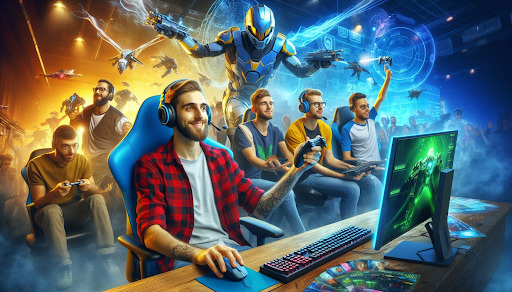
Advanced Streaming Platforms Transform Viewing
The rise of 1xbet has added new dimensions to how fans interact with eSports. This platform integrates live streaming with real-time updates, letting viewers stay connected to their favorite games. It supports a wide range of tournaments, ensuring fans never miss a moment.
Esports have been transformed with streaming sites. Good picture streams, timely broadcasts, and interactivity are experienced. Such services as Twitch and YouTube Gaming provide action in real-time and exceptionally clear images. The community members can converse, respond, and even impact streams by donating or subscribing. The platforms employ adaptive bitrate streaming that makes the playback buffer less frequent. More than 80 percent of eSports audience consumes tournaments through streaming, which went to confirm their leadership in the sector.
Real-Time Data Enhances Fan Engagement
Following the integration of live updates, 1xbet canlı takes fan engagement further with real-time data feeds. This feature delivers instant match stats, player performance metrics, and game updates. Fans can track scores, kills, or objectives as they happen, making every moment more thrilling. Real-time data creates a dynamic viewing experience, keeping audiences glued to the action. Over 60% of viewers prefer platforms with live stats, showing the demand for this tech.
Key Features of Real-Time Data Platforms
Real-time data platforms elevate how fans connect with eSports. They offer:
- Live Stats: Track player kills, assists, and objectives instantly.
- Interactive Overlays: Visualize game progress with dynamic graphics.
- Custom Alerts: Get notifications for key moments like game-changing plays.
These features make watching eSports more interactive and exciting, blending technology with entertainment. 
High-Performance Hardware Powers Gameplay
Elite hardware is what eSports competitors do at the core of competition. To optimize their play, players take recourse to using processors which are fast, monitors with high levels of refresh rates and responsive peripherals. Like the monitors that have a refresh rate of 240Hz minimise the motion blur and allow the player an advantage of split seconds. Mechanical keyboards provide accurate responses, which is important during the high-action games such as Valorant. According to a survey carried out recently, 95 percent of pro players utilize displays that contain refresh rates of 144Hz or higher.
Essential Hardware for eSports Players
In order to be a top-level competitor, players require:
- High-Refresh Monitors: Look to have 144Hz or higher to have smooth visuals.
- Low-Latency Peripherals: Mechanical keyboards and mouse used to be precise.
- High-end GPUs: Play popular games such as Dota 2 without any delays.
- This equipment can help players react within a short time and allow them to perform in intense matches.
Game-Specific Tech Optimizes Performance
Different eSports titles demand unique tech solutions. Developers optimize games for competitive play, balancing performance and accessibility. Below is a table showcasing popular eSports games and their tech requirements:
| Game | Provider | RTP (Response Time Priority) | Tech Features |
| League of Legends | Riot Games | High | Low-latency servers, anti-cheat systems |
| Counter-Strike 2 | Valve Corporation | Very High | 128-tick servers, precise hitboxes |
| Valorant | Riot Games | Very High | Anti-lag tech, customizable settings |
Each game uses specialized servers to minimize latency, ensuring fair and smooth gameplay. For instance, Counter-Strike 2’s 128-tick servers deliver precise updates, critical for competitive accuracy.
AI and Analytics Shape Strategies
Artificial intelligence is transforming the process of team preparation of eSports tournaments. AI tools are used to look at gameplay recordings and find out patterns and vulnerabilities. These insights are used by coaches to bring up winning strategies. As a case in point, AI is capable of monitoring the stance of a player within the game of Overwatch, indicating more efficient maps control strategies. Analytics software is currently used by over 70 percent of professional teams in order to get a competitive advantage. It is tech that assists players to hone their skills and adapt to opponents in real-time.
Benefits of AI in eSports
AI-driven tools provide clear advantages:
- Performance Analysis: Break down player stats to improve decision-making.
- Opponent Scouting: Predict enemy strategies based on past matches.
- Training Efficiency: Simulate scenarios to practice high-pressure situations.
These tools empower teams to stay ahead in the fast-evolving eSports landscape.
Access is Increased with Mobile Technology
eSports are easier to attend with the help of mobile gadgets. Such games as PUBG Mobile or Free Fire have millions of gamers and observers. Touch controls and lightweight applications on mobile are optimized to enable fans to watch or play anywhere. Among the eSports fans, more than 50 percent use mobile devices to watch tournaments. The sites also allow live chats, and notifications all the time, which makes the viewer remain active regardless of the location.
Top Mobile eSports Games
Mobile gaming is a major driver of eSports growth. Popular titles include:
- PUBG Mobile: Fast-paced battle royale with global tournaments.
- Clash Royale: Strategic card-based battles with quick matches.
- Brawl Stars: Team-based action with vibrant visuals.
These games make eSports inclusive, reaching audiences who may not own PCs or consoles.
Enhanced Streaming Features for Fans
Multi-angle viewing, instant replays are some of the features that are provided by streaming platforms now. The fans are allowed to toggle between the player views or see moments of importance in slow motion.
These amenities make tournaments interactive and 85 percent of viewers show interest in using platforms that offer some interactive capabilities. Machine learning is also incorporated to enable platforms to suggest highlights according to the user preferences, so that fans do not miss a vital play. This technology makes it an individualistic viewing process.
Interactive Streaming Tools
Fans love these streaming features:
- Multi-Angle Views: Choose between player or spectator perspectives.
- Instant Replays: Rewatch game-changing moments on demand.
- Highlight Reels: Get curated clips of the best plays.
These tools keep viewers hooked, blending technology with excitement.
Data-Driven Production Quality
eSports tournaments need high-quality production. Professional broadcasts are made by the advanced use of cameras, lights, and sound. It is through data-driven tools that the producers know which moments to feature, making the coverage dynamic.
As an example, heat maps indicate where the peak of action is during a game in order to make cameras focus there. The majority of viewers claim that the quality of production affects their enjoyment level, so this technology is necessary in order to keep the audience engaged.
The best production devices are:
- Heatmap Analytics: Can be useful in-game to view the action to adjust camera angles.
- 4K Cameras: These deliver good relay vision of clear, sharp pictures.
- Dynamic Audio: Adjust the sound on the basis of how intense the game is.
- The tools help in making the tournaments look like major sporting events, a spectator experience.
Future Tech in eSports
The changing trends in the sphere of technology, such as 5G and blockchain, will continue to revolutionize eSports even more since the 5G technology can result in ultra-low latencies, benefitting both gameplay and streaming.
Blockchain may provide safe in-game economy or reward fans. These innovations are promising in terms of a future that may be exciting. More than 30 percent of the eSports organizations are investigating 5G on tournaments, indicative of the future orientation of the industry.
The core of eSports is technology, which improves games and spectating in unlimited separations. Whether it is through streaming services to artificial intelligence analytics, these tools are making exciting, user-friendly experiences.