

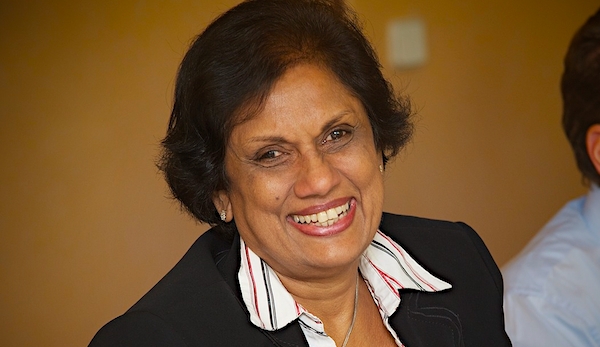
By Vipula Wanigasekera –

Dr. Vipula Wanigasekera
In the complex and often unforgiving landscape of Sri Lankan politics, few leaders have inherited a situation as daunting as Chandrika Kumaratunga. When she assumed office in 1994, Sri Lanka was already deeply entrenched in a brutal conflict—one she neither initiated nor escalated. Unlike the conditions that later enabled a decisive military end to the war in 2009, her presidency offered no such strategic or geopolitical advantages. Instead, she faced a protracted and uncertain war, with limited options and immense human and economic costs.
Yet, her approach reflected a rare blend of pragmatism and courage. She pursued peace negotiations, even at significant political risk, demonstrating a willingness to explore solutions beyond militarism. While these efforts did not yield a final settlement, they underscored a leadership style rooted in reconciliation rather than confrontation—an approach that, in hindsight, may have been ahead of its time.
Simultaneously, Kumaratunga had to grapple with the structural consequences of the open economic policies introduced in the late 1970s. By the time she took office, the country had become heavily import-dependent, with domestic production weakened. Critics often remarked—perhaps symbolically—that even basic items like pens and pencils were imported, illustrating the depth of economic vulnerability. Reversing or stabilizing such entrenched economic patterns while managing a war economy was no small feat.
Despite these severe constraints, her administration was able to maintain moderate economic momentum for much of her tenure, with growth hovering around the 4% mark in several years. However, this trajectory was sharply disrupted in 2001 following the attack on the airport, which dealt a heavy blow to investor confidence, tourism, and overall economic stability—pushing growth into negative territory for the first time in decades. In that context, even maintaining relative stability in the preceding years was a formidable challenge. It reflected not only a degree of macroeconomic resilience but also policy continuity and administrative functionality under exceptionally adverse conditions—an aspect often overlooked in contemporary assessments.
Equally noteworthy is the comparative absence of large-scale, systemic corruption scandals during her presidency. This is not to suggest that her administration was without flaws. Criticisms regarding governance style—such as reliance on a close inner circle, delays in attending meetings and decision-making, and perceptions of elitism—were frequently highlighted, including in the writings of Victor Ivan. However, when viewed against the backdrop of more recent governance challenges in Sri Lanka, these issues appear relatively modest. In many ways, they were overshadowed by far more serious allegations of corruption and mismanagement that characterized subsequent administrations.
Kumaratunga’s leadership must therefore be evaluated within its historical context. She governed during one of the most turbulent periods in the nation’s history, balancing war, economic transition, and political instability. Her ability to maintain institutional continuity and avoid major governance breakdowns speaks to a level of competence and restraint that deserves renewed recognition.
Today, as Sri Lanka continues to navigate economic recovery and political realignment, the question of leadership becomes ever more critical. While age and personal inclination may preclude her return to active politics, it is worth considering what her experience represents. In an era where governance often oscillates between extremes, her tenure offers lessons in moderation, resilience, and the difficult art of managing competing national priorities.
If circumstances were different—if energy and interest aligned—she might well be considered a strong candidate for leadership once again. Not because she was flawless, but because she governed during adversity with a degree of balance that is increasingly rare. In reflecting on her legacy, one is reminded that effective leadership is not always about dramatic victories, but about steady stewardship through the most challenging of times.
(Writer is a former diplomat and Head of the Tourism Authority, currently a lecturer, YouTuber, author, and meditation and Reiki therapist.)
Photo credit: https://www.dailymirror.lk/front-page/Chandrika-Kumaratunga-urges-people-not-to-be-provoked/238-165706
Year-by-Year GDP Per Capita Growth (Annual %) based on World Bank data
Nathan / April 22, 2026
Everybody speaks of a war, – the war. But, none speaks of what the war was about. How it came about? Was it a war? … .
Vipula Wanigasekera, Please begin your story with that.
/
Ocean11 / April 23, 2026
Yes the war came about as result of the suppression of the Tamil minority who were a minority in the country but were a majority in the North and East of the country.
/
SJ / April 23, 2026
What a daft oversimplification.
/
Ocean11 / April 24, 2026
Your sentence is a daft oversimplification.
/
Rohan25 / April 24, 2026
He is a devious person of great cunning with an agenda, who thinks he is all-knowing and very intelligent. Fortunately for him, he has a carefully cultivated echo chamber in this forum, which generally acts as a pack of wolves, supporting him. They pretend to be liberal, rational and not racist, but scratch the surface and all this pretence vanishes and they show their true colours.
/
SJ / April 24, 2026
Oh, the duo is now reemerging more openly.
A name change from ‘Rohi’ may have helped— but the style is a giveaway.
/
SJ / April 24, 2026
I should have been more precise and said ‘plain daft’ I guess.
/
vipula / April 25, 2026
Agree Nathan but my story is beginning from half way.
/
nimal fernando / April 22, 2026
I need an all paid up long vacation in Norway …….. and a trip to the Caribbean in a charted plane for a good Conga dance. To serve my country to the best of my ability.
–
Sweet dreams are made of these!
–
–
In Lanka, why does the truth, always take such a circuitous route to reach the destination?
–
Damned if I know!
/
vipula / April 25, 2026
Thank you Nimal for repeating this
/
Lester / April 22, 2026
This article is surely a joke. Because of her, the war lasted at least 10 years longer than it should have. The net GDP loss would measure in the hundreds of billions USD. Likely the most corrupt head of state since Independence (convicted by the SC). The mother’s swabasha nonsense encouraged (JVP) Marxist terrorists, while the father did nothing to prevent Tamil tiger terrorism. Her PM, Bond Scam Ranil, was about to sell the country with the help of Norway.
/
Ocean11 / April 23, 2026
“While the father did Nothing to prevent Tamil Tiger terrorism”. If you are referring to SWRD it was he who caused all turmoil and division that existed in the country by introducing the Sinhala only bill. He did this at a time when previously all other political leaders had agreed to consensus that both Sinhala and Tamil will be official languages in Sri Lanka.
Had we carried on with both Sinhala and Tamil as official languages yes the strife and war that continued would not have happened and yes the country would have in better place and the GDP would be a billion dollars higher.
As R Colvin De Silva predicted the one language policy led to 2 nations emerging. As he said “Do you want two languages and one nation, or one language and two nations?”
/
Ocean11 / April 23, 2026
“While the father did nothing to prevent Tamil Tiger terrorism”. If you are referring to SWRD it was he who caused all turmoil and division that existed in the country by introducing the Sinhala only bill. He did this at a time when previously all other political leaders had agreed to consensus that both Sinhala and Tamil will be official languages in Sri Lanka.
Had we carried on with both Sinhala and Tamil as official languages, yes the strife and war that continued would not have happened and yes the country would have been in a better place and the GDP would be a billion dollars higher.
As R Colvin De Silva predicted, the one language policy led to 2 nations emerging. As he said “Do you want two languages and one nation, or one language and two nations?”
If anything I would rank SWRD as the worst thing to happen to modern day Sri Lanka.
/
SJ / April 23, 2026
“He did this at a time when previously all other political leaders had agreed to consensus that both Sinhala and Tamil will be official languages in Sri Lanka.”
Did he?
Search to find who first proposed Sinhala Only.
What Tamil nationalists ignore was the resentment of a vast majority about inability to get even the smallest thing done without a knowledge of English.
in fact despite Sinhaa only being the law, the OfficialLanguage Department compiled glossaries for all subjects in science, technology and humanities, with no discrimination at all.
There were other dimensions to 1956 that narrow nationalists of all types ignore.
The Paddy Lands Act (something that the FP opposed), expulsion of foreign bases (also something that the FP opposed), legislation against caste discrimination (something that SWRDB persuaded the FP to let a Tamil MP propose, but no Jaffna peninsula MP would dare and the Trincomalee MP accepted), among other things that benefitted the poorer sections, Tamil, Sinhalese and Muslims.
*
BTW
The first major communal violence was in 1915 and targeted Muslims. The main Tamil politician stood by the SB chauvinists.
/
vipula / April 25, 2026
Thank you Lester. My story is a snap shot of an era that was subjected to circumstances.
/
Raj-UK / April 22, 2026
”….when viewed against the backdrop of more recent governance challenges in Sri Lanka, these issues appear relatively modest…”
Is the author referring to her hand in corruption or her style of ‘leadership’? Why didn’t she sue Victor Ivan to protect her unblemished character? True or false. it has been said that she borrowed jewelry from Padma Maharaja of her ‘inner circle’ to wear at her Presidential inauguration but had the money to buy property in fashionable St John’s Wood in London soon after her tenure. Was the money from a kind benefactor?
She appointed the loyal lapdog, MR as PM, probably to save the party her old man built, considered as the Bandaranayaka legacy, & when she couldn’t control him, went on to appoint another yob, Sirisena, all to no avail, the party is dead.. Is there a single contribution to the country that she can claim to be her’s?
/
vipula / April 25, 2026
Yes Raj I was with your version when VI published that book. This is my current version after seeing Governance after her tenure until now
/
vipula / April 25, 2026
You got valid points for discussion Raj. I too wrote supporting VI’s book at that time for making such exposure. And now after two decades , I am simply comparing with circumstances prevailed during her tenure
/
SJ / April 23, 2026
Whatever the excuses the author makes for CBK, she promised several things and went back on some even before she was elected.
Surely, she knew where the economy stood and she knew well of the need to end the war.
She was playing games with the national question which got nowhere, and she waged a ‘war for peace’ which strengthened the hands of the LTTE.
/
vipula / April 25, 2026
My point is if another person were in her position, he or she would have done the same as inter alia there was a time her Government was hanging in the parliament with just one seat majority
/