


By Jehan Perera –
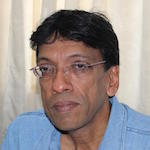
Jehan Perera
The government is preparing to meet the challenge of the UN Human Rights Council next month. A Sri Lankan delegation led by Foreign Minister Vijitha Herath is expected to attend the 63rd session of the UNHRC in Geneva, where the UN High Commissioner for Human Rights will present a written update on Sri Lanka. The government has already submitted its response to the advance version of the report prepared by the Office of the High Commissioner for Human Rights. The Foreign Minister, accompanied by officials from Colombo and Sri Lanka’s Permanent Mission in Geneva, is expected to explain the progress made on reconciliation, accountability and human rights. This is therefore an important moment for the government. It is an opportunity not merely to defend its record but to make new commitments.
The government has been criticised, as were its predecessors, for the manner in which it has dealt with past human rights violations, especially those connected with the thirty year war. The vexed issue of thousands of missing persons remains at the centre of this criticism. The government has sought to strengthen the Office on Missing Persons by providing it with additional staff and resources. It has also given support to the excavations at the Chemmani mass grave. Justice and National Integration Minister Harshana Nanayakkara has told parliament that the government has allocated Rs. 57 million for the excavations and related legal work, though that figure has not been set against the cost of comparable forensic operations elsewhere.
The government also took the significant step of holding a national event in Jaffna to mark the International Day of the Victims of Enforced Disappearances. Minister Harshana Nanayakkara attended the event together with the Chairman of the Office on Missing Persons (OMP), Mahesh Katulanda, and other senior officials and political representatives. Their presence was meant to demonstrate the government’s commitment to addressing the issue. But on the victims’ side there is continuing dissatisfaction. The commemoration in Jaffna was met by a protest outside the District Secretariat, organised by families of the disappeared, who demanded to know what happened to relatives who, according to their accounts, surrendered to or were taken away by the military and were never heard from again.
Jaffna Protests
The protests in Jaffna are a reminder of the gap that remains between what the government is trying to do and what the victims expect. For these families, compensation and death certificates are not substitutes for knowing what actually happened to those they lost. The protests, and the police action taken against some of those who demonstrated, were reported by the international and Tamil media and by international human rights organisations, and overshadowed much of what the government had hoped to showcase at the Jaffna event. The OMP’s mandate is to establish the fate and whereabouts of missing persons, clarify the circumstances in which they went missing, and provide redress and assistance to their families. Accordingly, it has sought to verify complaints, remove duplicate entries, encourage people who have not yet made complaints to come forward, and facilitate compensation and other forms of assistance. The families of victims expect the OMP to do more to clarify the circumstances in which their loved ones went missing. An example would be the disappearance of 158 displaced Tamil persons from the Eastern University campus in Vantharumoolai, Batticaloa District who were rounded up and forcibly removed in front of thousands of other similarly displaced persons, including the officer in charge Prof T Jayasingam.
The government has also increased the support available to families of the missing, and says it is accelerating the OMP’s investigations. But the scale of what remains undone is stark. There are around 11,000 complaints remain to be investigated, according to the Justice Minister, while the OMP has reported that final information has been established in only 31 cases, communicated privately to the families concerned. On the government’s own figures, that puts the clearance rate for establishing fate and whereabouts at well under one percent of the outstanding caseload. There is a limit to what the OMP can do even with more resources and time. Its mandate is primarily to establish the fate and whereabouts of individual missing persons. It was not intended to produce the comprehensive, public account of the past that victims and the country as a whole require.
In 2015, the government headed by President Maithripala Sirisena and Prime Minister Ranil Wickremesinghe committed itself to establishing such a commission as part of a comprehensive approach to dealing with Sri Lanka’s past. Human Rights Council Resolution 30/1, which the government co-sponsored, specifically welcomed the proposed establishment of a “commission for truth, justice, reconciliation and non-recurrence”, together with an Office on Missing Persons and an Office for Reparations. However, the commitment to a truth-seeking mechanism was never fulfilled. The government should consider setting one up now. There is a growing feeling among Tamil people in the North and East that the government is failing to deliver on promises that are important to them. On issues important to them, they feel this is once again a Sinhala-dominated government like all the ones that came before.
Establish Truth
For the past two years the government has been concentrating on problems that it deems are important to the country as a whole such as the economy, development, poverty alleviation and corruption and criminality. However, the government needs to demonstrate that national unity means addressing the concerns of all communities, including those whose wounds from the war remain unhealed. Some of its own institutions have begun to act on this. The Office for National Unity and Reconciliation recently staged a drama entitled “From Yakaweva to Nandikadal”, depicting relationships between people that transcend the destruction caused by war. The drama portrayed the sufferings as well as the prejudices on both sides of the divide, from the Kebetigollawa bus bombing to the final days of the war around the Nandikadal lagoon. Its central message is that without forgiveness there cannot be reconciliation.
Particularly moving was the fact that the actors themselves came from families touched by the violence on both sides. The son of an LTTE Black Tiger leader and the daughter of an Army officer were among those who performed, alongside others who had experienced and survived some of the sites of carnage. The fact that a state institution is taking this message of reconciliation forward is itself a testament to the government’s openness to dealing with the past. A government institution can reach a population far larger than any civil society campaign could reach on its own, simply because the machinery of the state is so much more extensive. It is in this context that the government needs to give serious thought to setting up a Truth and Reconciliation Commission as the next step in the truth-seeking process. Special care will need to be taken to ensure that those who are appointed are not only politically non-partisan, but are acceptable to all the communities.
A Truth and Reconciliation Commission cannot by itself resolve all the wounds of the past. Nor can it replace criminal investigations or judicial proceedings where these are necessary. But it can provide something that existing institutions cannot provide on their own. This would be a comprehensive national process through which victims can be heard and the truth can be established. The general population needs to understand what happened, so that the country can begin to acknowledge its past without passing it on indefinitely to future generations. The government has already taken several steps. It is supporting the search for the truth at Chemmani. It has begun reaching out to families of the disappeared. Its own institutions are producing messages of reconciliation. But these are still not delivering the results that the victims and their families want. For Sri Lankans, mass graves are symbols of both loss and failed accountability. A truth and reconciliation commission could be a strategy to deal with both issues.
leelagemalli / September 1, 2026
Readers,
–
Talk Is Cheap. Results Matter.
–
The growing contrast between Industry Minister Sunil Handunnetti and his predecessor is becoming difficult to ignore.
–
https://www.youtube.com/watch?v=pkyoHbwwRjU&t=776s
–
The previous minister was ridiculed over his limited formal education—often reduced to the claim that he had only reached Grade 5. Yet, despite that, his tenure in the sugar industry is said to have produced profits. Today, however, reports and allegations suggest that the Sevanagala sugar operation under the present administration has accumulated losses running into around LKR 10 billion. If that figure is accurate, it raises a very serious question: how can a government that promised efficiency, accountability and better management justify such a massive deterioration while continuing to speak about expansion and even exporting sugar?
–
Tbc
/
leelagemalli / September 1, 2026
cont.
The same question applies to the state-backed sugar retailing ventures, which have also reportedly suffered losses. Handunnetti is undoubtedly one of the most vocal and politically polarising figures in the JVP/NPP administration, but political speeches cannot replace economic results. There are also public allegations and questions concerning how his daughter’s education in a UK university is being financed and whether the source of those funds has been properly explained. Those allegations should be independently investigated rather than dismissed or treated as proven facts. But the larger issue goes beyond one minister or one family: the NPP came to power by portraying previous governments as deeply corrupt and incompetent. Therefore, it has an even greater obligation to demonstrate transparency, competence and measurable results.
–
Tbc
/
leelagemalli / September 1, 2026
cont.
If the reported figures are correct, the comparison is extraordinary: the Central Bank bond scandal has often been discussed in terms of a loss of roughly LKR 0.1 billion, while the alleged losses now associated with the sugar industry are said to be around LKR 10 billion—a difference of two orders of magnitude. The public is entitled to ask how the government will respond when the opposition starts putting these numbers under the spotlight. The real test of any government is not how convincingly it talks, but what it actually delivers. And if criticism becomes increasingly uncomfortable, the answer cannot be to silence, intimidate or imprison those who challenge the government. People did not vote for slogans; they voted for results.
/
Jit / September 2, 2026
“……The government has been criticised, as were its predecessors, for the manner in which it has dealt with past human rights violations……”
Nonsense!! Who can finish four decades of piled up murders within 24 months people? Already so called ‘Ranaviruvo’ including Commanders of the Forces have been arrested and on bail! And reforms to judiciary – despite severe protests – are going ahead! Man, what else can a government do!!
/
Rajash / September 2, 2026
Jaffna is protesting for the last 70 odd years.
The Sinhala polity has been showing scant respect.
/
RBH59 / September 3, 2026
Positive develop for long standing grievance
From a global perspective, the present Sri Lankan Government has taken a positive step by introducing the new 22nd Amendment.
It is an important move toward strengthening judicial reform, accountability and the rule of law.
A strong and independent judiciary is essential for protecting human rights and democracy.
Corruption and criminality, including at high levels, must be addressed without delay.
No one should be above the law, regardless of position or influence.
The Amendment can help strengthen public confidence in the justice system.
It also represents progress in addressing long-standing public grievances.
Sri Lanka should implement these reforms transparently and effectively.
This positive development can be presented at the forthcoming UN human rights session.
We hope the UN will recognize it as a constructive step toward stronger human rights and justice.
/
Ajith / September 3, 2026
“For Sri Lankans, mass graves are symbols of both loss and failed accountability”
Why the NPP not now talk about the mass graves of Sinhalese youth in 1971 or in 1989/90? They are now rulers. Once they joined rulers, they are not prepared to talk about it. There is a difference between Sinhalese killed Sinhalese for Power, But what happened in the North East a genocide against Tamils where the current rulers also part of it.
/
nimal fernando / September 5, 2026
“Jaffna’s Protests Are A Warning Sign”
–
–
You must be joking! …….. Is it only in Jaffna they are protesting?
–
Lanka is a nation of protesters!
–
The Sinhalese protest even better than the Tamils!
–
Look at all the protests going on in Colombo ……. all those protests …….. are a warning sign to whom?
/