

By R Hariharan –

Col. (retd) R.Hariharan
The month of August lived up to the caption of “the living, dead and disappeared.” The month saw the end of the 10-day Kandy Esala Perahera festival in all its glory. The festival is organized by the Sri Dalada Maligawa (Temple of the Sacred Tooth Relic) is a grand expression of Sri Lanka’s ancient Sinhala Buddhist heritage of their religious and cultural traditions. Over 60 to 100 elephants participate in the Esala Perahera during its peak nights. The final night, known as the Grand Randoli Perahera, features the largest gathering where about 100 caparisoned elephants walk along with over 1,000 cultural performers. There had been a fall in the number of tame elephants. The surviving elephants are advanced in age or have health issues. Temple officials often struggle to clear more than 60 to 70 healthy elephants fit enough to participate in the strenuous multi-hour parades. At least four vets attend daily to ensure the elephants don’t fall sick.
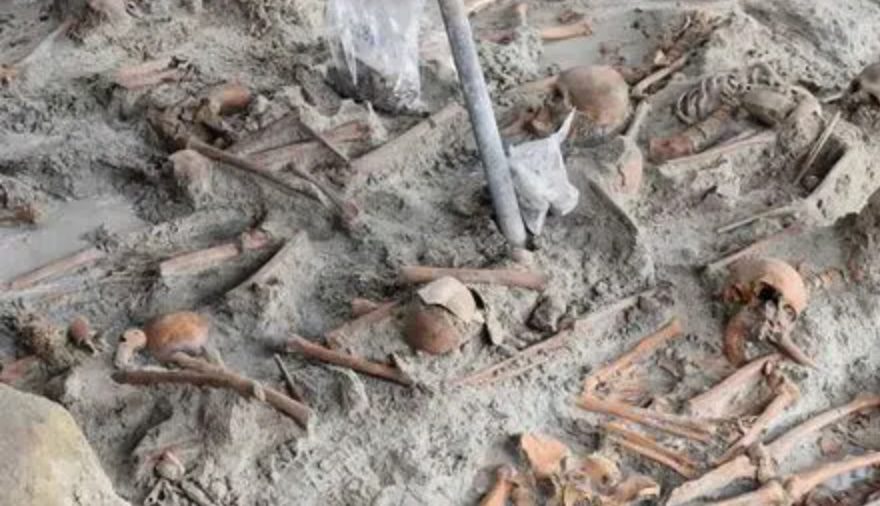
The third phase of excavations at the Chemmani mass grave site near Jaffna, Sri Lanka, concluded on August 19, 2026. After 110 days of excavation across three phases, 583 identified sets of remains have been recovered. However, archaeological, forensic and carbon-14 dating examinations remain. A meeting of the authorities scheduled on October 14 is likely to take decisions on how to proceed thereafter. Excavations have been going on for 110 days and so far 583 sets of human remains have been recovered. However, the process remains heavily dependent upon pending archaeological, forensic and scientific assessments.
Chemmani’s discovery explains the seamless connection between the living, dead and missing as it is related to the rape and murder of school girl Krishanty 30 years ago by soldiers at Chemmani. Her mother, younger brother and a family friend were also killed when they went searching for her. The convicted soldier is said to have disclosed the existence of mass graves at Chemmani when he was prosecuted. The Island, Colombo daily has reported the possibility of a fourth phase of excavation. The Judicial Medical Officer is expected to submit a proposal to the court seeking approval for a further 28 days of excavation. If the court grants approval, the proposal would then need to be forwarded to the Ministry of Justice for funding before any further excavation could begin. Funding has already been allocated for examinations of the remains that have been excavated, and steps are expected to be taken to begin those investigations. According to the Island “Despite 110 days of excavation and the recovery of 583 sets of human remains, the process remains heavily dependent on pending archaeological, forensic and scientific assessments, with no definitive findings from those examinations yet available.”
Towards the end of the month on August 30 – another event of immense relevance to Sri Lanka – the International Day of the Victims of Enforced Disappearances was observed globally. The year marks the 20th anniversary of the adoption of the International Convention for the Protection of All Persons from Enforced Disappearance, by the UN. It highlights the ongoing global crises and the demand for accountability of states. According to Relief Web, the International Committee of the Red Cross (ICRC) tracks roughly 284,000 actively registered missing persons worldwide due to armed conflict. Based on this specific humanitarian baseline, three decades of war with Tamil separatists and two Sinhala insurrections has given Sri Lanka the dubious distinction of having 60,000 to 100,000 people – that is 21% to 35% of historical global conflict caseloads of enforced disappearances.
The callousness with which the issue of enforced disappearances of such a large number of the population has been handled in Sri Lanka is in sharp contrast to the way captive elephants that take part in Esela Perahara are treated. The Sri Lankan government enacted the landmark Fauna and Flora (Protection, Well-being and Regularisation of Registration of Tamed Elephants) Regulations No. 01 of 2021 to crack down on widespread cruelty and illegal ownership of captive elephants, This law introduced specific mandates for daily care, tourism, and working conditions for captive elephants. Strict legislation demands that they must be provided with specific healthy diets to sustain their energy. At times, the government has provided police or military escort to elephants travelling to Kandy to protect them from crowds.
Though the Eelam War ended in May 2009, the Bill to establish the Office on Missing Persons (OMP) was presented in Parliament more than seven years later, on 22 June 2016. The Office on Missing Persons (Establishment, Administration and Discharge of Functions) Act, No. 14 of 2016 (OMP Act) was passed in Parliament on 11 August 2016. But it took two years to activate the OMP when President Maithripala Sirisena was in power, on 28 February 2018. The OMP has been functioning in fits and starts; this is evident from its website https://www.omp.gov.lk. On the International Day of the Victims of Enforced Disappearances, OMP’s Executive Director Dr Jeganathan Thatparan said though the OMP maintains 16,917 files of active cases of the reported 23,352 cases of missing persons, only 25 persons have been verified so far. Explaining the problems at a press meet on August 14, Dr Thatparan said the problem was duplicate cases of the same person.
Financial allocation
The recent operational allocations represent an increase in focused funding for investigations of missing persons compared to previous years. However, the broader capital budgets for reparations have decreased or fluctuated compared to the high-water mark allocations initially established when these independent bodies were first set up. Despite the tight financial situation, for the 2026 fiscal year Sri Lanka Government has earmarked specific operational and compensation budgets divided across its primary transitional justice set up. This shows apart from political considerations of making a headway in the North and East, modicum of sincerity in the current NPP dispensation in Colombo.
Missing Persons Investigations: This fiscal Cabinet has allocated Rs. 375 million to the OMP. This funding is specifically to clear the backlog of roughly 11,000 pending investigations through 25 specialized investigation committees, aiming for completion by 2027. In its initial years around 2018, the OMP was granted a substantial initial allocation of Rs. 1.3 billion to build infrastructure, regional offices, and digital tracking databases. However, in subsequent fiscal cycles, as the infrastructure was completed, the allocation normalized to a much lower baseline. The recent injection of Rs. 375 million sends a clear message that President Dissanayaka government is serious about investigating the missing persons. At the same time, it is also meant to cover a sudden recruitment drive of 69 specialized legal, psychosocial, and field tracing staff to clear the backlog of roughly 11,000 cases.
Mass Graves (Exhumation): In the case of exhumation of mass graves, budgets are approved piecemeal out of judicial allocations, national security ministries or supplementary local court finances whenever a magistrate officially orders an investigation. Such historical allocations were utilized during the Mannar and Matare excavations. The government has allocated local finances on an ongoing, project-by-project basis under judicial oversight. For example, a specific judicial budget of Rs. 12 million was authorized for the initial exhumation phases at the Chemmani mass grave site in Jaffna, with further financial commitments pledged locally as court directives dictate.
Reparations for Conflict-Affected Persons: Historically, Sri Lanka has never allocated a permanent, centralized annual budget line for mass grave exhumations. In the 2019 National Budget, the Sri Lankan government had originally approved a sum of Rs. 500 million package for interim relief specifically targeting families of the disappeared (structured around monthly subsistence allowances of Rs. 6,000 per family holding a Certificate of Absence) According to the Office for Reparations Annual Action Plan, Rs. 300 million has been estimated for “Death and Property Loss” applications earmarked for conflicts in the North and East. Additionally, a similar amount is earmarked for granting revival or interim payments specifically to missing persons’ families. According to the media, the government has successfully disbursed initial interim/revival support to more than 5,700 families island-wide.
Delivering transitional justice
Gautama Buddha’s teachings on governance focus on three things: moral responsibility of rulers, eradication of poverty, and leading by ethical example. In ancient Buddhist texts, the term “king” (Raja) represents what we modernly define as the government. The primary framework for a government’s responsibility is found in the Dasa Raja Dharma (The Ten Duties of the King) from the Jataka texts. In the modern context as a Buddhist nation Sri Lanka government has a duty to be Generous (Dana), Moral (Sila), Altruistic (Paricca), Honesty (Ajjava), Gentleness (Maddava), Self-Control (Tapa), Non-Anger (Akkodha), Non-Violence (Ahimsa), Patience (Khanti) and Non-Opposition (Avirodhana). Translated in simple terms the administration must act with transparency, sincerity, and absolute loyalty to the public, avoiding corruption. Hope AKD’s government understands that those seeking transitional justice are his people and follow Raja Dharma as laid down by Buddha.
Tailpiece: Sri Lankan authorities have brought back 66 suspects linked to organized crime and drug trafficking who had fled abroad, since the NPP government came to power. Police investigated 113 cases involving these suspects, resulting in the freezing of assets worth Rs. 6,000 million. Of this, Rs. 5,423 million in assets belong to 102 drug trafficking suspects, while Rs. 209 million belong to three organized crime figures. Assets worth Rs. 367 million tied to eight individuals connected to pyramid fraud, child abuse, and explosive material offenses. Among the frozen assets are 2 kilograms and 1,404 grams of gold, 136 acres of land, 55 houses, and 142 vehicles.
*Col R Hariharan VSM, a retired MI specialist on South Asia and terrorism, served as the head of intelligence of the Indian Peace Keeping Force in Sri Lanka 1987-90. He is associated with the Chennai Centre for China Studies.