

By Basil Fernando –

Basil Fernando
It has been noted by many that every problem in Sri Lanka turns into a national crisis in no time. This accumulation of crises has now brought the country to a position where a major breakdown of society is being predicted by many. So, it is time to stop this.
The strength of any society is its capacity to act and resist at the early stages when a problem arises. If that value is internalized, and the society has that strength, action will happen automatically. Unfortunately, Sri Lanka is widely acknowledged as a society that lacks that capacity, and people often accept every problem with indifference. This indifference to fighting against evil has almost become a national characteristic. Some say that you can never overcome this. However, if it continues this way, we will go from one peril to another, and the country’s instability will also continue.
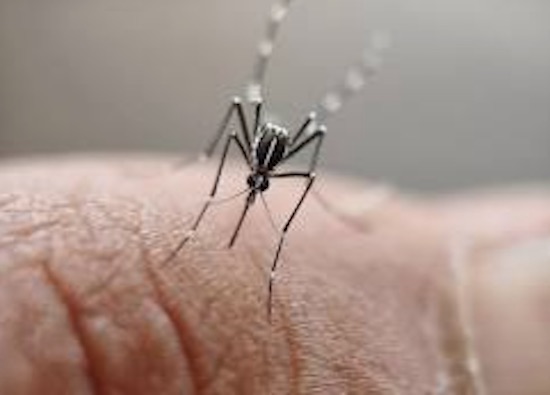
So, this time we are suggesting one such action. This action is that everywhere we live, in our own localities, whether small or large, we form small groups to take care of that area and keep it clean. If, in each area, people take responsibility and do what is necessary to keep that place clean, then very soon the mosquito will face the greatest threat from the people that it has ever faced in this country.
Once, in the early 20th century, something similar happened when people resisted malaria, and we were one of the countries with an international record of doing it very successfully. So, there is this example, and we could try to revive this as a collective effort. There need not be any kind of political covering for this. This is simply a people’s action for their own protection, taken independently as a citizens’ initiative.
There is the fullest freedom for anyone to do whatever they can to prevent these disasters, which are not only claiming lives but could also lead to even more severe consequences.
So, we are calling on you to take this initiative everywhere, on your own. And we hope that, if that happens, we will see something that helps us regain our capacity to react to evil.
This is a note from a voluntary group for the protection of people and solidarity. This has nothing to do with any project. This is urging the completely free participation of citizens, trying to carry out their obligations to their own people and also to themselves.

leelagemalli / June 24, 2026
Dengue and other mosquito-borne diseases are not new to Sri Lanka, and while governments have an important role to play, long-term success cannot depend on government action alone. Many mosquito breeding sites are found in our own neighborhoods, homes, vacant lots, drains, and public spaces. This is why community participation is essential if we want to reduce dengue cases in a meaningful and sustainable way.
One lesson Sri Lanka can draw from countries such as Japan is the culture of taking responsibility for shared environments. Cleanliness is not viewed solely as the government’s duty; citizens regularly contribute to maintaining their surroundings. If urban and rural communities organized regular cleanup activities, inspected potential breeding sites, and encouraged responsible waste disposal, mosquito populations could be significantly reduced before outbreaks occur.
At the same time, this does not absolve authorities of their responsibilities. Governments must continue to provide efficient waste collection, maintain drainage systems, enforce public health regulations, and address major environmental hazards. The most effective dengue prevention strategy is a partnership between government and citizens, where both sides contribute consistently rather than reacting only when an outbreak becomes a crisis.
/
leelagemalli / June 24, 2026
South Asian politics can often appear difficult for outsiders to comprehend because political narratives frequently differ from political realities.
–
In Sri Lanka, the current government came to power on promises of far-reaching systemic change, claiming that previous administrations had prevented the country from moving forward. However, nearly two years into its term, many critics argue that it has struggled not only to deliver major reforms but also to effectively address everyday governance challenges. Issues such as dengue control, public administration, and the management of essential services remain areas of concern. President Anura Kumara Dissanayake and his administration have faced growing criticism for failing to match their strong opposition rhetoric with practical results in government. Political opponents often point to past statements made by NPP leaders as evidence of a gap between promises and performance.
–
The government continues to highlight achievements such as economic stabilization, attracting investment, and meeting IMF-related targets, yet many citizens still face difficulties accessing essential goods, medicines, and economic opportunities. Critics argue that the administration overestimated the impact that reducing corruption alone would have on national prosperity and that many of its earlier claims have not been substantiated in practice. Significant structural reforms that were once presented as transformative have yet to materialize, leading some observers to conclude that governing a complex nation is far more difficult than opposition politics. At the same time, supporters maintain that meaningful change requires time and that the government remains the best option for addressing Sri Lanka’s long-term economic challenges.
/