


By Jehan Perera –
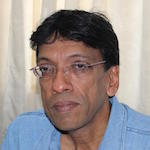
Jehan Perera
In contrast to intolerance in governance and towards others who are deemed to be outsiders that is increasingly being manifested in the world, Sri Lanka is taking a different path. It is adopting an inclusive approach to all communities that is in the national interest and is winning international support. The country’s recent conduct at the UN Human Rights Council (UNHRC) is a case in point. Rather than forcing a vote that would have been divisive and that would have pitted Sri Lanka against the Western countries promoting the resolution, the government opted for cooperation over confrontation. By doing so it signaled to the international community that the country is not taking sides internationally and prefers engagement and dialogue to confrontation and defiance.
This choice is consistent with an evolving domestic policy of inclusion. There was a time when governments in Sri Lanka treated those from some minority communities as aliens and threats to the nation. This began at the dawn of Independence with the disenfranchisement of the Tamils of recent Indian origin (Malaiyaha Tamils) in 1948 who were, at that time, the biggest ethnic minority in the country. Such early policy decisions set the country on a path of mistrust between communities and laid the foundations of a conflict that was both violent and prolonged. By contrast, the vision articulated by the present government in regard to the ethnic conflict is that every Sri Lankan citizen is equal and discrimination will not be permitted.
These are still early days for the government and this vision has still to be realized in practice. The absence of Tamil and Muslim representation in the Cabinet and in key national initiatives such as the Clean Task Force need to be addressed. The slow pace of progress on devolution of power further distances minority communities from meaningful participation in governance. Despite repeated assurances of inclusivity, the government continues to overlook the plural character of Sri Lankan society in issues of governance. On the positive side there are indications that the government is keen on treating everyone equally. The government is applying this policy across the board to other communities as well.
Protecting Minorities
The government is now planning to apply the principle of equality and non-discrimination to the LGBTIQ community, which is also a minority community that suffers from prejudice and discriminatory laws. This was not always the case. Homosexuality became a legal offence in Sri Lanka only with the imposition of the British Penal Code of 1883. The historical records show that the country had a liberal ethos prior to the colonial era which needs to be regained. The government needs to amend the archaic laws dating to the colonial period that criminalized same sex relations. These are laws that Britain itself has shed, and which neighboring India has struck down. The government has also indicated through the Tourist Board that those who belong to the LGBTIQ community worldwide are welcome to visit Sri Lanka as tourists.
Likewise, the government is moving to protect the rights of another minority community, the children of the country, who could be considered a minority community as they are powerless in the face of adult power. At present they are subjected to corporal punishment by their elders, often in the name of discipline. There are many in educational and religious institutions who believe int this practice and demand the discretion to use corporal punishment. The abuse of this power, whether in the school or home, is likely at the root of the culture of violence that manifests later in police torture and university ragging. It is a most unhealthy practice for adults, whether parents or teachers, to use violence against children who cannot defend themselves and depend on those very adults for their sustenance.
The values that the government is demonstrating with regard to the LGBTIQ community and to the protection of children are in accord with its pledges with regard to national reconciliation. Those who oppose it claim that the government is following alien (meaning Western) values. But loving-kindness and non-violence are part of the religious and cultural ethos of Sri Lanka and these moves suggest a coherent approach to governance rooted in fairness and inclusion. They indicate that the government understands that reconciliation is not only about resolving ethnic grievances and that inclusion cannot be compartmentalised. A democratic government needs to protect all its minorities whether ethnic, sexual, or generational.
Action Now
The most recent UNHRC resolution lists out a long list of actions that the government needs to take. These include finding missing persons or the truth about what happened to them, release of those held in detention under the Prevention of Terrorism Act (PTA), the repeal of the PTA, return of land, demilitarization of the north and east and restoration of the devolution of power by holding the long postponed provincial council elections. The UNHRC resolution also continues with the “Sri Lanka Accountability Project” which the government objected to just as previous governments have. This is a mechanism located in the UN High Commissioner’s office in Geneva which collects information and data on human rights violations and war crimes that have taken place in Sri Lanka.
Ever since the war ended bloodily on the military battlefields, the concern of successive Sri Lankan governments has been the demand, emanating in the main from the victim Tamil community, for accountability and war crimes trials that go beyond the national authorities. This meant an international demand for foreign judges, as in previous resolutions by the UN Human Rights Council or for action by the International Criminal Court. But this time around, the Sri Lankan government appears to have been able to convince the international community of its sincerity in taking the reconciliation process forward through domestic and national processes. Its consistency of approach appears to have convinced the international community during the UNHRC deliberations.
Overall, the UNHRC resolution calls for the reconciliation process to take place through domestic or national mechanisms as promised by the government so that the final decisions are made by Sri Lankans and not by foreigners. This major concession by the international community is likely to have been the reason why the government did not wish to go for a divisive vote. A confrontational approach might have pleased hardliners at home, but it would have squandered the international goodwill that has only now begun to return. The decision not to force a vote, and to mobilise some countries to vote against other countries was not an act of weakness but of prudence. It showed that the government recognises it cannot afford to be isolated or placed in a corner.
The economy continues to be in a precarious condition due to the economic collapse of 2022 (no fault of the present government) and a quarter of the population lives below the poverty line (double that of 2019). The country has lost close to a decade of development. It needs all the international assistance it can get from all quarters. Under the present government, Sri Lanka looks set to break decisively from its past, the opportunity is now and needs to be taken up without delay. The reconciliation promises repeated in Geneva must be reflected in the north, in the east, in the central hills and in every community that awaits justice. If the government acts now, it will not only restore the country’s credibility abroad but rebuild unity at home through its inclusive approach.
Nathan / October 14, 2025
… The absence of Tamil and Muslim representation in the Cabinet and in key national initiatives
The above statement, contrasted with,
… the vision articulated by the present government in regard to the ethnic conflict is that every Sri Lankan citizen is equal,
tells me that the vision remains only a slogan.
/
Ajith / October 15, 2025
“The absence of Tamil and Muslim representation in the Cabinet and in key national initiatives.”
If you look at the Tamil speaking ministers, none of them have sufficient education or professional qualifications. This is because NPP have never worked among Tamils before 2024 or Tamils never trusted NPP. Even NPP had the opportunity because of the Sinhalese people rejection of past Politics and Tamils rejection of past Politics.
/
SJ / October 17, 2025
Are you sure?
Some may be better educated than you.
/
J.C. Lately / October 15, 2025
Nathan, you’re right. Which relative or hanger-on should hold any ministry was MaRa’s policy. Now, the ministry is determined first and only then a suitable minister is appointed. Only in the case of the Speaker they have screwed up; first with the one who didn’t know how to wear the wig and now with one who has difficulty pronouncing the word constitution. Actually, the deputy speaker should have been made speaker who as a Muslim is conversant in all three languages and whose deportment is impeccable. Also, it is hoped in this year’s budget they have made provision for a new gown for the speaker as the present one has seen better days.
/
chiv / October 15, 2025
Take a look at the today’s article on DM ” Deshabandu and the Weligama Hotel shooting incident” – committee of inquiry report.
Reflects the extend to which our Low and Odor is corrupted, criminalized, dysfunctional and failed.
Imagine how these kind of criminals were behind political killings, journalist murders, kidnapping and disappearance, Easter Mayhem, staging communal conflicts , violating fundamental rights, unlawful activities . . . . . .
Over the years, this criminal alone was used by different Presidents, including Mara, Gota, Pissu and Ranil, for their unlawful activities.
There are two others mentioned in the report DIG Jagath Chandra Kumara and acting Director CCD , ASP Neville de Silva, where no action is taken yet.
/
old codger / October 15, 2025
Chiv,
Take a look at this list of DIG and SSP rank officers according to RTI.
I you can find one non- Sinhalese among the 100-plus names, please let me know. Perhaps this is part of the problem.
Why has the current government done nothing about this?
https://www.police.lk/?page_id=1326
As an interesting aside, I found an officer with probably the longest name in the country:
SSP .D.W.B.A.W.G.R.B.H.W.A.B. Hakmana.
/
SJ / October 17, 2025
oc
Has it gone into the Guinness Book of Records?
/
Naman / October 17, 2025
“an inclusive approach to all communities”
This is what the Tamil Speaking Citizens[TSC] in SL & Outside expect the NPP Government to do.
TSC are watching the actions taken towards the economic developments in the North & East = Up country
by GoSL. The money that has been allocated to the Ratmalana Airport should have been allocated in developing the JAFFNA airport. International financial help could be sought to develop the PORTS at KKS & Trincomalee. Return of the private lands that are being occupied by the Defence forces.
/
Naman / October 17, 2025
Tamils have been treated like a step child by all the various governments from the time of independence.
The 1070s International conference was violently DISTRUPTED by the Srimavo’s government. In 1980’s the Jaffna Library with its ancient valuable books was burnt down by the STATE sponsored terrorism.
JVPers were supporting the racists governments of the past. If there are political prisoners still languishing in the prisons, they should be pardoned and released. Those refugees in India or other countries should be allowed to return to their motherland without being arrested
/
SJ / October 17, 2025
“The 1070s International conference was violently DISTRUPTED by the Srimavo’s government. “
UNTRUE.
The 1974 conference went smoothly until the last day when there was an incident in a massive public meeting where police firing into the sky caused a stampede in which seven people died.
/
Rohan25 / October 17, 2025
According to Tamil Newspaper reports, the so-called fake Archaeological Department, largely run by Sinhalese Buddhist Fascists and extremists, is still trying its best and making moves to appropriate the ancient Tamil Saivite and Buddhist site and ruins in Kurunthoor and the surrounding 400 acres of land, around Thanimurippu in the name of fake history and Archaeology and convert this once ancient Tamil Saivite/Buddhist site into a Sinhalese Buddhist site and settle outside Sinhalese on all these appropriated from the local Tamil Hindu villagers, whose ancestors built these ancient religious monuments and worshipped there.
/
Rohan25 / October 17, 2025
In all other countries, an ancient religious or historical site or ruin is preserved, maintained, and the ruins are not disturbed, so that historians, anthropoligists and archaeologists can visit these sites, research and learn, and the true history is told. However, in Sri Lanka, all ancient Tamil historical and heritage sites, whether religious or historical, especially Buddhist and at times Saivite,, are falsely claimed by the fake Archaeological Department as ancient Sinhalese sites, to deliberately erase the ancient Tamil history and heritage on the island, to prove that the Tamils are recent arrivals and the Sinhalese are the ancient indigenous people, especially in the border Vanni and Eastern areas, , with fake concocted history and hundreds of acres of Tamil lands surrounding these ruins are also appropriated in the name of Archaeology and the original Tamil inhabitants chased out and outside Sinhalese settled.
/
Rohan25 / October 17, 2025
They immediately build a new huge Sinhalese Buddhist Vihara over this ancient ruin, and then the site declared sacred, so that no one could dig, research or find the actual truth, and to further strengthen their fake history and claim, the surrounding areas were immediately ethnically cleansed of Tamils and Sinhalese settled, with the strength and resources of the Sinhalese state. Strange, even huge ancient Viharas in Anuradhapura were endowed with around 25-40 acres of surrounding lands by the king for temple use. Still, the fake Archaeological Department claims that this remote ancient Tamil Buddhist/Hindu site had 400 acres of temple land endowed to it. No Tamil Buddhists exist, so they think that they can claim all ancient Tamil Buddhist ruins in the north and east can now be conveniently claimed as Sinhalese. They should even go the South India and claim all the ancient Buddhist ruins in Tamil Nadu and Andhra as ancient Sinhalese Buddhist ruins and make a claim that ancient Sinhalese lived there too. This government is continuing on the same Sinhalese Buddhist pathway as all previous governments.
/