

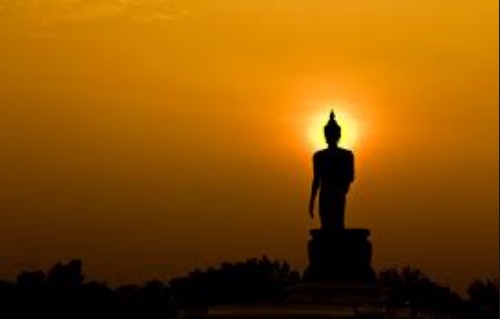
By Sarath Dissanayake –

Sarath Dissanayake
It’s Indeed an honour and privilege to pen this write-up on Buddha; The Enlightened One, and the essence of Dhamma, and his boundless compassion and loving kindness towards all beings – an epitome of humanity, peace and enlightenment.
As the Buddhists commemorate and celebrate the Thrice Blessed Day of Vesak on 30th May, there’s absolutely no better time than now to reflect on Buddha’s infinite wisdom, spiritual awakening and timeless Buddhist teachings. Let me be clear at the outset that I approach this topic with utmost respect for all religious leaders and faiths, and hold absolutely no malice toward any religion or faith leader; nor do I intend to claim the superiority of any specific religion or leader.
Buddhists in General are not What They Appeared To Be
Even-though a vast majority of people of my vintage call themselves die-hard-Buddhists, yet they continue to believe in mythical and misconceived perceptions of Buddhism – albeit sounding them prejudicial and hypocritical. Simply put, I can’t help thinking why on earth are they so engrossed themselves in seemingly flawed narratives of Buddhism as opposed to hallowed spiritual doctrine and dispensations. Aghast, their convoluted lopsided paradigms of ignorance and delusion stand fundamentally against the very foundations of Buddhism that is commonplace today among the ordinary temple-goers. Perhaps, it may well be the case that even a good majority of Buddhist followers in the country are supposedly in the dark, who would invariably fall into the category of Buddhist stereotypes with romanticized fixations of Buddhism. To my understanding, their emotional allegiance to Buddhism inter-alia, is driven by their natural instincts and desires towards (1) worshipping divine objects, symbols and idols, (2) patronizing overly obsessive acts of devotion and meritorious deeds (3) embracing community-spirited ethos, values and traditions. Needless to note, such mundane religious practices and divine offerings usually go hand-in-hand with temple-based merit-making endeavors.
What It Means to be Buddhist
Interestingly, the obvious question that may ring in the minds of many would be “what makes someone a Buddhist”. In Buddhist wisdom, a Buddhist is not measured by knowledge or success, but by one’s intention and conduct. Obviously, a calm mind, a gentle heart, and harmless actions are considered greater riches than gold. After all, humanity is best judged not by its power, wealth, or monumental achievements, but by its capacity for empathy, its resilience in the face of adversity, and how it treats its most vulnerable members. Ultimately, our legacy is measured by the enduring grace and compassion we extend to one another. In reality, being real means living honestly : not pretending, not performing, not hiding behind masks to be accepted, being humble means knowing your worth : without needing to prove it or place yourself above others, and being kind means choosing compassion : even when it’s inconvenient, unrecognized, or unreturned.
Buddhism – A Philosophy and Way of Life
Be that as it may, what the people in general haven’t realized is that Buddhism is not a religion: but a philosophy and a way of life – meant to be understood literally, and not metaphorically. Buddhism is certainly not for the ordinary, but for those with extraordinary spiritual wisdom, wholesome virtues and moral high grounds. Taking refuge in Buddhism is the act of formally committing to the Buddhist path or Buddhist way of life. It is not asking for blind protection, but rather taking the Three Jewels as one’s guide: the Buddha, the Dhamma, and the Sangha. It is simply the act of seeking sanctuary or blessings – not out of blind faith, but out of reasoned confidence in the path to enlightenment. There are approximately 41,000 Buddhist monks residing at over 13,000 temples scattered across the country. Oftentimes, these monks too can be seen accustomed to sentimental acts of religious depictions and reverence of spiritual symbols at temples. It goes without saying that such symbolic portrayals tend to be at odds with the very essence of Buddhism, thereby making the divine more relatable through personification rather than spiritual awakening.
What Buddha Said of Him – Why Buddha is Eternal
Buddha is neither superior or inferior to other religious leaders. This is exactly what Buddha said of himself. He did not proclaim himself to be a god, a prophet, or any divine being. Instead, he presented himself as an ordinary human being who achieved ultimate spiritual awakening on his own through meditation, mindfulness and moderation, which is unparalleled in the realm of humanity. He did not engage in holy wars, conquest, violence, or discrimination against others, and he held progressive views for his time, such as rejecting the caste system. Most importantly, Buddha’s teachings can help Buddhist followers to end suffering, rid oneself of rebirth and death, and reach the ultimate bliss of Nibbana while alive, and not after-life. Buddha was indeed a model of perfection in motivation, in conduct and the doctrine he taught. He was fully realized and the perfect teacher. There is none parallel to him and his teachings. Buddha also said that he should not be worshipped.
Doctrine of Dhamma – Timeless and Unparalleled
Buddha’s teachings are universal, and applicable to all – just like the laws of nature, gravity, cause and effect etc; irrespective of whether the reader believes it or not. Buddha’s teachings have never been found to be wrong, illogical, flawed or incomplete thus far, and his teachings are secular, not sectarian, treats followers and unfollowers alike, and not based on belief or blind faith, but based on logic, and can be practised and experienced. For 2500 years, Buddha’s noble doctrine of dhamma remains eternal and unparalleled in the realm of Buddhist era since Parinibbana in 544 BCE
A defining feature of Buddhist philosophy is its insistence on Ehipassiko; the invitation to “come and see”. Followers are actively encouraged to test the teachings for themselves rather than accepting them out of blind faith or social obligation. The Buddha compared this to a goldsmith testing gold: one must scrutinize, verify, and apply the principles firsthand. This empirical approach naturally resonates with skeptics and modern thinkers alike. The Buddhist philosophy stands out – because it operates primarily as a non-theistic, practical framework for self-transformation rather than a set of dogmas. Instead of demanding blind faith in a creator or focusing on salvation, it emphasizes direct personal experience, individual responsibility, and empirical investigation into the nature of reality.
Theravada Buddhism – A Profound Beacon of Hope for Spiritual Awakening
For over two millennia, Theravada Buddhism has remained the principal religion and cultural bedrock of Sri Lanka, anchoring its society in values of peace, compassion and loving-kindness – a beacon of hope and spiritual awakening for humanity. At its core, the true ethos of Buddhist doctrine is the universal, natural law of truth and reality. Buddhism is at the heart of mindfulness, compassion, and ethical living to end suffering and realize ultimate enlightenment. That is precisely why Buddha said, Buddhism is mind-centric, and that mind is the foremost in understanding dhamma and Buddhist way of life. It is an entirely practical path of self-transformation and self-transcendence designed to permanently eradicate suffering by purifying the mind of defilements like greed, hatred, and ignorance. For individual practitioners, patronage and reverence go hand-in-hand. True devotion in Buddhism requires more than worship; it is the active practice of the teachings that serve to cultivate inner qualities of peace, wisdom and compassion.
Core Buddhist Teachings
The core of Buddha’s teaching is the Four Noble Truths, which have to do with the (1) arising of suffering through ignorance and delusion, and (2) the cessation of suffering by clarifying one’s perception of reality. Buddha taught his followers that desire is the fundamental problem of human life, and dhamma enables people to end personal suffering by cleansing the mind of delusions and falsehoods. In essence, Buddhist philosophy is all about personal experience, rationalism, practice, morality and insight. Simply put, salvation comes from inner awakening and personal practice, and not from superficial / blind devotion. The Buddha proclaimed that understanding his teachings (the Dhamma) and cultivating wisdom ought to be more important than worshipping his physical presence. He exhorted to accept nothing, but to find out for oneself, to treat his teachings as a boat needed to cross a river, and when finished, leave the boat behind.
Rather than blinded by selfish egos, myths and delusion – driven by cravings, greed, desires et-al, the Buddha urged people to be rational minded, and test his teachings for themselves through personal wisdom, knowledge and reason. He advocated self-reliance, understanding and mindfulness, and emphasized the impermanence nature of all things and beings on the one hand, while exhorting that individuals are ultimately their own refuge, through mindful living and disciplined action on the other. The Buddha also spoke of the importance of adhering to the middle way, a practical path avoiding extreme asceticism and sensual indulgence, for overcoming suffering, freeing the mind, and achieving enlightenment (Nirvana).
Mindfulness, Mediation and Moderation (3Ms)
The Buddha, the Fully Awakened One or the Enlightened One, with his infinite wisdom (pragna) discovered what is called the fundamental nature of human mind, and the unsatisfactory nature of all phenomenal existence. It was he who raised the veil and showed us the world as it is, the unending suffering and pain all men are heir to. The Buddha taught that the mind is the primary creator of human experience and the ultimate source of both suffering and liberation. Rather than treating the mind as a permanent “soul” or a physical byproduct of the body, early Buddhist texts analyze it as a dynamic, ever-changing stream of mental activity
The very first verses of the Dhammapada establish the supreme importance of mental states: “Mind precedes all mental states. Mind is their chief; they are mind-made.” The Buddha explained that our intentions, thoughts, and attitudes act as a filter for how we perceive reality. As articulated by the Buddha, 3Ms (Mindfulness, Mediation and Moderation) are at the heart of Buddhist teachings and Buddhist way of life, and resonate well and truly with Buddhist practitioners. In Buddhism, mindfulness is the practice of maintaining a non-judgmental, present-moment awareness of one’s thoughts, bodily sensations, and environment. Practicing mindfulness allows anchoring one’s attention on the breath or body so as to help prevent the mind from spiraling into anxiety about the future or rumination on the past. Furthermore, meditation translates ancient wisdom into tangible habits that manage stress, and cultivates resilience amid one’s busy schedule of life.
Essence of “I, Mine and Myself” Interpretations
Buddha also exhorted the followers on the right way to view various things. Everything is empty of substance; everything is an illusion. The real self is not the body, and it is also not inside the body. When someone thinks of “I”, “mine” or “myself”, that is ego. When someone thinks of wanting to possess (either material wealth, fame, sensual pleasure, or leisure), that is greed. Ego and greed lead to “like” and “dislike”, which then lead to jealousy and hatred, and all kinds of suffering, mentally and physically. The thought of “I” being superior or inferior to others will both lead to suffering, to oneself and others. When someone said to the Buddha: “I want happiness.” The Buddha replied: “Take away “I”; that’s ego. Take away “want”; that’s greed. You will then have only “happiness” and nothing else
Five Aggregates Make up the Illusion of a Permanent-Self
In Buddhism, an individual is defined not by a permanent soul, but by the five aggregates (Skandhas) of clinging, or the five material and mental factors that take part in the perceptual process of craving, clinging and aversion due to ignorance (Avijja). These five ever-changing components of physical and mental existence combine continuously, driven by the laws of Karma (intentional actions), to create the illusion of a continuous “self”. Since every matter is composed of energy, and since energy cannot be destroyed, only transformed, it is only conceivable that a karmic life, the particular arrangement of matter, feeling, perception, mental states, and consciousness, could continue after death. This can be thought through scientifically, just as psychologists and geneticists try to articulate human behaviour by explaining genes, traits, organic variables, and memory power. Most scientists are reportedly not willing to venture into the realms of spirituality, although modern quantum physics does seem to approach such matters with a sense of rationality and reason.
Why Karma Matters
Karma is one of the most frequently discussed, complex and misunderstood topics in Buddhism. Karma is the fundamental universal law of cause and effect, dictating that every thought, word, and action sets a chain of energy in motion. It acts as a natural, self-sustaining system of truth, rather than a system of punishment—where our choices shape our current reality and future experience. In Buddhism, karma (or kamma) literally means “action”. It refers specifically to intentional or volitional actions – those driven by intention, whether done physically, mentally, or verbally. It’s not fatalistic, nor is it a system of cosmic reward or punishment; it is often described as the undeniable “law of cause and effect” (Dependent Origination), or natural law of justice in metaphorical terms, literally serving as a cornerstone of Buddhist philosophy. In other words, nothing can come into being without a cause, and that certain causes bring about certain effects. In dhamma, karma originates from one’s thoughts and feelings – often driven by compulsions such as desires and attachments. When repeated, these actions form habits that can either reinforce positive outcomes through virtue, or lead to negative results if non-virtuous. This is a law of nature, and applies to all actions which have a moral content, and to all beings whether they are Buddhists or not.
Understanding Karma
Understanding karma also helps people stay mindful in the present moment. Sometimes people worry about things they did in the past. They think, “I did this and that, so my whole life is ruined.” But the truth is, no one cannot change the past. No one also cannot stop the results of actions already performed. What one can change is this present moment. If one is mindful now, he / she can create good karma instead of unwholesome karma. There are certain actions performed in one’s daily life, such as talking, writing, sleeping, and traveling, but these actions are not necessarily wholesome or unwholesome in a moral sense. There are neutral karmas that one performs in everyday life. There are certain experiences in one’s life that arise due to past karma. According to Buddhism, people have been traveling through a long cycle called samsara. In this long journey, they have performed both good and bad karmas. In this life, they experience some of the results of the past actions. The present moment is within one’s control and that’s what one ought to focus on. If one truly understands the law of karma, it becomes easier to be compassionate toward others and toward one-self. In other words, “mind precedes all mental states. mind is their chief; they are all mind-wrought. If with an impure mind a person speaks or acts, suffering follows him like the wheel that follows the foot of the ox”.
Latest Trends – Gen Z Embracing Buddhism
Although Buddhism continues to inspire people for over 2500 years, a vast majority of Buddhists across the world lack the philosophical and ethical foundations of the tradition. Defying the hitherto prevalent trends among the youth, Gen Z, or those born between late 1990s and 2000s; has shown remarkable resilience and tendencies in embracing Buddhism, specially in India, China, Japan, Korea, in Europe and the West. For them, the Buddhist doctrine appears to be tremendously appealing viz-a-viz cognizant of its openness and freedom for practitioners, and its practical nuances (3Ms) : middle-path (moderation), mindfulness and meditation for everyday life experiences. Paradoxically, the middle-aged and the elderly, appeared to be apprehensive and cautious, amidst their perceived blind faith in the dhamma. Needless to note, Buddha’s sacred teachings are essentially meant for people of faith and wisdom, and are certainly not for god-fearing, idol-worshipping, and the prejudiced-minded.
Buddha’s Most Inspiring Quotes – First, Last Words, Dos and Don’ts’
During his 45-year long Buddha-hood, Buddha has spoken of certain mandatory do’s and don’ts for followers. In the name of Buddha, the following 3 proclamations are noteworthy.
1. Buddha delivered a famous exhortation to the first 60 enlightened monks (arahats) before sending them out into the world to spread the Dhamma (Mahāvagga of the Vinaya Piṭaka) said “Charitha bhikkhave charikan bahujanahitaya bahujana sukhaya lokanukampaya atthaya, hitaya, sukhaya devamanussanam”. “O Monks! Move around everywhere for the well-being of everyone, for the happiness of everyone, showering compassion on the entire world; for the good, for the welfare, for the happiness of the divine and human”.
2. Buddha asked monks to not even worship Buddha himself. Buddha’s stanza ” Yo dhammam passati : So mam passati” which translates into – “One who sees the Dhamma (the universal truth) sees me; and one who sees me sees the Dhamma.” which goes without saying that ” understanding the teachings is far more important than just physically looking at the teacher. Accordingly Buddha abhorred worshipping him and any idols.
3. Before his passing (Parinibbana) at Kusinara (Mahāparinibbāna Sutta) Buddha spoke to monks – “Handa dāni, bhikkhave, amantayāmi yo – Vayadhammā saṅkhārā appamādena sampādethā” which literally means – “Behold now, Bhikkhus, I exhort you : All compounded things are impermanent and subject to decay : Strive with earnestness and work out your own salvation with diligence”
Ray of Hope for Advanced Scientific Applications
Lately, Buddhism offers solutions in modern scientific applications in the fields of psychology, biology, and physics. It is supremely practical and profound at the same time. In Buddhist teachings, a sound mind is likened to a calm pond, undisturbed by the constant ripples of desires and dislikes that can make one feel upset or restless. Central to achieving this calmness is – Buddhist meditation. Through meditation, Buddhists learn to observe their thoughts and feelings without getting entangled in them, leading to a clearer, more peaceful mind. The Buddha delved deep into thinking patterns and how
they could be harnessed for a happier life. Fast forward to today, and one could see his profound insights echoing in the corridors of cognitive therapy and mindfulness seminars. The beauty of Buddhism and its philosophy lie not just in the grand spiritual ideas but also in its practical applications in daily life.
Vesak Celebrations at the American University
Given that I have already done a write-up on the Vesak celebrations at the American University on 23rd April at which the writer delivered brief remarks on the “Significance of Vesak & What It Means to Buddhists in Sri Lanka and around the World”; let me just confine this piece only to highlight the essence of Buddha’s life and his sacred teachings etc, for the benefit of CT leaders on the occasion of Vesak. The link for my write-up appeared in the Colombo Telegraph on 26th April titled “Vesak Commemorated At The American University In Washington DC Amid Global Peace Walk In Sri Lanka“.
A Paradigm Shift is the Need of the Hour
Humanity is at a crossroads today, facing an unprecedented crisis which is manifold and multi-dimensional. While scientific innovations and technology advancements including AI have progressed in leaps and bounds, it’s a pity that the world seems to be at significant odds – in the face of heightened chaos and unimaginable calamities never seen before, leading to human misery, distress and suffering. Besides profound setbacks to the rule-based world order in this day and age, the status-quo in the ME, Europe and Far East poses increased risks to world peace and humanity, with far-reaching consequences to global supply lines, at the risk of spiraling the current situation out of control. These unhealthy and unpalatable crises brought about by greed, anger, ignorance and the selfish conduct on the part of certain world players, is further compounded by the seemingly lack of understanding, compassion, tolerance and goodwill among all stakeholders. The need of the hour therefore is a paradigm Shift : to resolve all disputes and misunderstandings as amicably as possible, through negotiations and discussions, albeit with due regard and respect to the spirits of humanity, peace and stability of all nations and peoples at large. Let’s give peace a chance viz-a-viz over war of words, threats and coercion. At the end of the day, it is the innocent civilians and the unborn who would pay the ultimate price for the sins and fallacies of the few as proven time and again.
Closing Remarks
It can be said that the Buddha was one of the most revolutionary thinkers and pragmatic leaders who lived an exemplary life worthy of humanity, to the truest sense of the word, and whose legacy and destiny have championed millions of people throughout the world, being liberated from the shackles of suffering, greed and ignorance et-al, thanks to the Buddha’s unparalleled message of dhamma, infinite wisdom, boundless compassion which continue to inspire, invigorate and empower people in thousands everyday across the world. His profound message of truth, peace, harmony, compassion, selflessness etc. is as relevant today as it was in the past. His advocacy of pursuit of wisdom, and practice of meditation and vision of selflessness with everyone, and zealous longing for eradication of suffering of others transcending religious, ethnic, caste, creed and geographical barriers indeed ushered a new era in the annals of human history – amidst a paradigm shift for Buddhists and the like-minded. His benevolent teachings of spiritual awakening, liberation and mindfulness, his emphasis on noble virtues of maitri, karuna, mudita and upekka known as Brahmaviharas (in the name of, and for the sake of totality, and for the whole universe) continue to serve as a beacon of hope for the present-day distraught and distressed humankind suffering from exhaustion of spirit and languishing in the narrow and rigid confinements of ego-centrism, parochialism, and disastrous materialistic consumerism, perverted modernism etc. Let’s all rededicate ourselves to the cause of peace, humanity, loving kindness-ness, and spiritual awakening among mankind in the name of Buddha on this Thrice Blessed Day of Vesak. May all beings be happy, kind, peaceful and compassionate toward one-another and each-other.
“Do not believe in anything simply because you have heard it. Do not believe in anything simply because it is spoken and rumored by many. Do not believe in anything because it is found written in religious books. Do not believe in anything merely on the authority of your teachers and elders. Do not believe in traditions because they have been handed down for many generations. But after observation and analysis, when you find that anything agrees with reason and is conducive to the good and benefit of one and all, then accept it and live up to it.” – Buddha
*The writer is a retired Ambassador and Foreign Ministry Spokesman. He can be reached at schandrad@hotmail.com
les / May 28, 2026
Dear Sarath,
An in -depth article on many Facets of Buddism, Buddha,His Spiritual awakening and his enternal Doctrine of Dhamma, at the heart of Buddhists.
Couldn’t have said it louder, better and clearer. As we celebrate Thrice Blessed Day of Vesak on 30th,
hope Buddha’s message of peace,compassion and mindfulness would spread across the entire width and breath of the world, and reach all those who deserve Buddha’s mercy and blessings badly. Let’s us continue to strive hard and try our bit to make the world a better and safer place for all beings. May you all be happy, peaceful and blessed by the Noble Triple Gem.
/
Sarath / May 31, 2026
Les
Appreciate your comments. If you are interested in learning more on the subject, please click on the link below,
https://www.colombotelegraph.com/index.php/walk-for-peace-an-eventful-week-in-focus-21st-28th-april-part-ii/
/
Ajith / May 29, 2026
“Let me be clear at the outset that I approach this topic with utmost respect for all religious leaders and faiths, and hold absolutely no malice toward any religion or faith leader; nor do I intend to claim the superiority of any specific religion or leader.”
I appreciate your stand on Buddhism and your respect for other religions. The question is why Sri Lankan’s or Sinhalese people or political leaders or Buddhist leaders failed to understand correctly Lord Buddha’s true teachings for so long?
Buddhism or Lord Buddha’s teachings or principles did not originate in this island and it was brought by some one from India. Similarly, other religions also brought to this island may be from India or other countries before or after Buddhism.
I am sure that you as a Buddhist, and well disciplined, educated have a knowledge of Lord Buddha’s true teachings but most of the Buddhist’s are just followed what they were received from religious leaders or political leaders since 1948.
If they all followed real Buddhism or Lord, Buddha’s teachings the country would not have become a failed nation. Will the Vesak give an opportunity for all political and religious leaders to realise the truth?
/
Sarath / May 30, 2026
Ajith,
Thanks for your comments. As you have rightly said, a majority of our so-called Buddhists have failed to grasp the very essence of Buddhism, let alone its core practice of agelessness and non-attachment.” The essence of Dhamma is nothing but to avoid all that is evil, to embrace all that is noble, and to purify one’s mind against three Poisons” (roots of evil): greed (attachment), hatred (aversion), and delusion (ignorance). The ultimate goal is to remove these defilements to uncover the mind’s naturally pure state and achieve liberation from suffering. Just forget about the rest, even my own closest relatives and friends too seemed to be under these misconceived notions / perceptions and dogmatic rituals and illusions. I suppose, the Vesak at least offers the space and opportunity for people to come to terms with life realities in the name of Three Jewels of Buddhism, i.e, Buddha, Dhamma and Sangha.
/
SJ / June 1, 2026
“The question is why Sri Lankan’s or Sinhalese people or political leaders or Buddhist leaders failed to understand correctly Lord Buddha’s true teachings for so long?”
Seems that you have understood correctly Lord Buddha’s true teachings .
Could you kindly educate us on the subject?
/
Sarath / June 1, 2026
OC
Your query on why people have failed to grasp true Buddhist teachings can only be understood if one understands what exactly Buddha said.
This is exactly what I tried to emphasize in my article at least in the fisrt few paragraphs. In another words to try and explain the gap between the essence of Dhumma and perceived misconceptions prevalent among a majority of Buddhists. Let me be clear not all Buddhists belong to this category of passive believers / followers.
It is apparent that the ordinary temple goers in Sri Lanka have become blind followers of certain acts of reverence and devotion (often called aamisa pooja or material homage” or “worship through material offerings”), than believing in actual teachings of Buddha. This is seemingly due to perceived ignorance and lack of wisdom (pragna) and understanding of the real path to liberation. Even Buddha himself said after attaining Enlightenment that his Dhamma is not for the ordinary, but for those with Pragna. In that context it is quite logical for ordinary Buddhists to observe and practice Shraddha (through acts of reverence, homage and worship) which is the stepping stone for developing right mindset (Samadhi- mindfulness) and spiritual understanding (Pragna – wisdom) thus eventually leading them on the noble eightfold path. That’s the spirit of Buddha’s wisdom and spiritual awakening
.
Trust this helps
/
Sarath / June 1, 2026
SJ
The following is my reply to your all important question – Why people have failed to grasp true Buddhist teachings can only be understood if one understands what exactly Buddha said.
This is exactly what I tried to emphasize in my article at least in the fisrt few paragraphs. In another words to try and explain the gap between the essence of Dhumma and perceived misconceptions prevalent among a majority of Buddhists. Let me be clear not all Buddhists belong to this category of passive believers / followers.
It is apparent that the ordinary temple goers in Sri Lanka have become blind followers of certain acts of reverence and devotion (often called aamisa pooja or material homage” or “worship through material offerings”), than believing in actual teachings of Buddha. This is seemingly due to perceived ignorance and lack of wisdom (pragna) and understanding of the real path to liberation. Even Buddha himself said after attaining Enlightenment that his Dhamma is not for the ordinary, but for those with Pragna. In that context it is quite logical for ordinary Buddhists to observe and practice Shraddha (through acts of reverence, homage and worship) which is the stepping stone for developing right mindset (Samadhi- mindfulness) and spiritual understanding (Pragna – wisdom) thus eventually leading them on the noble eightfold path. That’s the spirit of Buddha’s wisdom and spiritual awakening.
By the way, even most of our temples / monks often tend to be focussing more on traditional/cultural aspects of Buddhist teachings than actual Dhamma.
.
Trust this helps
/
Ajith / June 1, 2026
As a so professor in Sinhala Buddhism,,,,,,,,, and involved with special status to Buddhism into the constitution in 1972 by your madam Srimavo, you must have well aware that the Buddhism you introduced in the constitution is much different to your violent Sinhala Buddhism. I am not a teacher or educated enough to understand your and Srimavo’s Buddhism. If you know why did not explain it in the constitution? why can’t you explantation of this subject that ordinary people like me to understand it?
/
old codger / May 30, 2026
Sarath,
“Lately, Buddhism offers solutions in modern scientific applications in the fields of psychology, biology, and physics.”
“Do not believe in anything because it is found written in religious books”
Does the second sentence contradict the first?
Have you ever had a horoscope made, Sarath? Be honest.
/
Sarath / May 31, 2026
OC
Yes I did have a horoscope. My mother in fact was a firm believer in horoscopes, planetary system and astrological timing. She in fact relied heavily on the horoscope and astrology in our major life events, like match-making, foundation laying, house-warming, birth registrations etc. I believe most Sri Lankan families still follow age-old traditions, and have faith in horoscopes in the selection of auspicious timing for almost all life events and family occasions, from the registration of a child’s birth, naming, schooling, marriage, through adolescent and and after, which have been age-old traditions deeply rooted in the Sri Lankan culture.
/
old codger / May 31, 2026
Sarath,
So, you believe in astrology as a “science” simply because it is “an age-old tradition”?
At the same time, you say that Buddhism is compatible with modern science. Does modern science take astrology seriously?
/
Sarath / May 31, 2026
OC
All what I said earlier on in response to your comments has nothing to do with my faith and beliefs in Buddhism viz-a-viz astrology and horoscopes. Well, my take on astrology is somewhat different from that of my mother. What I meant by – “I did have a horoscope“ was that though my mother dealt with horoscopes and astrology matters those days during my childhood, I no longer have a horoscope with me, nor do I believe in astrology any longer. It is as simple as that. Of course modern science has its own interpretations on astrology which is all but dealing with planetary positions and scientific predictions. Hope this answers your query.
/
old codger / June 1, 2026
Sarath,
OK, I thought you were justifying belief in astrology as a long-held tradition. Don’t you think that, if Astrology actually worked, we would be the most advanced country in the world?
/
Sarath / June 1, 2026
OC
You sound to be an astrologer yourself. The problem with astrology is that it doesn’t offer a holistic way of life as in the case of Buddhism. The astrology itself is just confined to addressing human affairs and personality traits in the context of positions of celestial bodies—like the Sun, Moon, and planets. So the astrology only confined to handling day today routine auspicious timing and related affairs matters such as writing horoscopes, palm reading, and other mundane aspects of life in relation to cosmology / position of planets / planetary system. Of course, astrology is defined as divinatory practice that interprets the positions of celestial bodies—like the Sun, Moon, and planets—to understand human affairs and personality traits. Tracing back to ancient Mesopotamia, it suggests that the cosmic layout at the time of your birth shapes your life’s path. Naturally one cannot expects more than that from astrology or cosmology. Trust this helps
/
SJ / June 1, 2026
“Of course modern science has its own interpretations on astrology which is all but dealing with planetary positions and scientific predictions.”
Regardless of what modern science’s take is on astrology, Indian astrology accommodates two ‘heavenly bodies’ that only refer to the alignment of the sun and the moon.
The phrae “modern science has its own interpretations” hints at the writer’s stand with regard to modern science.
More convinced by Karmic cycles than scientific reasoning?
/
leelagemalli / June 1, 2026
OC,
.
xPlease do not confuse it: the form of Buddhism known as Sinhala Buddhism that is practiced in Sri Lanka is not “true Buddhism.” It is merely a way of life.
–
I have encountered genuine Buddhists in Europe and the South Pacific who engage in meditation and other advanced spiritual practices of true Buddhism.
–
Unlike our Upasaka and Upasika, who are found in temples, they do not want others to see that they are Buddhists.
–
While I write this, I immediately think about what it would be like if the unfriendly Deepthi turned out to be “Upasika” in the coming years.
–
Recall how Rajapakshe exploited living monks in pansal for his own publicity and popularity, providing them with V8 vehicles. Those who entered monkhood to live without materials were addicted to materials and lay life through Rajapakshe-Chinthanaya.
/
Sarath / May 31, 2026
OC
Sorry I missed the first half of your first query, on “Lately, Buddhism offers solutions in modern scientific applications in the fields of psychology, biology, and physics.” Here the emphasis is on “mindfulness and meditation” and its applications in many facets of health sciences in this day and age.
Mindfulness-Based Stress Reduction (MBSR) and Mindfulness-Based Cognitive Therapy (MBCT) successfully translate ancient Buddhist meditation practices into clinical treatments. By cultivating present-moment awareness, these structured programs help break cycles of chronic stress, anxiety, and depression, empowering you to navigate daily challenges with greater mental clarity and emotional resilience. In essence, mindfulness and meditation therapies are effectively being applied and used in treating psychiatric patients, people with mental health disabilities, and mental illness.
/
Ajith / June 1, 2026
“Here the emphasis is on “mindfulness and meditation” and its applications in many facets of health sciences in this day and age.”
The oldest written records of meditation are found in ancient Hindu texts in India. Early yogis used these practices for spiritual development, focus, and connection to the divine.
Siddhartha Gautama (the Buddha) was a seeker who studied under Hindu and Yogic meditation masters before eventually developing his own methods to attain enlightenment.
/
leelagemalli / May 31, 2026
OC,
If Buddhist practices were near to the Buddha’s genuine teachings or those of other faiths, would you suppose Lester and Deepthi,(TT girl) or other mentally and physically damaged creatures in human disguise, would be created?
–
I believe they are the majority on our island.
–
Lately, Lester has cursed on us merely because I happened to called him “Mr Nutless” -going by his own information following one of his procedures removal of his genitals rotting by plastic surgery treatments over the years.
At the same time, Deepthi was choosing every statement against former President RW while commenting on other threads – all of which are “malle pol answers”. Anyway, Lester, the sensible man, believes he is more intellectual than anyone else in this forum. How come?
/
old codger / June 1, 2026
LM,
Mr.N also claims he’s not anonymous. 🤣🤣
/
leelagemalli / June 1, 2026
oc,
he is solely targeting me and you repeatedly. Addressing him as Mr. N has reduced him to the behavior he cursed at me with like no other.🤣🤣🤣🤣🤣🤣 He may still be suffering from the surgical wounds today. As I learned in my human psychology lessons from the mid-90s, I believe he was caught for child rape. I knew many who were caught in such rapes, and their victimized lives changed significantly, leading them to seek any means to stand out, regardless of whether what they say aligns with the facts.
–
Nonetheless, I observe that the individual behind the avatars Deepthi and TT is even more ruthless. S/he is feigning to be a lanken while paradoxically assaulting South Asians.
/
leelagemalli / June 1, 2026
“Sarath, have you ever had your horoscope prepared?”
To be honest, I have had a horoscope, and even my name was chosen according to numerology. But a person has no say in these things, just as they have no choice in the name they are given. Once a child is born, parents and elders make those decisions.
People also try to plan their lives according to auspicious times and astrological advice. Yet, after a few years, many still face difficulties and disappointments, and then they blame others for their problems.
At the same time, I see many people in Western countries who pay no attention to numerology or astrology. They build skyscrapers and achieve great success without following our traditional beliefs. In many ways, they seem to have achieved more success than what I have seen in Sri Lanka.
/
Ajith / May 30, 2026
“Do not believe in anything simply because you have heard it. Do not believe in anything simply because it is spoken and rumored by many. Do not believe in anything because it is found written in religious books. Do not believe in anything merely on the authority of your teachers and elders. Do not believe in traditions because they have been handed down for many generations. But after observation and analysis, when you find that anything agrees with reason and is conducive to the good and benefit of one and all, then accept it and live up to it.” – Buddha
What a wonderful statement from Lord Buddha.
In Lord Buddha’s word, the Buddhism practiced in Sri Lanka is completely different from Lord Buddha. Now, the so called constitutions and Sri Lankan leaders and Maha Sangha leaders cheated people with lies. Even, the NPP government also misused the constitution and Buddha’s teachings or Buddhism. Who are the real terrorists?
/
Sarath / May 31, 2026
Ajith,
Not really. The Four Noble Truths and the Noble Eightfold Path form the foundation of Buddhism. The Four Noble Truths diagnose the problem of human suffering and its cause, while the Eightfold Path serves as the practical, actionable “treatment plan” to overcome it. These core truths represent Buddha’s fundamental insight into the reality of existence.
However, a majority of Sri Lankan Buddhists confine themselves to practicing cultural and devotional rituals (like the offering of flowers, worshiping deity, idols, and poya day observances) rather than engaging in the deeper philosophical and meditative practices taught by the Buddha (like vipassana or sati mindfulness). That’s the difference. Hope this helps
/
Ajith / May 31, 2026
“However, a majority of Sri Lankan Buddhists confine themselves to practicing cultural and devotional rituals (like the offering of flowers, worshiping deity, idols, and poya day observances) rather than engaging in the deeper philosophical and meditative practices taught by the Buddha (like vipassana or sati mindfulness). That’s the difference. Hope this helps”
There is nothing wrong in Buddhists confine with practicing cultural and devotional rituals. Similarly, Hindu’s or Muslims or Christians confine with rituals. In my opinion, Buddhism was misused by Politicians and few Powerful Religious leaders together since 1948. It is not too late to make changes and make the past leaders to accept that it was wrong and it would be better for them to educate Buddhist people with true Buddhism rather than continuing with the same way.
/
Sarath / June 1, 2026
Ajith,
Of course there is no harm in people going after misconceived practices – as far as individuals themselves are concerned. The danger is that there are obvious trends in the societies we live today in which certain stereo-type illusions and mythical practices are commonplace, and could become part and parcel of the mindset / beliefs of our Buddhists and temple-goers in the long run, which undoubtedly would be a hindrance to the very practical norms and aspirations of the people at all levels of the nation and peoples / societies across the board. If such delusions, practices, myths and fallacies take roots in the society, which is seemingly the case around temples and places of worship today, then that would be very catastrophical, to say the least, and would invariably go against the very spiritual foundations of the mind-centric nature of Dhamma, and Buddhist teachings, which place the mind (chitta) at the core of Buddhist practice – which is sine-qua-nan in Buddhism for all intents and purposes. That’s my take on your comment. Thanks .
/
Sarath / June 1, 2026
Ajith,
What you say in the latter part of your comment indeed logical and makes sense, i.e, it is certainly not too late to find a way out, together with a clarion call for course correction in the name of Buddha and his eternal Buddhist teachings. This should be the sacred and bounden duty of the custodians of Buddhism – namely the Buddhist Prelates, Government hierarchy, and lay societies around the country. Thanks for your pointer.
/
Agnos / May 31, 2026
Hi Sarath,
Can the spiritual plane be fully divorced from the economic/material plane of life? The Western way of life–living beyond means– has permeated Sri Lanka and appears to have caused many problems, pricing out many people, causing many in the underclasses to beg in Sri Lanka’s towns.
Do Lakan towns without many tourists need Burger King, KFC, Pizza Hut, etc.? I saw these global chains in Jaffna, Colombo, Kandy, Nuwara Eliya, etc. I can understand having them in Ella, because it looks like an English town with a lot of Europeans, but not elsewhere.
I think in confronting the challenges of globalization, Lankan society needs to radically rethink the systems and way of life it should adopt, not blindly follow the Western models, at a time the West itself is in debt-crisis mode. True Buddhism, as you reflect here, can play a significant role in this. A small segment of well-educated and innovative population will still need to compete globally and confront the predatory capitalists and hold them at bay.
/
SJ / May 31, 2026
A
Consumerism has caught up in a big way in the Global South.
Do we need Coca Cola? Do we need bottled water? Do we need the volume of white wheat flour based foods that we consume.
Not just towns, villages too are major consumers of such things.
/
Sarath / June 1, 2026
Agnos,
Your comments certainly make sense in understanding the essence and realities of Buddha’s economic philosophy. Buddha said one must always practice moderation in every sphere of life and economizing / economic living.
however, the Buddha did not condemn wealth or lavish lifestyles, but he taught that economic moderation is essential for spiritual progress and lasting happiness. He advocated for living within one’s means, avoiding debt, and using ethical means of livelihood.
If you dive deep into Buddhist teachings, in the Sigalovada Sutta, the Buddha advised laypeople to divide their income into four specific portions to maintain financial and personal stability. He also said that the ultimate goal of consumption is personal well-being, not the endless accumulation of goods. He taught that wealth should be used to bring happiness to oneself and others, and to practice generosity. He also explicitly warned against the dissipation of wealth through five vices: drinking, gambling, associating with bad companions, idleness, and frequenting places of entertainment.
On your specific question on the western life styles of living beyond one’s means of course is completely at odds with Buddhist philosophy. Sri Lankans patronizing western style-meals offered by McDonalds, Burgher King, KFC, Pizza Hut certainly does not at all make sense, let alone adopting to luxurious living at the expense of country’s hard-earned forex reserves, and ailing economy which is very dependent upon the foreign remittances earnings of our ME based workforce. Therefore, we cannot afford to continue such lavish life styles and western food when the country is going through severe economic doldrums and dwindling forex reserves. Thanks
/
old codger / June 1, 2026
Sarath,
“He also explicitly warned against the dissipation of wealth through five vices: drinking, gambling, associating with bad companions, idleness, and frequenting places of entertainment.”
So, Buddhism doesn’t work for Donald.J.Trump ?
/
Sarath / June 1, 2026
OC
Believe DT is more into materialism and not into the core teachings of Dhamma which is where the actual Buddhist teachings can be found. In other words, even DT is on the wrong side of the Buddhist teachings and will never know what Buddha taught in the “The Four Noble Truths” and the “The Noble Eightfold Path” being the bedrock of Buddhism. Thanks
/
leelagemalli / June 1, 2026
oc,
Please do not confuse it: the form of Buddhism known as Sinhala Buddhism that is practiced in Sri Lanka is not “true Buddhism.” It is merely a way of life. I have encountered genuine Buddhists in Europe and the South Pacific who engage in meditation and other advanced spiritual practices of true Buddhism. Unlike our Upasaka and Upasika, who are found in temples, they do not want others to see that they are Buddhists. Recall how Rajapakshe exploited living monks in pansal for his own publicity and popularity, providing them with V8 vehicles. Those who entered monkhood to live without materials were addicted to materials and lay life through Rajapakshe-Chinthanaya.
/
leelagemalli / June 1, 2026
Agnos,
.
During my regular visits to Sri Lanka, I have noticed that coffee, particularly Nescafé, seems to be more readily available than traditional Sri Lankan tea in places such as Kandy and several other tourist areas.
On one occasion, I had to visit more than ten roadside cafés before I could find a simple cup of milk tea of the kind many Sri Lankans are accustomed to drinking. While expanding beverage choices for tourists is understandable, we should not overlook the importance of preserving our tea-drinking culture and heritage.
–
Countries such as the United Kingdom offer coffee widely, yet they have managed to maintain and celebrate their long-standing tea culture. Sri Lanka should strive for a similar balance. Our tea industry has long been a symbol of national identity and global recognition, and giving it greater prominence could help strengthen the value of the Sri Lankan tea brand at a time when competitors such as Kenya are gaining increasing international attention.
/
old codger / June 1, 2026
LM,
You mustn’t forget that tea was not part of our culture before British times. If not for the 18th century coffee blight, we would have been calling coffee our National Drink.🤣🤣
/
old codger / June 1, 2026
Agnos,
“The Western way of life–living beyond means– has permeated Sri Lanka and appears to have caused many problems, pricing out many people, ……..”
I don’t think this is a new phenomenon. Living within one’s means is a concept mostly confined to the North and East. The inhabitants of those places were sneered at for being stingy even 50 years ago when KFC was unheard of.
Easy credit has made things worse.
/
LankaScot / June 1, 2026
Hello Agnos,
I asked my Sri Lankan Grandchildren if they wanted Rice & Curry or Pizza. I will let you guess the answer.
Best regards
/
SJ / June 1, 2026
“Who are the real terrorists?”
You may not like the full list.
/
Ajith / June 1, 2026
“You may not like the full list.”
Of course, your list should include “special status to violent Sinhala Buddhism which is the basis for all other list. How can we forget this day on which your special status Buddhism burnt the Jaffna library.
/
leelagemalli / May 31, 2026
Hello Sarath,
I would like to begin by thanking you for this thoughtful piece, especially during this important period for Sri Lankans as they celebrate Vesak. While the government chose to hold its official celebrations on the 30th rather than the 1st of May, the spirit of Vesak remains a time for reflection on the teachings of the Buddha and their relevance to contemporary society.
*
The Buddha is often credited with saying: “Do not believe in anything simply because you have heard it… but after observation and analysis, when you find that anything agrees with reason and is conducive to the good and benefit of one and all, then accept it and live up to it.” This teaching encourages critical thinking, self-reflection, and a willingness to accept reality as it is. Yet in Sri Lanka, despite being a predominantly Buddhist country, many people appear more connected to rituals, traditions, and cultural identity than to the deeper principles of mindfulness, inquiry, and personal transformation taught by the Buddha. As a Sri Lankan who has lived in Europe for nearly four decades, I have often reflected on the gap between Buddhist philosophy and its practical application in everyday life.
*
/
Sarath / June 1, 2026
Leela
Thanks. On your first point why Vesak was celebrated on 30th May, (instead of 01st May). My understanding is that it was done on the request of Mahanayakes who wanted to the government to declare a Vesak Week.
On your second point as to why a majority tends to be under the elusion / misconceived notion of Vesak as against well-grounded Buddhist teachings. This is precisely what prompted me to pen this piece and highlight the widening gap between the reality and perceived narratives of Buddhism which is seemingly prevalent among a good majority of Buddhists.
I hasten to believe that the ordinary Buddhists in Sri Lanka seem to be more inclined practicing acts of reverence and devotion than worshipping in a truly spiritual / religious sense due to ignorance and lack of wisdom (pragna) and understanding of the real path to liberation. Even Buddha himself said after attaining Enlightenment that his Dhamma is not for the ordinary, but for those with Pragna. In that context it is quite logical for ordinary Buddhists to observe and practice Shraddha (through acts of reverence, homage and worship) which is the stepping stone for developing right mindset (Samadhi- mindfulness) and spiritual understanding (Pragna – wisdom) thus eventually leading them on the noble eightfold path. That’s the spirit of Buddha’s wisdom and spiritual awakening
.
May the blessings of the Noble Triple Gem be with you all and your loved ones
/
leelagemalli / May 31, 2026
cont.
Sri Lankan Buddhism has also absorbed influences from the wider Indian subcontinent, where diverse religious traditions, rituals, and superstitious beliefs have coexisted for centuries. While most Buddhists respect the Five Precepts—refraining from killing, stealing, lying, intoxication, and sexual misconduct; the reality of modern society often tells a different story. Rising crime, drug and alcohol trafficking, suspicious deaths, corruption, and political dishonesty raise important questions about how deeply these ethical teachings are being practiced.
*
Political leaders frequently speak of morality and national values, yet public trust continues to erode when words and actions do not align.
Another challenge is the growing cultural divide between rural and urban communities, often expressed through notions of “classy” and “non-classy” people. Such labels create unnecessary barriers and weaken social cohesion. If Sri Lanka is to benefit fully from the wisdom of the Buddha, there must be greater emphasis on critical thinking, honesty, compassion, accountability, and acceptance of facts, even when they are uncomfortable. True progress will not come from merely identifying as Buddhist, but from living according to the values of wisdom, ethical conduct, and mindfulness that form the foundation of the Buddha’s teachings.
/
Sarath / June 1, 2026
Leela
Your points of view on Sri Lanka’s status-quo are very much aligned with the spirits of Buddha’s principles on ethical living. Buddha’s teachings on ethical living center on harmlessness, mindfulness, and reducing suffering. They focus on practical, everyday conduct rather than rigid commandments.
As such, a “paradigm shift” is the need of the hour inter-alia, in the way we think, the manner in which we interact with one another, and how we conduct ourselves in our day-today life – in order address the peoples’ concerns and woes on the status-quo of the country.
Of course, the powers that be, ought to think rationally and act whole-heartedly in analyzing the situation in the country critically and strategically, and introduce a well-thought out framework and plan of action so as to reorient the country’s priorities, and strive in harnessing the maximum potential of its natural resources and human capital alike in keeping with the peoples’ true desires and aspirations. In doing so, the authorities must move forward successfully by adopting an integrated, holistic strategy that connects economic growth with socio-economic empowerment of people, and environmental well-being. This comprehensive approach must be led by a team of specialists responsible for a host of specialized subjects including ethical and moral living and upholding true essence of religious values and spirits unique to each religion / faith and guiding the people on the path towards spiritual emancipation and upliftment within the framework of a secular state, with all religions / faiths being granted their prides of place in the society and country as a whole.
Above all, Sri Lanka being a multi-ethnic, multi-religious, multi-cultural and multi-racial nation, with peoples’ rights and aspirations at the heart of government’s overarching national policy framework, the Buddhist monks and all other like-minded religious faithfuls should lead the transformation process in collaboration with all national stakeholders and the like-minded. In taking this well-grounded transformation process forward, the authorities must ensure that the nation’s path towards socio-economic well-being, religious emancipation and spiritual awakening go hand-in-hand with the country’s overall future trajectory while spearheading the paradigm shift and transformation process of the country’s destiny into a more harmonious, all inclusive and prosperous society respecting the true spirits, identity, will and aspirations of the entire population.
Hope this helps
/
leelagemalli / June 1, 2026
Sarath,
Thank you for sharing your thoughts; as a fellow expatriate living in the West, I have observed many of the same changes and concerns during my visits back home.
–
Although Buddhism teaches non-violence, compassion, honesty, and respect for others, my observations in Sri Lanka over recent decades seem increasingly disconnected from those values.
Having spent my first two decades in Sri Lanka and the last three decades in Europe, I often notice a striking contrast when I return each year for charity work. Many people continue to identify strongly with Buddhism and participate in religious activities, yet their daily behavior does not always reflect the principles they profess to follow.
I have witnessed dishonesty, corruption, drug-related activities, theft, violence, and a declining sense of personal responsibility in both urban and rural communities. Respect for elders, which was deeply ingrained during my youth, also appears to have weakened significantly among younger generations.
*
https://www.youtube.com/watch?v=IDUydhCBU9s
–
/
leelagemalli / June 1, 2026
cont.
I sometimes wonder whether Sri Lanka’s long civil war, economic hardships, rising cost of living, and broader social changes have contributed to this erosion of traditional values. While Buddhist teachings remain influential in theory, their practical application seems less visible in everyday life than in the past.
–
Recent incidents, such as elderly people being mistreated or even attacked during charitable events like dansalas, appear particularly troubling because they directly contradict the spirit of generosity and compassion that Buddhism promotes.
–
In comparison, I have found that countries such as Thailand and Singapore often display greater public discipline and social order, suggesting that the presence of a religious tradition alone does not guarantee that its ethical teachings will be reflected in society.
The challenge may lie not in the teachings themselves, but in how consistently individuals and communities choose to live by them.
/
Lester / June 1, 2026
Einstein liked to do thought experiments. Here is one he did at the age of 16. What would happen if you could catch up to a light wave?
“…I should observe such a beam of light as an electromagnetic field at rest though spatially oscillating. There seems to be no such thing, however,…”
The oscillation is what you would see if you could travel at the speed of light, c.
But it would lead to a contradiction.
Now here is another thought experiment: can a true Buddhist become a jihadist ? What are the contradictions that would arise? By answering this question, Ambassador Dissanayake’s propositions in relation to Buddhism become more clear.
Note that jihad is both an act and a mindset. Without the mindset, the act is not possible.
There is no martyr in Buddhism, this is what separates it from the Abrahamic religions.
/
Sarath / June 1, 2026
Lester
Your points of view on the one of our greatest ancient luminaries of the likes of Einstein certainly matter in the broader context of understanding his brilliance of explaining certain scientific discoveries, which remain central to modern scientific advancements. On the other hand, the Buddha, The Enlightened One, or, The Fully Awakened One, is one of the most revolutionary thinkers, philosophers, spiritual masters in the annals of humanity. His eternal teachings, wisdom and spiritual awakening etc remain unchallenged and unparalleled in the annals of spiritual emancipation and human evolution. The Buddha taught a strict doctrine of ahimsa (non-violence), compassion and loving kindness towards all sentient beings. His core teachings reject religious warfare, holy struggles, and martyrdom in favor of narrow-minded and self-centered egoistic interests such as jihadism and religious extremism whatsoever. That’s is precisely why Buddhism is different from other religious dogmas. As you have rightly said, the Buddha did not engage in holy wars, conquest, violence, or discrimination against others, and he held progressive views for his time, such as rejecting the caste system. So that’s my take on your query. Hope this helps. Thanks.
/
leelagemalli / June 1, 2026
“There is no martyr in Buddhism, this is what separates it from the Abrahamic religions.”
–
This is partly true but oversimplified.
In mainstream Buddhism, there is no central doctrine equivalent to the Abrahamic idea of martyrdom; dying for the faith as a path to salvation, divine reward, or special spiritual status.
–
The historical Buddha generally emphasized non-violence, compassion, and liberation through wisdom and ethical conduct rather than sacrifice in religious conflict. So in that narrow theological sense, Buddhism does differ from Christianity and Islam, where martyrdom has played a significant role in some historical and doctrinal traditions. However, Buddhism does contain stories of self-sacrifice by bodhisattvas and revered individuals, though these are usually framed as acts of compassion rather than dying in battle or for religious victory.
–
That said, the absence of a martyrdom doctrine has not prevented some Buddhist-majority societies from participating in violence or ethno-religious nationalism. Examples include the activities of some Buddhist monks and organizations in Myanmar and certain strands of Buddhist nationalism in Sri Lanka.
/