

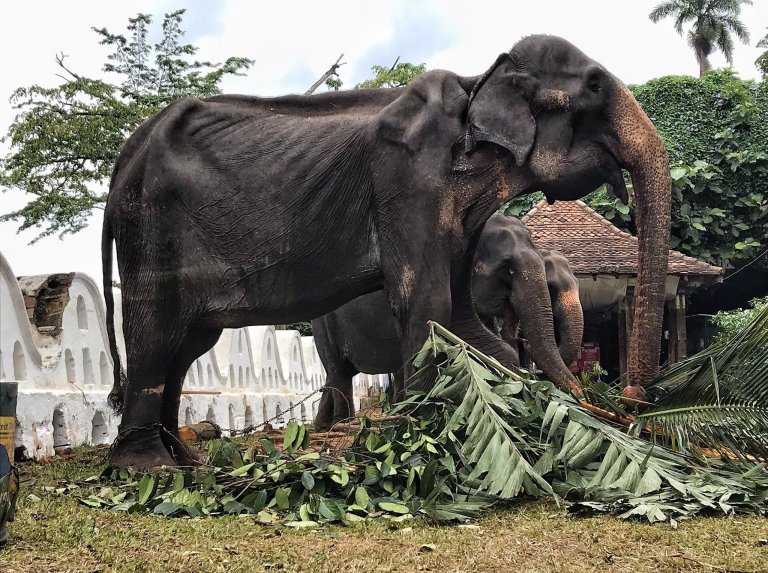
By Jude L. Fernando –

Jude L. Fernando
Dear Friends:
I began writing this poem two years ago, moved by grief and outrage at the suffering of elephants forced into religious processions in Sri Lanka. For a long time, I could not finish it—my sorrow felt too heavy and hope too distant. But in recent months, I witnessed a wave of global enthusiasm for animal welfare: nations as different as Switzerland, Italy, and the United States began to enshrine real protections in law, recognizing that how we treat the most vulnerable among us, human and animal alike, is the truest measure of a civilization. Sri Lanka, too, will gazette a bill to protect animal welfare bill—small but significant, a sign that even here, where tradition runs deep, conscience might be stirring. I also wish to honor, with deep respect and gratitude, the brave voices within Sri Lanka itself—the advocates, activists, and compassionate souls who have long stood against this cruelty at great personal cost, refusing to look away when silence would have been easier. Their courage has been a quiet light throughout this journey, indeed. That collective grief started this poem. Hope finished it!
Preface
This poem is written with grief and love alike,
for a land of immeasurable beauty and grace,
and for a hundred elephants forced to strike
a path of pain through a most sacred space.
Yet grief alone could never birth these lines —
this poem is also a reckoning, a mirror,
held to a nation drunk on ancient shrines
while the suffering before it could not be clearer.
For what is preached in temple, text, and tongue
means nothing if the living tremble and bleed.
Ahimsa is not a hymn to just be sung —
it is the hardest, holiest daily deed.
So read this not as hatred for a land
whose beauty breaks the heart that truly sees,
but as a question pressed by an open hand:
how long will you uphold Dhamma, worship gods with devotees like these?
I. The World Awakens
The world stirs with a long-awaited dawn,
where nations raise their voices, one by one,
where laws are carved in stone and conscience drawn
to shield the innocent beneath the sun.
From Switzerland’s cool courts to Lanka’s shore,
from Rome to Washington the message rings,
that cruelty shall be suffered nevermore,
that mercy now must govern earthly kings.
And Lanka too has raised the gazette’s pen,
a bill now born from decades overdue,
the question hangs like incense in the den,
will words become the deeds we’re meant to do?
II. The Contradiction
Oh Lanka, island jewel of ancient light,
you wear your faith like gold upon your skin,
you light ten thousand lamps on temple night
and bow with folded hands to God within.
You speak of metta, of the boundless love
that radiates like sun on every soul,
you point with pride to Dhamma’s stars above
and call compassion your most sacred goal.
Yet in the streets of Kandy, chains are bright,
not bright with holiness but bright with steel,
and in the name of that most sacred night
a hundred gentle giants are made to kneel.
This is the wound that festers at the heart,
not carved by foreigner or foreign creed,
but grown within the very sacred art
of a nation praying while it makes things bleed.
The most devout, the most religious land,
the one that lifts Lord Buddha’s name up high,
is also one where cruelty’s iron hand
falls hardest where the most vulnerable lie.
The weak and wordless suffer most in those
societies that shout their virtue loud,
for piety worn publicly as clothes
can hide the whip beneath the golden shroud.
This is the contradiction living raw,
the fracture running deep beneath the prayer,
where love thy neighbour becomes hollow law
and mercy bends to power beyond repair.
III. The Nationalist Pathology
And when the world points gently to the pain,
when voices rise from diaspora’s heart,
when NGOs call out the grief and stain,
the answer comes like thunder from the start.
A foreign plot, they say, a crafted scheme
to undermine the Buddha and the isle,
a Western trap dressed up as moral dream
to desecrate what we have held worthwhile.
But this deflection is itself the sin,
the oldest trick of those who will not look,
to point the finger outward and begin
to burn the messenger and praise the hook.
For those who wrap the Dhamma in a flag
and call all criticism a foreign attack
have not defended Buddha, they have gagged
the very teaching they claim to protect and back.
The Dhamma itself condemns what they defend.
Ahimsa, do no harm, was not a clause
that bends for culture, bows before a trend
or stops respectfully at tradition’s doors.
When cruelty is shielded by the claim
of protecting Buddha, nation, faith and floor,
the teaching has been stripped down to a name
and Dhamma has been shown the exit door.
For when a nation cannot tell apart
the good from evil by the Dhamma’s light,
but measures right and wrong by national heart,
it has already lost its moral sight.
To wrap the Dhamma in a nation’s flag
is not devotion, it is the oldest lie,
it turns the living teaching to a rag
and lets the chained and suffering wonder why.
The Dhamma is not Sinhalese or Pali,
it is not owned by temple, flag or race,
it did not ride to power on a rally,
it belongs to every breathing, suffering face.
For good and evil are not defined
by where the voice that names them happens to be born,
a truth spoken from diaspora’s mind
is still a truth, however proudly torn.
The Buddha was not born inside these shores,
his teaching carried no one nation’s seal,
it did not stop at Lanka’s coastal doors,
it spoke to everything that breathes and feels.
To place the nation above what Dhamma teaches
is not to honour Buddha but to chain him,
to say his light stops where our border reaches
is not to follow him but to rename him.
IV. The Multispecies Dhamma
The Buddha’s path was not anthropocentric,
it did not say that humans stand alone,
his vision was magnificently eccentric,
it gave all species dignity and throne.
Not just the neighbour standing at your gate,
not just the citizen who shares your tongue,
but every sentient soul that bears the weight
of suffering from the oldest to the young.
A Buddha statue watches, carved in stone,
as one who breathes like Buddha walks in pain,
his teaching was the forest, field and bone,
his congregation every soul in chain.
He taught that leaf, the worm, the stone
each carries in its breath a sacred right,
no species walks this spinning earth alone,
all souls are equal in Dhamma’s light.
V. What the Elephant Remembers
I was born where silence holds the morning mist,
where my mother’s rumble mapped the forest floor,
where ancient trees bent down and gently kissed
the red soft earth I loved and still adore.
I walked at my own rhythm, my own will,
beneath the canopy of star and shade,
I cooled my burning skin beside the rill
and dressed my wounds with earth and leaf and jade.
I knew no tar road burning at my feet,
I knew no iron hook that split my skin,
I knew no night without escape or retreat,
no silent scream locked permanently within.
VI. The Preparation
They walked me on the tar road, blazing white,
my tender feet not born for asphalt’s burn,
or chained inside a truck through blinding night,
in scorching sun at every screaming turn.
The motorcycles tore against my ears,
the horns exploded like a thousand guns,
my ancient blood soaked deep in ancient fears
remembered every battle lost and won.
For I have felt your fire before, dear man,
your torches chasing us from blackened ground,
the forests razed by your relentless plan,
our children screaming with no shelter found.
VII. Dressed for Your Devotion
Then came the robes, the gold, the glittering weight,
the capes that smothered every breathing pore,
the battery lights that sealed my burning fate,
the ornaments, ten, twenty, thirty more.
My ears, these magnificent and sacred fans
that cool my blood and read the soft world’s hum,
were swaddled tight inside your religious plans,
my body made your decorative drum.
The eye slits shifted, darkness swallowed me,
I walked half blind through thundering walls of sound,
a prisoner dressed as pageantry,
a king in chains paraded on your ground.
The mahout pressed his full weight on my spine,
his iron hook a comma in my flesh,
three bodies rode this broken back of mine,
even horses carry one, yet still I stretched.
I bore upon my back your sacred relic
held high in splendour for the watching crowd,
but underneath, the straps of suffering speak,
bound tightly, buckled, hidden in its shroud.
VIII. The Night of the Perahera
The flames leaped high, oh how they leaped and curled,
like every forest I have watched them take,
like every home they burned, like every world
they torched and left as nothing but heartache.
The drummers beat their rhythm in my skull,
the whip crack split the air beside my face,
the trumpets turned my silence to a lull
of pain that echoed through each sacred space.
On either side, a wall of human flesh,
the very species written in my blood
as danger, loss and wounds that never mesh,
that smear my memory thick as darkened mud.
I walked because the chain said I must walk,
I walked because the hook said do not stop,
I walked without a voice, without a talk,
without a law to say enough, now drop.
IX. What Would the Buddha Say
Oh Siddhartha, if you walked these streets tonight,
if you appeared beneath the Kandy moon,
if your compassionate, all perceiving sight
fell on this grand and glittering golden boon,
would you bow your head in reverent awe,
would you fold your hands and smile upon the show,
or would your eyes, those eyes that saw beyond all law,
fall on the chains and fill with grief’s soft glow?
You who left a palace built on privilege’s lie,
you who saw the suffering in one old man’s face,
you who taught that not a single soul should cry
beneath another’s boot in any sacred place —
tell us, Great Teacher, what you see tonight.
What would you say, Great Teacher, standing here,
watching your most sacred relic borne
upon the spine of one consumed by fear,
his dignity and ancient freedom torn?
This is not devotion, you would say,
this is not the Middle Path I walked,
you have dressed your cruelty in gold today
and called it faith while suffering has been stalked.
Ahimsa, do no harm, was not a suggestion,
compassion has no asterisk or clause,
it does not pause for culture or procession,
it does not bend before tradition’s flaws.
The relic that you carry on his back,
does it not groan beneath its own deep shame,
can what is sacred ride upon a rack
of blood and pain and carry my great name?
I taught that all who breathe deserve their right
to live beyond the reach of human greed,
I did not teach that faith requires a night
of torture dressed as ceremonial creed.
I taught multispecies grace, a world entire
of sentient souls each worthy of their peace,
not one species lighting up the fire
while others burn so spectacles increase.
X. The Message We Send the World
Oh world that watches, cameras raised up high,
that streams this splendour to a billion screens,
what do you see beneath that glittering sky,
do you see the suffering between the scenes?
We tell the world of Dhamma, cosmic law,
of karma, mercy, of the lotus soul,
of ancient wisdom standing without flaw,
of Buddha’s light that makes the broken whole.
Yet in the same breath, in the same proud land,
we chain the largest mind upon this earth,
we drive the hook deep with a careless hand
and call it culture, heritage and worth.
What mirror do we hold to those who seek
the ancient light of Lanka’s storied grace,
they see the robe of gold but do not speak
of what endures and suffers in its place.
The elephants of wiser, braver lands
now walk on wheels, crafted, carved and bright,
built lovingly by compassionate hands
that chose the Dhamma over ancient rite.
If Lanka’s diaspora the world around
can celebrate tradition without chains,
then why must Lanka’s banner be unwound
upon the back of one who screams in pain?
XI. The Nightmare That Returns
And so each year when August lights the sky
and Kandy’s drums begin their primal call,
the elephant closes his exhausted eye
and sees the nightmare rising like a wall,
the tar road and the hook and roaring crowd,
the fire and the darkness of the cape,
the chains, the weight, the drumbeat cruel and loud,
the question with no answer and no escape.
He is not costume, he is not a float,
he is not backdrop for your sacred art,
he is intelligence, note every note
of grief he plays upon his breaking heart.
He cries, and yes, elephants cry real tears,
he mourns his dead for years beside their bones,
he nurses young as tenderly as mothers here,
he carries memory deeper than your stones.
He is not property of priest or nation,
he is not vessel for your piety,
he is a soul deserving liberation
as much as any monk that you set free.
XII. The Reckoning
Sri Lanka, Pearl of the great Indian Ocean’s face,
Resplendent Island, ancient, proud and deep,
the world now watches more than just your grace,
it watches what you choose to hold and keep.
The gazette is written, now the deed must rise,
a law unwalked is just a gilded word,
as hollow as the robes that blind the eyes
of those whose pain has never once been heard.
Will Esala’s beauty not shine more bright
if built on willing joy and not on pain,
can what is sacred be truly sacred right
until compassion runs through every chain?
The Buddha did not need an elephant’s tears
to carry forth his message to the world,
his truth walked light through centuries and years,
no chain attached, no hook above it curled.
XIII. A Final Word from the Elephant
I do not hate you, man, I never could,
I have forgiven more than you will know,
I simply ask for what was understood
before your fires made my forests go.
Give me back my wildness and my worth,
give me back the morning and the dew,
let me walk the sacred breathing earth
the way Lord Buddha always meant me to.
If you must celebrate your faith and light
let me stand beside you, not beneath,
let me roam the forest through the night,
and you, dear man, shall lay that sacred wreath.
For I am not your vessel, not your prop,
not your proof of piety or might,
I am a soul and souls were born to stop
at no one’s chain but walk toward the light.
Epilogue
Sri Lankan Animal Welfare bill is gazette and the world applauds,
but paper bows to practice in the end,
a true religion is not found in wards
of golden silk but in the will to mend.
The oldest teacher walked without a throne,
he needed neither chain nor gilded street,
his temple was the forest, field and stone,
his congregation every soul that breathes and beats.
Let the Perahera blaze with light and pride,
let Kandy’s drums resound from hill to sea,
but let no living soul be forced inside
a nightmare in the name of you and me.
For what we do to the most gentle and great
in the name of God or culture or of law
defines us, not our temple, not our state,
but whether we chose mercy at our core.
All beings tremble before violence. All fear death. All love life.
See yourself in others. Then whom can you hurt? What harm can you do?
— The Dhammapada, Chapter 10 (Violence / Dandavagga), Verses 129 and 130
Our Wish. For the hundred elephants of Esala.
May the day come when your only procession
is the one you choose yourself,
walking free beneath the stars,
toward home.
