



Dr. Geewananda Gunawardana
The modern nation-state is often viewed as a crucial foundation for economic development, social cohesion, and political stability. A nation is a cultural or social community bound by shared identity, memory, and heritage. A state, by contrast, is an independent political entity with a defined territory, a permanent population, and a sovereign government.
By most major measures of economic development, Sri Lanka ranks below many comparable countries. For a new generation that has learnt from the past and striving to head in a new direction for the first time since independence, this raises a difficult question: is the problem primarily a weakness of the state, a weakness of shared national identity, or a combination of both?
The Central Question
Global benchmarks such as the Fragile States Index place Sri Lanka in the “High Warning” category yet still regard it as a functioning state. If the state is not entirely broken, and if the country possesses natural resources, arable land, a favorable climate, and a strategic geographic position, then the deeper difficulty may lie elsewhere: in the collective mindset through which Sri Lankans understand nationhood. This essay explores that mindset and asks why a stronger sense of shared national purpose has not taken root in our country.
A Historical Pattern of Division
If a nation is understood as a community bound by shared identity and heritage, Sri Lanka’s history suggests that this quality has often been weak or incomplete. At certain moments, islandwide unity has emerged, but rarely as a durable political and social mentality. The ideal of one nation, indivisible, with liberty and justice for all did not become the dominant organizing principle of public life.
K. M. de Silva’s A History of Sri Lanka, widely regarded as a major single-volume historical synthesis of the island, helps explain how a divisive mentality became deeply embedded. If prominent events—royal lineages, invasions, the introduction of Buddhism, colonial rule, and independence—are set aside, one recurring theme remains in this narration, that is the persistence of particularism. In this context, particularism means placing the interests of a limited group, region, class, or community above the wider common good. In other words, the disregard of “Equal Justice for All” condition that is crucial for nationhood.
The rulers of the Anuradhapura kingdom aspired to unify the island, but their success was limited. Vijaya’s clan, traditionally said to have come from northeastern India, was not the island’s only early settler group. Communities from other regions also settled in different parts of the island and formed their own administrative units. Because these groups had distinct identities and interests, they often resisted unification when it threatened their autonomy. Over time, invasions, succession struggles, mercenary settlements, and colonial interventions deepened these divisions.
Sri Lanka did not fight colonialism in complete unison. Some segments of society benefited from existing arrangements and saw little advantage in ending colonial rule. After independence, political competition intensified these divisions. The country increasingly became a collection of individuals and groups protecting narrow interests rather than a people collectively committed to national development. This, more than any single policy failure, has become a major obstacle to progress. Even honest leadership and sound policies cannot succeed without a population that shares a strong “one nation” mentality.
Why Fragmented Societies Struggle
When a society becomes fragmented, several interconnected dynamics tend to reinforce one another:
Particularism over universalism. When broader institutions such as the state, the rule of law, and the social contract lose credibility, people retreat into narrower circles of trust. Universal principles—what is fair for everyone—are replaced by local survival strategies: what protects me, my family, or my group.
The tragedy of the commons. In a high-trust society, individuals make short-term sacrifices—paying taxes, obeying rules, volunteering, and respecting shared obligations—because they believe others will do the same. Once trust collapses, people fear being exploited and begin placing private interest above public responsibility.
Patronage and clientelism. When access to resources, opportunities, or justice depends on personal connections (andurana kama), political affiliation, or group identity rather than equal rights, citizens learn to navigate society through factional loyalty instead of national solidarity.
The need to rebuild civic identity. A fragmented society cannot be repaired by moral preaching alone. The social contract must be renewed so that serving the common good also advances the well-being of individuals and communities.
Such renewal requires trustworthy institutions, impartial governance, and a rule of law that treats all citizens equally. It also requires shared national goals—economic transformation, institutional reform, and social justice—that transcend subgroup identities.
Civic engagement is essential in this process. When diverse groups collaborate on practical community problems, they rebuild social capital from the ground up and learn to see one another as partners in a shared national project.
Elitism, Governance, and the Failure of Nation-Building
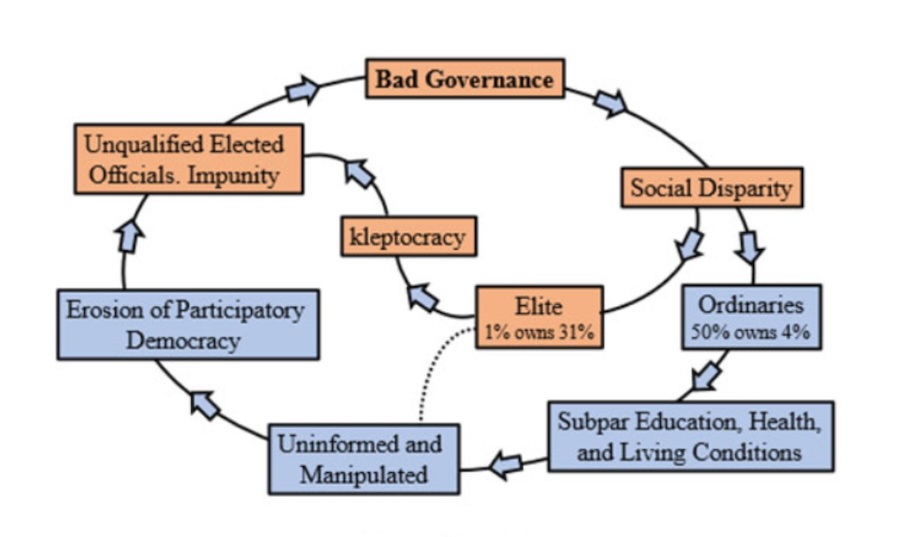
Post-independence developments helped produce a new elite class. Elitism is not inherently harmful; societies need capable, principled leadership. It becomes destructive when privilege is preserved through corruption, inherited status, manipulation, or indifference to the national interest—especially when elites exploit social divisions for personal gain. That, in fact, is precisely what has been happening: competitive democratic politics encouraged major parties to appeal to ethnic majorities for electoral gain. Many political leaders, drawn from elite circles, have prioritized short-term majoritarian advantage over inclusive nation-building. This majoritarian nationalism has weakened the nation, while fiscal mismanagement and institutional decay weakened the state. Furthermore, we have failed to understand that they have curtailed access to growth opportunities, wealth, and information so that their followers can be kept in the dark.
Despite these deep-rooted tendencies, young generation of Sri Lankans often look beyond such divisions in daily life. They have repeatedly shown a willingness to set aside historical differences in moments of national crisis, including after the tsunami and the devastation caused by Cyclone Ditwah. More importantly, it appears that people have united against rampant corruption and inept governance. Yet a powerful counterforce led by the remnants of the old elite that have lost the ill-gotten privileges desperately struggles to weaken that civic spirit.
Screenshot
The elite had maintained undue influence over judiciary and law enforcement, enabling unlawful exploitation to continue with impunity. Whenever that power is threatened, they have colluded with like-minded allies to retain control and shield one another. As changes to the old system begin to emerge, these interests have become even more active in spreading division. Nothing else, but for their own survival. Society, too, bears responsibility for tolerating such conduct—and worse, for blind veneration of those who practice. Venerable S. Mahinda was right to ask whether we are blind.
Since independence, elites, political or otherwise, have repeatedly used nationalist rhetoric to consolidate voting blocks, distract from corruption and economic mismanagement, and unite factions against perceived threats for their benefit. Most unfortunately, the institutionalization of religion has contributed to this process by giving political agendas sacred or cultural cover. Today, the country is largely united, better informed, and it is moving in a new direction, and that is threatening the old entrenched corrupt ways gasping for survival.
Cultural Habits That Must Change
To move forward, Sri Lankans must confront deeply ingrained cultural habits and social attitudes that sustain division and prevent reform. These include blind veneration of elites, dependence on personal connections and political allegiances, and a feudal mindset that discourages meritocracy. When family networks or partisan loyalty matter more than talent and integrity, capable people are pushed aside, young professionals become disillusioned, and brain drain accelerates.
Education and social life must also change. Too often, traditional schooling rewards deference, rote memorization, and obedience rather than critical thinking, original inquiry, and analytical debate. Constructive dissent is often mistaken for disrespect or opposition. This weakens institutions, prevents innovation, and makes reform difficult. At the same time, deeply rooted ethno-religious identity politics continue to fragment society, shaping voting patterns, appointments, economic decisions, and most importantly the foundation of nation hood – equal justice for all by projecting communal gains rather than the national interest.
The weaponization of tradition must be recognized for what it is. Political actors often co-opt culture and religion to inflame insular nationalism or resist necessary economic and social reforms under the guise of protecting heritage.
A related problem is excessive dependence on ancient glory. Pride in the past can be valuable, but when historical achievements, sometimes exaggerated or fictionalized, become a substitute for present responsibility, it encourages complacency rather than progress. In this respect, history education must be tailored age appropriately, and facts must be presented when the students can analyze them objectively. Unfortunately, some flowed education materials promote divisions rather than eliminate them.
Nationhood as a Shared Commitment
Up until now, our post-independence leaders, not just the political ones, have pandered to our ingrained divisions and, at times, inflamed our primal instincts for their own betterment, not for uplifting the country. Even though now rejected and out of power, the remnants of that elite are desperately trying to convince the people that they know better. Sri Lankans must learn to see reality by critical examination of history and not by listening to their divisive rhetoric and baseless slogans. The truth is that history has produced a fragmented society rather than a fully unified nation, but we cannot simply blame the past and continue as before.
Nationhood cannot be created by law alone; it requires a shared mindset and commitment. For Sri Lanka to become prosperous and just, nation-building must move beyond elites with vested interests and become a grassroots effort rooted in civic responsibility, common purpose, and the public good. We must confront the divisions we have created and sustained—religious, ethnic, linguistic, political, geographic, economic, caste-based, and others. Should we choose leaders for their ties to our group or for forward-looking policies that benefit the whole country? Should our decisions be guided by evidence or by simply following others? Recent events offer hope: people increasingly recognize that Sri Lanka has no future without equal justice for all—a significant achievement given its long history.