

By Jehan Perera –

Jehan Perera
Sri Lanka is witnessing an unprecedented effort to challenge a culture of impunity, with senior political figures, public officials and others facing investigation and prosecution. The significance of the present moment is whether Sri Lanka can establish a system in which no person, regardless of political position or social status, is above the law. The credibility of accountability depends significantly on an independent judiciary capable of deciding difficult cases without fear or favour. It is in this context that the government proposal to amend Article 107(5) of the Constitution to raise the mandatory retirement age of Supreme Court judges from 65 to 67 and that of Court of Appeal judges from 63 to 65 has attracted particular attention. The government has also approved amendments to the legislation governing the other courts to increase their retirement ages by two years.
The Bar Association of Sri Lanka and opposition parties have raised concerns about the implications for judicial independence and public confidence. They have taken their objections to the larger society, but only with limited success so far. The general population does not seem as apprehensive of the government’s motives as the BASL and opposition parties. The large number of successful prosecutions of hidden and known corrupt and criminal activities of the past corresponds to popular expectations. The government has justified the proposed extension principally on the grounds of the severe backlog of cases and the need to retain experienced judges. The Minister of Justice Harshana Nanayakkara has said that approximately 1.1 million cases are pending before the courts and has emphasised that extending the retirement age is one part of a wider effort to improve the efficiency of the judicial system.
The debate, however, needs to go beyond the immediate question of whether judges should retire two years later. As Prof Jayadeva Uyangoda has pointed out in a recent interview, the larger issue is the condition of the judicial system itself. Delays in adjudication, the enormous backlog of cases, limitations in court administration and the lack of adequate institutional capacity all affect access to justice. The significance of the present moment should therefore be understood not simply in terms of the number of investigations or prosecutions being undertaken, but in terms of whether they represent a deeper change in the system through which public power and accountability operate. Systems change requires more than replacing individuals or pursuing individual cases. It requires changes in institutional practices, incentives, relationships and norms so that accountability becomes a sustained feature of governance rather than dependent on the intentions of a particular government.
Judicial Independence
Judicial independence and fearlessness is particularly important at a time when there are serious efforts to dismantle the culture of impunity that prevailed in the past. Senior political figures, senior officials and persons once thought to be beyond the reach of the law are being investigated and prosecuted through the institutions of the state. The credibility of this process ultimately depends on whether the courts are able to decide difficult cases without fear or favour. At a time when the courts are being asked to deal with a large backlog while simultaneously handling cases of major public significance, retaining experienced judicial leadership can contribute to stability, consistency and continuity in the administration of justice.
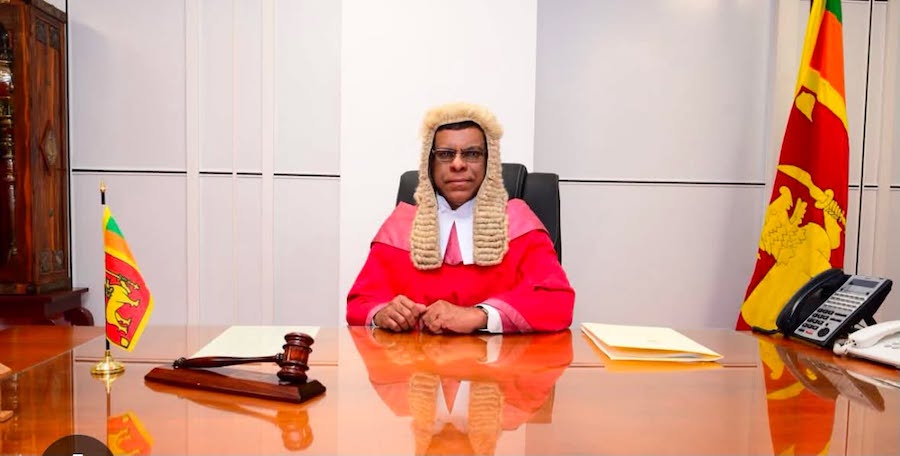
Leadership matters when institutions face exceptional challenges. Institutions do not operate automatically. They operate through the individuals who staff them and depend on leadership. The present Chief Justice, Preethi Padman Surasena, was President of the Court of Appeal when the constitutional crisis of October 2018 erupted with President Maithripala Sirisena dismissing Prime Minister Ranil Wickremesinghe and appointing former president Mahinda Rajapaksa in his place. Mass protests took place and the country was heading towards chaos when the Court of Appeal with Justice Surasena at the helm issued an interim order in early December 2018 restraining former president Rajapaksa from functioning as prime minister. The Supreme Court later that same month upheld the constitutional challenge to the president’s dissolution of parliament. The significance of that period is that the courts were called upon to resolve an exceptionally controversial political conflict through constitutional and legal processes which they did independently and fearlessly.
This experience illustrates why judicial leadership becomes particularly important when institutions face exceptional challenges. Prof Uyangoda’s analysis is useful here because it cautions against reducing judicial independence to the question of retirement age alone or individuals. The mere fact that judges are given an additional two years does not necessarily mean that they will surrender their independence and favour the government that made the change. Sri Lanka has several examples of judges who gave judgements against the wishes of the government leaders who appointed them and paid a heavy price. Two names that come to mind and are in living memory are Chief Justices Neville Samarakoon (1984) and Shirani Bandaranayake (2013).
Ensuring Continuity
The BASL has raised a serious concern about changing the retirement age of serving judges at this time which it believes will erode the independence of the judiciary. In its May 2026 communication to the President, the BASL argued that the existing retirement ages for the Supreme Court and Court of Appeal had been in place since the 1978 Constitution and expressed the view that they should not be changed arbitrarily. The more serious constitutional concern would arise if the executive were given discretion to decide which individual judges should receive an extension and which should not. A general rule applying equally to judges, as provided for in the 22nd Amendment, is fundamentally different from a system in which the government can selectively determine who remains in office.
Judicial independence depends not only on the conduct of individual judges but also on public confidence that the conditions under which judges serve are not being altered for political purposes. In this case, the valid argument has been made that life expectancy has increased significantly, and with it the ability to work productively for more years. Indeed, the government needs to utilise the public interest in the matter of the retirement age of judges to consider other sectors as well. When the Constitution was adopted in 1978, and the age of retirement of the judges was set, life expectancy at birth in Sri Lanka was about 67 years. By 2024, it had risen to almost 78 years, an increase of nearly 11 years. Six years ago Prof T Jayasingam, former Vice Chancellor of Eastern University advocated that the retirement age for academics should be increased to 70 years on the basis that retirement policies should take account of this increased longevity and enable those who are able and willing to make a continued contribution to society..
The retirement age debate should therefore become an opportunity to address these wider institutional deficiencies. Sri Lanka has waited a long time for government and public institutions to begin dismantling the culture of impunity. Political leadership, judicial leadership, professional law enforcement and an independent legal profession all have roles to play in ensuring that this process succeeds. But continuity will command public confidence only if it is accompanied by transparency and respect for the constitutional process. The forthcoming debate in parliament will hopefully ensure this. Government leaders have said they are prepared to make changes to the draft law when it is debated in parliament. The objective would be continuity in the judiciary without compromising independence. The passage of the 22nd Amendment needs to be seen in this light to support the progress that Sri Lanka has begun to make.
Ajith / August 11, 2026
“The passage of the 22nd Amendment needs to be seen in this light to support the progress that Sri Lanka has begun to make.”
Whether they are right or wrong the people have no alternative to accept it that it is the part of progress. Even the people accepted the PTA as a temporary in 1979 in the progress to eradicate Terrorism. The executive President system came with a new constitution brought in 1978 with the two third mandate. Did we think that it will lead to bring bankruptcy in 2022?
Once the power misused, then there is always more chance for further misuse because there will be threat to power at anytime, particularly for a political party which depends on votes. We will never ever know to understand what goes in the mind of AKD or NPP?
/
Ratnam Nadarajah / August 11, 2026
Yes Jehan its a bold and courageous move by the NPP government and PresidentAKD
Its challenging times for Sri Lanka for that matter for most countries
We need to safeguard ALL the citizens of the land immaterial of social or political standing. The law should treat every body equally
Ratnam Nadarajah
/
SebastianSR / August 14, 2026
“The significance of the present moment is whether Sri Lanka can establish a system in which no person, regardless of political position or social status, is above the law”Jehan Perera. The law should treat every body equally” Ratnam Nadarajah
For the law to treat everybody equally, everybody needs to have the same means to hire lawyers and support witnesses with free transport and so forth. This is NEVER the case. So, the law alone can NOT treat people equally. Furthermore, the law was NOT MADE to be an instrument of fairness. It was, and is, a means of safeguarding the property, power and interests of those who have property, power and interest. When a low-caste சண்டாளன்who des not have a place to live goes and squates in the land owned by an Eilte of Manipey who lives in Karuvakaddu (Colombo7), the Elite gentleman uses the law to evict the Chandalan, but fairness would dictate something else.
/
leelagemalli / August 12, 2026
After two years of this government, it is difficult not to ask where the expertise is to manage even the smaller and more basic tasks of running a country. Whether it is education, trade, energy, transport, road construction, health, agriculture or finance, almost everything they have touched appears to have resulted in failure, stagnation or far less progress than was promised. Yet, what they seem to have mastered is the art of creating narratives to defend their record and mislead the very same public, even as support for those narratives has drastically declined. People from different sectors—and even schoolchildren and teenagers—are openly asking why the government’s actions are so different from what it loudly promised before coming to power. Therefore, whenever a statement comes from the Prime Minister or any other minister, people have every reason to question it and ask whether it genuinely reflects what the majority of Sri Lankans expected from this government.
/
leelagemalli / August 12, 2026
A year ago, Sri Lanka was hit by the devastating Ditwah flood catastrophe. Yet the Disaster Management Commission was not called, while funds received for relief and recovery have remained largely hidden from public scrutiny. More than 35,000 people, or possibly even more, are still stranded in the hill country and living in temporary shelters, while many others have yet to receive what was promised to them. The losses claimed by the Finance Ministry also do not appear to be receiving the seriousness they deserve, while the Finance Secretary has been allowed to remain in his position despite experts believing that he should have been sent home long ago. Not a single minister has stepped down after being caught red-handed. Instead, we repeatedly hear promises of greater transparency and accountability. But how long can people be expected to accept promises when accountability itself appears to be missing? The reality is that people are increasingly fed up with this system. They are not asking for more narratives or excuses—they are asking for competence, honesty, transparency and results.
/
leelagemalli / August 12, 2026
Readers,
If the government is genuinely clean, then it has a responsibility to clearly clarify all the charges and allegations raised by the opposition, rather than simply saying that it is clean. These include: 1) the release of 323 harbour containers reportedly containing red-labelled items; 2) the Ranwala issue, which prevented him from continuing as Speaker; 3) the coal procurement issue, which, according to the opposition, was flawed from the very beginning under Minister Jayakody. Had the opposition brought a No-Confidence Motion (NCM), the person concerned would still have remained a minister; 4) the alleged USD 2.5 million fraud, which the government has attributed to phishing. Whether that explanation is true or not is something that must be properly established. Yet the Minister of Finance, together with his secretary, continues to give what appear to be contradictory or unconvincing explanations simply to survive politically. Where on earth, even in a democracy, does a secretary continue in office under such serious allegations without providing a convincing explanation?
All in all, none of the above charges and doubts have been properly and transparently clarified by the government, even though some of these allegations have been in the public domain for more than 12 months.
/
Naman / August 13, 2026
“ The general population does not seem as apprehensive of the government’s motives as the BASL and opposition parties.”
We the right thinking people of SL do welcome the increasing the working life of Judges and magistrates. The previous governments were appointing Judges to suit their whims.
I don’t understand the BASL/Mahanaykas getting agitated.
The ISLAND newspaper too has become a mouthpiece of the OPPOSITION!!!
/
SJ / August 14, 2026
May I say that things that are seemingly right to some are being done for devious purposes.
*
Wise sections of the population question the timing of the decision and the lack of discussion even within the top levels of the NPP.
/
Laksiri Fernando / August 14, 2026
Considering the delays of court cases and the number of cases dragging on, the extension of the retirement age of the judges may be accepted. However, it also raises an alarm on judicial independence. There are other measures like digitization of court procedures and reform of the attorney general’s department that should be undertaken to resolve the court delays etc. There are no indications that the government is considering those necessities. Most questionable is whether the government is faithful to the independence of the judiciary. Or do they still believe in the ‘dictatorship of the proletariat’?
/
SebastianSR / August 14, 2026
If the law if the be fair, people should not be discriminated on the basis of AGE. There should be a retirement age, but any one fit and willing to continue to work should not be forced to retire simply based on age. Given that the population Pyramid has inverted in 2022, i.e., now there are more retired people in Sri Lanka than there are working people, there are not enough paying taxes to keep pension funds going, The country will inevitably crash. Why forcibly retire a higly experience Professor, Maths Teacher, an irrigation engineer, or a head nurse when such people are in short supply? The same logiv applies to supreme court judges or CID officers. If they want to leave at the nominal age of retirement, they can do so. But if they wish to continue, they should do so. A professor continues to work, but becomes an emeritus so that a younger person can step in to the chair, and so on, some simple adjustments may be needed.
/
SebastianSR / August 14, 2026
Jehan Perera says Sri Lanka is witnessing an unprecedented effort to challenge a culture of impunity, with senior political figures, public officials and others facing investigation and prosecution. This show is NOT unpreceedented. Where has Jehan Perera been? Didn’t Ranil and Sirisena come into power expressly claiming to clean up the culture of impunity? Didnt they appoint the FCID with Champika Ranawaka (?) who ever excavating the lands of the rajapaksahs looking for Lambroginis? The NPP has ignored vital and urgent state responsibilites and tries to play to the gallery by making a sjow of retribution politics, and Jehan Perera is happy because those who pay him are happy. The main rail road connecting the tow MAJOR cities lof the country, i.e., Colombo and Kandy, has been washed of and disfunctional now for an year, after the Ditwah cyclone, and the Govt. has not fixed the 5 heavily dagmaged areas. GIvern modern machinary, this should have been a priority — also, it happened because of neglect and lack of maintainance – who did the neglect?
/