

By Mohamed Harees –

Lukman Harees
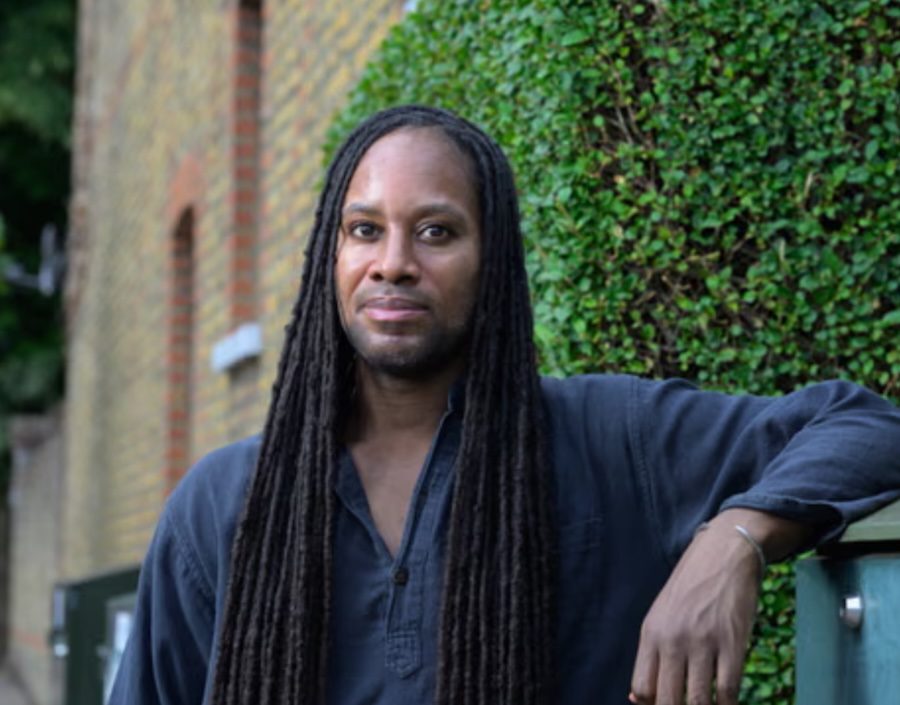
Jason Arday died on 14 August 2026, in his London home. He was 41. Nine days earlier he had resigned his chair at Cambridge, where — at 37 — he had become the youngest Black professor in the university’s eight-hundred-year history. The resignation followed weeks of press investigation into his doctoral thesis, his athletic record, and his charitable work. He denied the plagiarism allegations. Police say the death is “unexpected, but not believed to be suspicious”; no official cause has been given. His family described “a campaign of sustained abuse” stretching back three years, and “misinformation” that finally became, in their words, “too much for Jason.” A Cambridge colleague, Simon Baron-Cohen, said Arday had come to believe there was a deliberate pattern to how Black academics get discredited — and pointed to Claudine Gay’s resignation from Harvard’s presidency two years earlier under strikingly similar circumstances.
It is not intended to reduce any of this to a single life, or a single news cycle, whatever that life was worth — and it was worth a great deal. What Arday’s death actually forces us to sit with is harder than the question of whether his CV held up. It’s this: why does accountability, when it lands on a Black person, so often show up not as due process but as spectacle? Why do the failures that got him there in the first place — a university that didn’t verify a credential, a publisher chasing a good story — get quietly absorbed, while he was left to answer for everything, in public, over and over, alone? And why, nearly eighty years after the world promised itself the Universal Declaration of Human Rights, does any of this still feel so recognisable?
The Comfort of Individual Blame
None of this is to say “accountability” is a dirty word. It isn’t. Academic standards matter, and institutions have every right — an obligation, really — to check what’s on a CV. But accountability stripped of history and power stops being neutral. It becomes a mechanism that hits with wildly different force depending on who’s under it. Universities absorb far graver scandals all the time — plagiarism, fabricated data, financial misconduct — involving senior white academics, and those tend to end in a quiet settlement, a redacted internal report, sometimes nothing you’d ever hear about. What set Arday’s case apart wasn’t only what he was accused of. It was the register the accusations were pursued in: months of serialised coverage, speculation about his childhood, his autism, his fundraising, written in a tone that kept sliding from scrutiny into something closer to mockery.
That’s the trap in treating this as purely an individual failing. It asks us to litigate one man’s honesty while leaving alone the machinery that decided, long before a single fact was verified, that his story was worth telling this way. Power like this doesn’t announce itself. It shows up in editorial judgment calls about which errors count as “scandals” and which get filed as footnotes; in how readily an institution extends the benefit of the doubt to some people and not others; in a public appetite, built up over a very long time, for stories of Black excellence unmasked as fraud. It is not necessary for anyone to be a conscious racist for this to happen. You just need the ordinary machinery of scrutiny to keep running down channels that history laid a long time ago.
Not an Isolated Case
This isn’t a one-off. Claudine Gay resigned as Harvard’s president in early 2024, over plagiarism accusations that arrived in the middle of a much bigger political assault on the university — and it’s the case Arday is reported to have thought about in his final days. Look at the shape of both: a Black leader reaches a historic first; the scrutiny that follows is disproportionate in volume, in tone, in how personal it gets, compared to what a comparable white peer would face; the person resigns; and afterwards there’s a public argument about whether “accountability” was ever really what was happening.
It’s not just universities, and it’s not just Britain or the US. We see the same pattern wherever an institution built over centuries to exclude certain people finally, partially, lets some of them in. The door opens a crack. Nothing behind the door changes. And when the person who walked through it makes a mistake — sometimes a real one, often only an alleged one — the institution that never built the support or the scrutiny-resilience it should have acts surprised to discover it has a problem. Then, with a kind of practiced ease, it hands that problem to the individual, who’s left to answer for it in public, mostly by themselves.
The Same Machinery, a Different Target: Islamophobia
It would be strange to write about racialised institutional harm and say nothing about its close relative: what’s happened to Muslim communities across much of the world since the early 2000s. The mechanisms are recognisable even where the vocabulary changes. Surveillance justified by “security” rather than academic integrity. Media coverage that treats an entire faith as answerable for the actions of a violent few, in a way no other religious group is expected to be. Counter-extremism programmes — Britain’s Prevent duty is just one example among many — that have been criticised again and again for casting suspicion on ordinary religious life and speech. Political rhetoric, across dozens of countries now, that treats being Muslim as something requiring explanation, monitoring, sometimes apology.
It is not that the harms here are identical to what happened to Arday — they’re not, and it would be lazy to flatten them into one story. But they share an underlying architecture: a hierarchy of who gets presumed trustworthy, inherited from colonial and racial orderings of the world, that decides whose mistakes are individual and whose are collective, whose motives get investigated and whose get assumed, whose humanity is the starting point and whose has to be re-earned. Anti-Black racism and Islamophobia are different histories with different logics. But they’re symptoms of the same underlying failure — a world that declared, in 1948, that “all human beings are born free and equal in dignity and rights,” and then left almost entirely intact the everyday habits that decide, in practice, whose dignity gets extended automatically and whose has to be argued for.
Why the Declaration Has Not Delivered
The Universal Declaration of Human Rights was written in the shadow of an atrocity built on pseudo-scientific racial hierarchy. It was supposed to be the hinge point — the moment the world formally gave up on the idea that some populations were biologically or civilisationally lesser. But eugenics didn’t disappear in 1948. It just changed clothes. You can find it now in algorithmic risk-assessment tools that reproduce racial bias while wearing the mask of objectivity, in immigration debates carried out in the language of “national stock” and “cultural compatibility,” in openly race-science-adjacent commentary that keeps finding its way back into mainstream political discourse. White privilege has outlasted the Declaration not because anyone signed something defending it, but because the Declaration dealt with the legal architecture of inequality and left the cultural and institutional architecture almost entirely standing. Formal equality got written down. The informal systems deciding who gets believed, who gets protected, and who gets treated as expendable were never actually taken apart — just asked, politely, to be better about it.
That, is the deeper lesson in Arday’s death, once you read it as something bigger than a British media controversy. The gap between what states signed up to in the UN Charter — “to reaffirm faith in fundamental human rights, in the dignity and worth of the human person” — and how the institutions those states actually built behave day to day isn’t a gap of good intentions. It’s a gap of accountability infrastructure. Neither the Charter nor the Declaration was ever going to enforce itself. Making them real still requires deliberate rebuilding: consistent standards of scrutiny that apply no matter who’s in the room, media accountability that can tell the difference between legitimate investigation and a racialised pile-on, and governance — in universities, in states, in international institutions — that judges itself not by who it lets through the door but by how those people are treated once they’re inside.
Toward Inclusive Governance, Not Symbolic Inclusion
Diversity without structural change is just decoration. And inclusion without any accountability for how institutions treat the people they include becomes a liability quietly handed to the people least equipped to carry it. If the UDHR and the UN Charter are going to mean more than ceremonial language, the institutions operating under their promise — Cambridge, Harvard, every national government still working out how to treat its Muslim citizens — need to move from representation to redistributing scrutiny and protection fairly. That means building processes for handling allegations that are actually proportionate and consistent, whoever they’re aimed at. It means media organisations and public institutions being honest with themselves about the line between accountability and spectacle, because right now too many of them can’t tell the difference, or don’t want to. And it means admitting that a world still shaped by eugenics, still organised — quietly, informally, but unmistakably — by racial and religious hierarchy, hasn’t yet earned the right to say it has kept its founding promises.
‘The Mirage of Dignity’
This is, in essence, the argument that I made across nearly eight hundred pages in my book ‘The Mirage of Dignity on the Highways of Human ‘Progress’. Harees surveys institution after institution — legal systems, economic orders, the United Nations itself — and finds the same gap everywhere: between the rhetoric of dignity and rights that modern “progress” likes to congratulate itself on, and a ground reality where might still quietly rules over right, even in what I call the post-UDHR era.
However, stopping at indicting institutions will not set the issues right. A university’s silence while the coverage escalates, a newsroom’s decision to keep running the story, a public that scrolled past headline after headline without asking who benefited from the pile-on; none of these were neutral acts. Dignity is never restored from above, by institutions performing the right language at the right moment — it is restored, if it is restored at all, when enough bystanders refuse to remain onlookers. Jason Arday’s death is, among everything else it is, a test of whether that refusal is finally coming. Jason Arday’s death is one tragedy inside a much larger, unfinished project. Honouring it takes more than mourning. It takes the harder, structural work the Declaration always asked for, and that the world still hasn’t finished. Bystanders have a major role to play.
Agnos / August 22, 2026
Mr. Harees,
There is a lot that is wrong with academia in the West.
The professors at the institution that gave him the PhD didn’t supervise his thesis correctly to ensure there was no plagiarism. Then, many university administrators and hiring committees were too credulous of his fabulist claims. Some say it was due to DEI efforts becoming too rampant. If the due diligence had been followed earlier, none of this would have happened.
Not doing so is a failure of process at these institutions, but it unfortunately gives fodder to the right-wing people who attack all forms of DEI efforts. But the right wing forgets that the same failed system enabled the rise of an utterly unworthy man like Trump to the presidency.
/
Leonard / August 23, 2026
Agnos
So it’s Trump what would you all done if Trump didn’t come alone. Life would have utter boring to lefty loons right. I’ll bet you will be so happy if you have to go under knife in emergency theater filled with a DEI hire surgeons and nurses and technicians in life or death situation all had special exempt and got their with lower markes with the help of DEI, or may fly with full DEI hired crew without any hesitation. I would be fine in booth occasion with people of any color or ethnicity as long as they got there by own merit not because of DEI or their color of the skin. So you lament such unworthy man like Trump, Clear case of mega virus TDS “Trump Derangement Syndrome” But please don’t lament Dr Fauci is developing a vaccine for TDS and he is going to recommend personally . In the interim a mask around the eyes and some ear plugs, so you won’t see or hear anything to do with Trump. Because so for no vaccine for TDS, it’s seems TDS going to carry on well after Trump ends his second term well in to the future many years to come.
/
LankaScot / August 23, 2026
Hello Leonard,
“The term ‘DEI’ has its roots in the social justice movements of the 1950’s and 60’s in the US and other countries like the UK. This was a period marked by a push for civil, equal rights and non-discrimination primarily based around the injustices being witnessed in those societies particularly around issues of race and gender inequalities such as segregation, voting, access to housing and other resources and other basic human rights”.
Do you disagree with any of the above?
Best regards
/
UK Citizen / August 23, 2026
DEI may have started as a Civil Rights issue but that’s no longer the case.
*
Diversity = Antiwhiteism. Reverse Racism is still Racism.
*
Equity = Opportunity of Outcome instead of Opportunity of Equality.
*
Inclusion = Only if you share the same Opinions. No discussions allowed.
*
Finally a general comment about this article:-
*
A SriLankan complaining about Racism and Inequality in the West is just laughable when you look at the situation in Sri Lanka.
*
SriLankans are among the most Racist people I’ve ever encountered.
*
Fix your own country first!
/
Jit / August 24, 2026
“….SriLankans are among the most Racist people I’ve ever encountered….”
–
That I agree.
Particularly after living in some western countries well over two decades.
/
leelagemalli / August 24, 2026
The statement, “Sri Lankans are among the most racist people I’ve ever encountered,” can certainly be politically motivated, but I believe there is some truth in it.
Some people can behave in racial or fundamentalist ways without fully understanding the meaning of racism or fundamentalism. I have also found that some Buddhist monks (Buddhagama monks) have become increasingly racial through their bana preaching, which can further polarise sections of Sri Lankan society. This is not something unique to Sri Lanka, especially in a developing country where progress has lagged in many areas and the enforcement of law and order is often inadequate. As a result, small groups of terrorists, racists, fascists, and other “schadenfreude seekers” can continue their activities. These smaller groups with potential to become dangerous should first be properly identified and understood.
Sri Lanka has also given former ruthless rebels an opportunity to prove their abilities by governing the island and putting into practice what they once preached. However, after nearly 24 months in government, the JVP/NPP has yet to demonstrate much tangible progress, despite its earlier high-set rhetoric. Many people are now agonised and speechless because they believed former rebels should at least be given a chance. I have personal experience of this history: during the JVP insurgency of 1989–92, when tens of thousands were killed, I was forced to leave Sri Lanka to continue my degree courses in Europe. So I know what I am talking about when I raise these concerns today.
/
Leonard / August 24, 2026
Just look at what the DEI done, do you think Obama and Supreme court justice and all others got their by DEI. “I have a dream that my four little children will one day live in a nation where they will not be judged by the color of their skin but by the content of their character.” America moved on since then but now the racism has reversed. Asian students need higher marks to get into colleges in USA because places are going to underachieving minorities to balance the ledger. Playing your minority privilege added to victimhood and plethora of mental illness euphoria and gender diversity education system is going to hell in basket. LBJ’s “The Great Society” Its main goals were to end poverty, reduce racial injustice, and improve education, health especially for black minority things have gone backswords. in the 1960 67% (two-thirds) of Black children lived in two-parent households with both a father and a mother present.Before Great society today 47% of Black mothers in the United States are raising children as single parents (unmarried or with no spouse present in the household).More DEI more Professor Arday’s are the great answer.
/
old codger / August 24, 2026
LS,
You don’t have to guess about which side they’re on when people don’t know the difference between “their” and “there ” 😉
/
leelagemalli / August 24, 2026
Hello Lanka Scot,
In the UK, the term EDI (Equality, Diversity and Inclusion) is more commonly used, while in the US, “DEI (Diversity, Equity and Inclusion)” is more widely used. Although the wording differs, both approaches aim to create fair, respectful and inclusive workplaces where people from different backgrounds have equal opportunities and can participate fully. The main distinction is that “equality” in the UK often emphasises equal treatment and protection from discrimination, whereas “equity” in the US places greater emphasis on recognising and addressing different barriers or disadvantages people may face. In practice, however, the concepts overlap considerably.
/
leelagemalli / August 24, 2026
Agnos,
Plagiarism and other forms of research misconduct remain serious challenges across science, medicine, and experimental research. Scientific knowledge necessarily builds upon previous publications, references, datasets, and established findings, which makes the boundary between legitimate scholarly continuity and inappropriate copying particularly important; and sometimes difficult;to police. From my own experience in life-science research, I have encountered cases in which substantial portions of data or scientific material appeared to have been copied and reused by multiple co-authors. Such practices can undermine the integrity of the scientific record and, more importantly, mislead researchers who rely on published work as a foundation for future discoveries.
We therefore need stronger, more systematic mechanisms for detecting potential plagiarism, inappropriate data reuse, image manipulation, and other forms of research misconduct at an early stage. Equally important, these systems must be transparent and evidence-based, allowing researchers who are wrongly accused to defend their work with verifiable facts. Effective safeguards should not merely punish misconduct after publication; they should help prevent it, protect legitimate researchers, and preserve the reliability of the scientific literature for future generations.
Scientific progress depends not only on producing new knowledge, but also on maintaining trust in the process by which that knowledge is generated, reviewed, and communicated.
/
Nathan / August 24, 2026
leelagemalli,
Over years I have observed that your comments are worthy and gainful.
/
leelagemalli / August 24, 2026
Nathan, thank you !
/
Jit / August 23, 2026
It is quite paradoxical – Jason Arday became a victim of the same forces that first elevated him — the global spotlight on Cambridge’s youngest Black professor and the acclaim surrounding his achievements. When aspects of that narrative were questioned — proven or not — the coverage intensifies. Good news walks, but bad news flies. Simply how media ecosystems work!
But that is not exclusive to Black academics, despite you suggesting otherwise. High profile cheating or plagiarism have exposed prominent Caucasian figures too. The 2019 Operation Varsity Blues scandal in the United States dominated headlines because it involved well known, white entertainment personalities. Germany’s former Defence Minister Karl-Theodor zu Guttenberg faced widespread exposure in 2011. Stanford President Marc Tessier-Lavigne’s case, and Hungary’s former president Pál Schmitt in 2012, also attracted extensive international coverage. Media attention follows prominence, not ethnicity.
Arday was investigated after complaints about inconsistencies in his biography and academic work, beginning with the claim of completing three marathons in one day — a miraculous feat but no supporting evidence. Cambridge opened an inquiry into both his personal story and academic output, but he opted to go before the process was concluded.
Personally, I feel he should have stayed and faced the investigations if he believed he was not guilty. Therefore, jumping to conclusions that black people always get hyper victimized in academia is somewhat closer to paranoia.
/
Agnos / August 24, 2026
Jit,
Marc Tessier-Lavigne (a French Canadian) resigned as Stanford President and then became a Silicon Valley entrepreneur. I saw him being part of a panel discussion at an AI conference recently. He probably earns a lot more than what Stanford paid him, but he seemed very subdued; the reputational damage from the allegations of academic dishonesty must have been very crushing to one’s ego.
Regardless, Arday’s fabulist claims and plagiarism were at a wholly different level, going back to his PhD thesis. The allegations against Tessier-LaVigne were nowhere near as serious, and he took the right course by resigning and refocusing on another career.
.
/
Jit / August 24, 2026
I guess you agree with me when I said “…he should have stayed and faced the investigations if he believed he was not guilty….”
Yes Marc did the honourable thing despite having done a despicable act.
Skin colour is means nothing to me – totally irrelevant. Honesty is what goes the long mile.
/
Leonard / August 23, 2026
He is the biggest con man who made fools out of 800 year old Cambridge elites. And robbed chance from genuine educated candidate may be Black women chance to get the position. Blame it on racism. Hilary Cremin his boss at cambridge call him the best in his field, yea right field of telling fabulous Whoppers. I’m sure Cambridge will introduce new Subject to honour of Arday Phd in “Humbug and how to get away for few years” only open for minorities . What shocking is how this time lefty lunes are right this started with Champagne drinking pseudo white elites trying to prove that they are not racist by making a feel good appointment of a black man tas to be the poster boy for DEI but making the silliest mistake similar to 10 year old kid will say to the parents “My hand got stuck in the cookie jar while I was looking for pencil”. Now the people who outed Arday has become the liar’s.Go figure Sri Lankans will remember Gypsies Icon Sunil Perera’s comedy skit returning after winning the Gold Medal at the world champion Olympic for liar’s. Arday would have been sure winner there. People will say I’m dumping on a dead man. That’s the wright of other fabulist to be sad and disagree,
/
Rajash / August 24, 2026
I dont think its anything to do with unfinished work of human rights. My son went to the same prestigious university, 20 years ago , because he was intelligent and hard working. I have attended dinners at his prestigious college, sharing table with professors and Deans. The term DEI, Diversity, Equity, and Inclusion was not coined at that time. In Sri Lanka The Sinhala people have a reverse mind set, “majority with a minority complex” mindset, Sri Lanka implemented Standardisation, a reverse DEI against Tamils because of this mind set. British still have a colonial mindset. However in Britain talented men/women from any background can enter prestigious universities and climb the corporate ladder or be successful entrepreneurs without any need for DEI. I am speaking from personal experience.
/
leelagemalli / August 24, 2026
Rajash,
“British still have a colonial mindset. However in Britain talented men/women from any background can enter prestigious universities and climb the corporate ladder or be successful entrepreneurs without any need for DEI. I am speaking from personal experience.”
–
I agree with you that the British still carried a colonial mindset, and that those who were colonised also developed their own mindset as a consequence. This is why I believe we continue to see deeply rooted, difficult-to-change psychological and social issues in Sri Lanka even today. I have seen Sinhalayas who consider themselves upper class who do not even want to see others improve their knowledge and social position through education. In Colombo, so-called popular schools and those who received their education there can be overly proud of their schools and privileges, sometimes failing to give due respect to those who earned their degrees and reached the top through hard work and intelligence. I have heard old-fashioned Colombo men and women showing little respect for MBBS doctors from rural backgrounds simply because they remain confined to old Anglo-style attitudes rather than embracing their indigenous Sinhala identity; they themselves can treat their rural fellow citizens in a condescending manner. I have noticed this repeatedly, and I do not believe it is confined to Sri Lanka.
/
Rajash / August 24, 2026
leelagemalli, I am aware of the two tier school class system. Royal Thomian for boys and St Bridget/Ladies for girls.
The school class system is very prominent in UK. There are three tiers. (a)Those who go to fee paying Private Schools and Public Schools, very snobby and stiff upper lips, (b) Those who go to Grammar School, non fee paying but admission by entrance exam. dominated by second generation Asian immigrants, and English middle class, they cram for the admission test and get it. (c)state school predominantly working class , white/black/Asian/African ,you name it, and liberal middles class children.
This flow through to the universities. What they call Russel Group is mainly for Private schools.
/
Rajash / August 24, 2026
I must add that I came to the UK as an immigrant/student at the age of 22. I did a professional qualification and despite racial discrimination and ultra right wing organisations like National Front being very active, I didn’t have any issues getting senior management jobs in prestigious organisation. My children , second generation immigrants, have done well for themselves while they respect their Sri Lankan roots.
/